Hydrangea garden design landscaping is becoming one of the most defining trends of 2026, blending soft floral volume with structured layouts and modern outdoor living. Have you ever wondered how hydrangea in garden design can transform both small and large spaces into elegant, layered landscapes? Or how garden design hydrangea concepts can enhance curb appeal and create a luxurious yet natural atmosphere?
In this article, I will walk through practical, modern, and stylish ways to integrate hydrangeas into outdoor spaces. From front yard garden design hydrangea solutions to garden pool exterior design hydrangea layouts, each idea is built to be both visually striking and functional for everyday living.
Hydrangea Garden Design 2026 – Modern Landscaping Trends with Lush Hydrangea Beds
I see hydrangea garden design landscaping in 2026 focusing on balance between softness and structure. Large hydrangea beds are used as visual anchors, often paired with clean pathways, natural stone edging, and layered planting zones. This approach creates depth while keeping the layout organized and easy to maintain.
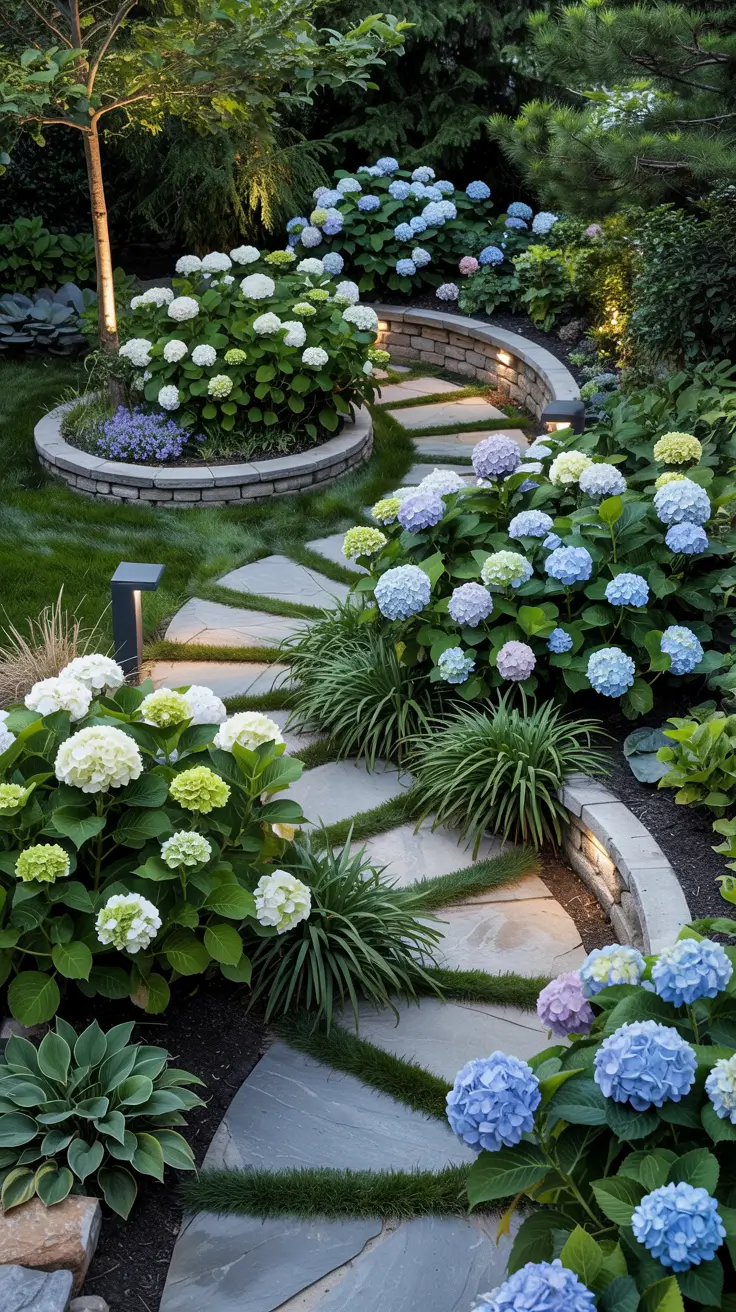
I typically include wide hydrangea garden bed design areas with curved borders, complemented by gravel paths, low landscape lighting, and subtle seating zones. The hydrangeas themselves act as the main volume element, while surrounding greenery like ornamental grasses or Hostas adds contrast in texture and height.
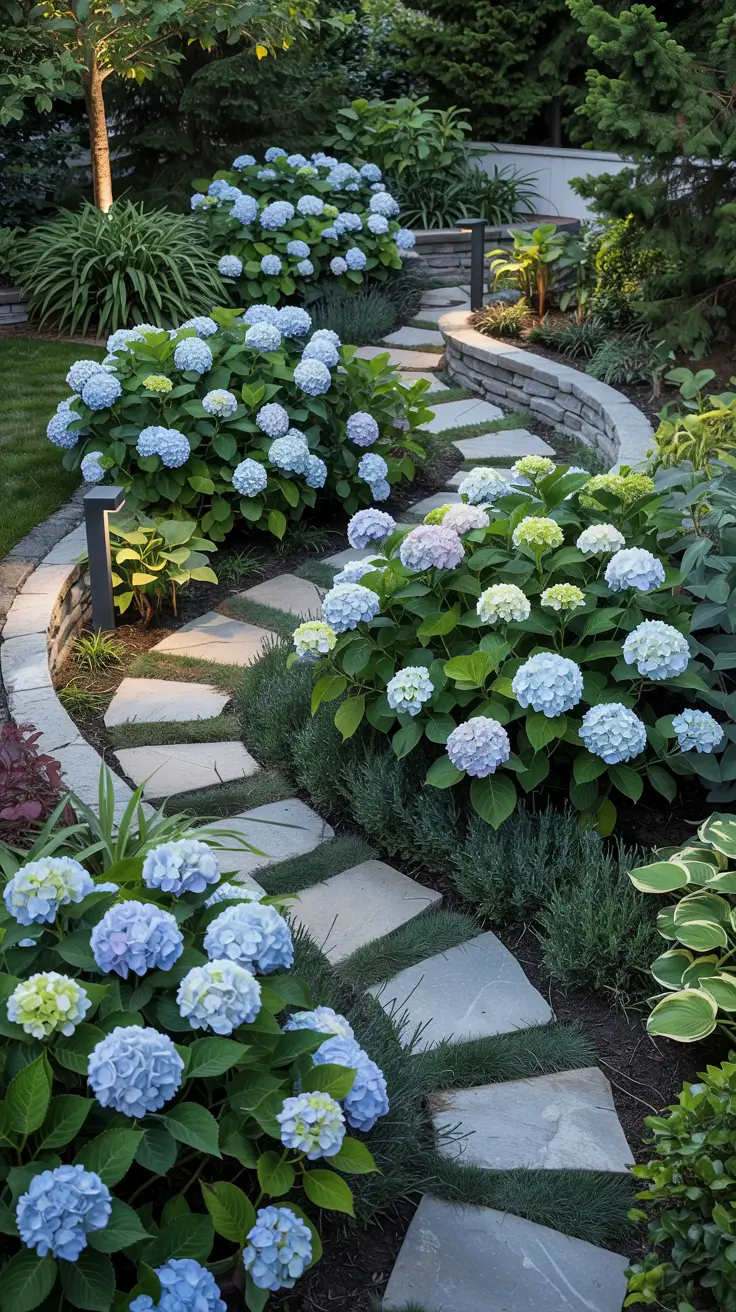
In my experience, this type of layout works best when you limit the color palette to two or three tones. Designers often recommend repeating plant groupings to create rhythm, which I also find essential for a cohesive look.
I would add integrated irrigation and lighting planning to this section, as these are often overlooked but crucial for maintaining lush hydrangea beds and enhancing evening ambiance.
Creative Hydrangea Garden Design Ideas for Stylish Outdoor Spaces 2026
When I design creative outdoor spaces with hydrangea in garden design, I focus on combining functionality with visual storytelling. Hydrangeas can define zones such as relaxation areas, dining corners, or pathways, making the garden feel intentional and curated.
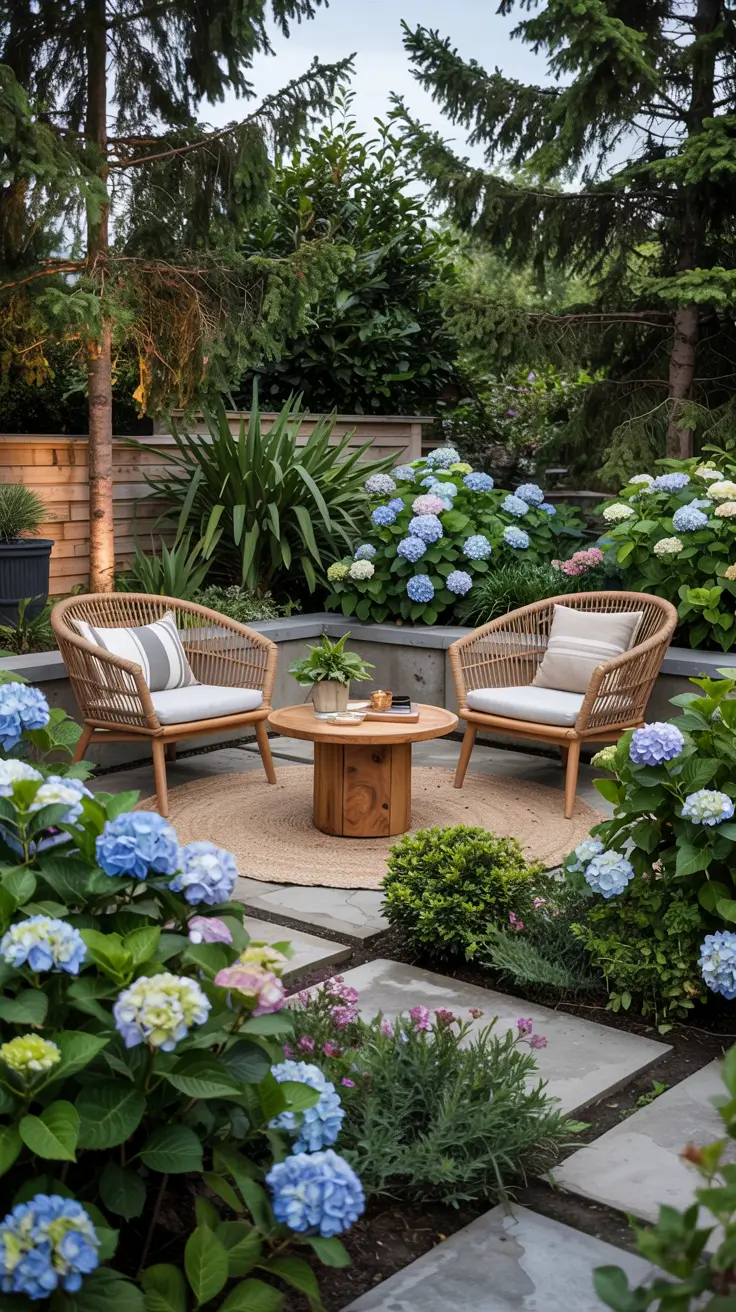
I like to incorporate outdoor furniture such as wooden benches, woven lounge chairs, and minimalist dining sets surrounded by hydrangea clusters. Planters, vertical trellises, and layered beds help create dimension, especially in modern garden design hydrangea layouts.
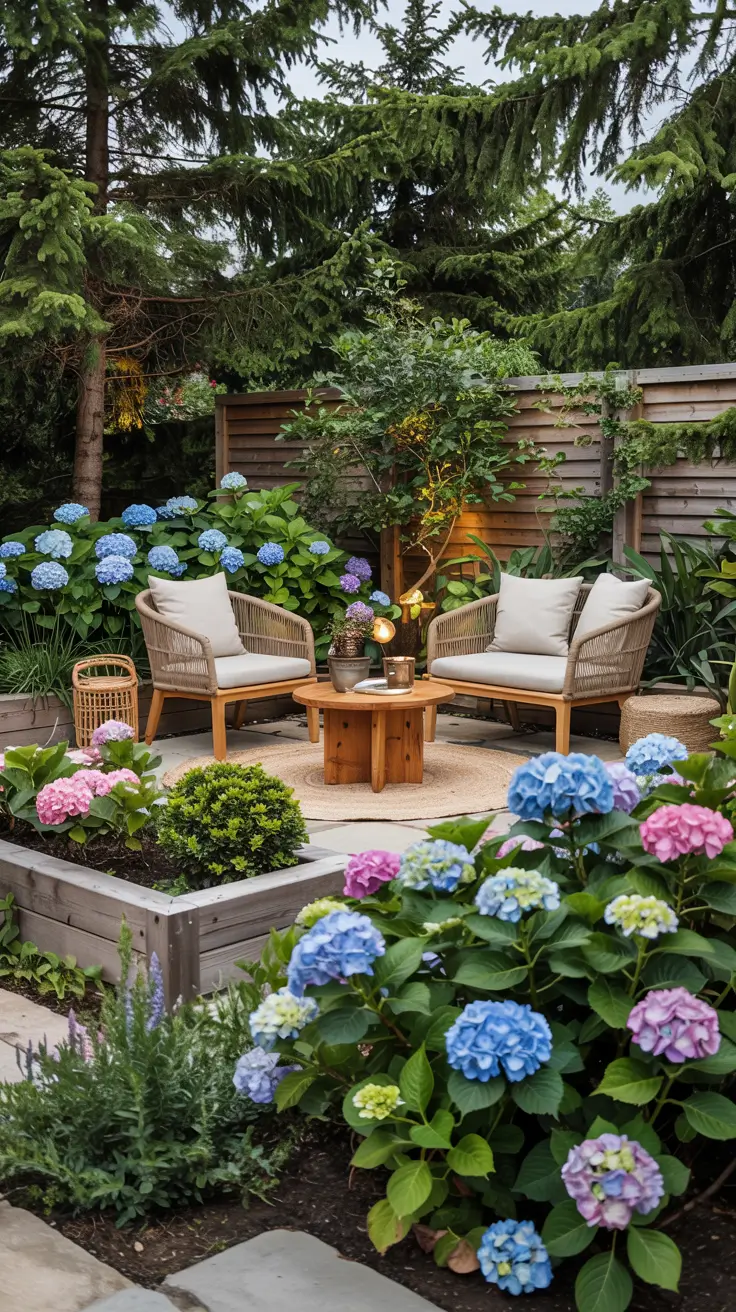
Personally, I find that mixing hydrangeas with natural materials like wood and stone elevates the entire space. Many landscape experts emphasize creating outdoor rooms, and hydrangeas are perfect for softly framing these areas without making them feel enclosed.
What is often missing here is seasonal planning. I would recommend including evergreen plants or structural elements so the space remains attractive even when hydrangeas are not in full bloom.
Hydrangea in Garden Design – Elegant Layouts with Seasonal Color Impact
I approach garden design hydrangea layouts by considering how color evolves throughout the seasons. Hydrangeas offer a dynamic palette, shifting tones that can redefine the garden’s mood over time.
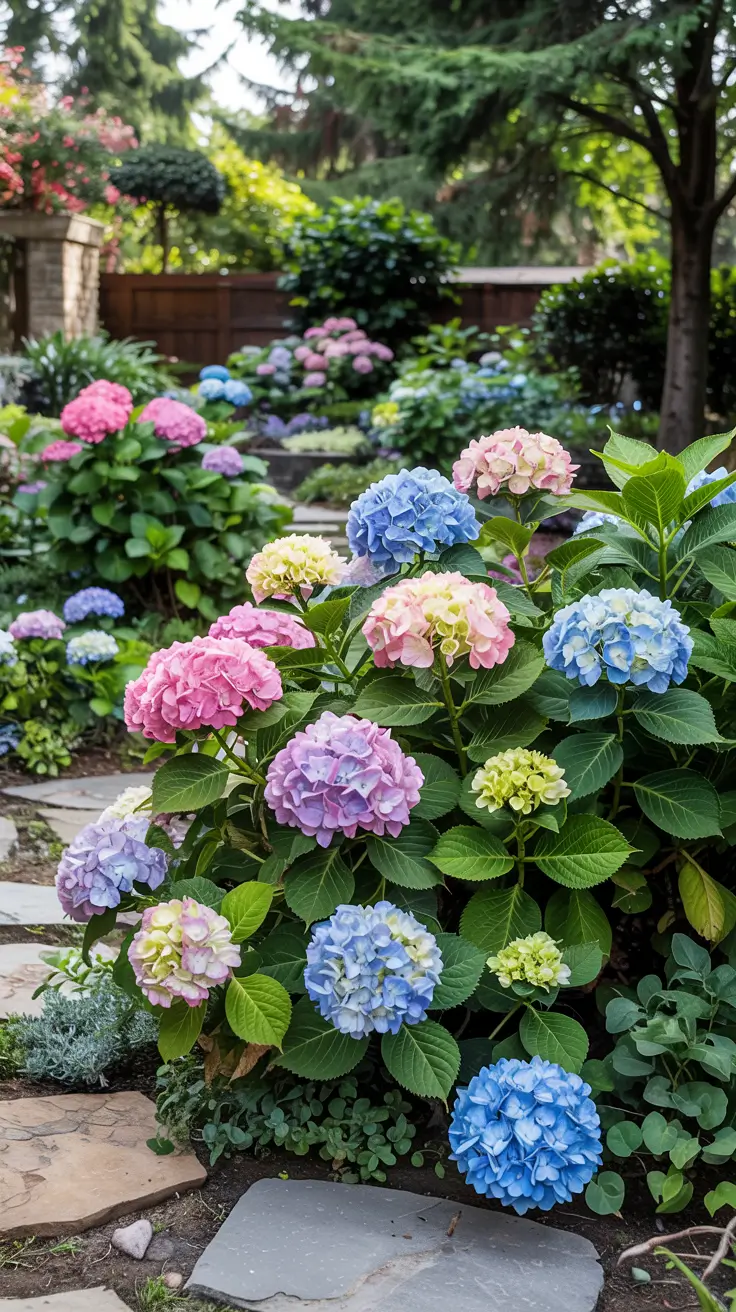
To enhance this, I combine different hydrangea varieties with complementary plants. For example, pairing white hydrangea garden design with darker foliage or soft pastels creates contrast. Pathways, edging, and subtle elevation changes help guide the eye through these seasonal transitions.
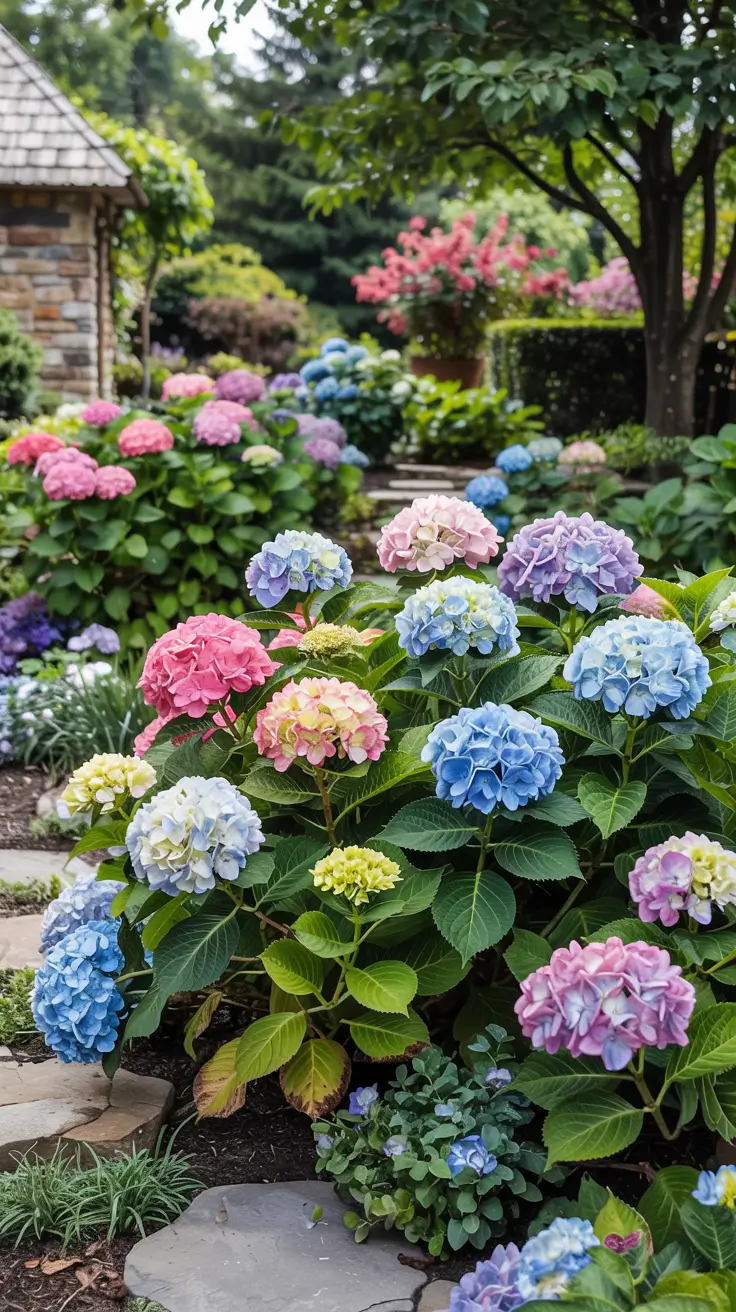
From my perspective, the key is not to overcrowd the space. I prefer giving each plant enough room to mature naturally, which results in a more elegant and less forced composition.
I would also include soil preparation and pH control here, as they directly influence hydrangea color and overall health, which is essential for achieving the desired visual effect.
Garden Design Hydrangea Concepts for Balanced and Layered Landscapes
Balanced landscaping is something I always prioritize when working with hydrangea garden design landscaping. Hydrangeas are naturally voluminous, so they need to be balanced with structured elements like hedges, pathways, or architectural features.
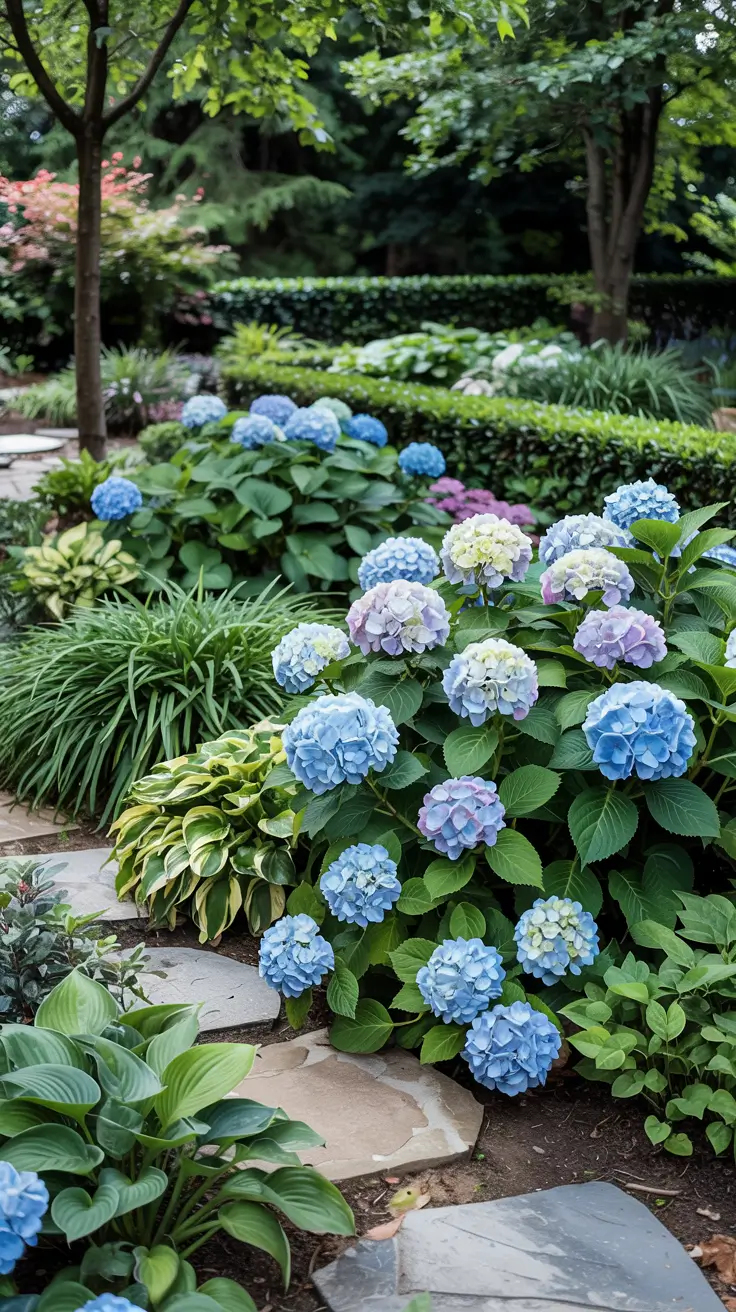
I often layer plants by height, starting with low ground covers, then medium hydrangeas, and finally taller shrubs or trees. Adding Hostas and ornamental grasses helps soften transitions between layers while maintaining visual interest.
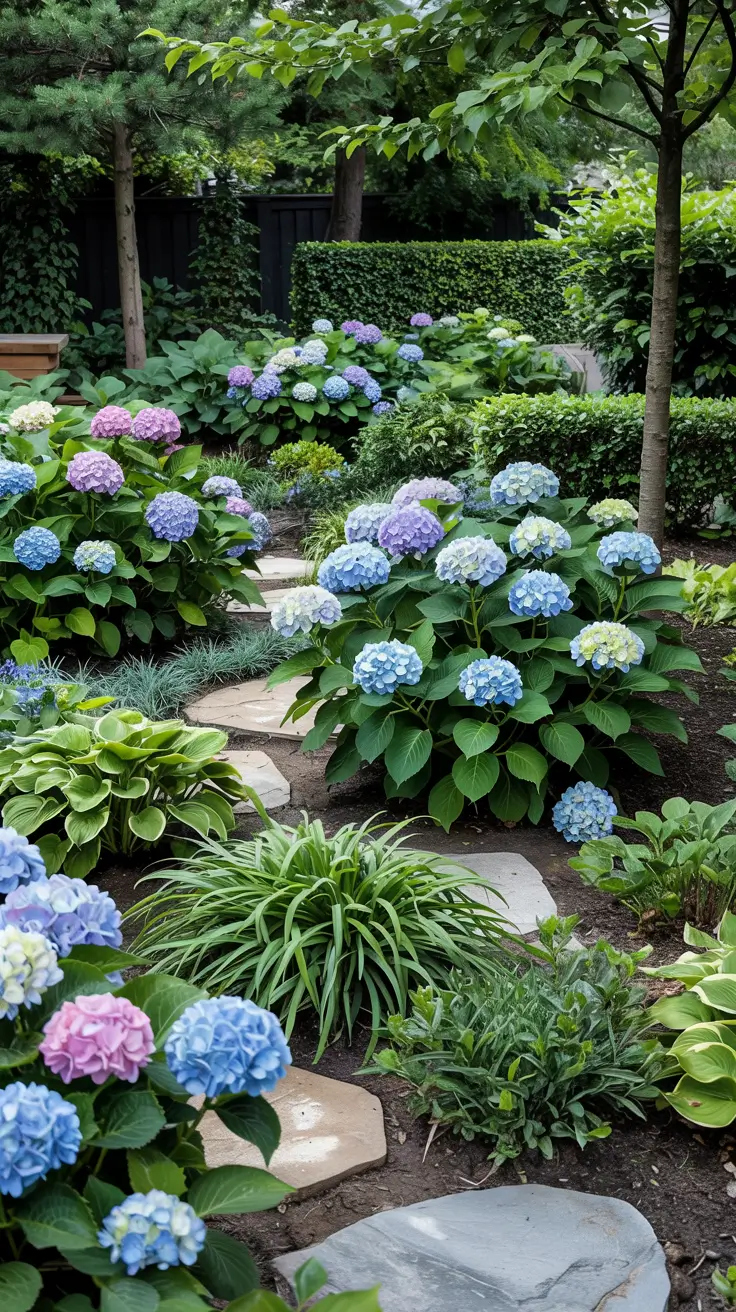
In my opinion, layering is what transforms a simple garden into a professional-looking landscape. It creates depth and ensures that every angle offers a different perspective.
What I would add here is a clear zoning plan, especially for larger gardens, to prevent the design from feeling repetitive or overwhelming.
Front Yard Garden Design with Hydrangea – Curb Appeal Ideas for 2026
Front yard garden design hydrangea concepts are all about first impressions. I focus on creating a welcoming entrance with symmetrical or slightly asymmetrical layouts that highlight the home’s architecture.
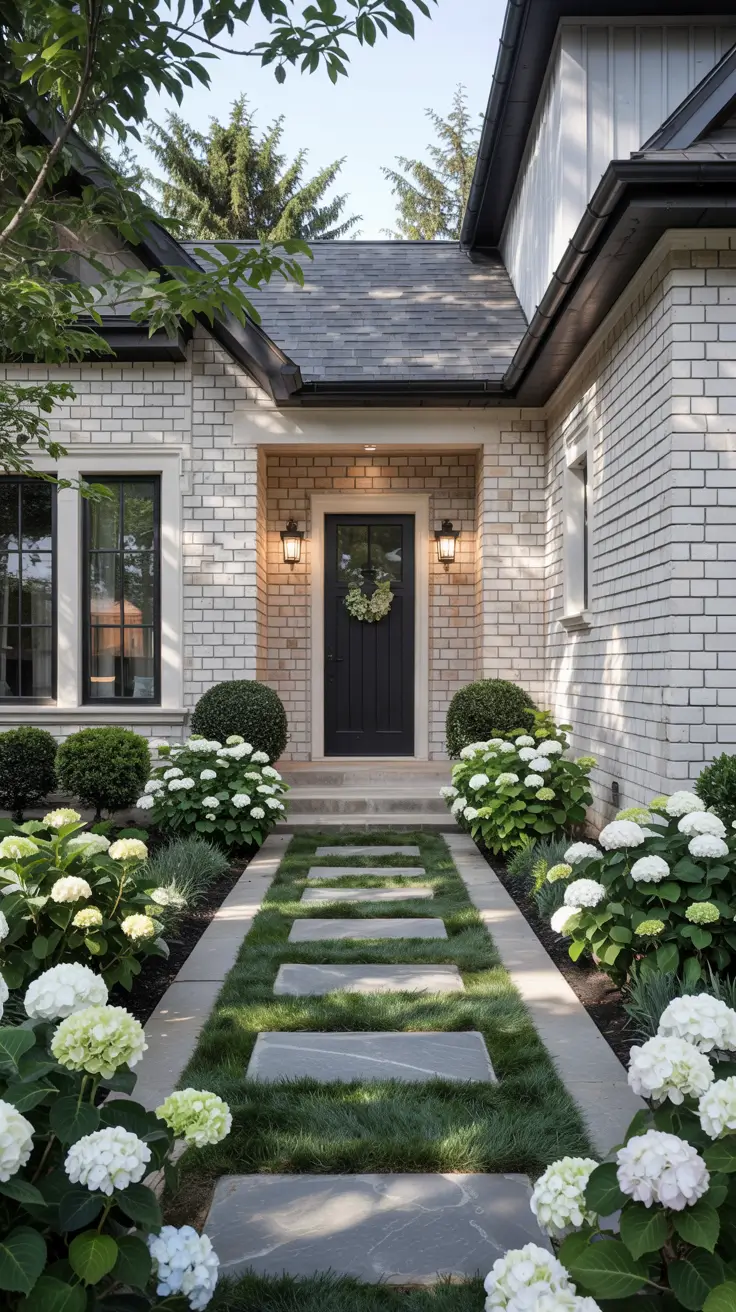
I typically place hydrangeas along walkways, near entry doors, or beneath windows. Combining them with structured elements like low hedges, stone borders, and lighting fixtures enhances both visibility and elegance.
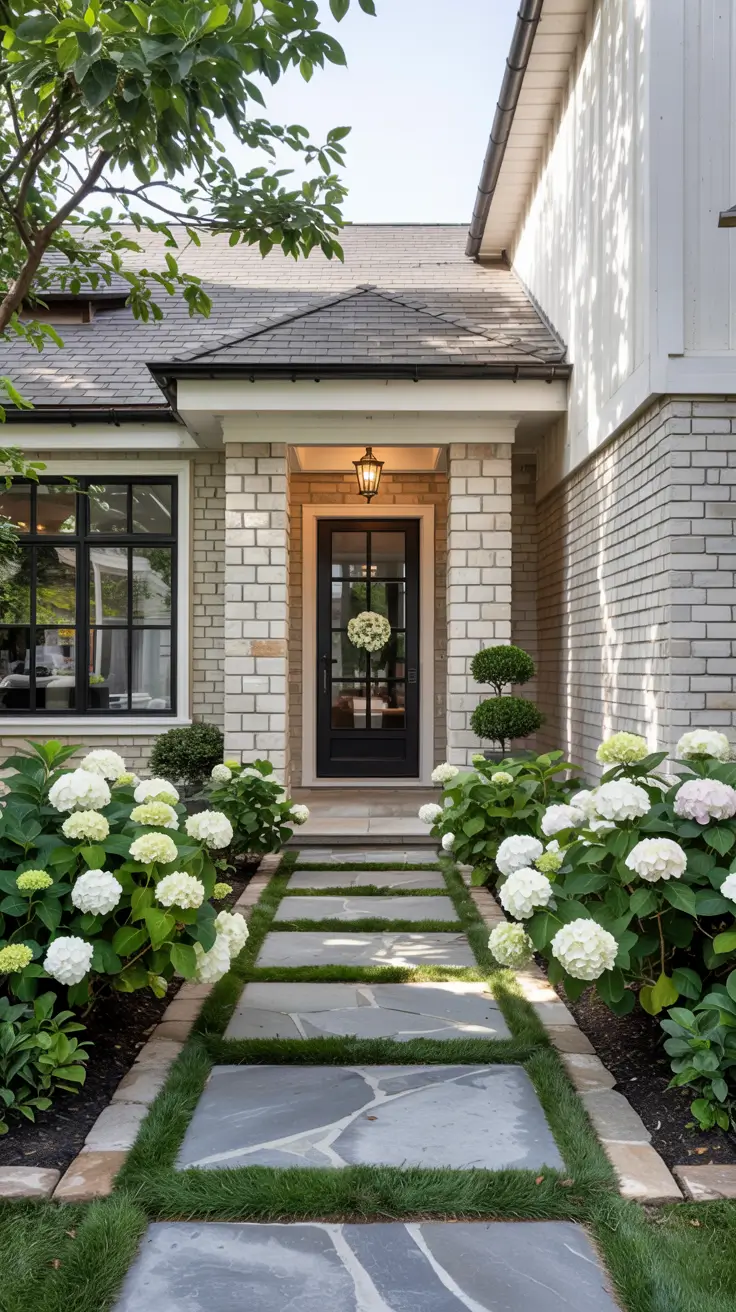
From my experience, white hydrangea garden design works exceptionally well in front yards because it feels clean and timeless. It also pairs easily with modern and cottage-style homes.
I would recommend adding pathway lighting and defined edging to improve both safety and visual clarity, especially in evening settings.
Hydrangea Garden Design Landscaping – Combining Texture, Color, and Structure
In hydrangea garden design landscaping, I always aim to balance three key elements: texture, color, and structure. Hydrangeas provide softness and volume, but they need contrast to truly stand out.
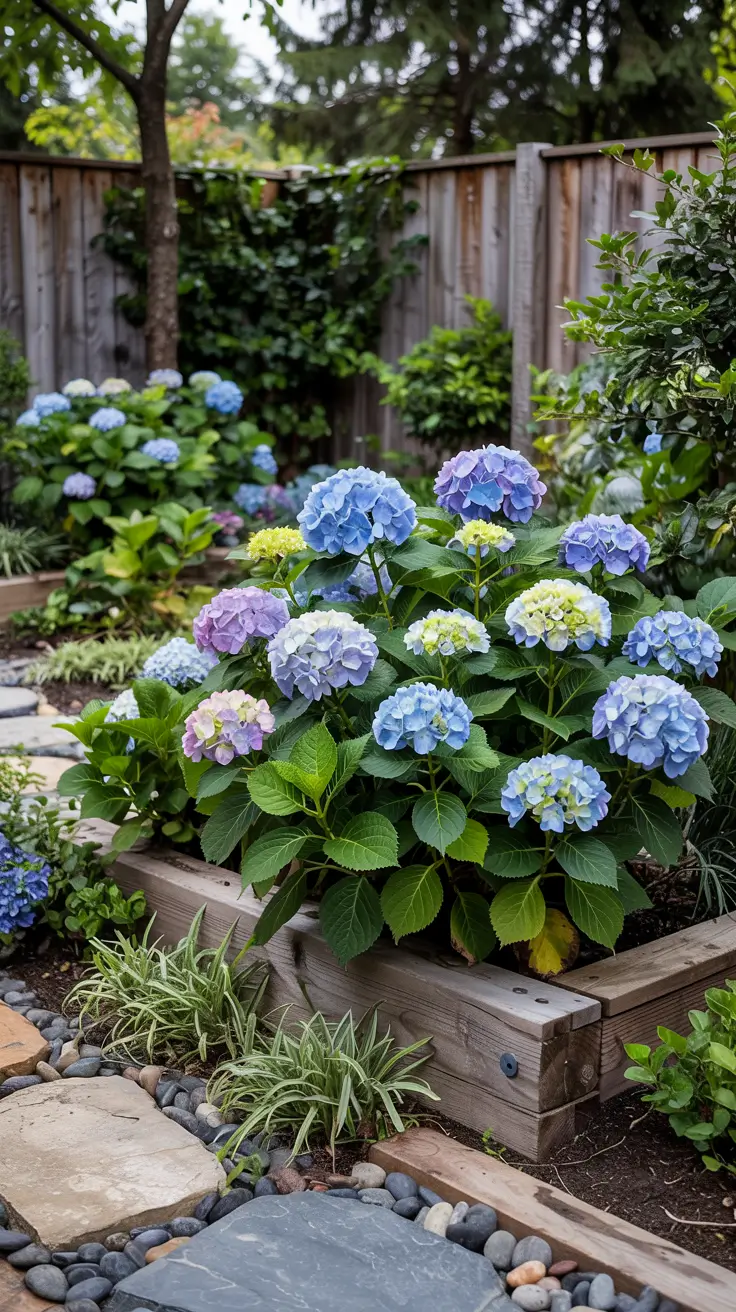
I combine them with materials like stone, gravel, and wood, as well as plants with different leaf shapes and sizes. This creates a multi-dimensional space that feels rich but not chaotic.
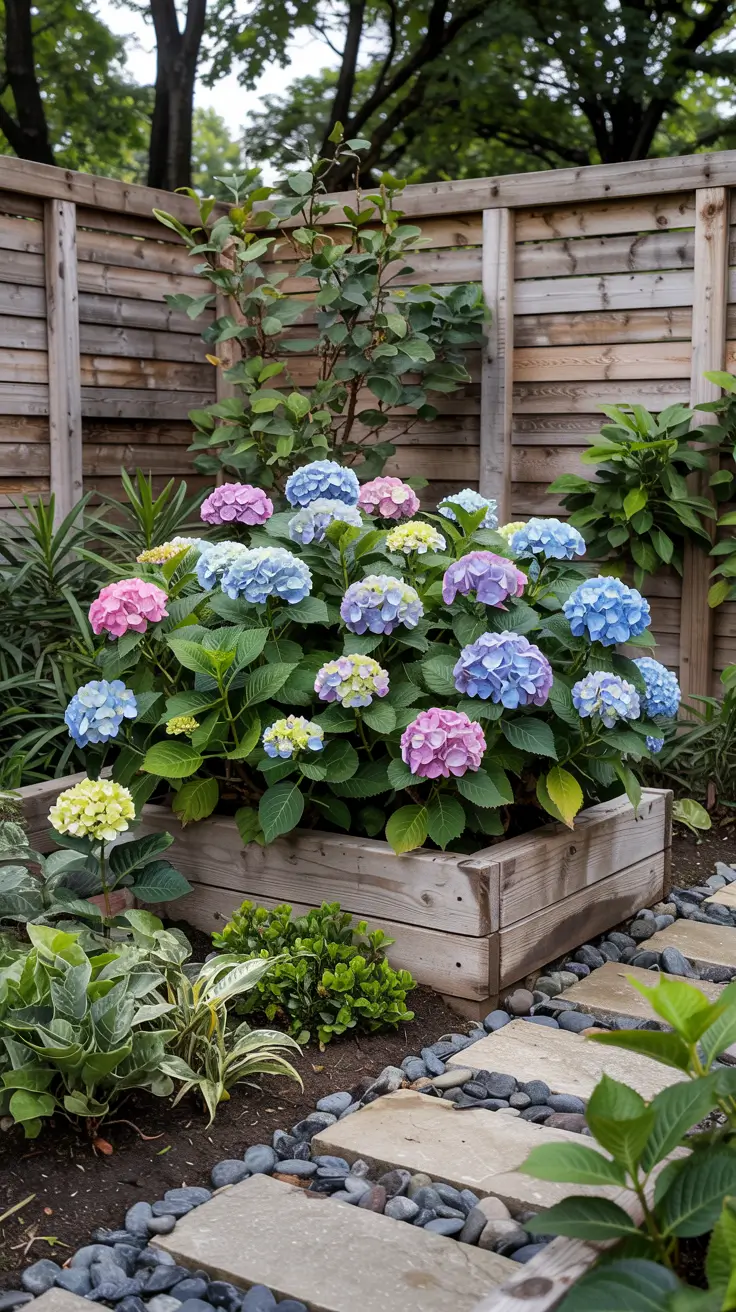
I believe that texture is often underestimated. By mixing smooth surfaces with rough ones and soft plants with structured elements, the garden becomes more engaging and visually dynamic.
What I would include here is a stronger focus on maintenance planning, ensuring that the design remains practical and sustainable over time.
Small Garden Design with Hydrangea – Space-Saving and Cozy Layouts
Small garden design hydrangea solutions require a more strategic approach. I focus on maximizing vertical and layered space while keeping the layout open and uncluttered.
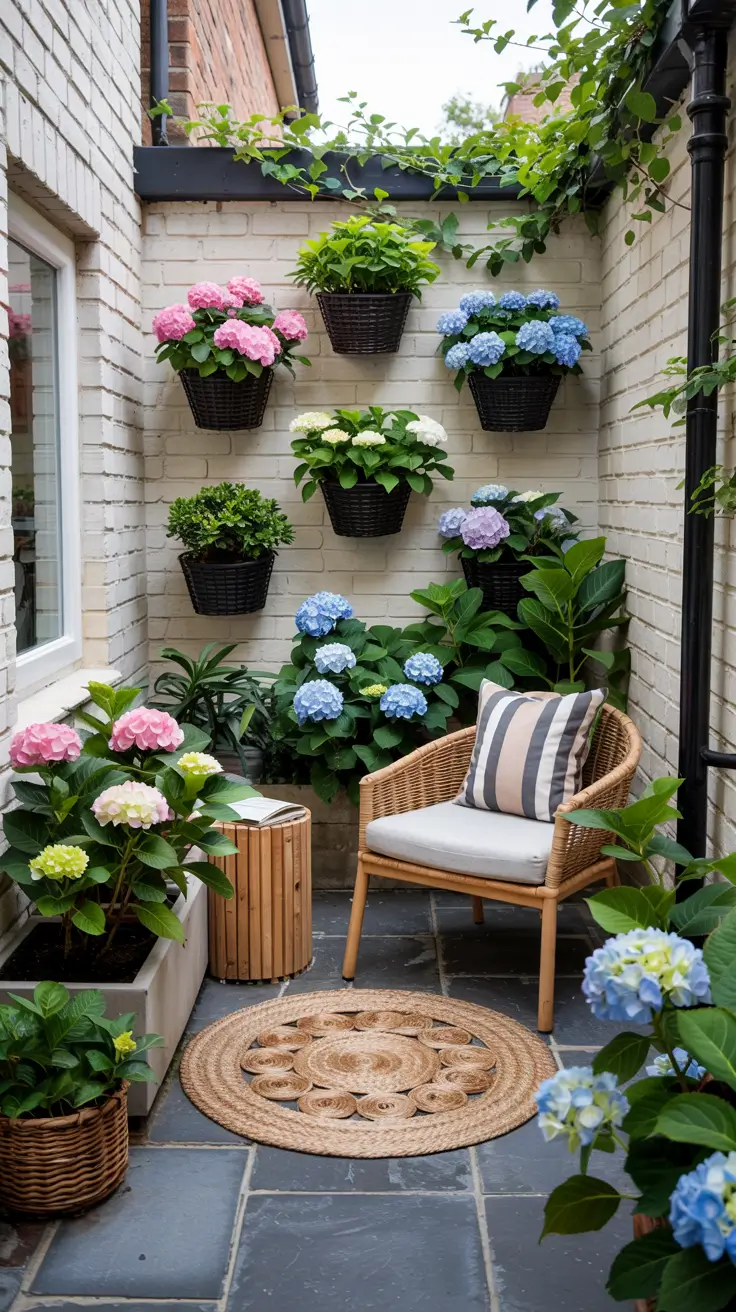
I use compact hydrangea varieties, raised beds, and vertical planters to save space. Adding mirrors, light-colored surfaces, and minimal furniture helps create the illusion of a larger area.
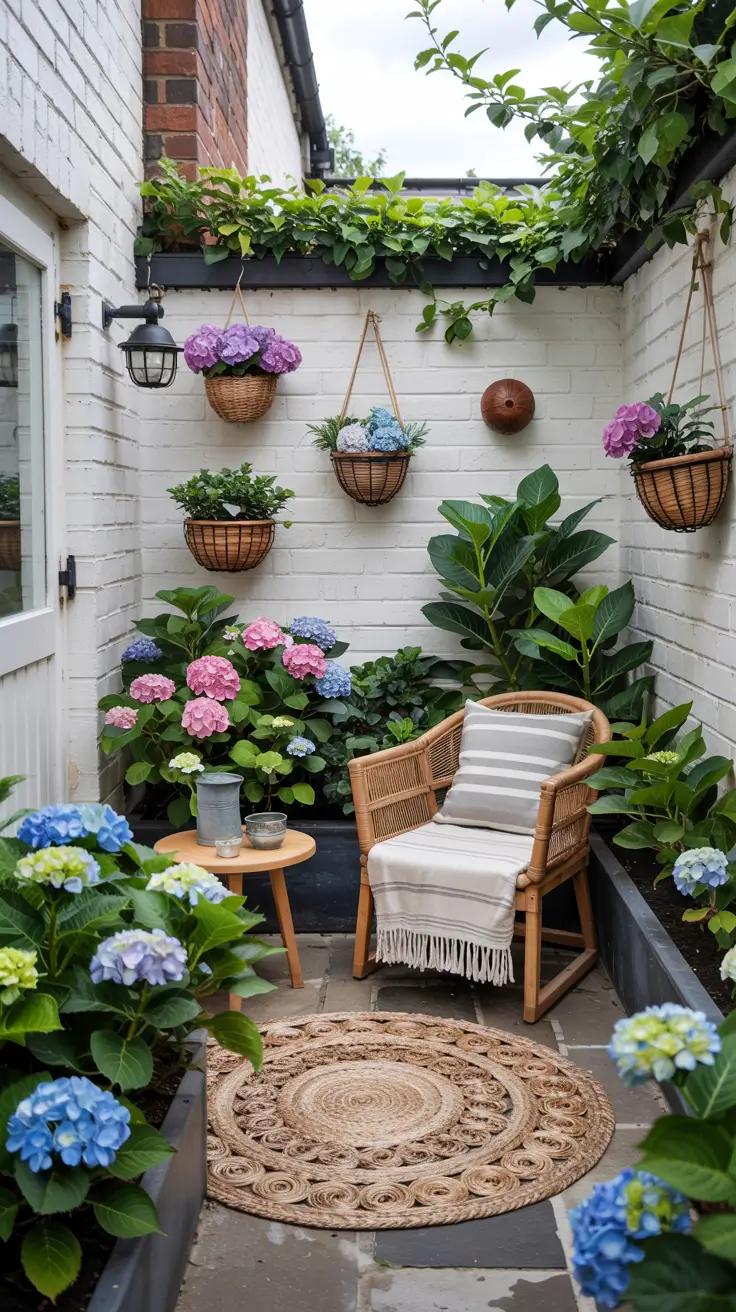
In my experience, less is always more in small spaces. Carefully selected elements can make the garden feel cozy rather than cramped.
I would add multifunctional furniture and hidden storage solutions to improve usability without compromising the aesthetic.
Hydrangea Paniculata Garden Design – Structured and Contemporary Outdoor Looks
I often use hydrangea paniculata garden design when I want to create a more structured and architectural outdoor space. Paniculata varieties naturally grow upright and are perfect for modern layouts where clean lines and defined zones are essential. This makes them ideal for contemporary landscaping where order and symmetry matter.
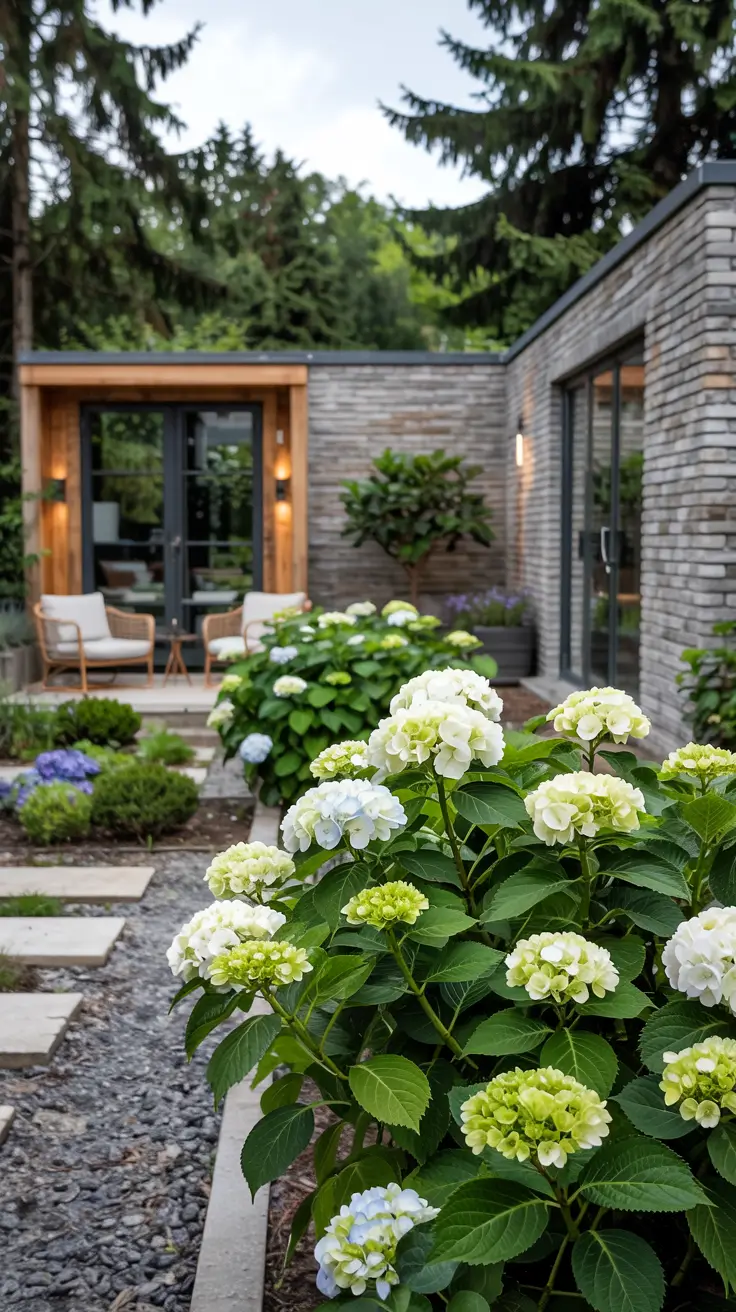
In my projects, I position paniculata hydrangeas along pathways, fences, or as natural dividers between zones. I combine them with gravel paths, concrete slabs, and minimalist outdoor furniture to reinforce a modern aesthetic. Their elongated blooms add vertical interest, which helps balance lower plantings and open lawn areas.
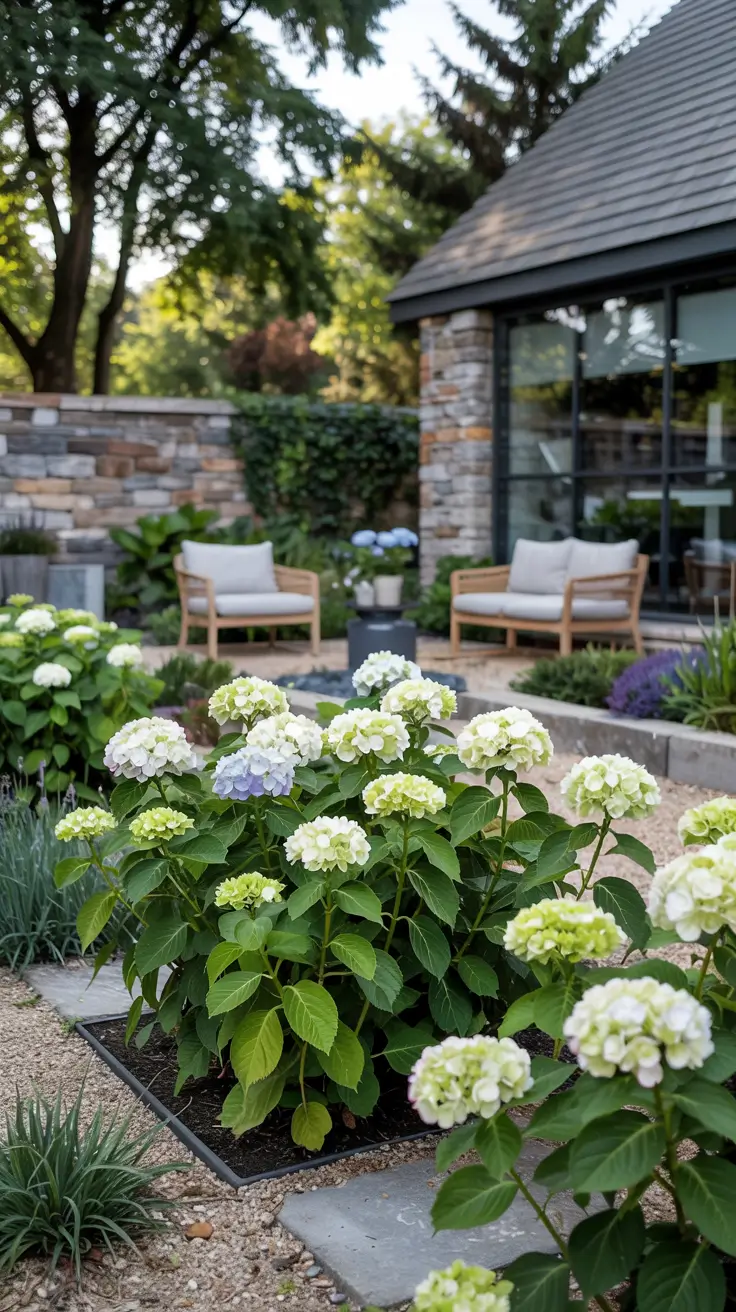
From my experience, paniculata hydrangeas are also more adaptable to sunlight and climate variations, which makes them a reliable choice for long-term landscaping. Many designers highlight their durability as a key advantage in modern garden design hydrangea concepts.
I would add more emphasis on pruning techniques here, as proper shaping is essential to maintain their structured appearance over time.
White Hydrangea Garden Design – Timeless and Minimalist Outdoor Aesthetics
White hydrangea garden design creates a calm and refined atmosphere that aligns perfectly with modern and minimalist outdoor spaces. I often use white blooms to bring brightness and visual clarity, especially in gardens with neutral palettes.
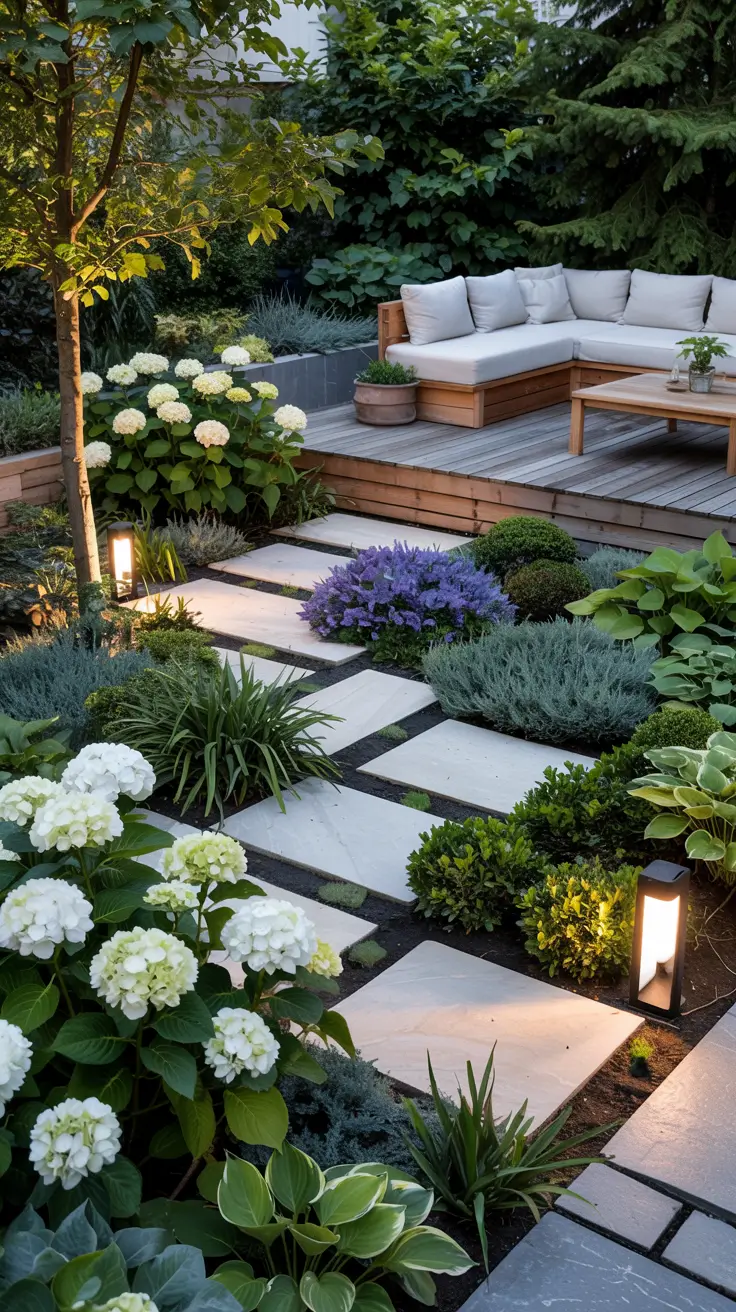
I like to pair white hydrangeas with materials such as light stone, wood decking, and simple metal furniture. This combination enhances the clean aesthetic while still feeling warm and inviting. Adding subtle greenery like Hostas helps prevent the design from feeling too sterile.
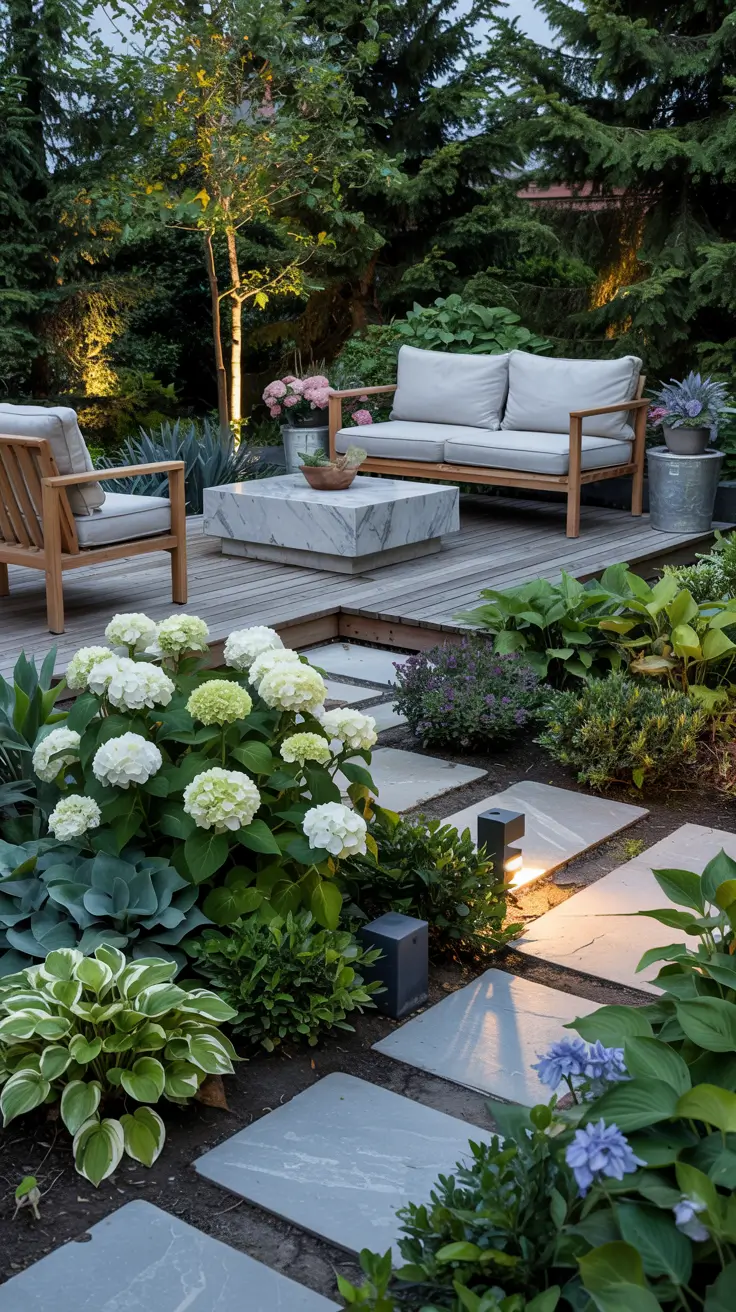
Personally, I find that white hydrangeas work well in both small and large gardens because they reflect light and visually expand the space. Designers often recommend them for creating timeless landscapes that do not rely on trends.
I would include a note about nighttime lighting here, as white flowers look especially striking under soft garden lights and can elevate the overall ambiance.
Cottage Garden Design with Hydrangea – Romantic and Natural Garden Styling
Cottage garden design hydrangea layouts focus on a more relaxed and organic feel. I approach this style by allowing plants to grow more freely, creating a layered and slightly wild composition that feels natural and inviting.
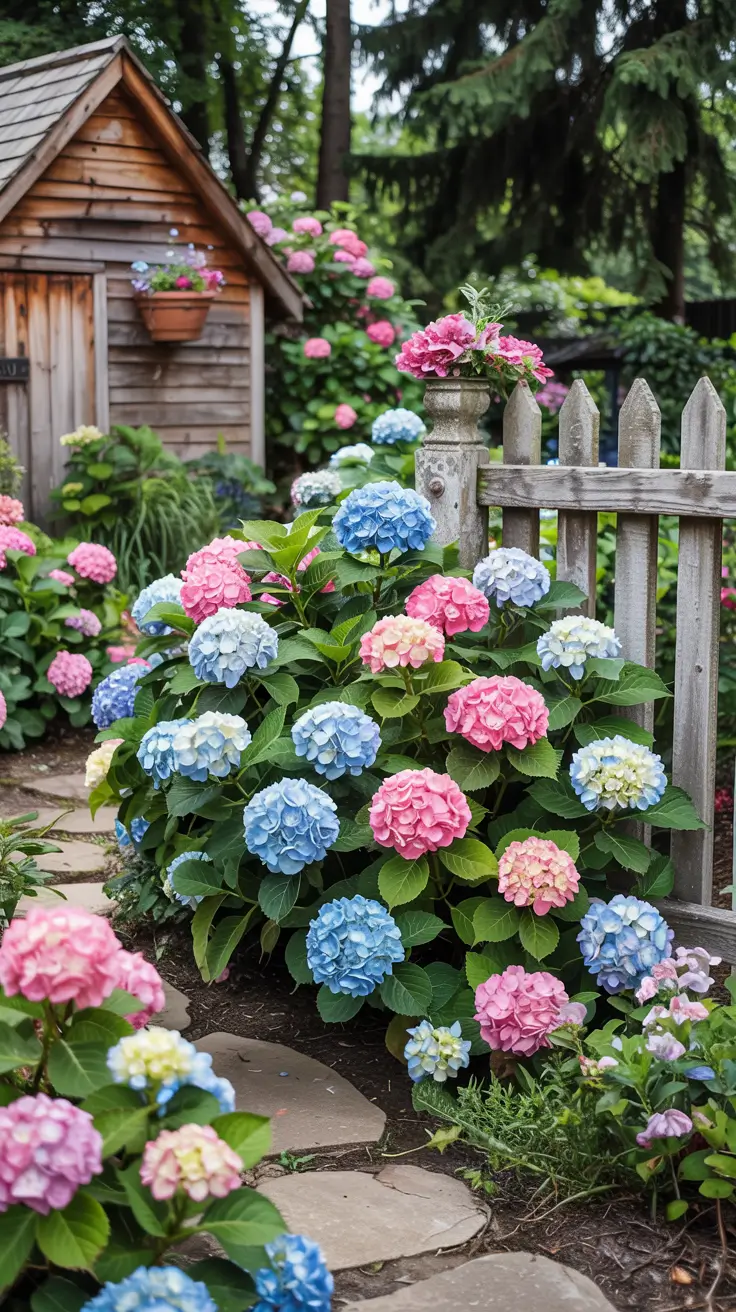
I combine hydrangeas with other flowering plants, climbing vines, and rustic elements like wooden fences or stone paths. Soft pastel tones and varied textures are essential in achieving that classic cottage look.
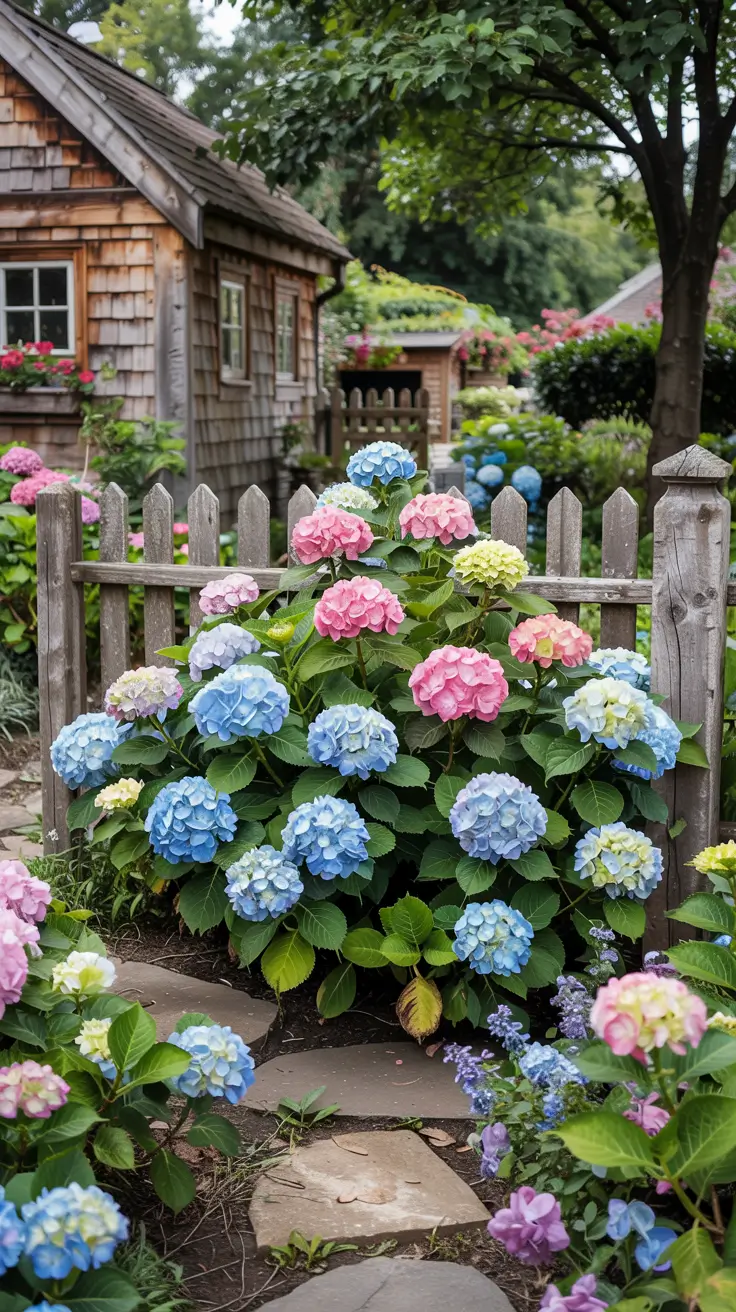
In my opinion, this style is perfect for those who want a garden that feels personal and lived-in rather than overly polished. Many landscape designers emphasize the importance of diversity in planting to create this effect.
What I would add here is a stronger focus on seasonal layering, ensuring that the garden remains vibrant throughout the year and not just during peak bloom.
Modern Garden Design Hydrangea – Clean Lines and Minimal Green Spaces
Modern garden design hydrangea concepts are all about simplicity and intentional design. I focus on creating clean layouts where each element has a purpose and contributes to the overall composition.
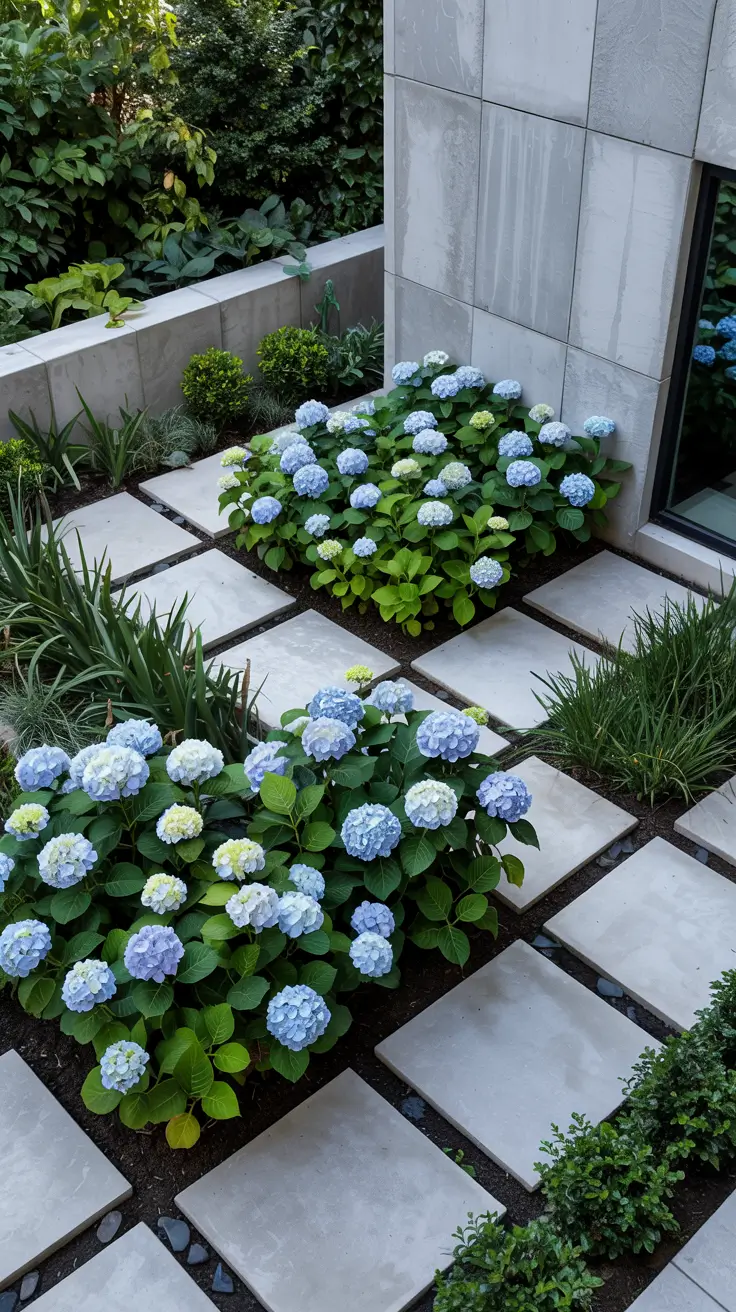
I use geometric planting beds, straight pathways, and a limited color palette. Hydrangeas are often arranged in uniform groupings, paired with materials like concrete, steel, and wood to enhance the modern aesthetic.
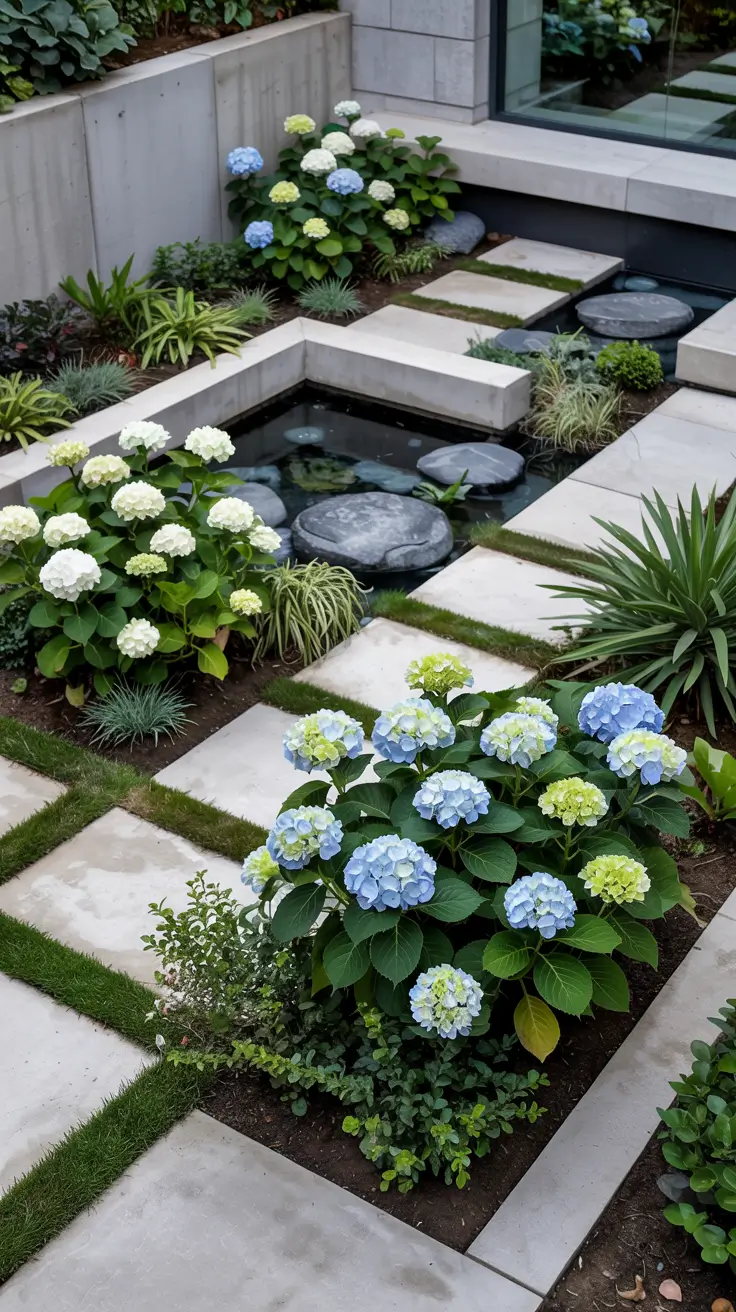
From my experience, restraint is key in modern landscaping. Avoiding overcrowding allows the hydrangeas to stand out and creates a sense of calm and order.
I would recommend incorporating smart irrigation and low-maintenance materials to align with the practicality expected in modern outdoor spaces.
Hydrangea Garden Bed Design – Layered Flower Beds with Depth and Texture
Hydrangea garden bed design is one of the most effective ways to introduce depth into a landscape. I design beds with multiple layers, ensuring that each plant contributes to the overall visual composition.
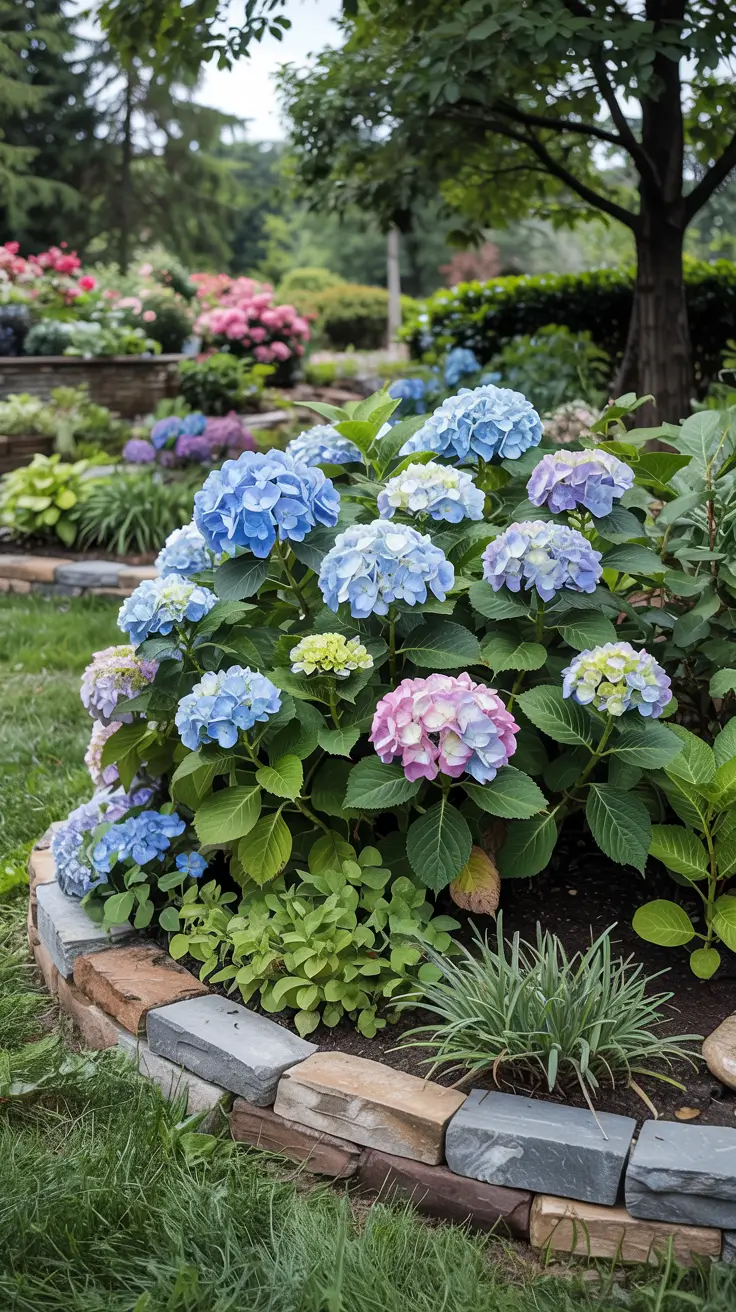
I start with a base of ground cover, then add hydrangeas as the main feature, and finish with taller plants or shrubs behind them. Edging materials like stone or metal help define the space and keep it organized.
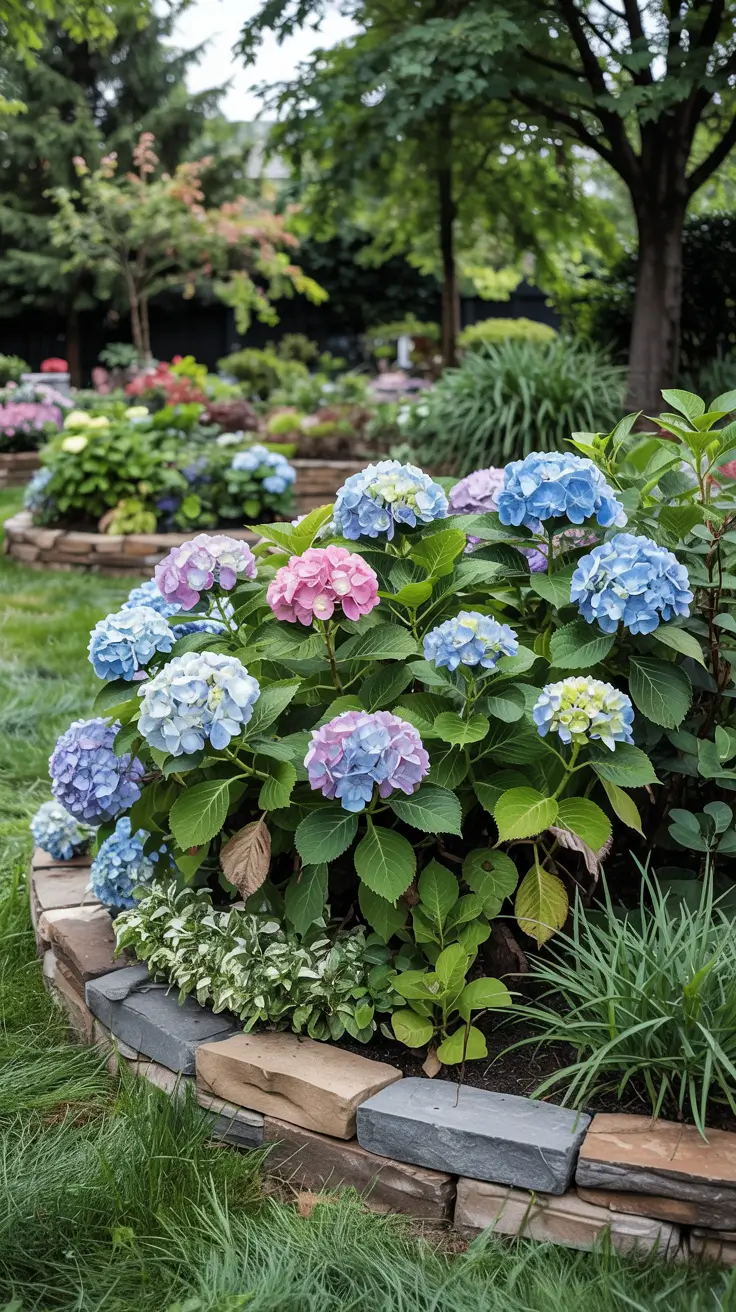
In my experience, well-designed garden beds can transform even a simple yard into a visually rich environment. The layering technique also makes maintenance easier by clearly defining planting zones.
I would add irrigation zoning and soil preparation details here, as they are essential for maintaining healthy and vibrant hydrangea beds.
Front Yard Hydrangea Landscaping Ideas for a Fresh and Inviting Entrance
Front yards benefit greatly from thoughtful hydrangea landscaping. I focus on creating a welcoming and balanced entrance that enhances the home’s overall appearance.
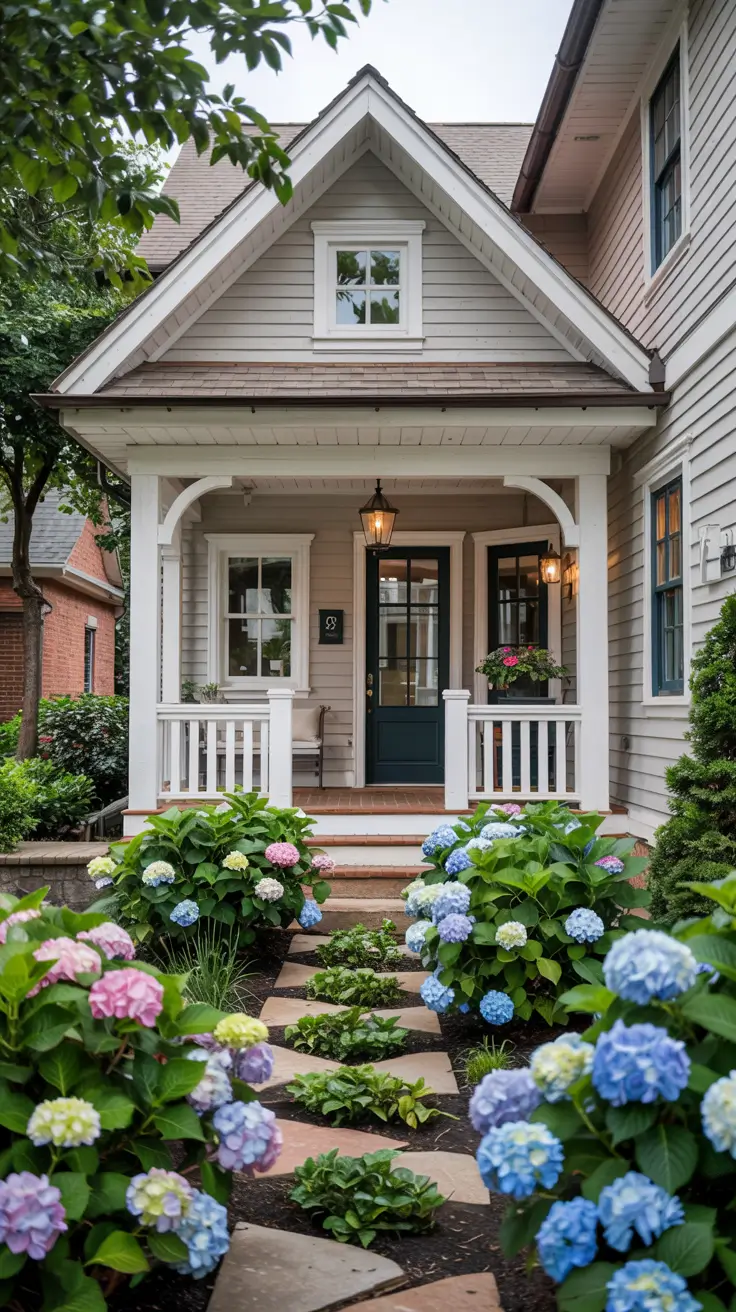
I place hydrangeas strategically along walkways, near entrances, and around focal points like porches or steps. Combining them with structured elements such as hedges and lighting improves both aesthetics and functionality.
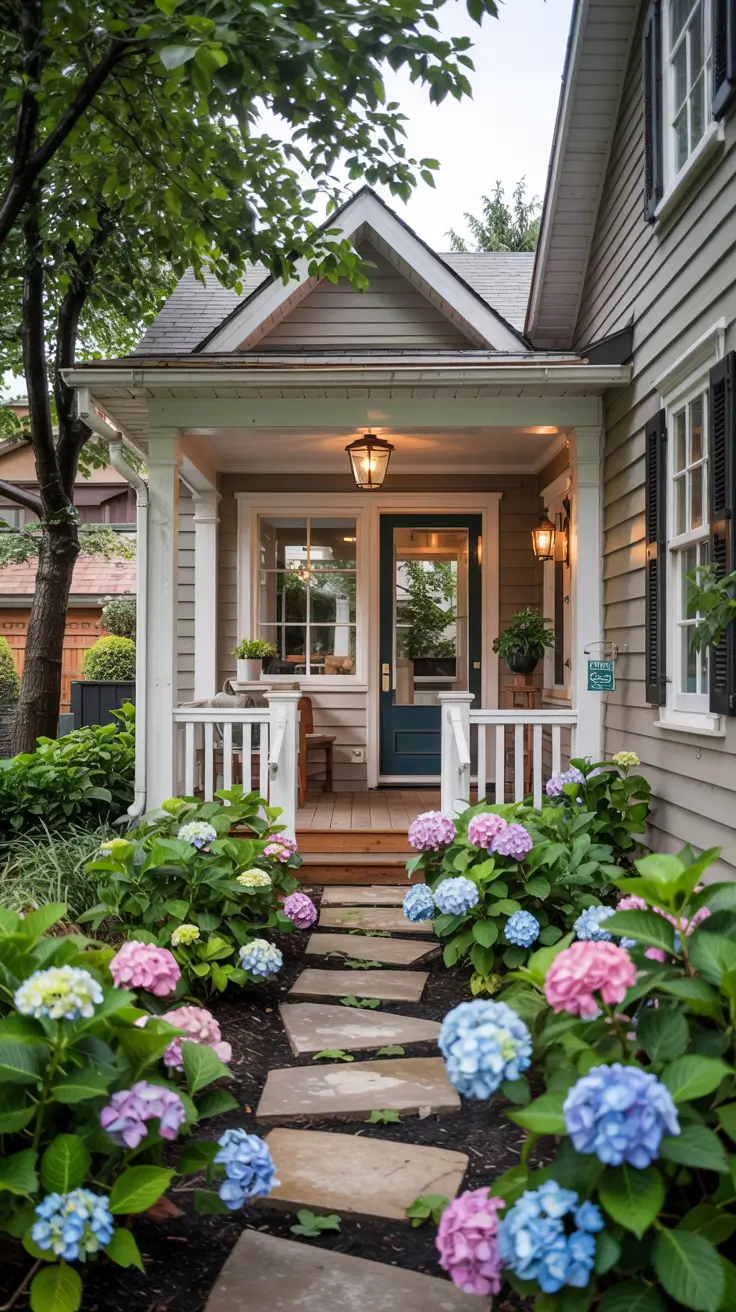
Personally, I believe that front yard garden design hydrangea layouts should be both beautiful and practical. They need to guide visitors while also creating a strong visual impression.
I would include more details about seasonal maintenance and pruning to ensure that the entrance always looks well-kept and inviting.
Garden Pool Exterior Design with Hydrangea – Luxury Outdoor Living Trends
Garden pool exterior design hydrangea concepts bring a sense of luxury and relaxation to outdoor spaces. I use hydrangeas to soften the hard edges of pools and create a more natural and inviting environment.
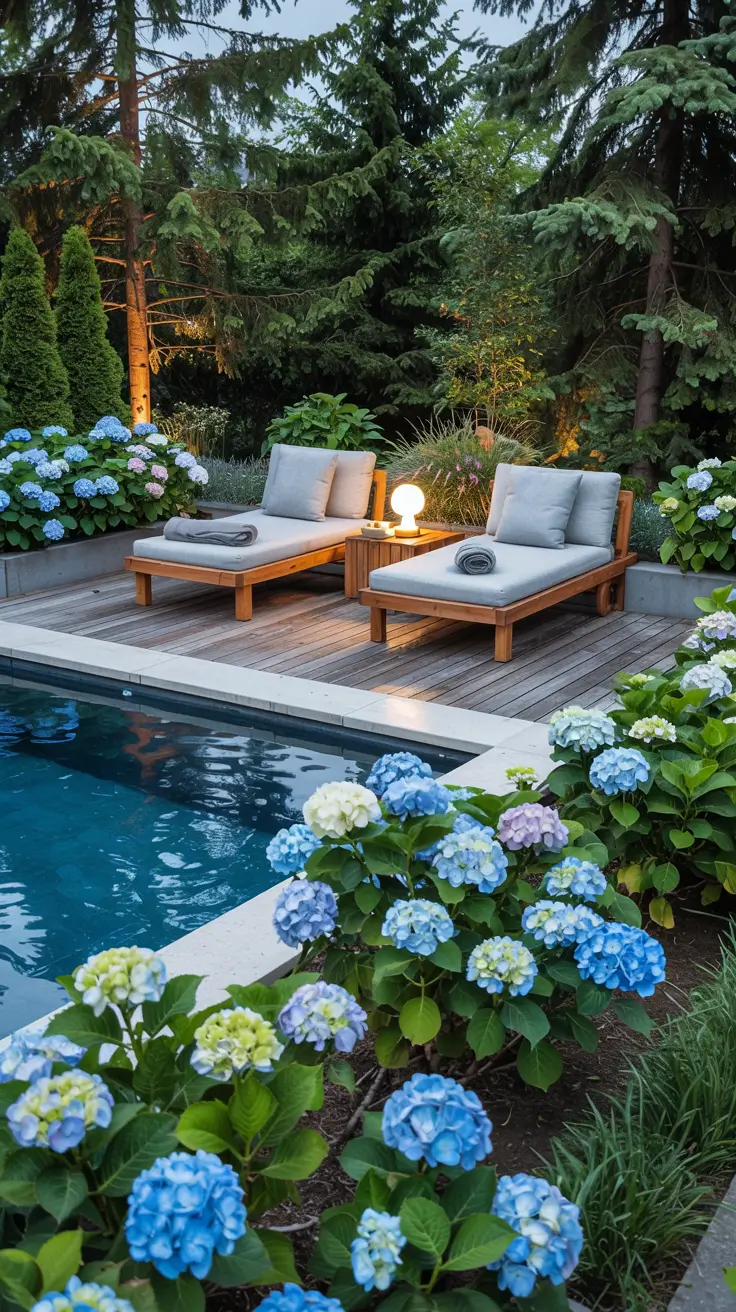
I combine them with lounge furniture, wooden decking, stone surfaces, and subtle lighting. Hydrangeas are often placed around seating areas or along pool borders to create privacy and visual interest.
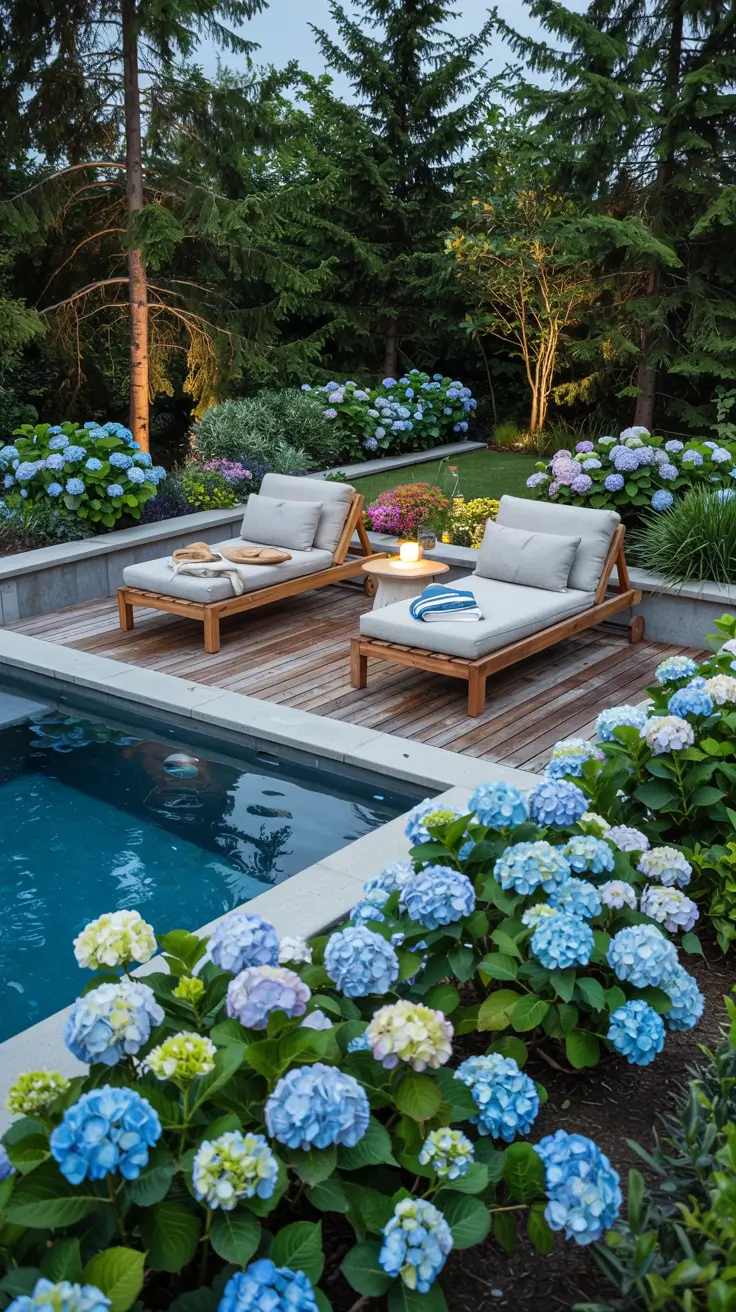
From my perspective, the key is to balance aesthetics with practicality. Plants should enhance the space without interfering with movement or maintenance around the pool.
I would add considerations for humidity, drainage, and plant placement here to ensure long-term durability in a poolside environment.
Hydrangea and Hostas Garden Design – Perfect Plant Pairing for Shade Gardens
I often use hydrangeas and hostas together when designing shaded garden areas because they naturally complement each other in both texture and structure. In hydrangea garden design landscaping, this pairing works especially well under trees or along north-facing boundaries, where light is soft and diffused. The large hydrangea blooms bring height and seasonal interest, while hostas create a lush, layered base that fills gaps and prevents the space from looking empty.
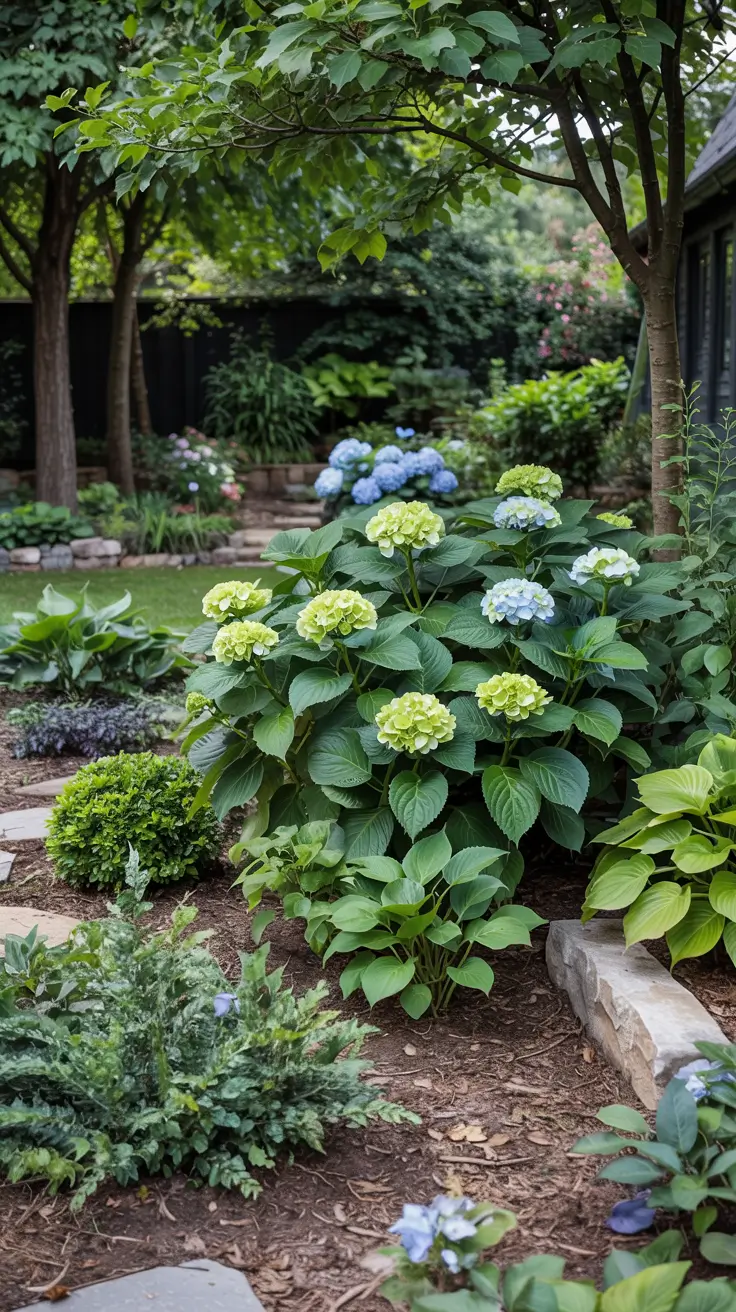
When I plan this type of garden design hydrangea layout, I carefully position hydrangea shrubs at the back or center, depending on the layout, and surround them with hostas of varying sizes. I prefer mixing different hosta varieties to introduce subtle variation in leaf color, from deep green to soft variegated tones. Mulch, natural stone edging, and a simple garden path help define the bed while keeping maintenance low and the design cohesive.
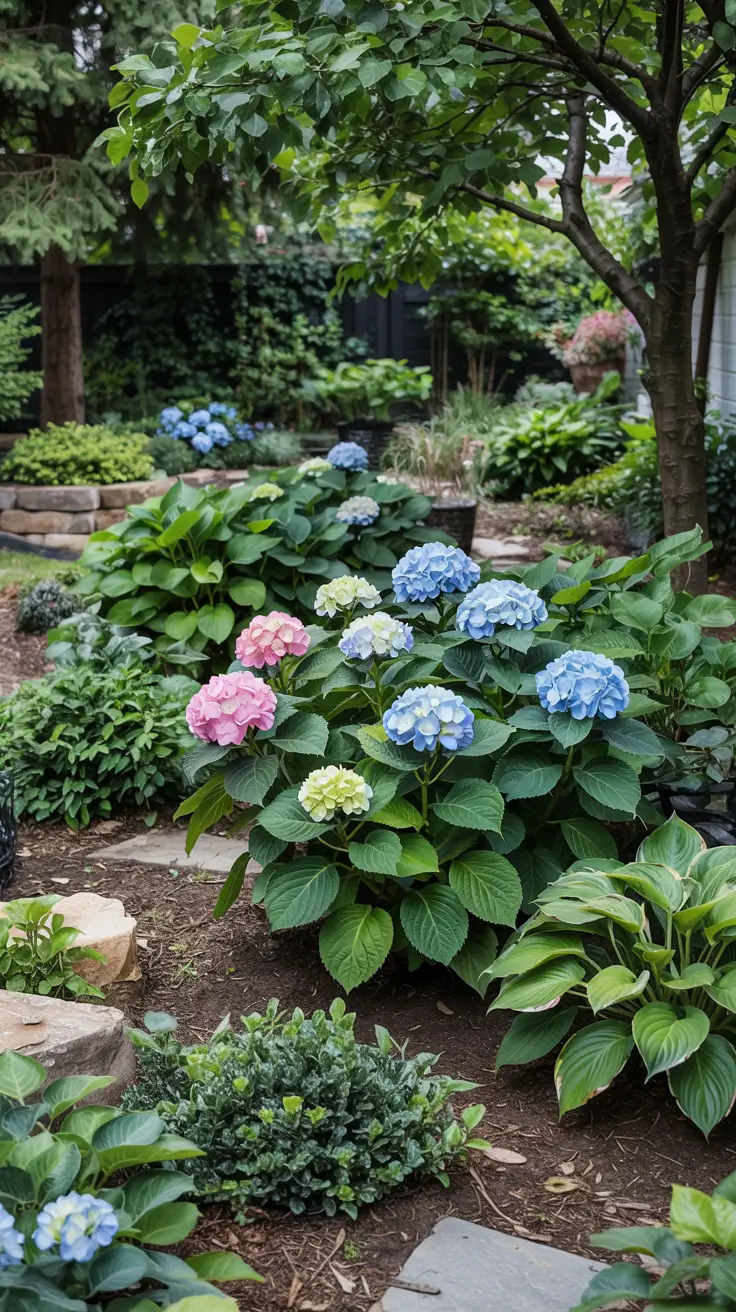
From my experience, this combination is one of the most reliable solutions for low-maintenance landscaping. Many landscape designers, including those featured in Better Homes and Gardens, emphasize layering plants with different heights and textures for visual depth, and I consistently see how effective this approach is in real projects.
To enhance this section further, I would add low garden lighting and a subtle irrigation system to maintain moisture levels, as both hydrangeas and hostas thrive in consistent, well-watered conditions.
Landscaping with White Hydrangeas – Bright and Airy Garden Concepts
White hydrangea garden design is one of my preferred approaches when creating bright and timeless outdoor spaces. In modern garden design hydrangea concepts, white blooms reflect light beautifully, making even compact gardens feel more open and fresh. This approach works particularly well in both small garden design hydrangea layouts and larger garden settings where clarity and calmness are desired.
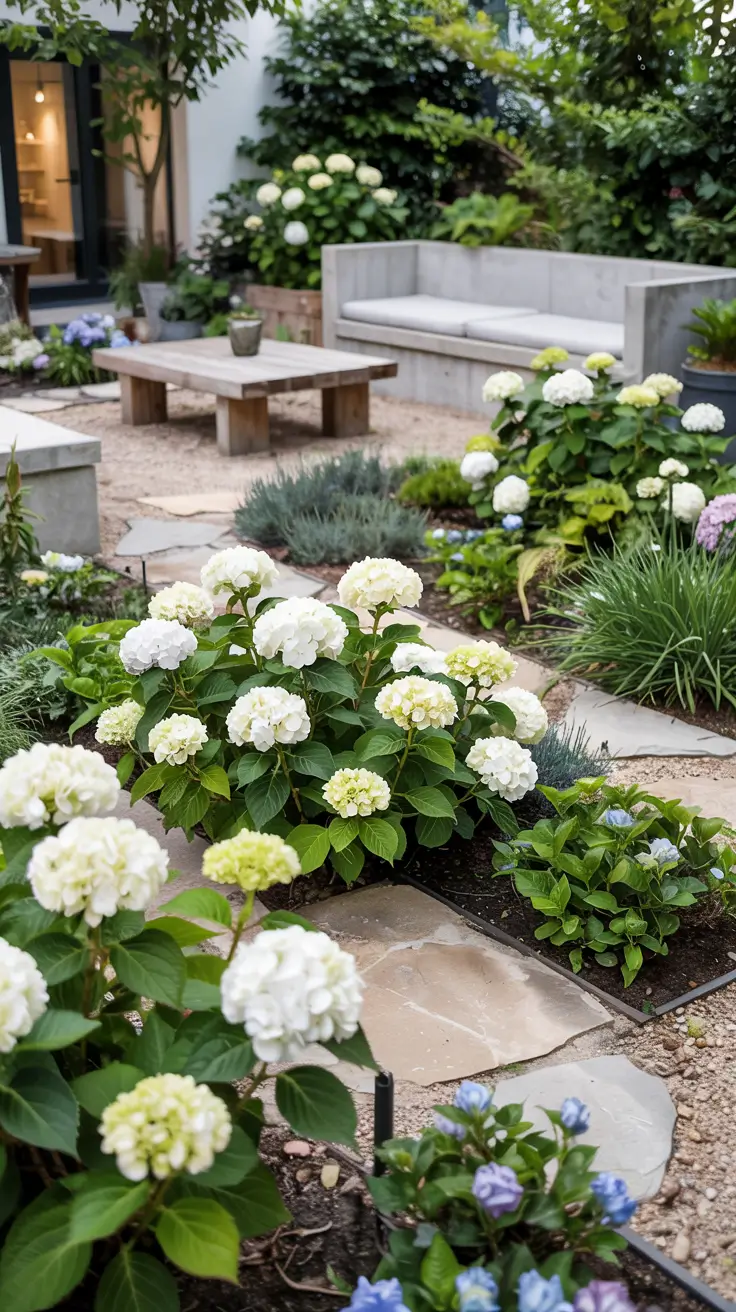
I usually combine white hydrangeas with neutral hardscaping materials such as light stone, gravel, or pale wood decking. Clean lines, minimal edging, and simple outdoor seating help maintain a modern aesthetic while allowing the hydrangeas to remain the focal point. I also like to incorporate subtle greenery, such as ornamental grasses or low shrubs, to soften the overall look without overpowering the white blooms.
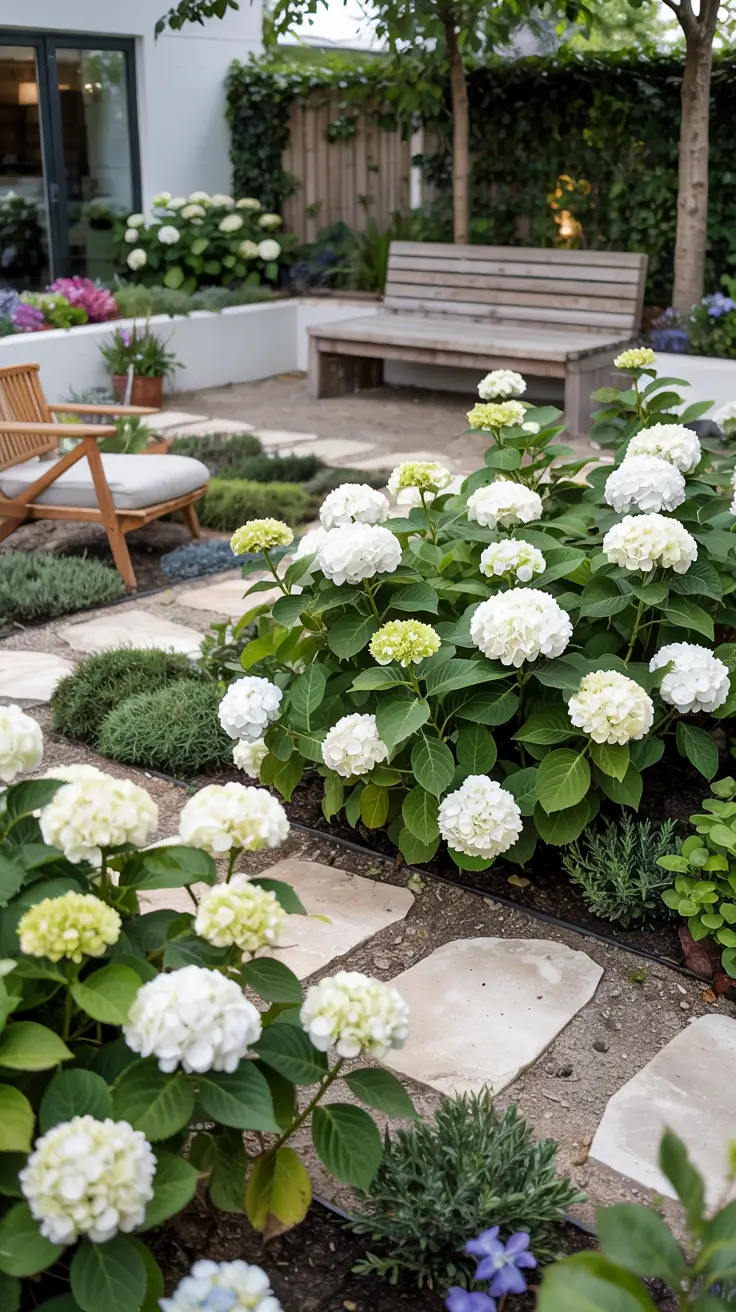
Personally, I find that white hydrangeas create a sense of order and elegance that is hard to achieve with more colorful plant palettes. Designers often highlight the importance of restraint in modern landscaping, and this is a perfect example where less truly becomes more.
To complete this concept, I would include a focal feature such as a minimalist bench or a water element to anchor the space and enhance the serene atmosphere.
Paniculata Hydrangea Landscaping Ideas for Structured Garden Layouts
Hydrangea paniculata garden design is ideal when I want to introduce structure and vertical rhythm into a landscape. These hydrangeas have a more upright growth habit, which makes them perfect for defining pathways, framing entrances, or creating natural borders within a garden design hydrangea layout. Their seasonal color transitions also add dynamic interest throughout the year.
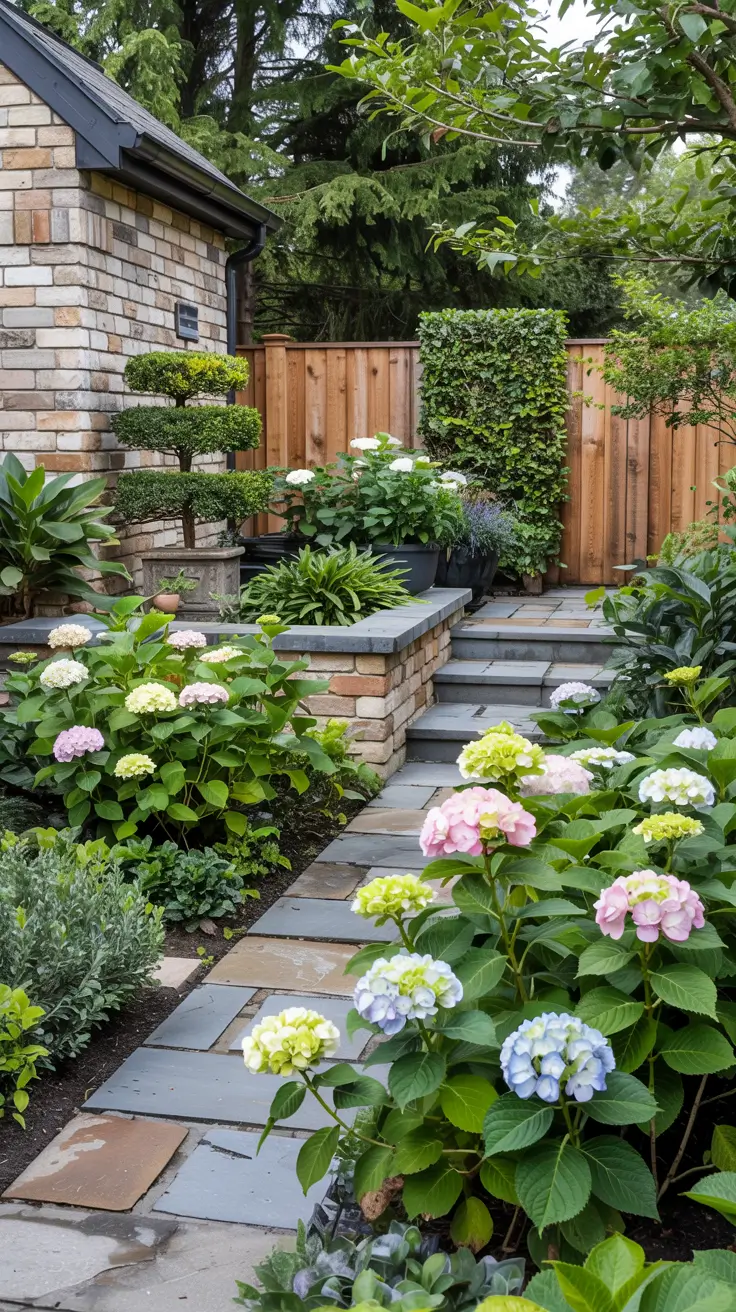
In my designs, I often plant paniculata hydrangeas in rows or clusters to create a sense of order. I pair them with structured elements like stone pathways, trimmed hedges, or wooden fences to reinforce the geometry of the space. This approach works especially well in front yard garden design hydrangea projects where a clean, organized appearance is essential.
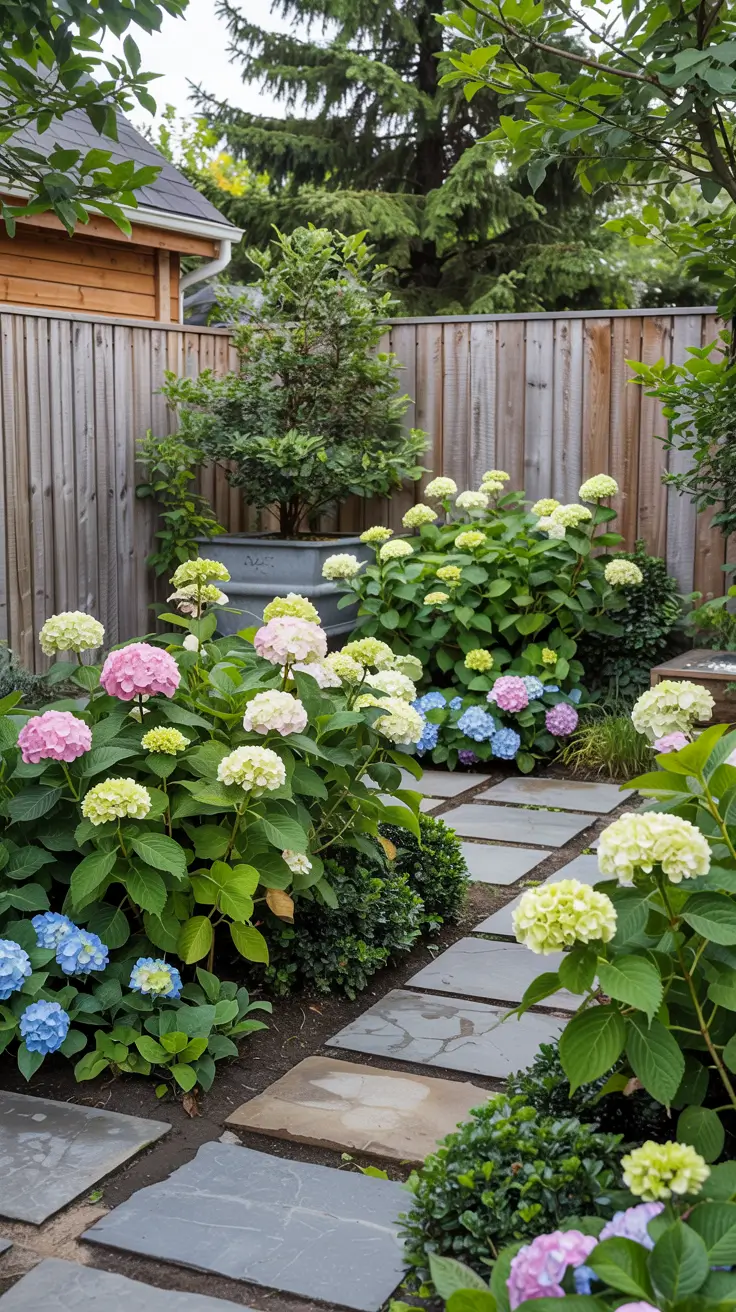
From my perspective, paniculata hydrangeas are one of the most versatile choices for landscaping. Many professionals recommend them for their durability and adaptability, and I have found them particularly effective in climates with varying conditions.
What could further improve this section is the addition of seasonal companion plants that extend visual interest beyond the hydrangea blooming period.
Hydrangea Garden Design for Front Yards – Elegant and Functional Layouts
When I approach garden design hydrangea front yards, I focus on balancing curb appeal with functionality. Hydrangeas are perfect for front yards because they create a welcoming, polished look while remaining relatively easy to maintain. I often use them to frame walkways, highlight entry points, or soften the edges of a house facade.
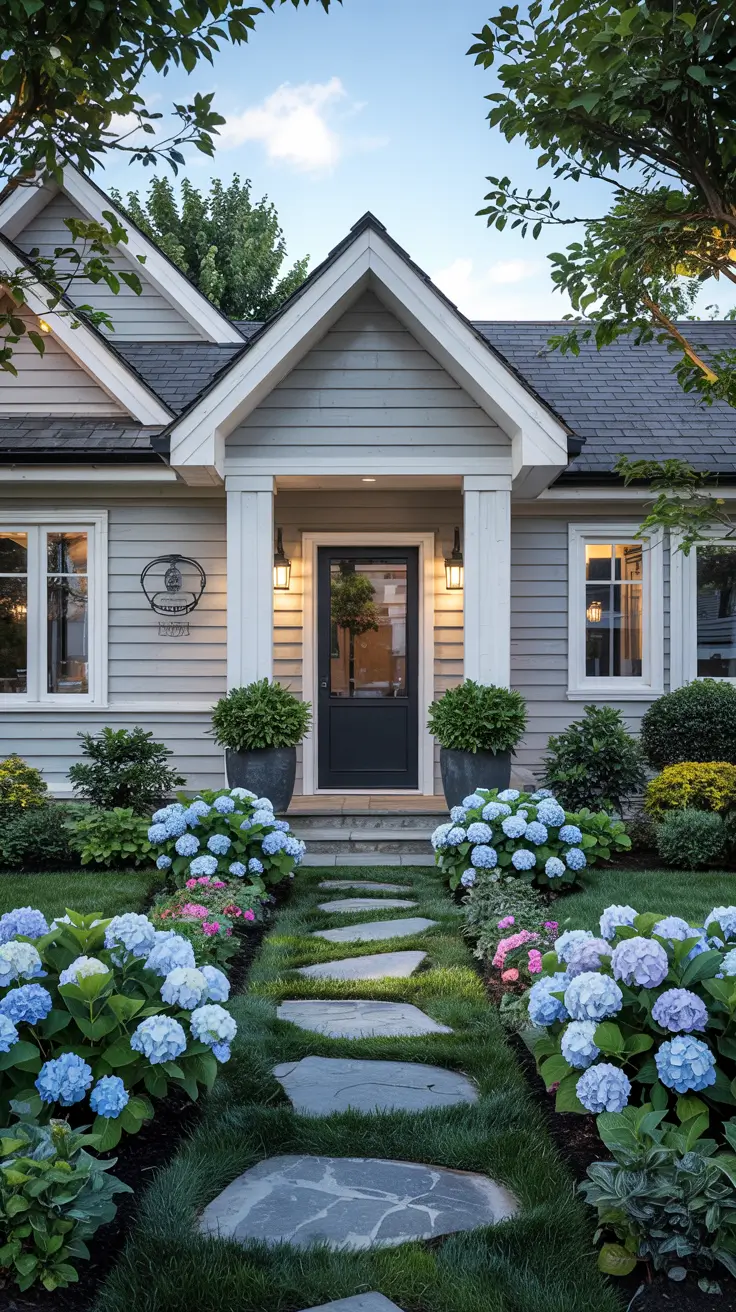
I typically combine hydrangeas with structured elements such as stone borders, symmetrical planting layouts, and clean lawn edges. Adding a pathway with natural stone or concrete pavers enhances both usability and visual appeal. Lighting is also essential, as it highlights the hydrangeas in the evening and improves safety.
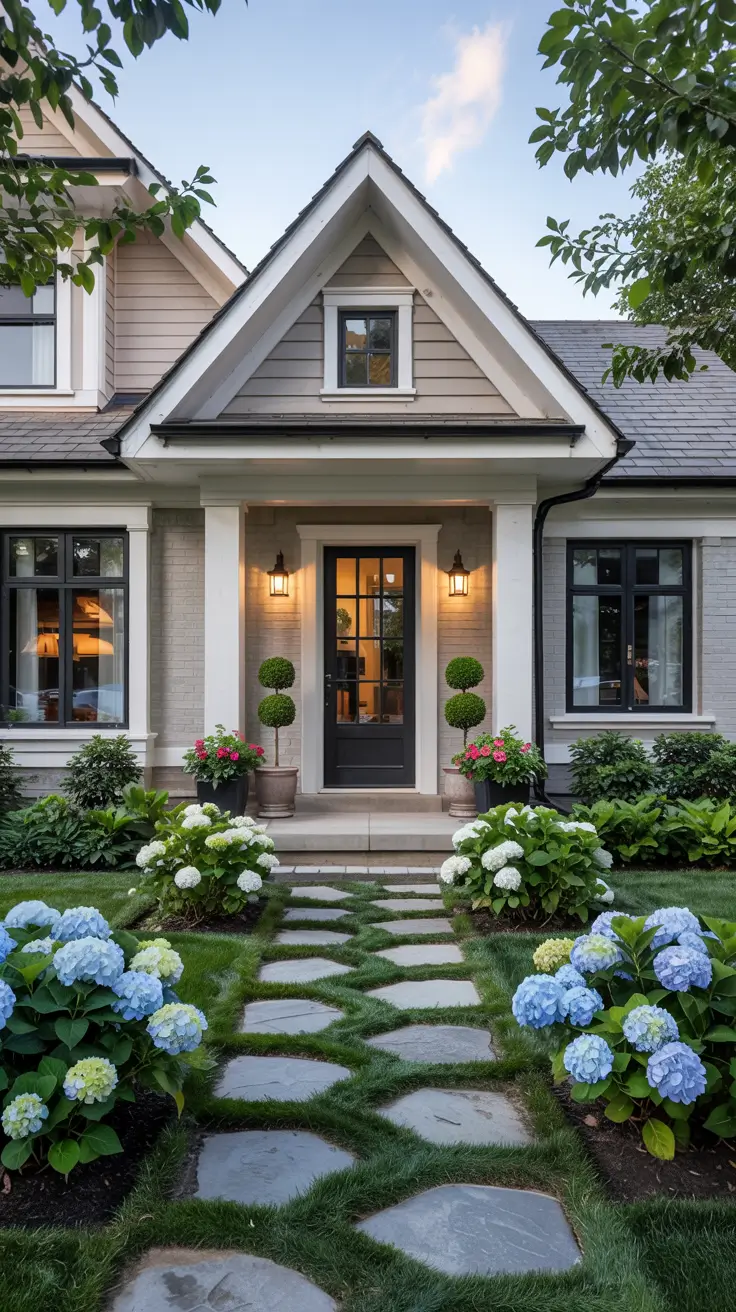
In my experience, a well-designed front yard using hydrangeas significantly increases the perceived value of a home. Many landscaping experts emphasize first impressions, and I have seen how impactful a cohesive front yard design can be.
To refine this concept, I would incorporate seasonal accents such as planters or decorative elements near the entrance to keep the design dynamic throughout the year.
Modern Hydrangea Garden Ideas with Stone, Wood, and Neutral Tones
Modern garden design hydrangea concepts often rely on a balance between natural materials and clean architectural lines. I like to use hydrangeas as a soft contrast against harder materials like stone walls, wooden decking, and concrete surfaces. This creates a harmonious blend of organic and structured elements.
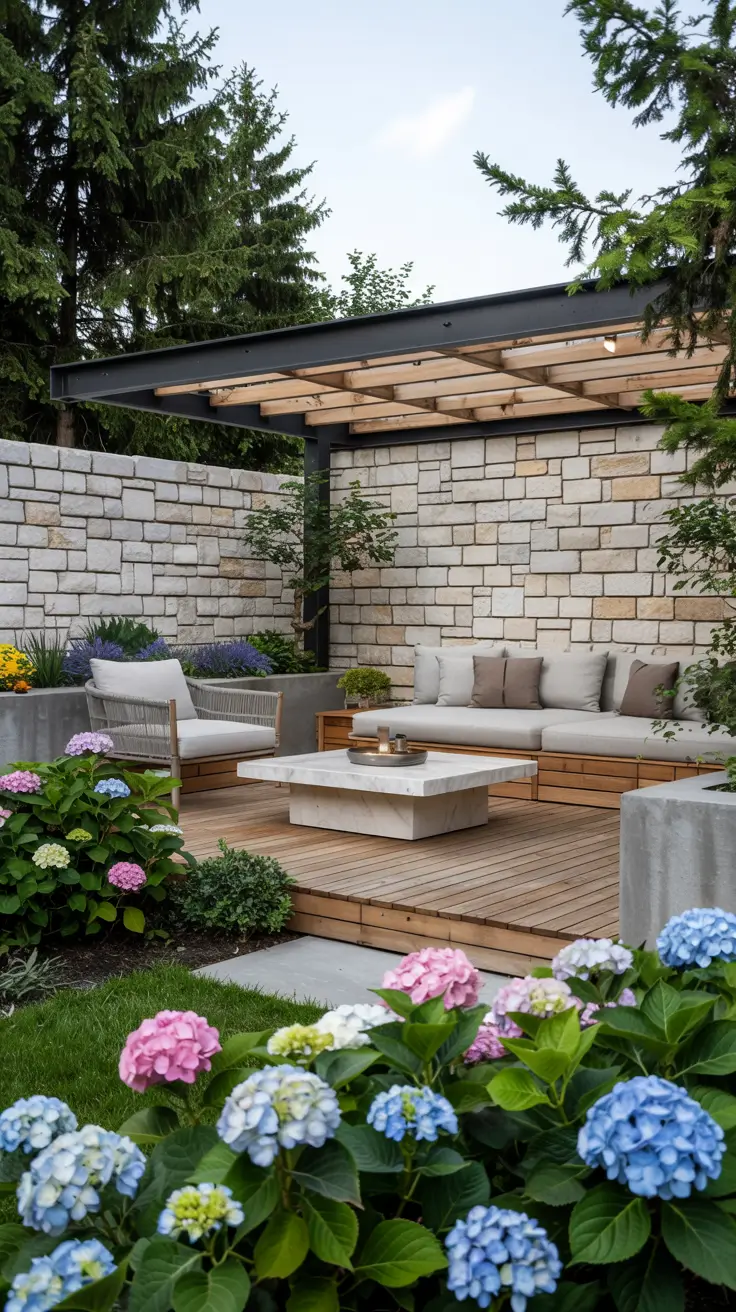
In these designs, I carefully select materials such as light wood, textured stone, and neutral-toned outdoor furniture. Hydrangeas are placed strategically to soften edges and add movement to the space. I also incorporate simple seating areas, planters, and subtle lighting to enhance usability without cluttering the design.
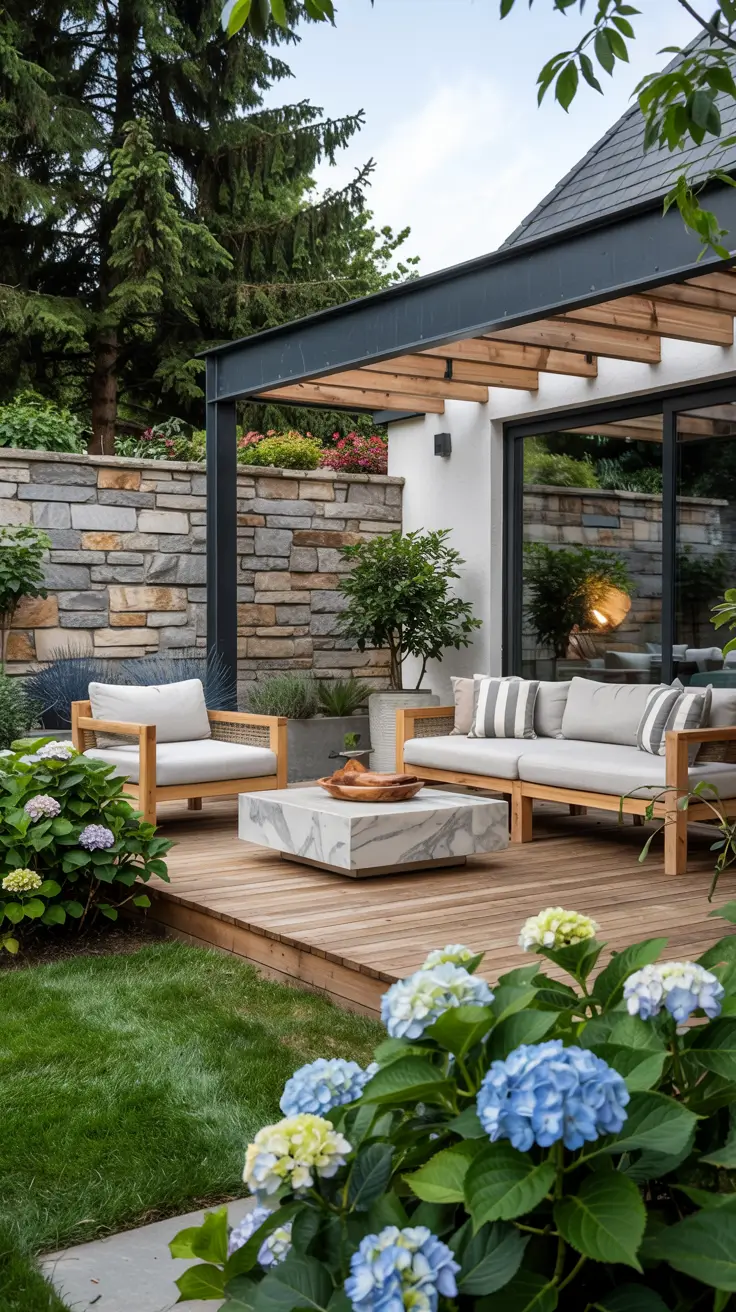
From my point of view, this style reflects the direction of 2026 landscaping trends, where simplicity and natural materials dominate. Designers often highlight the importance of cohesion between architecture and landscape, and hydrangeas play a key role in achieving this balance.
To elevate this section, I would add a fire pit or a minimalist outdoor lounge area to increase functionality and create a focal point.
Cottage Style Hydrangea Landscaping for a Cozy and Lush Garden Feel
Cottage garden design hydrangea layouts are all about abundance and softness. I use hydrangeas as anchor plants and surround them with a mix of perennials, climbing plants, and informal pathways. This creates a relaxed and inviting atmosphere that feels both natural and curated.
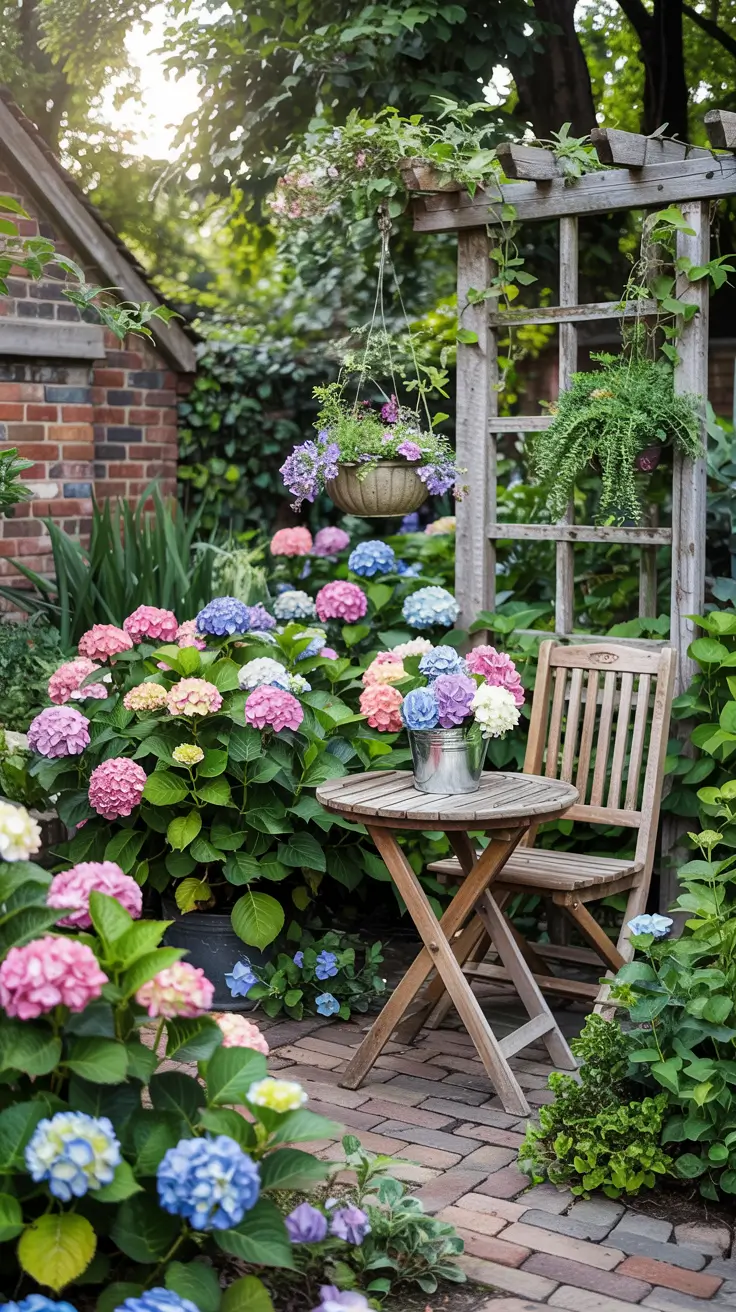
I typically combine hydrangeas with materials like weathered wood, brick paths, and vintage-style garden furniture. Layering is key in this style, so I include a variety of plant heights and textures to create depth. The result is a lush, slightly wild garden that still feels intentional.
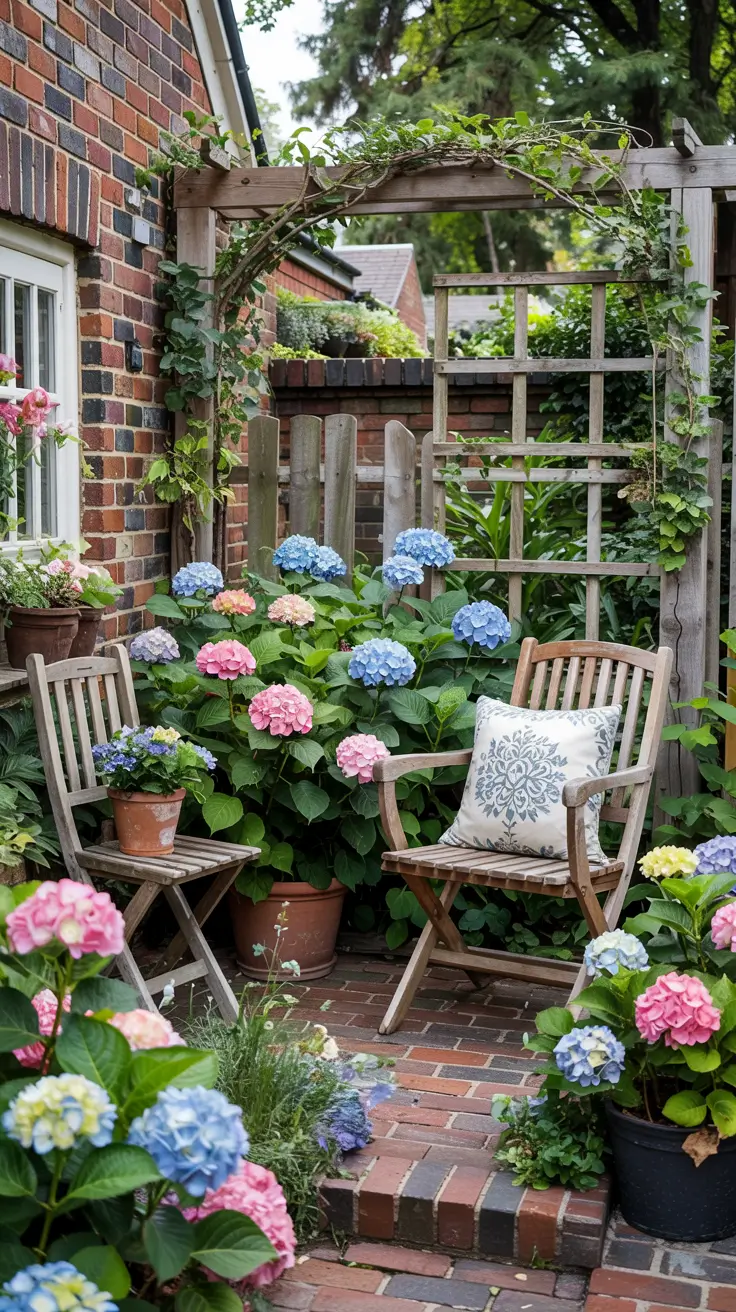
Personally, I enjoy designing cottage gardens because they allow for more creativity and flexibility. Many designers emphasize the emotional impact of such spaces, and I have found that clients often feel more connected to these softer, more personal environments.
To enhance this section, I would include vertical elements such as trellises or arches to add height and support climbing plants.
Hydrangea Garden Design 2026 Trends – Natural Textures, Layers, and Soft Color Palettes
In 2026, hydrangea garden design landscaping is moving toward more natural and layered compositions. I focus on combining hydrangeas with grasses, shrubs, and subtle hardscaping to create a seamless flow between different elements of the garden. This approach works across various styles, from modern to cottage.
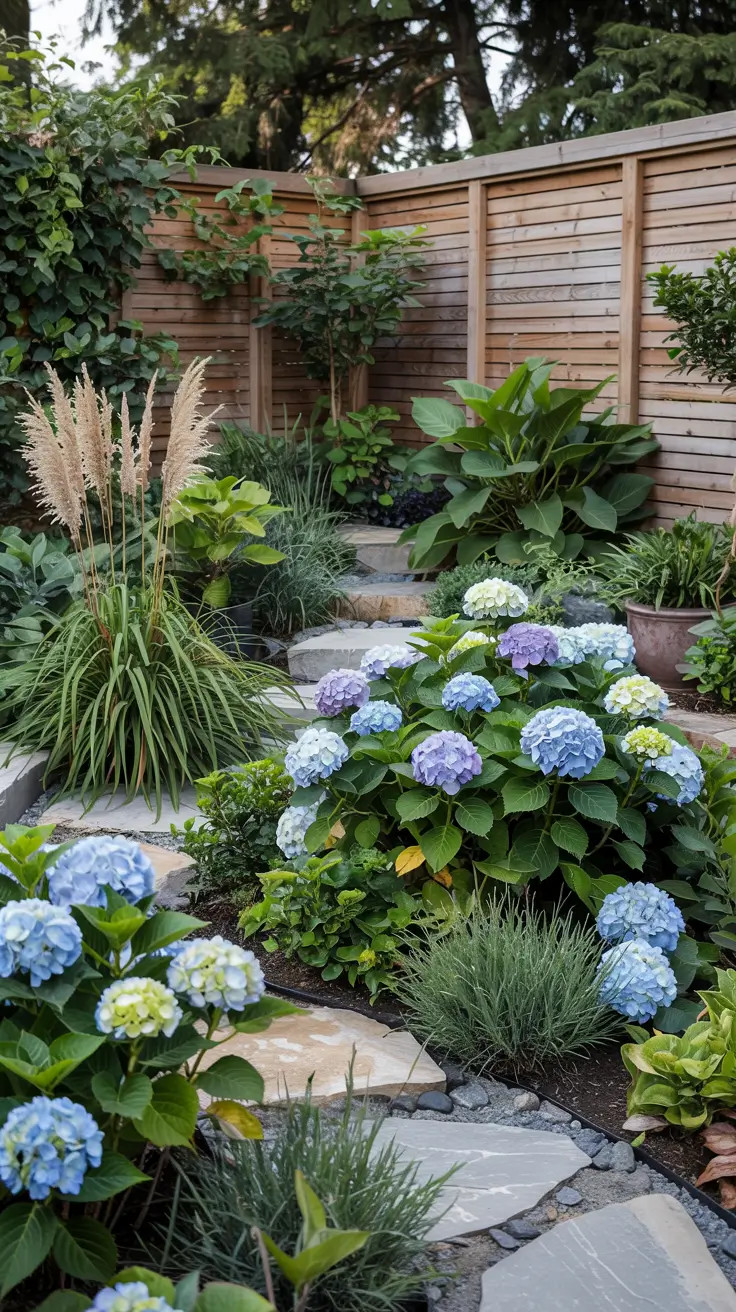
I design these spaces by carefully layering plants based on height, color, and bloom time. Soft color palettes, including whites, greens, and muted pastels, dominate the design. Natural materials such as stone, wood, and gravel further enhance the organic feel of the space.
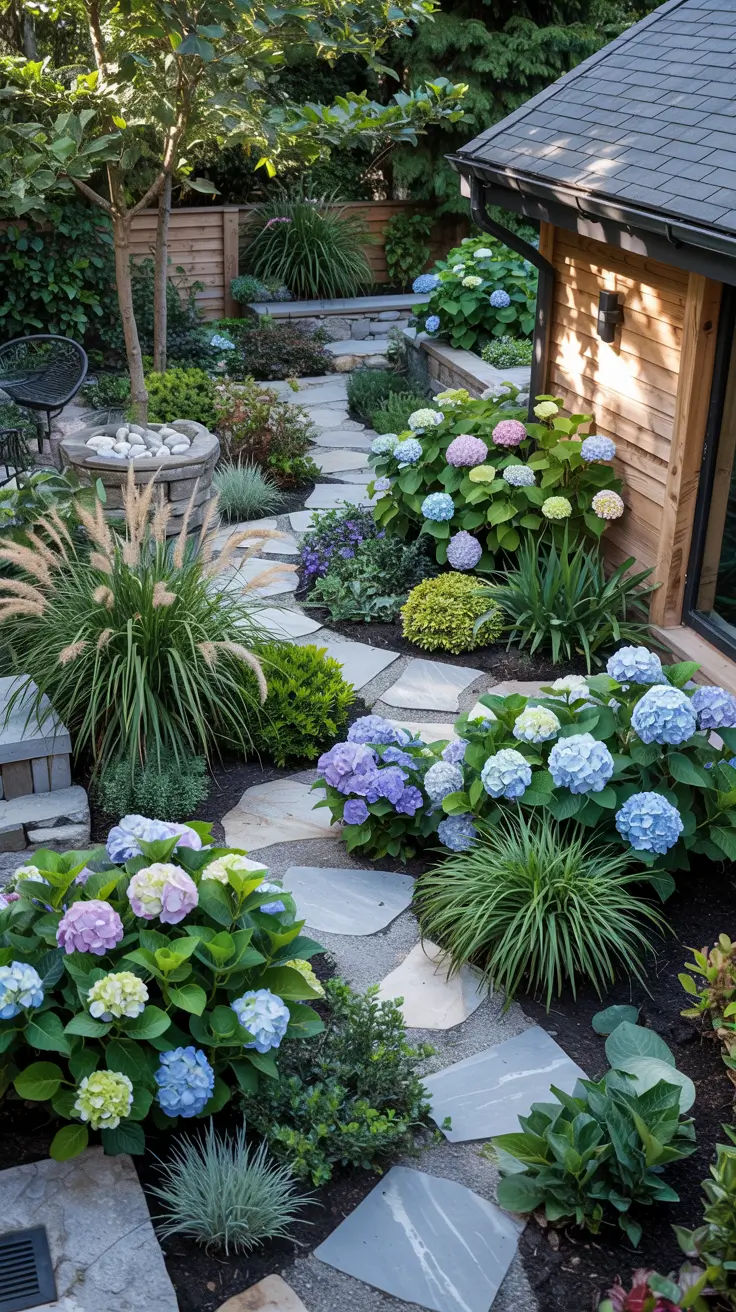
From my experience, this trend reflects a broader shift toward sustainable and low-maintenance landscaping. Many experts highlight the importance of creating gardens that are both beautiful and practical, and this approach achieves both.
To complete this concept, I would integrate eco-friendly features such as rainwater collection systems or native plant additions to support sustainability.