Indoor outdoor living room ideas are redefining how we live, relax, and entertain in 2026. From indoor outdoor living room and kitchen layouts to modern sliding doors that open entire walls, the indoor-outdoor living room design has become the heart of contemporary homes. How do you create a space that feels open yet comfortable, modern yet timeless, and practical for daily life? In this article, I explore how the indoor outdoor living room is evolving, what design decisions matter most, and how to plan spaces that genuinely connect interior and exterior living.
Indoor – Outdoor Living Room 2026 as the Heart of Modern Living
I see the indoor outdoor living room in 2026 as the central zone where daily life unfolds, rather than a secondary entertaining space. The design focuses on visual continuity, natural light, and flexibility, allowing the living room to function equally well as a quiet retreat or a social hub. By removing rigid boundaries between inside and outside, the room becomes larger, brighter, and more adaptable to different seasons and lifestyles.
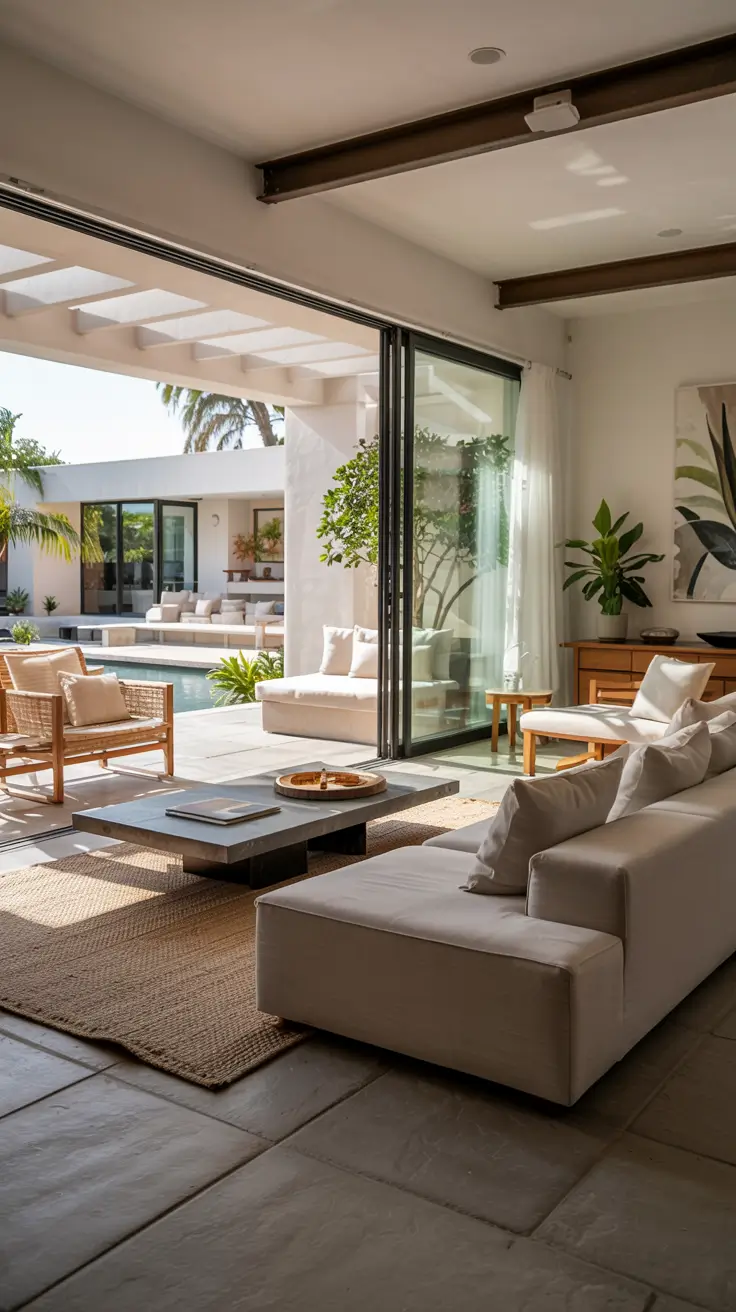
From my experience, this space works best when furniture and layout are planned holistically. A low-profile sofa, modular seating, and a central rug help define the indoor area, while outdoor lounge chairs and a deck extension mirror the same proportions and materials. Flooring that flows from interior to patio or deck reinforces the sense of one unified room rather than two separate zones.
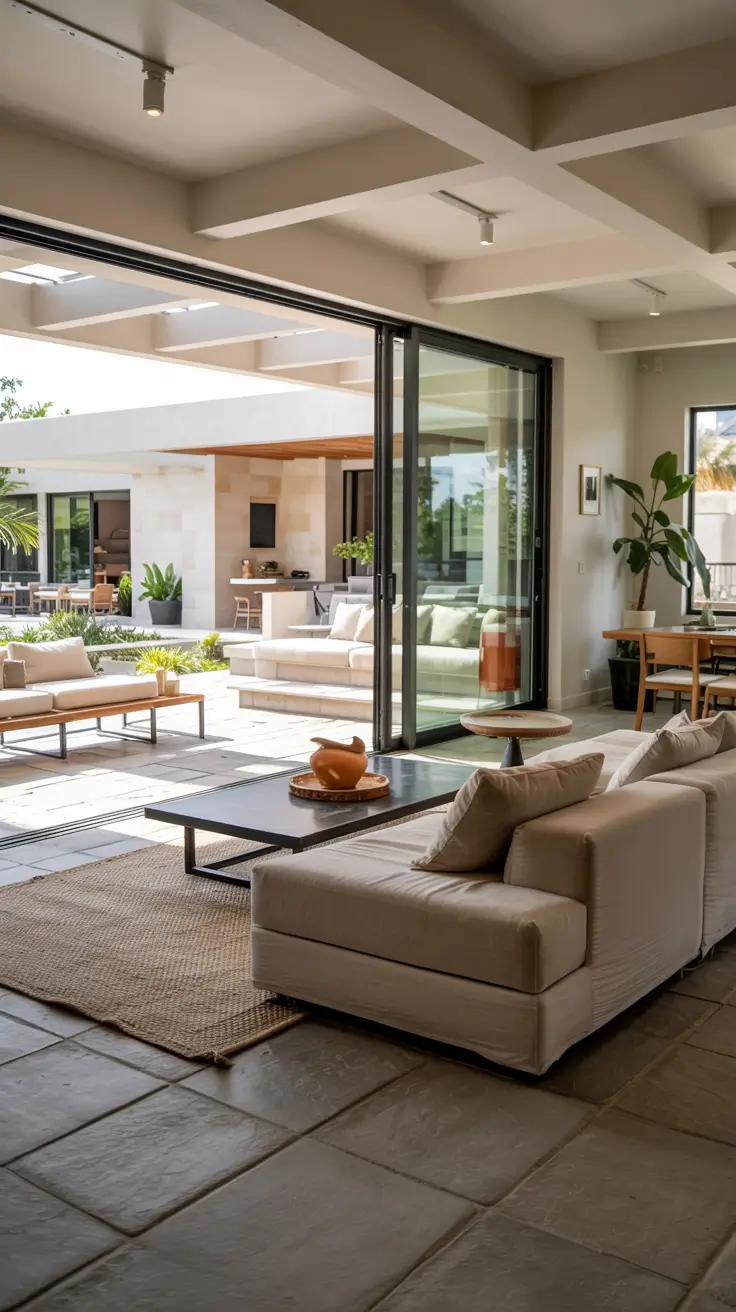
In my professional view, designers in Australia and the US increasingly emphasize this approach because it supports modern living patterns. Well-known publications like Architectural Digest often highlight how central living zones improve daily comfort and property value. I agree with this perspective because a well-designed indoor/outdoor living room becomes the emotional core of the home.
What I would add to this section is greater attention to climate adaptability, such as adjustable shading systems, ceiling fans, and weather-resistant finishes that ensure the space remains usable throughout the year.
Indoor Outdoor Living Room Ideas Shaping Homes in 2026
When developing indoor outdoor living room ideas for 2026, I focus on adaptability and layered design rather than fixed concepts. These spaces are no longer just about opening doors; they are about creating zones that shift easily between relaxation, work, and entertainment. The most successful ideas integrate nature, technology, and comfort without overwhelming the layout.
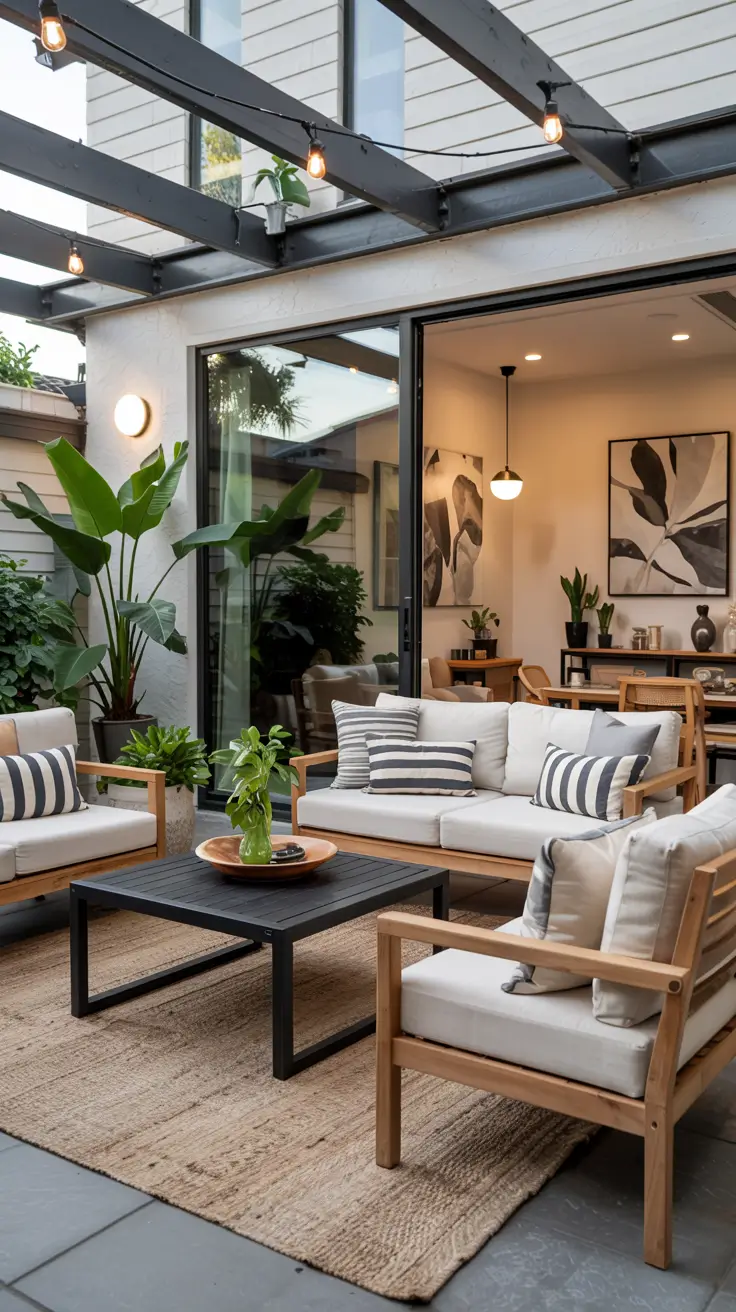
In practice, I recommend combining comfortable indoor seating with outdoor-grade furniture that visually matches it. Stone or wood coffee tables, built-in benches, and flexible side tables allow easy reconfiguration. Decorative elements like planters, soft lighting, and outdoor rugs help blur the line between interior decor and exterior decor ideas.
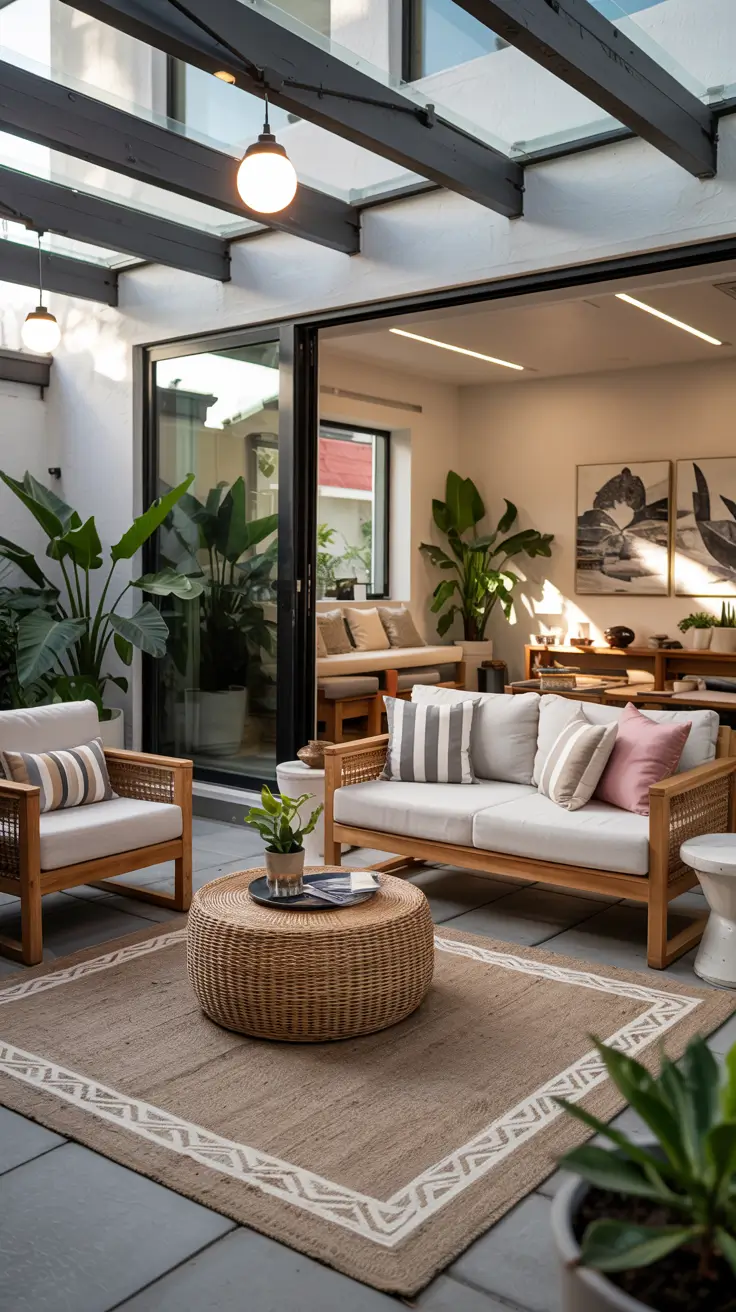
Personally, I have seen that homeowners respond best to ideas that feel realistic rather than overly styled. Advice from designers featured in Elle Decor often stresses livability over trends, and I fully support that. An indoor outdoor living room should feel effortless, not staged.
What may be missing here is a clearer focus on small house solutions, where compact layouts and multifunctional furniture are essential to achieving the same sense of openness.
Indoor Outdoor Living Room Design for Seamless Transitions
Indoor-outdoor living room design in 2026 prioritizes seamless transitions that feel intuitive rather than forced. I approach these designs by aligning ceiling heights, floor levels, and sightlines so that moving from inside to outside feels natural. This design strategy enhances both usability and visual harmony.
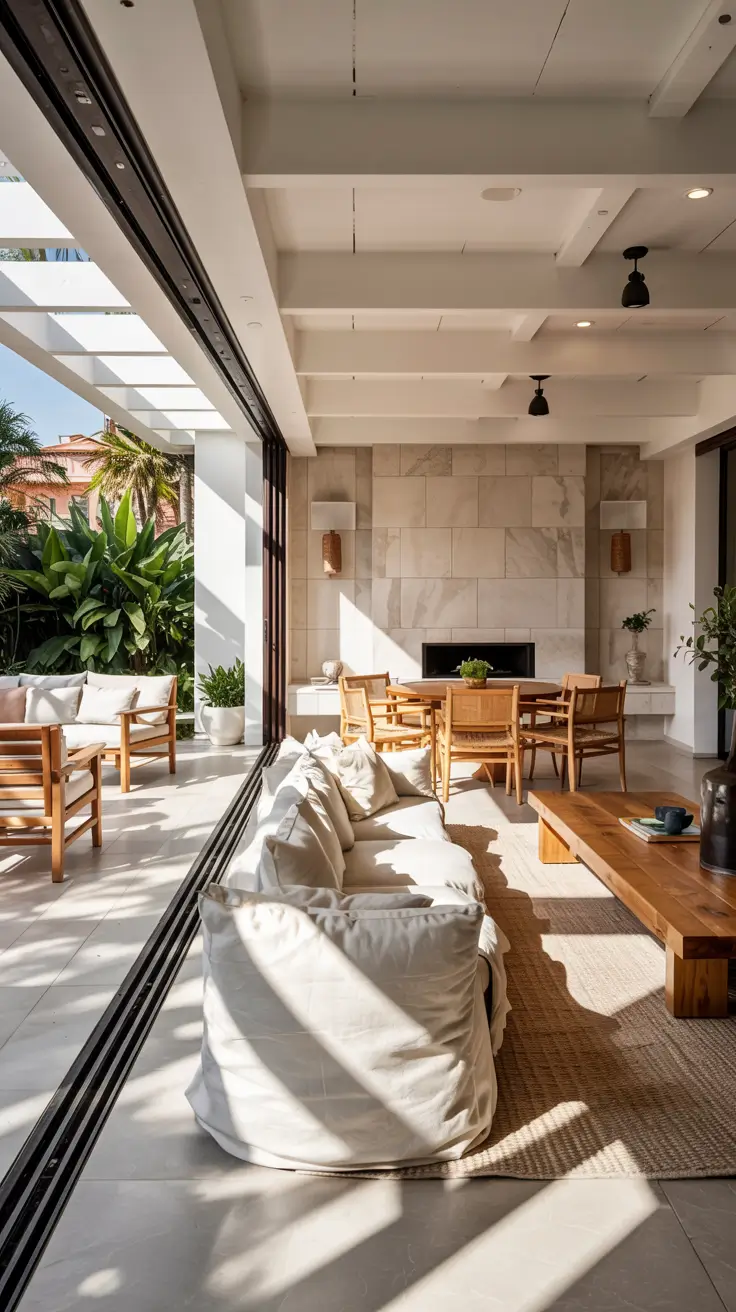
Key design elements include consistent flooring materials, recessed tracks for sliding doors, and concealed drainage systems. I often specify neutral color palettes that work both indoors and outdoors, allowing furniture and decor to bridge the two environments without visual disruption.
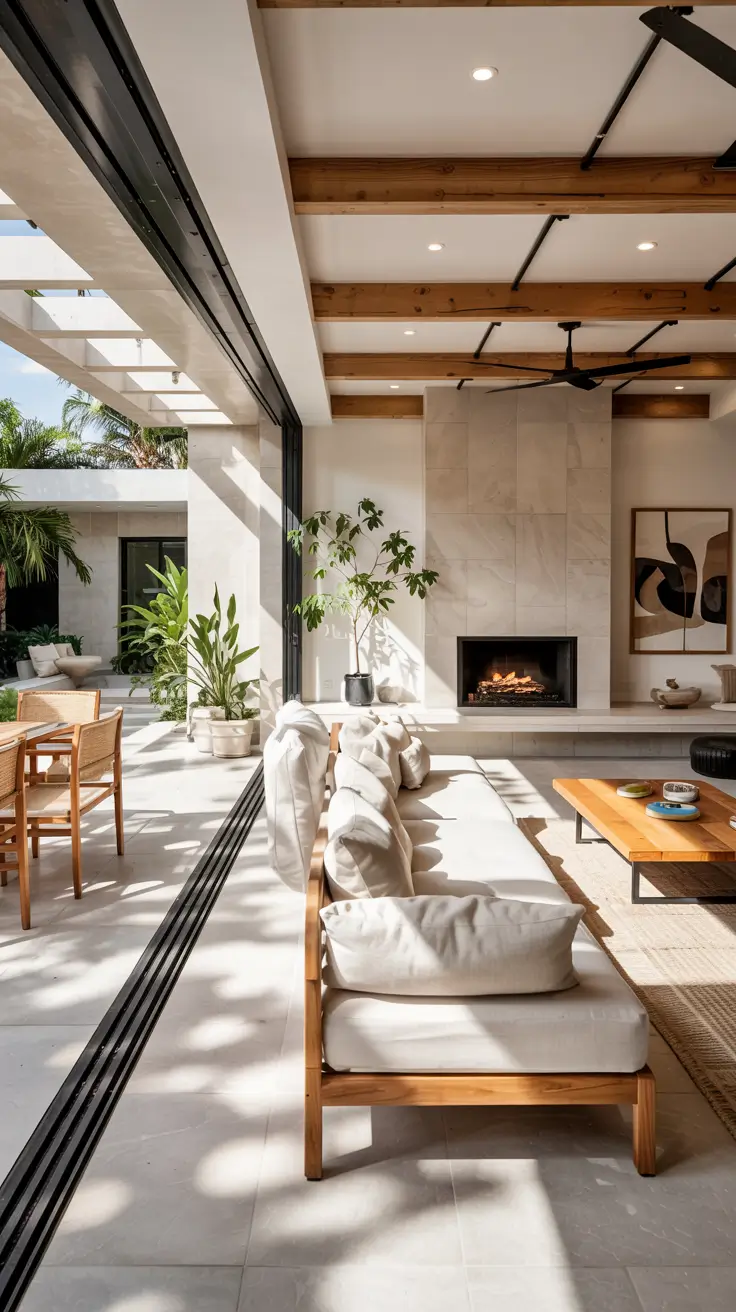
From my own work, I have learned that seamless design is less about expensive materials and more about thoughtful planning. Designers frequently quoted in Dwell magazine emphasize that continuity creates calm, and I find that to be absolutely true in practice.
To strengthen this section, I would include more guidance on lighting transitions, especially how to balance natural daylight with evening ambient lighting across both zones.
Sliding Doors That Define the Indoor Outdoor Living Room Experience
Indoor outdoor living room sliding doors are one of the most defining features of modern layouts. I see them not just as doors, but as architectural tools that shape how the space is used. In 2026, large-scale sliding doors allow entire walls to disappear, transforming the living room into an open patio or deck.
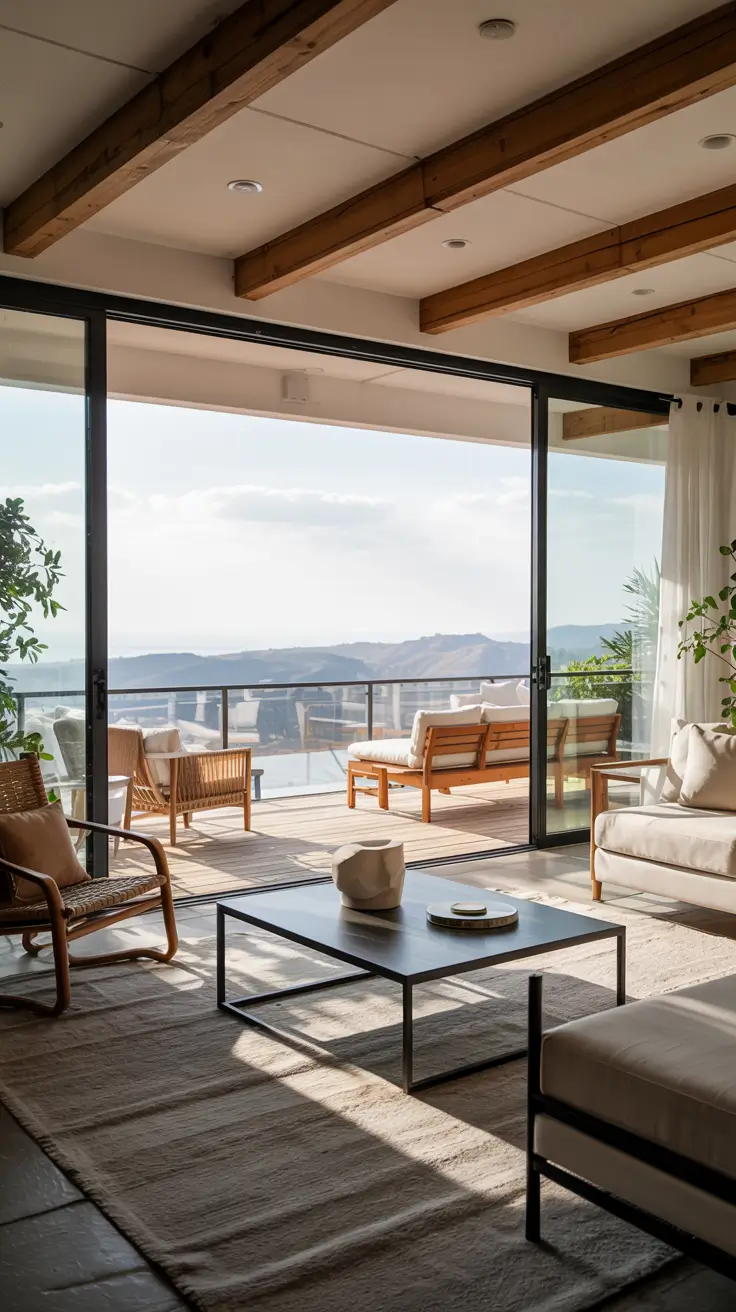
I typically recommend slim-frame aluminum or wood-framed sliding doors with high-performance glazing. These doors provide insulation, acoustic control, and unobstructed views. When paired with minimal thresholds, they make the indoor/outdoor living room accessible and visually continuous.
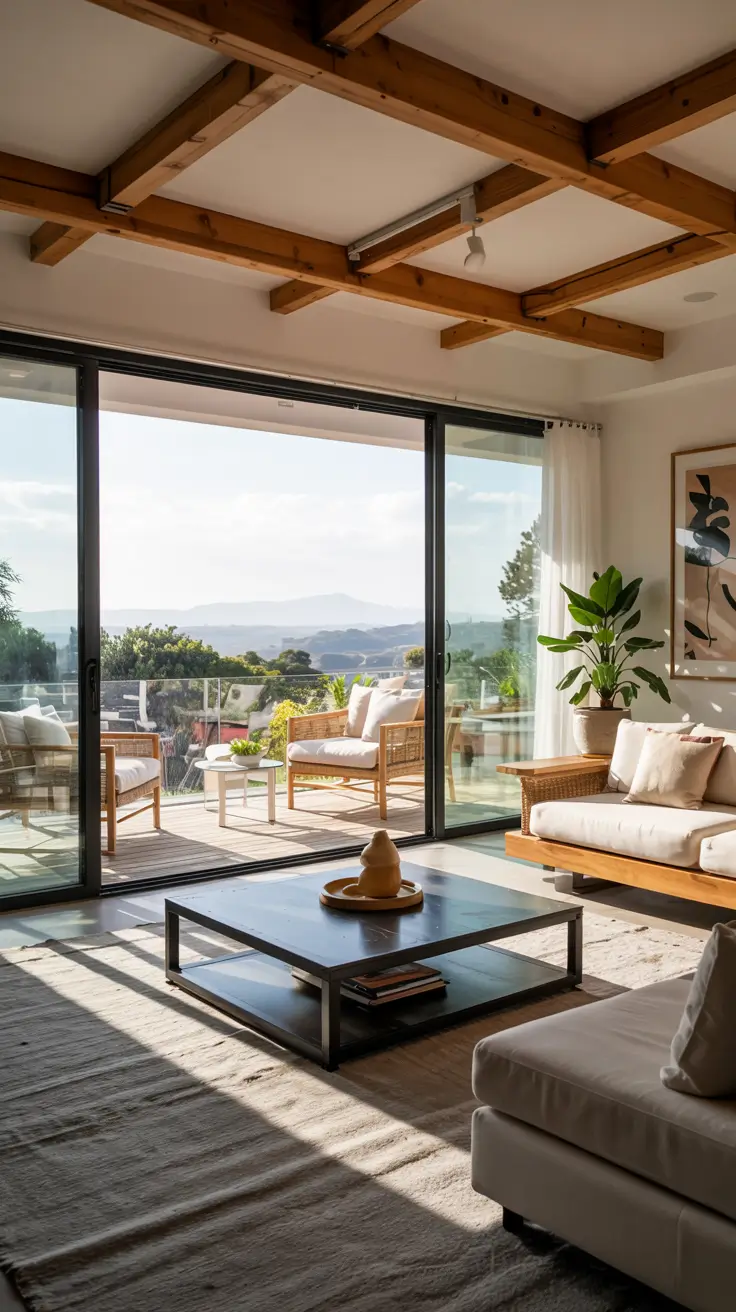
In my opinion, sliding doors dramatically change how people interact with their homes. Well-known architects in the US often point out that flexibility is the new luxury, and I agree. Being able to open or close your living room depending on mood or weather is a powerful design advantage.
What I would add here is a deeper discussion of privacy solutions, such as integrated screens or sheer curtains, which are often overlooked in open layouts.
Indoor Outdoor Living Room and Kitchen as One Unified Space
The indoor outdoor living room and kitchen combination is one of the strongest design moves of 2026. I design these spaces as a single social zone where cooking, dining, and relaxing happen together. This approach supports modern lifestyles where formal separation feels outdated.
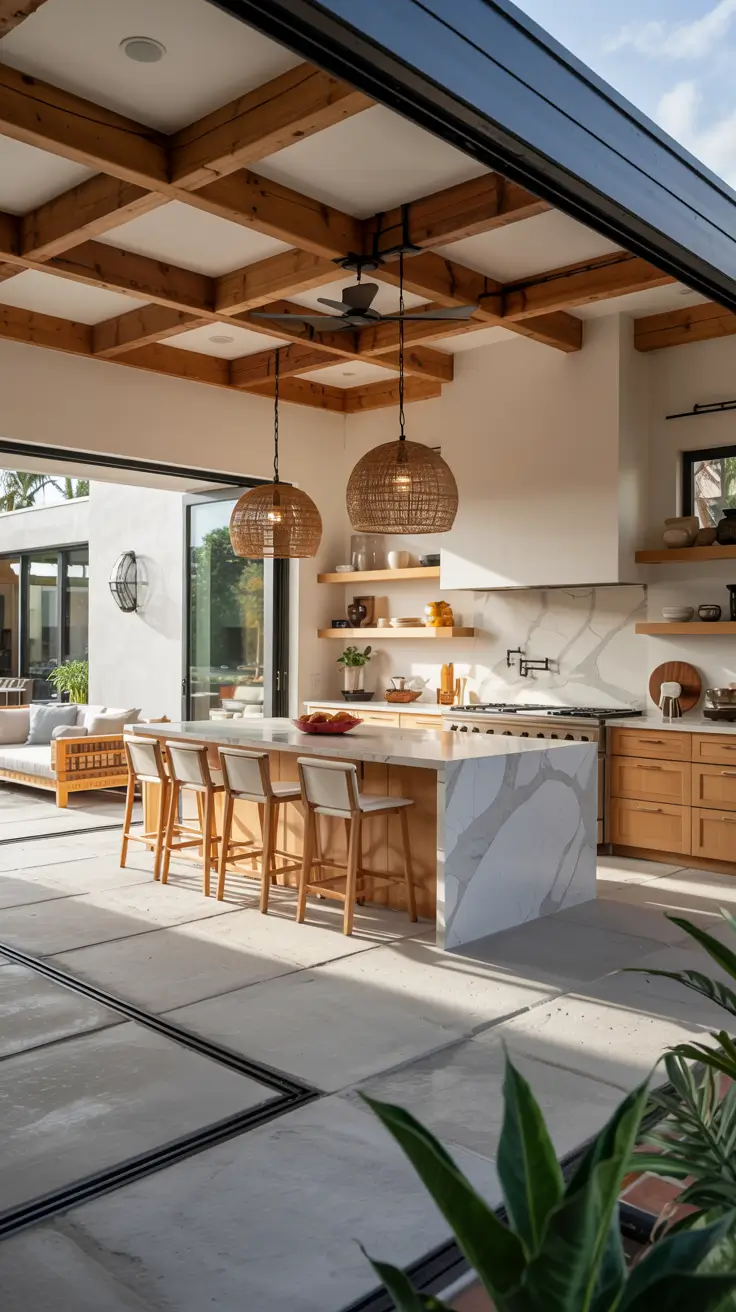
In terms of layout, I favor kitchen islands that face the living area and extend visually toward the outdoor patio. Durable countertops, outdoor-rated appliances, and cohesive cabinetry finishes ensure the kitchen ideas feel integrated rather than isolated. Furniture choices like bar stools and dining benches should be equally comfortable indoors and outdoors.
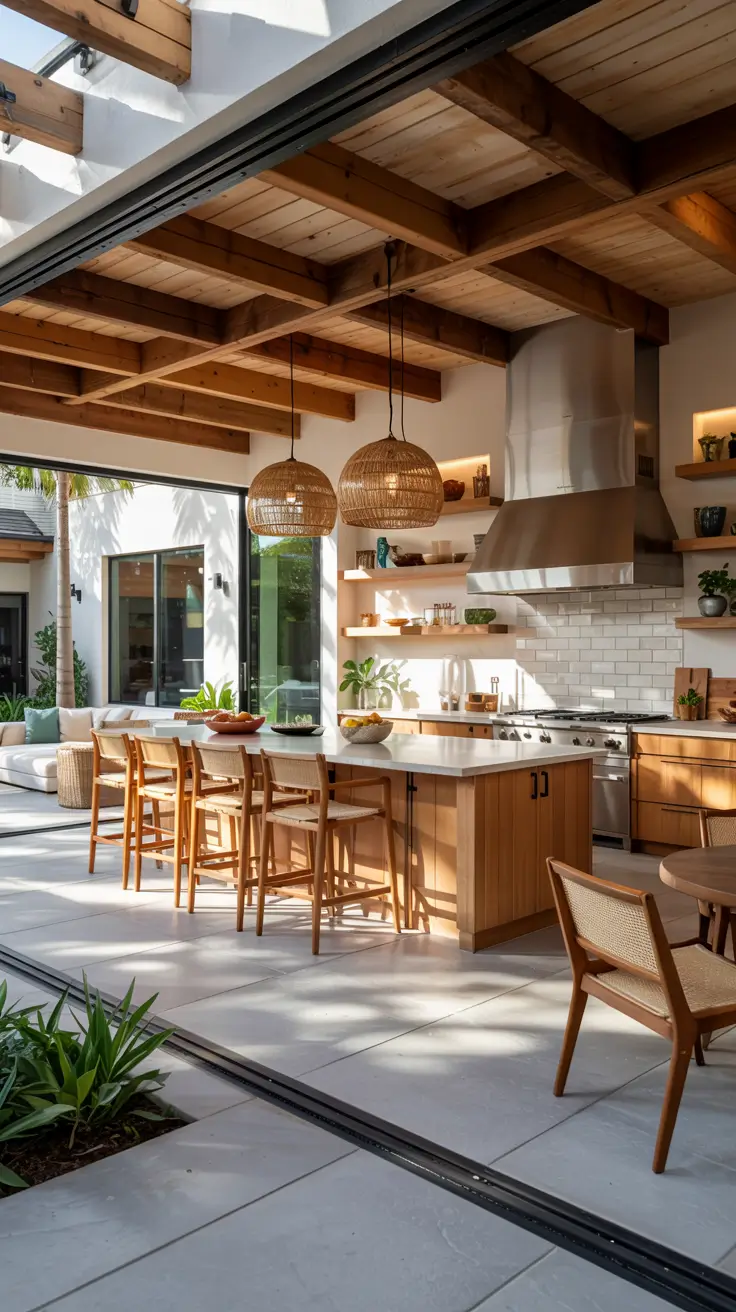
Based on my experience, this unified approach improves daily functionality and social interaction. Media outlets like House Beautiful often highlight open kitchen and living spaces as a key trend, and I find that clients appreciate the practicality as much as the aesthetics.
To complete this section, I would suggest adding more information about ventilation and odor control, which are critical when kitchens and living rooms merge.
Modern Indoor Outdoor Living Room Concepts for Contemporary Homes
Modern indoor outdoor living room concepts in 2026 emphasize simplicity, clean lines, and purposeful design. I approach these spaces with restraint, focusing on quality materials and thoughtful proportions rather than decorative excess. The goal is to create a calm, cohesive environment that feels timeless.
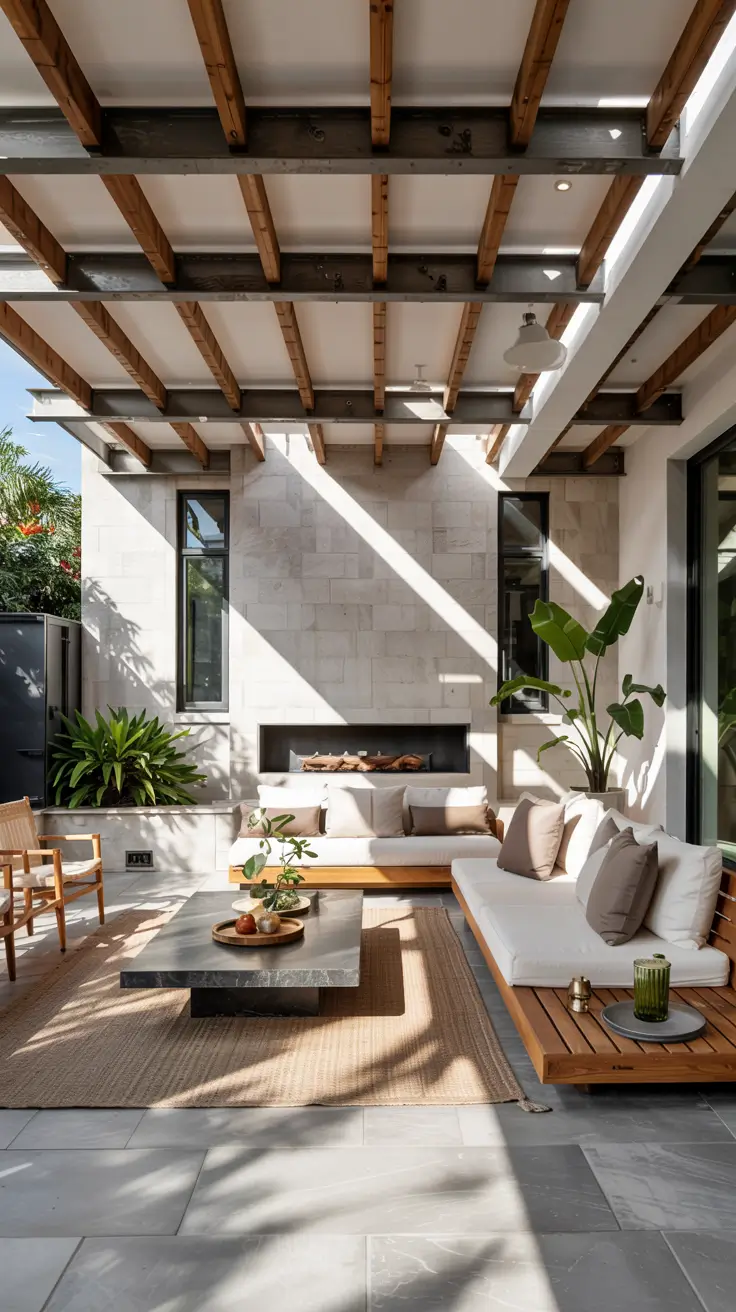
Furniture plays a central role in achieving this look. I often select low-profile sofas, sculptural lounge chairs, and integrated storage that maintains visual order. Materials like concrete, natural wood, and textured fabrics add depth without clutter, while subtle decor reinforces the modern aesthetic.
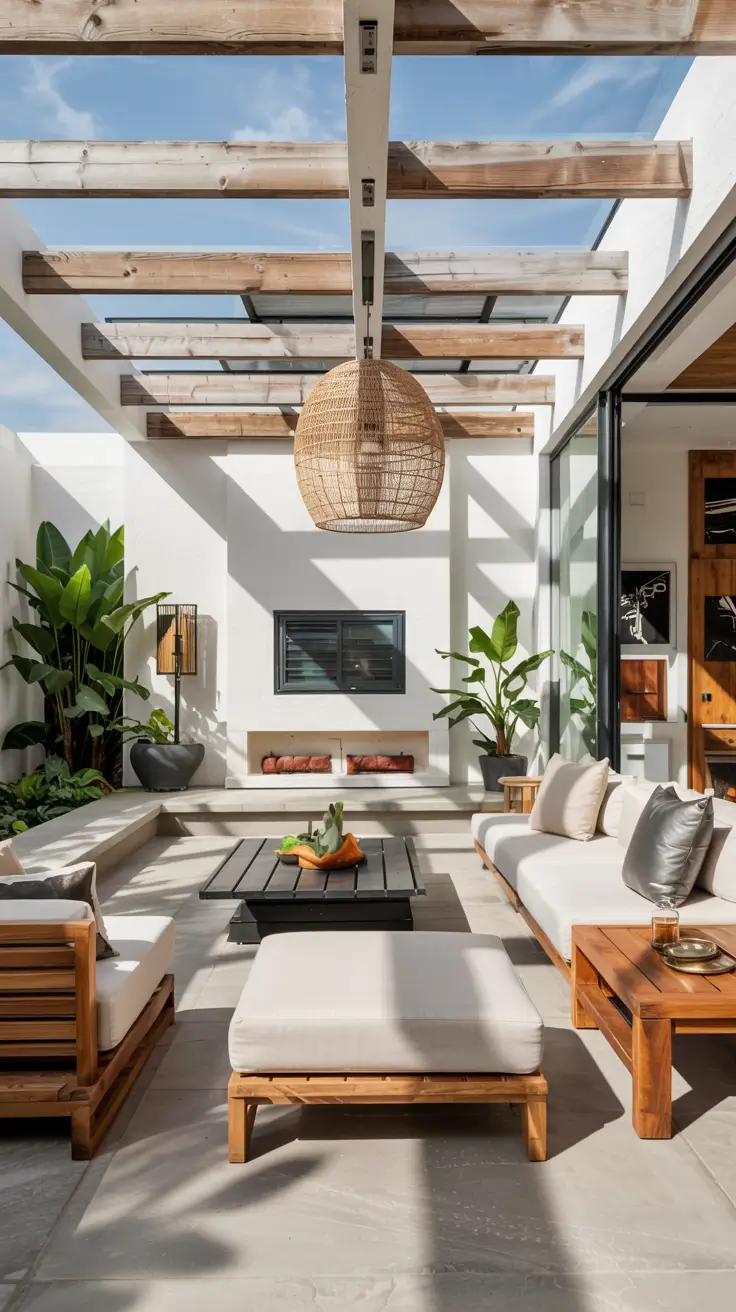
In my professional opinion, modern design works best when it supports real life. Designers frequently cited in The New York Times design section emphasize comfort alongside minimalism, and I align strongly with that philosophy.
What could enhance this section is a closer look at smart home integration, such as automated lighting and climate controls that support indoor/outdoor living.
Indoor Outdoor Living Room Layouts That Enhance Flow and Comfort
Indoor outdoor living room layout is where all design decisions come together. I prioritize clear circulation paths, balanced furniture placement, and visual anchors that guide movement through the space. A well-planned layout ensures the room feels inviting rather than chaotic.
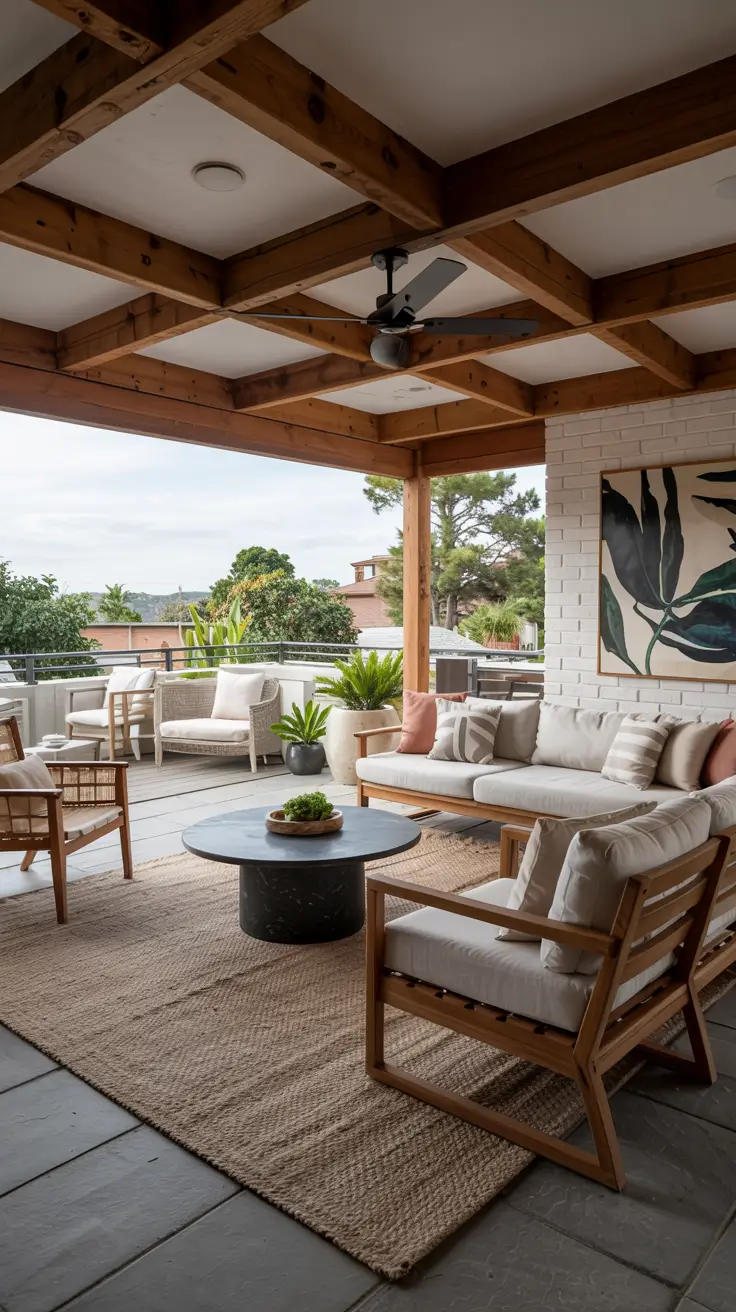
I recommend zoning the space with rugs, furniture groupings, and subtle changes in ceiling or lighting design. Seating should encourage conversation, while leaving enough open floor area to move easily between indoor and outdoor zones. This approach is especially important in an indoor outdoor living room apartment or small house.
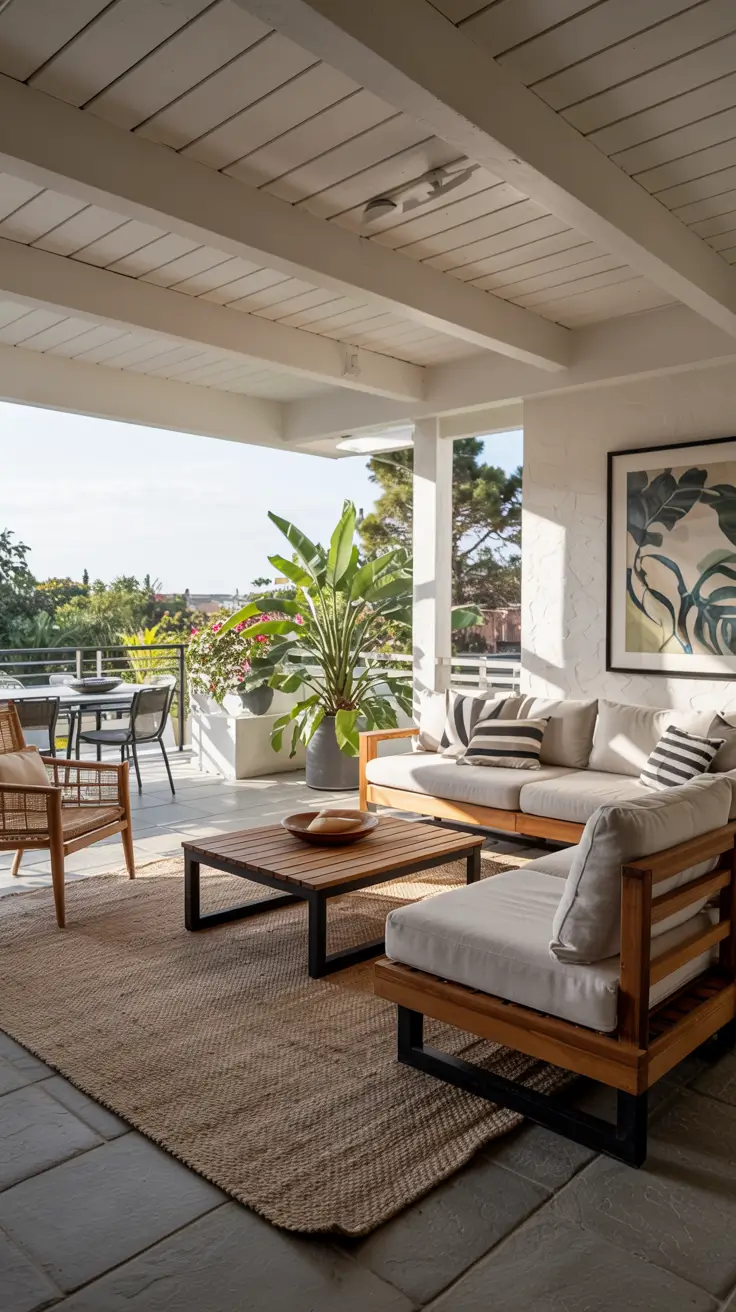
From my experience, comfort always comes from clarity. Designers often note that good layout is invisible when done right, and I find that to be true in every successful project I have worked on.
To improve this section, I would include more examples of adaptable layouts for balconies and decks, particularly in urban environments.
Indoor Outdoor Living Room Furniture for Style and All-Weather Use
When I plan indoor outdoor living room furniture for 2026, I focus on pieces that balance comfort, durability, and visual continuity. The furniture should feel inviting indoors while performing reliably outdoors, especially in spaces connected to a patio or deck. This approach ensures the room remains functional and attractive regardless of how often the doors are opened.
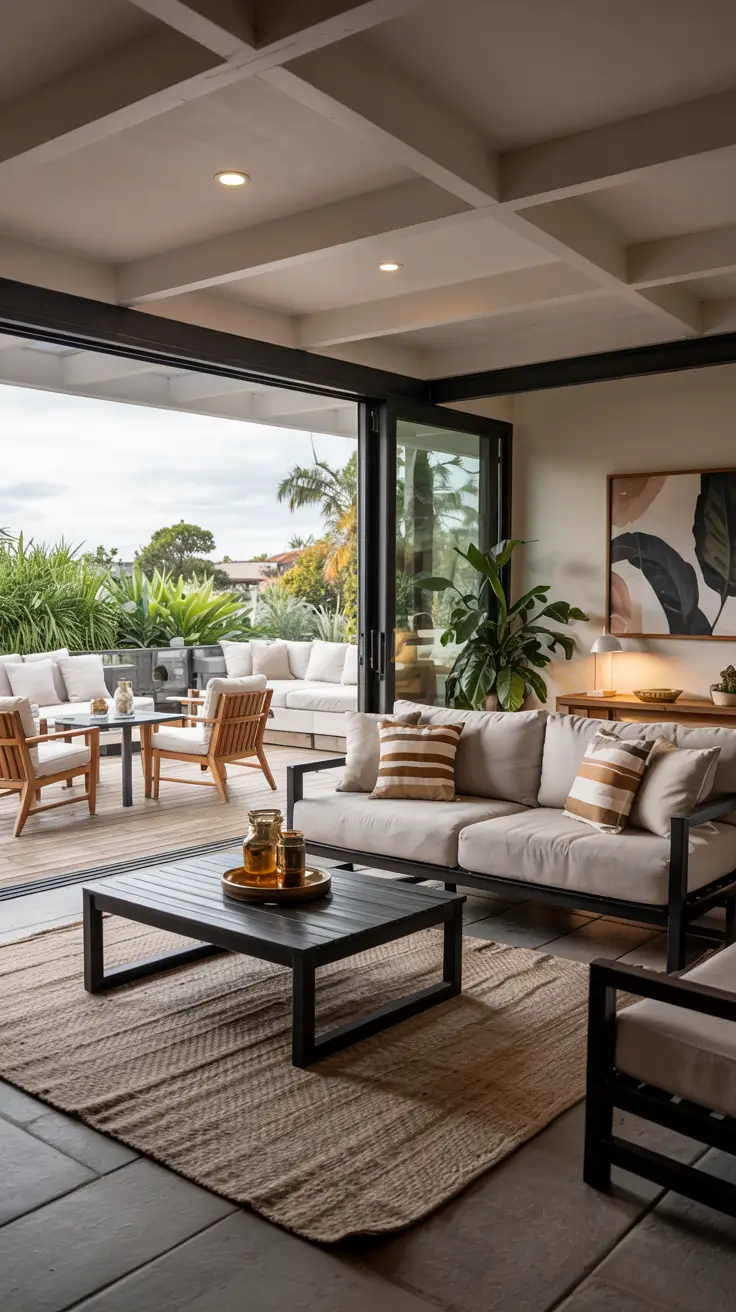
I usually choose weather-resistant sofas, lounge chairs, and coffee tables with finishes that echo indoor furniture. Materials like treated wood, aluminum, and performance fabrics work well, while cushions with quick-dry foam improve everyday usability. Matching silhouettes between indoor and outdoor furniture helps maintain a cohesive design language.
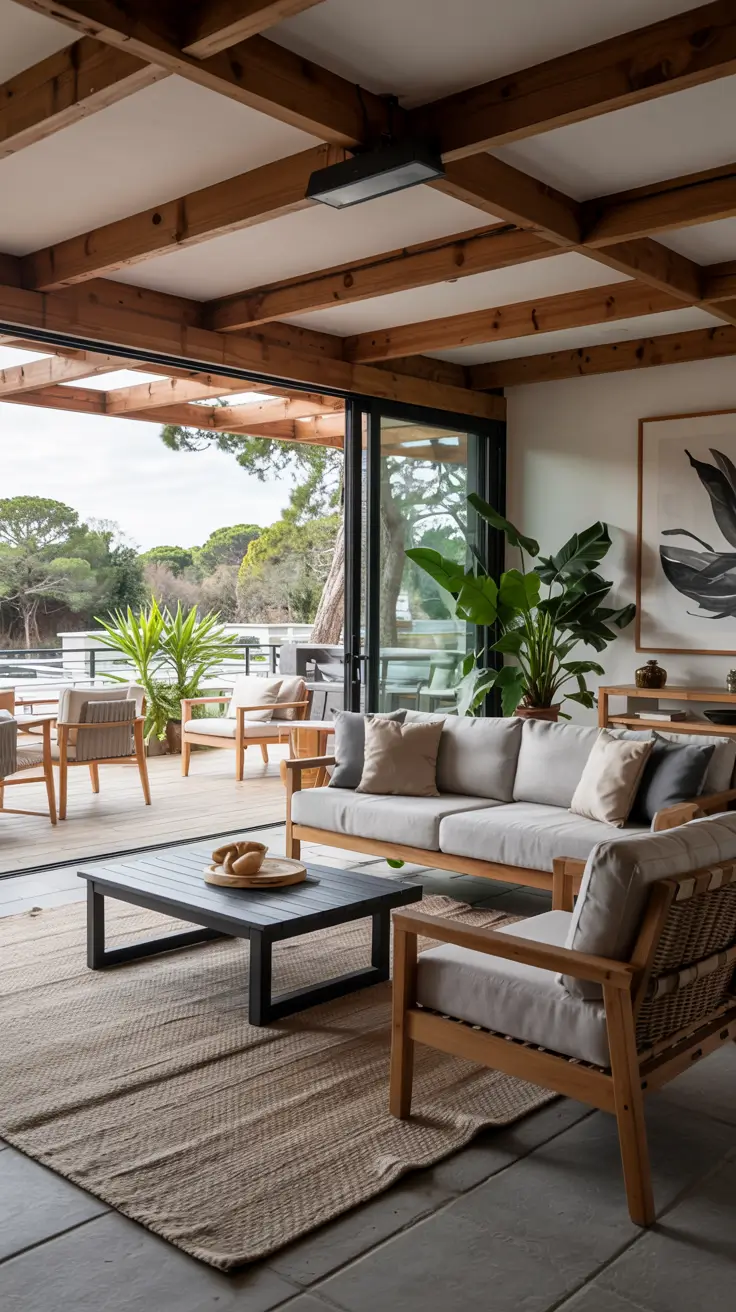
From my experience, investing in high-quality furniture reduces long-term maintenance and enhances daily comfort. Many designers featured in US interior design media emphasize that outdoor furniture should never feel secondary, and I strongly agree with this principle.
What could be added here is guidance on storage solutions for cushions and accessories, especially in apartments or small house layouts where space is limited.
Floor Choices That Connect Indoor and Outdoor Living Rooms
Floor design plays a crucial role in connecting indoor and outdoor living rooms. In 2026, I see a strong preference for continuous floor surfaces that visually and physically link interior spaces with decks or patios. This creates a smooth transition that enhances both flow and spaciousness.
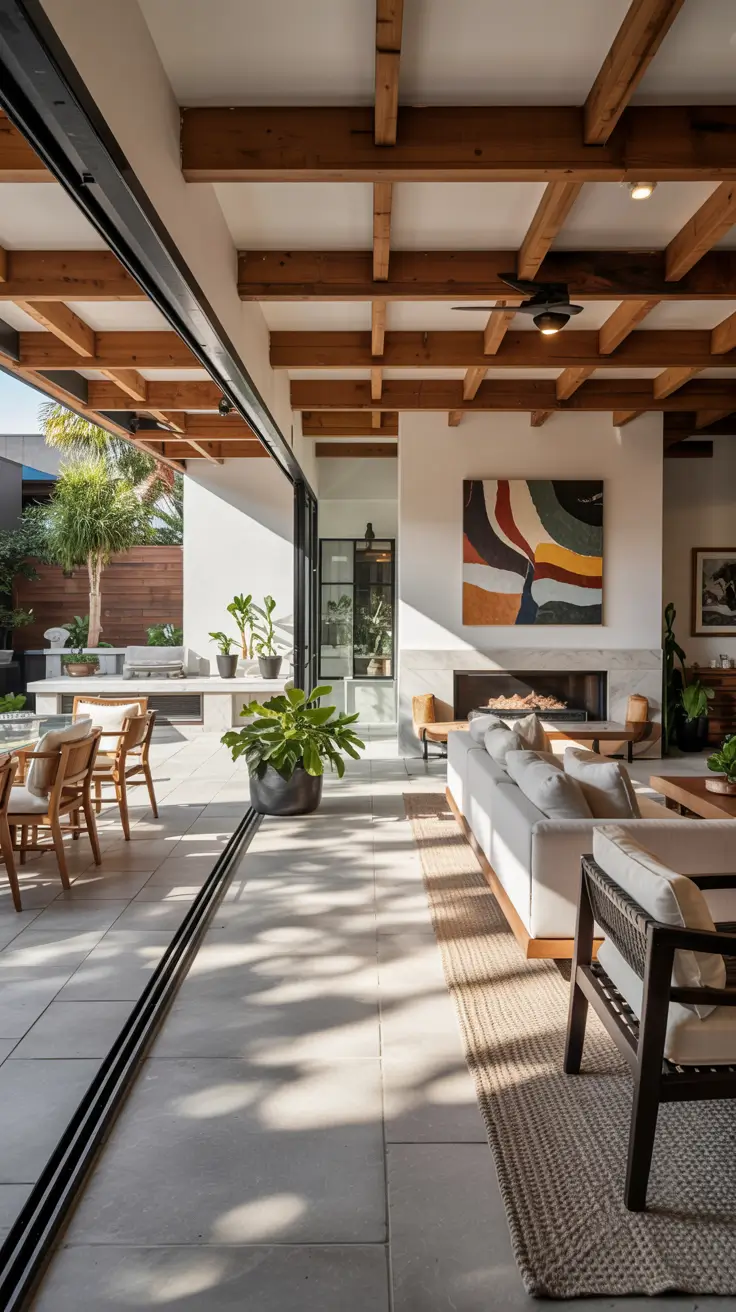
I often recommend porcelain tiles, polished concrete, or treated wood flooring that can be used both indoors and outdoors. These materials handle temperature changes well and provide slip resistance without compromising style. Consistent floor color and texture help unify the entire living area.
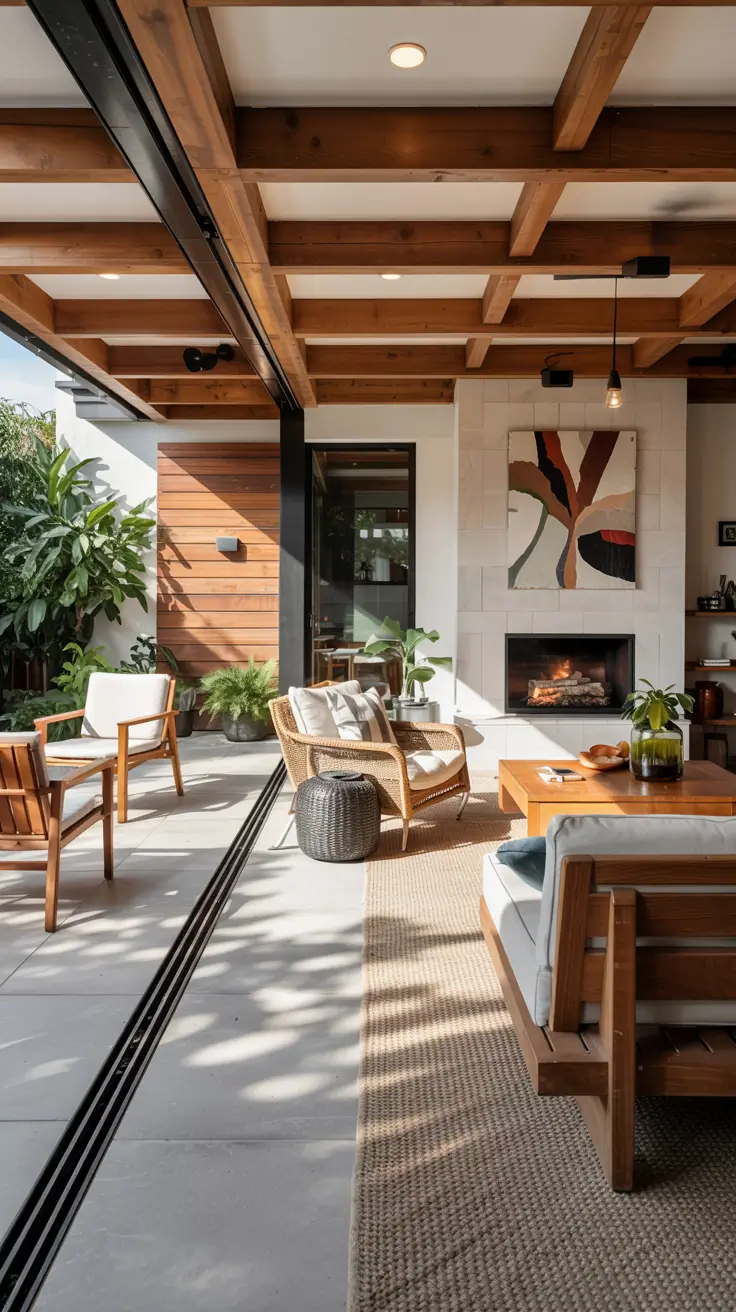
In my professional view, flooring decisions have a bigger impact than many people expect. Designers regularly stress this point in architectural publications, and I have seen firsthand how the right floor choice elevates the entire indoor/outdoor living room design.
To strengthen this section, it would be useful to add advice on underfloor heating or cooling options that improve comfort across seasons.
Indoor Outdoor Living Room Fireplace Ideas for Cozy Open Spaces
An indoor outdoor living room fireplace adds warmth and character to open living spaces. I see fireplaces in 2026 as design anchors that make large, open rooms feel intimate and welcoming, even when sliding doors are fully open.
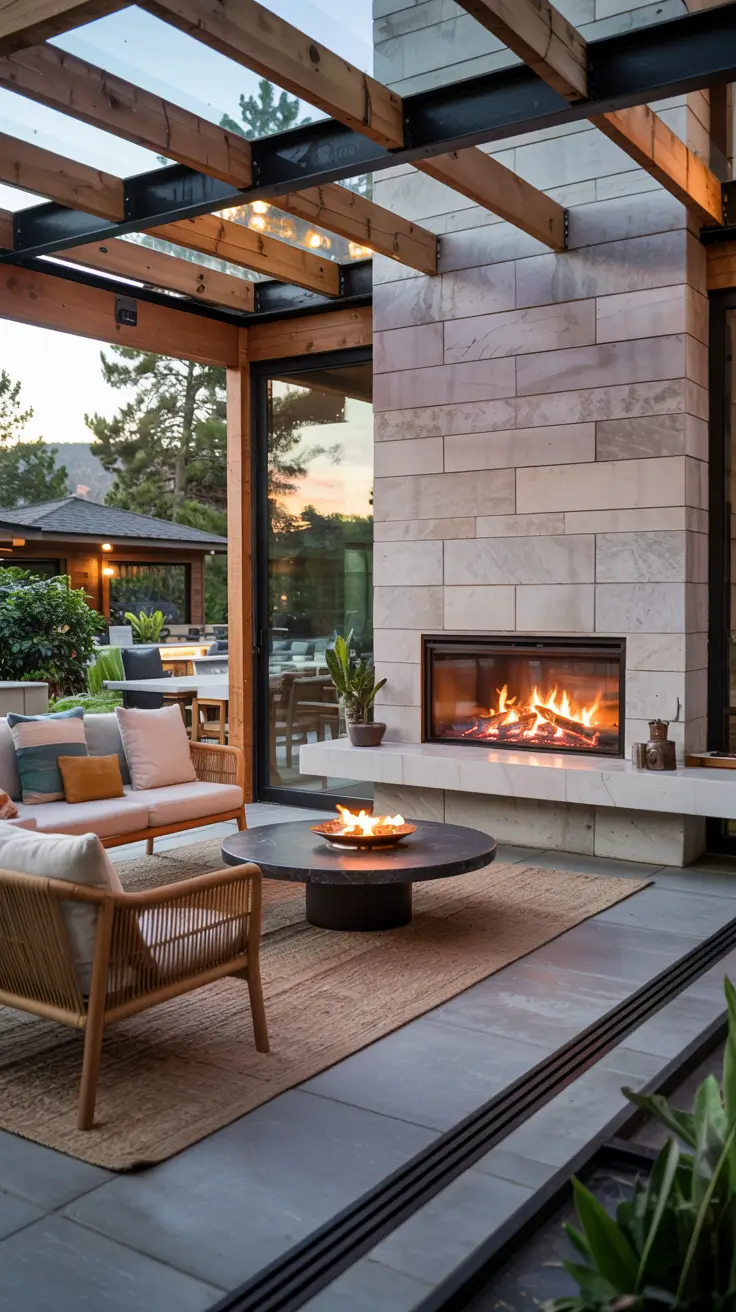
I typically specify linear gas fireplaces or modern wood-burning models that can be enjoyed from both inside and outside. Fireplaces integrated into feature walls or outdoor partitions help define zones while maintaining openness. Heat-resistant materials and clean lines support a modern aesthetic.
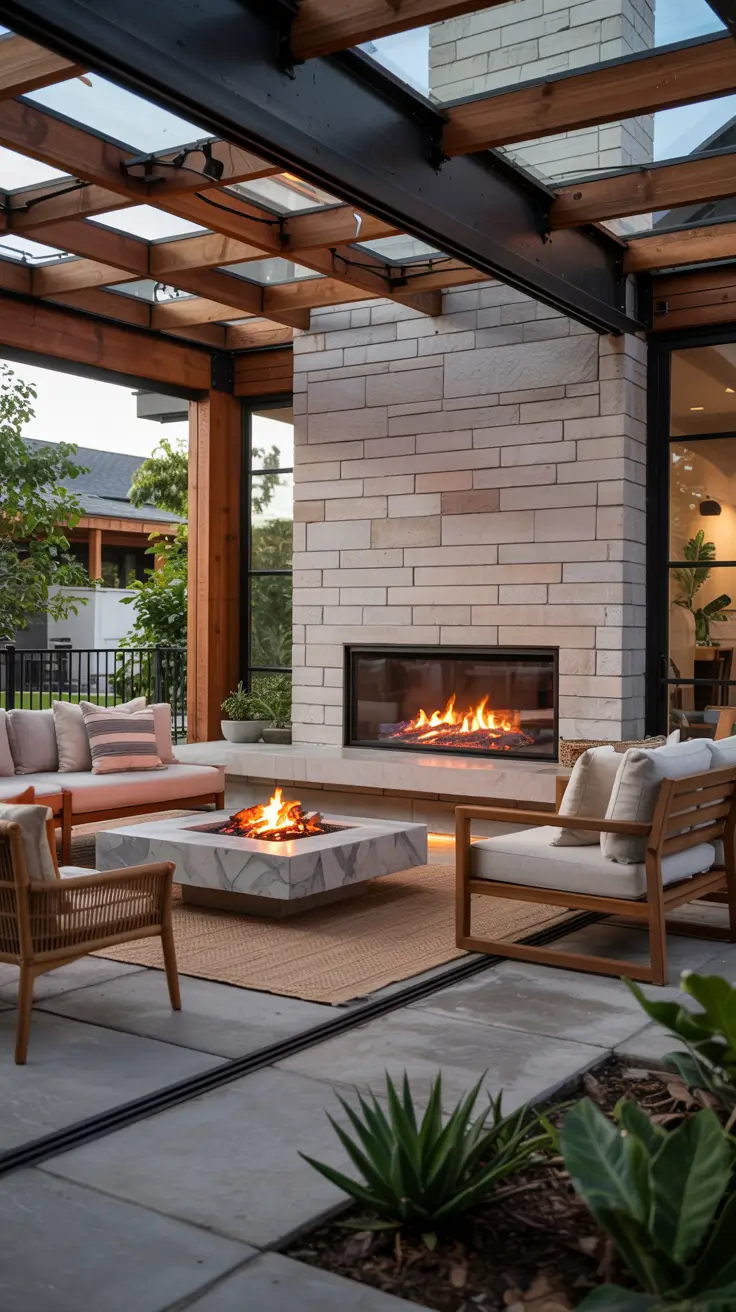
From my own projects, fireplaces often become the emotional focal point of the living room. Many US-based designers note that fire features encourage year-round use of outdoor areas, and I find this to be consistently true.
What is often missing is proper planning for ventilation and safety clearances, which should always be addressed early in the design process.
Indoor Outdoor Living Room Decor Ideas That Blur Interior and Exterior
Indoor outdoor living room decor ideas in 2026 focus on subtlety and cohesion. I approach decor as a tool to soften transitions and add personality without disrupting the openness of the space. The goal is to make interior decor feel natural outdoors and vice versa.
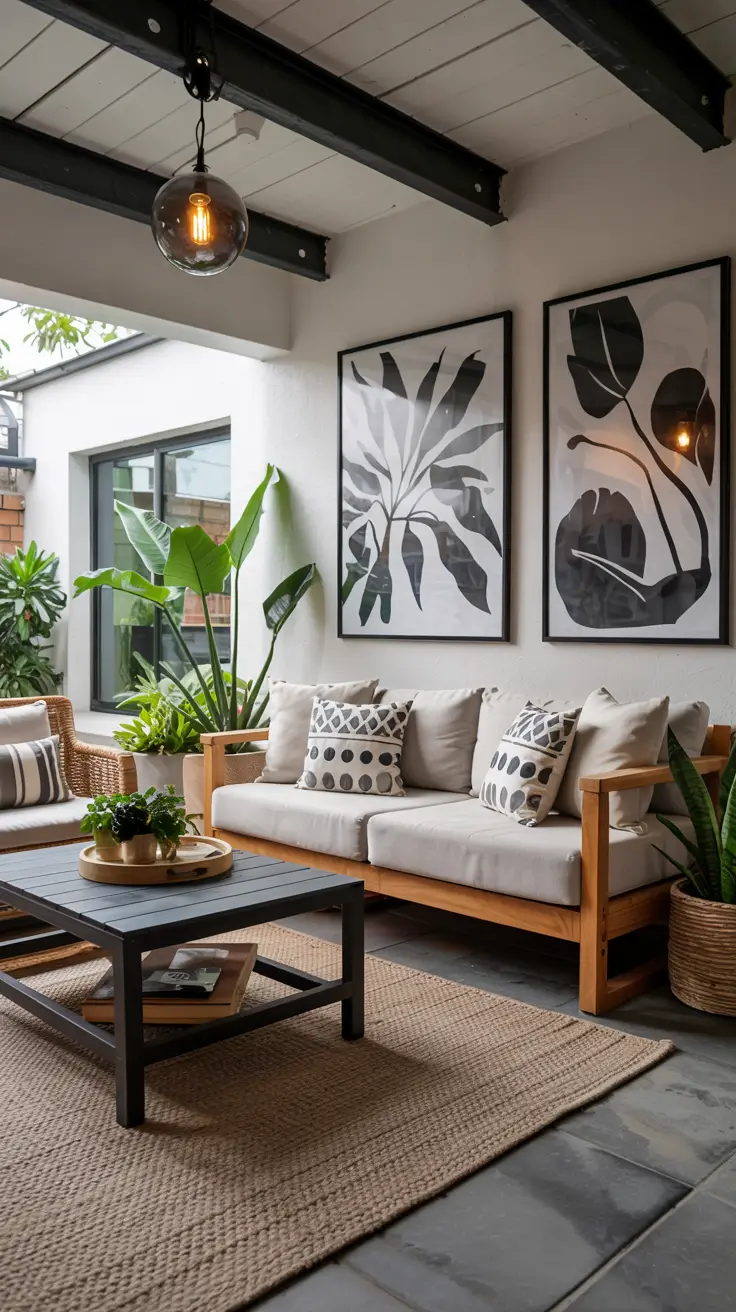
Decor elements like planters, sculptural accessories, throw pillows, and wall art designed for outdoor use work particularly well. I recommend repeating colors and textures across both zones to maintain visual harmony. Natural materials and layered lighting enhance warmth and depth.
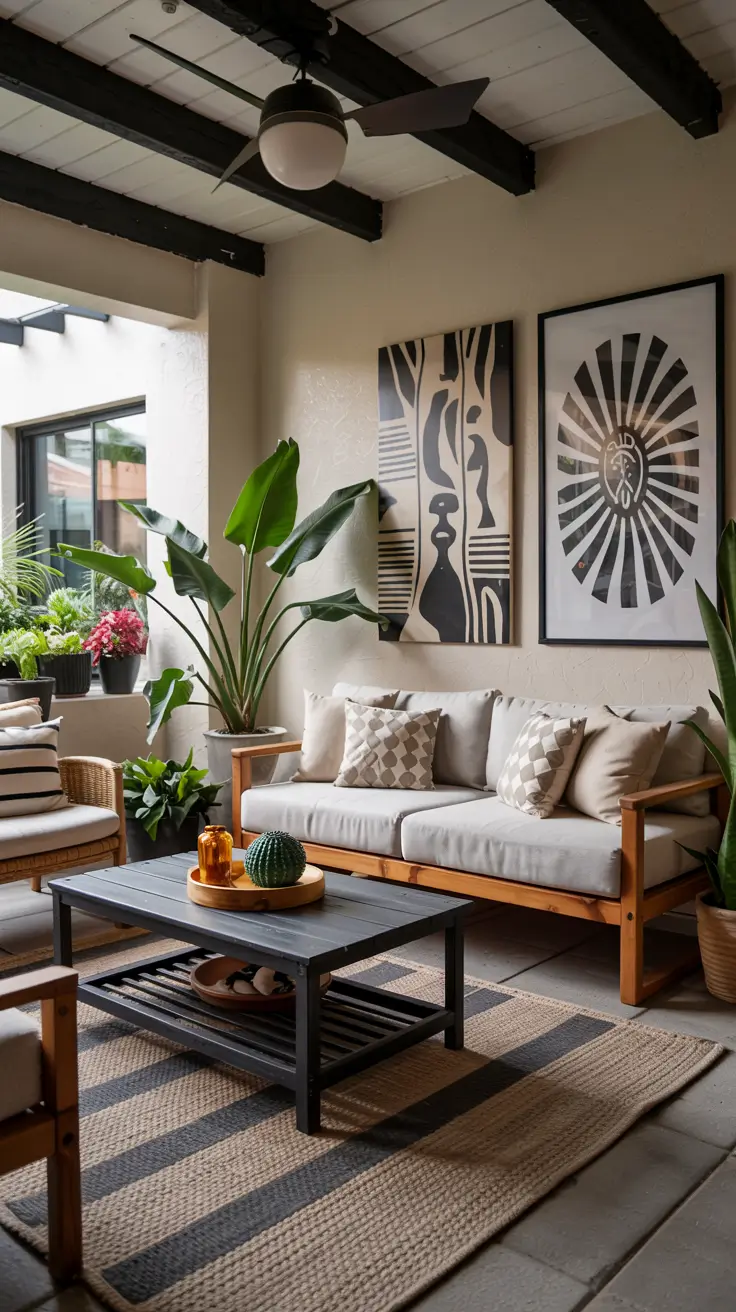
In my experience, decor works best when it feels intentional rather than excessive. Interior design experts often advise restraint, and I agree that fewer, well-chosen items create a more refined indoor/outdoor living room.
To improve this section, I would include more guidance on seasonal decor updates that keep the space fresh throughout the year.
Rugs That Visually Anchor the Indoor Outdoor Living Room
Rugs are essential for anchoring an indoor outdoor living room layout. I use them to define seating areas and add comfort underfoot, especially in open-plan designs where walls are minimal or absent.
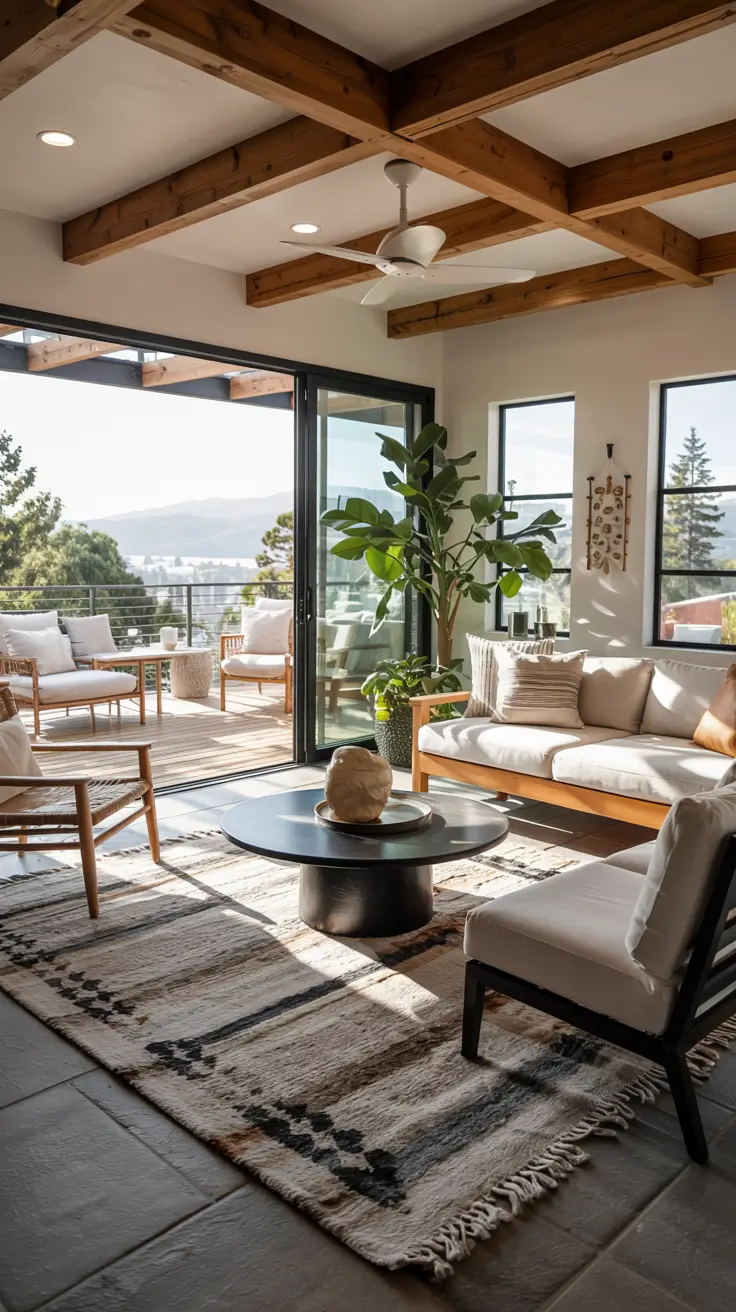
I prefer outdoor-rated rugs that can handle moisture and sun exposure while still offering texture and pattern. Placing similar rugs inside and outside helps visually connect the spaces and reinforces the overall design concept. Neutral tones with subtle patterns tend to work best.
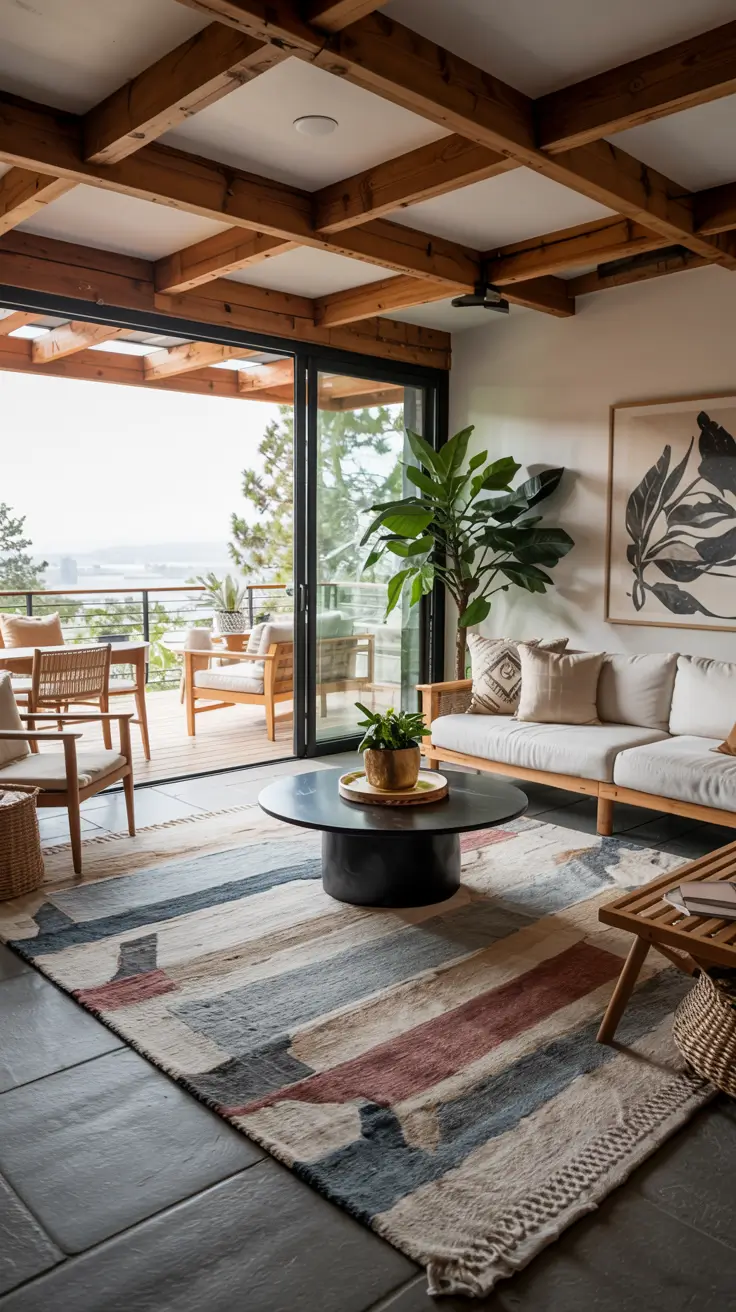
From my perspective, rugs are one of the simplest ways to improve comfort and style. Designers frequently highlight their importance in open layouts, and I find that clients immediately notice the difference once rugs are introduced.
What could be added here is advice on rug sizing and placement to avoid disrupting circulation paths.
Indoor Outdoor Living Room Entertainment Ideas for Social Living
Indoor outdoor living room entertainment ideas in 2026 focus on shared experiences rather than isolated screens. I design these spaces to support gatherings, casual conversations, and relaxed evenings that flow easily between inside and outside.
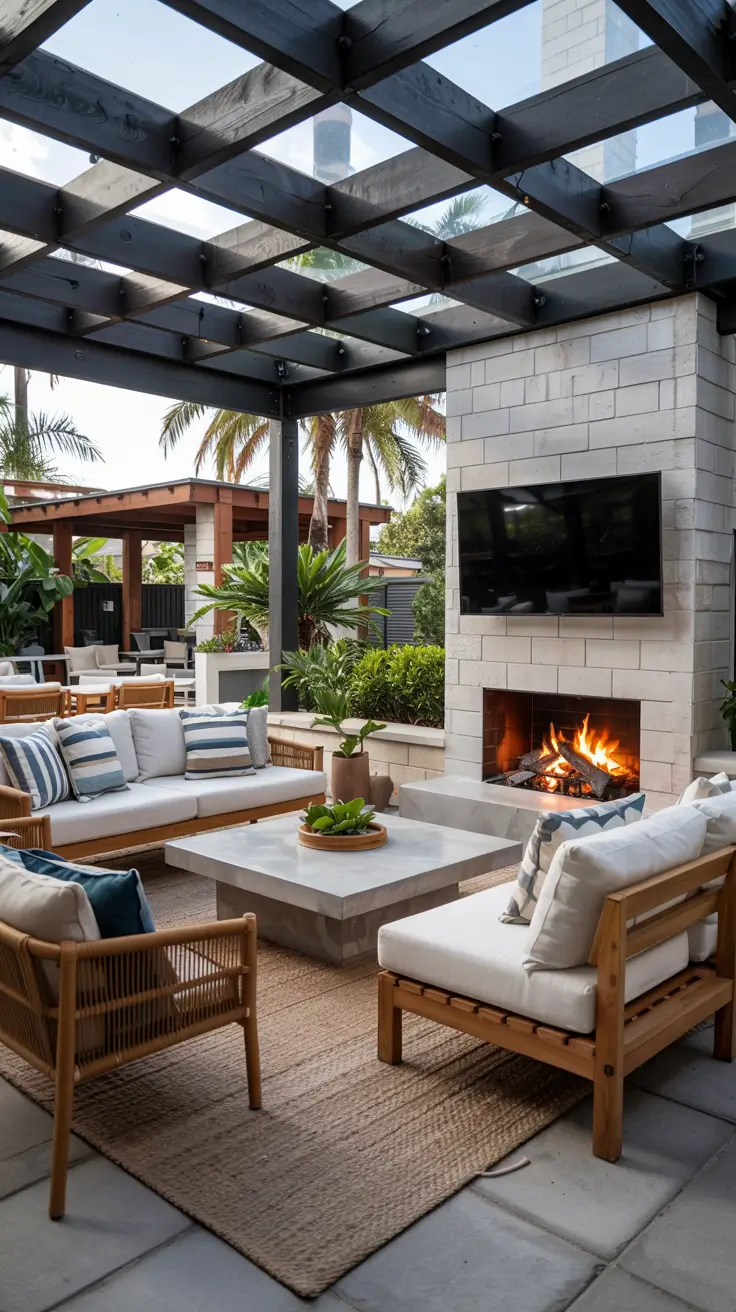
Entertainment features may include discreet outdoor speakers, concealed televisions, and flexible seating arrangements. I recommend integrating technology subtly so it does not dominate the space. Furniture placement should encourage interaction rather than fixed viewing positions.
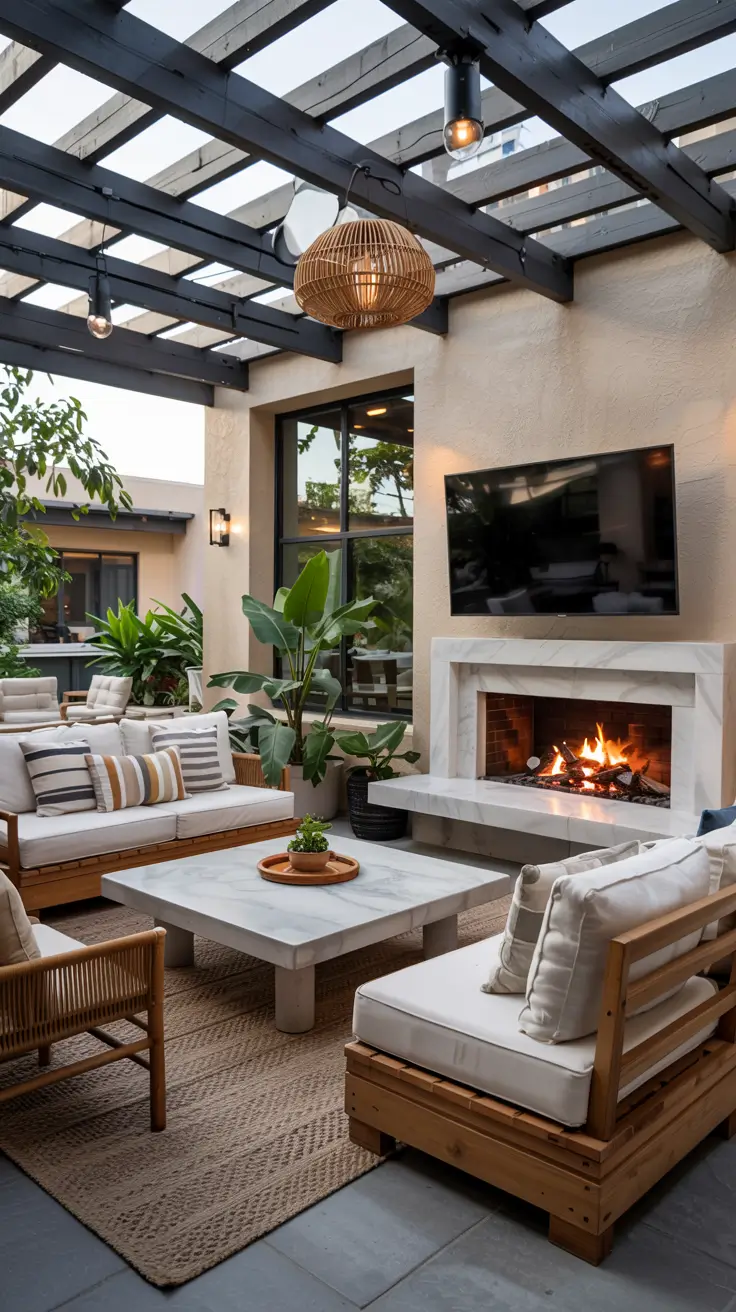
Based on my experience, social-focused entertainment design creates more memorable spaces. Many interior design professionals emphasize that technology should enhance, not control, the environment, and I strongly agree.
To complete this section, I would add more detail on acoustic planning to ensure sound quality works well in open indoor/outdoor layouts.
Indoor Outdoor Living Room Balcony Designs for Urban Lifestyles
Indoor outdoor living room balcony design is especially important for urban homes and apartments. I see balconies in 2026 as extensions of the living room rather than separate outdoor areas, even when space is limited.
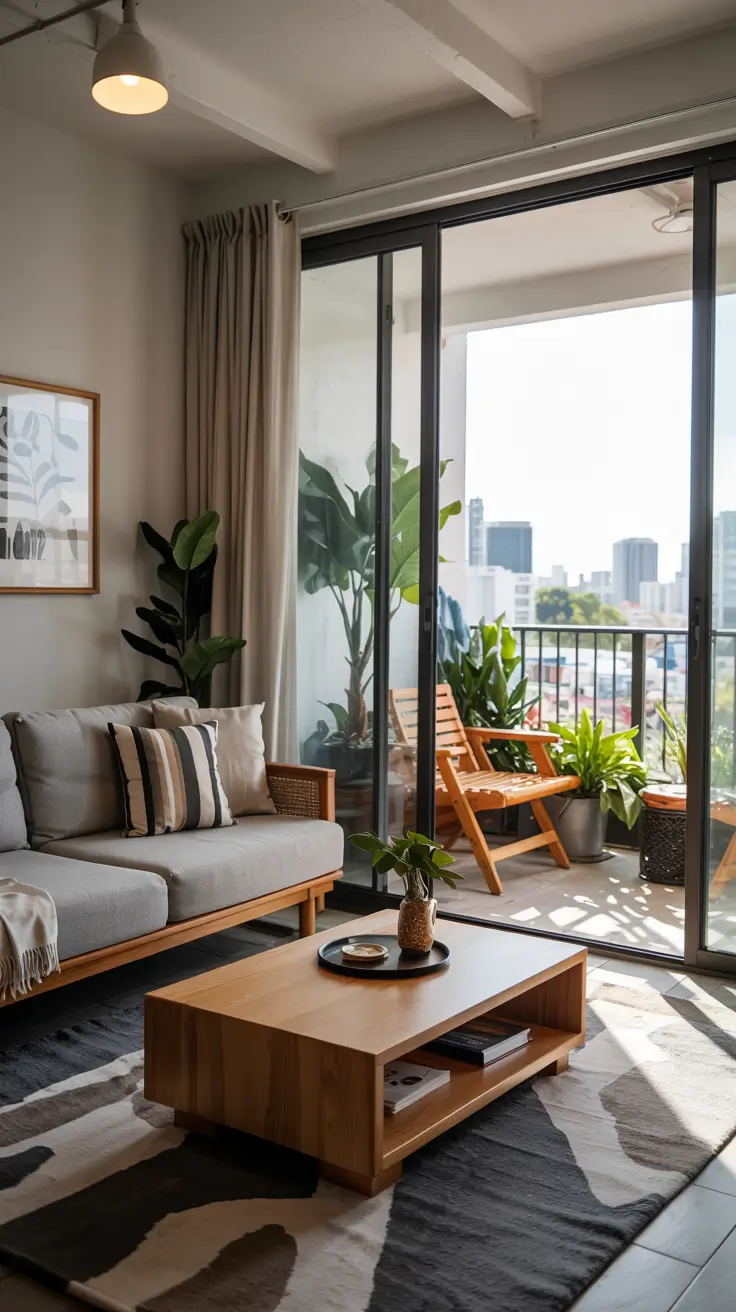
I usually recommend compact furniture, vertical greenery, and sliding doors that fully open the living room to the balcony. Durable flooring and lightweight furniture help maintain flexibility, while thoughtful layout ensures comfort without crowding.
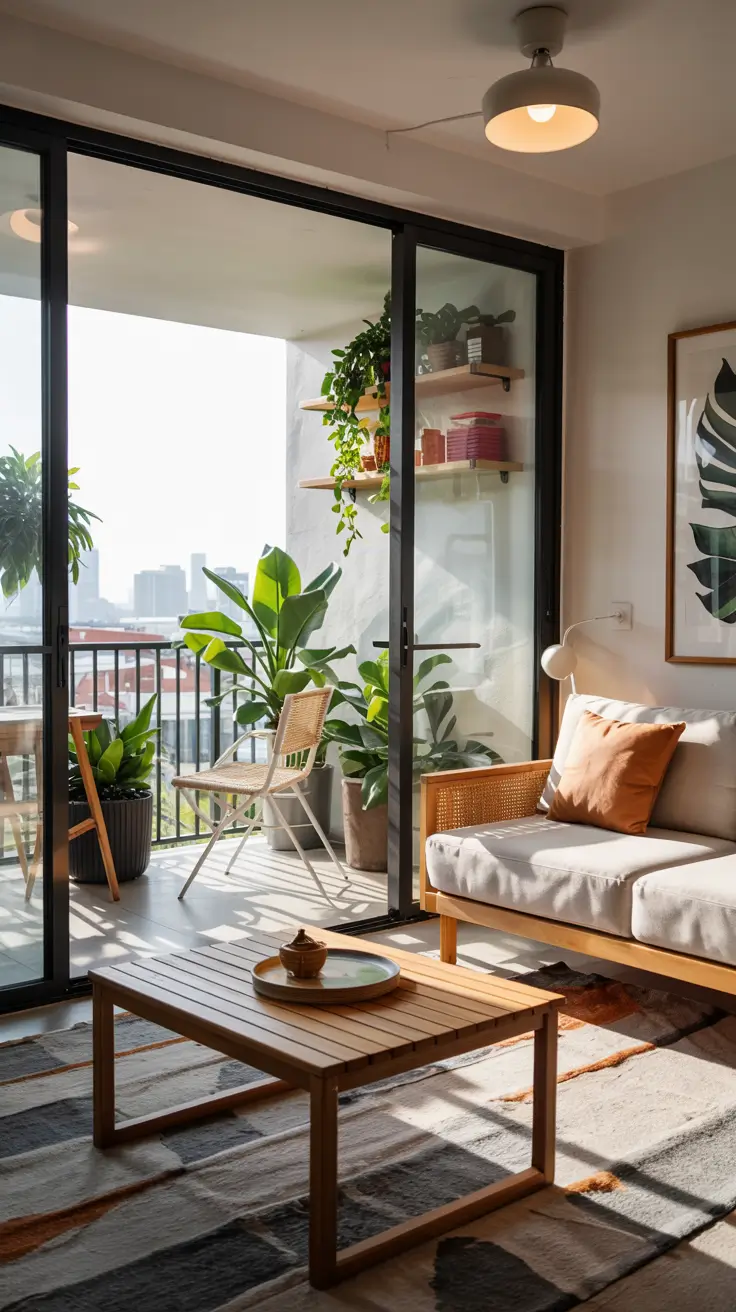
From my professional experience, balcony integration significantly improves apartment living. Designers often highlight this strategy in urban design discussions, and I find it adds both functional and emotional value.
What could enhance this section is more emphasis on privacy solutions, such as screens or planting, which are crucial in dense city environments.
Indoor Outdoor Living Room Deck Ideas Inspired by Nature
I see the deck as one of the most natural extensions of an indoor outdoor living room layout. In 2026, deck-focused designs emphasize visual continuity between interior floor finishes and exterior decking materials, often using similar tones or textures. I focus on creating a seamless transition with large indoor outdoor living room sliding doors that open fully, allowing the deck to function as part of the main living space. This approach works especially well for entertainment ideas where indoor seating flows directly into outdoor lounging.
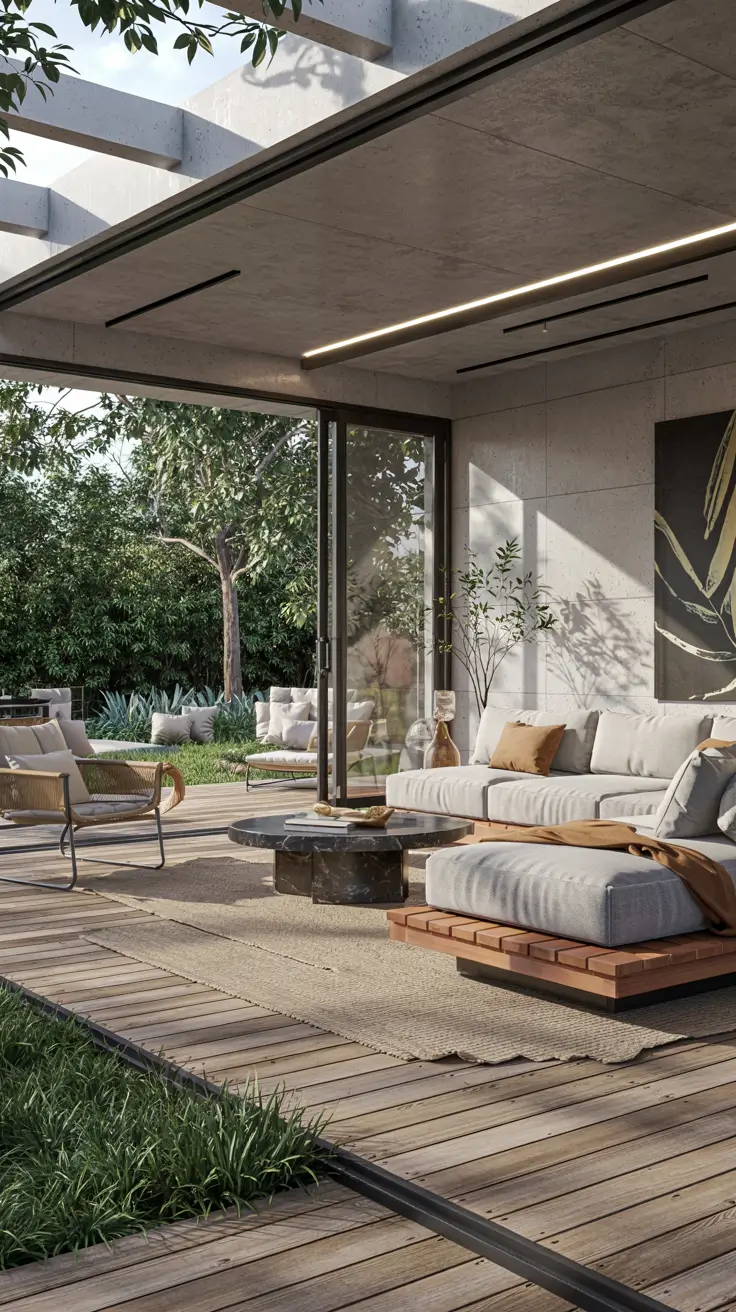
When selecting furniture for this space, I prioritize indoor outdoor living room furniture that feels refined yet durable. Modular sofas with weather resistant upholstery, low-profile coffee tables, and woven accent chairs create a balanced look. A well placed rug designed for outdoor use helps define the living area on the deck while maintaining comfort underfoot. I also include subtle lighting such as recessed floor lights or modern lanterns to enhance the atmosphere without overpowering the natural setting.
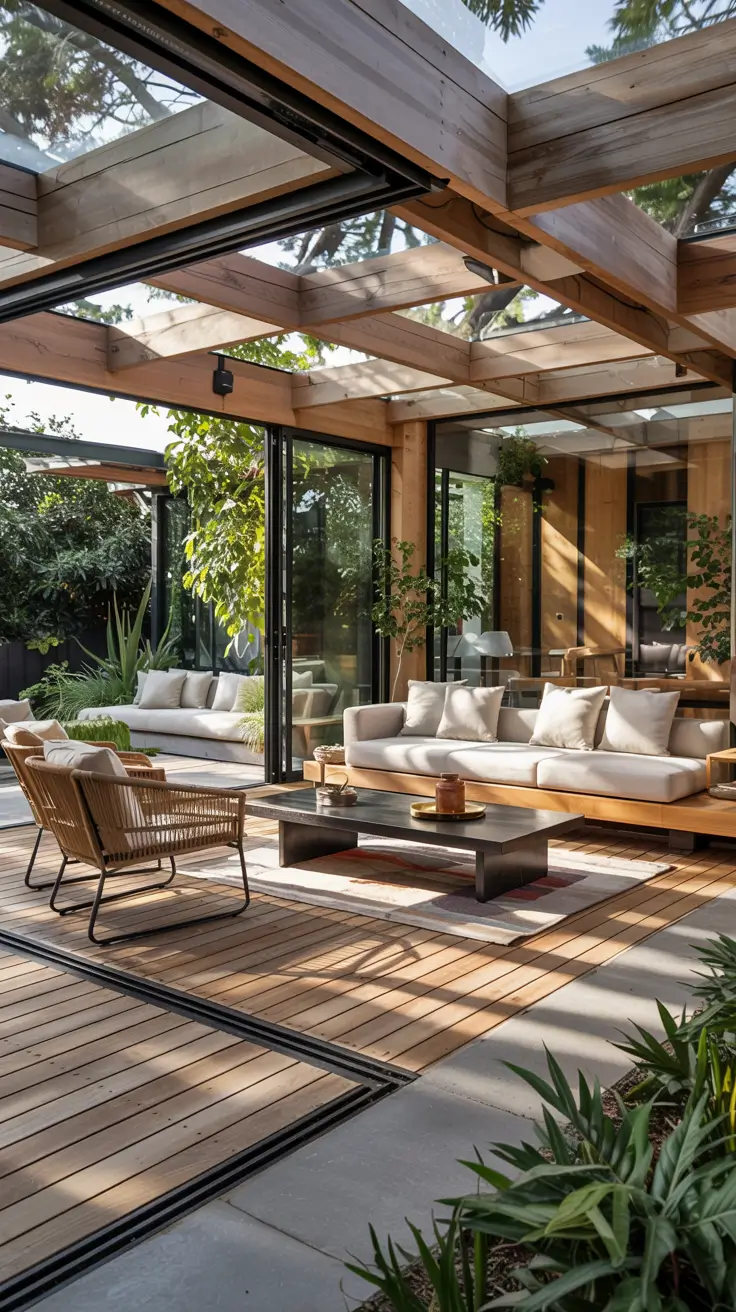
From my experience, the success of a deck-focused indoor outdoor living room depends on restraint and cohesion. Many designers featured in US-based interior publications emphasize that fewer materials used consistently create a stronger visual impact. I agree with this approach and recommend limiting finishes to wood, stone, and metal to keep the design timeless.
What I would add to this type of space is integrated storage within deck seating. Hidden compartments for cushions or outdoor decor improve usability and keep the area looking clean and organized year-round.
Indoor Outdoor Living Room Patio Concepts for Relaxed Living
A patio-oriented indoor outdoor living room offers a grounded and relaxed atmosphere that suits both small house layouts and larger homes. I design these spaces to feel like an extension of the living room rather than a separate zone. Sliding doors and wide door openings allow natural light to flood the interior, enhancing the modern feel and making the patio usable throughout the day.
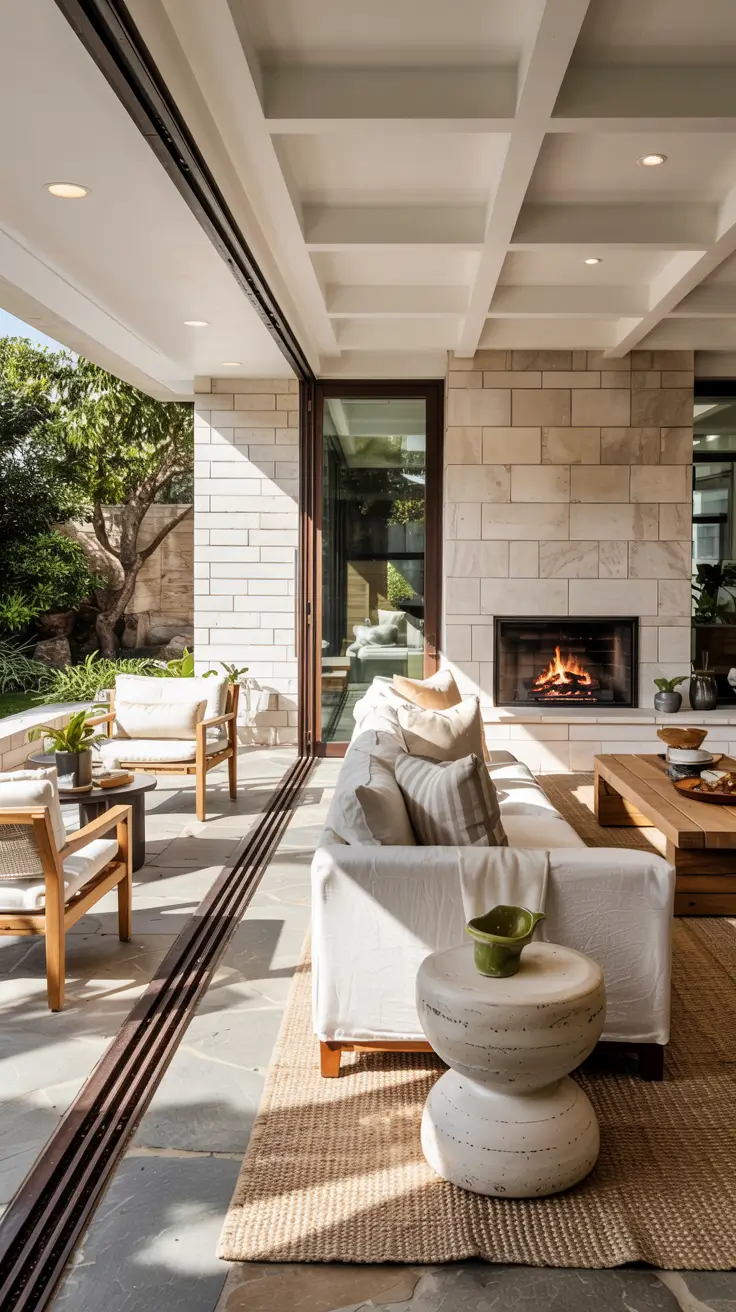
Furniture selection plays a critical role here. I often use deep seating sofas, cushioned lounge chairs, and a central coffee table to mirror the indoor living room setup. A fireplace positioned between the indoor and outdoor zones can act as a shared focal point, reinforcing the indoor outdoor living room fireplace concept. Decorative elements such as textured pillows, ceramic side tables, and layered rugs add warmth without clutter.
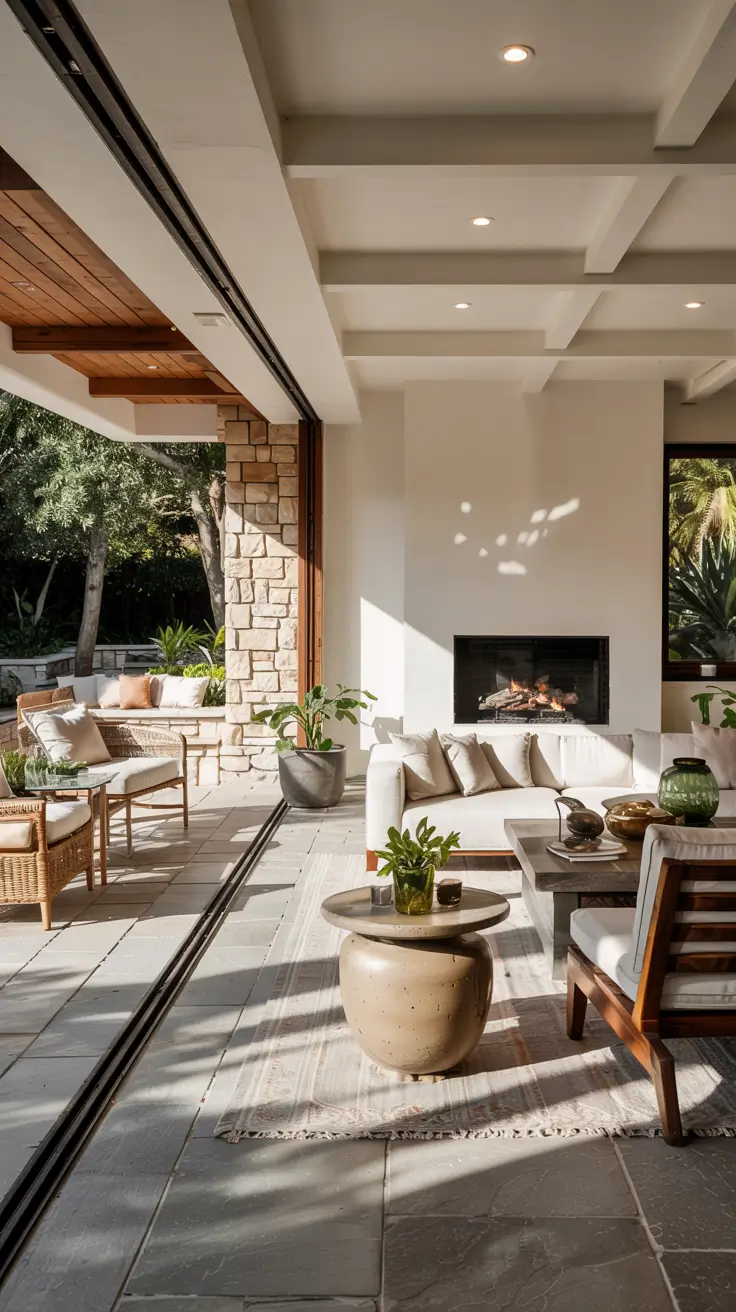
Personally, I find patios ideal for slow living and casual gatherings. Designers frequently recommend using neutral palettes with one or two accent colors to keep the space calming. I follow this advice and often introduce greenery through large planters to soften architectural lines.
What is often missing in patio concepts is proper floor continuity. I recommend using similar floor tones indoors and outdoors to visually connect the spaces and improve overall design flow.
Indoor Outdoor Living Room Apartment Solutions for Limited Space
Designing an indoor outdoor living room apartment requires thoughtful planning, especially when space is limited. I focus on maximizing every square meter by using sliding doors that open onto a balcony or compact patio. This strategy visually expands the living room and enhances natural ventilation, which is particularly valuable in urban settings.
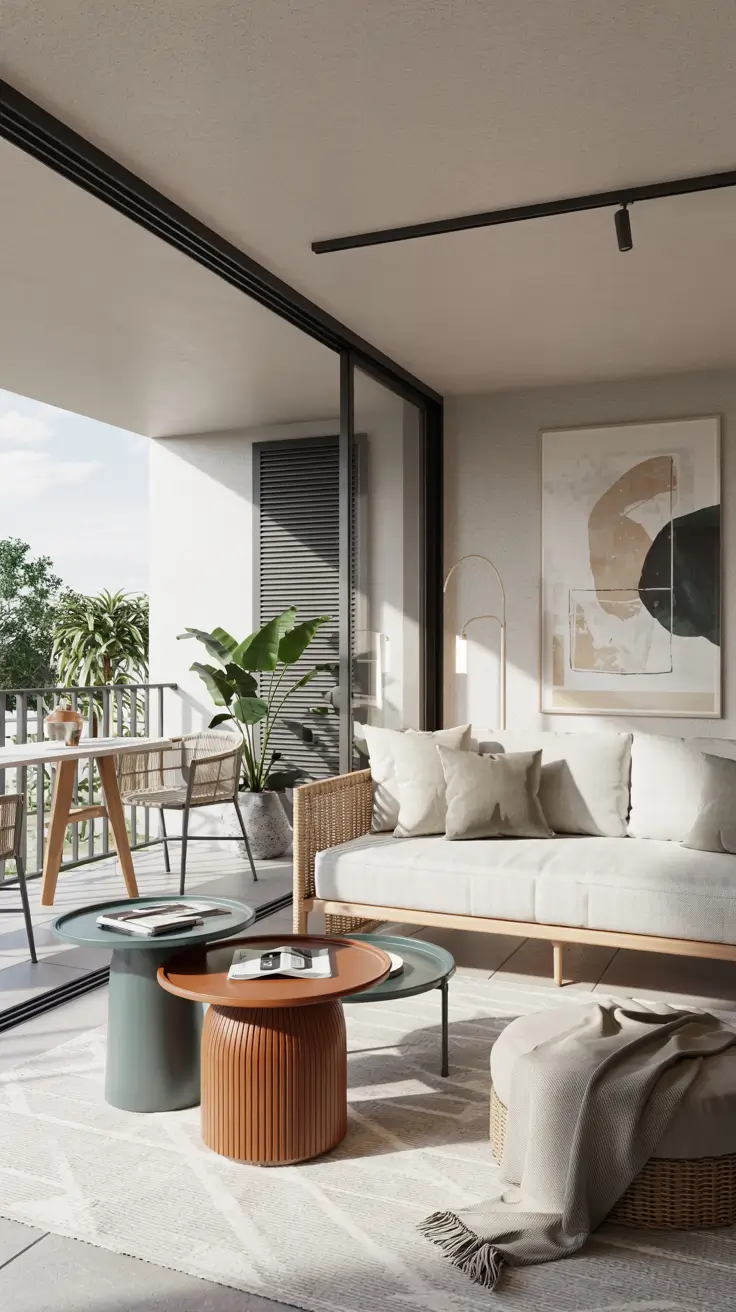
Furniture choices must be intentional. I select slim sofas, nesting tables, and multifunctional pieces that adapt easily between indoor and outdoor use. Balcony furniture should echo the interior design style to maintain cohesion. Lightweight chairs, compact rugs, and wall-mounted decor help maintain openness without sacrificing comfort.
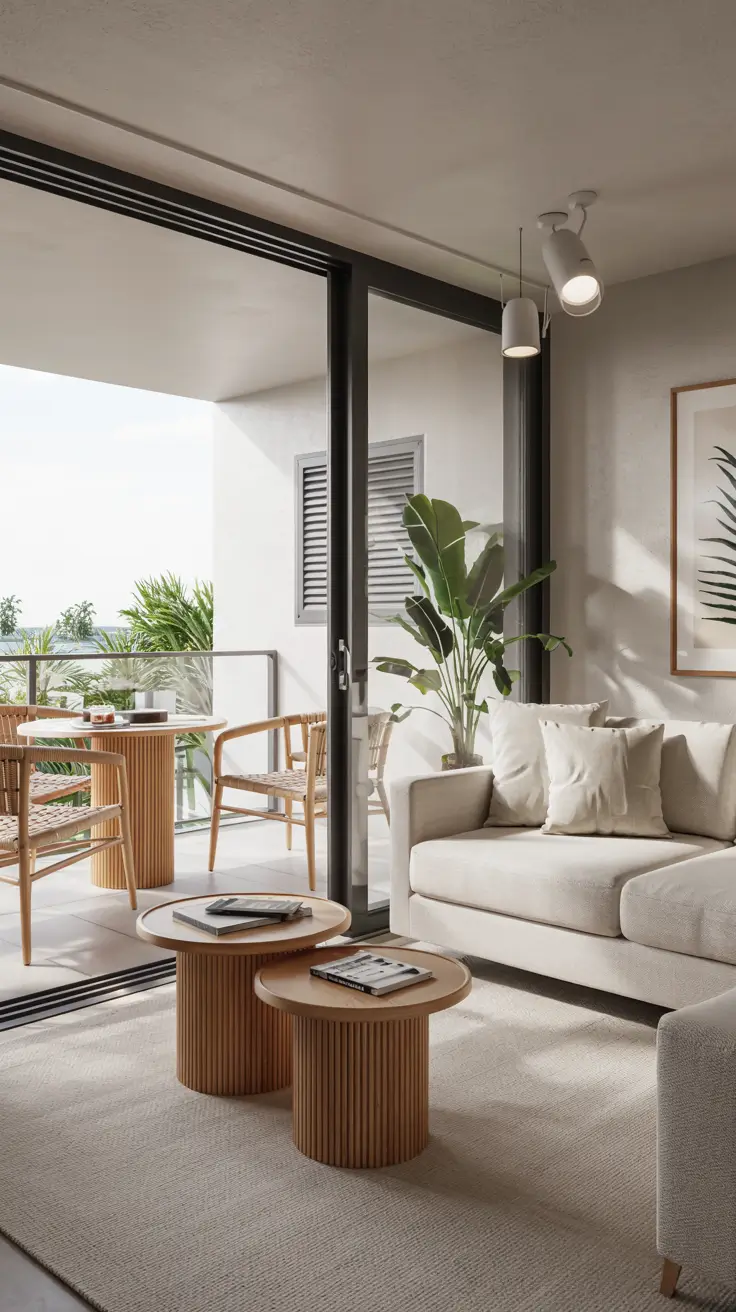
In my experience, apartment dwellers benefit most from clear zoning. Interior designers often stress the importance of defining areas without physical barriers. I agree and use rugs and lighting to subtly separate lounging, dining, and relaxation zones.
What I would improve in many apartment designs is storage integration. Built-in benches or concealed cabinets can dramatically enhance functionality while keeping the design clean and modern.
Indoor Outdoor Living Room Ideas for Small House Designs
In small house layouts, an indoor outdoor living room becomes a powerful tool for expanding perceived space. I design these areas to blur boundaries by aligning sightlines and maintaining consistent ceiling heights where possible. Large doors and minimal framing enhance the sense of openness and improve natural light distribution.
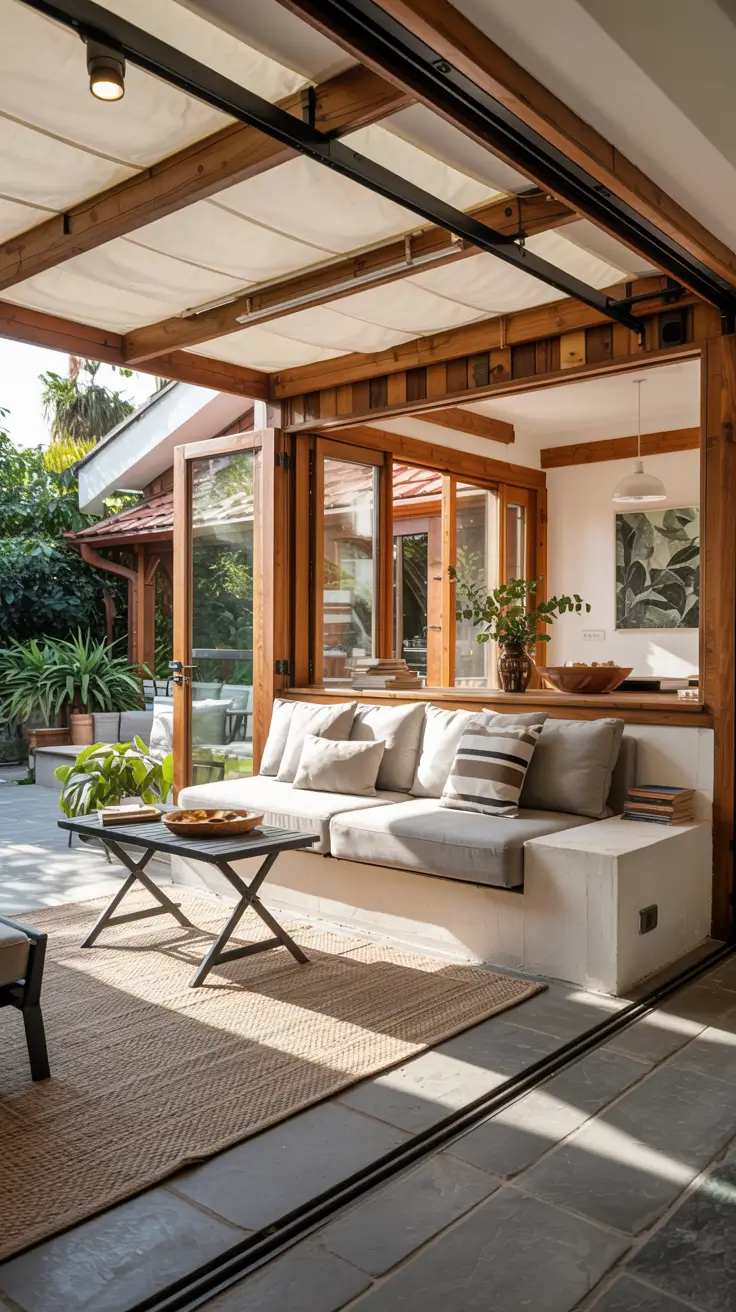
Furniture selection focuses on scale and flexibility. I use compact sectionals, armless chairs, and foldable tables that adapt to different needs. Outdoor furniture mirrors indoor pieces in color and texture, reinforcing unity. Decorative elements are kept minimal, with emphasis on quality materials rather than quantity.
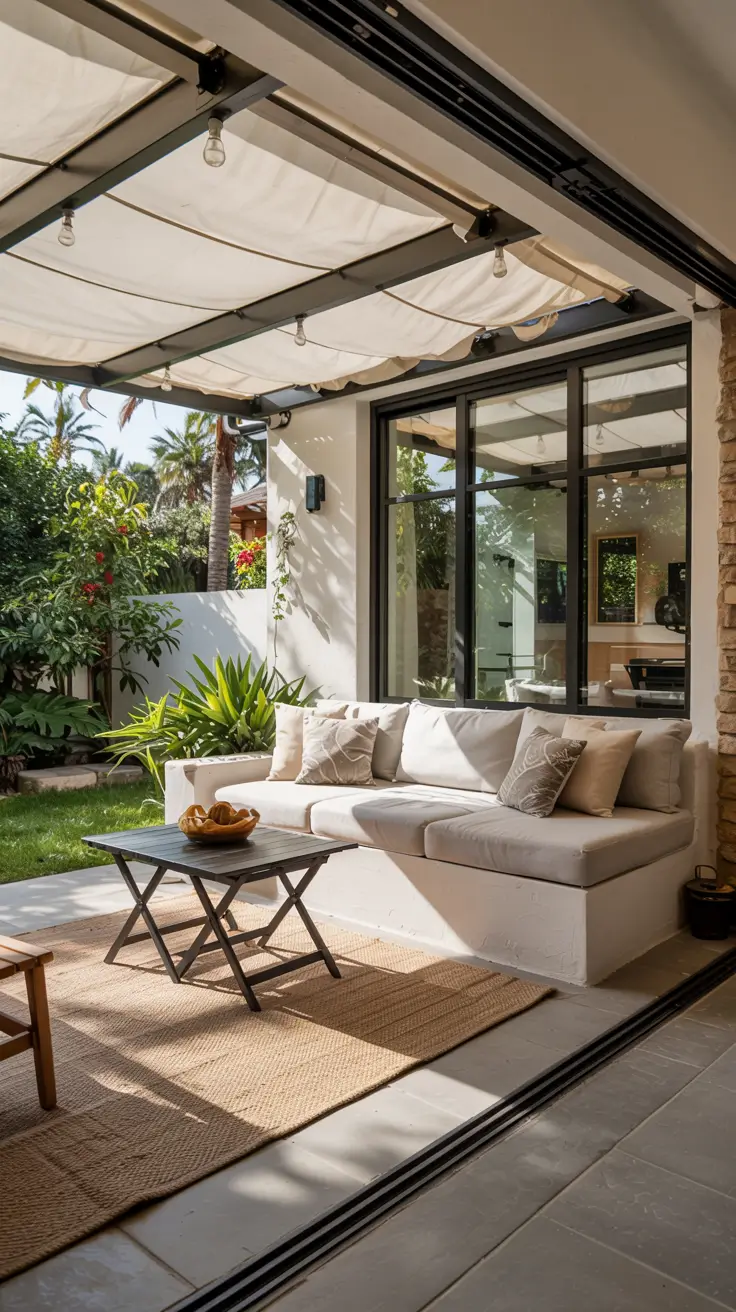
From my perspective, small homes benefit from simplicity. Many professionals advise avoiding heavy decor in compact spaces, and I fully support this approach. A clean layout enhances comfort and usability without overwhelming the design.
What is often missing is proper weather protection. I recommend adding retractable awnings or covered patios to ensure year-round usability of the outdoor extension.
Indoor Outdoor Living Room Tropical Style for a Resort Feel
The indoor outdoor living room tropical concept brings a relaxed, resort-like atmosphere into everyday living. I design these spaces using natural materials, open layouts, and abundant greenery. Large sliding doors and open corners allow air to circulate freely, creating a breezy and inviting environment.
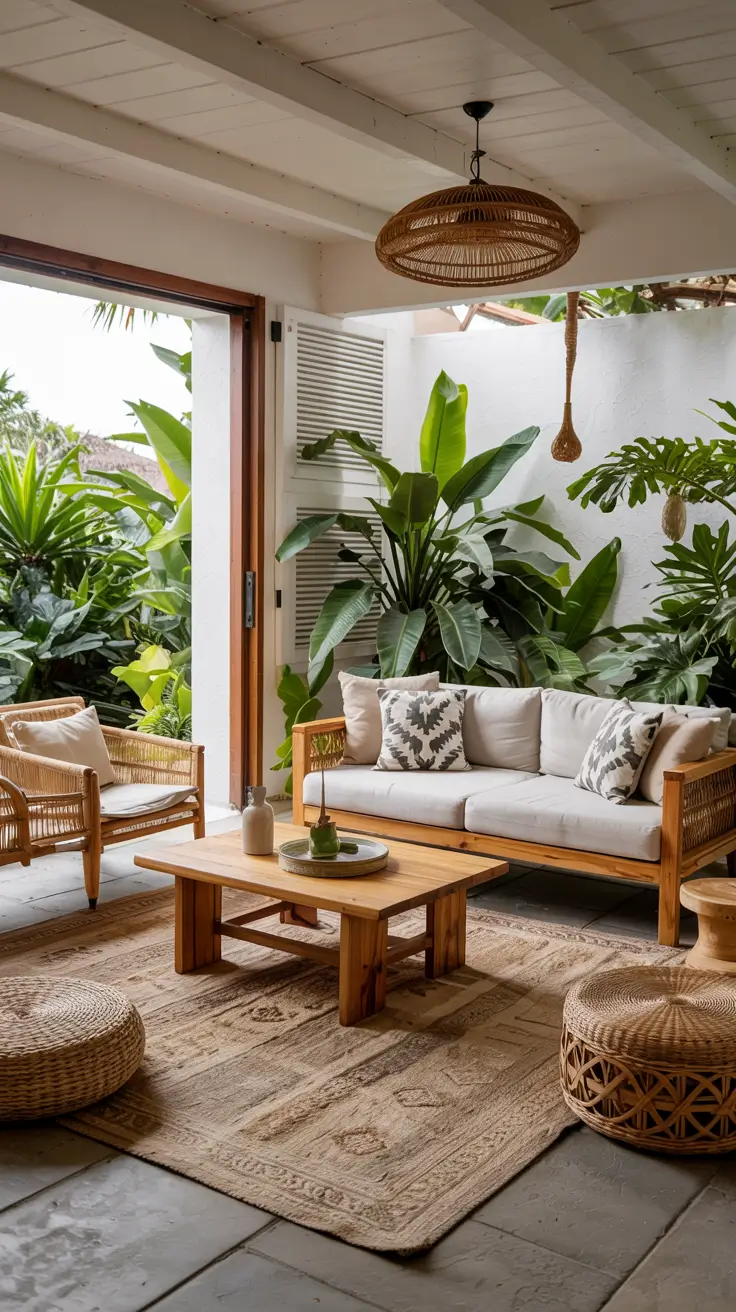
Furniture in tropical designs leans toward organic shapes and textures. I choose wooden frames, rattan accents, and soft upholstery in neutral or earthy tones. Low seating, layered rugs, and indoor plants enhance the indoor outdoor living room decor while maintaining comfort and visual interest.
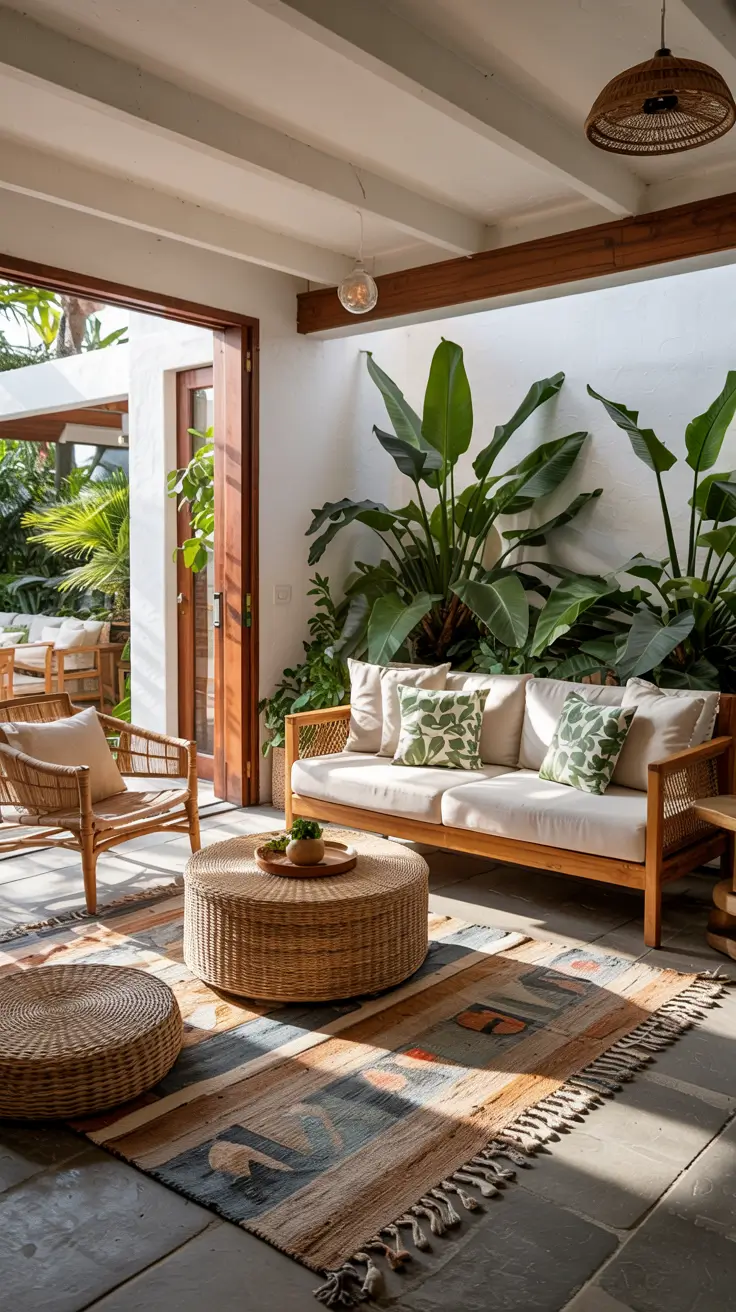
I personally enjoy how tropical interiors encourage slower, more mindful living. Design experts often highlight the importance of natural light and ventilation in tropical homes, and I apply these principles consistently to achieve authenticity.
What I would add here is ceiling treatment. Exposed beams or natural wood finishes can elevate the tropical feel and add architectural depth.
Luxury Indoor Outdoor Living Room Features for Premium Homes
Luxury indoor outdoor living rooms focus on seamless integration, premium materials, and advanced comfort features. I approach these designs by creating expansive layouts where the living room, kitchen, and outdoor areas function as one cohesive space. Indoor outdoor living room and kitchen concepts often include shared islands or bars that bridge both zones.
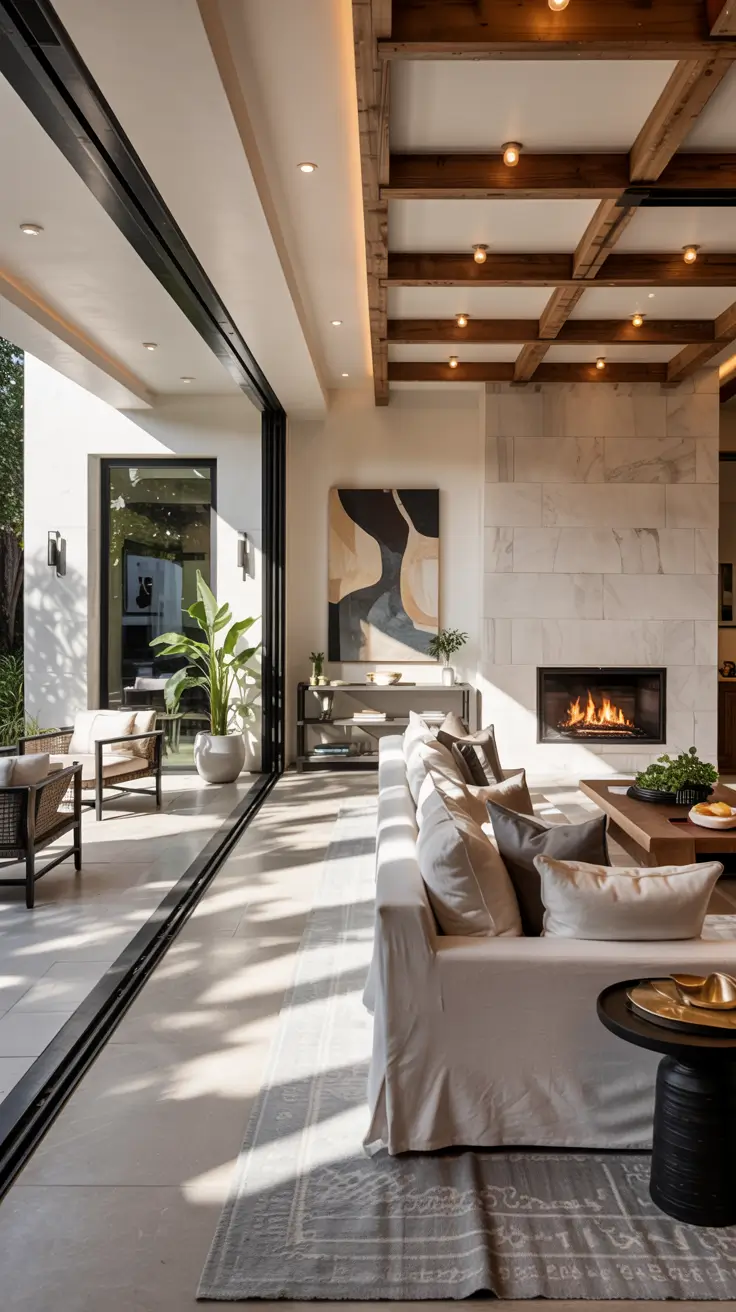
Furniture selection emphasizes quality and craftsmanship. I incorporate custom sofas, statement lighting, and elegant rugs that define zones without disrupting flow. Fireplaces, whether linear or double-sided, add warmth and serve as visual anchors. Flooring materials are carefully chosen to ensure continuity and durability.
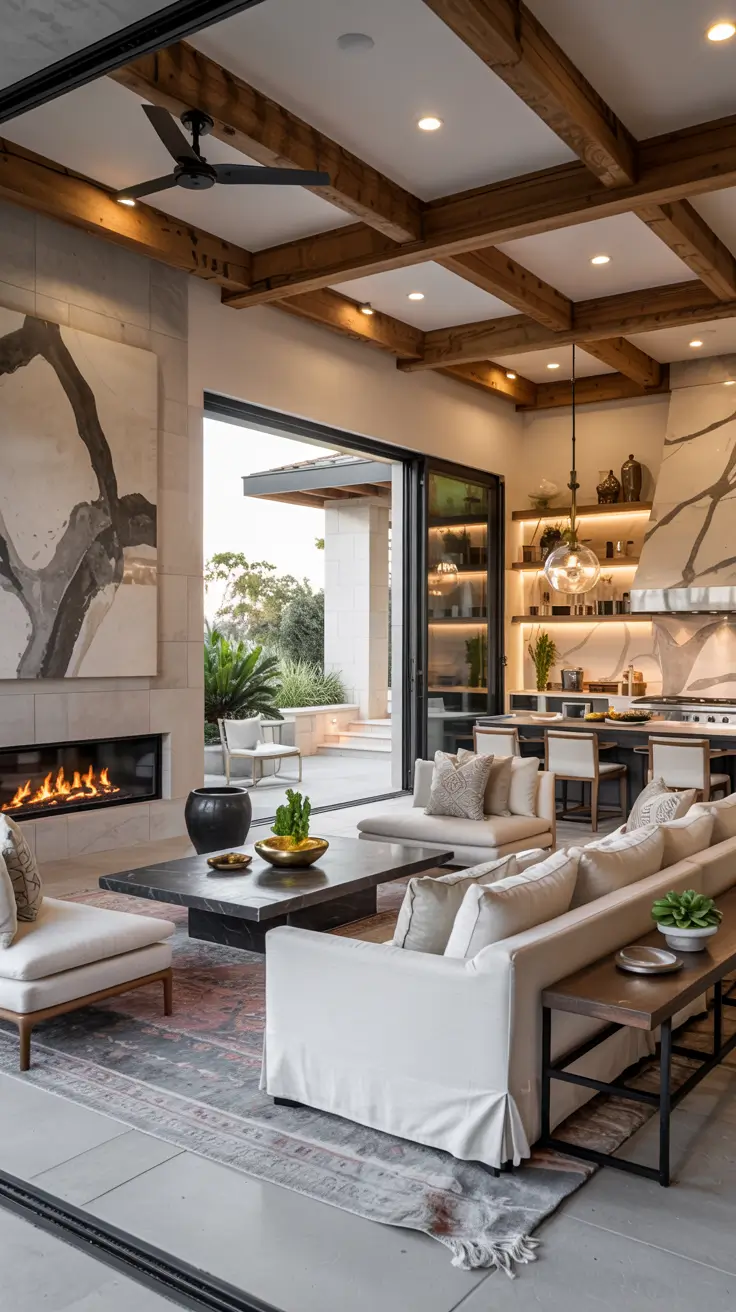
In my experience, luxury design is about subtlety rather than excess. Renowned designers often stress the importance of proportion and balance, and I apply this by limiting decorative elements and focusing on texture and finish.
What is sometimes overlooked is acoustic comfort. I recommend incorporating soft furnishings and acoustic panels to maintain a calm atmosphere even in large open spaces.
Indoor Outdoor Living Room Design Trends Influenced by Australia
Australian-inspired indoor outdoor living room design continues to influence global trends in 2026. I draw inspiration from the emphasis on climate responsiveness, relaxed layouts, and strong connections to nature. These designs prioritize open plans, generous decks, and fluid transitions between indoor and outdoor zones.
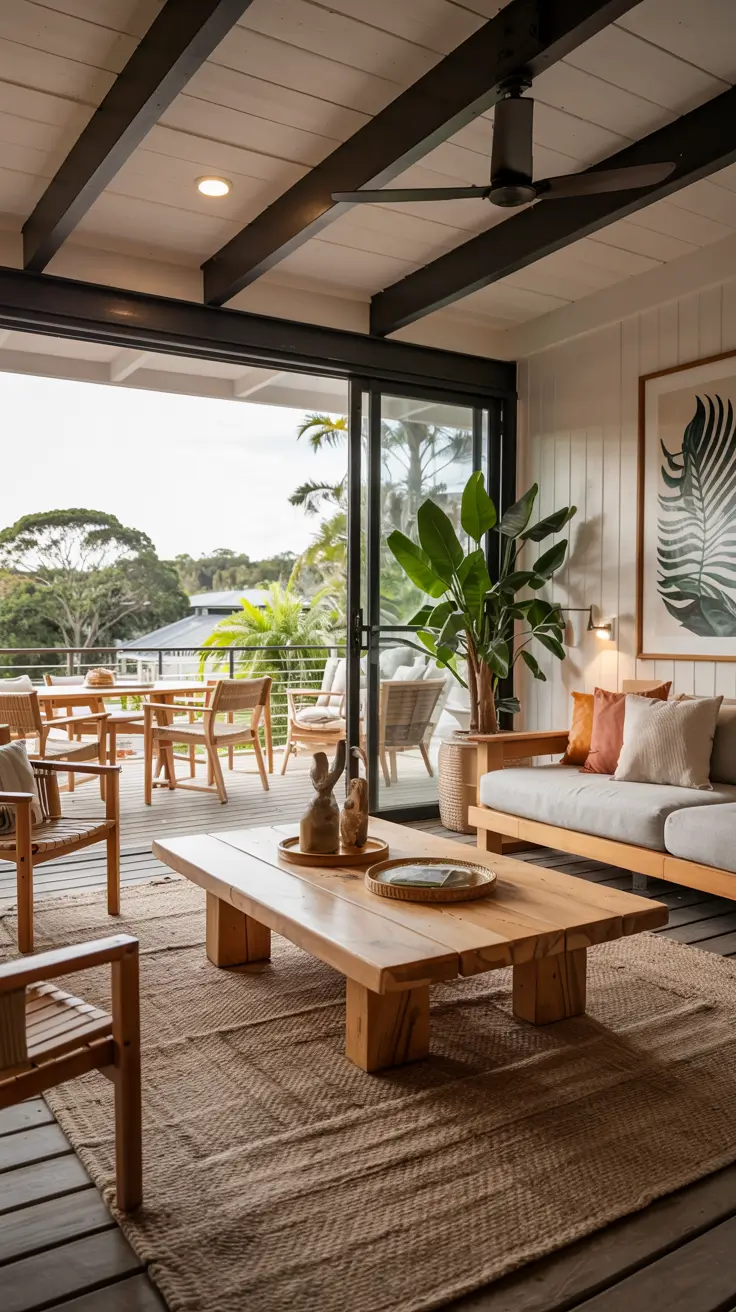
Furniture choices reflect a casual yet refined lifestyle. I often select low-profile seating, natural wood tables, and versatile outdoor furniture that suits both entertaining and daily use. Balconies and patios are treated as essential living areas rather than secondary spaces.
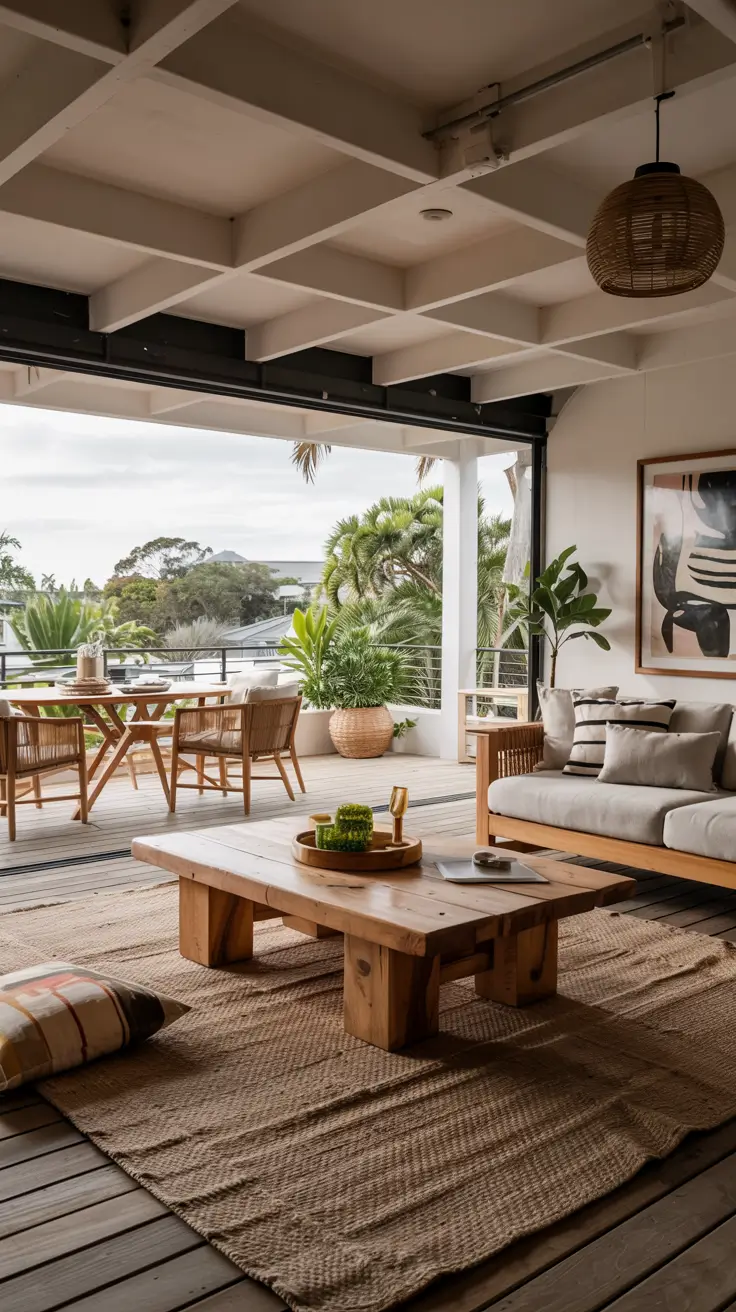
From my professional experience, Australian design philosophy values practicality above all. Media outlets frequently highlight the importance of durability and ease of maintenance, which I fully endorse in my projects.
What I would enhance in these designs is layered lighting. Combining ambient, task, and accent lighting improves usability and mood across different times of day.
The Future Vision of Indoor Outdoor Living Rooms Beyond 2026
When I look beyond 2026, I see the indoor outdoor living room evolving into a fully adaptive living environment rather than a fixed design solution. Future layouts will prioritize flexibility, with spaces that adjust easily to climate, lifestyle changes, and technology. I expect sliding doors, movable walls, and adaptable layouts to become standard, allowing the indoor/outdoor living room to shift seamlessly between private relaxation and large scale entertainment ideas. The focus will remain on comfort, natural light, and strong visual connections to the exterior.
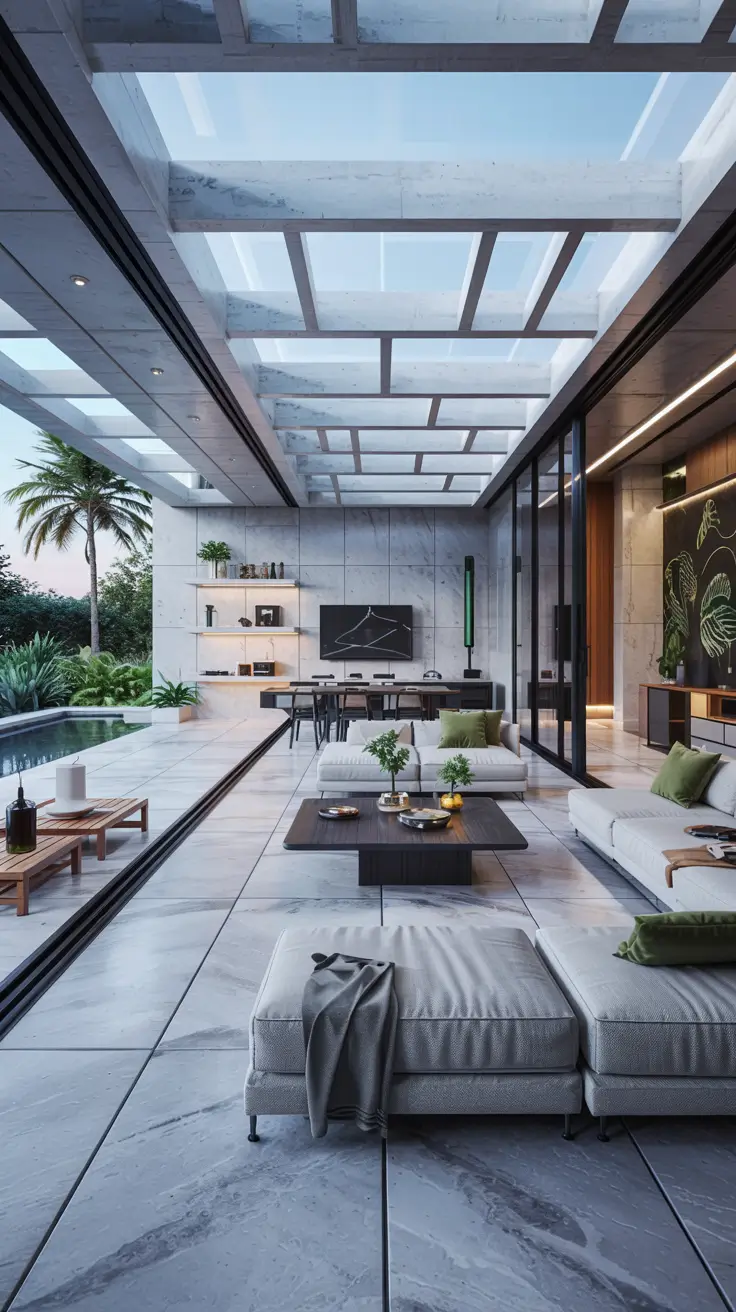
Furniture will become more intelligent and versatile. I anticipate modular indoor outdoor living room furniture that can be rearranged or stored effortlessly, along with materials that perform well across different environments. Sofas, rugs, and tables will increasingly blur the line between indoor and outdoor use, while integrated technology such as discreet lighting, climate control, and sound systems will enhance daily living without dominating the design. Flooring will also play a larger role, with continuous floor treatments strengthening the connection between interior and exterior zones.
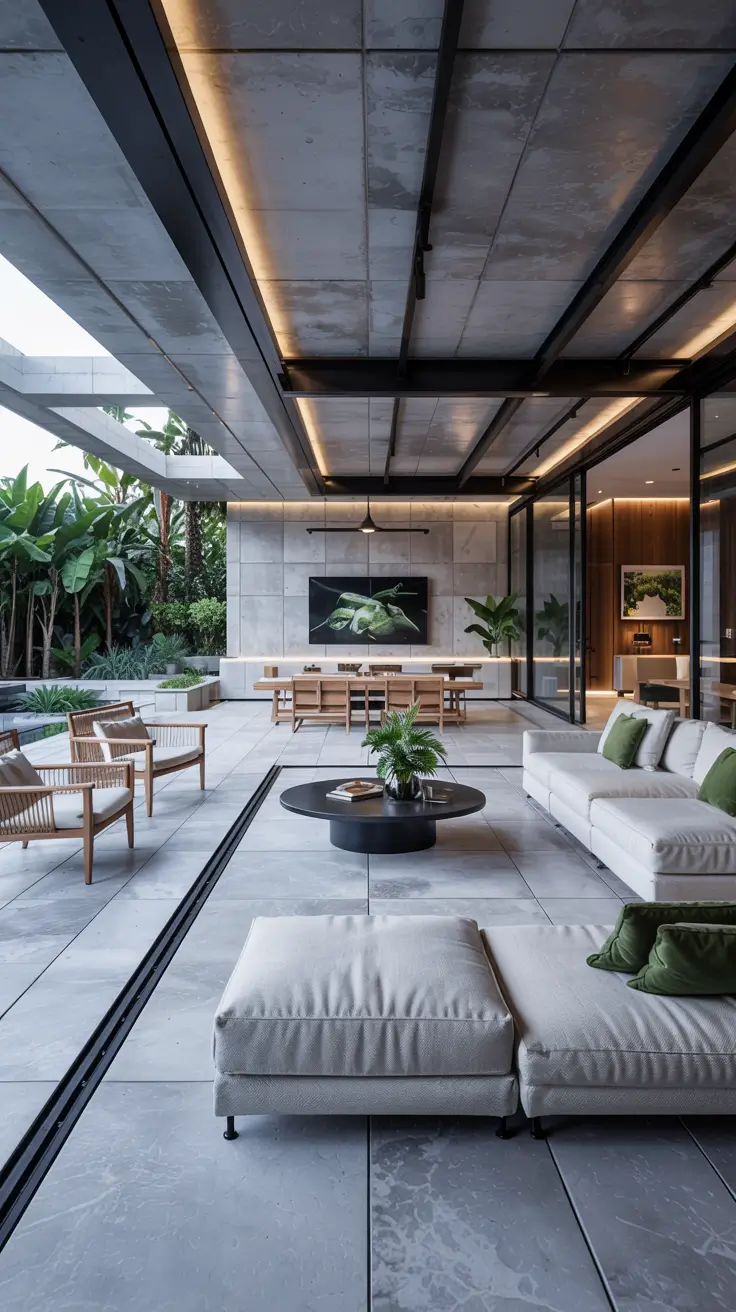
From my professional perspective, many designers and media outlets already point toward sustainability and wellness as the core drivers of future interior design. I fully agree with this direction. Indoor outdoor living room design will place greater emphasis on natural ventilation, biophilic decor, and healthier materials. Homes in Australia and similar climates are already leading this shift, showing how design can respond intelligently to the environment rather than fight against it.
What I believe should be added to future indoor outdoor living rooms is deeper personalization. Beyond layout and furniture, homeowners will want spaces that reflect their routines, whether that means adaptable kitchen ideas for hosting, quiet balcony corners for retreat, or hybrid living rooms that support both work and leisure. Designing with long term adaptability in mind will be essential.