Are you looking to transform your outdoor space with a timeless yet modern mediterranean garden style landscape? Wondering how mediterranean garden styles can evolve in 2026 while still preserving their rustic charm? In this guide, I explore how to design a garden in mediterranean style that blends tradition with contemporary outdoor living, using natural materials, warm palettes, and thoughtful layouts inspired by Tuscan, Spanish colonial, and modern influences.
Mediterranean Garden Style Landscape Ideas for a Natural and Elegant Outdoor Space
I approach a mediterranean garden style landscape by focusing on balance between structure and nature. In 2026, I see a strong emphasis on organic layouts with gravel pathways, stone borders, and layered greenery that feels effortless yet intentional. Olive trees, lavender, and ornamental grasses create a relaxed but refined atmosphere, while natural light plays a key role in highlighting textures and depth throughout the landscape.
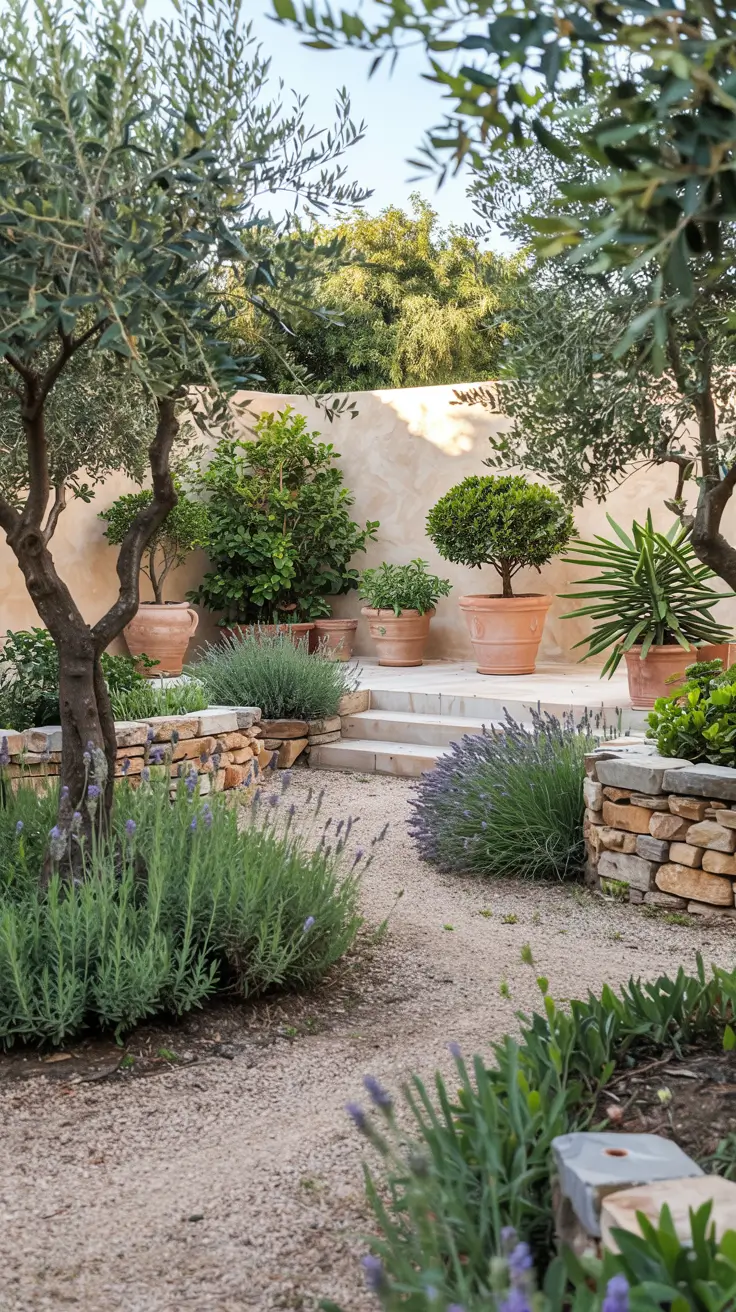
I include materials such as aged stone, terracotta pots, and weathered wood because they establish authenticity. Low stone walls define zones without closing off the space, and wrought iron accents add subtle elegance. I also prioritize functional outdoor living areas with simple seating arrangements that integrate seamlessly into the garden rather than dominating it.
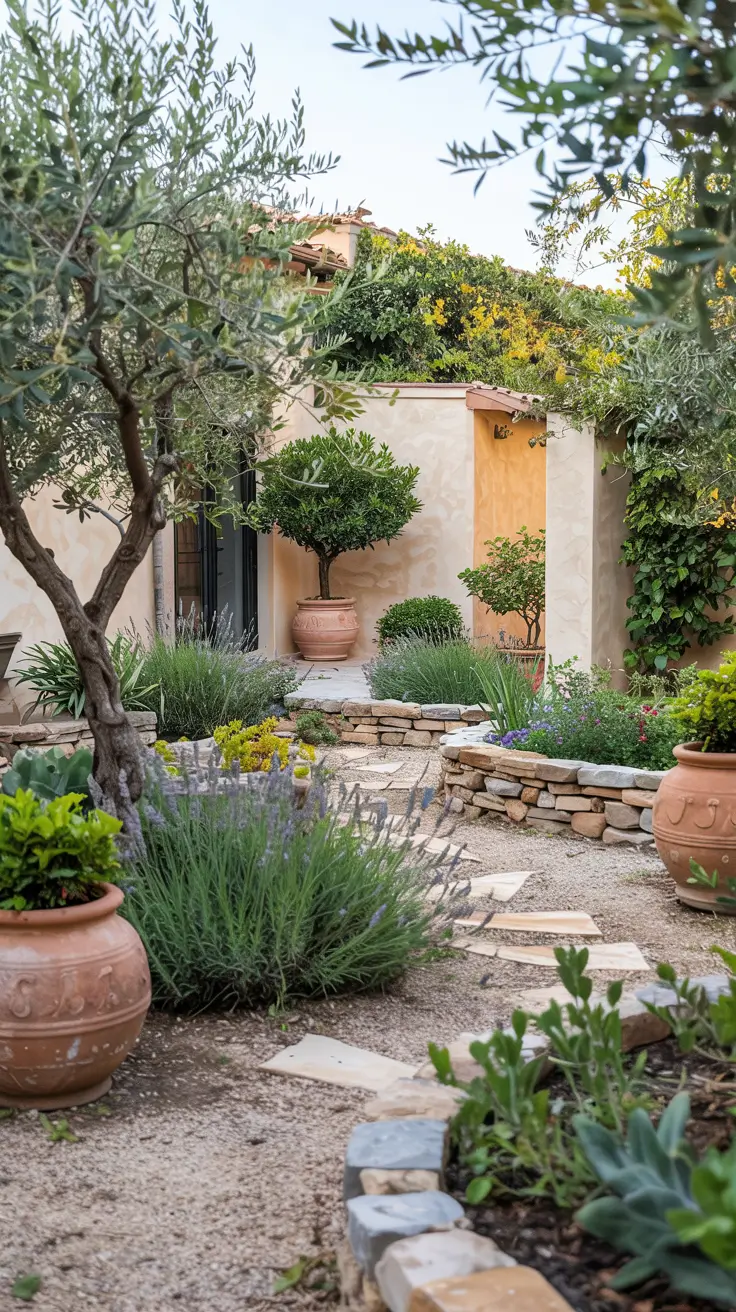
From my experience, restraint is essential. Many designers, including those featured in Architectural Digest, emphasize that mediterranean spaces feel luxurious because they are not overcrowded. I always recommend focusing on fewer, high-quality elements that age beautifully over time.
I would add a water feature to this section, such as a small stone fountain, to enhance the sensory experience and reinforce the calming, timeless character of the space.
Mediterranean Garden Styles That Blend Tuscan, Spanish Colonial, and Modern Trends
When combining mediterranean garden styles, I carefully blend Tuscan warmth, Spanish colonial structure, and modern simplicity. The result is a layered outdoor space that feels both classic and current. I use symmetry in layout, softened by natural planting, to create harmony across different stylistic influences.
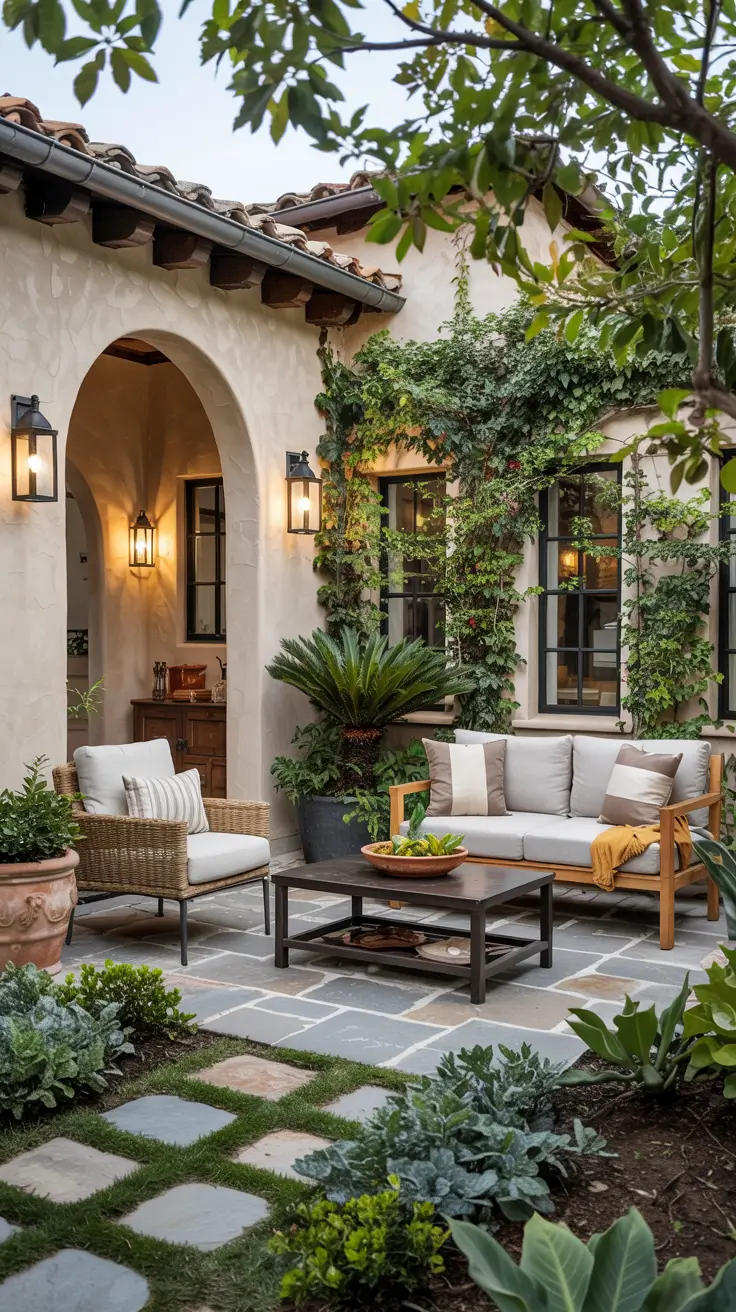
I incorporate stucco walls, arched openings, and clay roof tiles to reflect Spanish colonial roots, while Tuscan elements appear through stone paving and rustic wooden furniture. To modernize the look, I introduce clean-lined seating, neutral cushions, and minimalistic lighting fixtures that keep the design fresh for 2026.
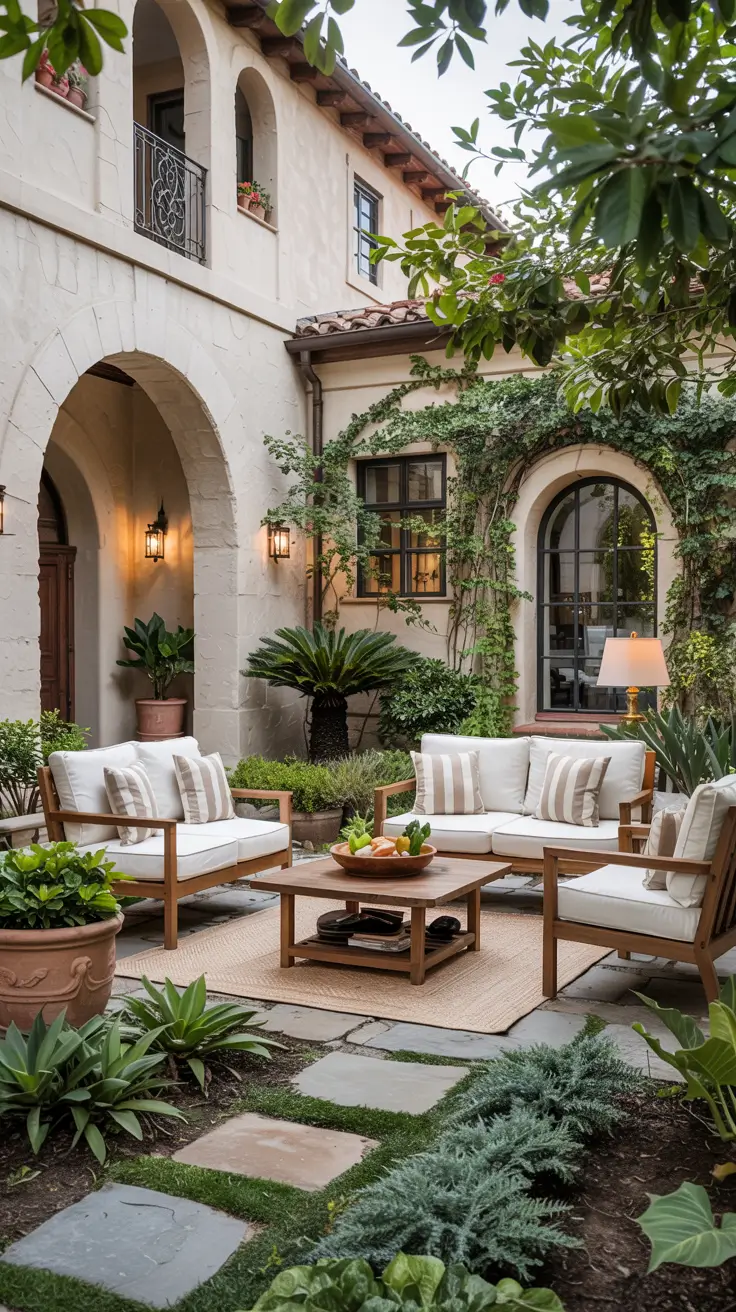
I have found that the key to mixing styles successfully is consistency in color palette. Earthy tones like sand, terracotta, and muted greens unify the design. Designers often note that cohesion matters more than strict adherence to one style, and I fully agree with this approach.
This section would benefit from more emphasis on lighting design, particularly layered outdoor lighting that highlights architectural features and creates ambiance in the evening.
Mediterranean Style Garden Design with Warm Textures and Earthy Color Palettes
In mediterranean style garden design, I prioritize texture as much as color. Rough stone, smooth plaster, and natural wood create visual depth, while earthy tones establish a grounded and welcoming environment. In 2026, I see a growing trend toward softer, sun-washed palettes that reflect natural aging and exposure to light.
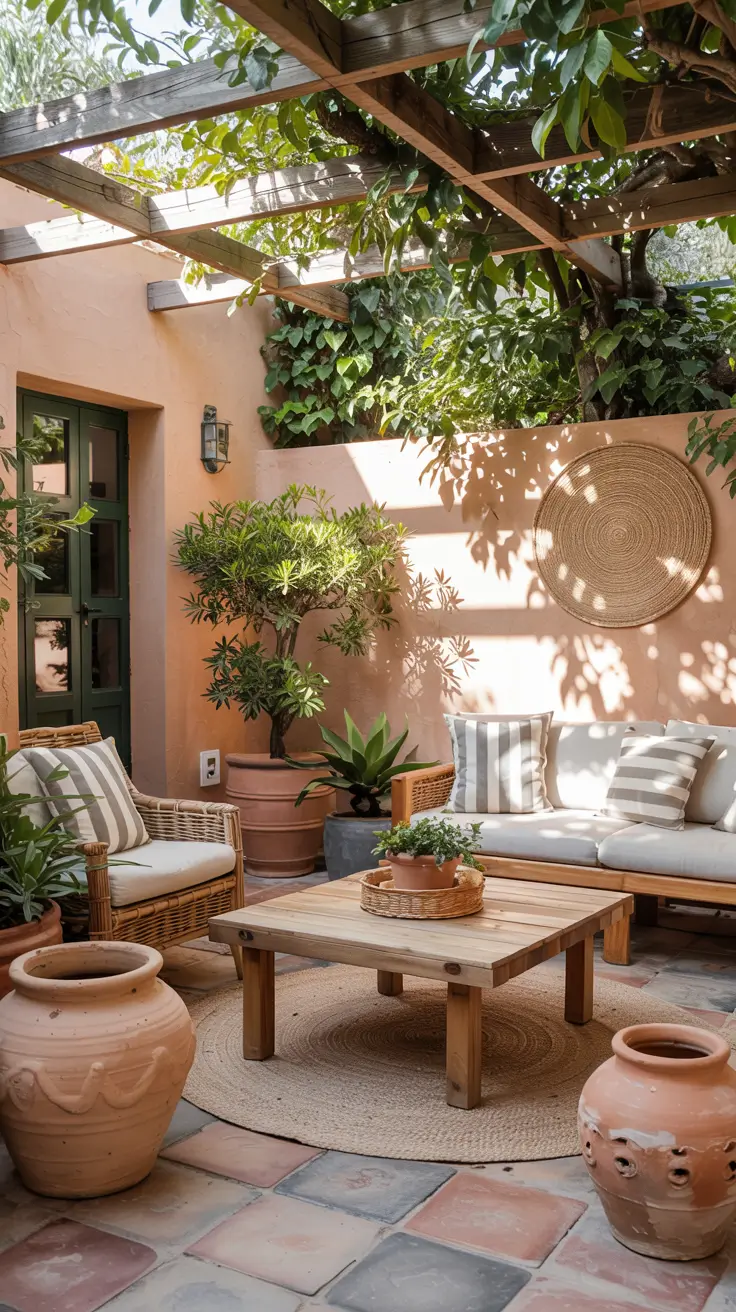
I use terracotta tiles, woven outdoor rugs, and linen cushions to introduce tactile contrast. Planters in clay and ceramic finishes complement the landscape, while neutral furniture allows the textures to stand out. Every element is selected to feel natural, not overly polished.
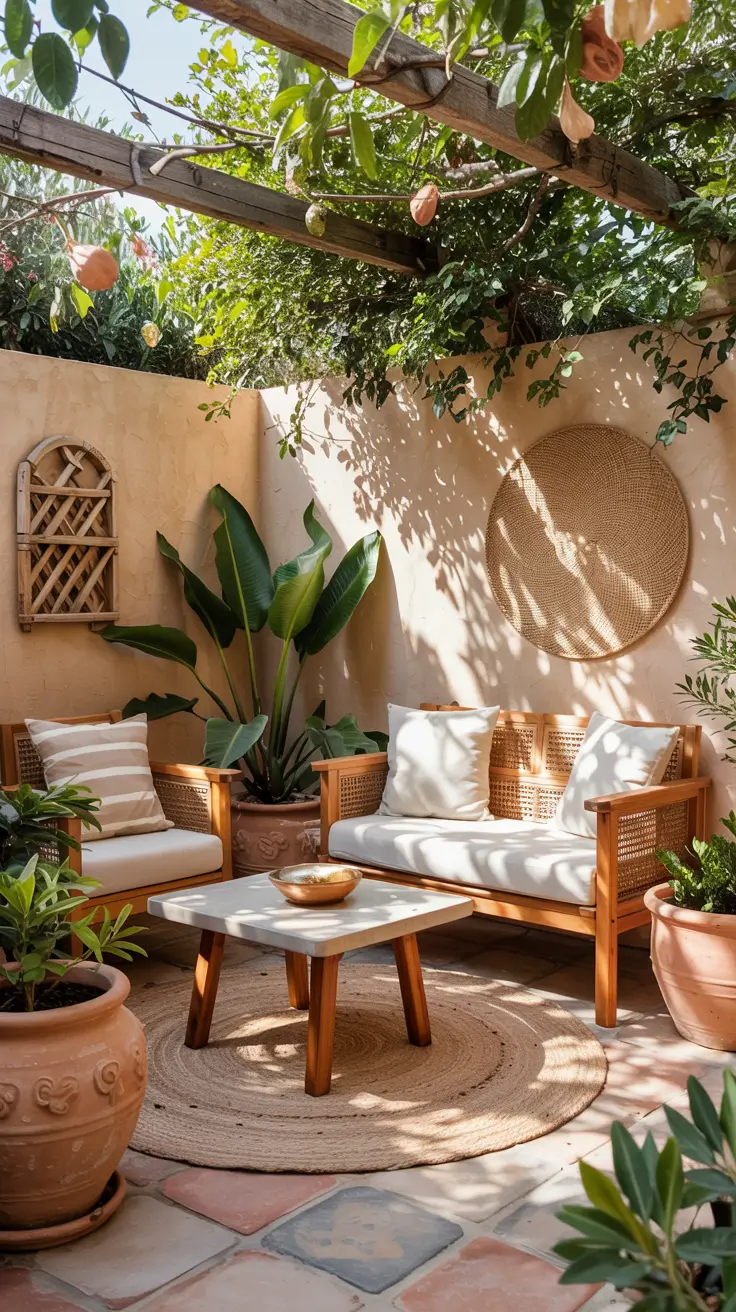
Personally, I believe that texture is what makes a mediterranean garden memorable. According to Elle Decor, layering materials is one of the most effective ways to create a lived-in and inviting outdoor space, and I consistently apply this principle in my designs.
I would add vertical elements such as pergolas or climbing vines to enhance the layering effect and provide both shade and visual interest.
Mediterranean Style Homes Garden Ideas for Seamless Indoor Outdoor Living
A mediterranean style homes garden is all about fluid transitions between indoor and outdoor spaces. I design these areas so that patios, terraces, and interiors feel like one continuous environment. Large openings, such as sliding or arched doors, help blur the boundaries and invite natural light inside.
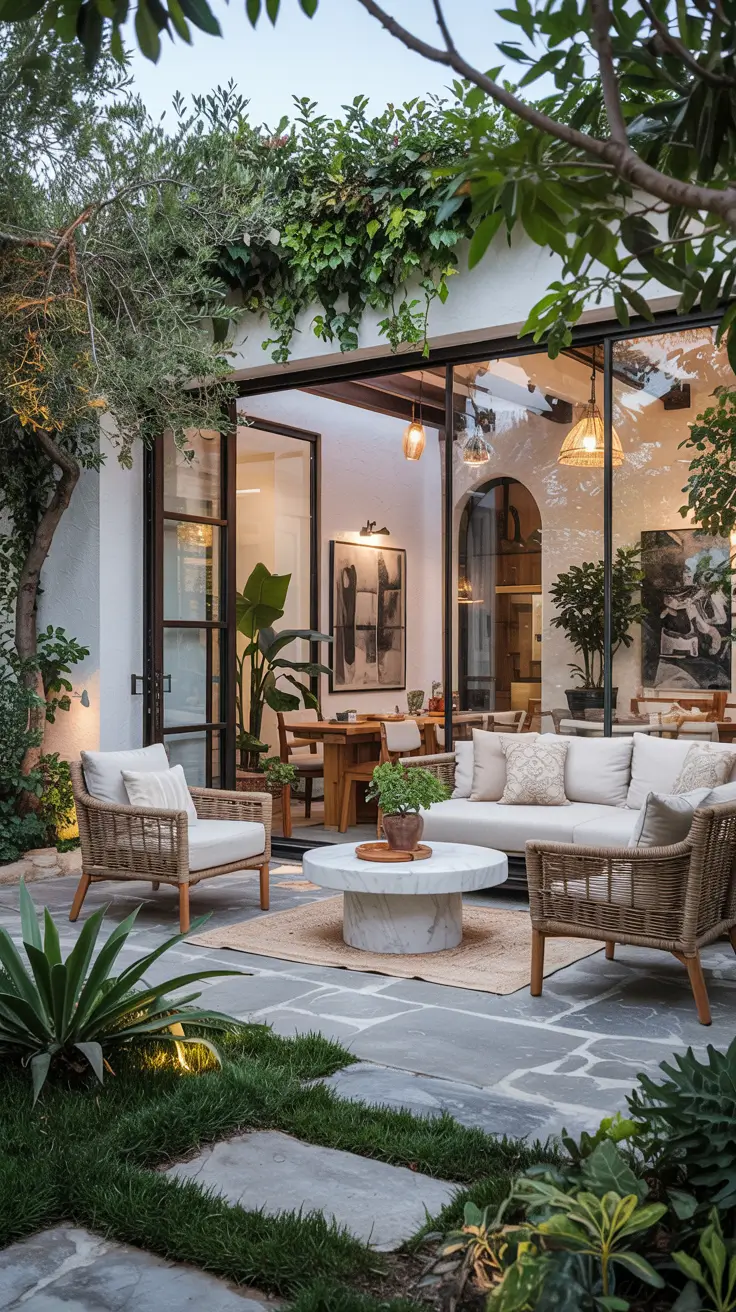
I include outdoor furniture that mirrors indoor comfort, such as cushioned sofas, wooden dining tables, and soft textiles. Materials remain consistent across both spaces, with stone flooring extending from inside to outside to create cohesion. Plants are used strategically to soften transitions and add freshness.
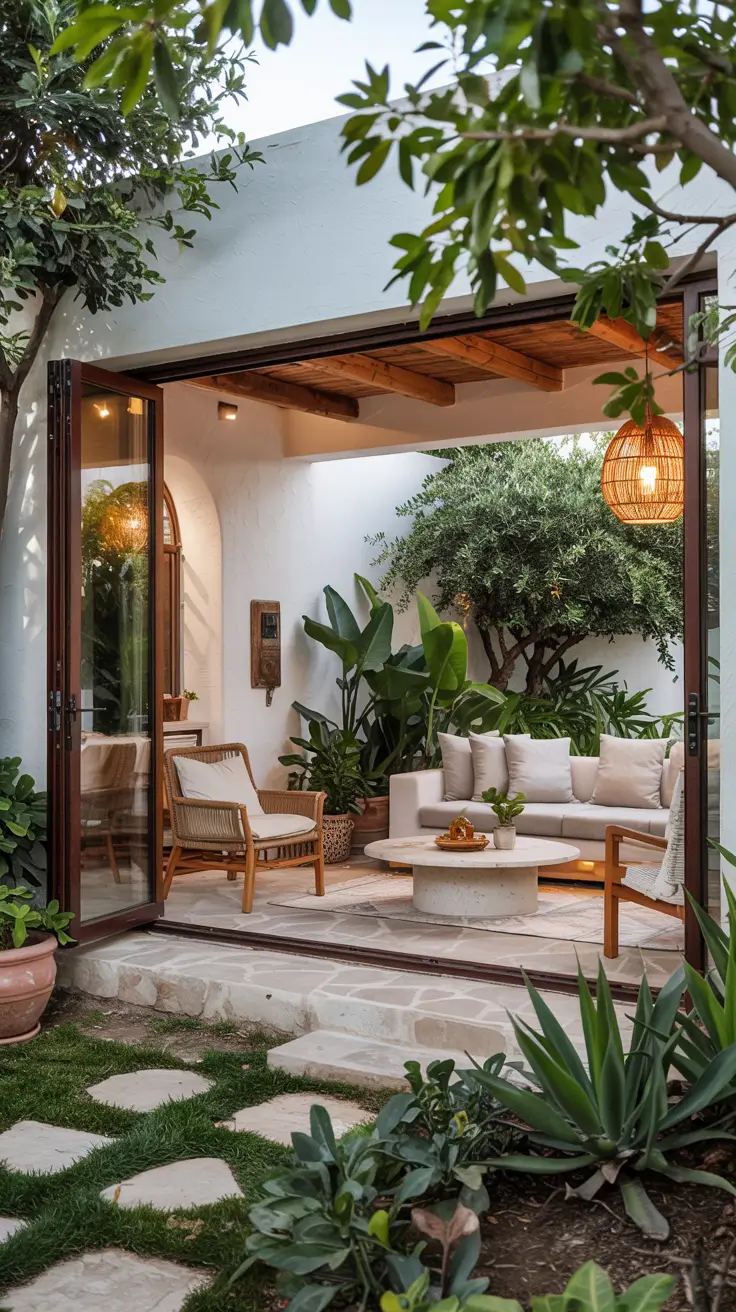
In my experience, this approach significantly enhances how people use their homes. Many designers highlight that outdoor living is no longer seasonal but an extension of daily life, and I see this reflected in how clients prioritize these spaces.
I would enhance this section by adding outdoor kitchens or built-in grills to fully support functional outdoor living.
How to Create a Garden in Mediterranean Style with Authentic Rustic Charm
Creating a garden in mediterranean style requires attention to authenticity. I focus on natural imperfections, such as uneven stone paths and weathered finishes, to achieve a rustic charm that feels genuine rather than staged. The goal is to create a space that looks like it has evolved over time.
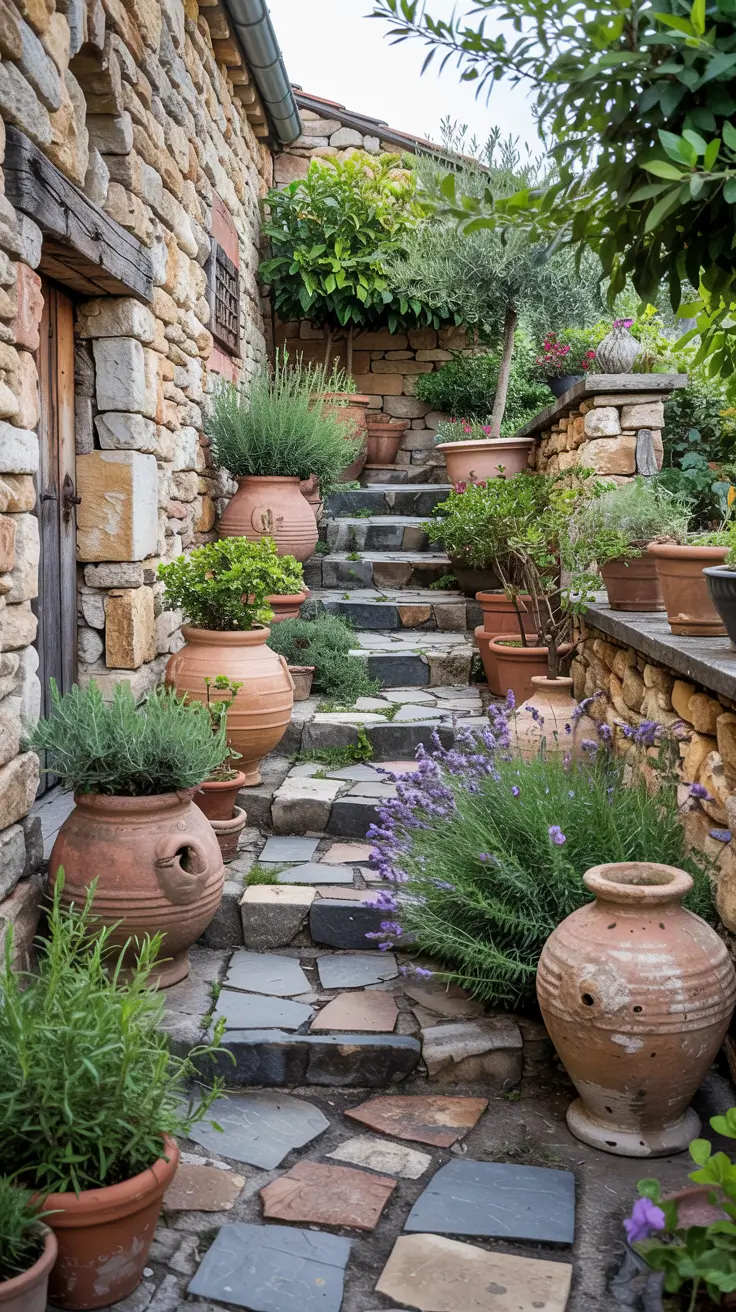
I select materials like reclaimed wood, antique pots, and handmade tiles to reinforce this aesthetic. Plant choices also play a role, with drought-tolerant species arranged in a slightly informal way. Furniture is simple and sturdy, often with a handcrafted appearance.
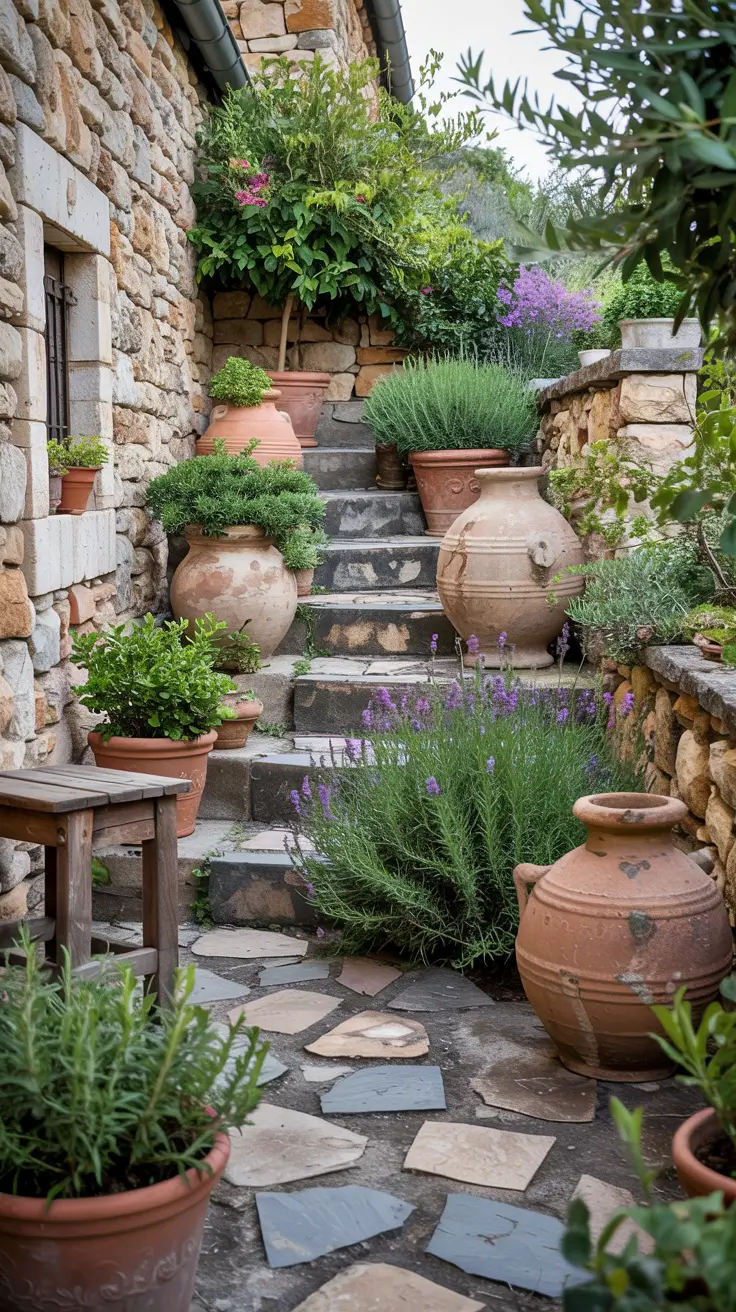
I always remind myself that perfection is not the goal here. As noted by House Beautiful, the beauty of rustic design lies in its imperfections, and I find that embracing this idea leads to more authentic and inviting spaces.
I would add more emphasis on scent, incorporating herbs like rosemary and thyme to enhance the sensory experience of the garden.
Mediterranean Garden Design Tuscan Style Patio for Cozy Outdoor Dining Spaces
A mediterranean garden design tuscan style patio is centered around gathering and dining. I design these patios to feel intimate and welcoming, often enclosed by stone walls or greenery to create a sense of privacy. The layout encourages long, relaxed meals in a comfortable outdoor setting.
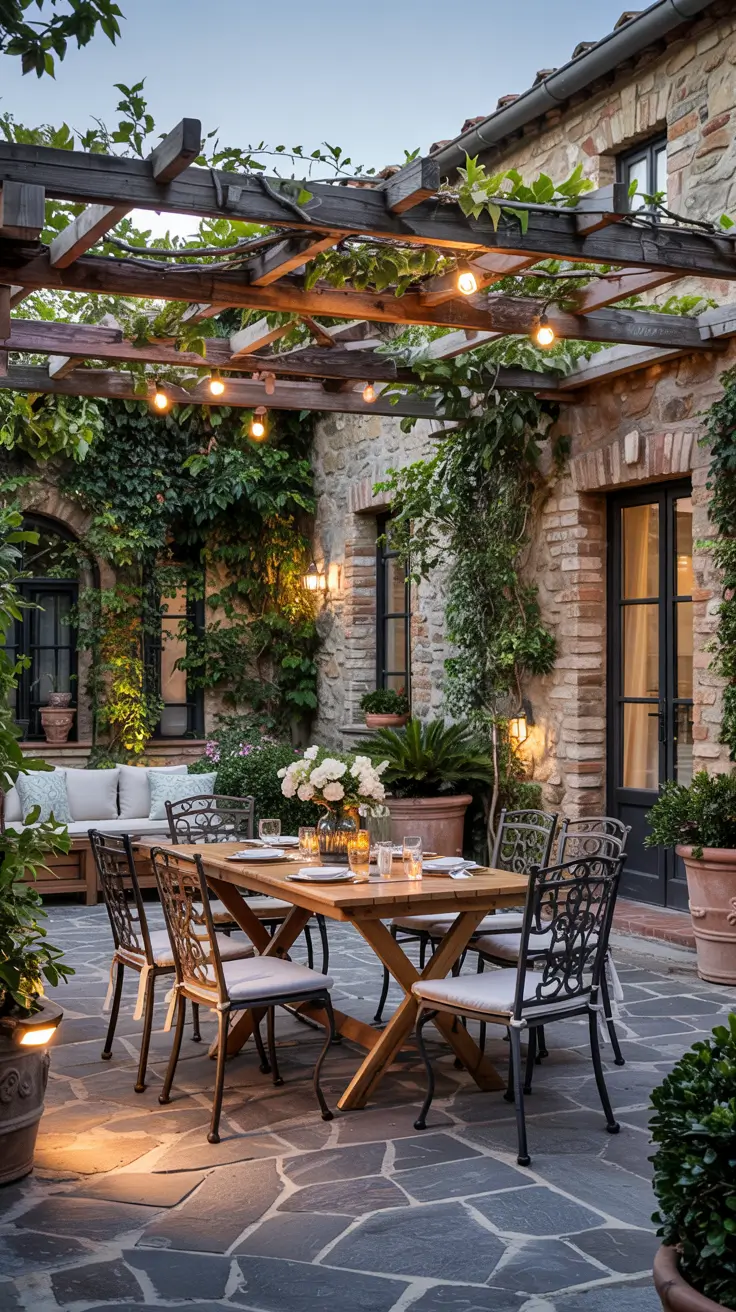
I include a large wooden dining table, wrought iron chairs, and soft cushions for comfort. Overhead, I often add a pergola with climbing vines to provide shade and texture. Lighting is warm and subtle, with lanterns or string lights enhancing the atmosphere in the evening.
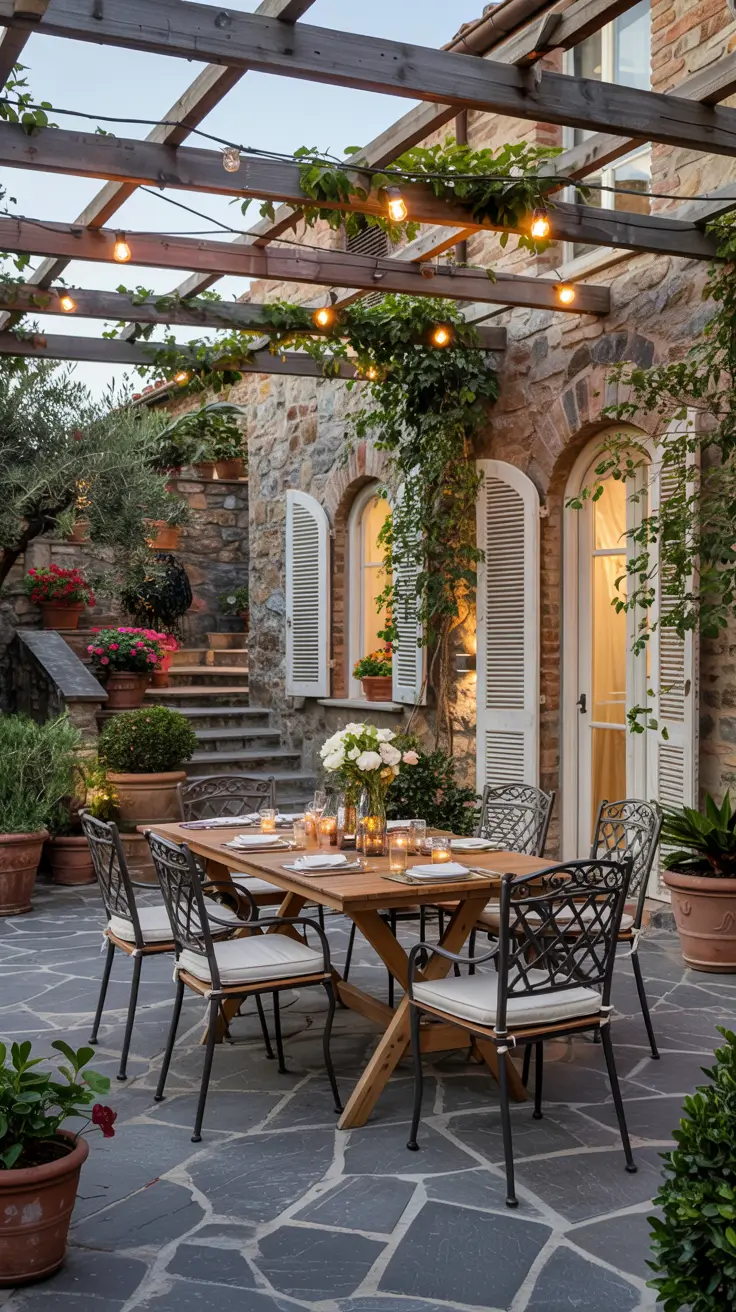
From my perspective, the success of a Tuscan patio lies in its ability to bring people together. Many outdoor living experts emphasize the importance of creating spaces that encourage connection, and I always keep this in mind during the design process.
I would incorporate a built-in pizza oven or fireplace to elevate the functionality and create a focal point for gatherings.
Mediterranean Garden Design Tuscan Style Outdoor Living for Relaxed Luxury
Mediterranean garden design tuscan style outdoor living combines comfort with understated elegance. I create lounge areas that feel luxurious without being overly formal, using natural materials and soft textiles to achieve a relaxed atmosphere.
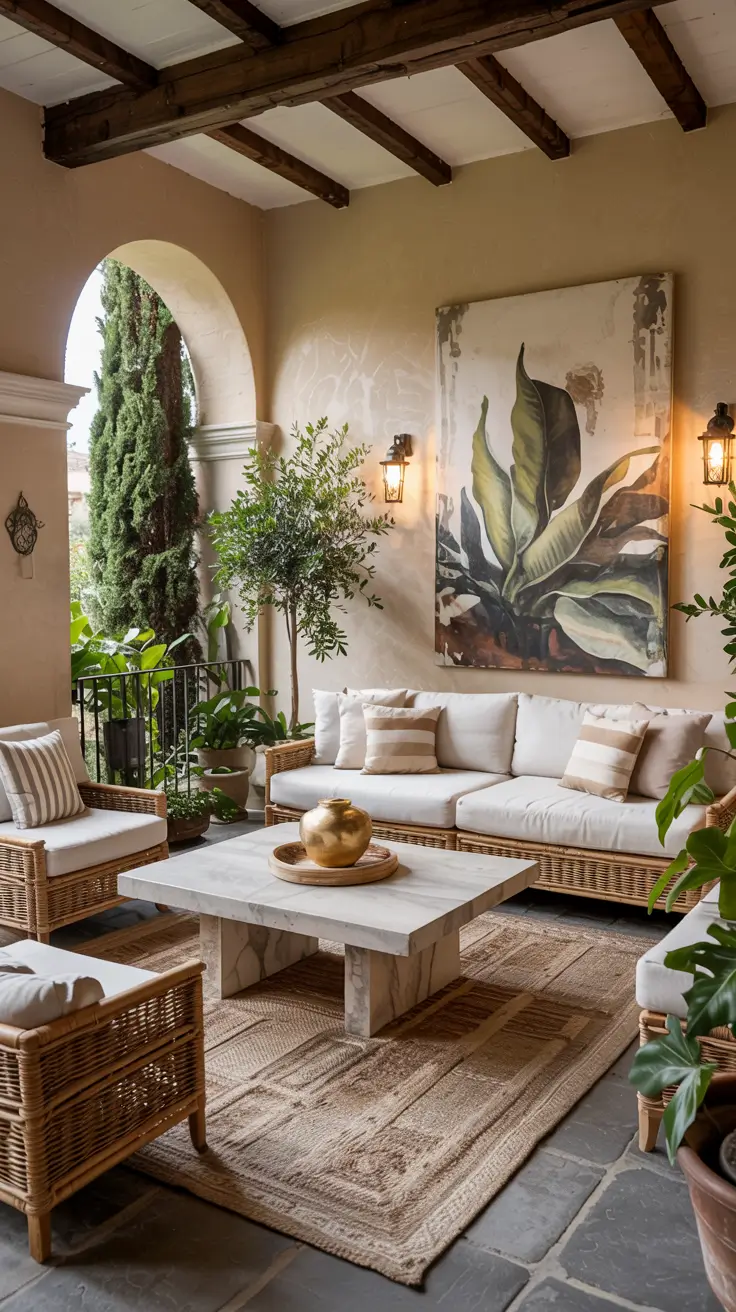
I choose deep seating with neutral cushions, stone or wood coffee tables, and layered rugs to define the space. Surrounding greenery provides privacy and softness, while architectural elements like arches or columns add structure. Every detail is designed to encourage relaxation.
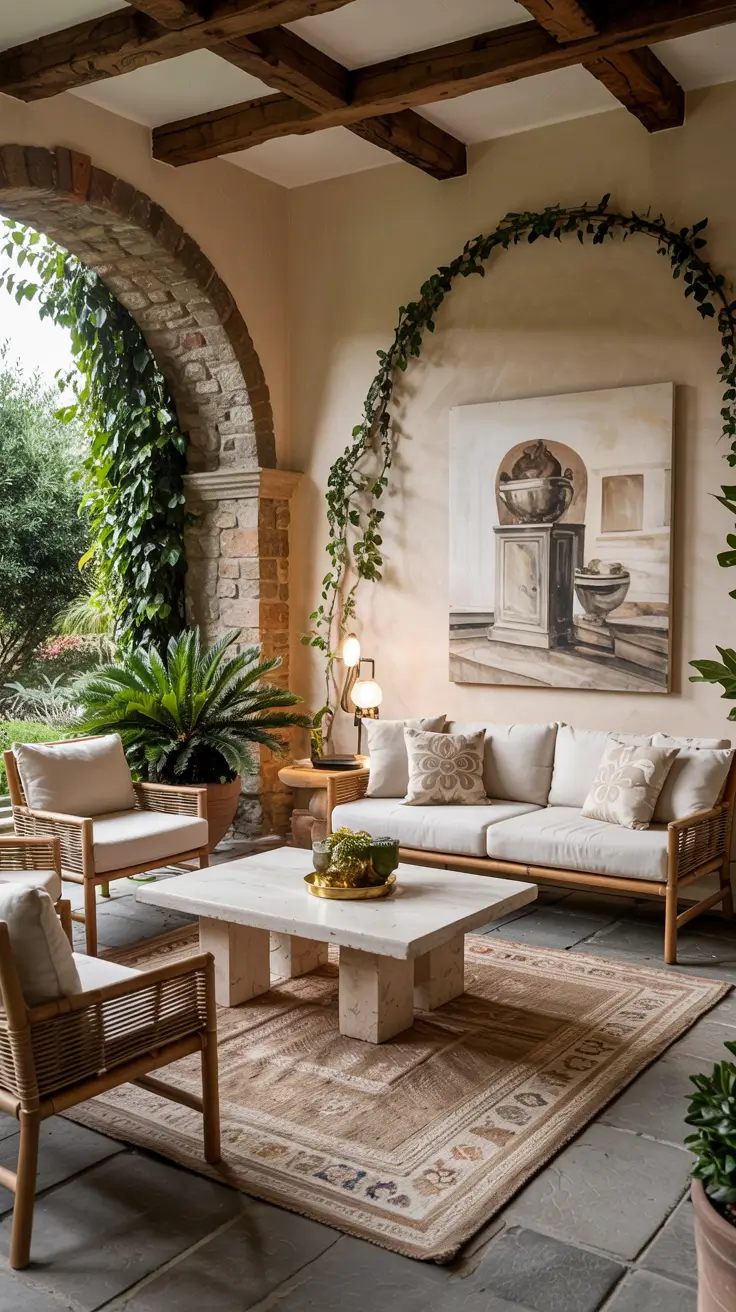
In my work, I have found that luxury in mediterranean design is subtle. It comes from quality materials, thoughtful layout, and a strong connection to nature. This aligns with the approach often highlighted in Veranda magazine, where outdoor spaces are designed to feel both refined and livable.
I would enhance this section by adding water elements, such as a reflecting pool or fountain, to reinforce the sense of tranquility.
Mediterranean Style Garden Shed Ideas with Rustic and Coastal Influence
I design a mediterranean style garden shed as more than just a storage space. In 2026, I see it becoming a decorative focal point that enhances the overall landscape. I focus on blending rustic textures with subtle coastal influences, using light stucco finishes, soft blue or sandy tones, and natural surroundings to create harmony with the garden.
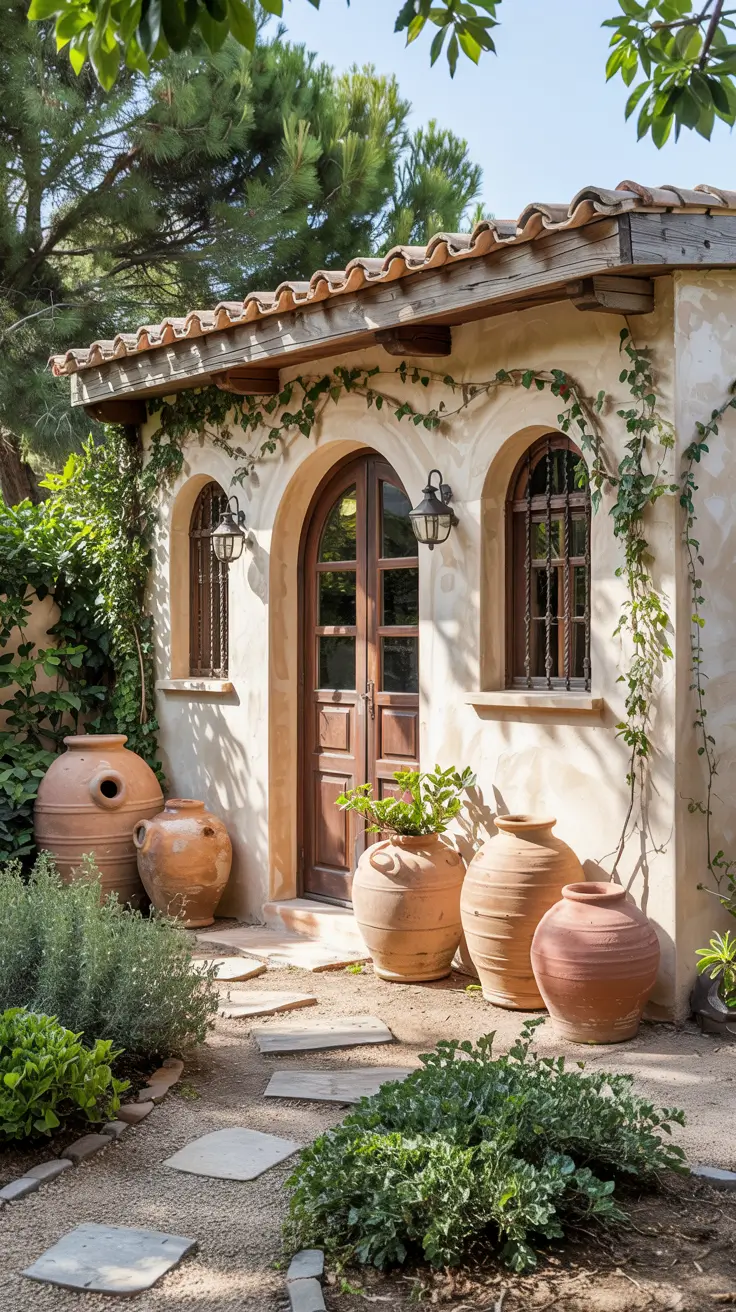
I include wooden doors with a weathered finish, small arched windows, and terracotta roof tiles to maintain authenticity. Surrounding the shed, I place clay pots, climbing vines, and gravel paths to integrate it into the mediterranean garden style landscape. Functional elements like shelving and hidden storage are carefully incorporated without disrupting the aesthetic.
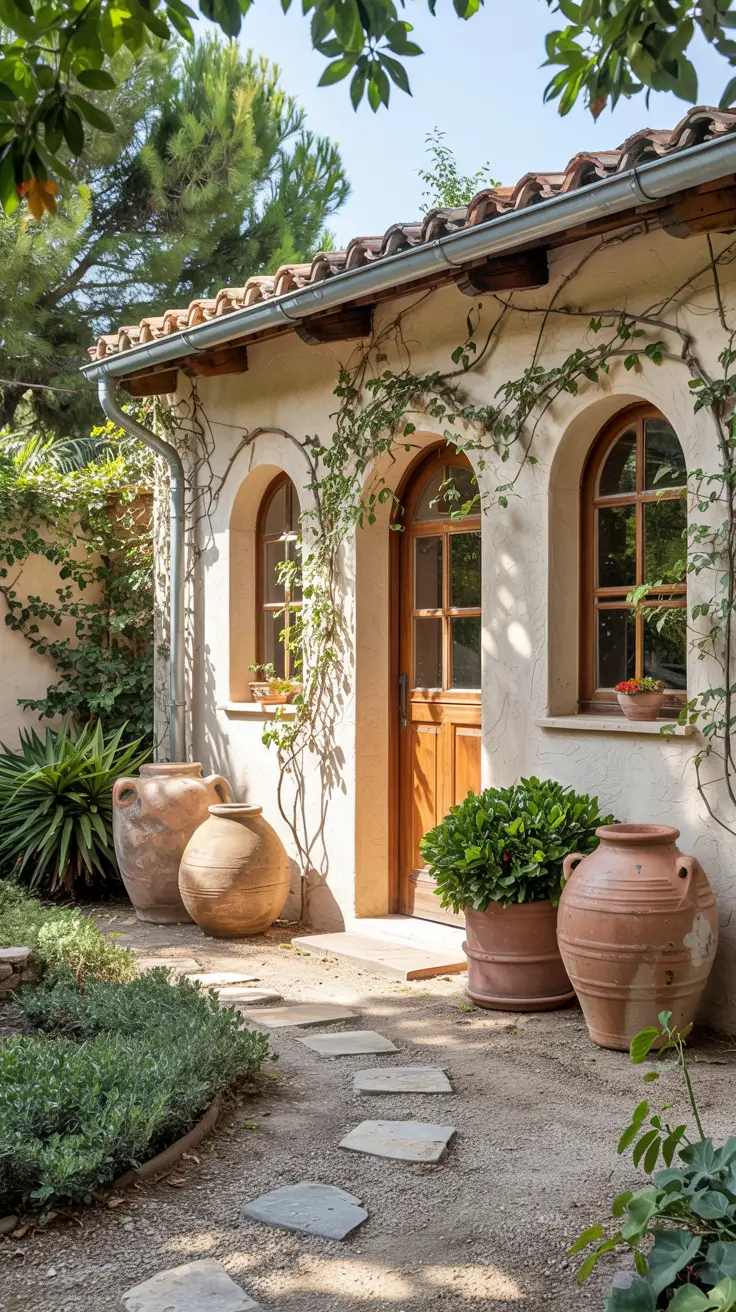
From my experience, a well-designed shed can elevate the entire outdoor space. Designers often emphasize that even utility structures should follow the same design language as the main house, and I fully support this approach.
I would add outdoor lighting around the shed to highlight its architectural details and make it visually appealing during evening hours.
Mediterranean Style Roof Garden Designs for Urban Outdoor Escapes
A mediterranean style roof garden allows me to bring warmth and nature into urban environments. I approach these spaces with a focus on maximizing light, airflow, and functionality, creating a peaceful retreat above the city. In 2026, rooftop gardens are becoming essential for modern outdoor living, especially in compact spaces.
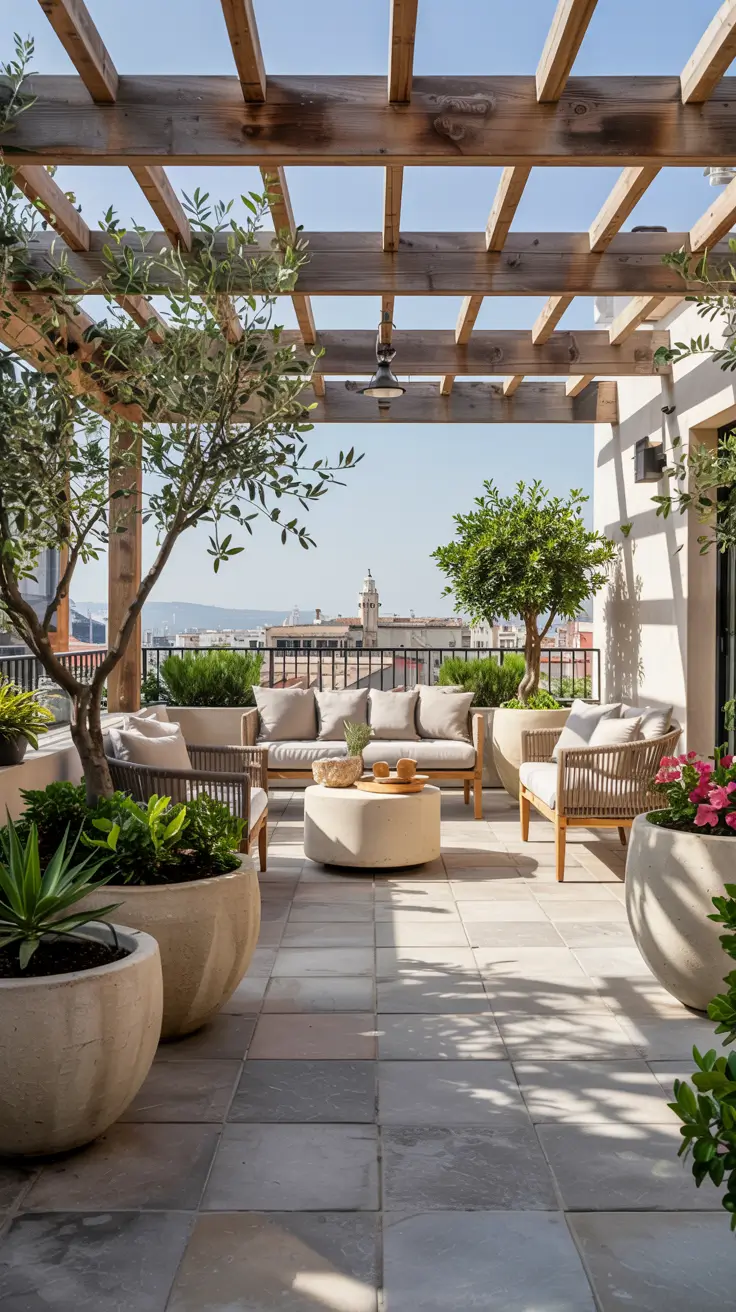
I use large planters with olive trees, citrus plants, and grasses to create a layered look. Flooring often includes stone or textured tiles, while pergolas or shade sails provide comfort. Furniture is low-profile and neutral, ensuring the space feels open and uncluttered.
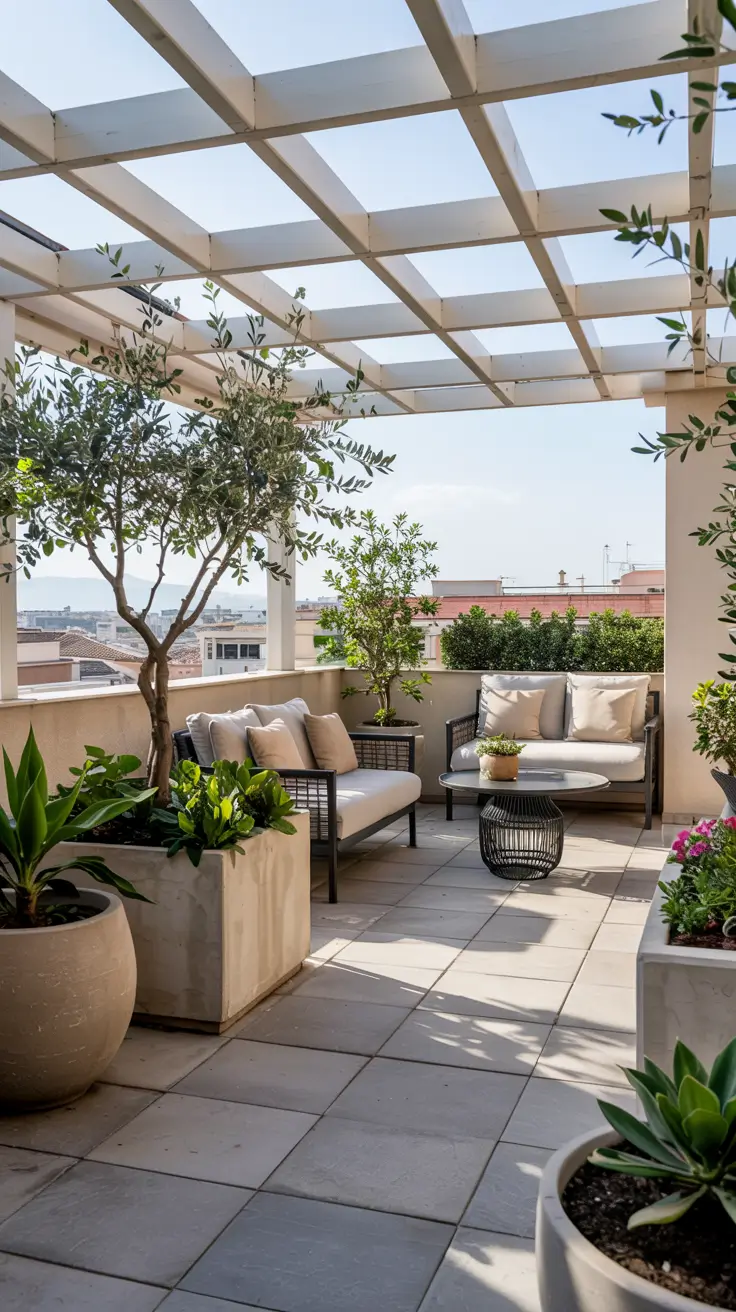
I have found that rooftop gardens benefit greatly from simplicity. According to many urban design experts, overloading a small space reduces its usability, so I always prioritize balance and openness.
I would enhance this section by adding a small water feature or vertical garden wall to increase visual interest without taking up valuable floor space.
Mediterranean Style Container Garden Ideas for Small and Stylish Spaces
A mediterranean style container garden is ideal when space is limited but style is still a priority. I use containers to create flexible layouts that can adapt to terraces, balconies, or patios. In 2026, this approach is increasingly popular in urban settings and smaller homes.
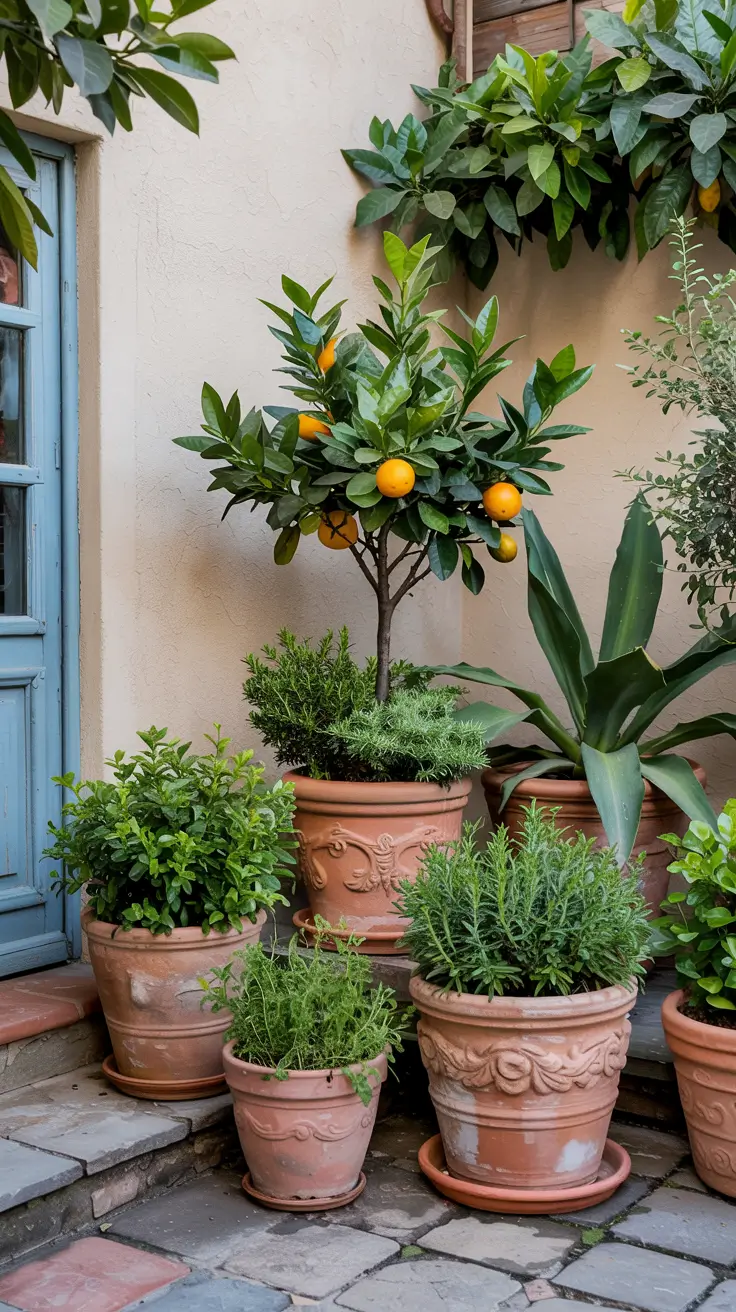
I select terracotta, ceramic, and stone containers in varying sizes to create depth and interest. Plants such as rosemary, thyme, and small citrus trees work well in these setups. I arrange them in clusters to mimic the layered look of a traditional mediterranean garden design tuscan style backyards.
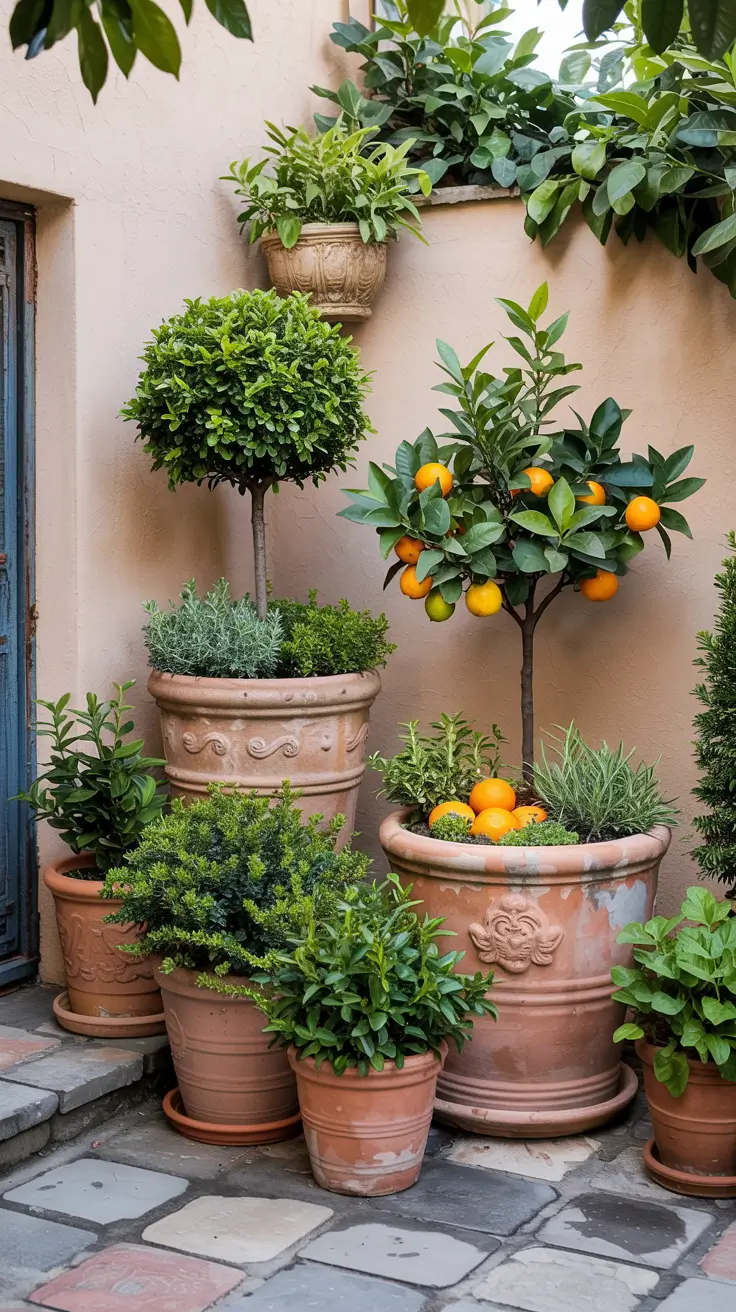
Personally, I appreciate how versatile container gardening can be. It allows for easy updates and seasonal changes while maintaining a cohesive aesthetic. Many designers recommend grouping containers in odd numbers for a more natural look, and I often apply this technique.
I would include a drip irrigation system to improve maintenance and ensure plants thrive with minimal effort.
Mediterranean Garden Design Tuscan Style Backyards with Stone and Greenery
When designing mediterranean garden design tuscan style backyards, I focus on strong structural elements combined with lush greenery. Stone surfaces define the space, while plants soften the overall look. This balance creates a timeless outdoor environment that feels both grounded and inviting.
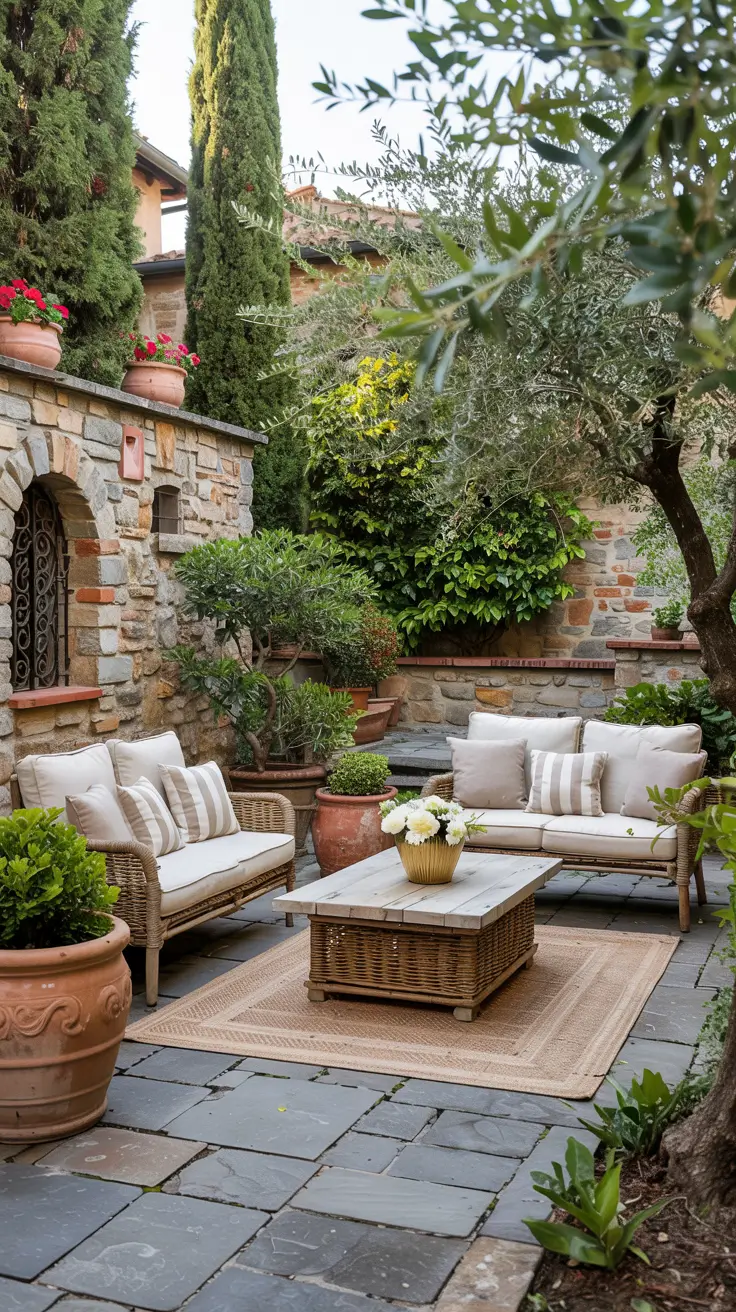
I incorporate stone patios, low walls, and pathways to organize the layout. Olive trees, cypress, and flowering plants provide vertical and horizontal interest. Seating areas are integrated naturally, often positioned to take advantage of shade and views.
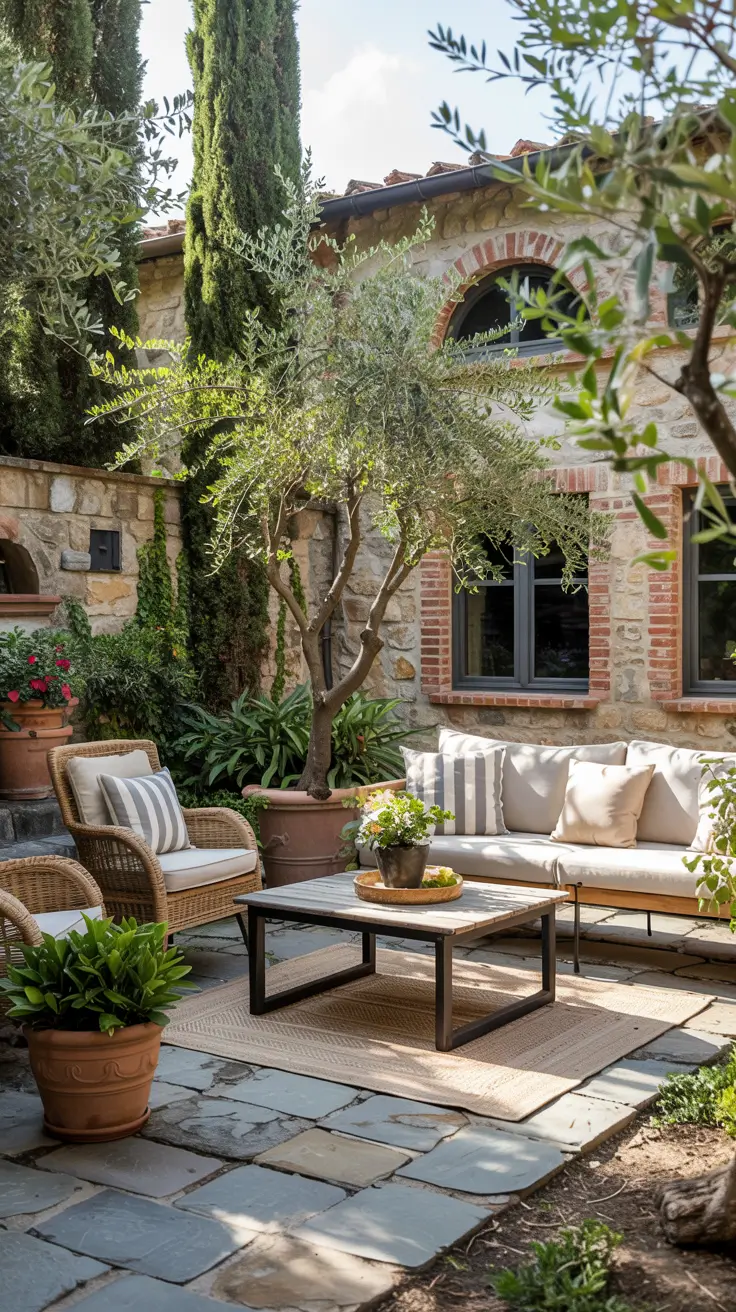
In my opinion, the success of a Tuscan backyard lies in its ability to feel both structured and relaxed. As highlighted in many landscape design publications, combining hardscape and softscape elements is key to achieving this balance.
I would add more shaded seating areas to improve comfort, especially in warmer climates where sun exposure can be intense.
Mediterranean Style Terrace Garden Ideas for Elevated Outdoor Living
A mediterranean style terrace garden transforms elevated spaces into functional and beautiful outdoor living areas. I design terraces to feel like extensions of the home, incorporating comfortable seating, greenery, and thoughtful layouts that maximize views.
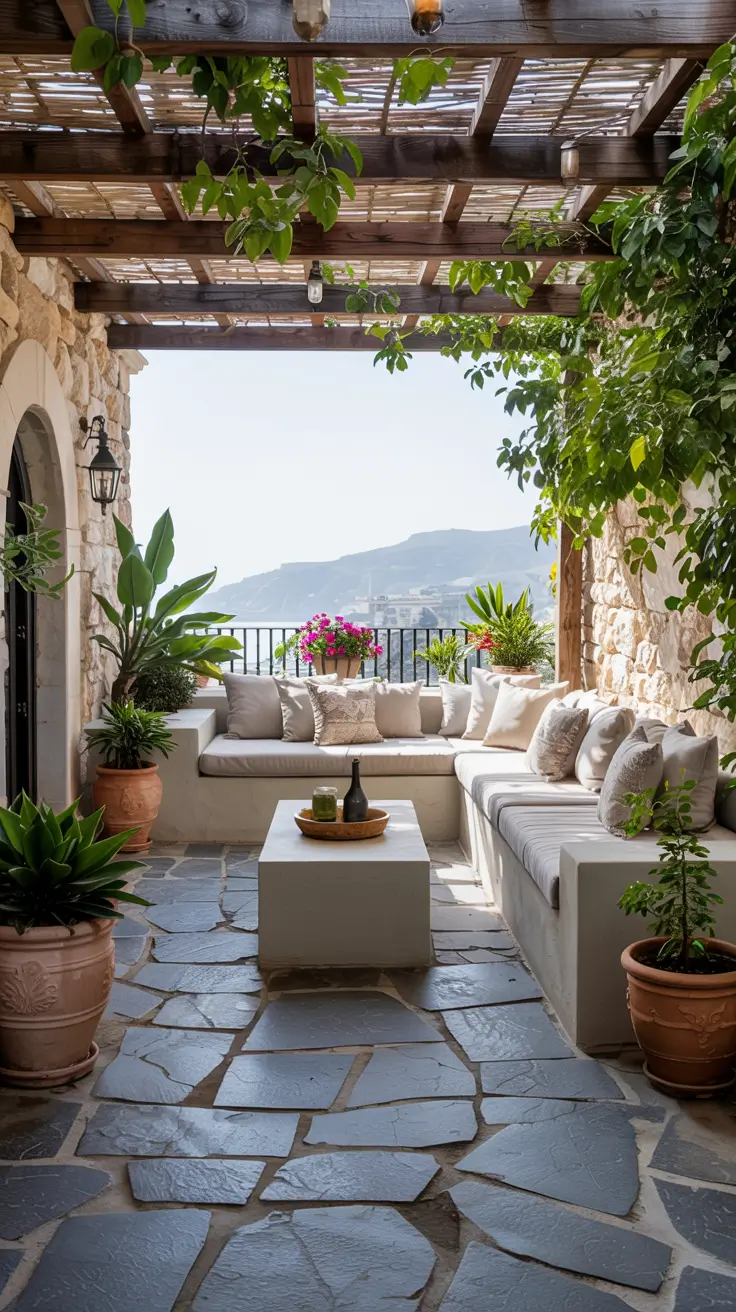
I use stone or tile flooring, built-in seating, and planters to define zones within the terrace. Neutral cushions, woven textures, and soft lighting create a cozy atmosphere. Railings are often softened with plants to maintain a natural feel.
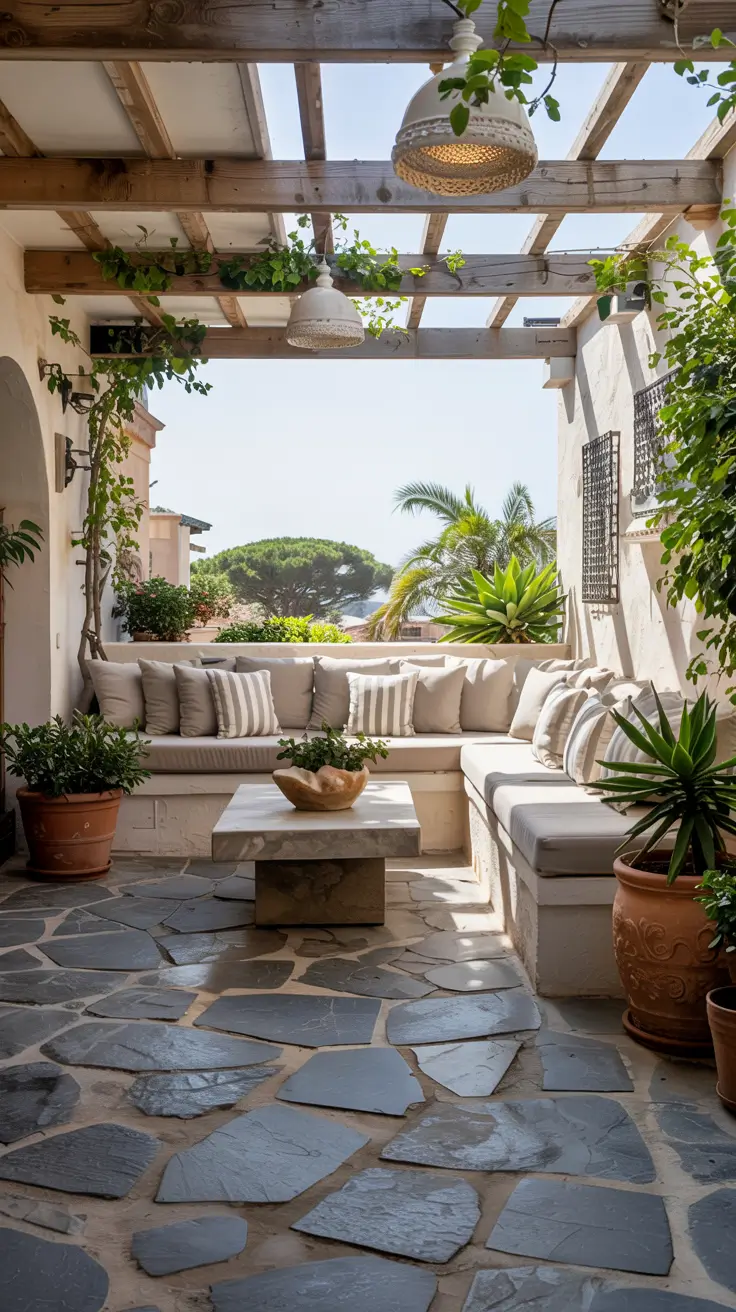
From my experience, terraces offer a unique opportunity to combine privacy with openness. Designers often suggest using layered elements to create depth, and I find this approach especially effective in elevated spaces.
I would enhance this section by incorporating shade solutions such as pergolas or retractable awnings to improve usability throughout the day.
Mediterranean Landscape Design Tuscan Inspiration for a Natural Look
Mediterranean landscape design tuscan inspiration is rooted in simplicity and connection to nature. I aim to create spaces that feel organic and timeless, using natural materials and a restrained palette to achieve a cohesive look.
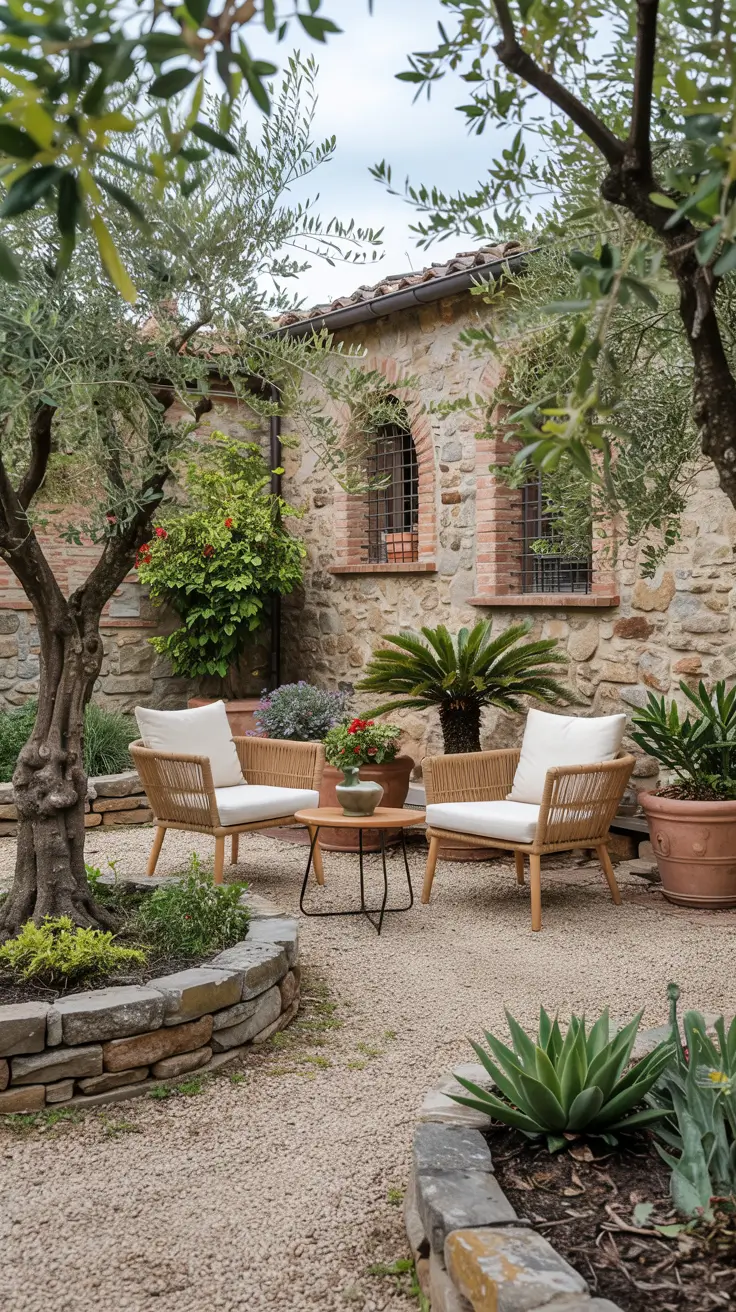
I include gravel paths, stone walls, and drought-tolerant plants to reflect traditional tuscan landscapes. The design is intentionally understated, allowing the natural beauty of the materials and plants to stand out. Furniture is minimal and blends seamlessly into the environment.
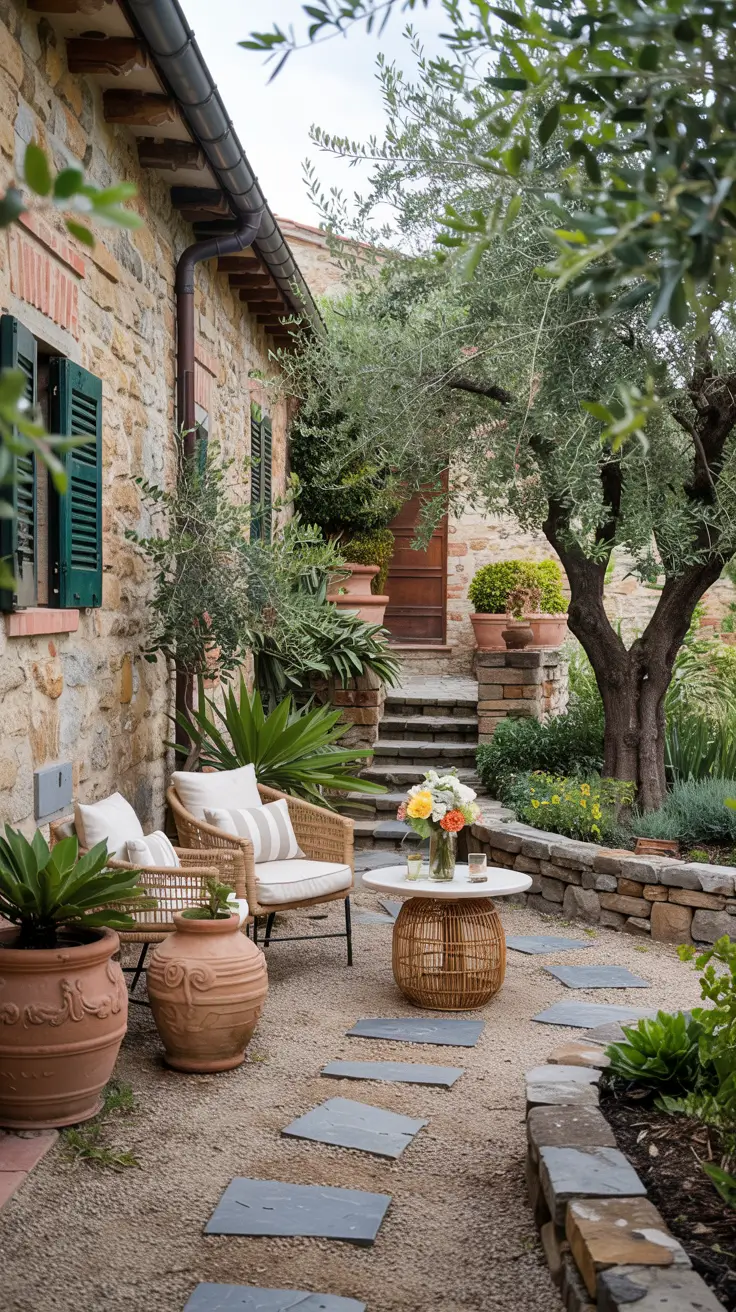
I believe that less is often more in these spaces. Many experts emphasize that mediterranean gardens should feel effortless, and I always strive to create that sense of ease in my work.
I would add more emphasis on seasonal changes, ensuring the garden remains visually appealing throughout the year with a mix of evergreen and flowering plants.
Mediterranean Garden Ideas UK Adaptations for Cooler Climates
I often approach mediterranean garden styles in the UK by focusing on climate-smart design while preserving the essence of a warm, sun-soaked landscape. A mediterranean garden style landscape in cooler regions requires thoughtful planning with sheltered zones, windbreaks, and materials that retain heat. I design spaces that maximize sunlight exposure, often incorporating south-facing layouts and enclosed courtyards to mimic the microclimates found in southern Europe.
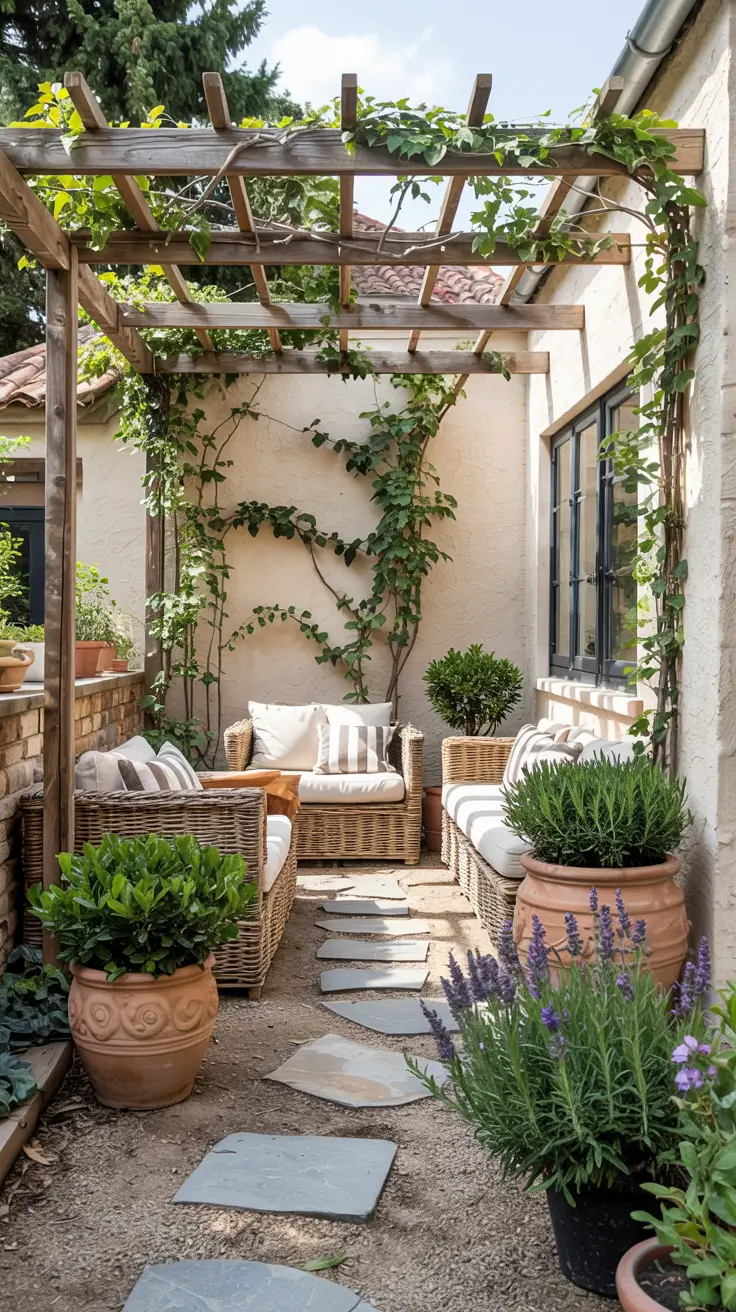
In my experience, materials play a crucial role. I prefer using natural stone paving, gravel pathways, and terracotta pots that store warmth during the day and release it slowly at night. Olive trees can be replaced with hardy alternatives like bay or hardy palms, while lavender, rosemary, and sage still thrive well. I also integrate pergolas with climbing plants to create protection from wind and light rain, making outdoor living more practical.
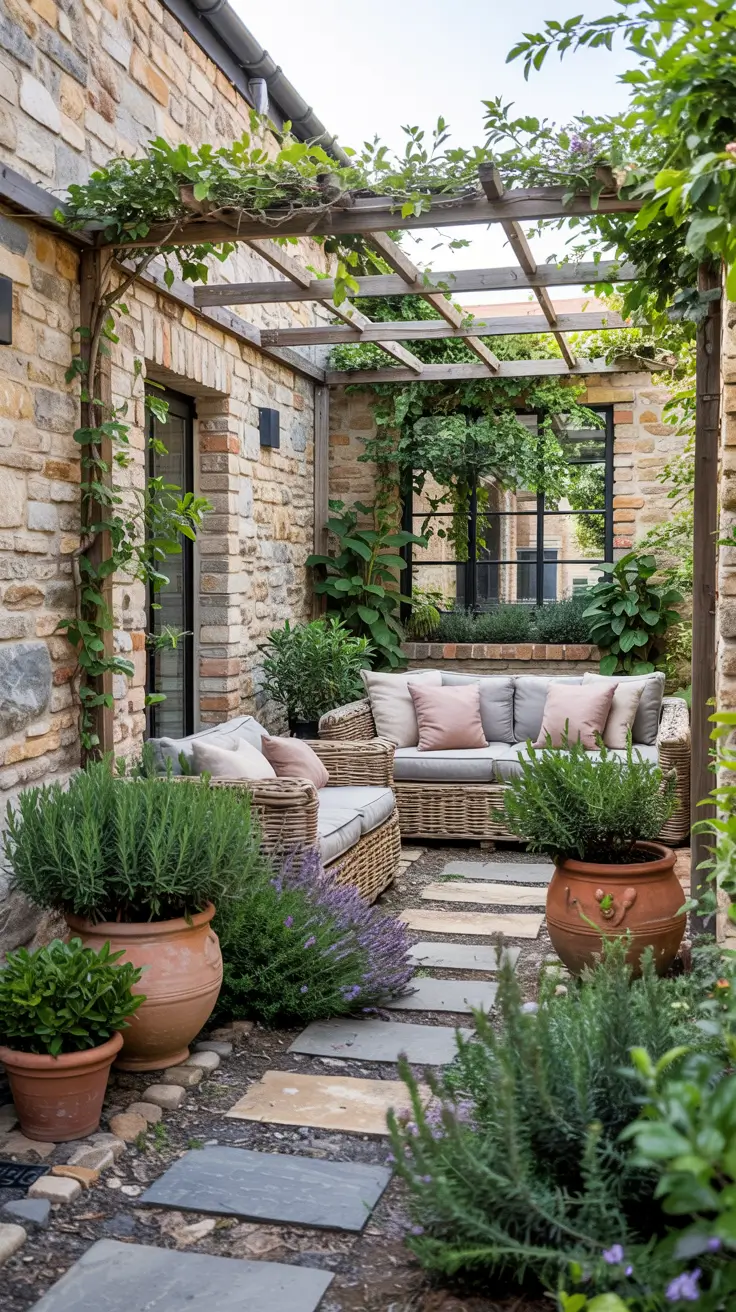
From a professional perspective, I align with advice often shared by designers featured in House Beautiful and Gardenista, who emphasize layering textures and choosing climate-appropriate plants rather than forcing authenticity. I have found that adapting rather than replicating is the key to success in mediterranean style homes garden design.
What I would add here is a stronger irrigation and drainage strategy. I always recommend raised beds and well-draining soil mixes to prevent waterlogging, which is often overlooked in UK adaptations of mediterranean style garden design.
Mediterranean Outdoor Living Spaces with Pergolas, Tiles, and Water Features
When designing mediterranean garden design tuscan style outdoor living areas, I focus on creating a seamless transition between indoor and outdoor spaces. The goal is to make the garden feel like an extension of the home, where dining, relaxing, and entertaining happen naturally. Pergolas, tiled patios, and water features form the foundation of this concept.
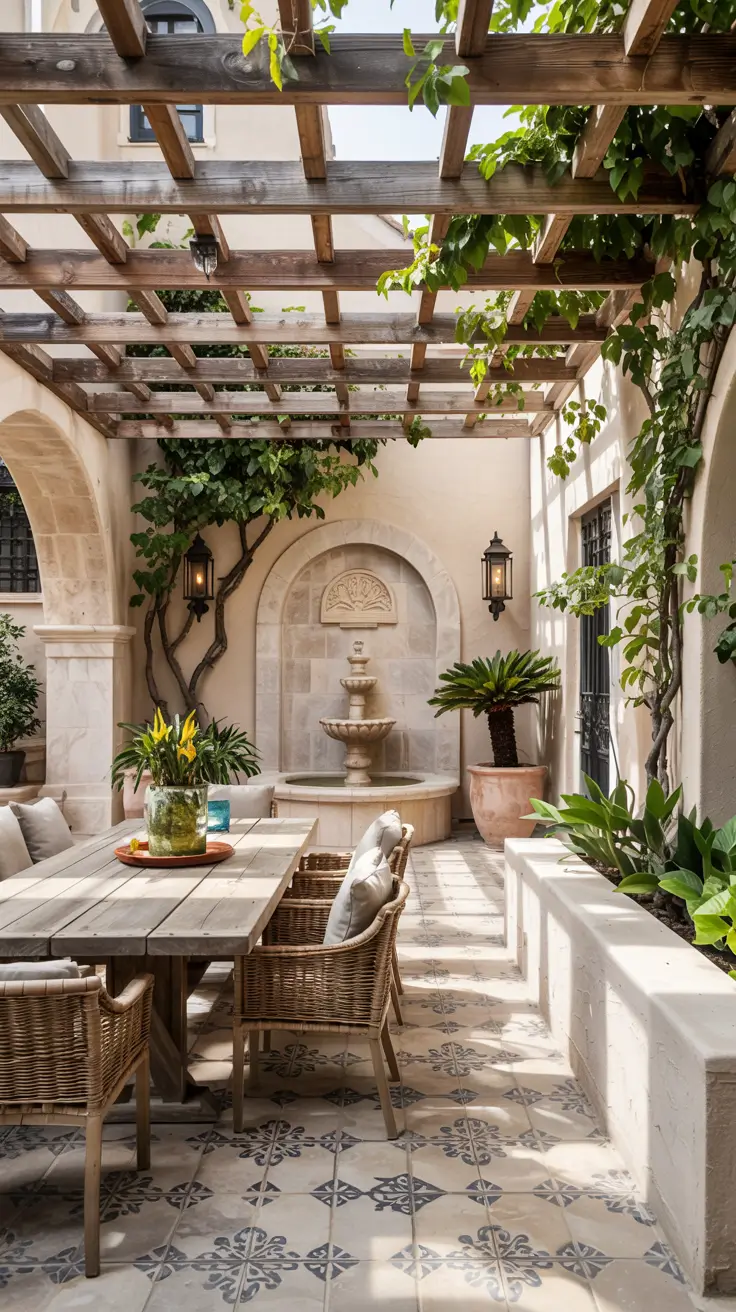
I typically include wooden or wrought iron pergolas covered with climbing vines such as wisteria or grapevine. Underneath, I place large rustic dining tables, comfortable cushioned seating, and ceramic or mosaic tiles that bring color and texture. Water features like small fountains or wall-mounted spouts introduce a calming sound and help cool the space during warmer months.
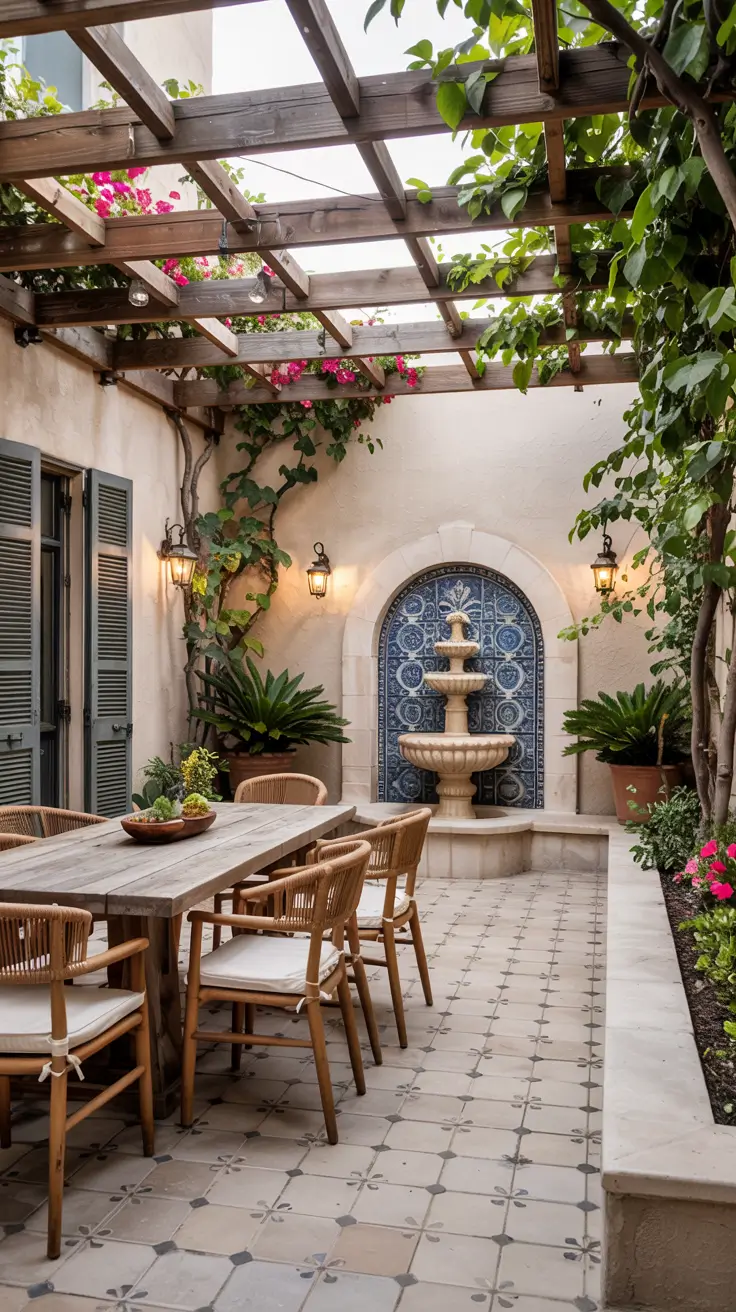
Personally, I believe that outdoor living is the heart of mediterranean style garden design. I often recommend using layered lighting such as lanterns, string lights, and wall sconces to extend usability into the evening. This approach aligns with trends highlighted by Veranda Magazine, which emphasizes creating atmosphere through lighting and materials.
What I would improve in this section is the addition of outdoor kitchens or built-in grills. These elements significantly enhance functionality and align perfectly with mediterranean outdoor living traditions.
Spanish Colonial Garden Style Ideas for Elegant and Historic Outdoor Design
Spanish colonial garden design introduces a more structured and architectural approach to mediterranean garden styles. I usually design these spaces with symmetry, enclosed courtyards, and strong visual focal points such as fountains or arched walkways. This style is ideal for those who appreciate elegance and historical character.
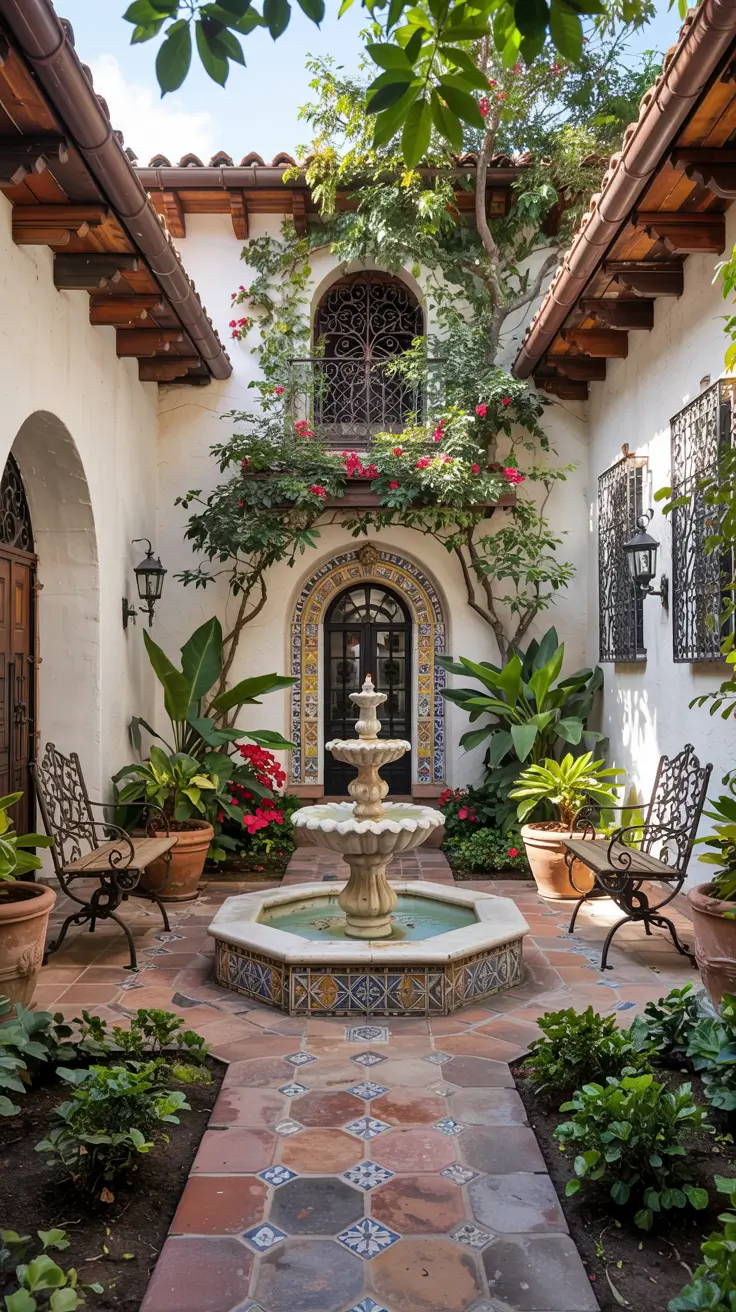
In my designs, I incorporate stucco walls, clay roof tiles, wrought iron details, and patterned tile accents. Seating areas often include built-in benches with colorful cushions, while pathways are defined with stone or brick. Plants like bougainvillea, citrus trees, and palms enhance the authenticity of the space.
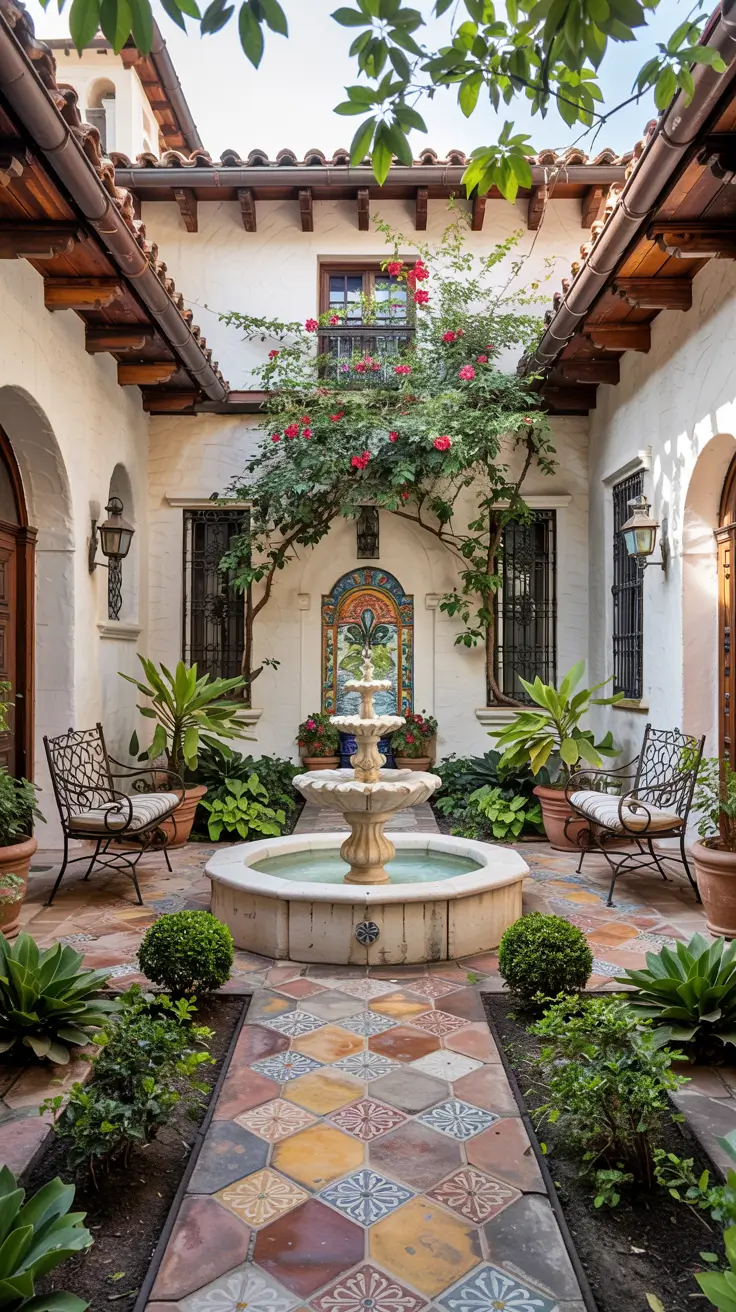
From my experience, the strength of spanish colonial style lies in its ability to feel both grand and intimate. I often draw inspiration from traditional hacienda layouts, ensuring that every element has a clear purpose and visual harmony. Many US designers highlight the importance of symmetry and repetition in achieving this look.
What I would add is more emphasis on shaded walkways and transitional spaces. These areas improve usability and create a more immersive experience within the garden.
Mediterranean Garden Design Tuscan Style Patio for Cozy Outdoor Dining
A mediterranean garden design tuscan style patio is all about warmth, texture, and comfort. I design these patios to feel rustic yet refined, often using earthy tones and natural materials that age beautifully over time. The patio becomes a central gathering space for meals and relaxation.
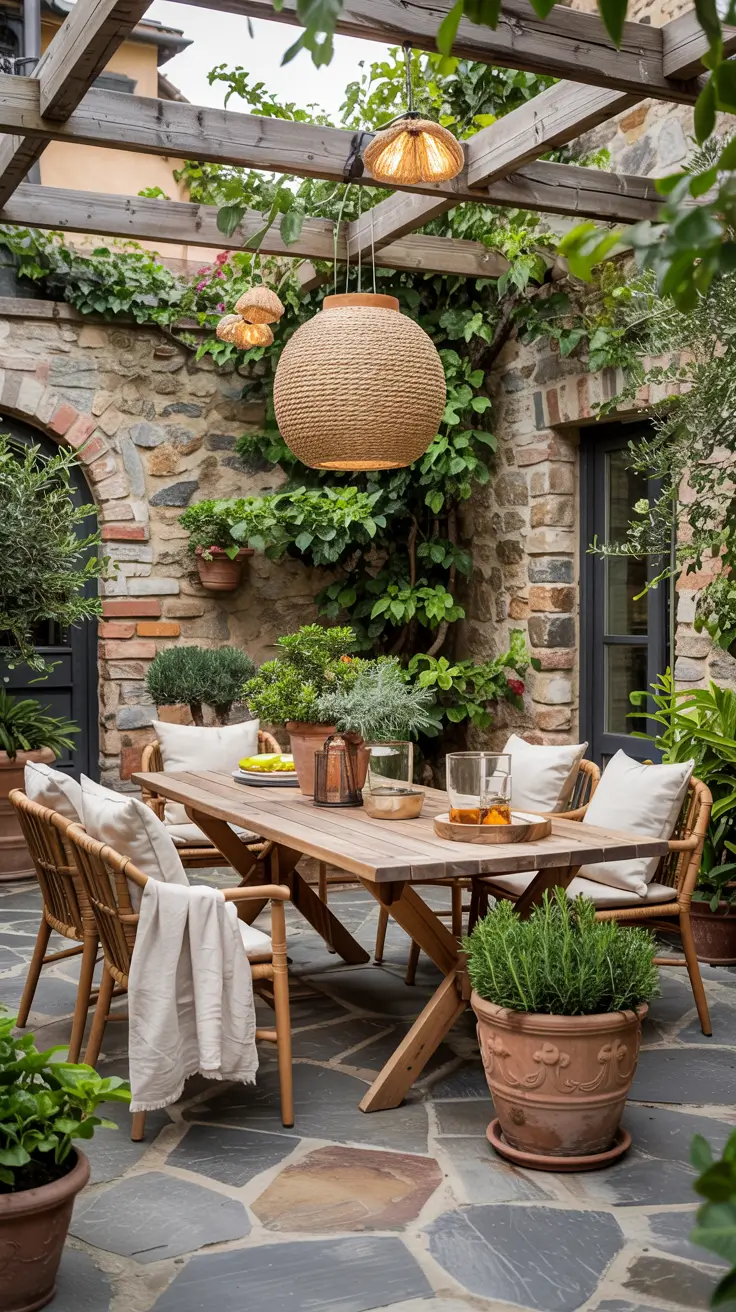
I typically include large wooden dining tables, terracotta planters, and stone or travertine flooring. Accessories such as linen tablecloths, ceramic dishware, and vintage lanterns enhance the tuscan atmosphere. I also like to incorporate herbs nearby, allowing easy access for cooking and adding fragrance to the space.
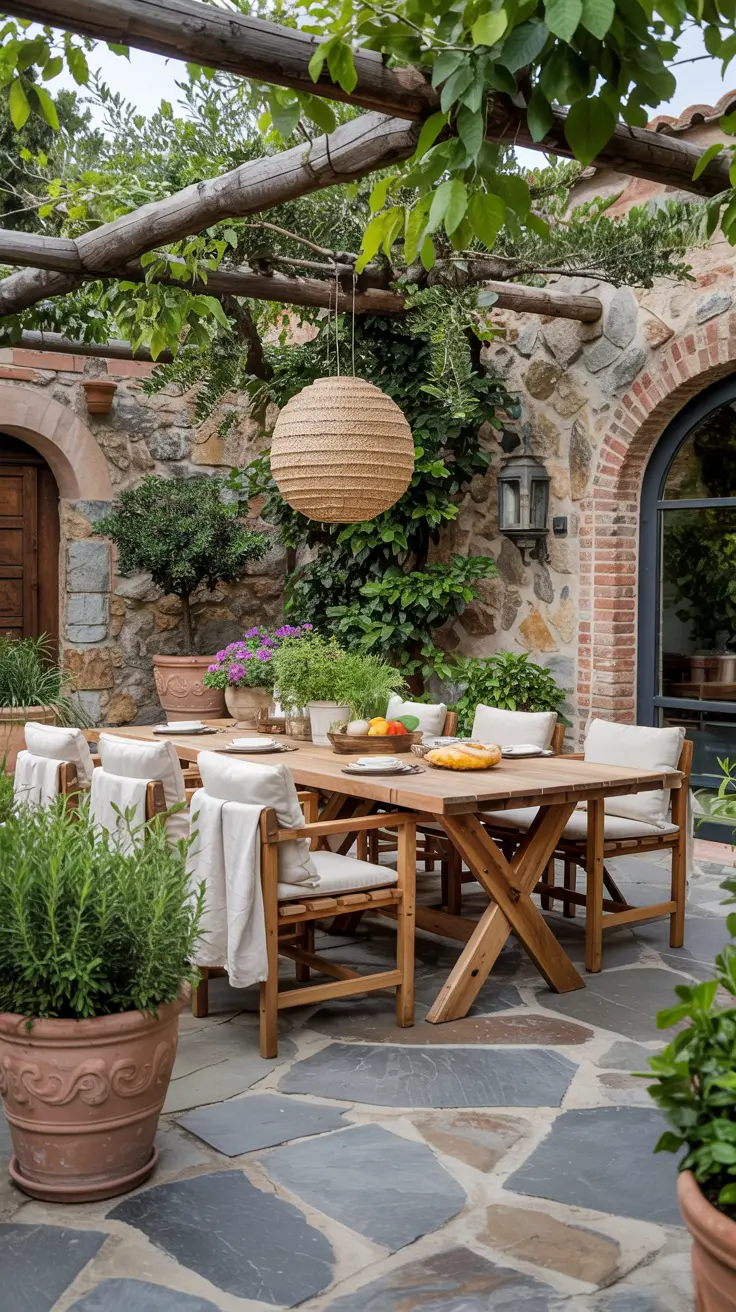
In my opinion, the charm of a tuscan patio lies in its imperfection. Slightly weathered materials and handmade elements create authenticity. Designers frequently emphasize that a lived-in look is essential for achieving a true mediterranean feel.
What is often missing in these spaces is adequate shade control. I recommend adding retractable canopies or layered pergolas to ensure comfort during peak sunlight hours.
Mediterranean Style Roof Garden for Urban Living Spaces
A mediterranean style roof garden is an excellent solution for urban environments where ground space is limited. I design these spaces to feel like private retreats, bringing the essence of mediterranean outdoor living into a city setting. The key is to balance greenery, seating, and structural elements.
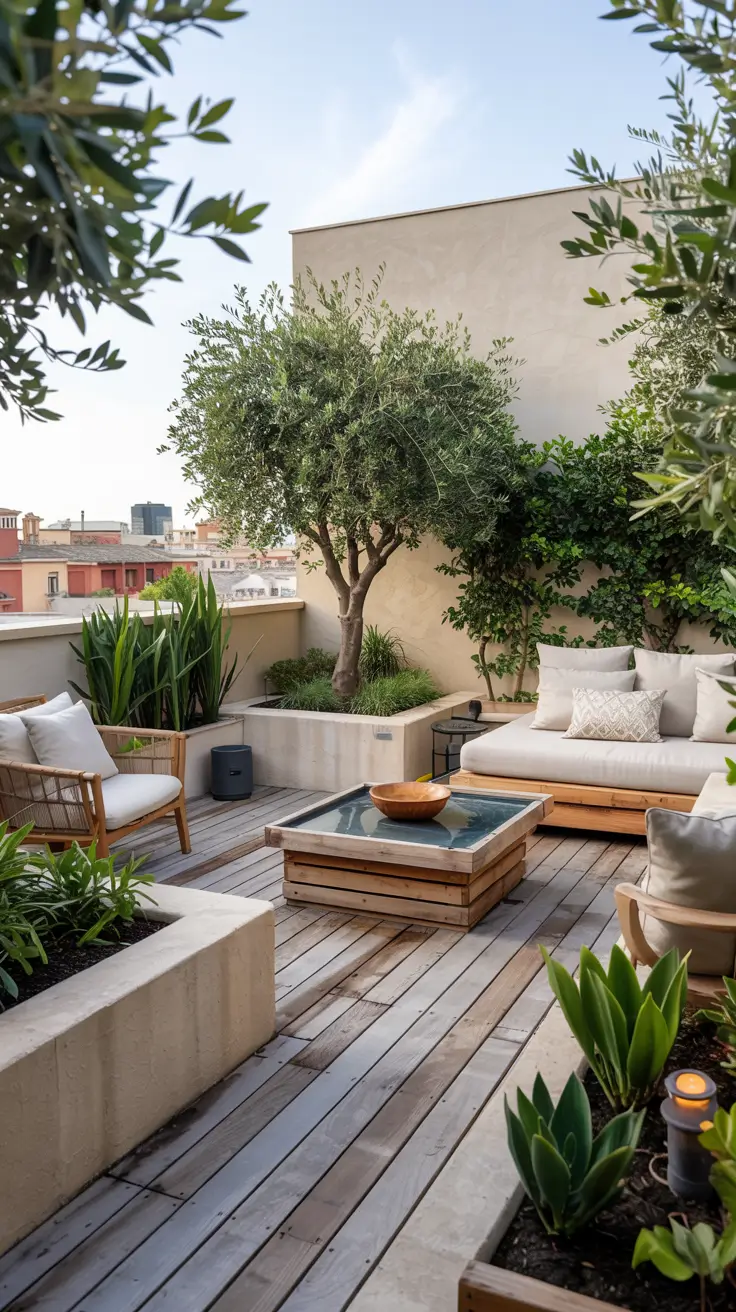
I use lightweight planters, drought-tolerant plants, and modular furniture to maintain flexibility. Materials such as wood decking, gravel, and ceramic tiles help create a layered and inviting look. I often include lounge seating, small dining areas, and even compact water features to enhance relaxation.
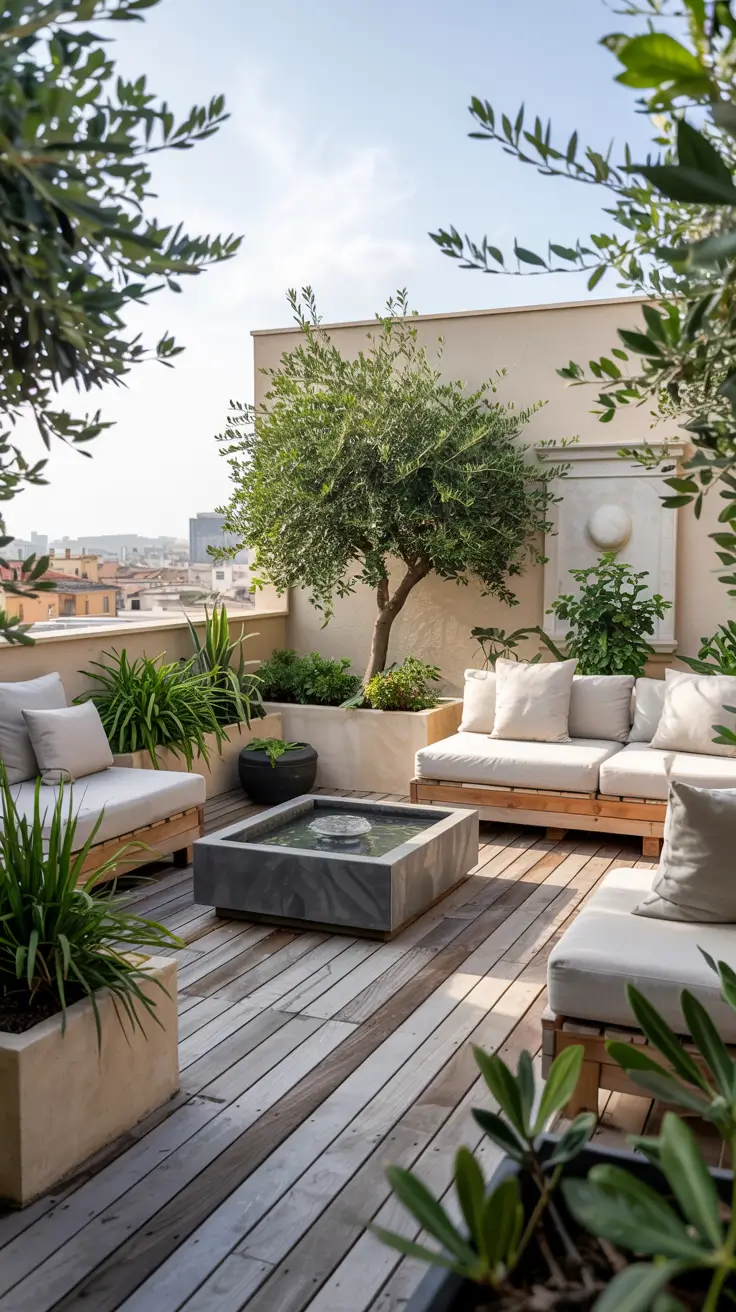
From my perspective, roof gardens require careful planning in terms of weight, drainage, and wind exposure. I always recommend consulting structural guidelines and using wind-resistant plants. This aligns with best practices often discussed in urban landscaping publications.
What I would add here is more vertical greenery. Green walls or trellises can significantly increase visual impact without taking up valuable floor space.