So, what will minimalist bedrooms feel like in 2026? The answer is style, comfort, and a touch of personality, all in a small footprint. If you want to turn tight spaces into calm, beautiful havens, keep reading. I’ll share the latest interior trends that balance pretty looks and real-life usability, perfect for small bedrooms.
We’ll travel from the quiet calm of Scandinavian design to the balance of Japanese minimalism, and from affordable teen bedrooms to dreamy romantic setups. Each idea fits snugly into compact spaces, complete with tricks for making a bed work with an off-center window or squeezing in a TV without clutter. Ready? Let’s explore the most adaptable and inspiring trends that merge thoughtful design with today’s lifestyle.
Fresh Minimalist Bedroom Concepts
Minimalism in 2026 is moving away from cold, empty whites and toward cozy warmth, smart features, and little personal sparks. I’m noticing a growing love for soft fabrics, gentle, layered lights, and layouts that don’t just look neat they feel calm. Even in a small room, these small changes add up. Whether you’re drawn to deep black, rich charcoal, or soft whites, the secret is removing the fuss while keeping the heart.
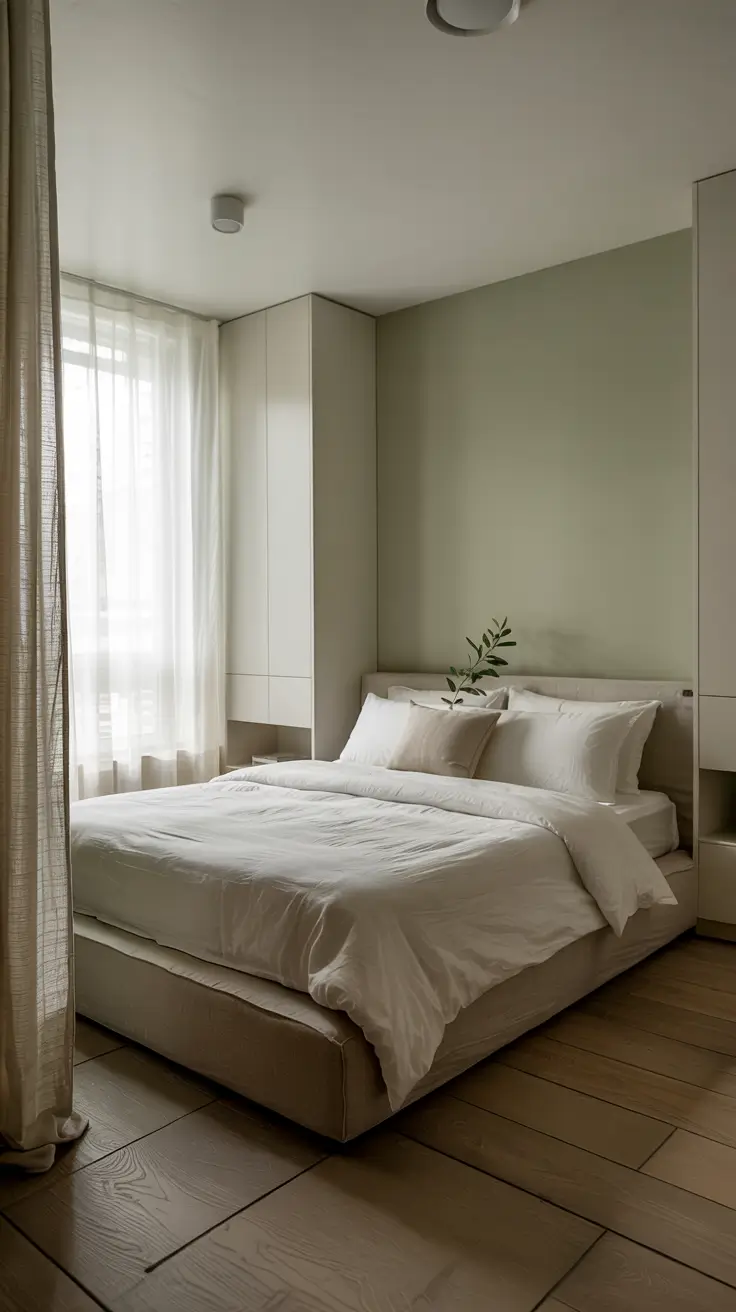
In tight living spaces, every item must pull double duty. A low-slung platform bed, cabinetry that blends into walls, and flexible pieces like wall-mounted desks and ottomans that open to tidy away out-of-sight belongings keep lines clean and sights clear. Prioritize airiness, soft lighting that bounces instead of glaring, and quiet colors like pale sage, soft grey, petal pink, or deep emerald to create calm in every corner.
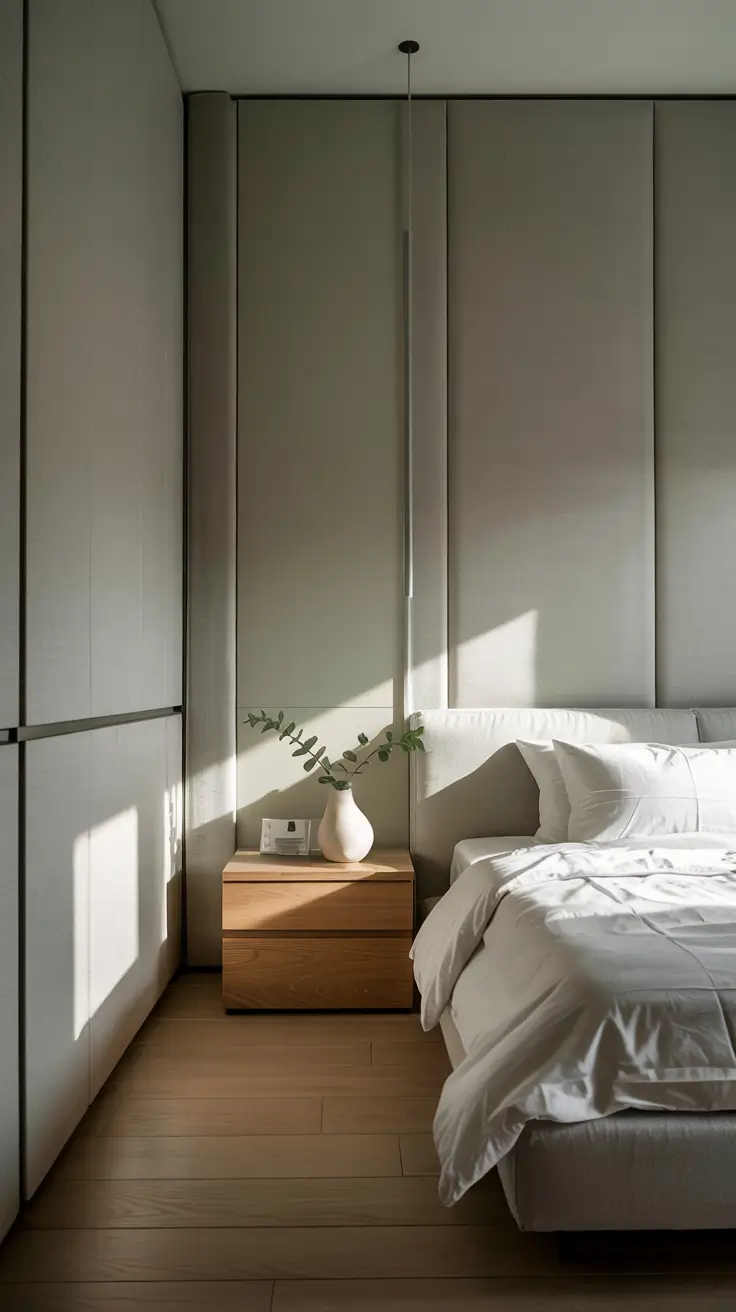
I feel that this next stage of minimalism perfectly merges good looks and good vibe. I always encourage clients to embrace natural finishes oak that breathes, linen that softens, matte metal and paint that feels warm to the touch. Architectural Digest says that by 2026 we’ll arrive at “tactile minimalism,” spaces designed to be both beautiful and feel wonderful to interact with. It’s minimalism that pulses with quiet life.
To keep the space tidy, add smart tech that vanishes when you don’t need it: light strips that hide in shelves, TV panels that glide into walls, and smart speakers tucked behind fabric grilles. This way, convenience lives softly beside simplicity.
Aesthetic minimalist bedroom ideas for 2026
A gorgeous minimalist bedroom goes beyond just white walls. In 2026, intentional styling is what counts: think asymmetrical layouts, gentle curves, and thoughtful color balances. I love to mix sculptural light fixtures, organic shapes, and soothing tones to create warmth and personality. This method is perfect for smaller white rooms, where every little detail gets its moment to sparkle.
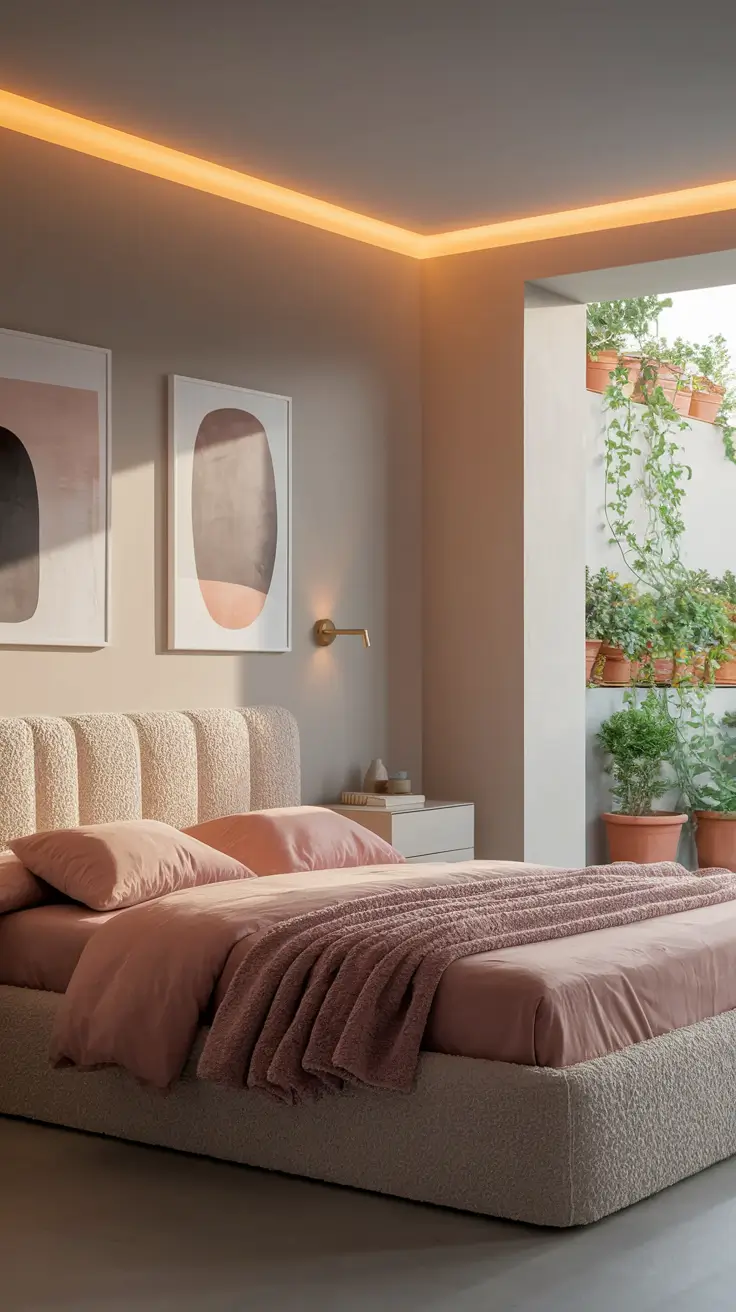
Must-have pieces are a plush headboard wrapped in soft grey and blush boucle, a sleek low wooden nightstand, a single large piece of abstract wall art, and gentle, layered bedding. Soft LED cove lighting on a dimmer switch brings a touch of the future while keeping the atmosphere soft. My favorite color combos are dusty blush with cool grey and white, or a hint of sage green on one wall to keep the space feeling layered and rich instead of flat.
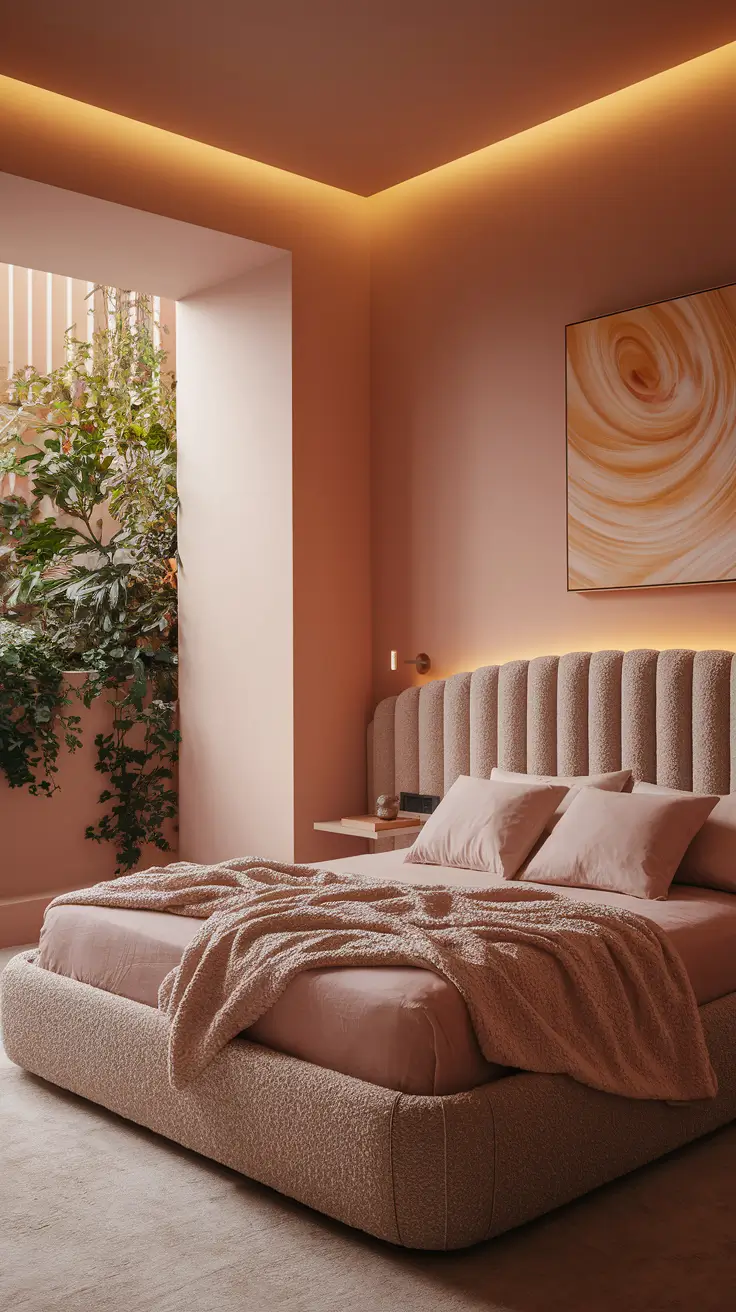
I’ve learned that a calm, minimalist space doesn’t have to sacrifice warmth or style. When I’m helping a client, I suggest they pick one standout piece maybe a colorful accent chair or a richly textured rug and hold everything else to a low profile. Elle Decor sums this up nicely: “Curated minimalism creates emotional warmth through fewer, more thoughtful objects.”
To build on that, I always encourage layering minimalist textiles. A light waffle knit throw, an organic cotton blanket, or even a hand-stitched cushion can add both softness to the eye and comfort to the touch, making the space feel inviting without adding visual clutter.
Small rooms Indian minimalist bedroom ideas
Building minimalist Indian-style bedrooms in tight spaces demands both care and clever choices. I like to pair sleek lines with deep-rooted craft: a jute rug underfoot, handwoven throws draped lightly, and a low-slung wooden bed. By 2026, blending local artistry with modern minimalism feels not just doable, but dynamic.
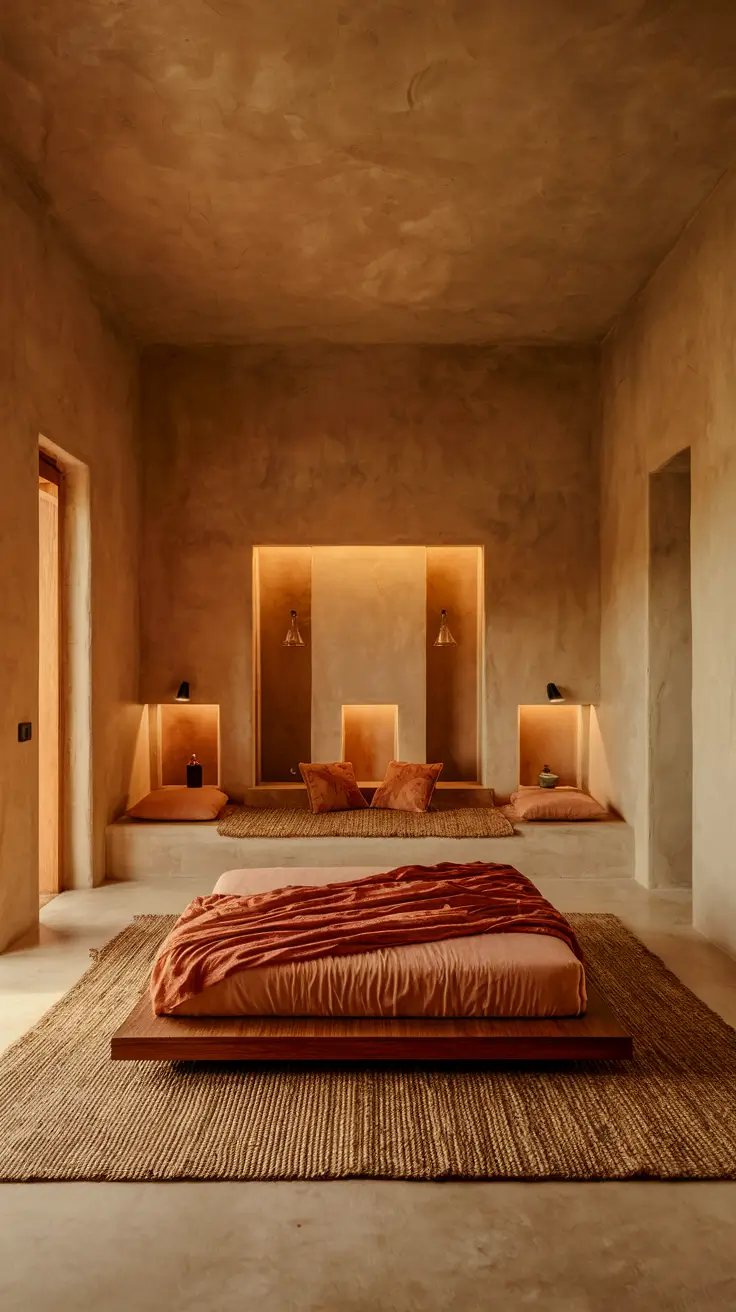
For materials, consider solid teak or mango wood beds, earthy terracotta bedding, and open shelves in place of heavy wardrobes. Floor options like a simple khatiya or a clean-lined modern diwan keep the space grounded, yet fresh. Wall niches or recessed lighting let the textures breathe without adding clutter, quietly celebrating the room’s beauty.
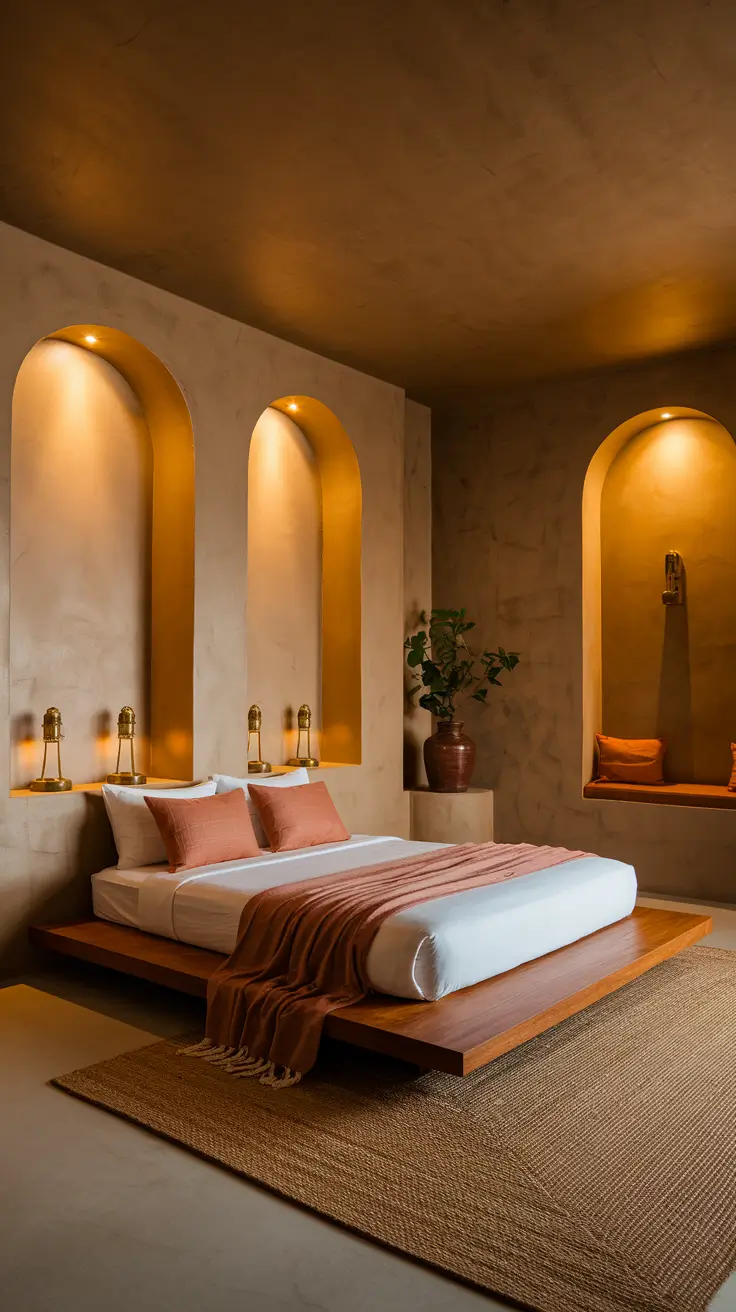
Having collaborated with Indian clients in snug apartments, I frequently recommend tapping into vertical space through decorative wall hangings or elegant brass sconces. Vogue India recently described the new Indian minimalist approach as one celebrating “cultural lightness,” marrying time-honored craft with a keen eye for airy, uncluttered living.
To strengthen that point, I’d add a few modular furniture options now trending in Indian showrooms, along with homegrown brands that champion sustainable, compact living. Look for stackable wooden benches that double as side tables, or folding console units by brands like Urban Ladder that slide into a nook when dinner guests leave. These pieces blend seamlessly into the cultural palette while keeping floor space free.
Small rooms loft bed minimalist solutions
When tackling tiny rooms, a loft bed often rises as the smartest minimalist move. By 2026, today’s high-perch beds feel miles away from their thrift-shop dorm days. They’re refined enough for grown-ups, yet still juggle space like a champion. I often sketch these for city flats and studios, where dividing sleep, work, and leisure is a designer’s chess game.
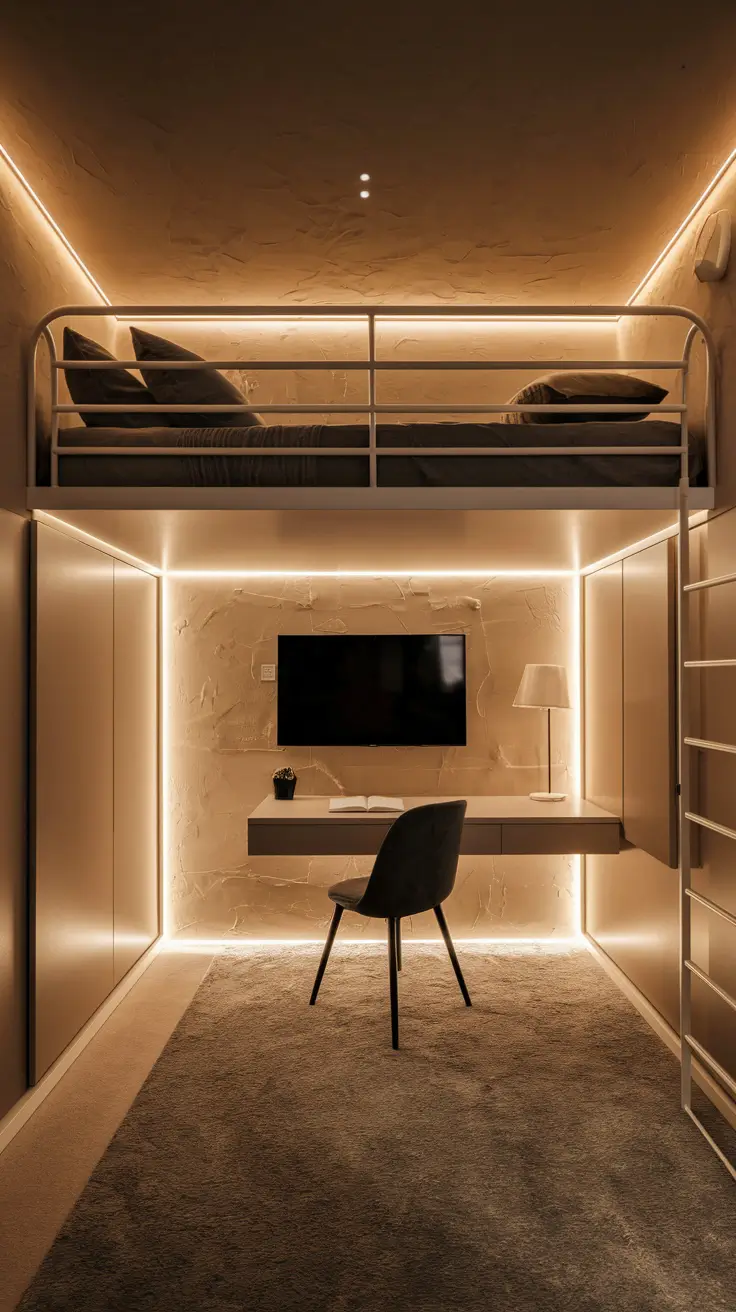
Picture this: a powder-coated matte-black or crisp-white metal frame lofting above your head, while a petite desk and wardrobe slide, tucked, beneath. Thoughtful LED strips along the loft’s underside add a glow without clutter. Choose soft neutral walls and a single piece of framed art, and the room opens like an origami flower. Throw in a flat-screen mounted above the desk, and the compact yet complete setup gives even the smallest urban bedroom a stadium-sized feel.
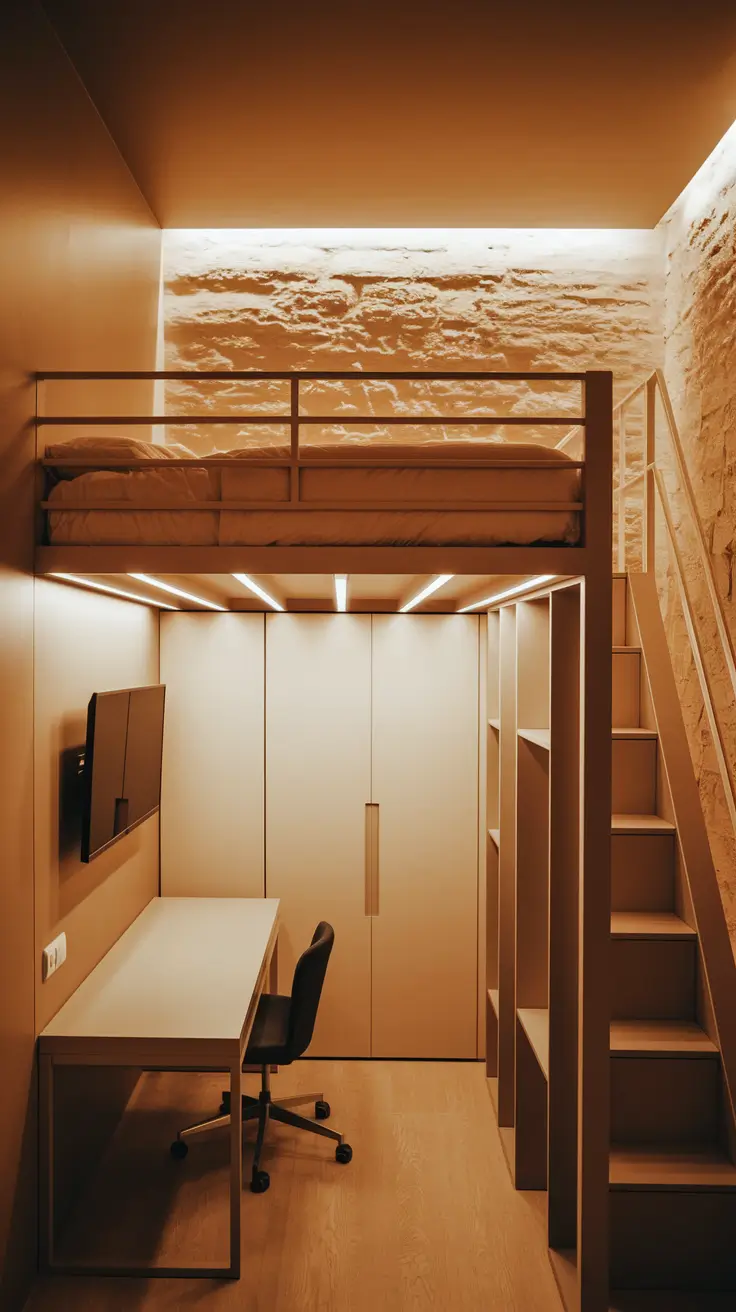
From working with clients, I’ve found they really enjoy how vertical layering can play up a small footprint. The latest loft beds from IKEA and Urban Outfitters Home slide right into the clean lines of today’s minimalist looks. Swap a bulky floor dresser for a compact wall-mounted system, and the room suddenly breathes.
Adding a few thoughts on safety is a good idea, especially if the loft is meant for adults. I always suggest checking for a ceiling height of at least 8 feet. That way, there’s room for a safety rail and enough space for the sleeper to sit up without bumping their head.
Minimalist design for small-space bedrooms
Small-space design is all about keeping things clear, useful, and restful. I use mirrors, a calm palette, and furniture that does double-duty to trick the eye into seeing more. In 2026, I expect to see more clear acrylic tables, fold-down desks that tuck away, and modular wardrobe systems that shift as needs change.
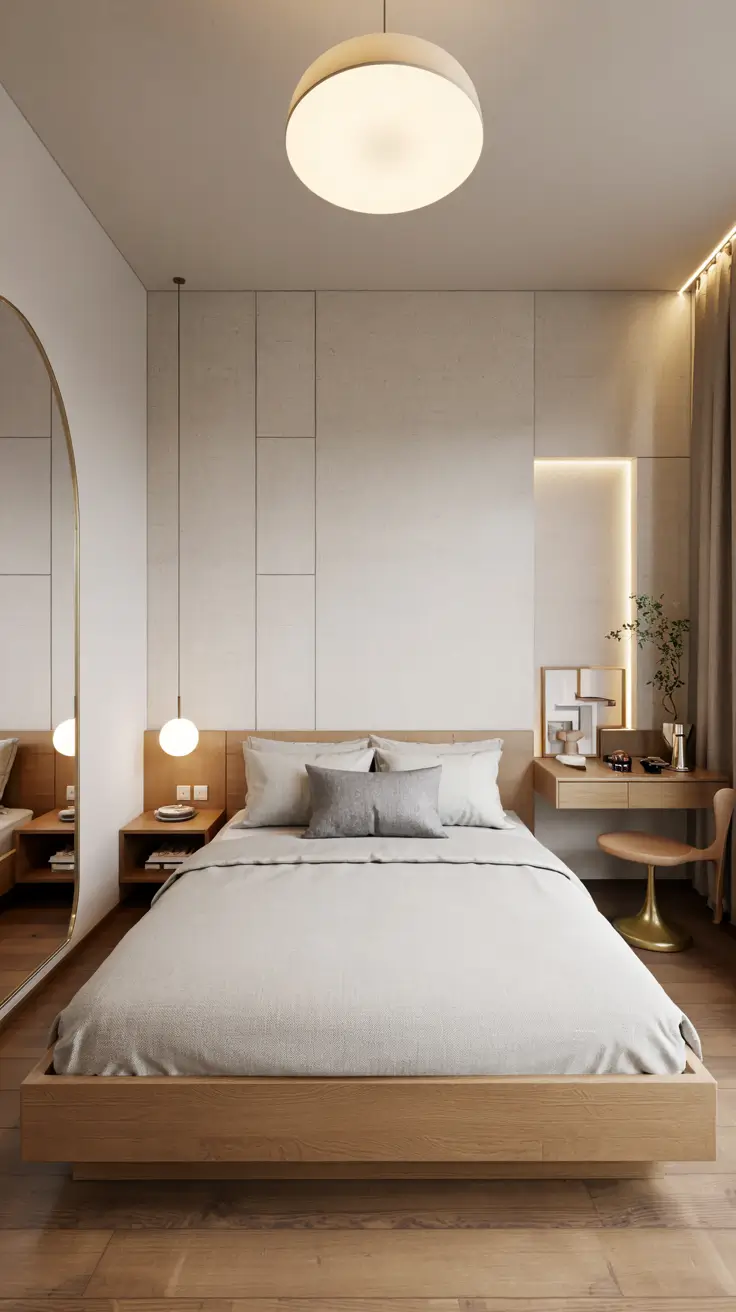
My favorite trio is a low light-oak bed, a tall, skinny dresser, and floating nightstands that never touch the floor. Stored shoes and sweaters hide under the bed, wall sconces free up nightstand space, and a single large mirror gives the illusion of more room. I especially like how a mostly white palette can make the space feel airy and open.
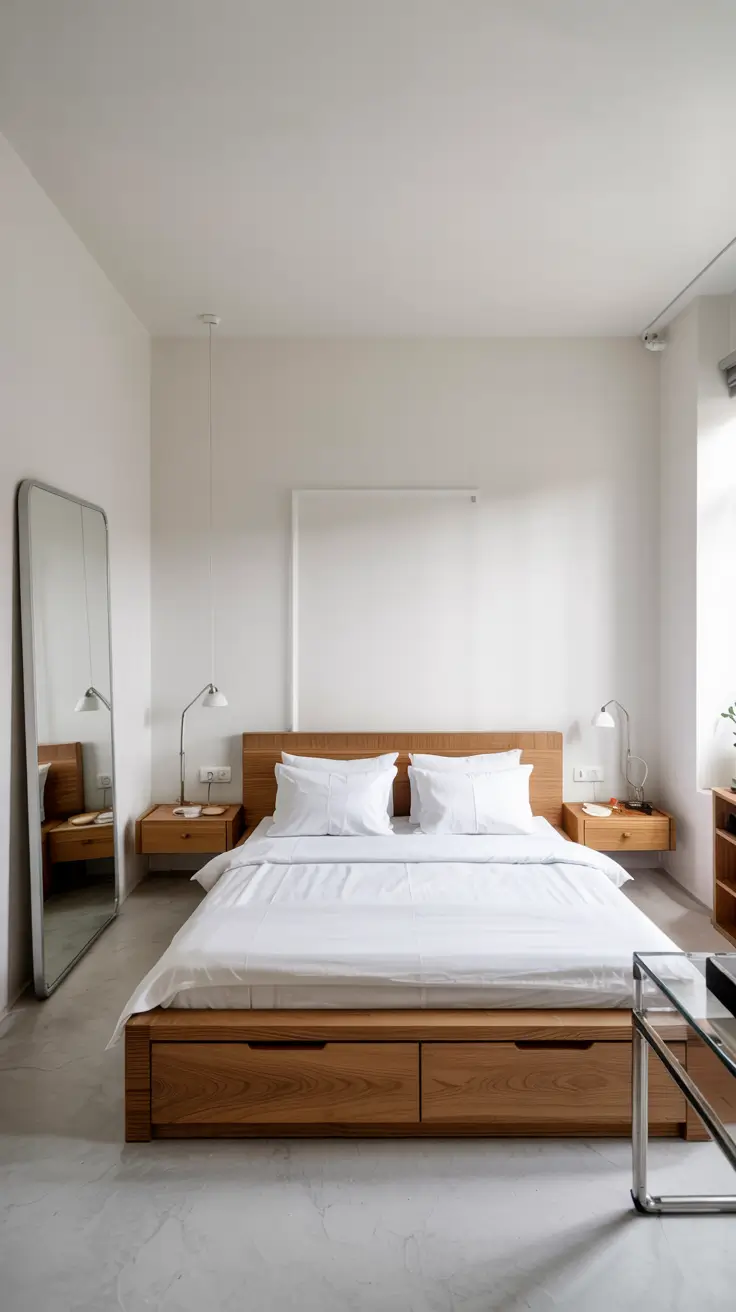
I often tell my clients that function doesn’t have to mean boring. The right textures and an intentional layout can elevate everything. Dwell Magazine puts it best when they say that tiny minimalist bedrooms should “maximize flow, not fill the void.” That mantra echoes my own: if something doesn’t bring value or joy, it doesn’t stay.
One easy win for acoustic comfort in snug spaces is to layer in quiet solutions. Lightweight, minimalist soundproof curtains can soften noise while still allowing light. Thin, felt wall panels bring warmth and hush, keeping the room calm and collected.
Japanese Influence for Small Rooms: The Quiet Strength of Minimalism
Japanese minimalism is a natural fit for small rooms. The aesthetic whispers, not shouts, and it prizes natural light, gentle lines, and a lasting calm. I’m drawn to the way tatami layouts, shoji screens, and soft, touchable surfaces invite the room to breathe. As we move into 2026, that tradition continues, refreshed with new material blends and sleek, modern finishes.
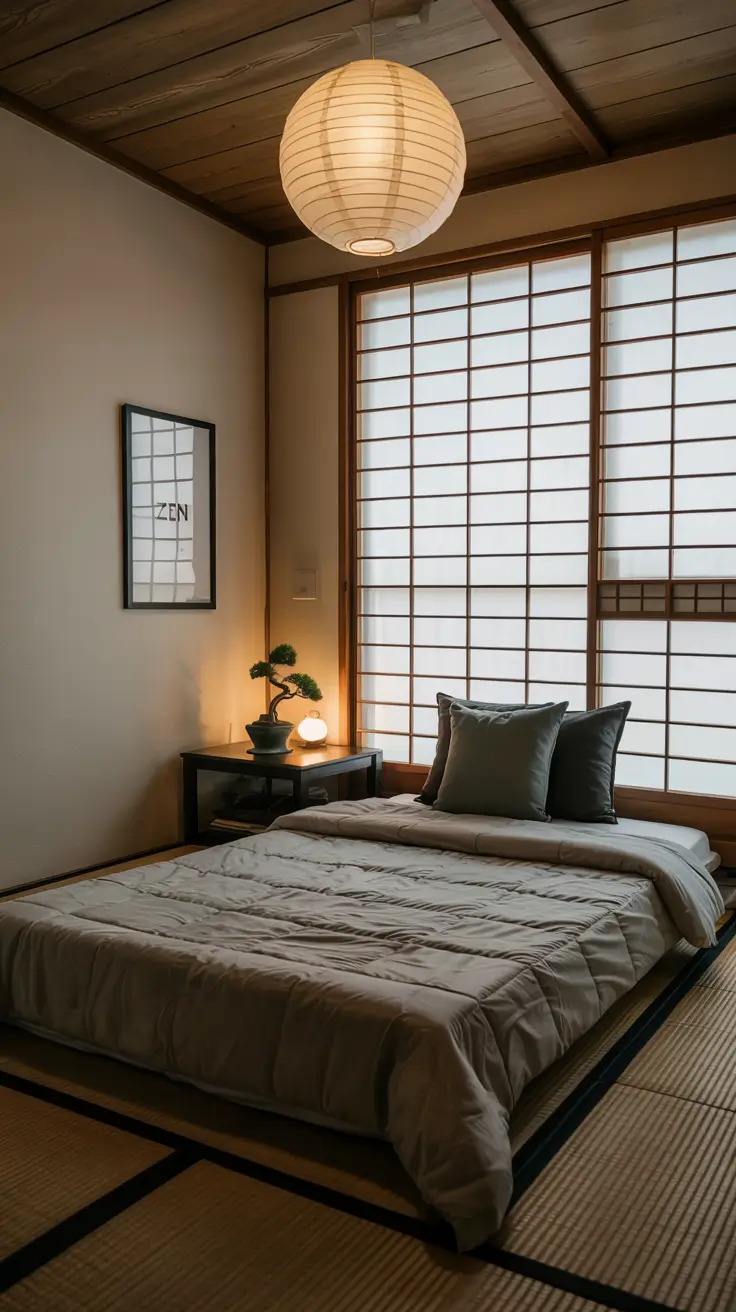
Key pieces remain the same: a tatami-style futon mattress that rolls away during the day, a low wooden platform that grounds the space, and either built-in closets or simple, open hanging rails. Décor is reduced to a few quiet tokens: a rice-paper lantern, a small bonsai perched on a slender shelf, and soft swathes of green or sage-hued textiles. Sliding doors, of course, trade an outward swing for effortless hush, leaving every inch open to light and calm.
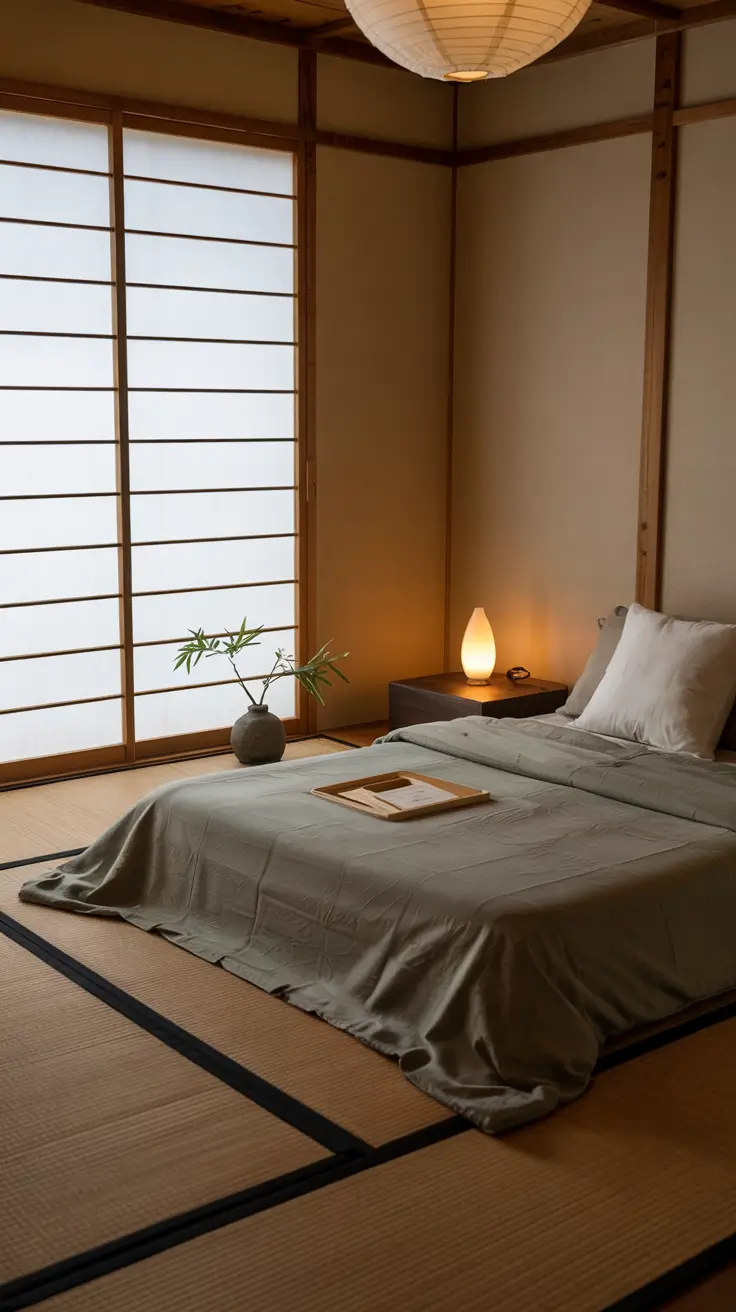
I’ve created a few bedrooms where I’ve removed the bed entirely, using traditional tatami mats and roll-up bedding instead. This low-profile setup is perfect for small rooms and creates the feeling of extra space. Recently, The New York Times named “Japandi” the hybrid style of the year, combining Scandinavian and Japanese influences in a way that feels both serene and warm.
To give this section a little extra punch, I’d suggest adding natural materials such as bamboo and linen. Both breathe well, helping to keep the air fresh. That fresh air and the soft, tactile feeling of linen bedding can really improve the sleep environment.
Teen Boys Minimalist Bedroom Inspiration
Minimalist bedrooms for teen boys can be tricky, but 2026 is bringing some smart, masculine options that keep the space tidy while letting their personalities shine. I often choose a palette of soft greys, whites, and the occasional bold black, then layer in clean-lined furniture that makes both studying and sleeping easy.
Key pieces include a sturdy metal platform bed with under-bed drawers, a small study desk highlighted by a slim LED strip, and open shelves for sneakers, trophies, or a few favorite books. Mounting the TV on the wall keeps the floor clear, and a few posters or easy-to-remove wall decals let the room change with their mood. This setup is especially handy in small bedrooms that still want the occasional movie night.
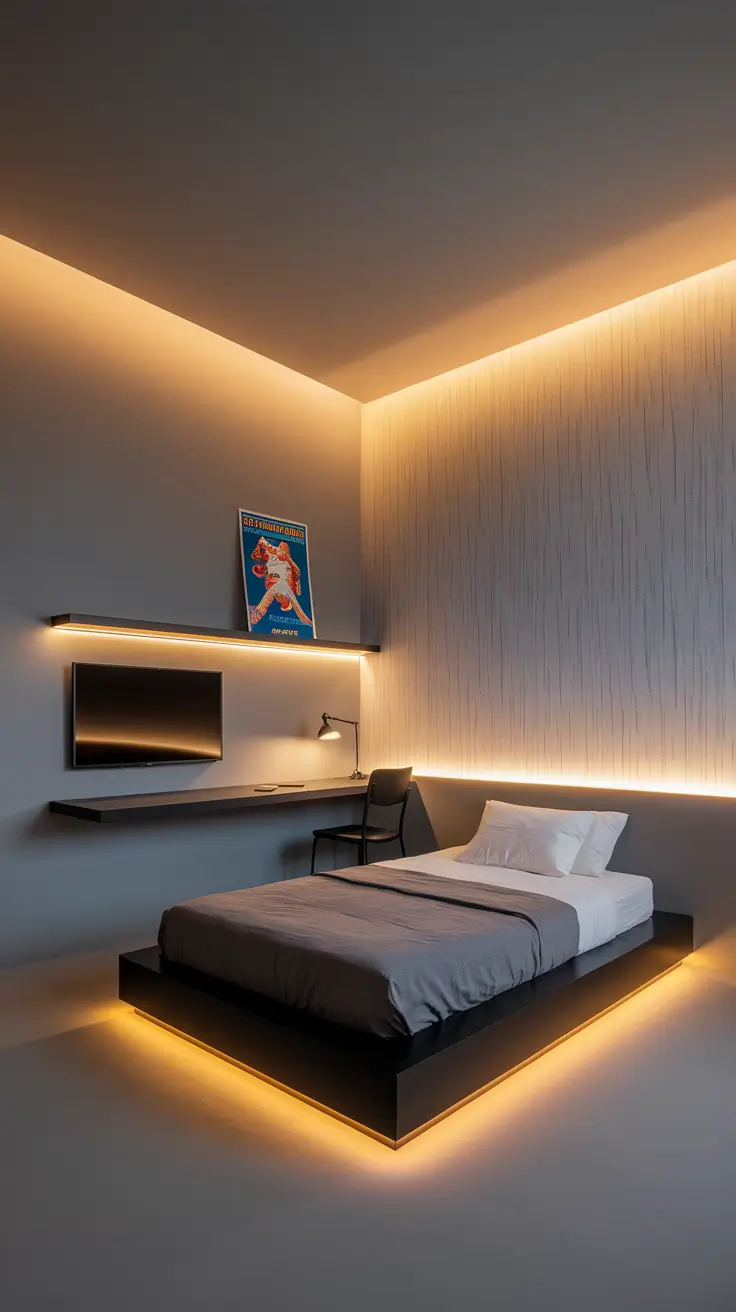
Many teens love the small RGB LED strips we tuck behind their bed frames or bookshelves. I’ve noticed that sticking to soft, toned-down colors helps them settle and study. Apartment Therapy recently wrote that minimalist teen rooms give them a calming, flexible space that feels like truly their own.
To keep their space both personal and tidy, I talk with them about little design choices: which trim, how many plant pots, or which wall to spotlight in soft color. By letting them choose one or two accents like a storage box or a favorite print we keep the room from bumping into chaos while still celebrating their style.
Scandinavian minimalist bedroom designs
Scandinavian minimalism still champions calm, light, and smart use of space. In 2026, I see its airy, uncluttered vibe in many new designs. White walls and warm natural wood pair with soft textiles to make even a snug bedroom feel roomy and peaceful.
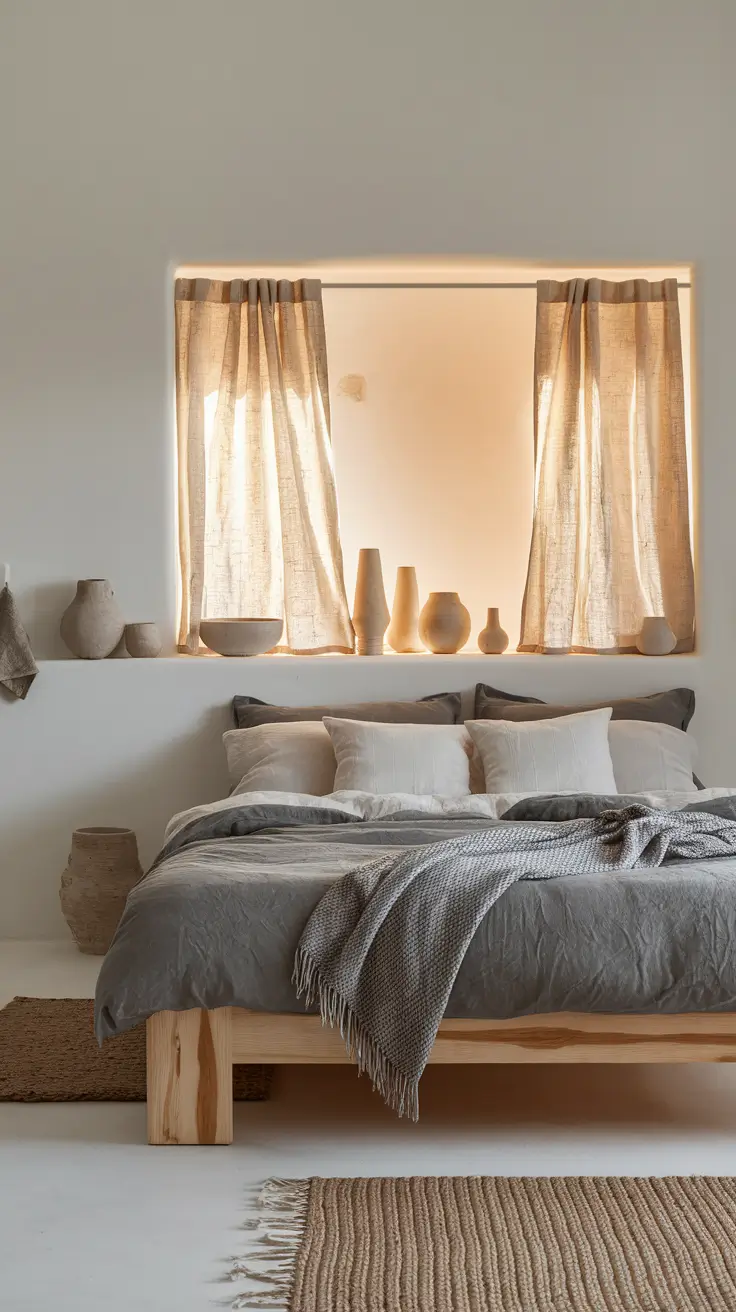
The go-to pieces are a low wooden bed, sleek bedside tables, and a wardrobe with a simple profile. I like to add a textured wool throw, a neutral linen duvet, and one or two ceramic or glass objects to keep it warm without crowding. I stick with a grey-and-white base and layer in a soft sage green or a light beige to add gentle depth.
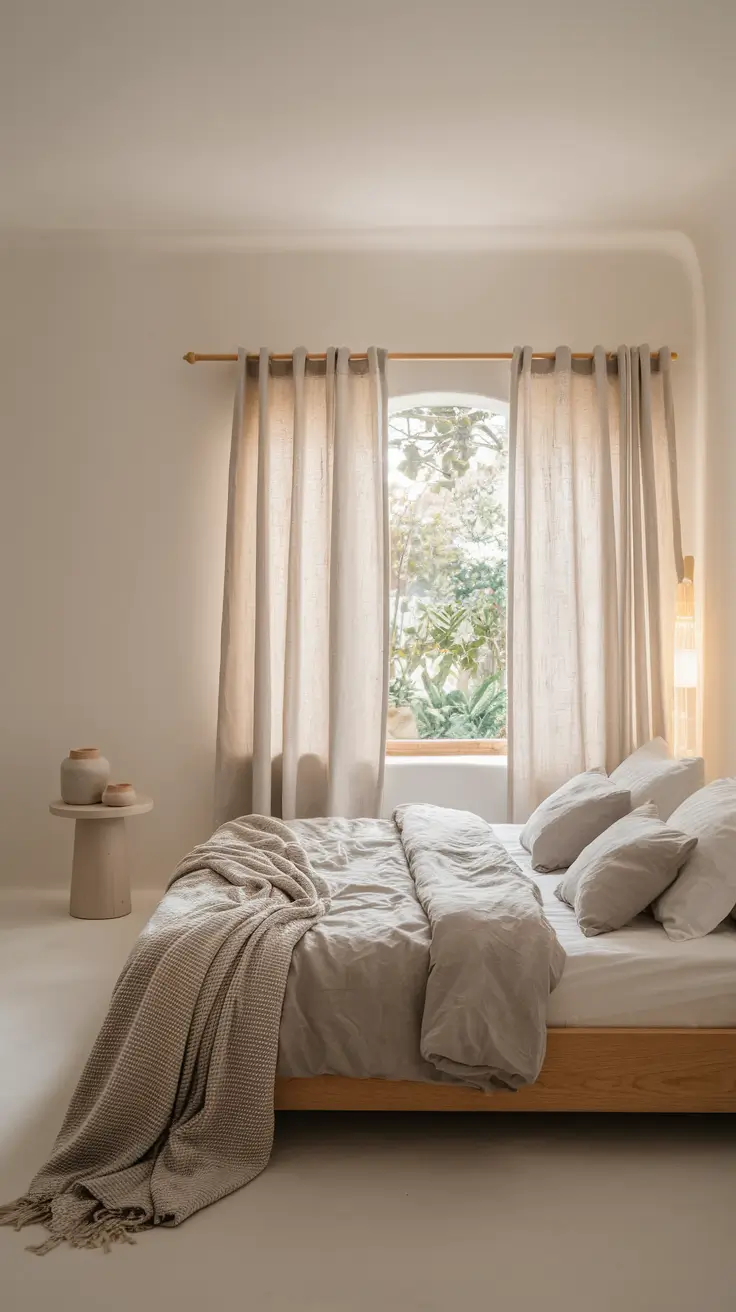
I keep seeing clients feel instantly at home in this style because it feels calm and easy to live with. House Beautiful calls Scandinavian minimalism “visual silence” a design choice that gives both the eye and the mind a moment to breathe. I’ve noticed it feels just right in bedrooms where the bed sits under a window that isn’t centered; the room feels balanced even when it isn’t perfectly symmetrical.
To bring this concept to life, think about the lighting. Layered floor lamps, warm brass pendants, and narrow LED strips can work together to soften shadows and mimic the gentle glow of daylight at dusk. Choose bulbs that hover around 2700K for a cozy glow.
Romantic minimalist bedroom ideas
Minimalism can whisper romance when balanced just so. This year’s dreamy bedrooms soften strict lines with muted colors and gentle details that feel intimate yet never crowded. The secret is to mix a few simple pieces with warm, inviting touches of candlelight, light fabrics, and hints of bloom.
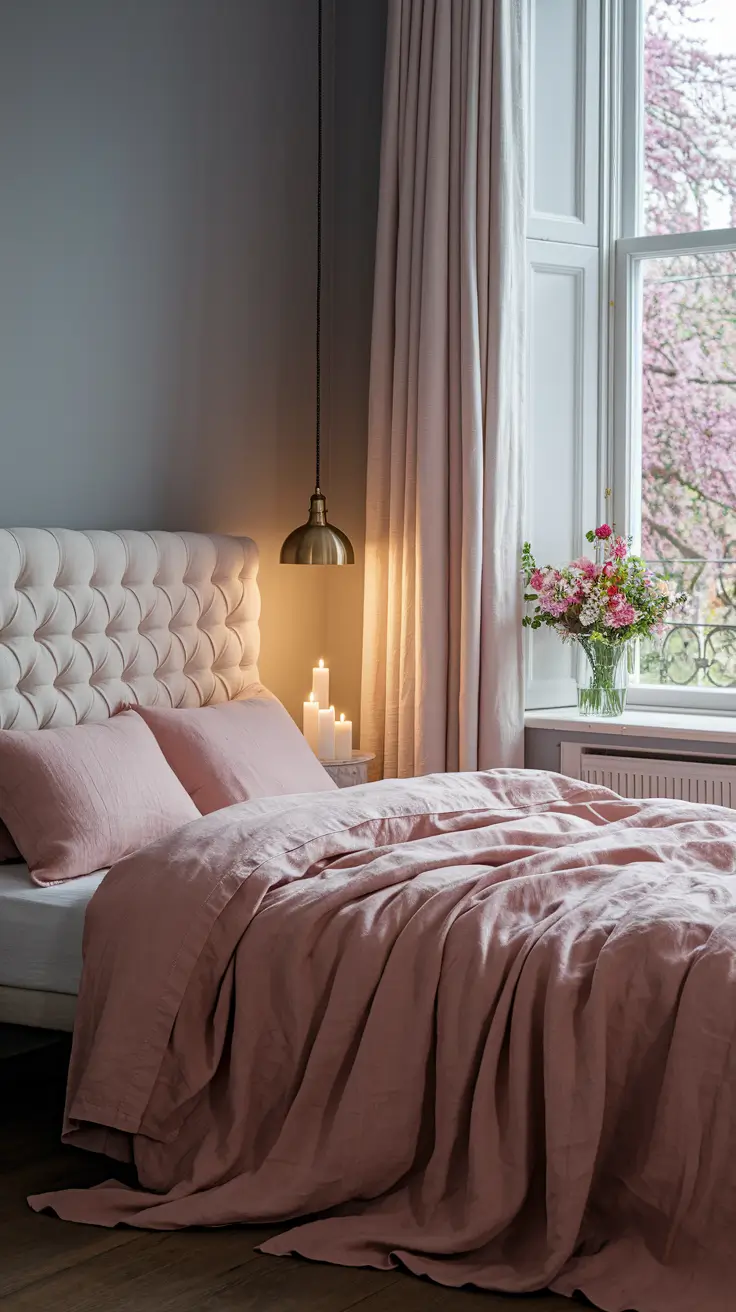
Start with a softly tufted headboard and airy, floor-length curtains. Blush-toned or pale pink bedding keeps the mood tender. Hang a small brass chandelier or a simple pendant above the bed to catch the light, and place a fresh vase of blooms or a plush textured rug underfoot for extra warmth. A neutral base light grey, soft white, or pale pink unites it all without fuss.
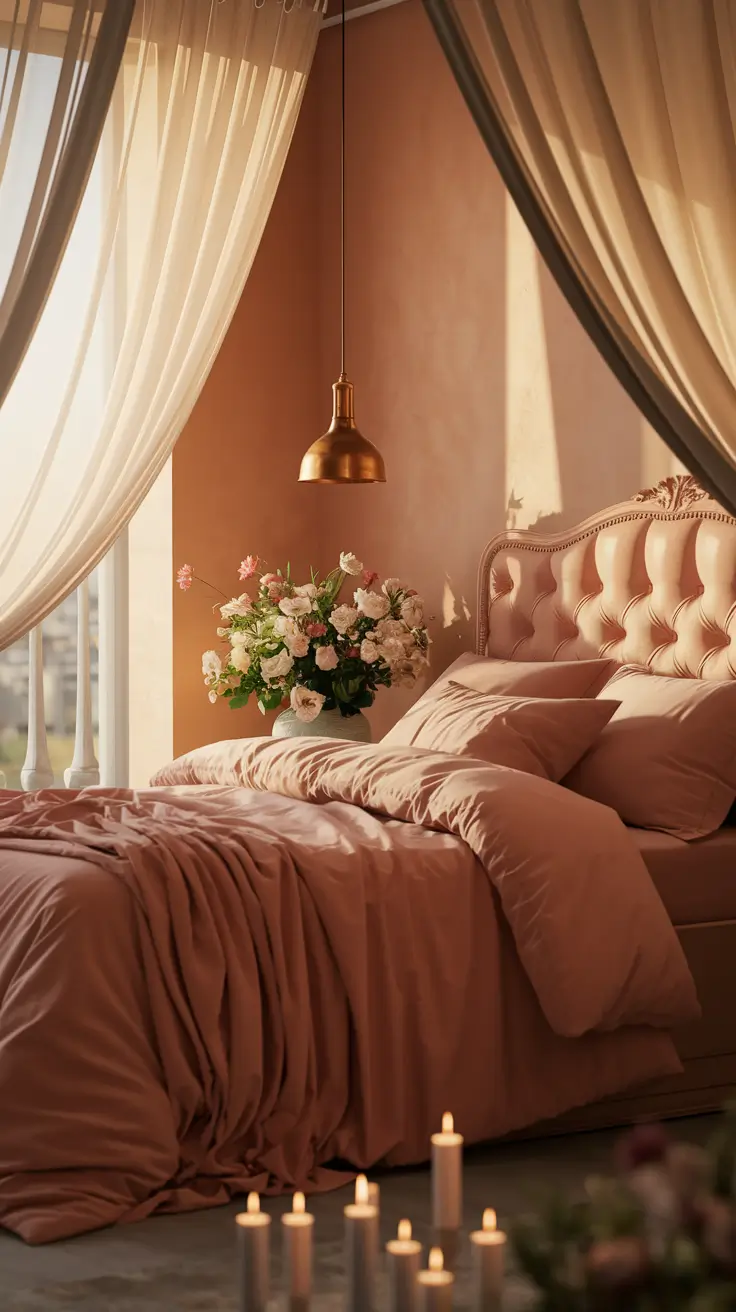
I think the latest wave of “romantic minimalism” quietly redefines minimalism as cozy instead of cold. Elle Decor puts it well: editors focus on “editing, not erasing.” You preserve the personal touches while still keeping the room calm and uncluttered. I’ve brought this approach to couples’ bedrooms where the desire for both softness and simplicity overlaps beautifully.
This approach fits small rooms perfectly, especially when you use multi-purpose pieces that stay light on the eye. A bed that doubles as storage, a fold-down desk, or a mirror that hides a drawer lets the room breathe while keeping it functional.
Small white minimalist interiors
I’ve found that dressing small rooms in white remains the simplest way to suggest more space. For 2026, the all-white look now invites tiny pops of color and layered textures, so it stays welcoming instead of sterile. I lean on matte paint, soft linens, and the right light to create depth and gentle contrast.
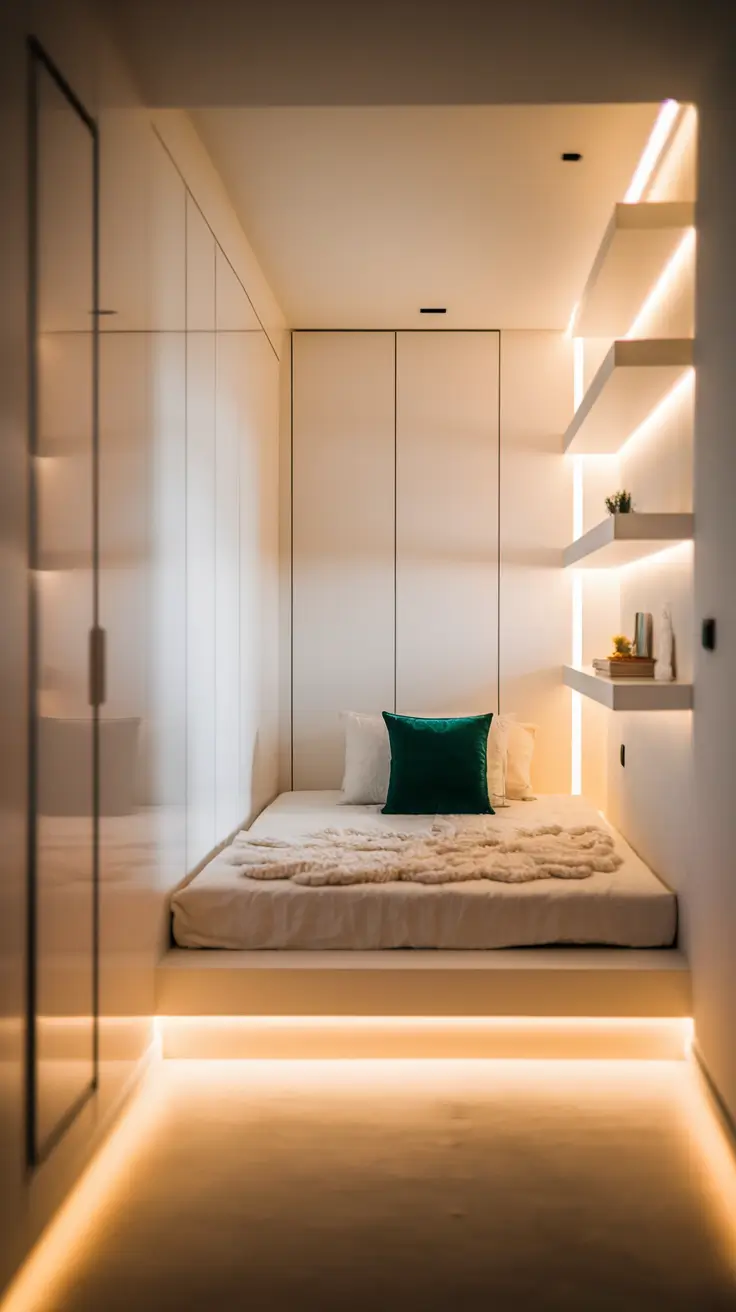
Must-have pieces are a white platform bed, floating shelves, and a built-in wardrobe with smooth handleless doors. A whisper of color, maybe a cushion in emerald, a small violet chair, or a strip of warm wood anchors the design. Swapping a floor lamp for a wall sconce opens up the floor and keeps the space truly uncluttered.
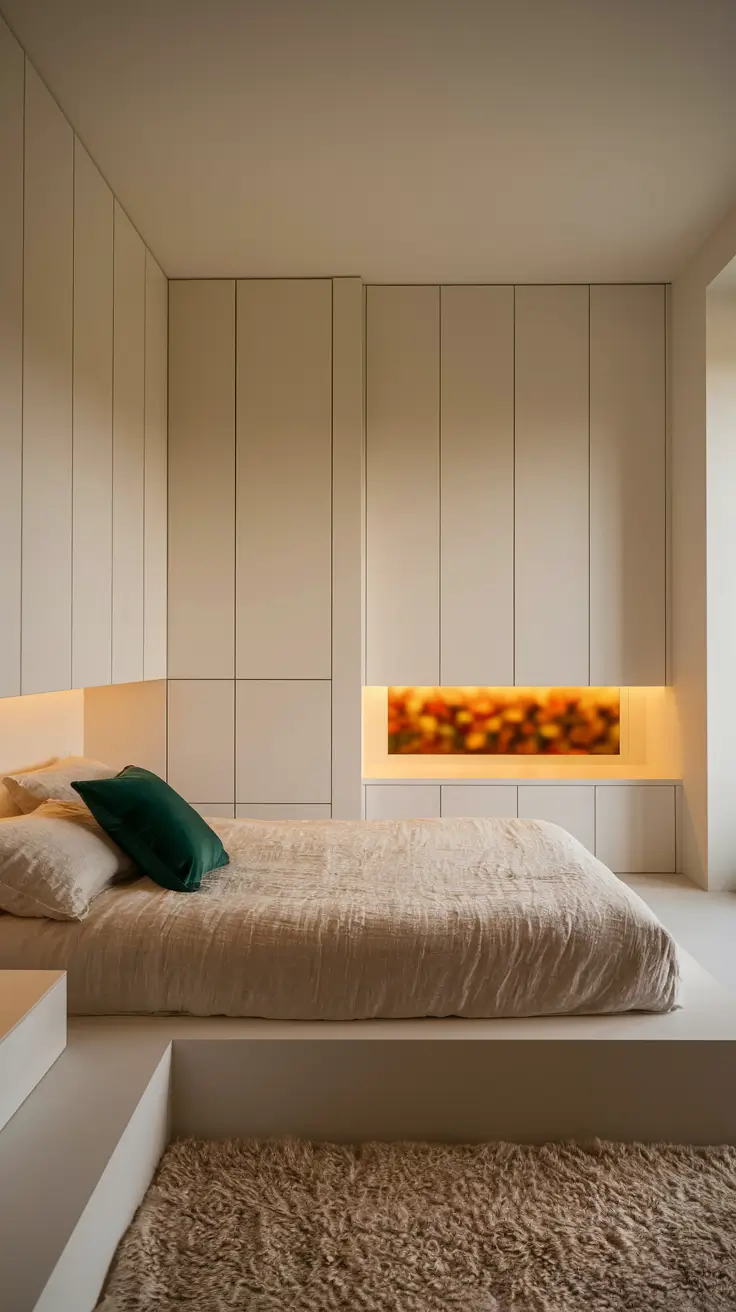
In my experience, the softest, calmest minimalist bedroom comes alive when it embraces white tones and companion textures, think plush wool rugs, airy linen sheets, and light, breezy cotton curtains. Research from Architectural Digest in 2026 notes that today’s all-white designs are exploring “contrast in texture, not in color.” This idea feels like the quiet twin of minimalism, celebrating subtle richness without veering from calm. My go-to tip is dreamy white-on-white layering: matching glossy paint with matte linens or a satin-finish bedside table next to rougher burlap for that satisfying, quiet contrast.
To keep the brightness in balance, I suggest bringing in a small, dimmable 2700K LED strip, tucked behind the bed’s floating rail or in the soft cove of a wall panel. This setup transforms a stark, bright space into a gently glowing, almost moonlit room at night. The warmth of the light harmonizes with hygge linen and wool, and the soft dimmer lets you choose between a bright, energizing wake-up or a quiet, slumber-inducing light.
Using pink accents in minimalist bedrooms
I begin with a calm neutral base and let pink act as a delicate highlight, never the star. In tight footprints and small spaces, a tight color range makes rooms feel larger and easier to read. A soft blush with grey and white creates a look that feels current yet gentle, and I often use a subtle grey-to-pink fade in pillows and throws to keep things quiet. If the design is for a small white study or for a small Indian room with rich, patterned textiles, I go easy on motifs and let the color speak in soft, hushed tones.
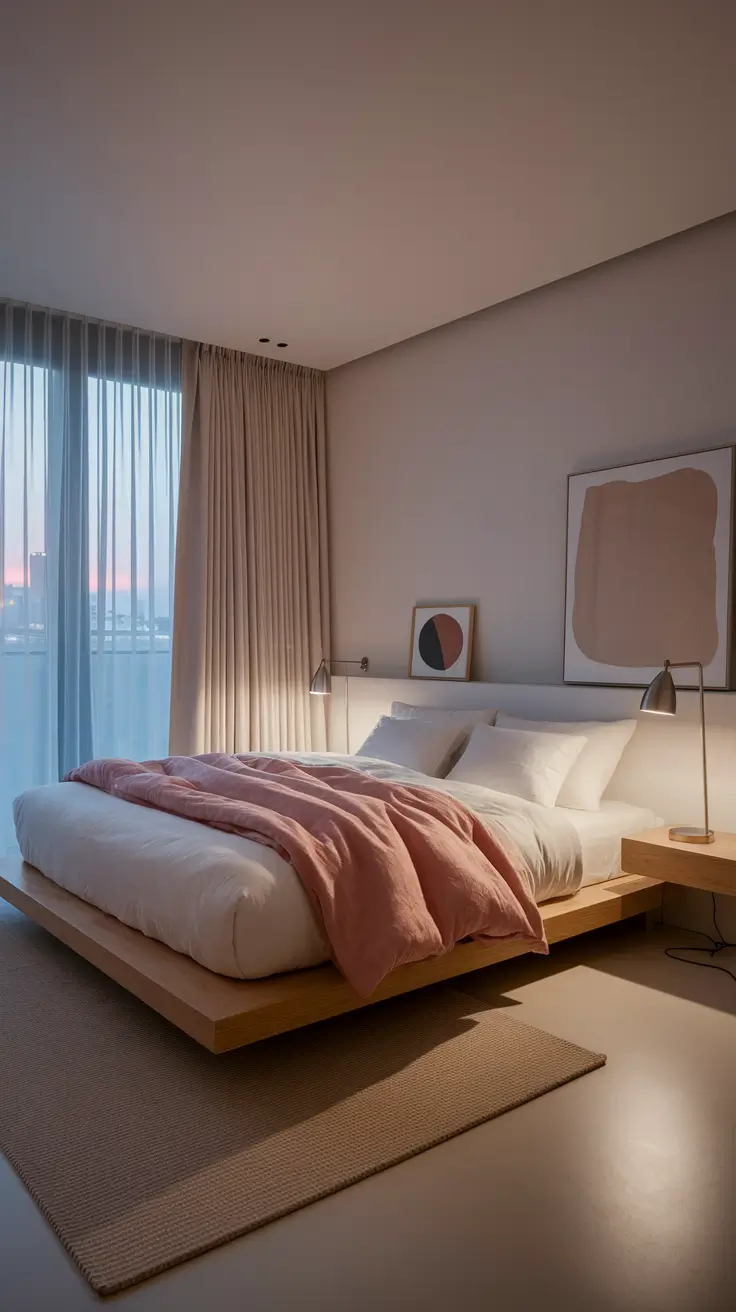
My favorite starter kit includes a low oak platform bed, snow-white cotton sheets, a blush linen duvet, and a sculptural satin-nickel bedside lamp. I add a slim oak bench at the foot and a thin, light-coloured rug that runs under two-thirds of the bed to anchor the scene. I choose airy, abstract art and keep window dressings to soft, unlined sheers over blackout blinds. A small, dusty purple ceramic vase sits quietly on the bedside its gentle, off-key note keeps the whole palette refined.
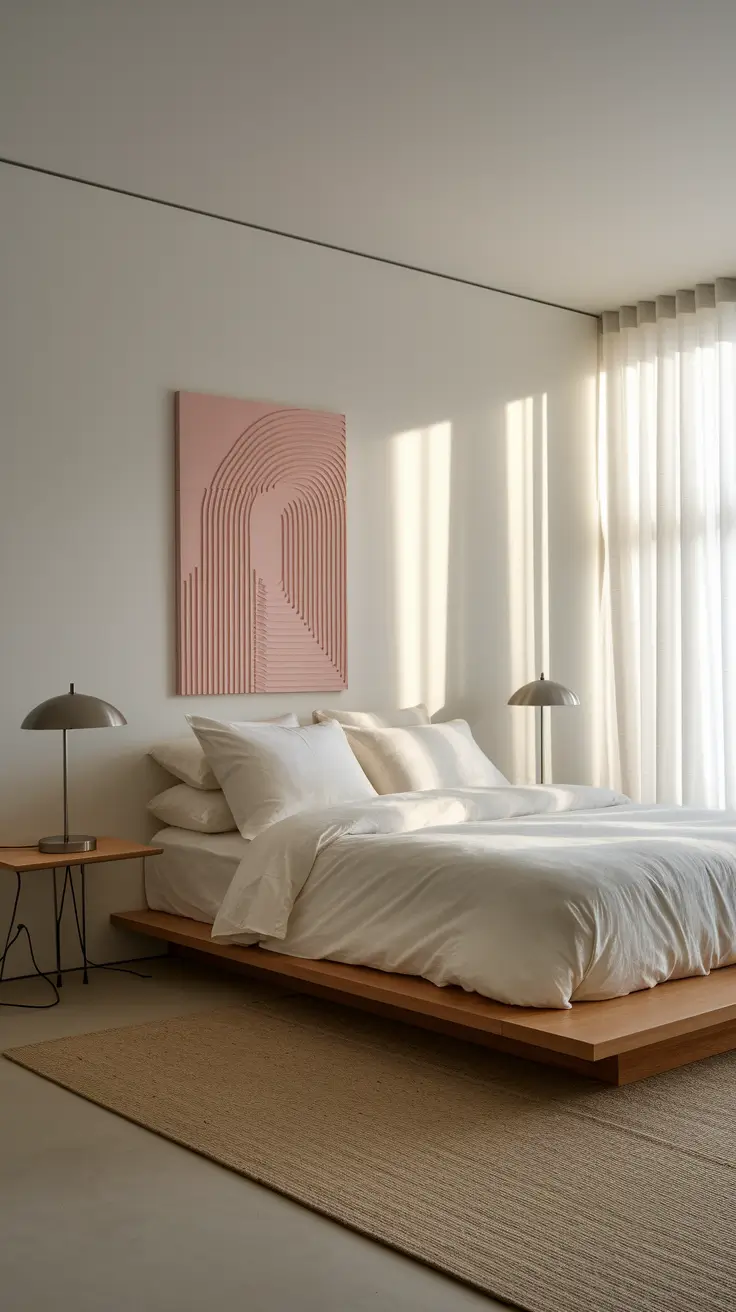
I’ve found the best trick is to edit. I limit pink surfaces to two so the space never veers into theme-park territory. Longtime AD editors have noted that fewer contrasting finishes make small rooms feel both serene and upscale, and I’ve seen the same trick work in person. I also favor dim-to-warm bulbs, so the pink reads soft and flattering in the evening.
I’d add one statement piece that marries color and texture: a boucle pillow in soft blush or a micro-fluted side table. If the room belongs to teen boys or is a shared space, I trade blush fabrics for dusty mauve art to keep the look age-neutral.
Japanese minimalist bedroom design trends
For a Japanese minimalist bedroom, I center on nature, quiet geometry, and low, horizontal lines. In small rooms japanese, I set the mattress on a low frame to open sightlines, and I keep walls clear so the edges feel light. A single green plant, a sage throw, or a deeper emerald green accent nods to the garden and deepens the calm.
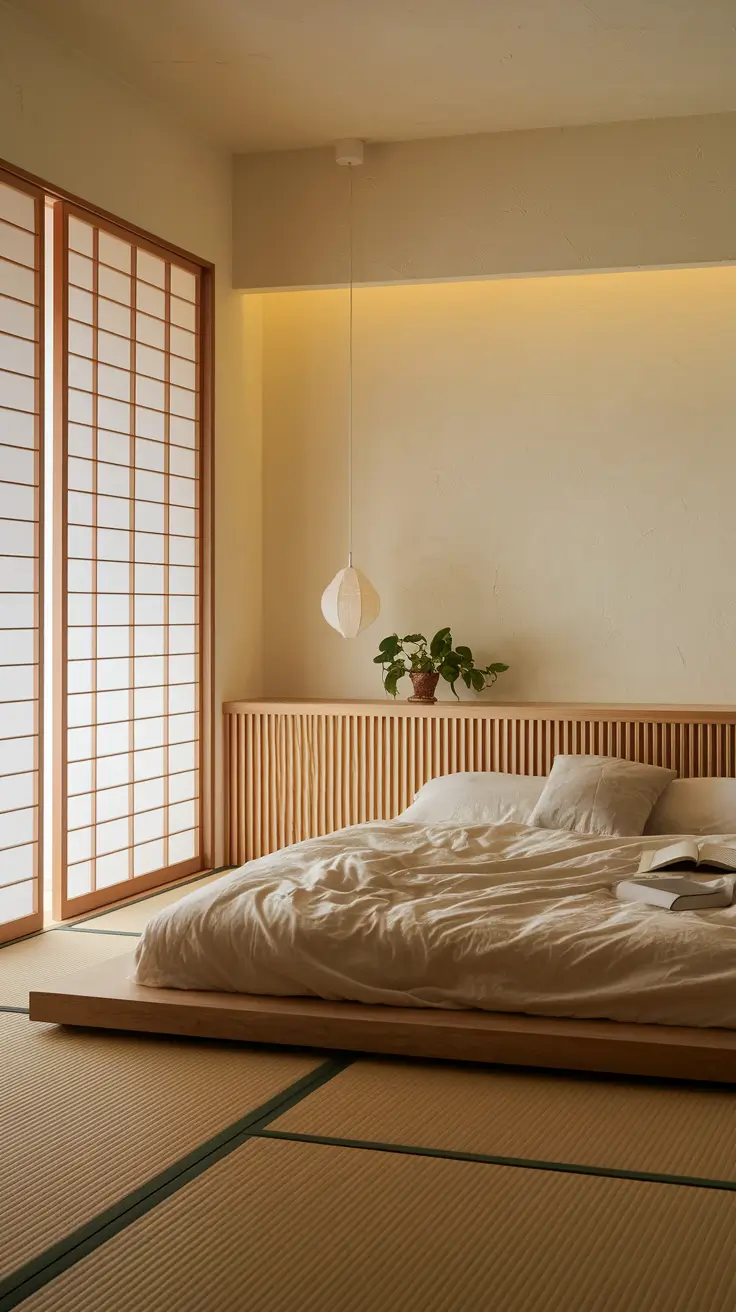
My color scheme floats on ash or pale oak, warm off-white limewash walls, and a softly rounded bed frame. I love slatted headboards that gently calm sound and let me tuck a few books on a whisper-thin ledge, paired with a rice paper lantern that spills light. Slim shoji-style sliding closet doors slide away silence, keeping any swing door from crowding the room. A subtle tatami-like rug underfoot feels soft without pulling the eye into busy prints.
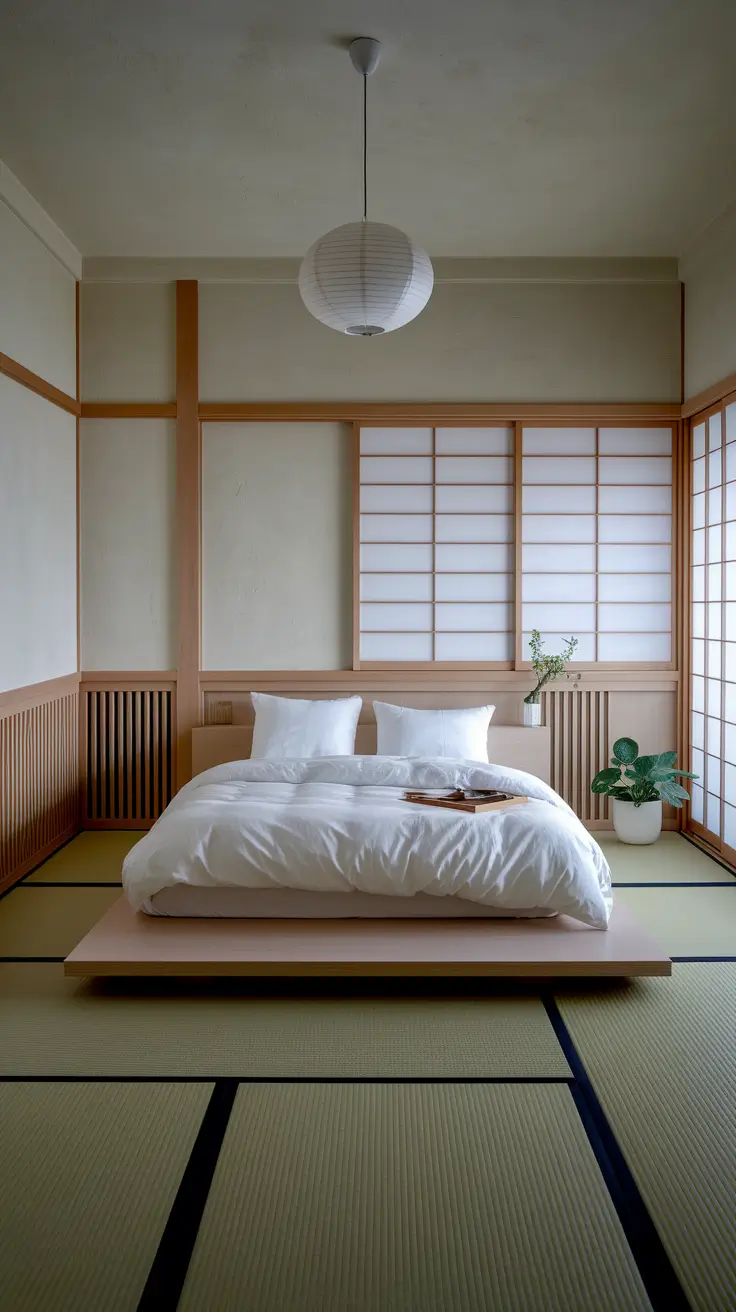
The Japanese spirit harmonizes with my love for tidy, modern storage. I nest covered boxes inside the closet, letting the outside stay calm and empty. I skip heavy wallpaper or extra trim, letting the room stay light. Following Apartment Therapy’s wise nudge, I weave the same woods or linens across corners and surfaces so small rooms read as one calm, flowing space.
For a soft finishing touch, a quiet tea corner feels warm and welcoming, with a low, round tray and a single cushion that invites a pause. I especially love this in studios. If the ceiling lifts high enough, a mini sleeping loft brings the bed off the floor and the eye still skyward, echoing the idea of a modern loft bed. I keep that option for rooms with safe headroom and sturdy railings, letting the floor stay clear and open.
Grey and white minimalist bedroom ideas
A pure grey and white color scheme gives me instant visual calm. In small spaces, the lack of color lets daylight bounce around and makes shelves and cabinets fade into the background. It also sets the stage for Scandinavian touches light wood, soft wool that add heat without adding stuff.
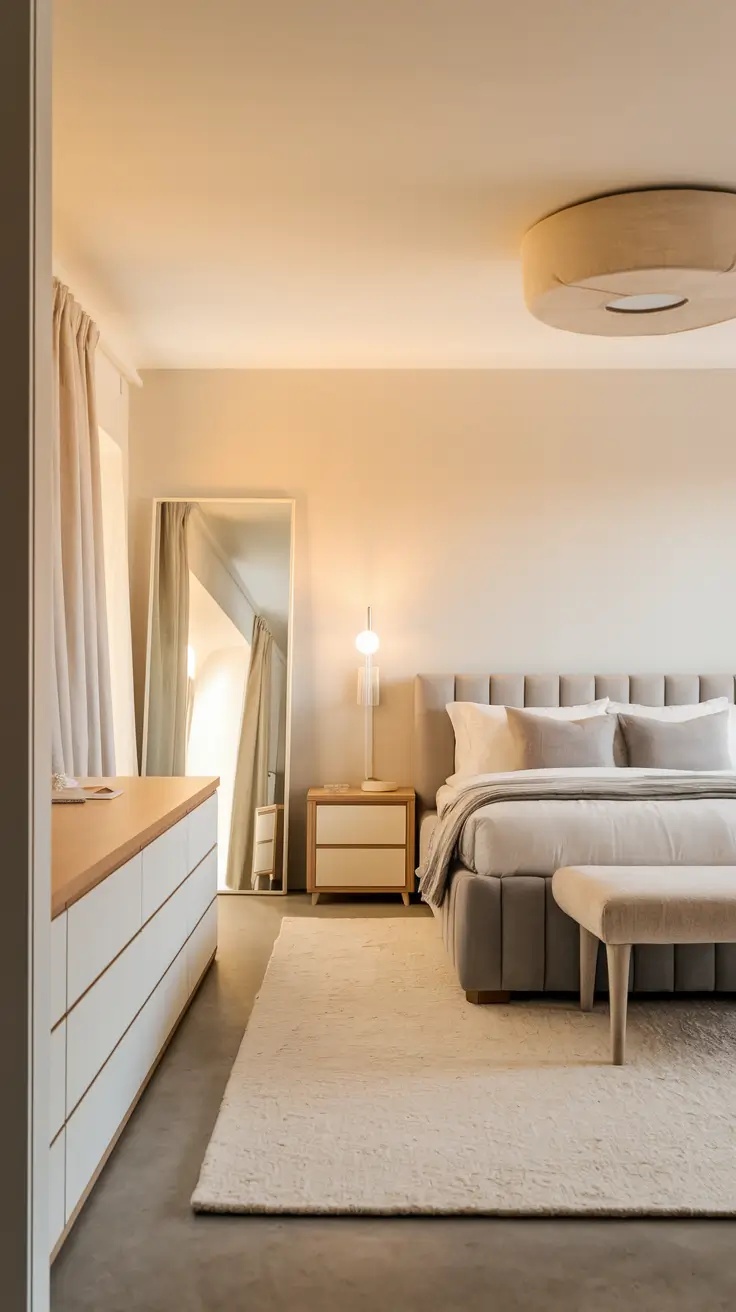
I choose a matte white wall, a dove-grey upholstered bed, white-oak nightstands, and a low white dresser with hidden handles. The bedding moves from crisp white sheets to a grey coverlet, topped with a single, tonal lumbar pillow. A frameless mirror opens the wall, and a flush-mount fabric shade gives a soft, even glow. A light wool rug keeps the floor quiet.
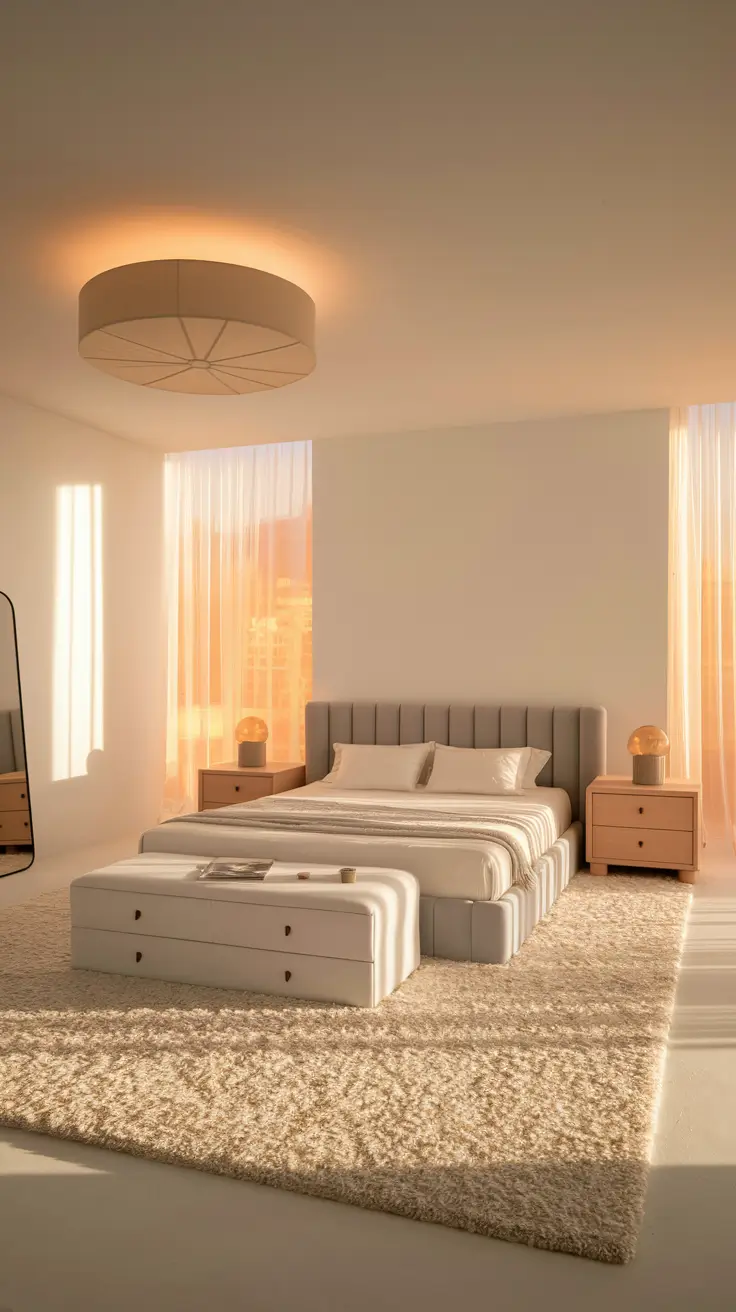
For families, this scheme easily becomes a teen boy’s room: I switch to charcoal for the accent pieces, add a sleek graphite task lamp, and keep the same furniture line. Design names like Domino remind us that sticking to two or three finishes keeps a room minimalist yet warm which I keep seeing in my own projects.
If a space feels flat, the fix is texture. I’d throw on some ribbed curtains or a soft, chunky throw to warm it up, and with Small rooms white, I often paint the baseboards the same color as the wall to sneak the ceiling a little higher.
Small Rooms Without Bed Minimalist Setups
When clients ask for Small rooms without bed, I build a sleep zone that disappears by morning. In micro apartments and Small spaces, taking the bed footprint out frees up the room so you can multitask work, yoga, whatever without a furniture shuffle. The trick is a tidy daily ritual that swaps the room in seconds.
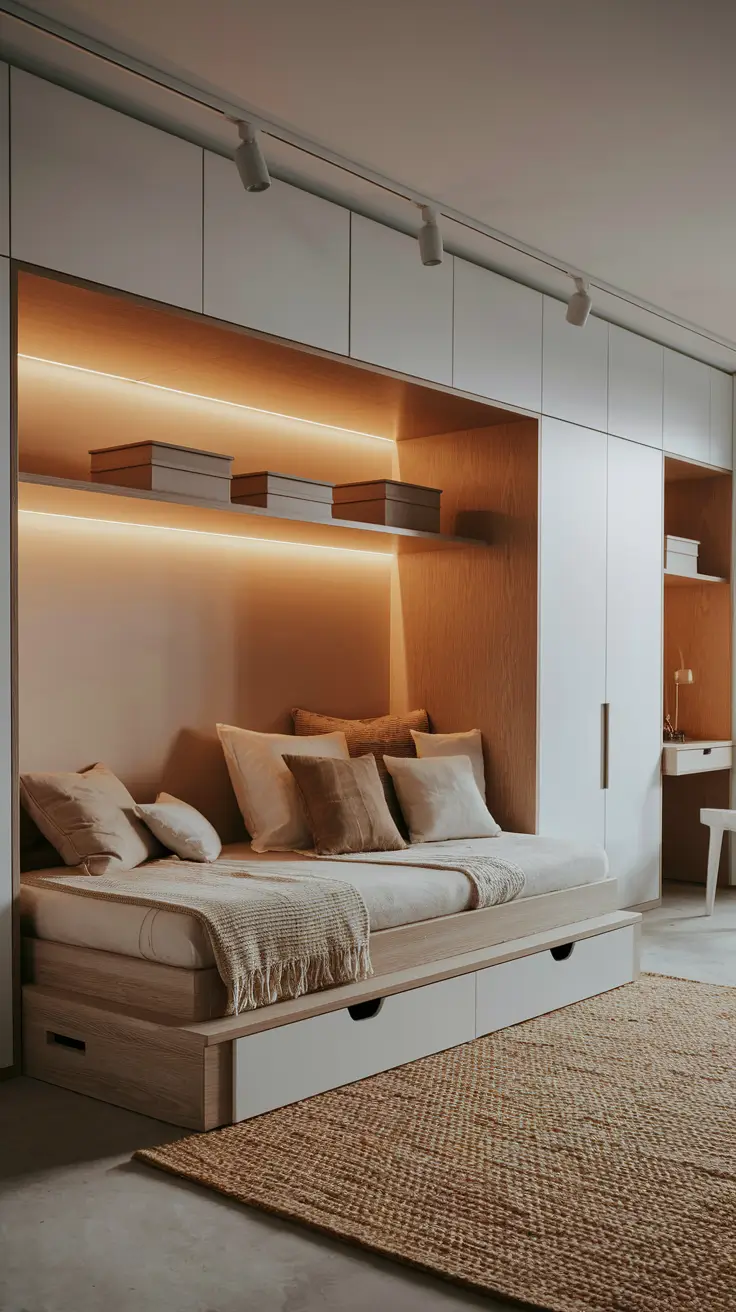
I choose one of three tricks. The first is a high-quality tri-fold floor mattress that stands tall in a wardrobe when rolled up. The second is a daybed with a firm seat cushion and a drawer that hides the bedding. The third is a ceiling-mounted deck that floats like a stealth Small rooms loft bed but leaves the floor fully available. I layer the lighting with recessed tracks and soft, directed task lamps.
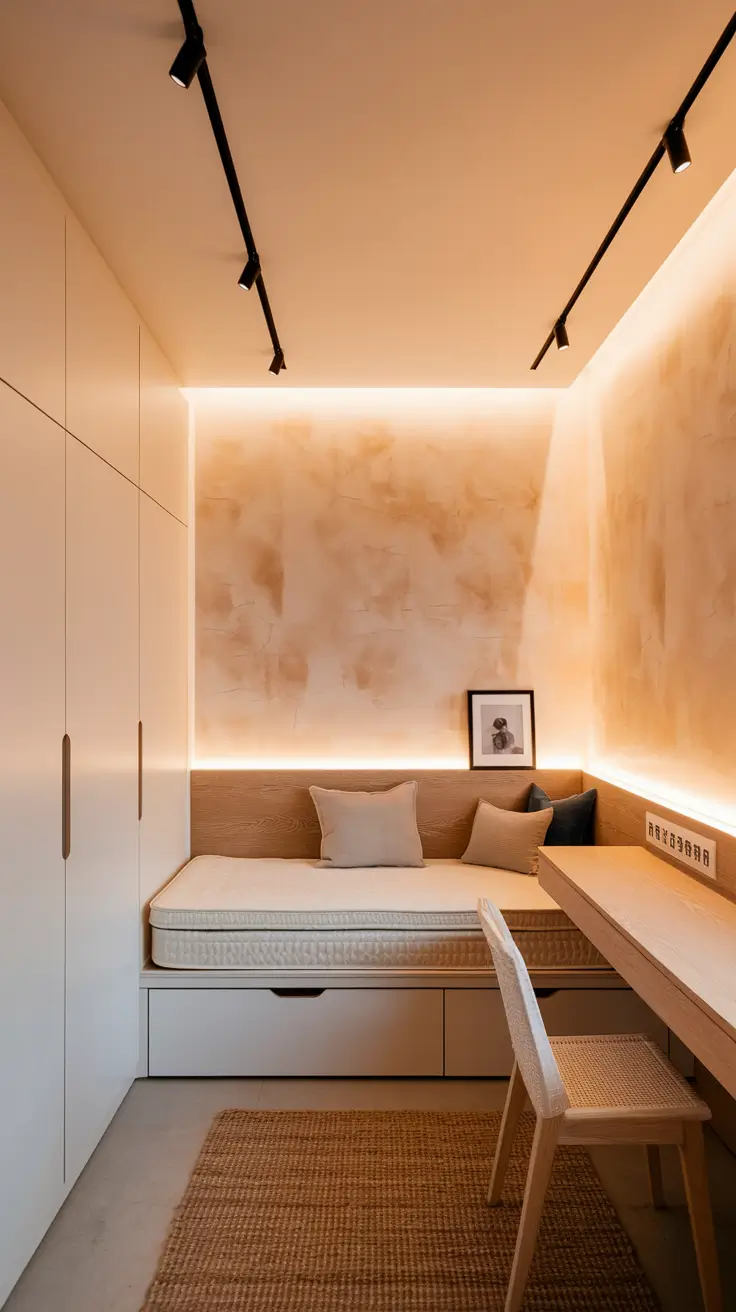
In my home, everything has a home. I give bedding a clear shelf, pajamas a lone hook, and pillows a light, breathable bag. Professional organizers often say to label even the quietest corners, and I’ve learned a small label stops little messes from regrowing.
To complete the calm, I’d add slim, dimmable LED strips under the deck or daybed. These small lights act as gentle nightlights and make moving safely around the space feel easy and clear.
Off-Centered Window Behind Bed: Minimalist Styling
An off-centered window behind the bed always feels tricky, but minimalism hands us quick, smooth fixes. Instead of fretting about the window’s place, I treat the whole wall. I place the bed so it relates to the whole wall, not just the window, and the little imbalance feels like a smart choice, not a mistake.
I can run a single shelf or a smooth, fabric-covered panel across the whole wall, then place the bed right in the middle of that shape. Floor-to-ceiling, soft drapes pull across the whole wall, hiding the window’s offset and softening the room’s sound. One simple linear sconce in the center, or two small sconces placed just off the sides, steady the look without clutter.
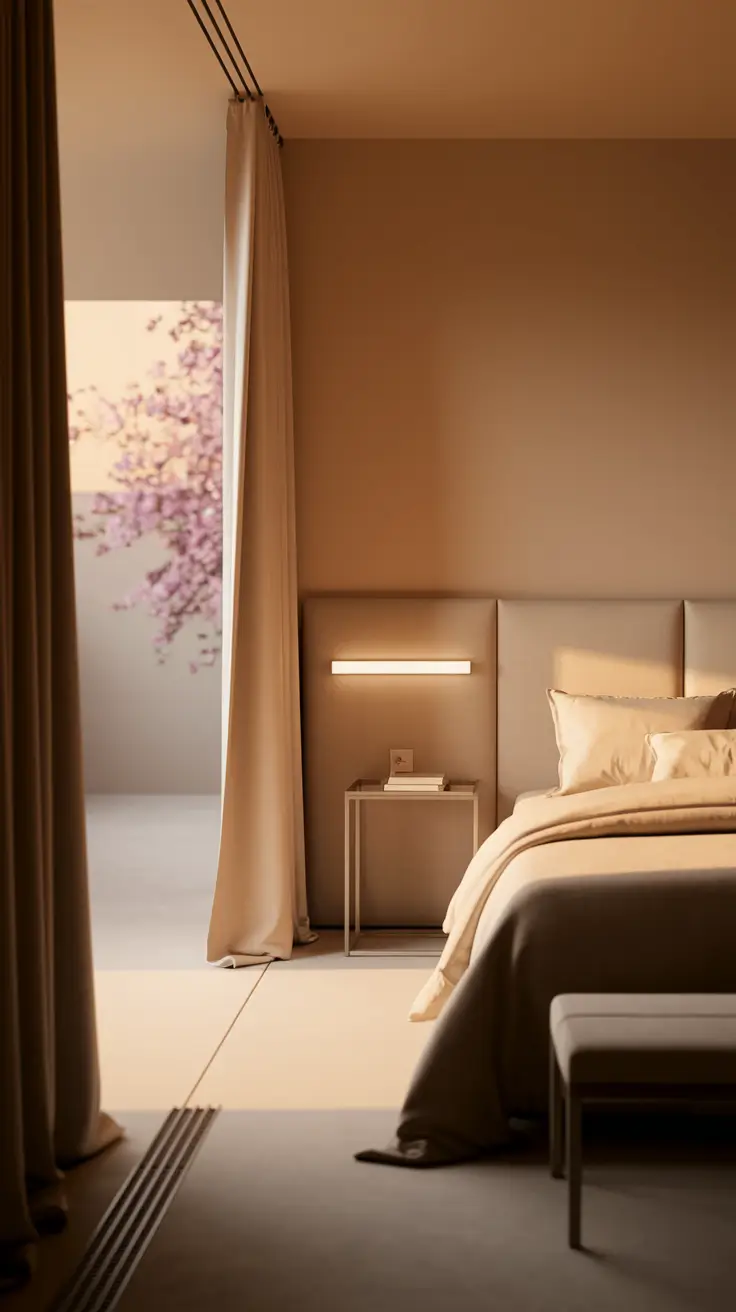
In design, I steer clear of bulky canopy beds in these spaces. They fight the wonky window line. House Beautiful has said that in asymmetrical rooms, broad strokes work better than fiddly fixes, and in my experience that holds up when I’m facing tricky window placements.
Instead, I tuck in neat cable channels and a slender bench to gently stretch the whole look toward the window. If the window has black steel bars, a whisper of Industrial flair a metal nightstand, perhaps hints at the mullions without crowding the room.
Dark minimalist bedroom concepts
A dark bedroom invites calm when the materials feel soft and the shapes stay spare. In compact rooms dressed in black, I pull back the contrast and let texture speak, turning the space into a cozy cocoon rather than a cave. If my clients crave a moody feel, I back it up with tight lighting control.
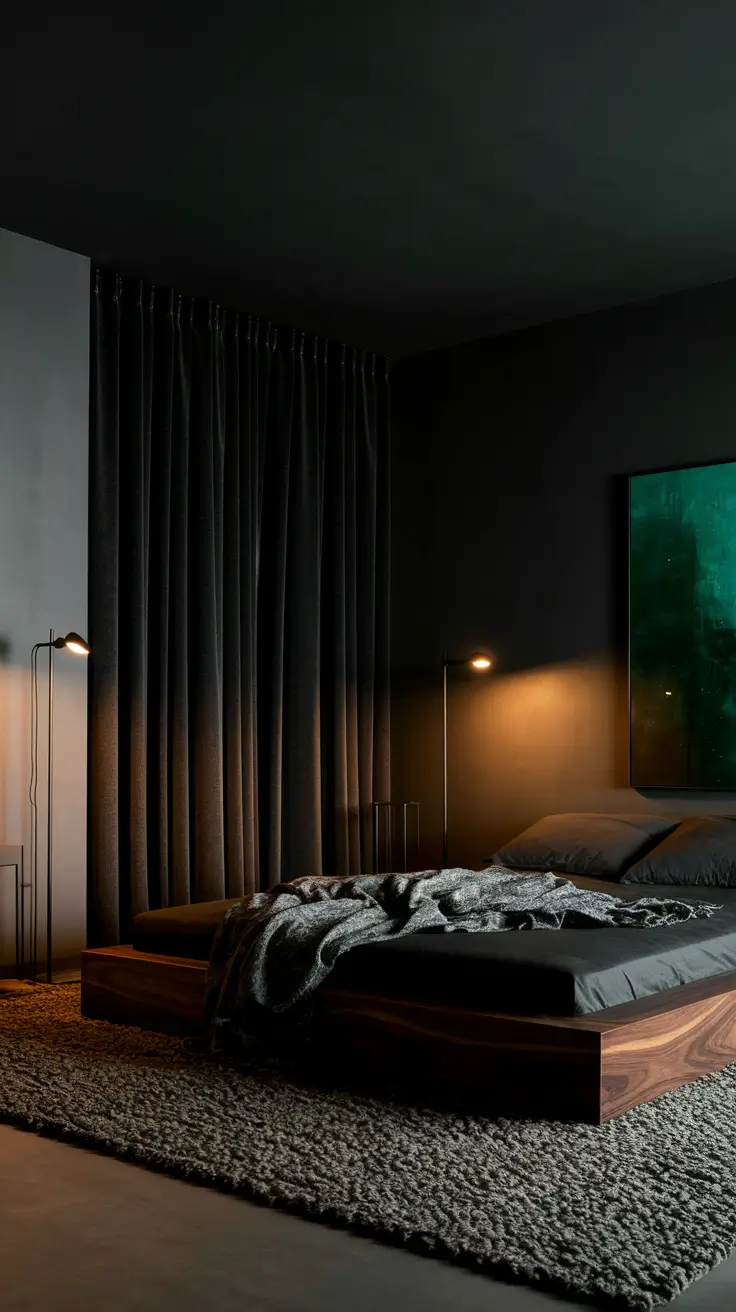
I propose matte charcoal on the walls, a low-profile walnut or black-stained bed, and heavy woven drapes. Metal hardware remains satin, never polished. One piece of art muted emerald or plum adds depth without shouting. Underfoot, a thick wool rug hushes the sound.
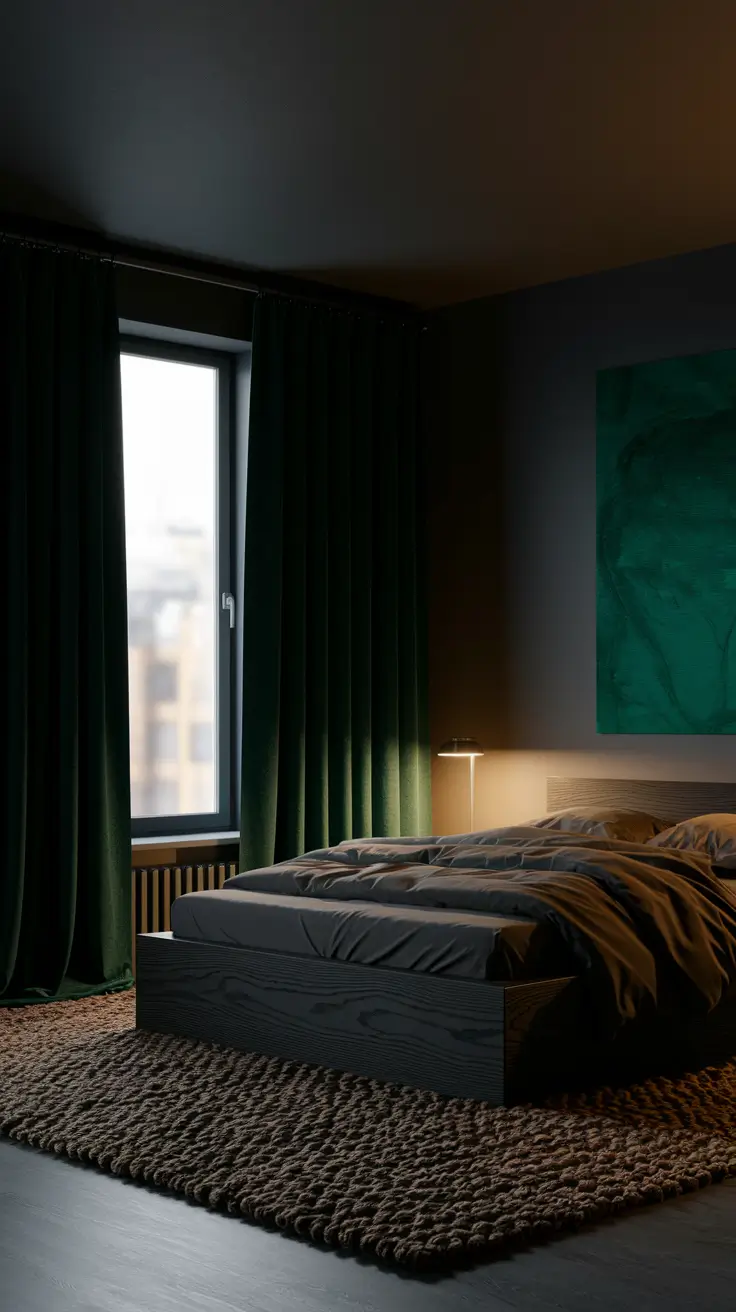
From my practice, dim-to-warm bulbs and blackout curtains rule my night routines. I layer subtle lamps for reading and low pathways, giving the room helpful light after dusk. The Spruce editors usually recommend painting the trim the same color as the walls to deepen dark spaces. I’ve adopted that trick and find it tidies edges and light feels softer.
To finish the room, I’d tuck in one small plant for a pulse of life and a light linen duvet to keep the air cool. A single mid-century-shaped chair or a slim industrial sconce can nod toward the era of my choice without throwing off the quiet.
Small rooms with TV minimalist layouts
Designing small rooms with a TV means the screen must vanish when it is off. I quick-mount the TV at the right eye level for night viewing and then either recess it or paint the wall dark. The rectangle then stays invisible. In small spaces, I keep circulation around the bed clear, so I choose the slimmest swing-arm mount that still tilts for comfy angles.
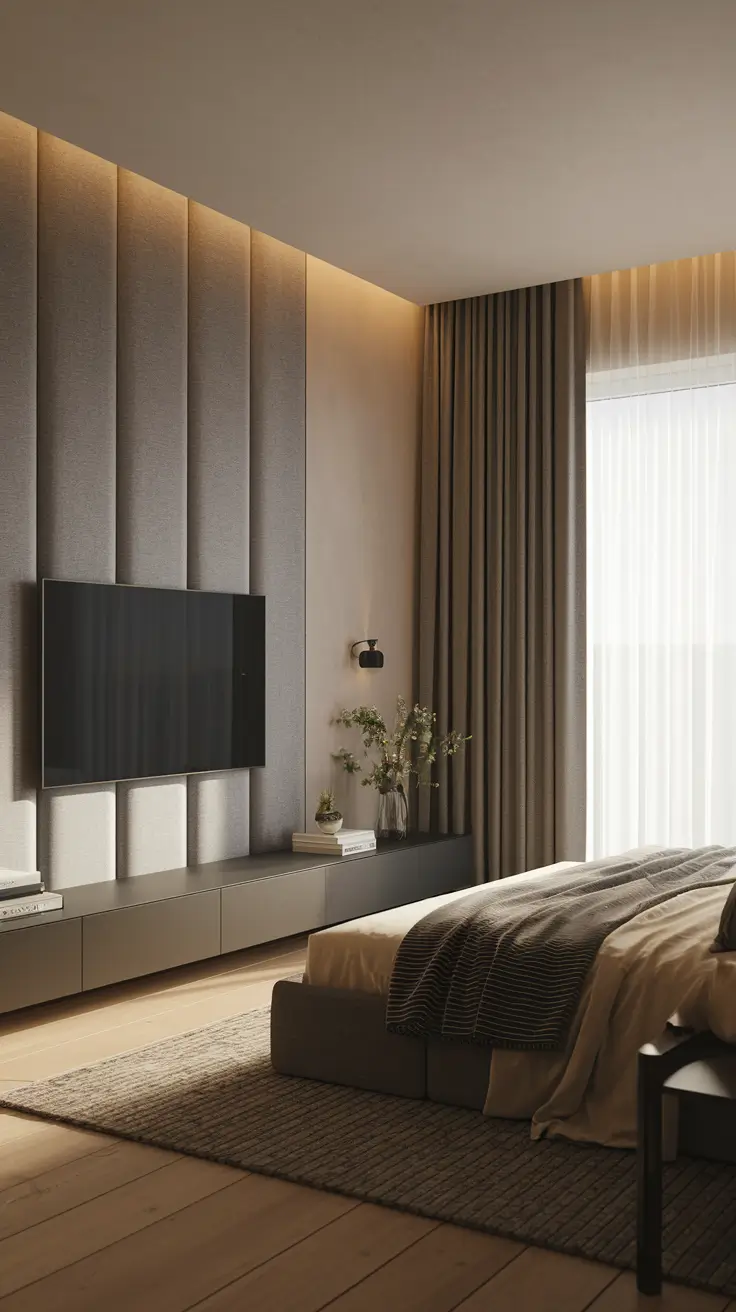
My kit starts with a sleek, handle-free shelf low enough for consoles and a sleek fabric cord channel that keeps all cables tucked tidy. Above it, I mount one slim swivel sconce for nighttime reading no space for a bulky lamp. If sun glare becomes a problem, I pull a set of dimmable blackout drapes. Behind the TV I place soft bias lights that not only create the perfect glow for late-night shows but also double as gentle, low-energy Small rooms led lights when I want a little moonlight effect.
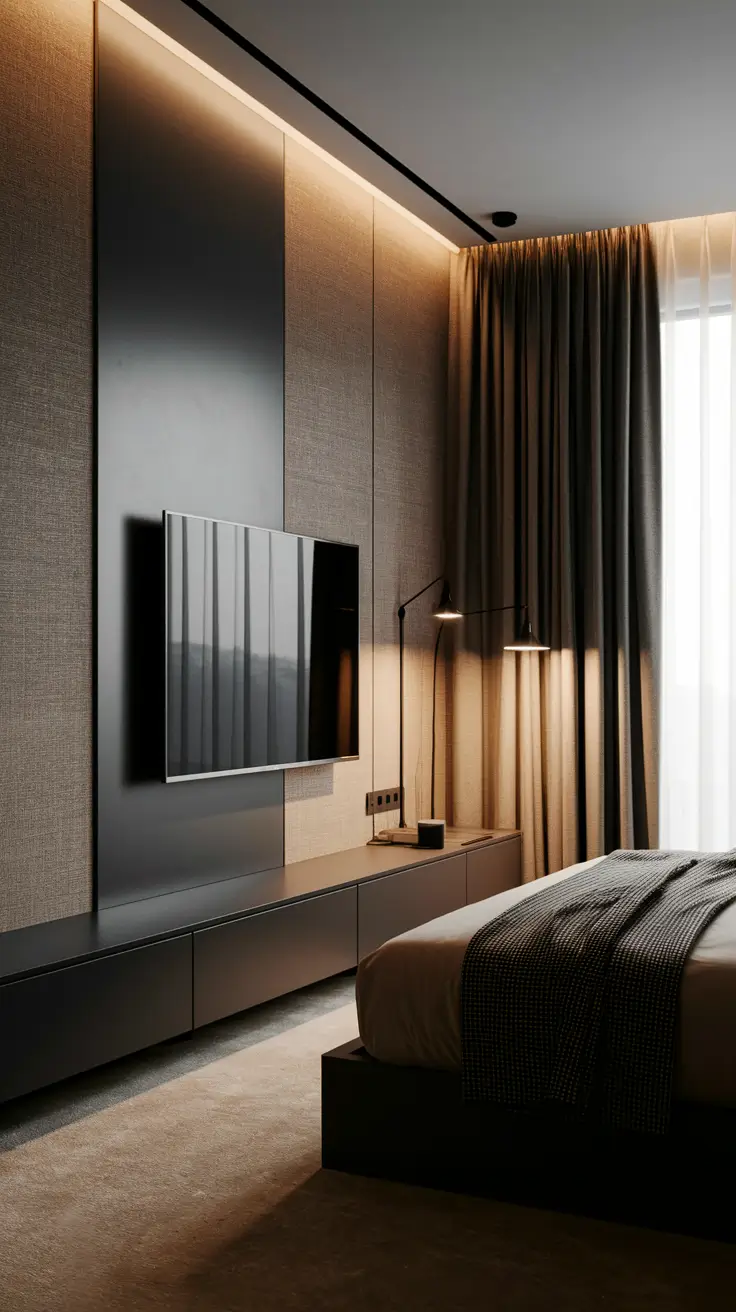
In spots meant for teens or the occasional gaming den for Teen boys, I stick with an easy muted palette and layer in grey acoustic panels. They stop that echo-y feedback without cramming the walls with stuff, keeping the space visually calm even with all the tech.
Final touches are a small catchall tray on the shelf for remotes and a compact universal power strip tucked inside the cabinet so chargers won’t sprawl across the surface. If the whole apartment leans toward Scandinavian vibes, I get the shelf in pale oak to soft-match the other casework and maintain that bright, airy feel.
Scandinavian Minimalist Bedroom Designs
The Scandinavian touch to minimalism champions calm, light, and smart use of space. In 2026, it still shapes bedrooms that feel open, fresh, and beautifully tidy. I’m drawn to how white walls, light wood, and soft fabrics combine to stretch even tight corners into generous, calm zones.
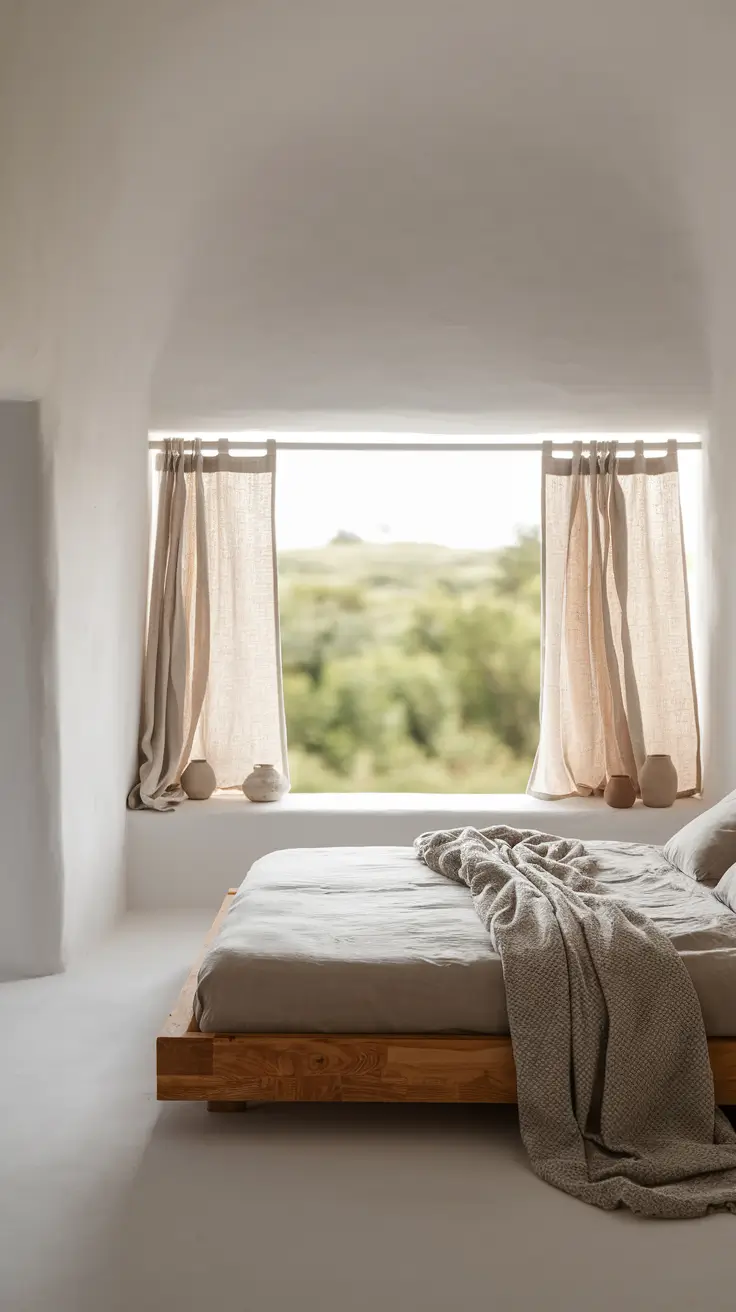
The furniture lineup usually starts with a low-profile wooden bed, slim nightstands, and a wardrobe that keeps its lines sleek. A chunky wool throw, a light linen duvet, and a couple of simple ceramic or glass pieces add warmth without crowding. For a color scheme, a base of cool white and soft grey works well, and a hint of sage green or soft beige gives it that extra depth.
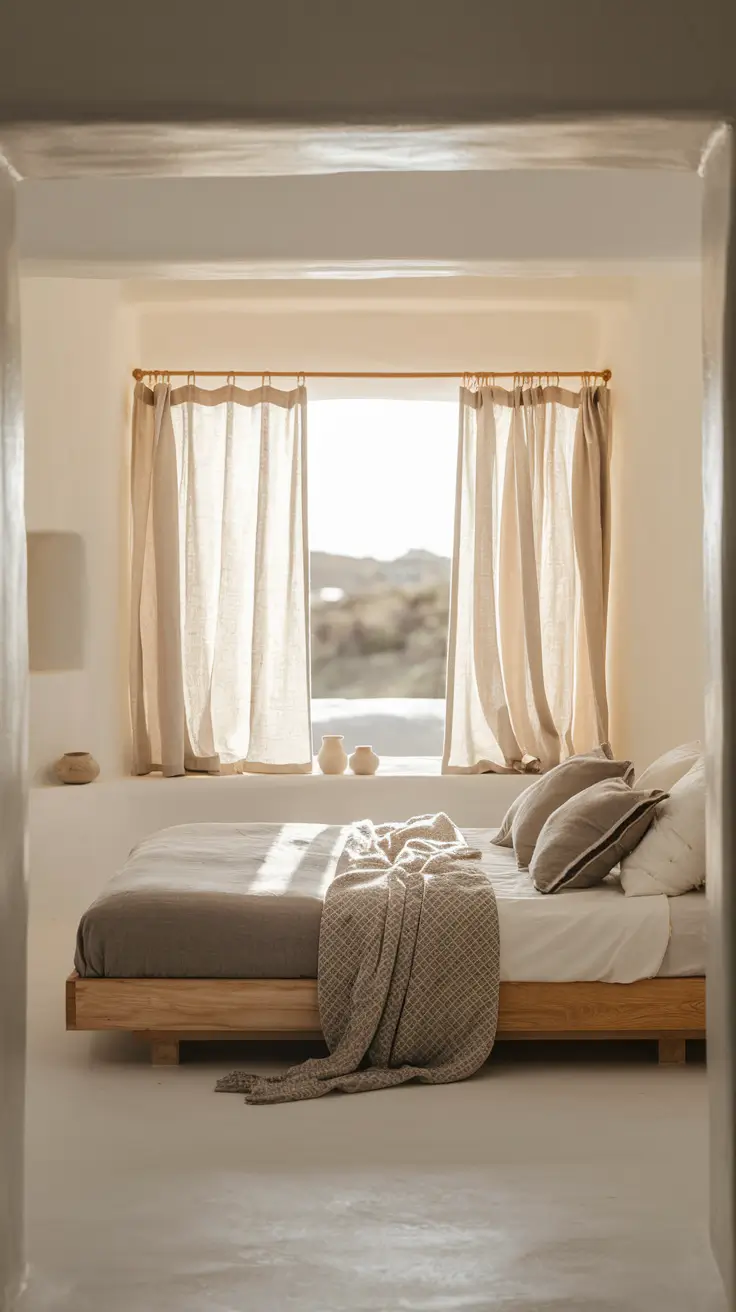
Clients tell me they love this look because it never goes out of style and it changes with them. House Beautiful once called it “visual silence” and I think that’s spot on. In bedrooms where the window sits off-center behind the bed, the look shows that balance doesn’t always mean symmetry.
To complete the scheme, add layered lighting. A slim floor lamp by the bed and a pendant overhead, both in warm tones, mimic daylight and coax the room into a softer, more inviting space.
Romantic Minimalist Bedroom Ideas
Minimalism doesn’t have to be stark; it can be tender when you know the soft spots to press. This year’s romantic minimalist bedrooms whisper intimacy through dusty color schemes, gentle textures, and those little details that pull you in without filling the space. The trick is to nest simple lines next to cozy accents like flickering candlelight, loose linens, and flower-kissed decor.
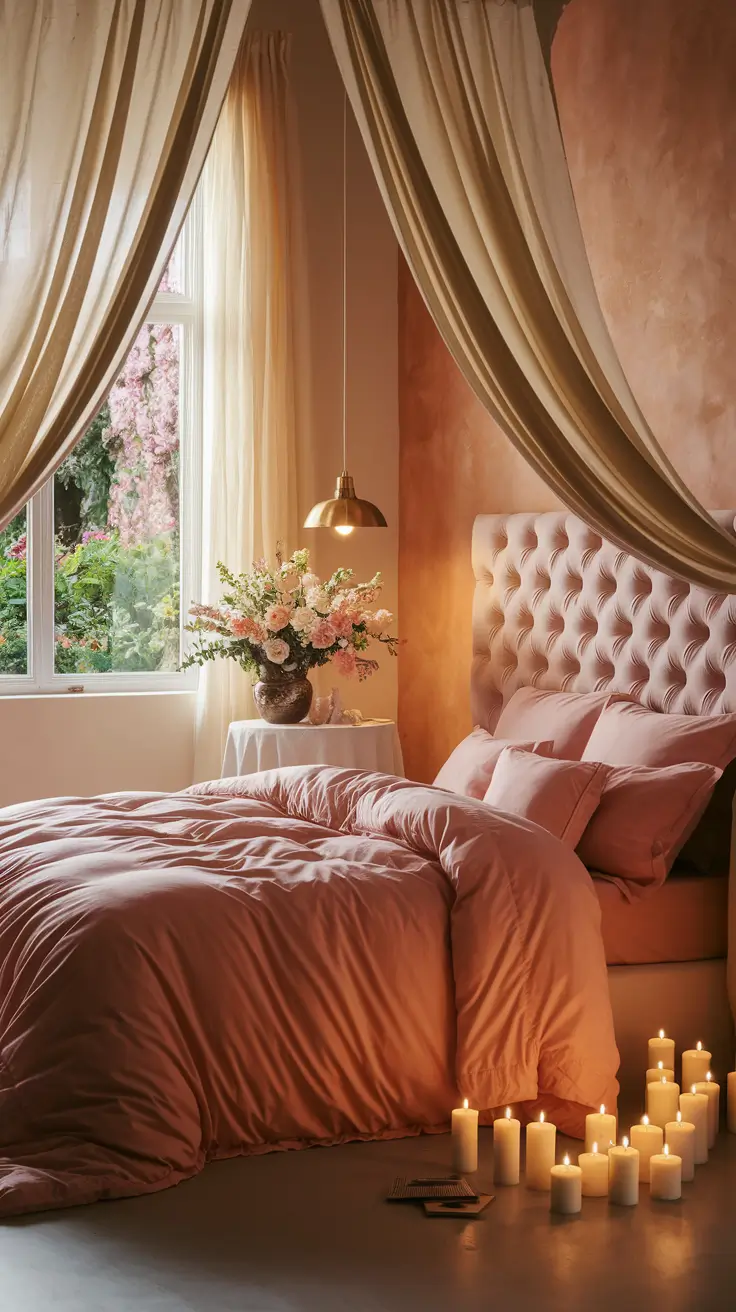
Scene set, you start with a cloud-soft tufted headboard, sheer curtains, and blush or soft dusty-pink bedding that nearly hugs the mattress. A petite brass chandelier or a slender pendant light overhead, balanced with a single vase of fresh blooms and a touchably textured rug, heightens the mood. Keep the walls a quiet greyish pink or creamy white to let everything breathe.
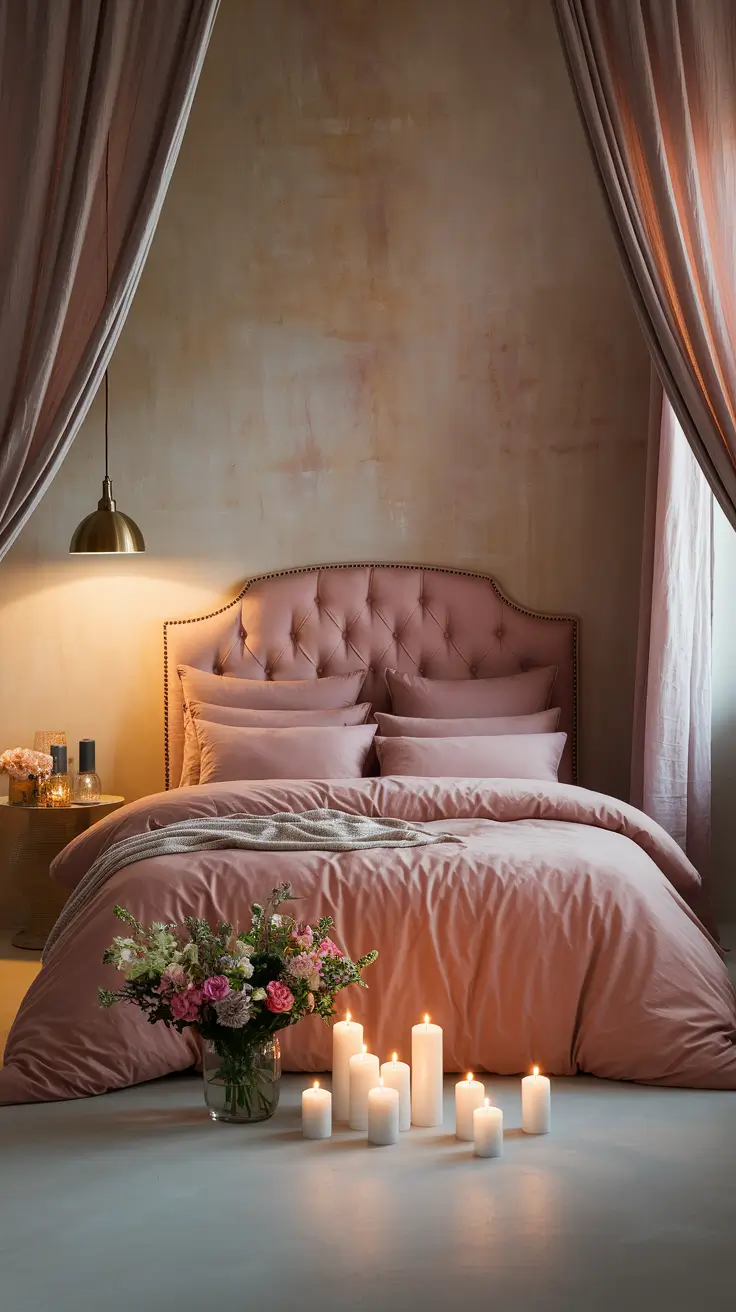
I find this trend quietly subversive. It proves minimalism can be warm, not sterile. Elle Decor says romantic minimalism is really about “editing, not erasing” showing you can keep a space deeply personal and still clear. I’ve borrowed the idea in couples’ bedrooms that craved the same dose of calm and gentle touch.
And here’s the bonus: romantic minimalism is a friend to small rooms. Choose multi-purpose pieces that slide in without fuss a bench that doubles as storage, or a small bedside table that holds a lamp and a book, and you keep the openness without losing the heart.
Small Rooms White Minimalist Interiors
Designing small rooms in white keeps them feeling open and airy. For 2026, the classic white look is getting updates with gentle pops of color and rich textures that stop it from feeling sterile. I like to mix matte surfaces with cozy fabrics and let smart lighting create the shadows that give the space depth.
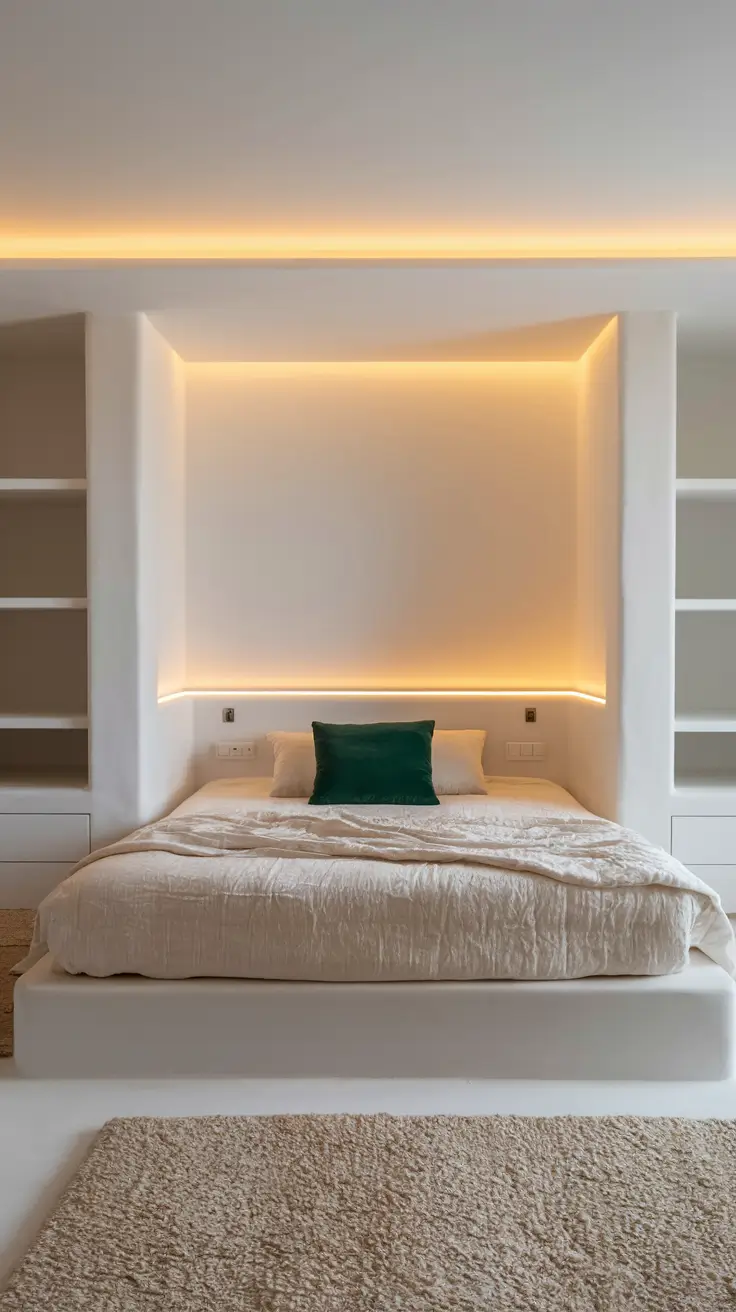
Essentials for the look include a low white platform bed, slim floating shelves, and built-in wardrobes with sleek, handle-free doors. A touch of emerald green, soft purple, or warm wood through a single cushion or a small accent chair keeps the room from feeling flat. Using wall-mounted sconces instead of floor lamps frees up the floor and keeps the space tidy.
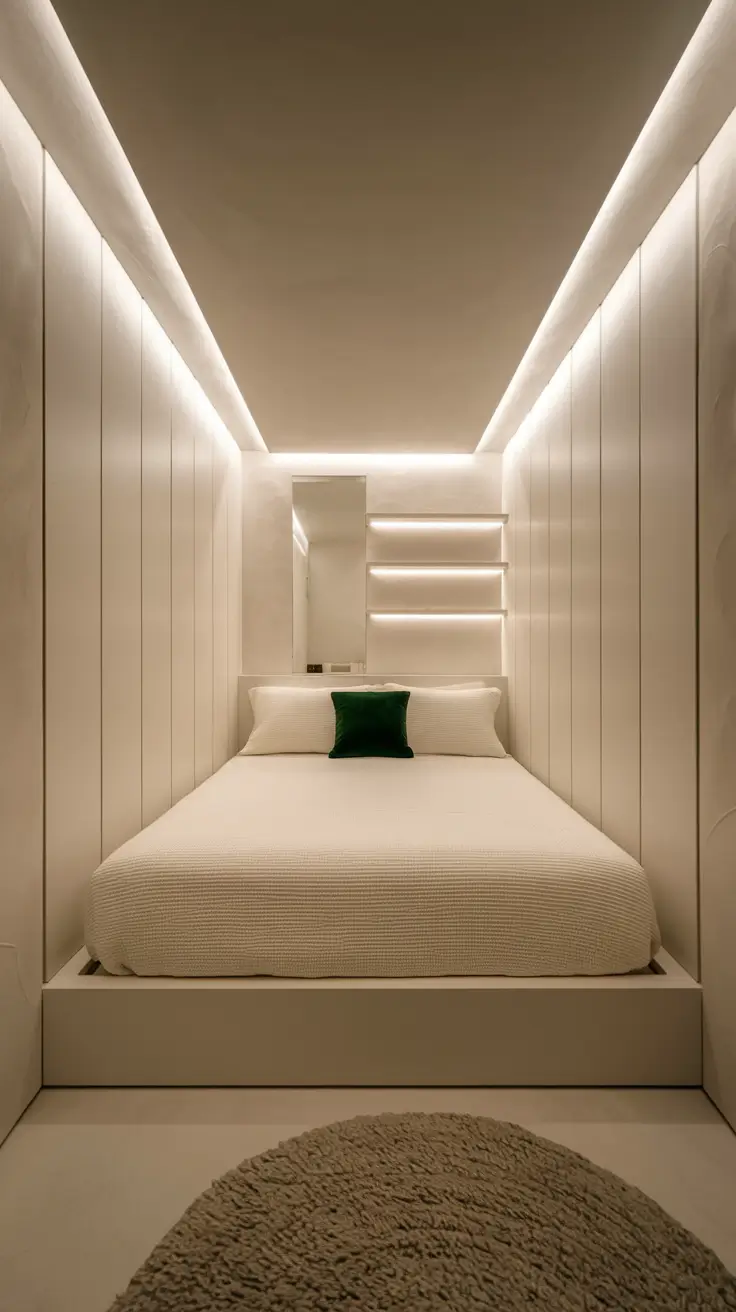
From what I’ve seen, white minimalist bedrooms feel most serene with cozy, tactile pieces like a thick wool rug, fresh linen sheets, and light cotton curtains. Architectural Digest reported that 2026 white rooms focus on “texture contrast, not color contrast,” which really clicks with minimalist thinking. I often suggest layering white-on-white, like shiny paint against soft matte fabrics, to create subtle depth.
This approach is balanced best with light control. Installing dimmable LED spots under shelves or in small ceiling alcoves lets you soften the brightness after dark, wrapping the room in a gentle, inviting glow.
Industrial Minimalist Bedroom Designs
I think of industrial minimalism as a careful mix of materials that feels calm rather than cold. In small floor plans I use deep charcoal for punchy accents in a small room painted black, then I pair it with warm oak, soft linen, and warm white to create a moody, inviting dark shell. If your room has a window that lands behind the bed, a wide upholstered headboard can pull the whole space together, hiding wires and softening sounds at the same time.
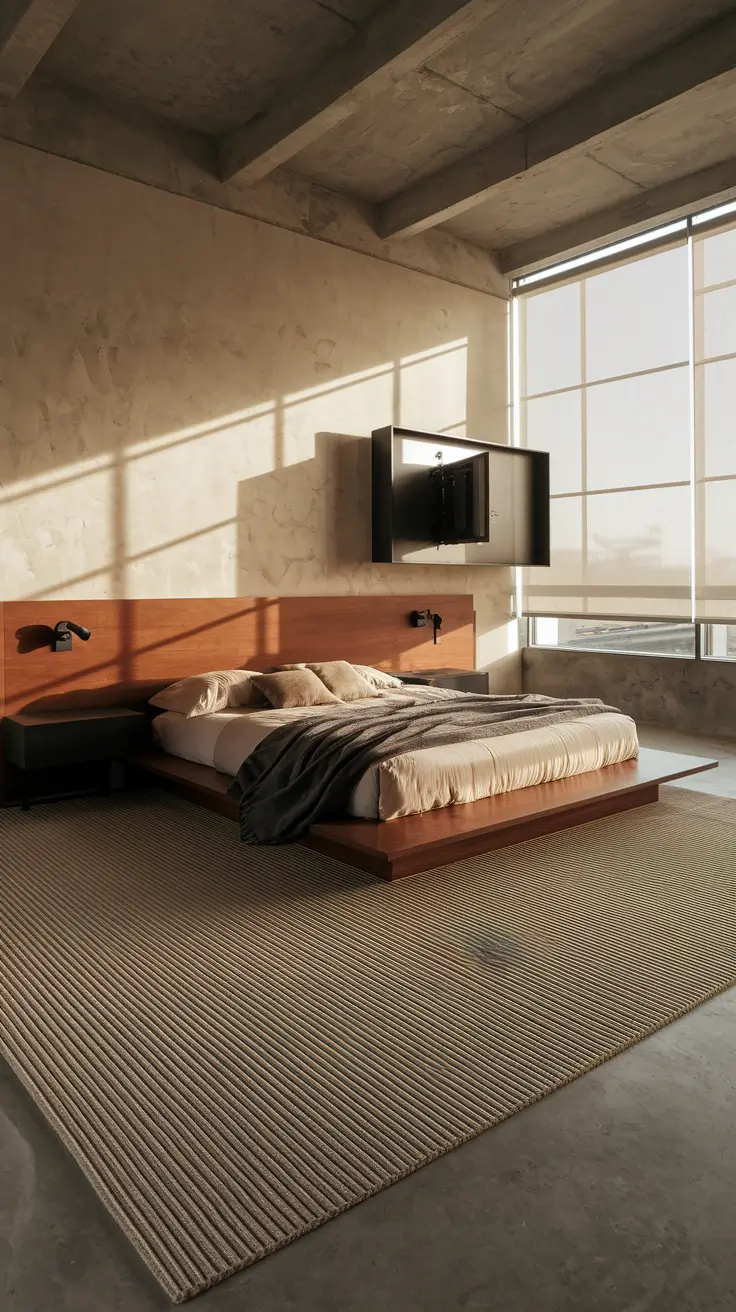
I usually choose a low walnut platform bed, pair it with slim black steel nightstands, and add one streamlined wardrobe with muted grey and white matte fronts. A simple ribbed wool rug gives warmth without fuss. If you want a screen in a small room, I mount a 43-inch TV on a swivel arm and float a narrow media ledge, so the floor stays light and open.
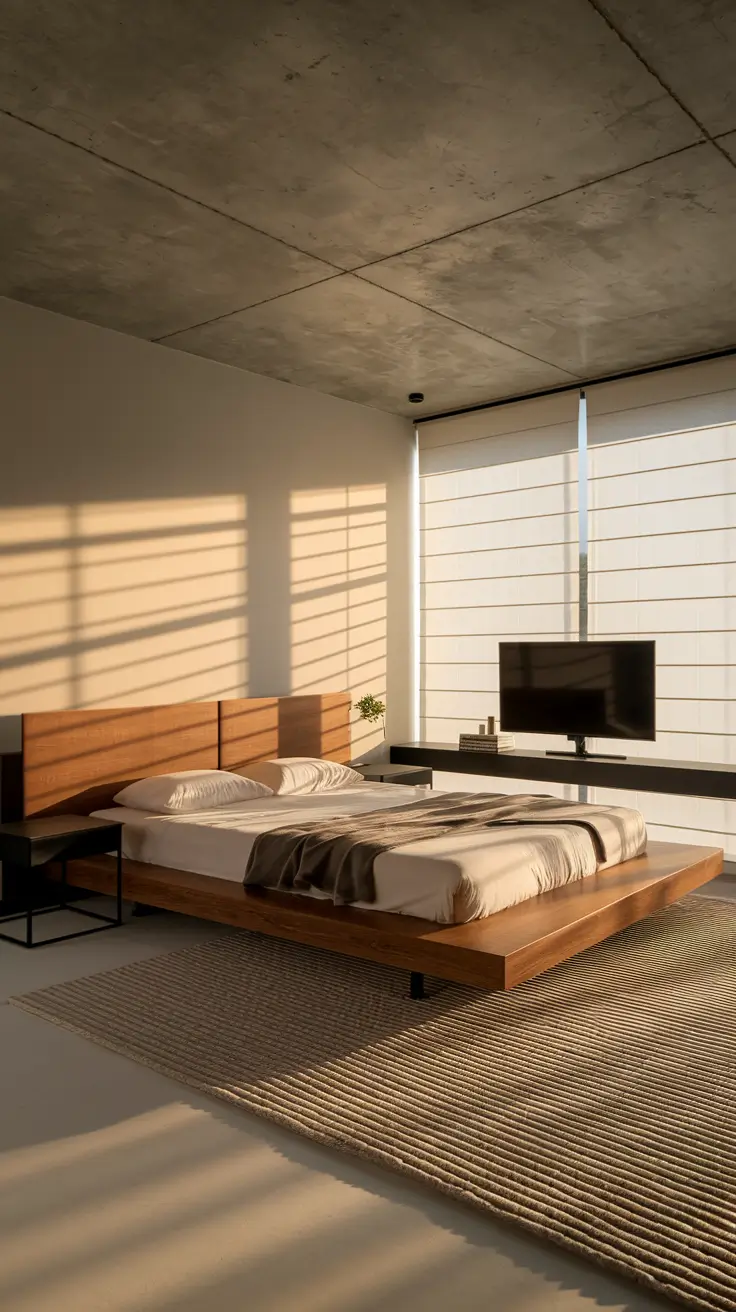
I have learned that restraint is what makes this style work. As designer Leanne Ford says, editing is a powerful tool. I keep surfaces nearly empty, use the same finishes again and again, and let the soft patina of wood and metal become the only decoration. One bold black-and-white photograph on a white wall is all the art I need.
I’d still add floor-to-ceiling blackout shades, overlaid with sheer drapes for perfect light control, and tuck-under drawers that match the bed finish so the storage just melts into the architecture.
Purple Touches in Minimalist Bedrooms
When clients ask for an accent color without fuss, I start with a calm shell and layer in purple . A lavender-gray duvet, a heathered throw, and a single plum cushion feel soothing, not sweet. A lone pink ceramic lamp warms the space just enough to add a hint of romance without clutter. The scene still photographs beautifully clean.
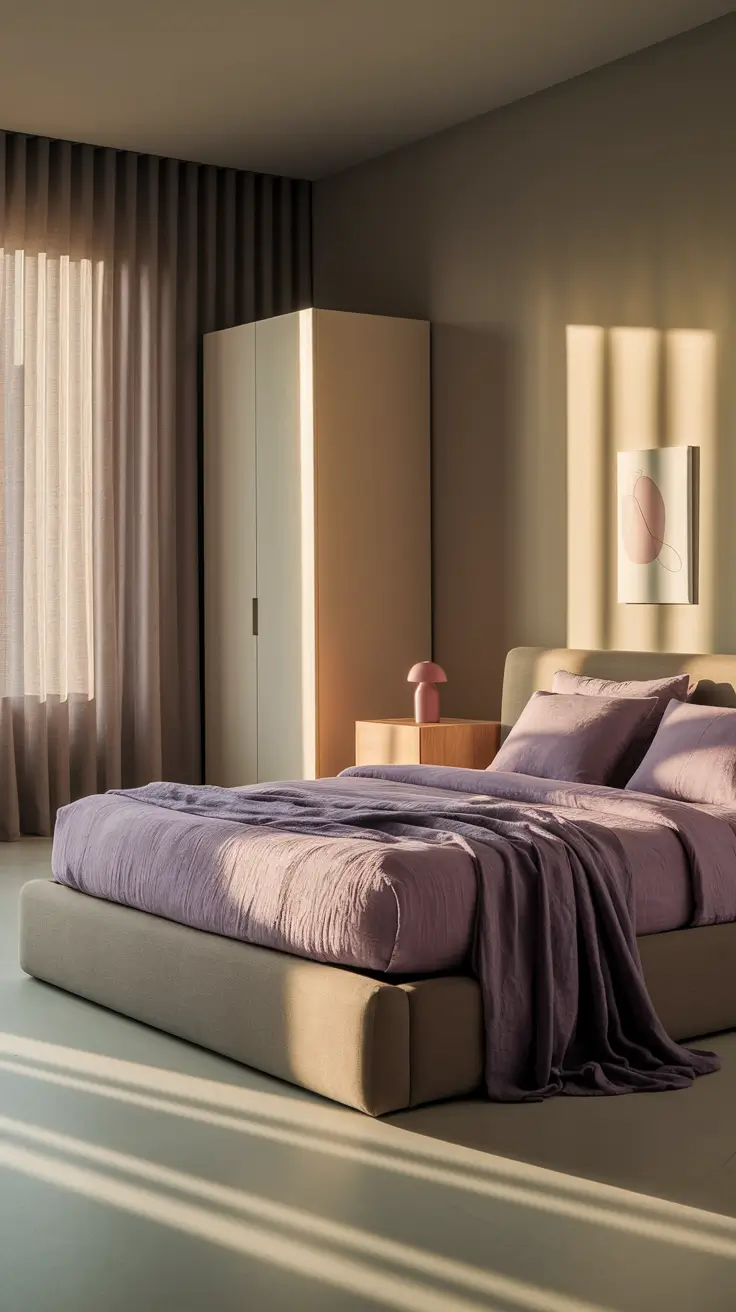
Furniture stays low and simple: a pale taupe-upholstered platform, two light oak cubes for nightstands, and a frameless wardrobe with quiet, soft-close doors. The window linen floats in a mist-gray tone that blends right in. If a room is for teen boys who want a little edge, I swap the textiles for deeper eggplant and charcoal.
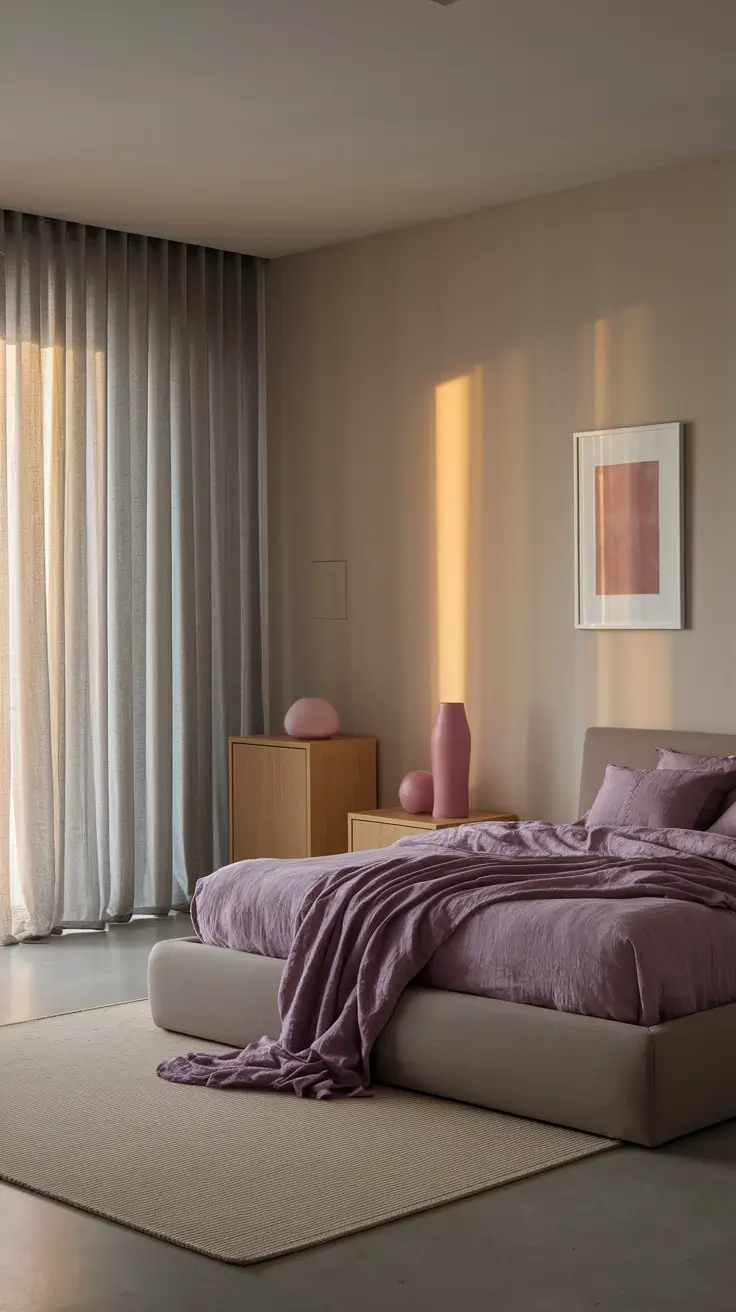
Color experts in top magazines keep telling us undertone is everything. I test swatches under morning and evening light so I don’t get surprised by rogue magenta. In my work, softened violet almost always feels right when I give it a bed of textured neutrals like boucle, wool, and raw ceramic.
I’d keep this space feeling calm by adding a low dimmable wall sconce on either side of the bed to keep the floor clear of lamps. A slim, low bench at the foot of the bed would let me stage daily outfits while respecting the room’s quiet line.
Sage Green Minimalist Bedroom Ideas
A sage green color scheme is my favorite for bringing gentle, plant-like calm to small rooms. This softened green acts like a neutral, especially when finished in a limewash that gently scatters light. I like to blend soft Scandinavian and Japanese cues, choosing low, organic forms that feel balanced.
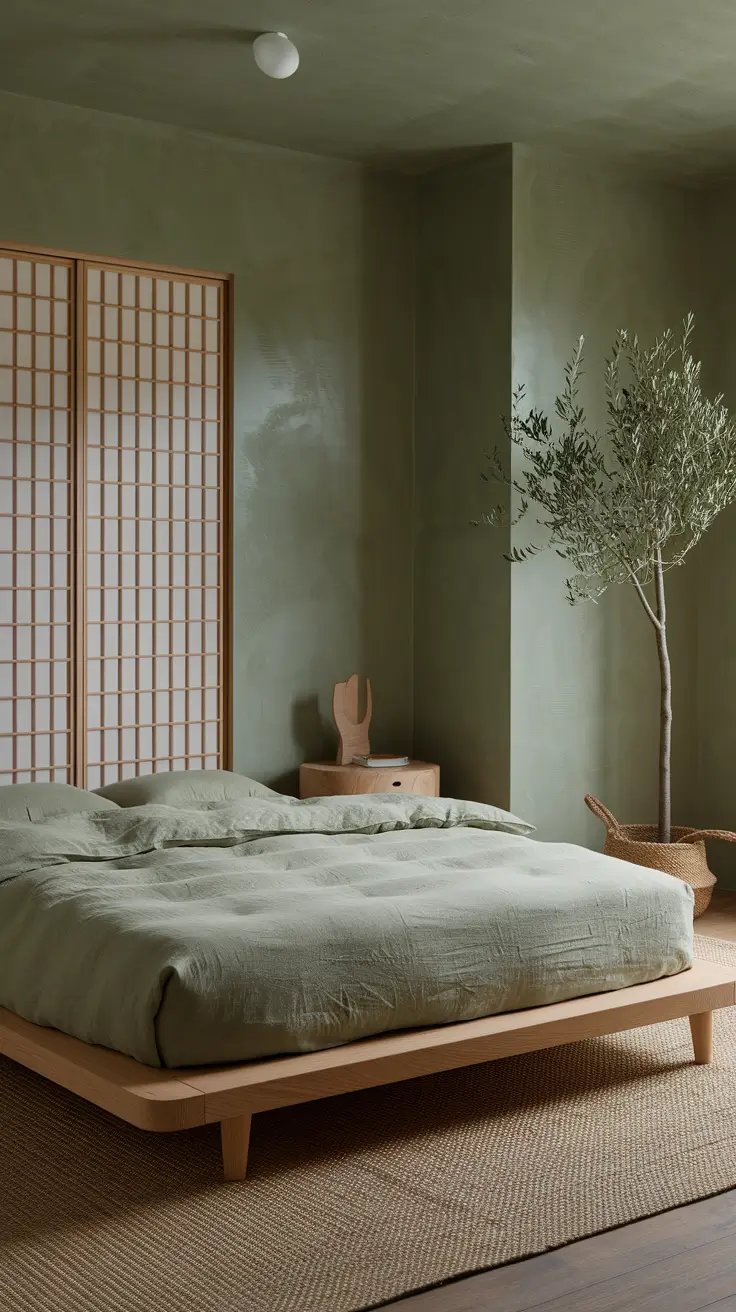
I’d choose a natural oak platform bed, a pebble-gray linen duvet, a woven jute rug, and round wood nightstands. A sliding, shoji-style panel closet hides clothes and bags while echoing the room’s Japandi feel. A single olive tree in a light pot or a trailing pothos brings a bit of life without fuss.
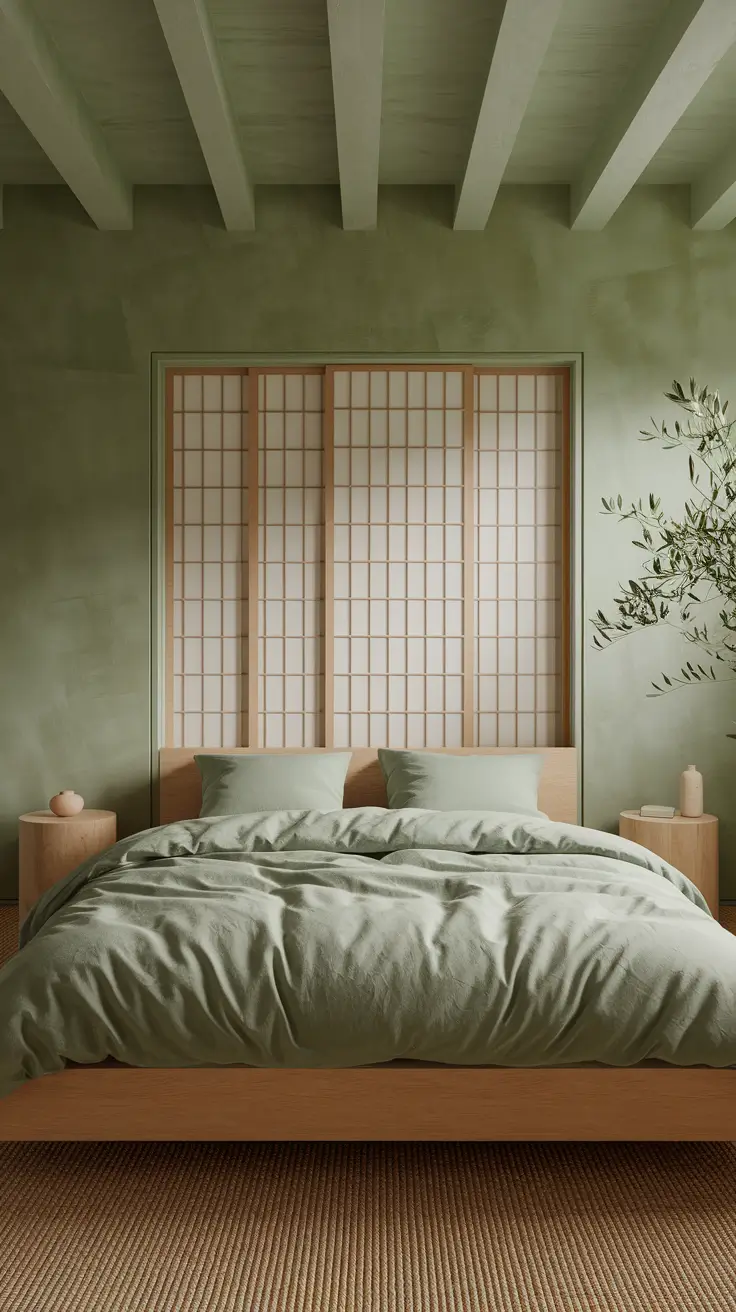
Editors at The Spruce often point out that green lightens visual stress. I agree, and find that sage walls let small art pieces and light wood catch the eye without needing extra styling. The color is easy to touch up and patient with everyday life.
To keep the room feeling light, I’d add a concealed charging drawer in one nightstand and a narrow wall shelf for a few favorite books, keeping the tops empty and the overall look intentionally airy.
Emerald Green Minimalist Bedroom Interiors
Emerald green brings a bold touch that makes a minimalist bedroom feel luxurious. I like to paint only the wall behind the bed in this jewel tone while leaving the side walls pale. This keeps the space feeling airy and modern and gives a sophisticated contrast, especially with satin-brass accents and warm walnut finishes.
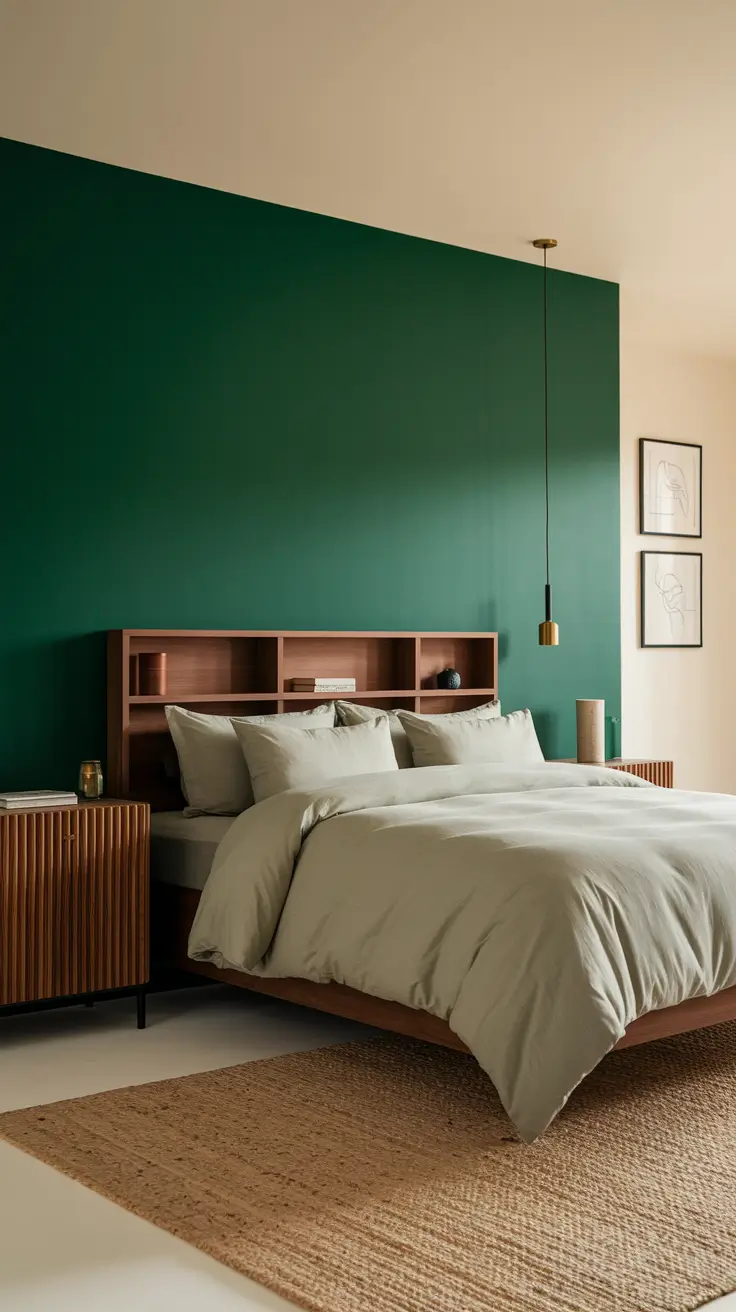
For the bed, I pick a walnut frame with a built-in shelf headboard. Fluted walnut nightstands and a low, slab-front dresser complete the look. I hang the curtain rod in unlacquered brass, dress the bed in soft cotton percale in warm bone, and layer a flat-weave rug below. A single sculptural metal pendant lamp hangs from the ceiling, keeping the lines of the space clean.
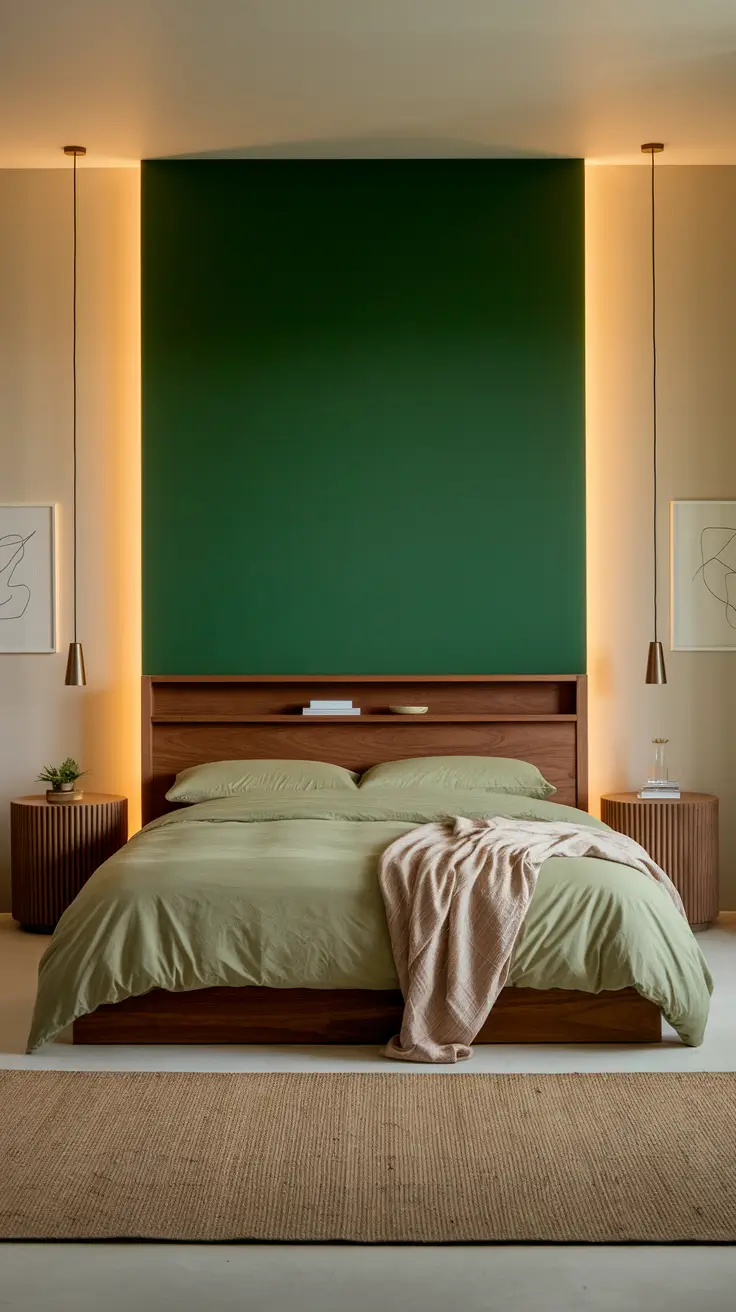
Architectural Digest often shows how one bold surface can shape a whole room. In real life, I feel this color lifts my mornings and wraps around me in the evening, needing very little extra decor.
To refine the space, I would add a narrow picture light above a simple line drawing and switch plastic plant pots to matte ceramic, keeping the materials honest and elevated.
Grey and Pink Minimalist Bedroom Designs
A grey and pink color scheme walks the line between calm and cozy. I start with warm grey paint on the walls and light grey bedding. Then I sprinkle in just a few soft blush accents maybe a pair of small cushions or a light throw blanket. This way, pink feels welcoming but never too loud, flattering both skin tones and morning sunshine.
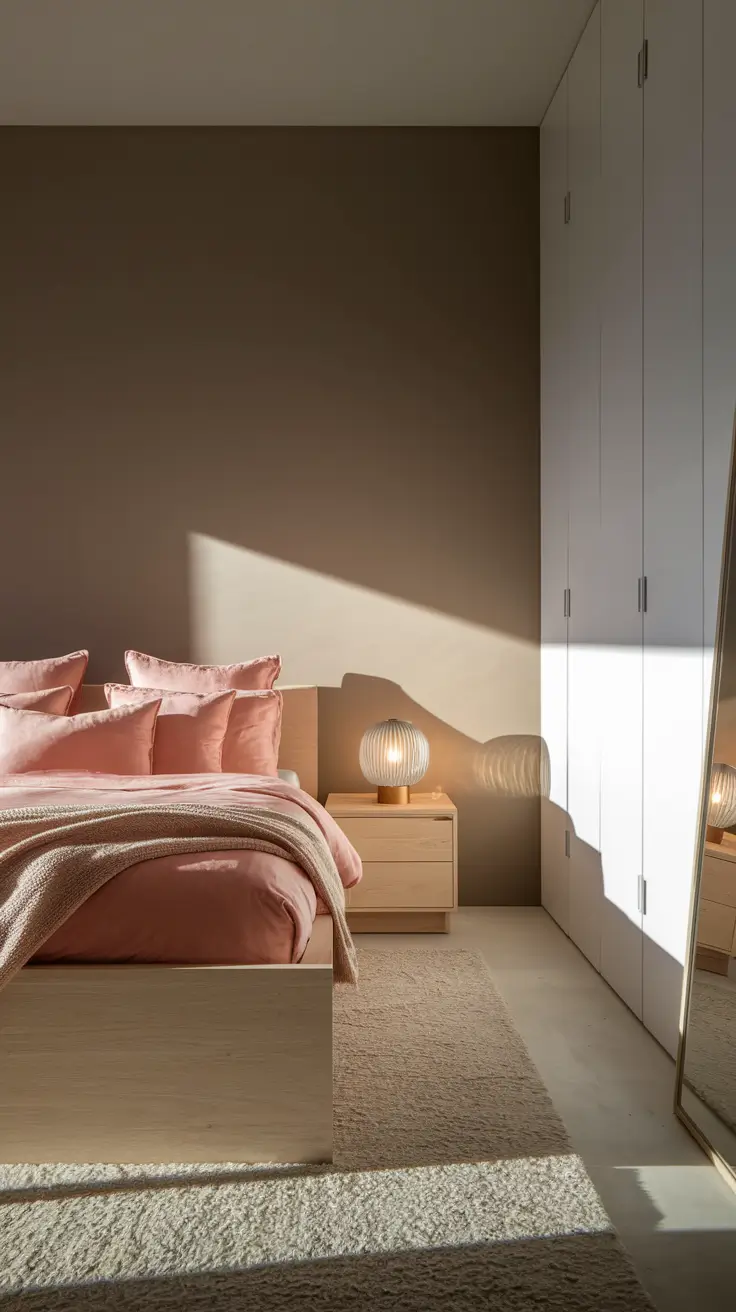
Furniture is kept sleek and simple. I choose a light oak bed frame, nightstands with soft-close drawers and no visible pulls, and a white closet that stretches up to the ceiling. This bright closet makes small rooms feel a little roomier. A ribbed glass lamp sits on the nightstand, casting soft light without looking busy, and a plush, low-pile rug pulls the whole room together.
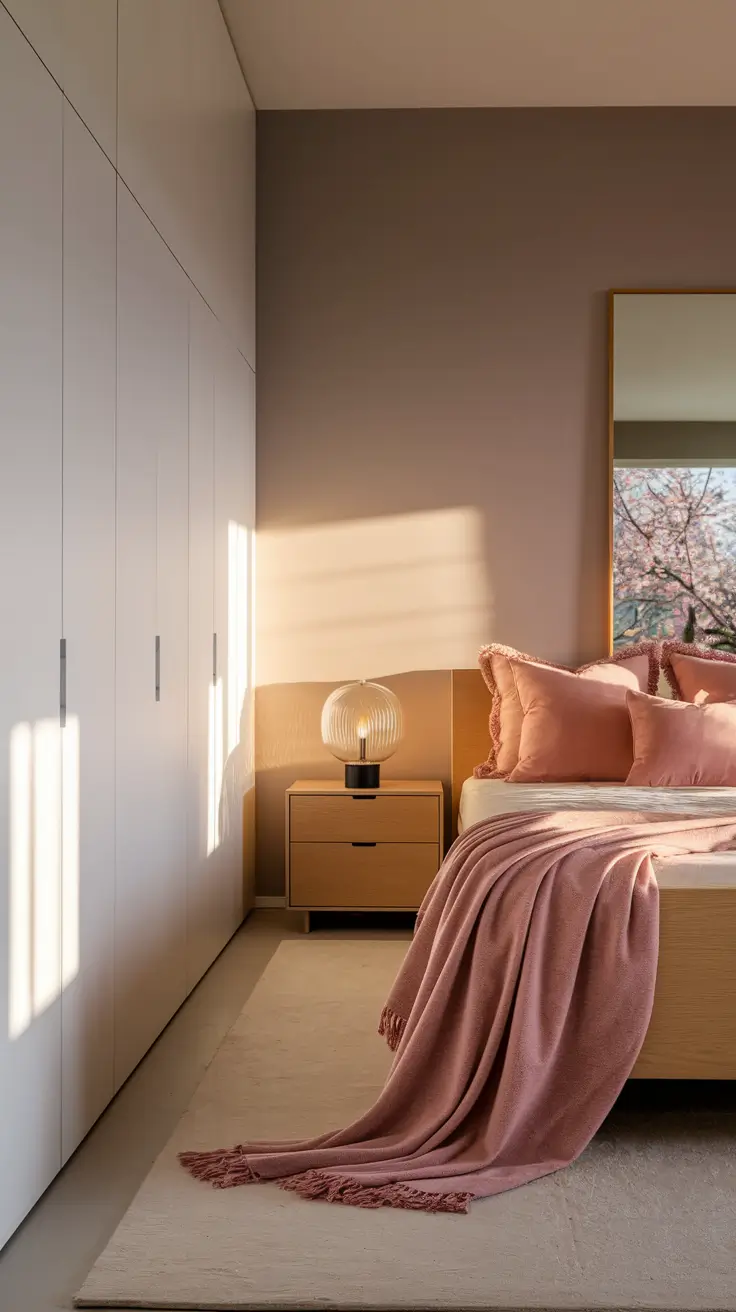
Stylists often say that mixing matte and shiny finishes adds life. I use matte paint on the walls, soft-finish bedding, and a small, glossy tray on the dresser. This simple switch makes the eye move playfully around the space, so I don’t need extra decor to keep it interesting or to clean.
For a practical touch, I’d hang a slim valet hook on the wall for tomorrow’s outfit. A narrow full-length mirror with rounded corners can go beside it, lengthening the room’s look while softening sharp edges.
Minimalist LED Lighting for Cozy Rooms
Smart LED lights are magic for creating a mood in small bedrooms. For small rooms LED lights , I tuck flexible LED strips behind a headboard and under a floating nightstand. This hides the light and makes the walls look farther away. Task sconces give bright light for reading while a hidden cove light casts a gentle glow that’s great on video calls and flattering in person.
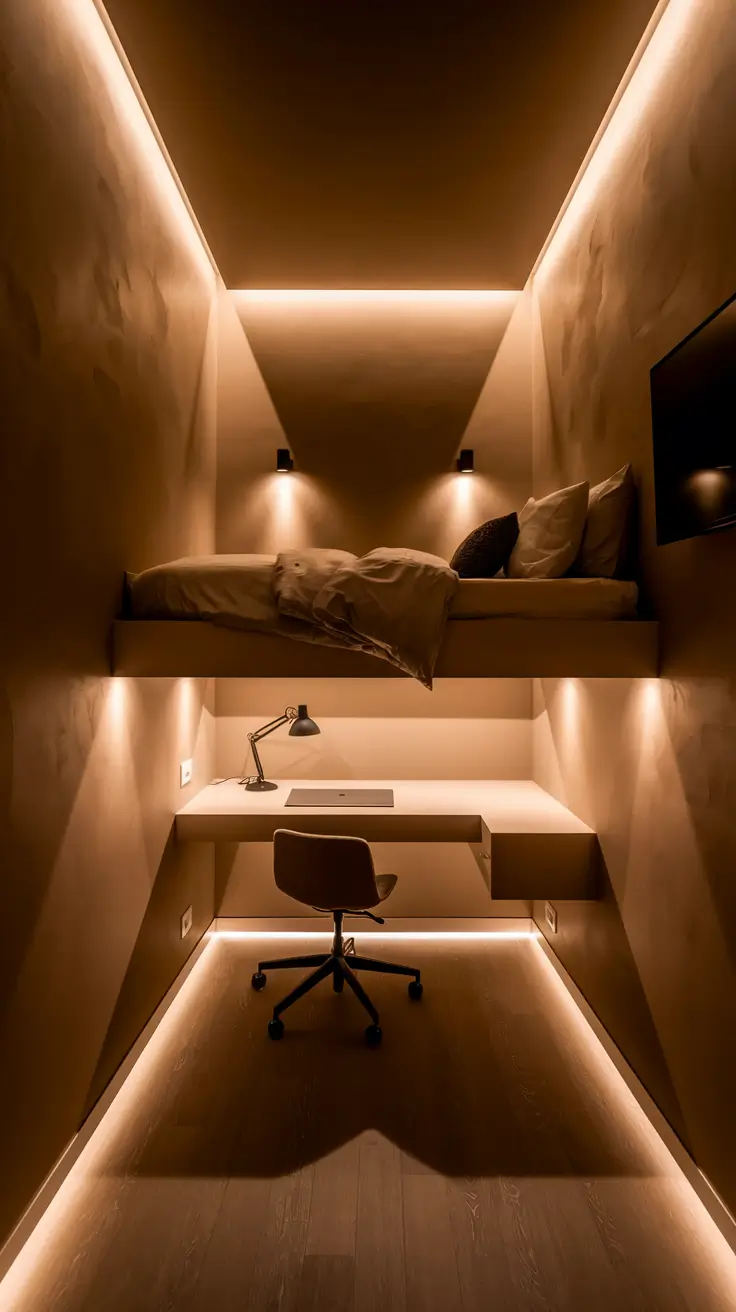
In techy rooms or spaces for teen boys , I mount a small bias light behind the screen on the wall for small rooms with TV . When the floor plan is tight, I use a small rooms loft bed that has a built-in ladder and an underloft desk. Motion strips under the loft light the way without taking up extra room.
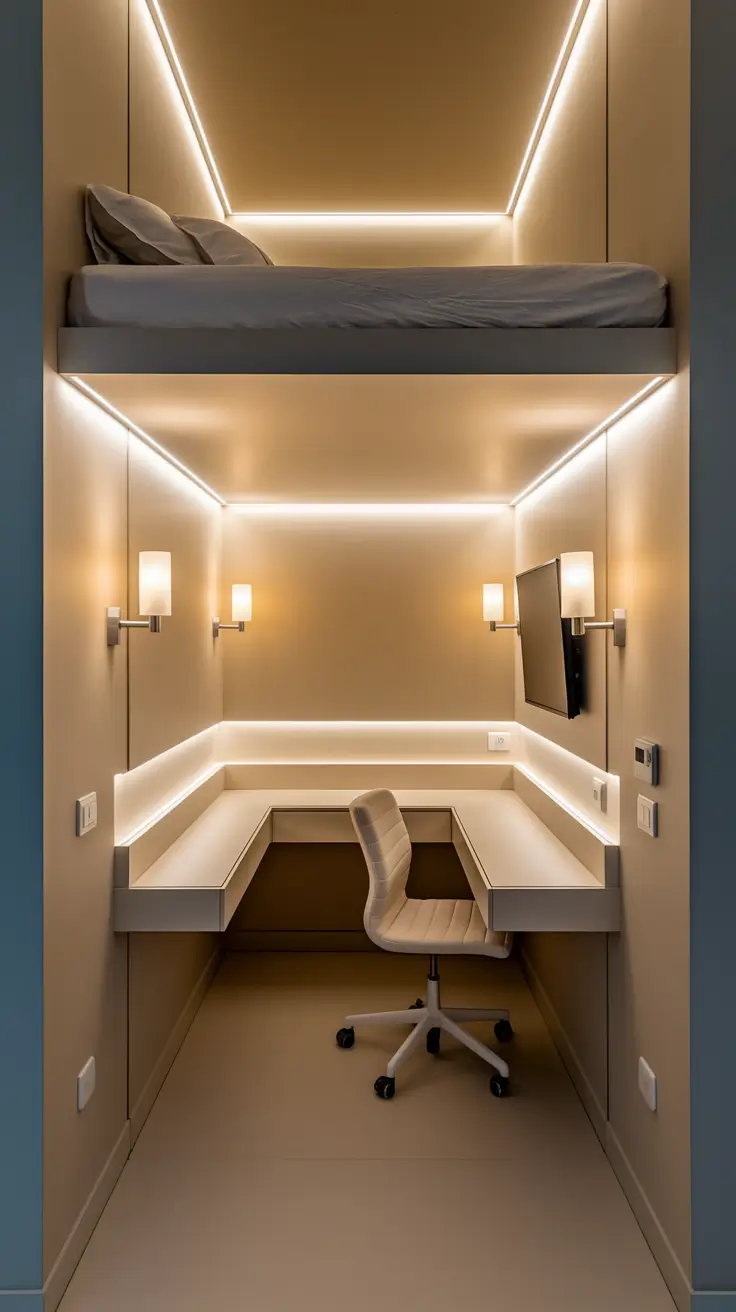
Sleep pros say to use warm colors in the evening and cooler ones in the morning. I set custom scenes to shift the light from 2700K in the evening to 4000K in the morning. This keeps sleep routines on track and makes the room feel planned, not cluttered with gadgets.
To keep the look tidy, I still install cable trays and a hidden outlet behind the headboard, so wires stay hidden. A tiny remote holder or a small wall keypad beside the door keeps light controls simple and neat.
Minimalist Bedroom Decor Trends for 2026
In 2026, I see minimalist bedrooms embracing global craft and flexible layouts while echoing the honest materials of Mid-century modern design. Anticipate warm hardwood, touchable plaster walls, and fewer, yet better, pieces of furniture. The focus is on calm, efficient function that still feels beautifully designed in everyday life.
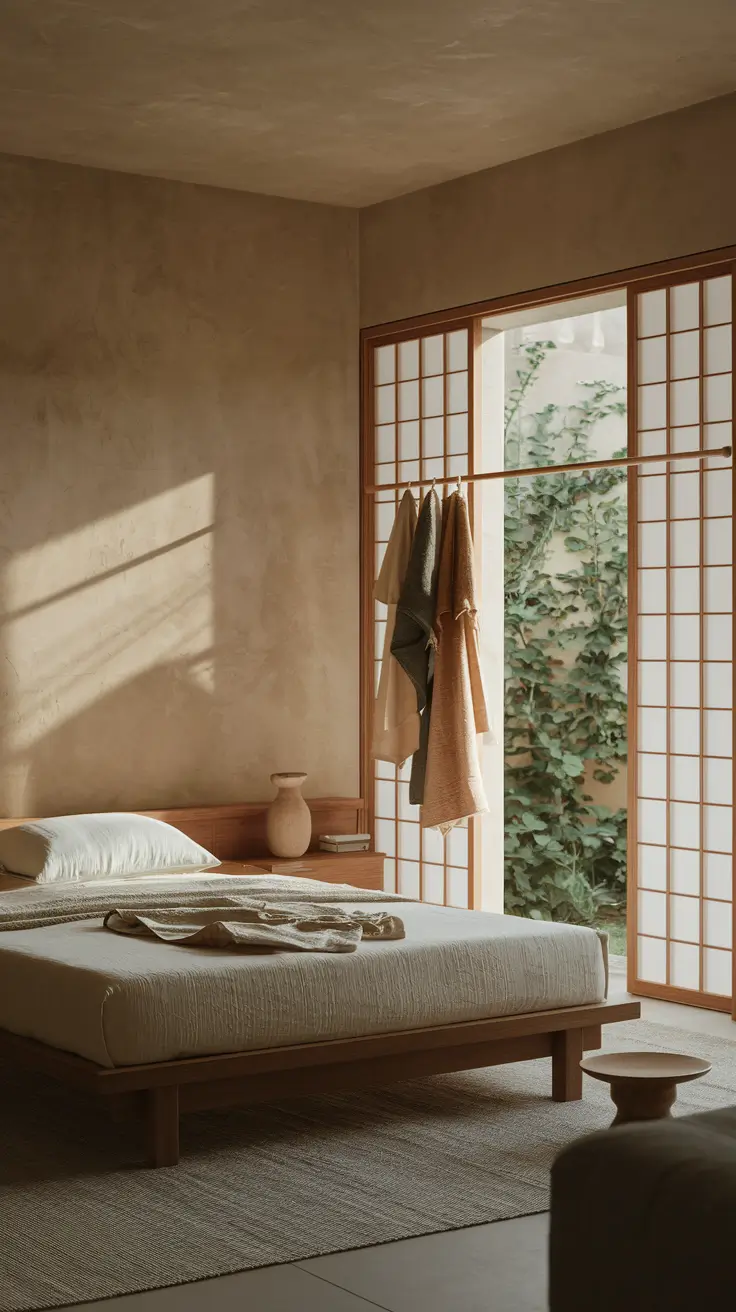
Small spaces benefit from cultural micro-influences. In Indian-influenced tiny bedrooms, a low charpoy-inspired frame and a single block-printed cushion add warmth without clutter. In Japanese-inspired small rooms, a sliding tatami mat and concealed storage echo Japanese principles while keeping the footprint light. Where ground living feels natural, I suggest a small room without a bed, using a foldable tatami set that disappears into a tall cabinet when guests arrive.
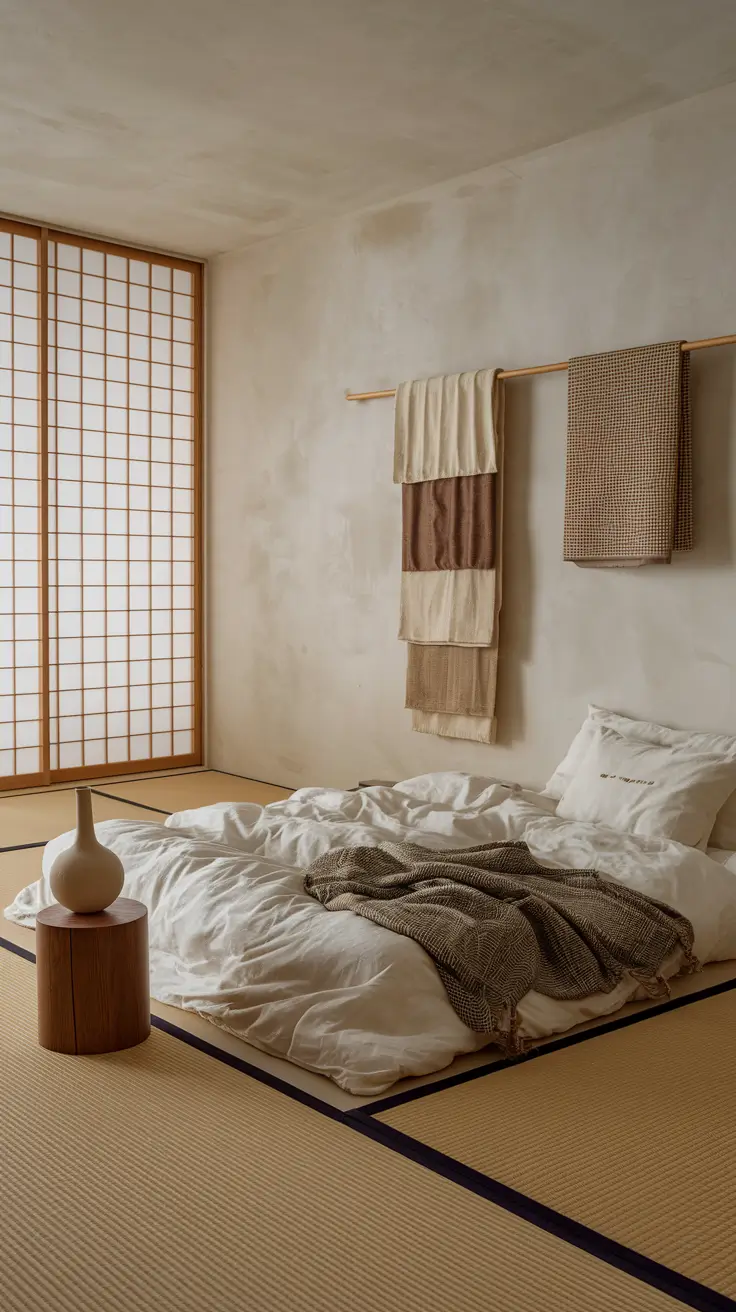
To keep the look fresh, I use understated hardware and simple shapes. A walnut bedside stool, a single matte ceramic vase, and crisp, white linens are enough to centre the space. The outcome is culturally aware, quietly personal, and quick to tidy when needed.
I’d add a simple art rail to rotate photographs or textiles, and where the architecture is charmingly uneven, a soft fabric-wrapped panel can visually balance an off-centred bed when a window is positioned behind it, all without major renovations.
Final thoughts on minimalist bedroom living
After years spent designing minimalist bedrooms, I’ve figured out that what turns a space from just empty to warm and meaningful is pure intention. I always begin by mapping the small, daily routines so the layout stays practical for tiny floor plans, but still feels pleasing to the eye. When I run into quirks like a window that sits awkwardly behind the bed I treat the problem with a few clever built-ins instead of piling on more décor. That way, the room stays open, calm, and easy to keep tidy.
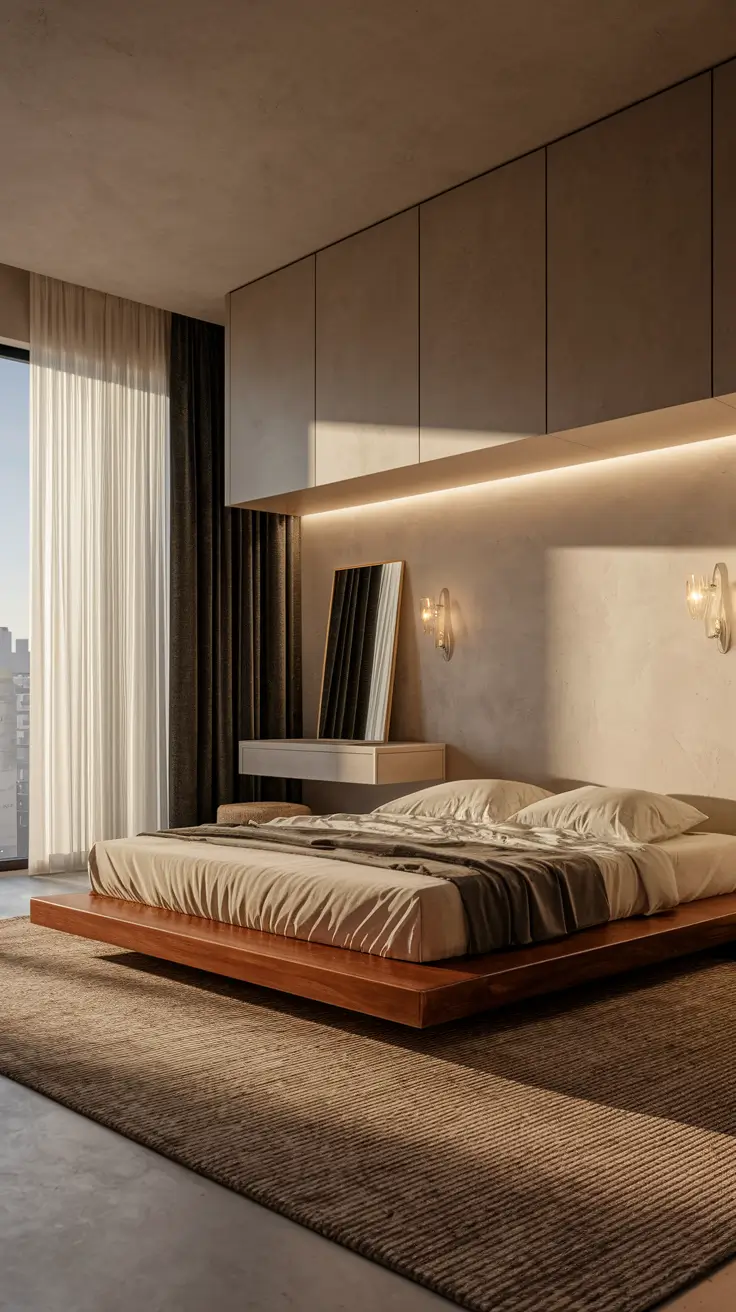
The core tools in my kit stay pretty steady: a low platform bed or a fold-down futon, closed storage that climbs to the ceiling, and layered curtains that block light at night but let in softness during the day. I drop in a large area rug to pull the space together, pair wall sconces with a dimmable cove for gentle light, and nestle in discreet tech like a slim sound machine or a small wall-mounted screen only if you’ll really use it. Finally, I choose one bold artwork or a softly textured plaster panel to give the room just a hint of personality, without cluttering the eye.
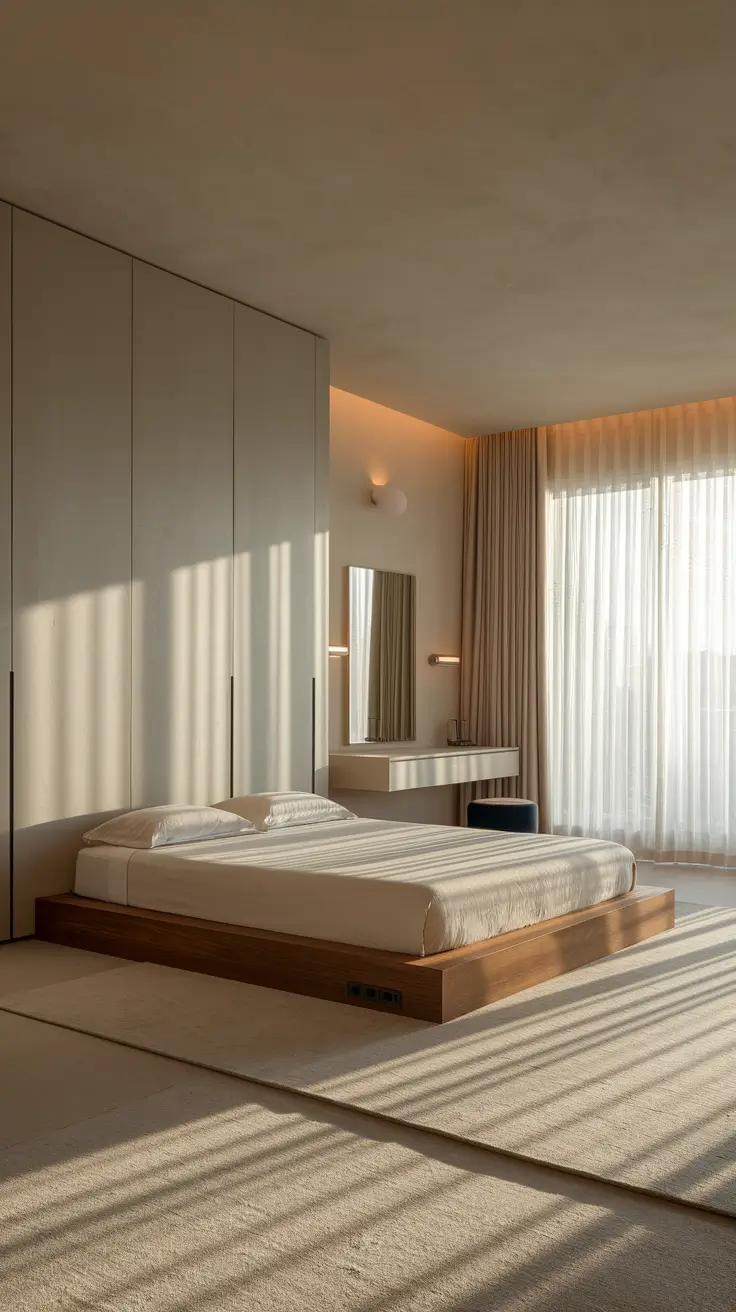
From what I’ve seen, a sensible, repeatable order keeps a space more calming than any trendy style name. Editors of major US shelter mags keep telling me that using fewer finishes and restaging the same materials usually photograph and function better in everyday life. I stick to that advice by capping the whole color story to two woods and two soft neutrals, then I invite mood with soft textiles or a single accent wall in a color like Sage green or Emerald green when the moment calls for it.
Equally, I would weave in a simple upkeep practice: a pledge to declutter every three months, swap textiles with the seasons, and spend five quiet minutes restaging nightly. I keep one running note for paint codes, light bulb temps, and trouble-free furniture sizes so any future swap or upgrade locks into the same story, with zero guesswork.