How can outdoor play spaces keep up with the needs of modern families in 2026 while staying simple, safe, and affordable. Is it possible to design a playground that works in a small space, fits a budget, and still feels inspiring and nature-inspired. In this article, I explore outdoor area ideas for kids 2026 that combine play, cheap diy solutions, and thoughtful playground design for backyards and gardens, answering these questions with practical and future-ready ideas.
Kids Outdoor Play Trends for 2026
In 2026, outdoor play areas for kids are designed as flexible, multifunctional environments that support active play, creativity, and calm moments. I focus on layouts that feel open and organized, even in a small space, using zones instead of bulky structures. Natural materials, simple forms, and nature-inspired colors dominate the overall playground design, making the backyard or garden feel like an extension of the home rather than a separate play zone.
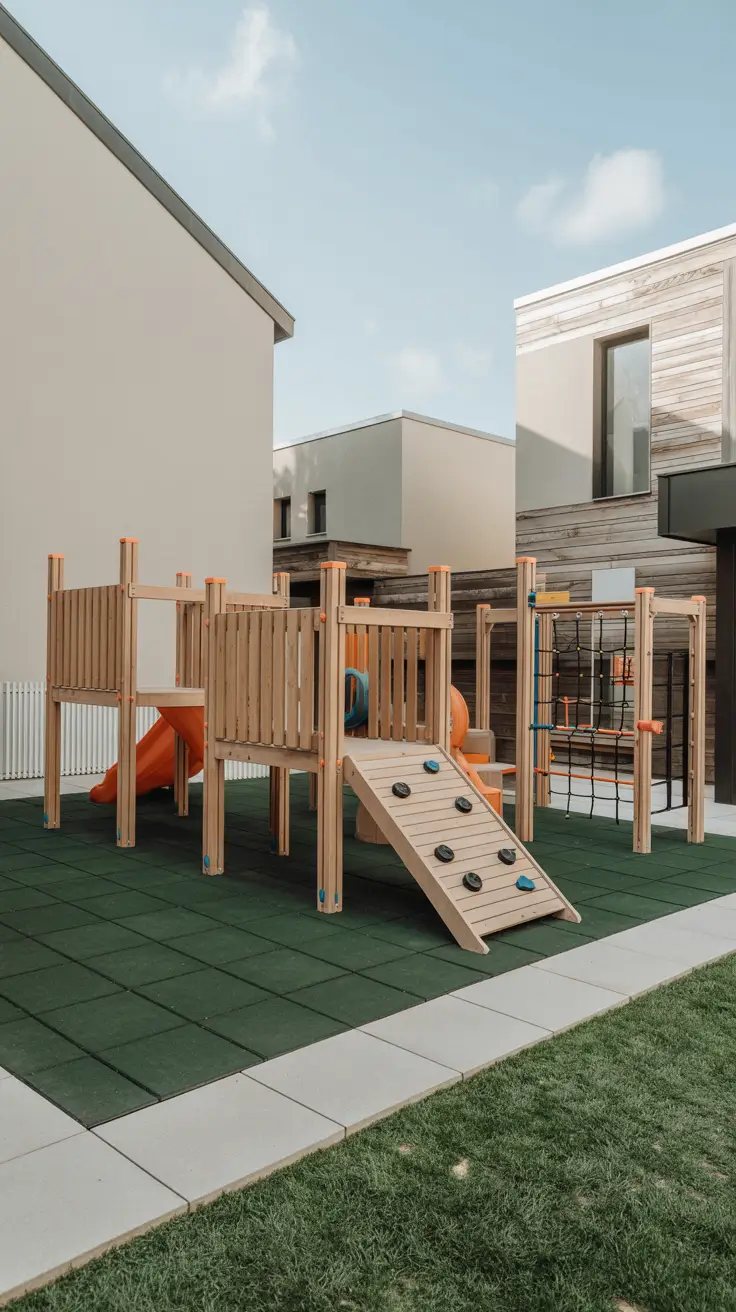
When I plan these spaces, I include modular play elements, low-profile climbing structures, and movable seating for kids. Natural wood, rubber tiles, and rubber mulch are common surfaces because they are safe, durable, and visually clean. I also see a growing use of pallets for cheap diy platforms and storage benches, which keeps the playground design backyard friendly and adaptable as children grow.
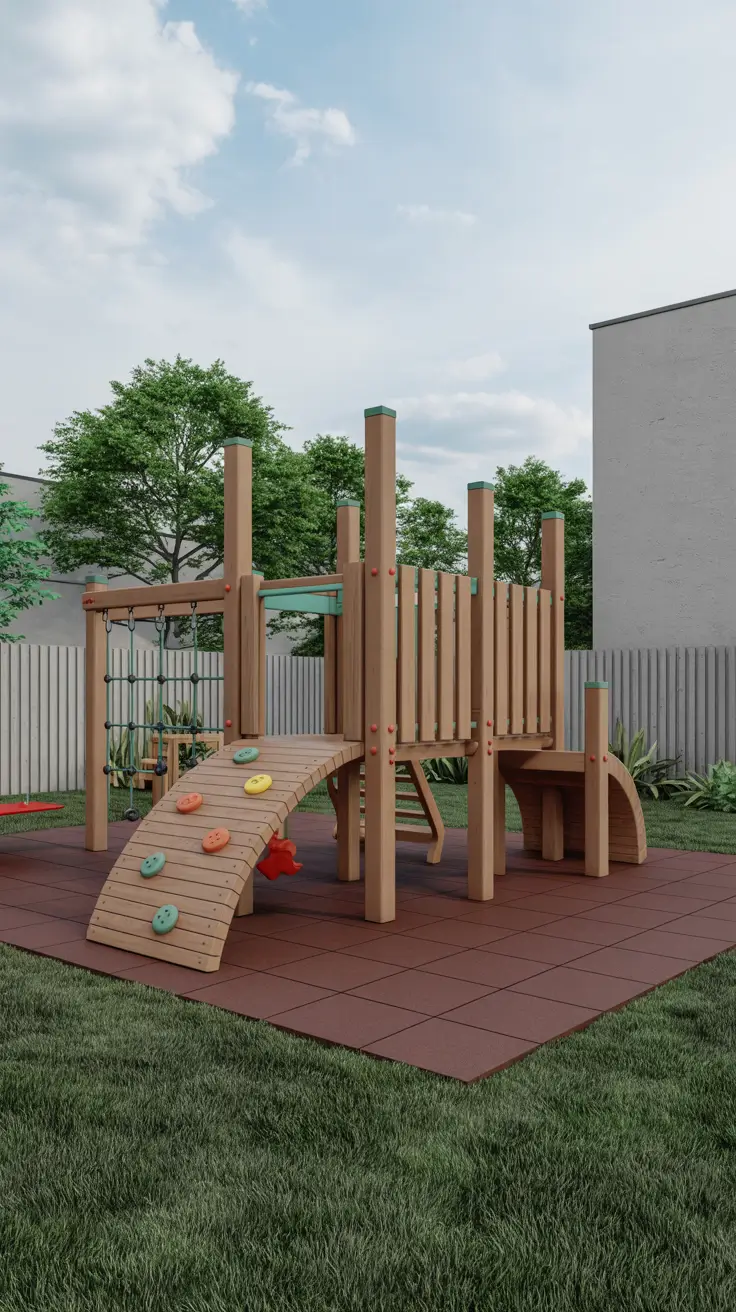
From my experience, parents appreciate play areas that are not overdesigned. Well-known US landscape designers often highlight that children engage longer with simple, open-ended environments. I have noticed the same in real projects, where fewer fixed toys lead to more imaginative play.
What is often missing in trend-based designs is proper shade planning. I always recommend adding pergolas, fabric canopies, or tree placement to ensure comfort and usability throughout the day.
Creative Outdoor Play Area Ideas for Kids
Creative outdoor play areas combine physical activity with imaginative exploration. I design these spaces as mini play gardens where each corner encourages a different type of play, from role-playing to building and storytelling. The key is a clear playground design plan that allows children to move freely while staying visually connected to the rest of the backyard.
In these designs, I include chalkboard walls, low stages, loose building blocks, and simple playhouses made from natural wood. Furniture is lightweight and child-scaled, allowing kids to rearrange their environment. This approach supports creativity while keeping the playground simple and practical for daily use.
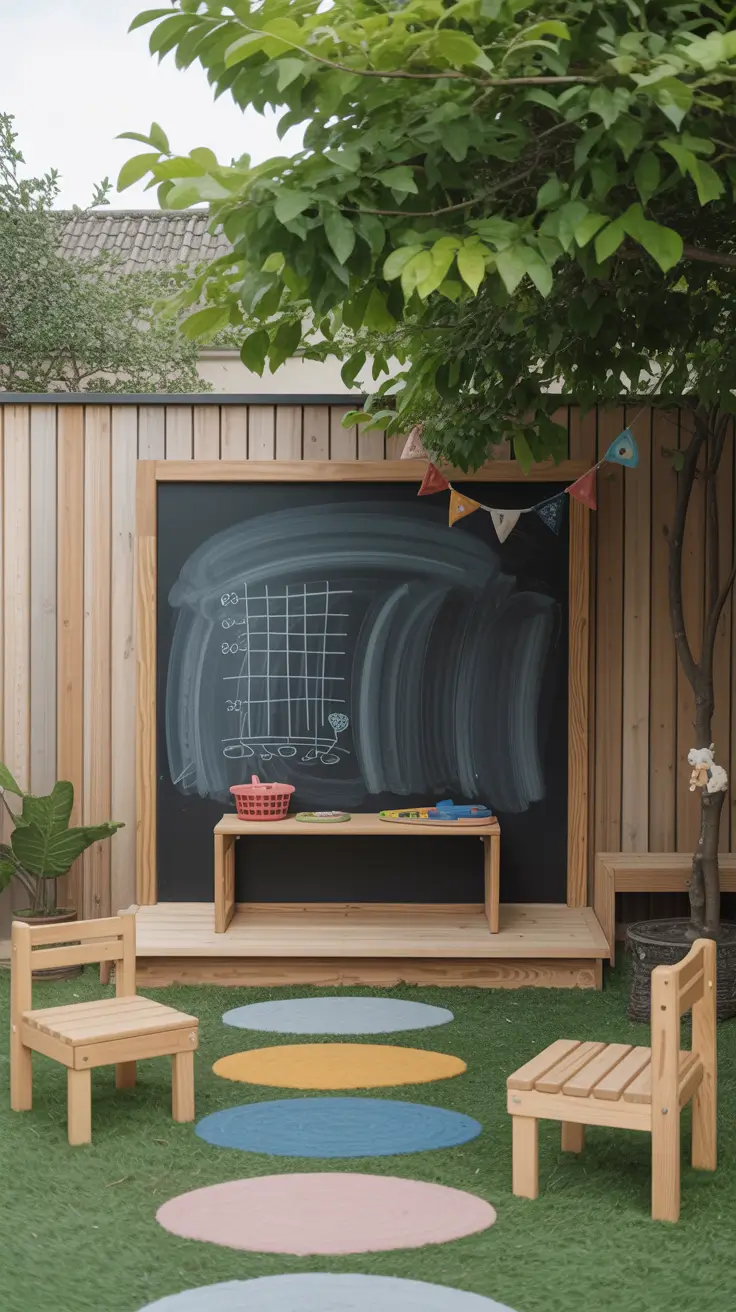
In my opinion, creativity thrives when children are not overwhelmed by too many instructions. Designers featured in US parenting and design media often stress the value of open-ended play, and I fully agree. I have seen kids spend hours inventing games with just a platform, fabric, and a few natural elements.
To strengthen this section, I would add more storage solutions integrated into the design. Built-in boxes or pallet benches help keep creative materials organized without cluttering the play area.
Cheap DIY Outdoor Area Ideas for Kids
Cheap diy outdoor areas focus on accessibility and smart material choices rather than expensive equipment. I design these playgrounds to be easy to build, easy to maintain, and adaptable to different backyard sizes. The goal is to create a functional playground on a budget without sacrificing safety or visual appeal.
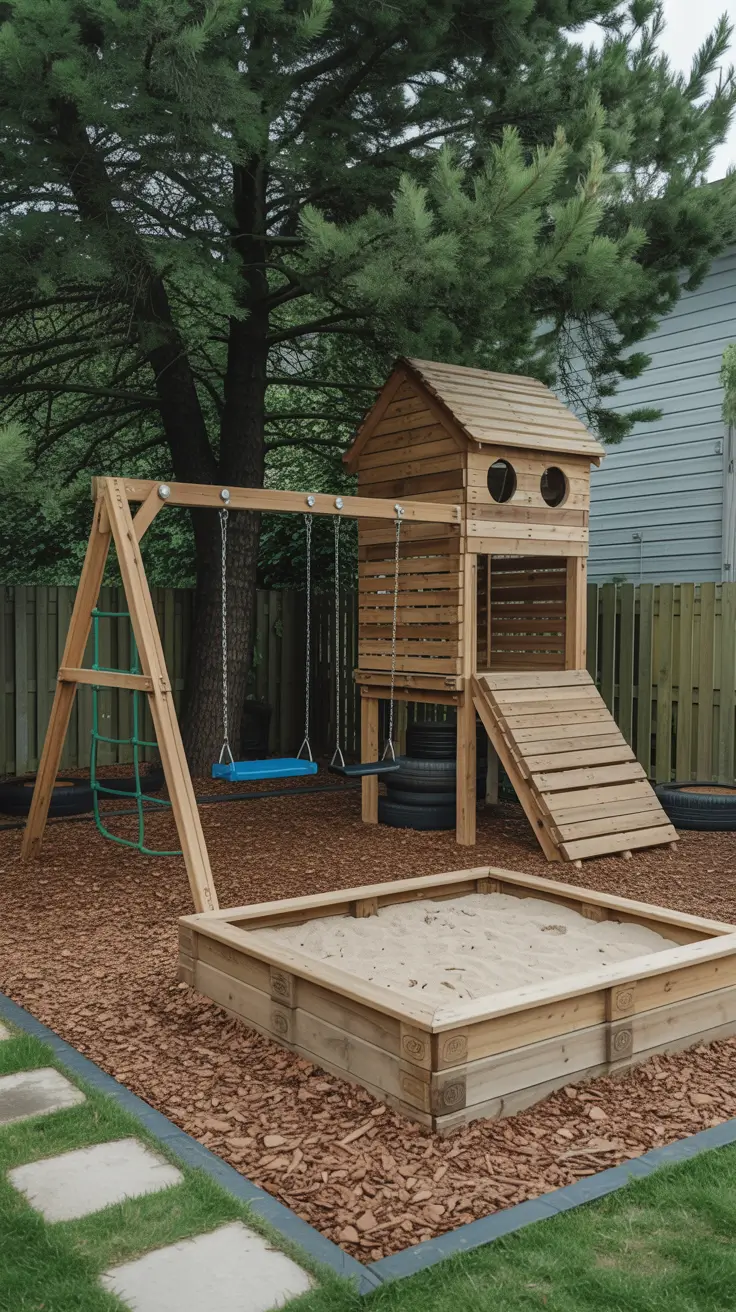
I often use pallets for climbing frames, balance paths, and seating. Old tires become planters or obstacle courses, while sand boxes and simple swings add classic play value. Rubber mulch is an affordable and safe ground option that works well under active play zones.
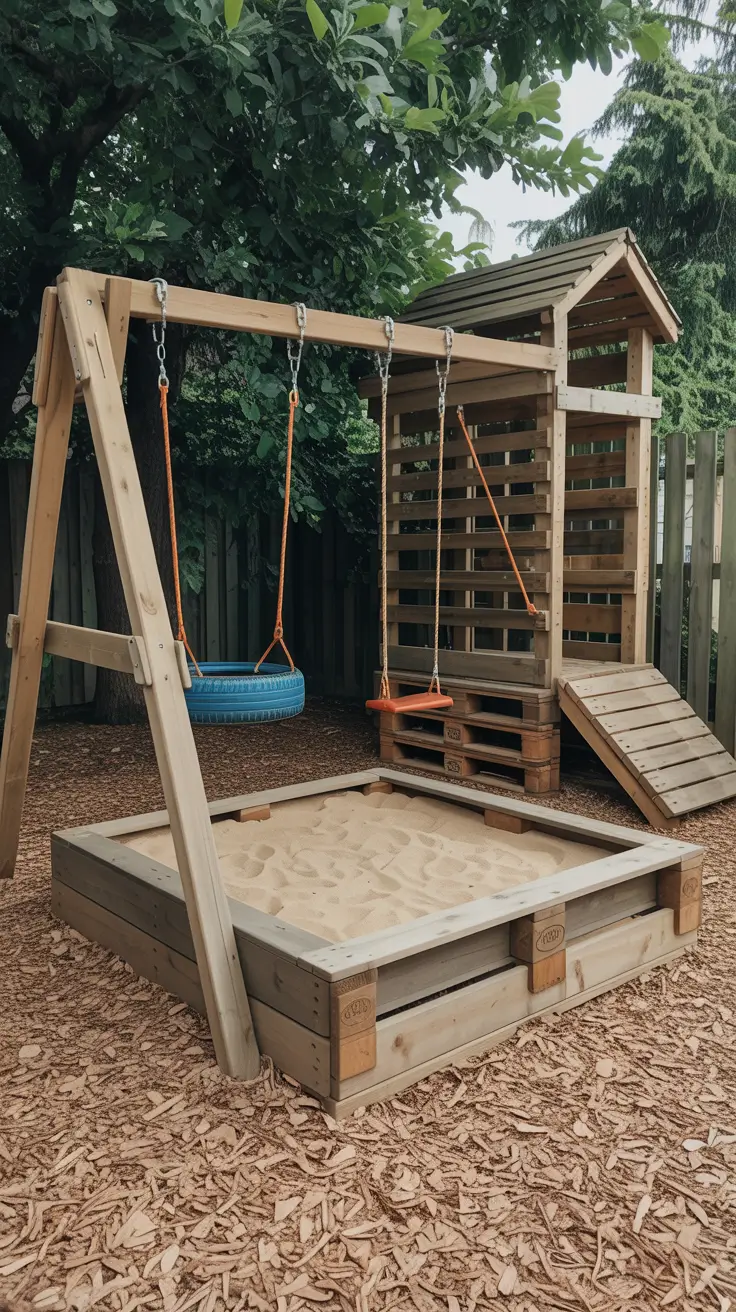
From my professional perspective, diy projects also strengthen family involvement. Many US-based home improvement experts encourage parents to involve children in simple building tasks, which I have seen increase a child’s sense of ownership and care for the play space.
What is often missing here is a long-term plan. I recommend designing diy elements so they can be easily upgraded or replaced as children grow, ensuring the playground design stays relevant over time.
Small Space Outdoor Area Ideas for Kids
Designing for a small space requires careful planning and vertical thinking. I approach these outdoor areas by maximizing every square meter while keeping the playground visually light and uncluttered. Clear zoning and compact layouts help transform even a narrow backyard or patio into a functional play area.
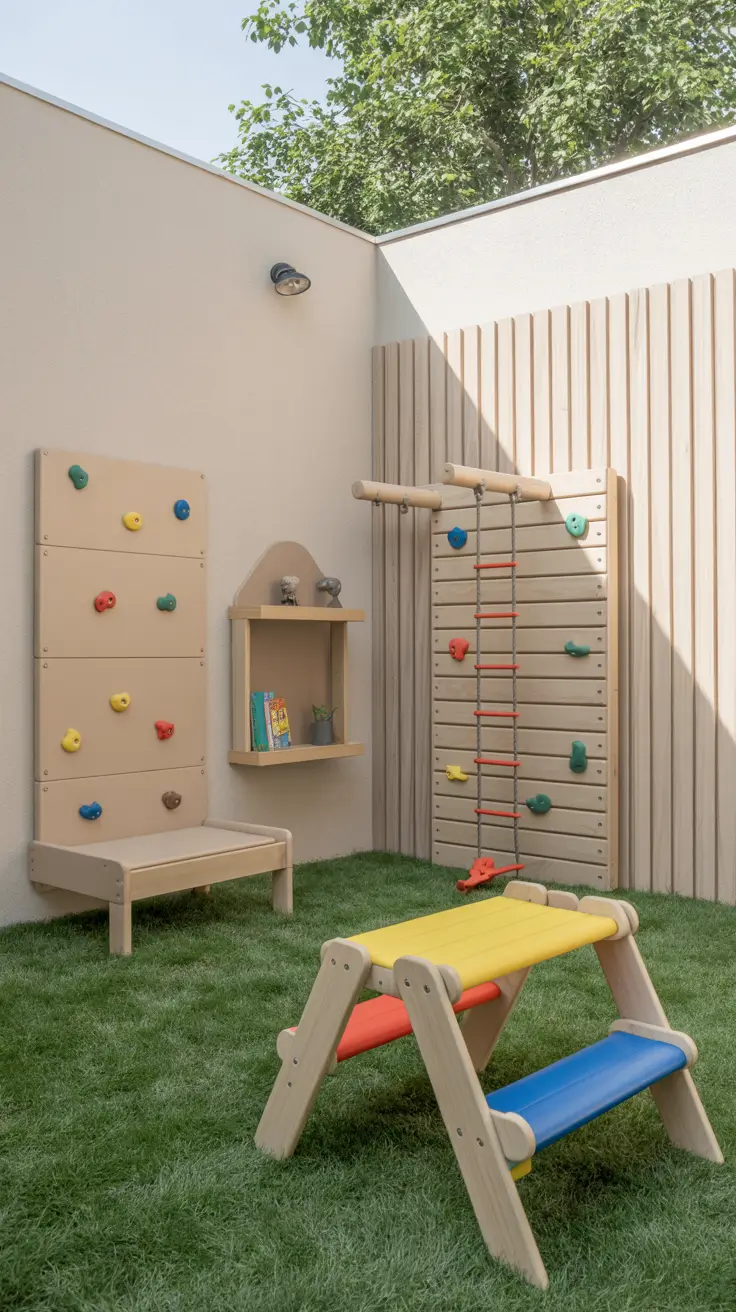
In these designs, I include wall-mounted activity panels, foldable furniture, and multi-use structures like benches with built-in storage. A small sand box, a compact water play table, and a mini climbing wall can coexist when arranged thoughtfully.
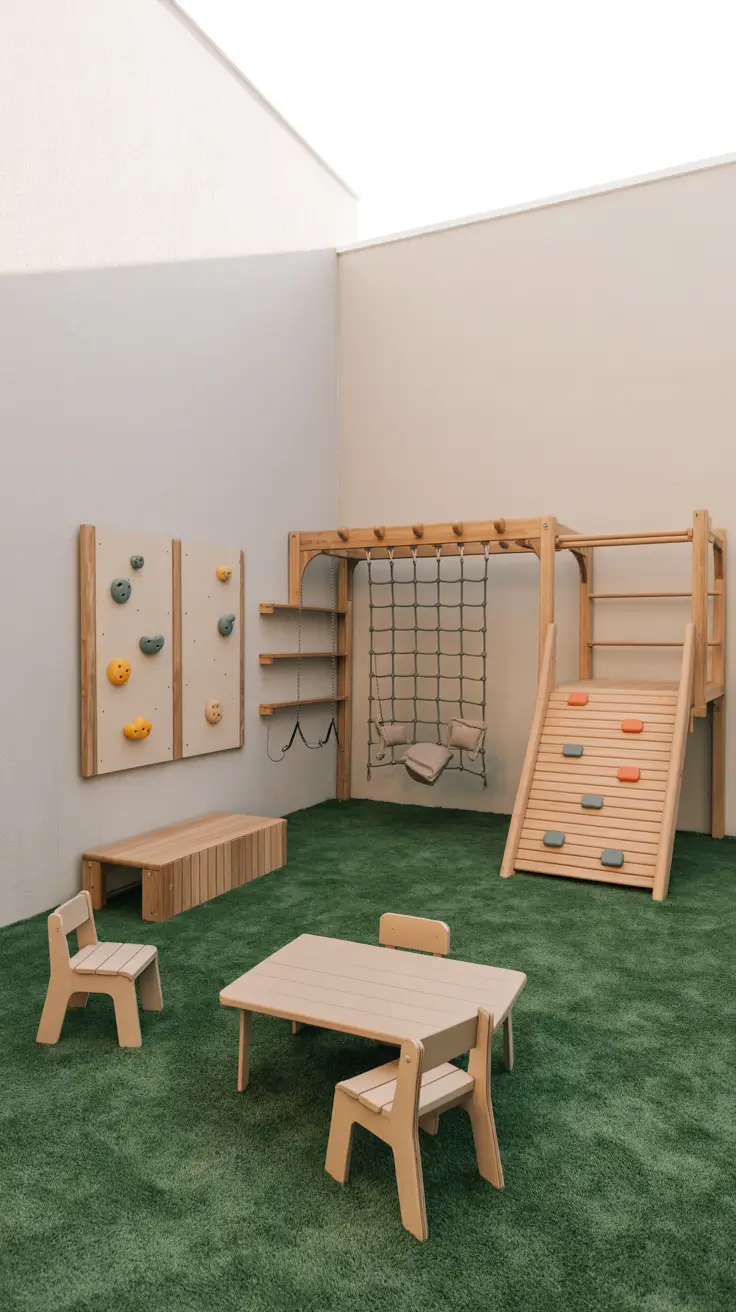
I have learned that small spaces often lead to more focused play. Many child development specialists note that limited environments can encourage deeper engagement, and I have seen this repeatedly in urban backyard projects.
To improve these spaces further, I would add visual boundaries such as low planters or changes in flooring material. This helps children understand play zones without making the area feel cramped.
Backyard Playground Design Ideas
Backyard playground design in 2026 emphasizes balance between structured play and open lawn areas. I design these spaces to blend seamlessly with the garden, ensuring the playground does not dominate the entire backyard. Natural transitions and clear pathways make the area feel cohesive and family-friendly.
Key elements include swings, climbing frames made from natural wood, sand boxes, and rubber tiles for safety. I also incorporate seating for adults, so supervision feels comfortable and integrated rather than separate from the play area.
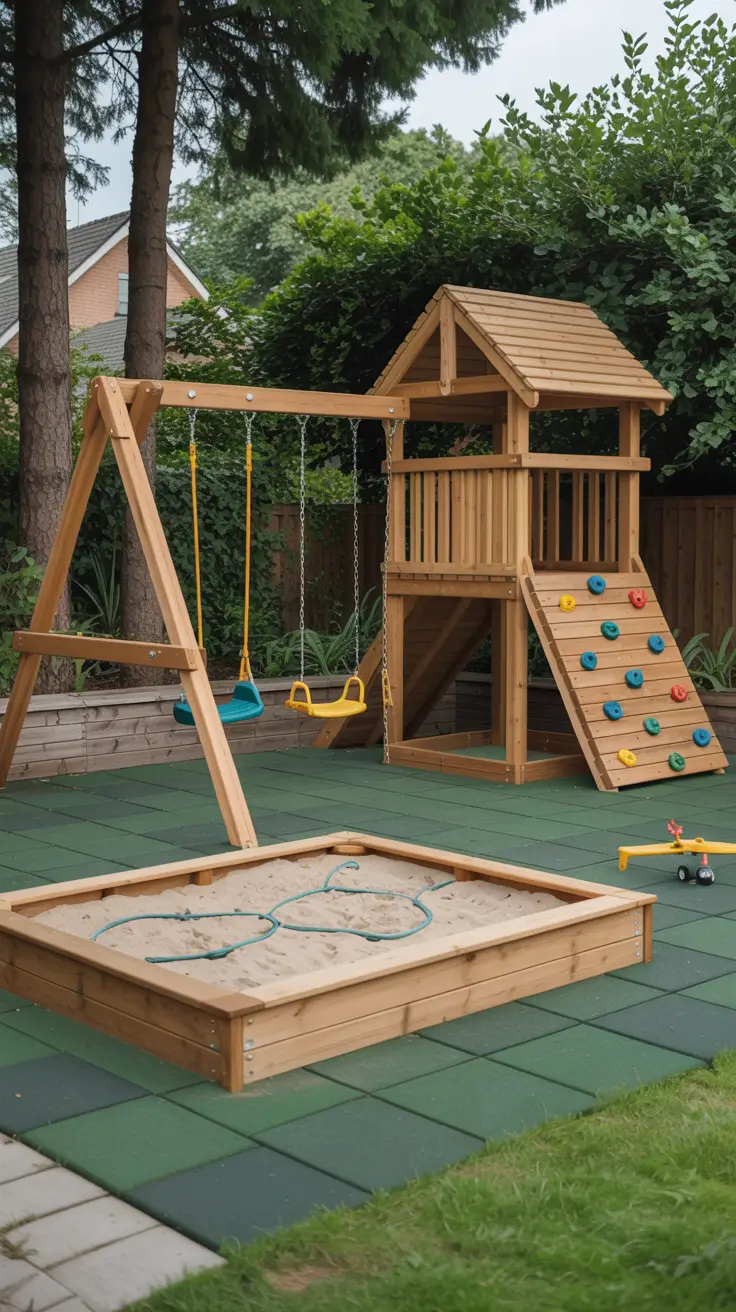
In my experience, families value playgrounds that grow with their children. US landscape architects often recommend investing in quality base structures and updating accessories over time, a strategy I consistently apply.
What I would add to many backyard designs is better lighting. Soft, low-level outdoor lighting extends usability into the evening and improves overall safety.
Nature-Inspired Outdoor Areas for Children
Nature-inspired outdoor areas focus on sensory experiences and connection to the natural world. I design these play gardens to feel organic, using curves, plants, and natural textures instead of rigid playground layouts. The result is a calming yet engaging environment.
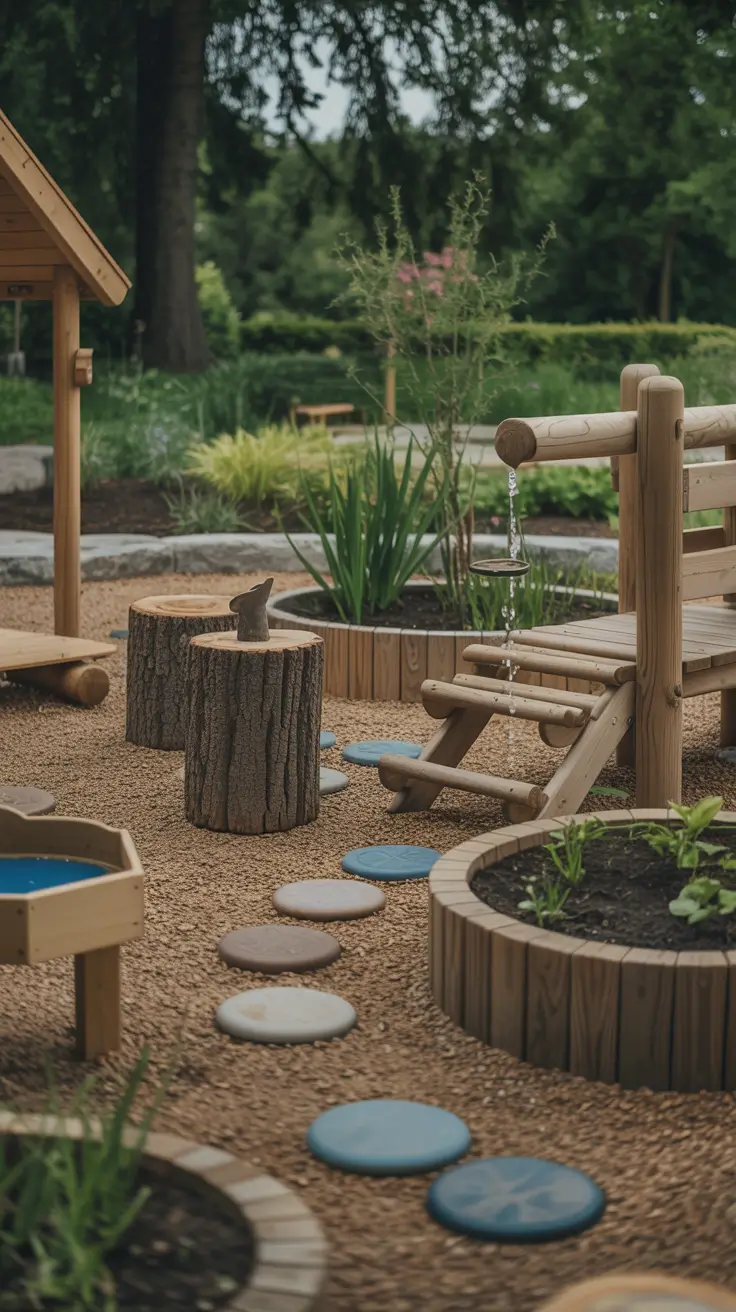
I include logs for balancing, stepping stones, a sensory garden with herbs and grasses, and simple water play features. Playground design natural wood elements blend beautifully with greenery and encourage respectful interaction with nature.
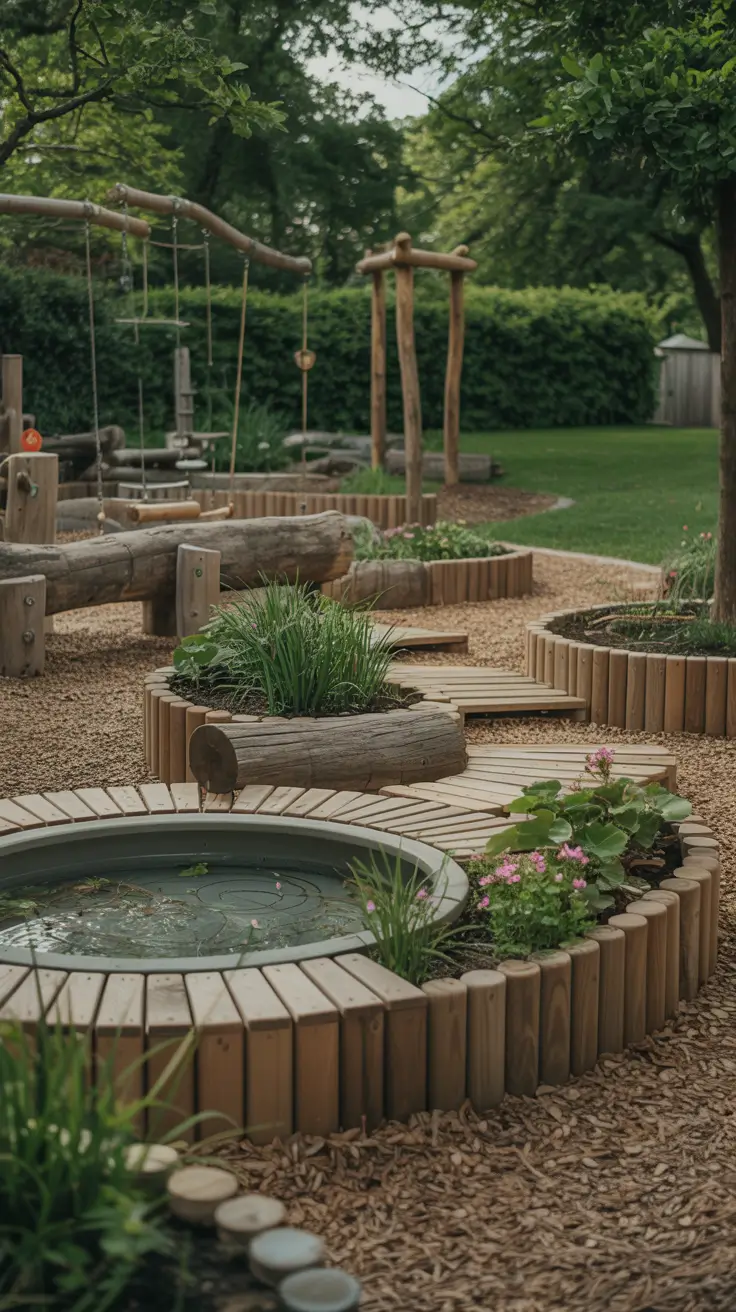
From my perspective, these spaces support emotional well-being as much as physical play. Many US educators and designers highlight the benefits of nature-based play, and I have personally seen children become calmer and more focused in such environments.
To complete these areas, I would add clear maintenance plans. Choosing hardy plants and durable materials ensures the play garden remains inviting without excessive upkeep.
Montessori Outdoor Area Ideas for Kids
Montessori outdoor areas emphasize independence, order, and purposeful activity. I design these spaces with clear structure and accessibility, allowing children to choose activities freely while maintaining a sense of calm. Simplicity and function guide every design decision.
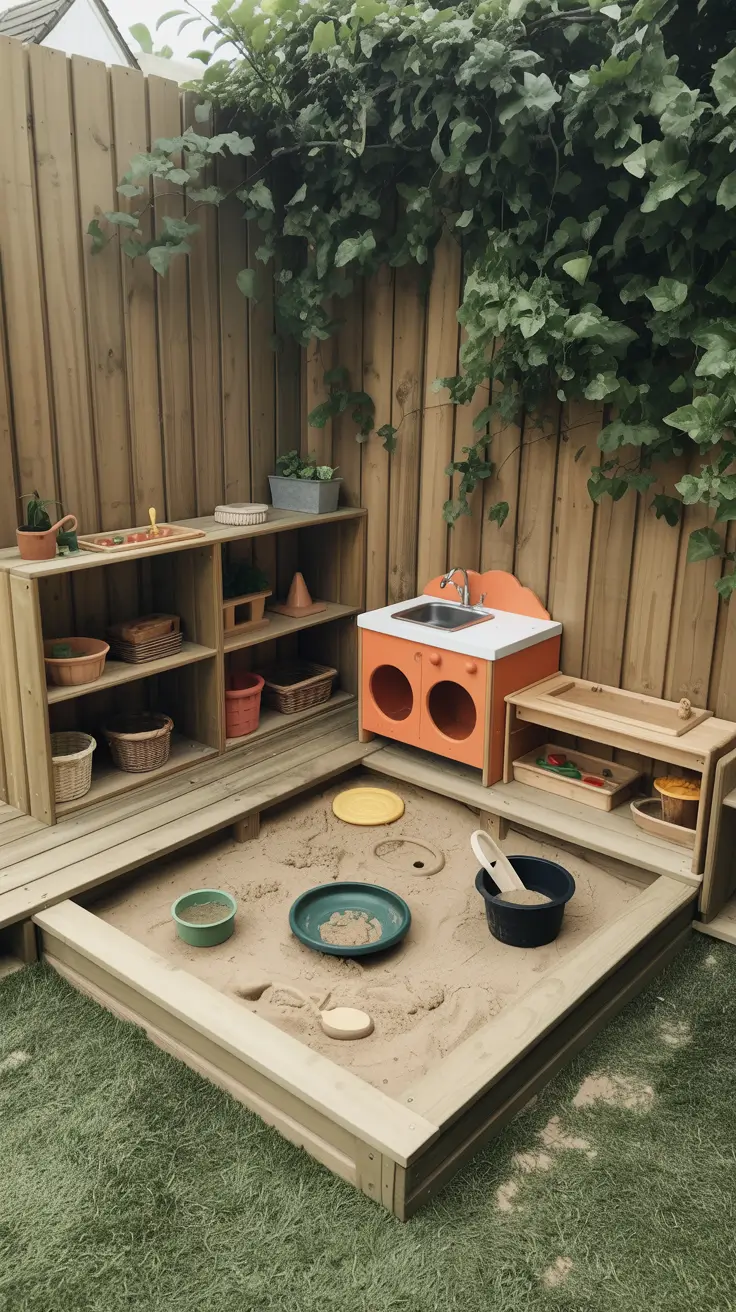
Typical elements include low shelves with outdoor toys, practical life stations like watering areas, sand boxes, and mud kitchen setups. Playground design mud kitchen areas and simple work tables encourage hands-on learning and responsibility.
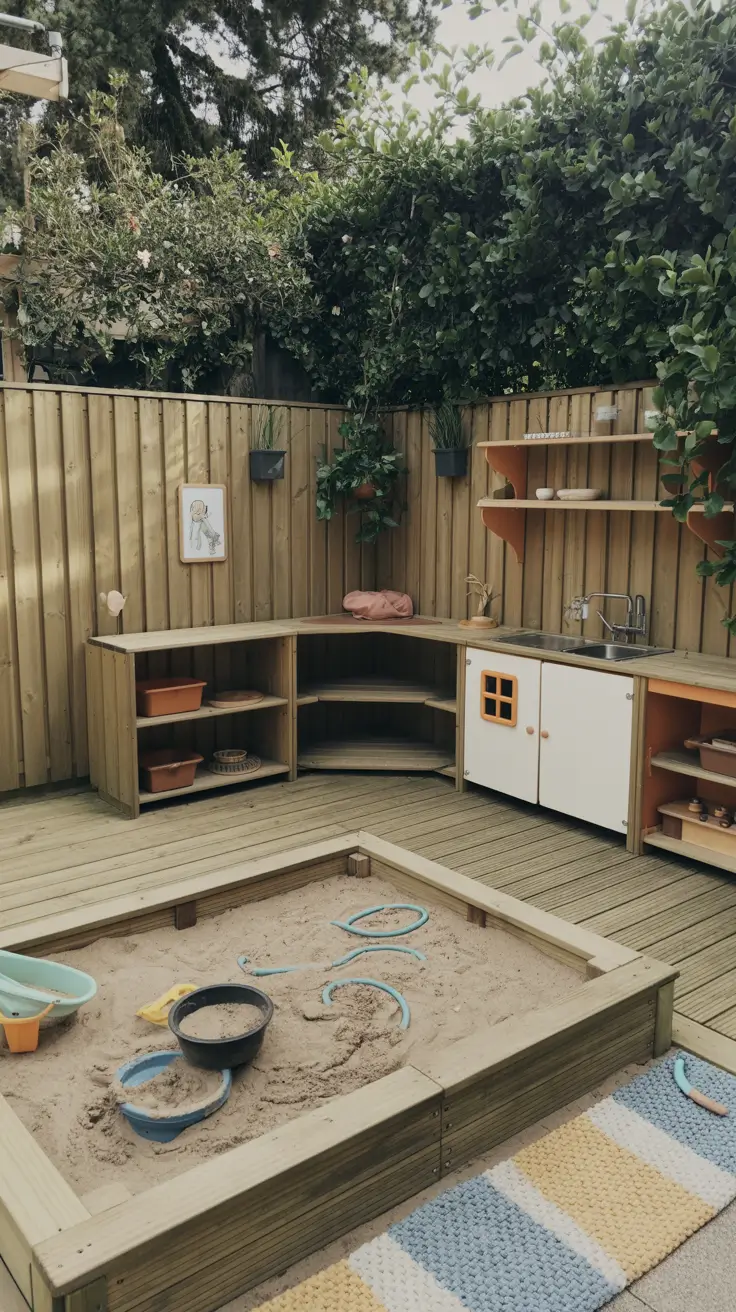
In my professional experience, Montessori-inspired designs work especially well in backyards and small gardens. Educators in the US often stress the importance of child-scaled environments, and I consistently see positive results when these principles are applied outdoors.
What I would enhance here is weather adaptability. Adding covered zones ensures Montessori activities can continue in different seasons, making the space more versatile.
Sensory Garden Ideas for Kids Play Areas
A sensory garden is one of the most effective outdoor area ideas for kids in 2026 because it supports development through touch, sound, smell, and movement. I design these spaces as calm yet engaging zones within the backyard or garden, where children can slow down and explore nature at their own pace. Clear pathways, soft ground covers, and layered planting help define the space while keeping it accessible and safe.
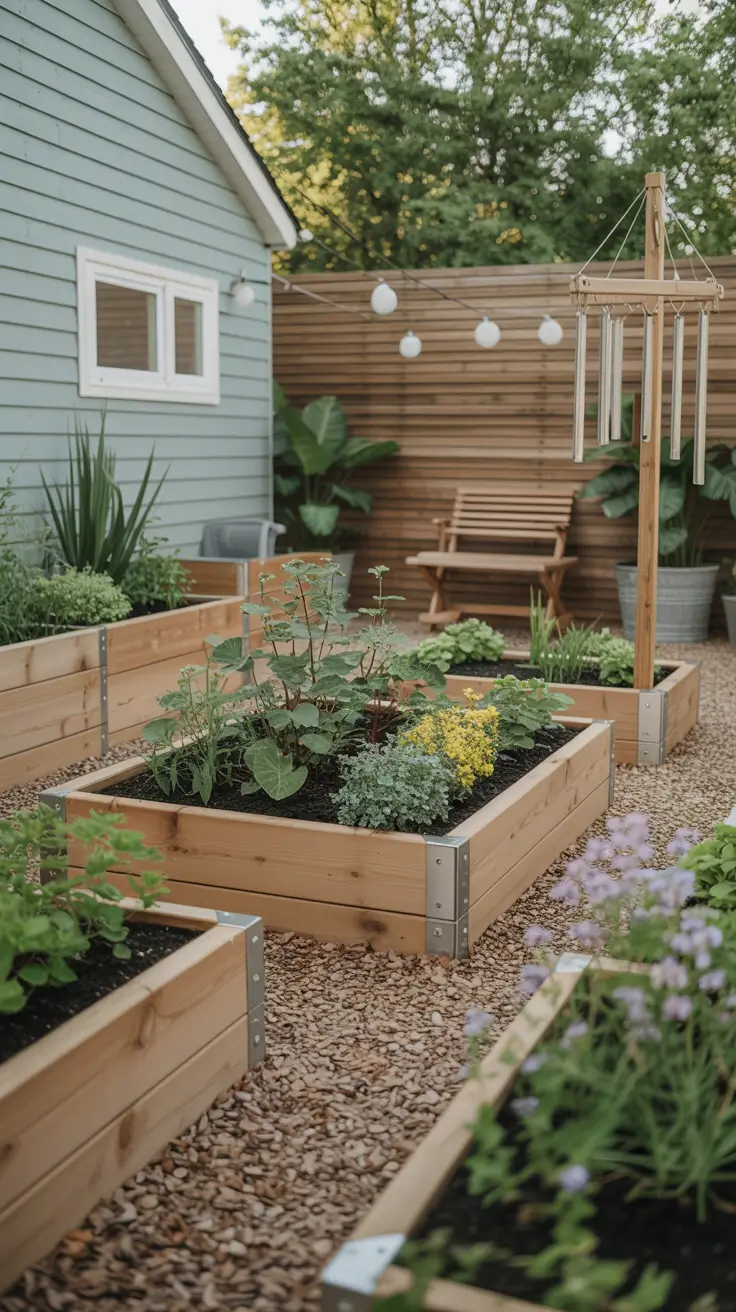
In my projects, I include raised planters with herbs, textured plants, smooth stones, wind chimes, and simple balance elements. Natural wood borders and rubber mulch pathways help separate areas without making the playground feel structured or restrictive. These elements support sensory play while fitting naturally into a play garden concept.
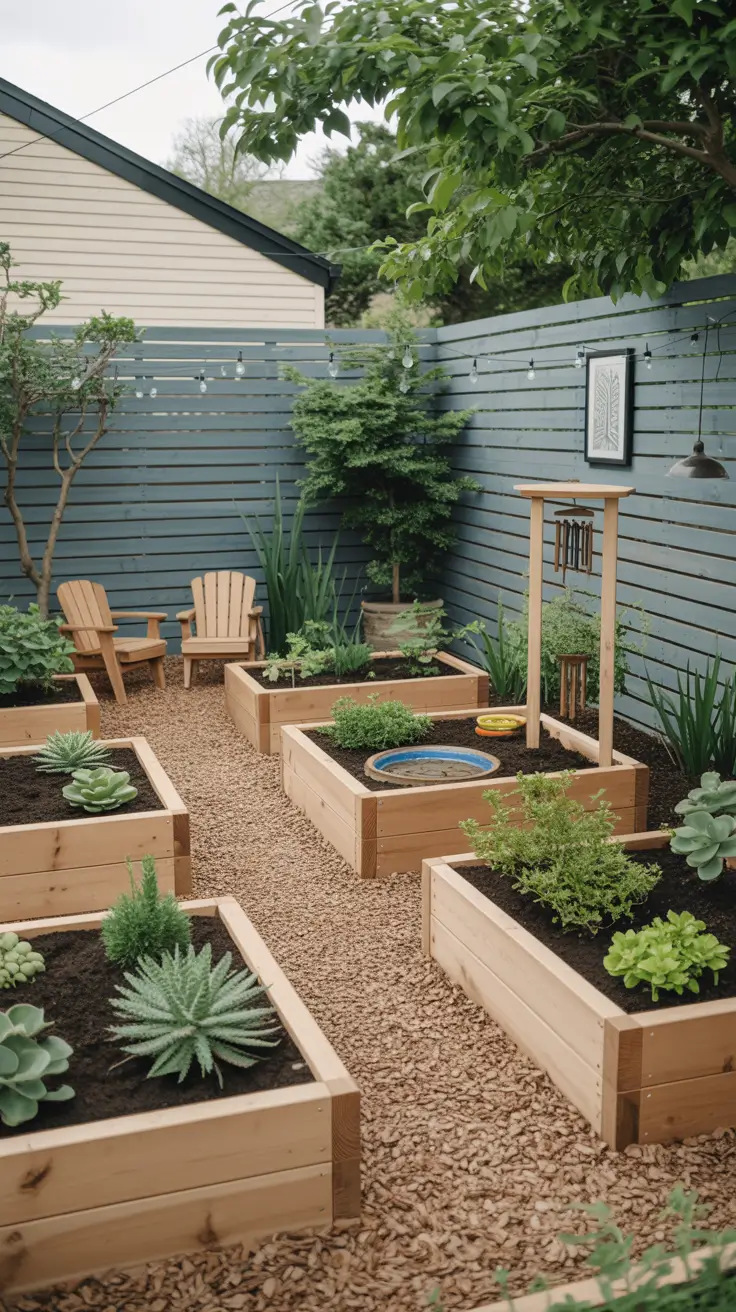
From my experience, sensory gardens are especially valuable for younger children and those who benefit from Montessori-inspired environments. Many US child development specialists emphasize outdoor sensory play as a way to improve focus and emotional regulation, and I consistently see positive responses from families.
What is often missing in sensory gardens is seating. I recommend adding small benches or log stools so children and adults can pause and observe, making the space more inclusive and functional.
Water Play Ideas for Outdoor Kids Areas
Water play remains a key trend in playground design for 2026, especially during warmer months. I approach water play areas as controlled, purposeful zones that encourage exploration without overwhelming the rest of the backyard. Proper drainage and clear boundaries are essential for keeping the area practical and safe.
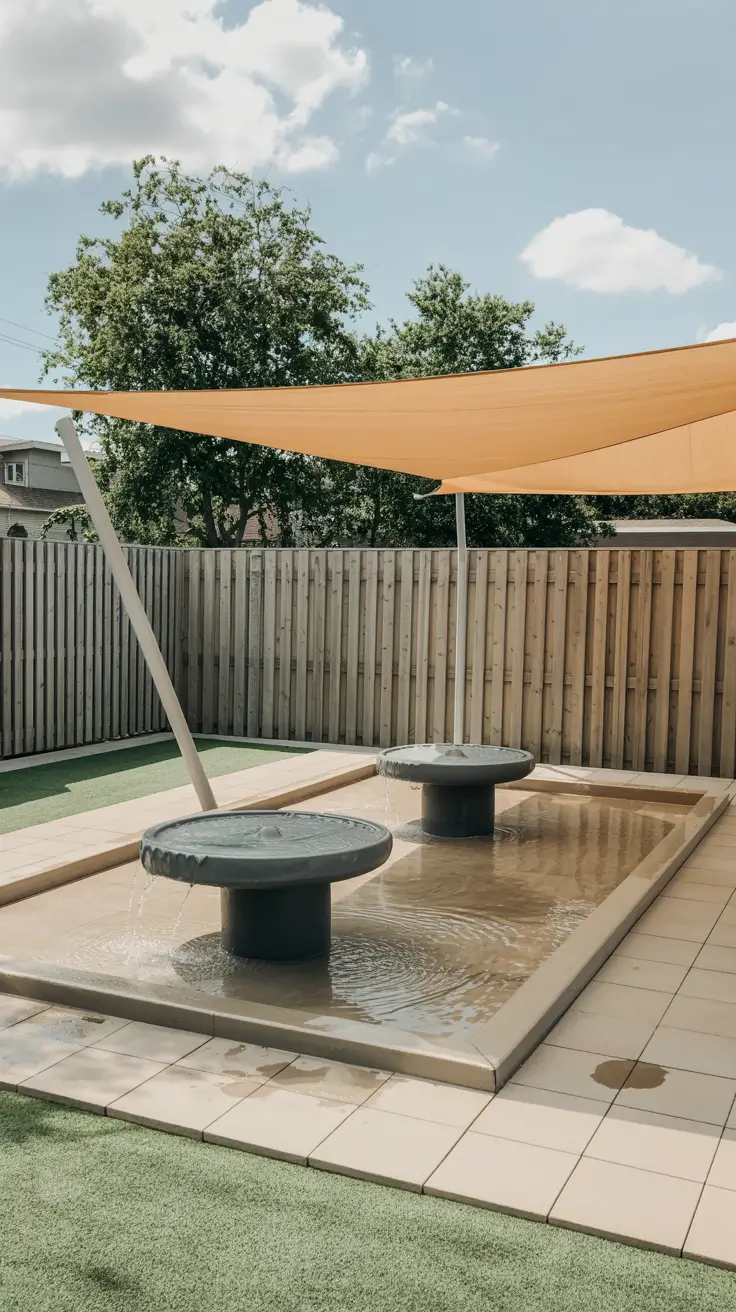
I usually include water tables, hand pumps, shallow channels, and splash pads combined with rubber tiles for slip resistance. These features are simple, easy to use, and adaptable to different ages. When space allows, I integrate water play near a garden area to support learning about plants and nature.
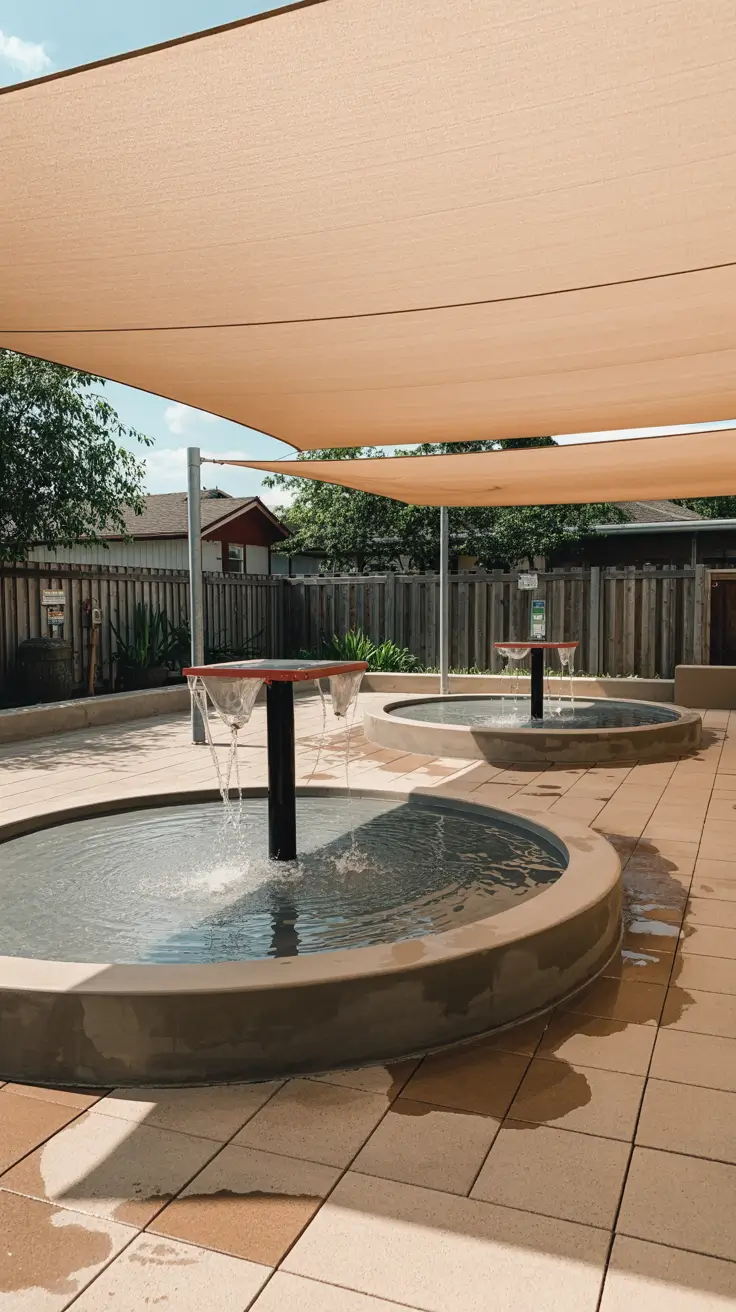
In my opinion, water play is one of the most engaging outdoor activities for kids. US-based pediatric and design experts often highlight its benefits for sensory development, and I have seen children stay engaged far longer with water features than with traditional fixed equipment.
To improve these areas, I would add shaded zones nearby. Sun protection ensures water play remains safe and comfortable throughout the day.
Mud Kitchen Playground Design Ideas
Mud kitchens are a staple of playground design backyard concepts in 2026 because they combine creativity, sensory play, and real-world learning. I design mud kitchens as semi-structured stations within the play area, keeping them close to water sources and away from high-traffic zones.
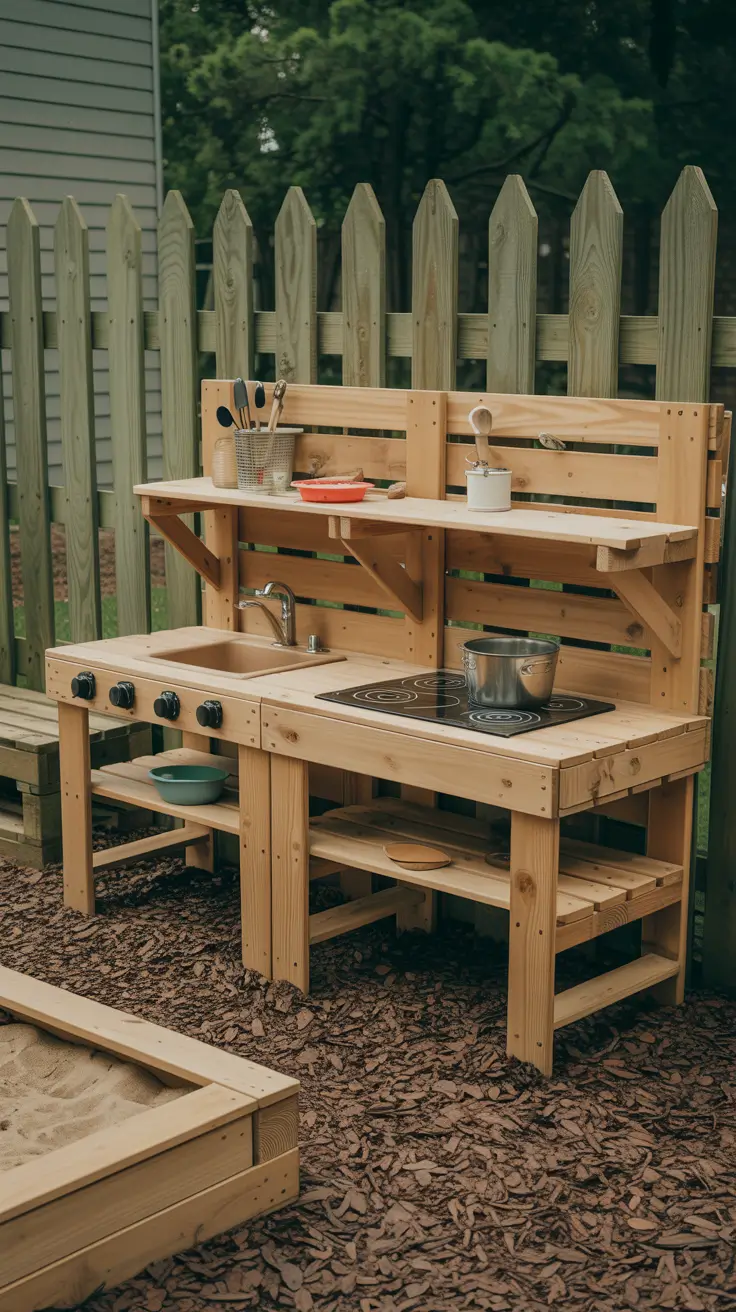
Typical elements include countertops made from natural wood, shelves for pots and utensils, hooks for tools, and a nearby sand box. Using pallets keeps the design cheap diy and budget-friendly while maintaining durability. Rubber mulch or compacted soil works well as ground cover.
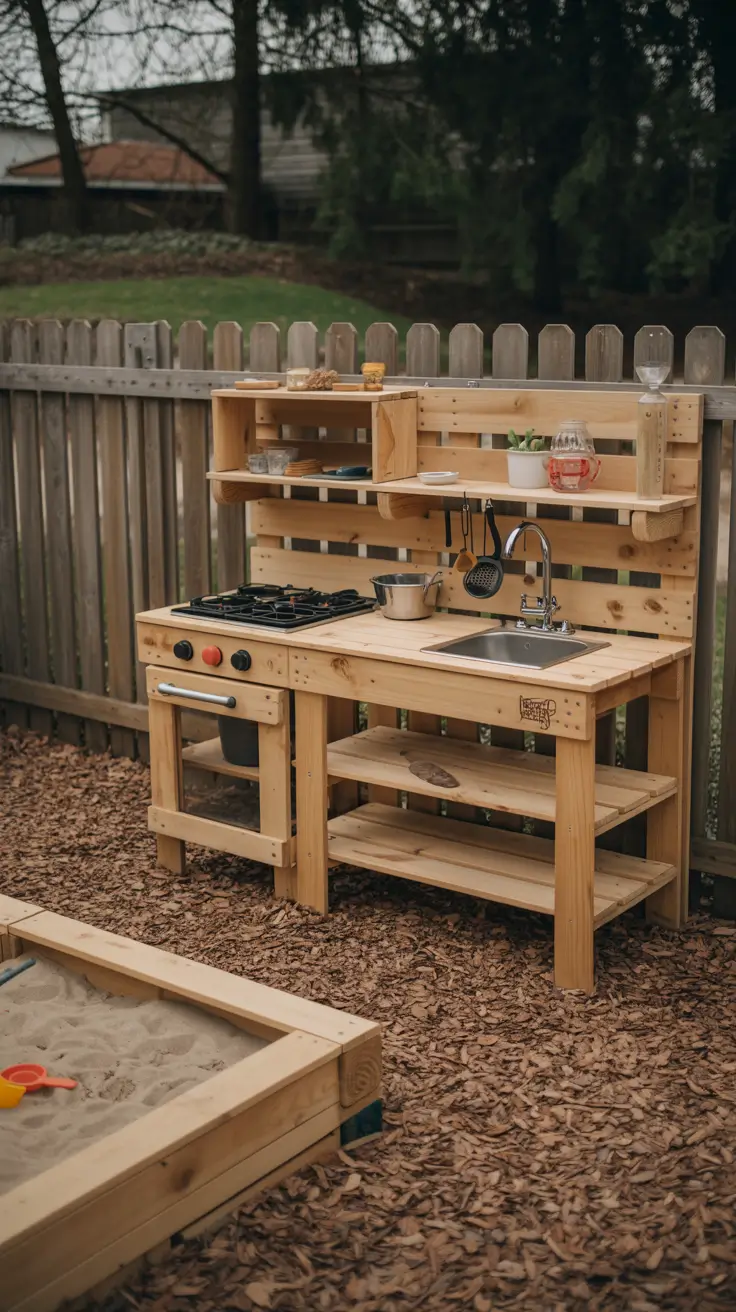
From my professional experience, mud kitchens encourage cooperative play and problem-solving. Many US educators support mud play as a foundation for imaginative learning, and I have observed children naturally role-play and collaborate in these spaces.
What I would add to most mud kitchens is clear storage. Bins or closed shelves help keep materials organized and make cleanup easier for families.
Music Wall Playground Design for Kids
A music wall adds sound-based exploration to outdoor play areas, making it ideal for sensory-rich playground design. I integrate music walls along fences or garden walls to save space while creating a strong visual and interactive element.
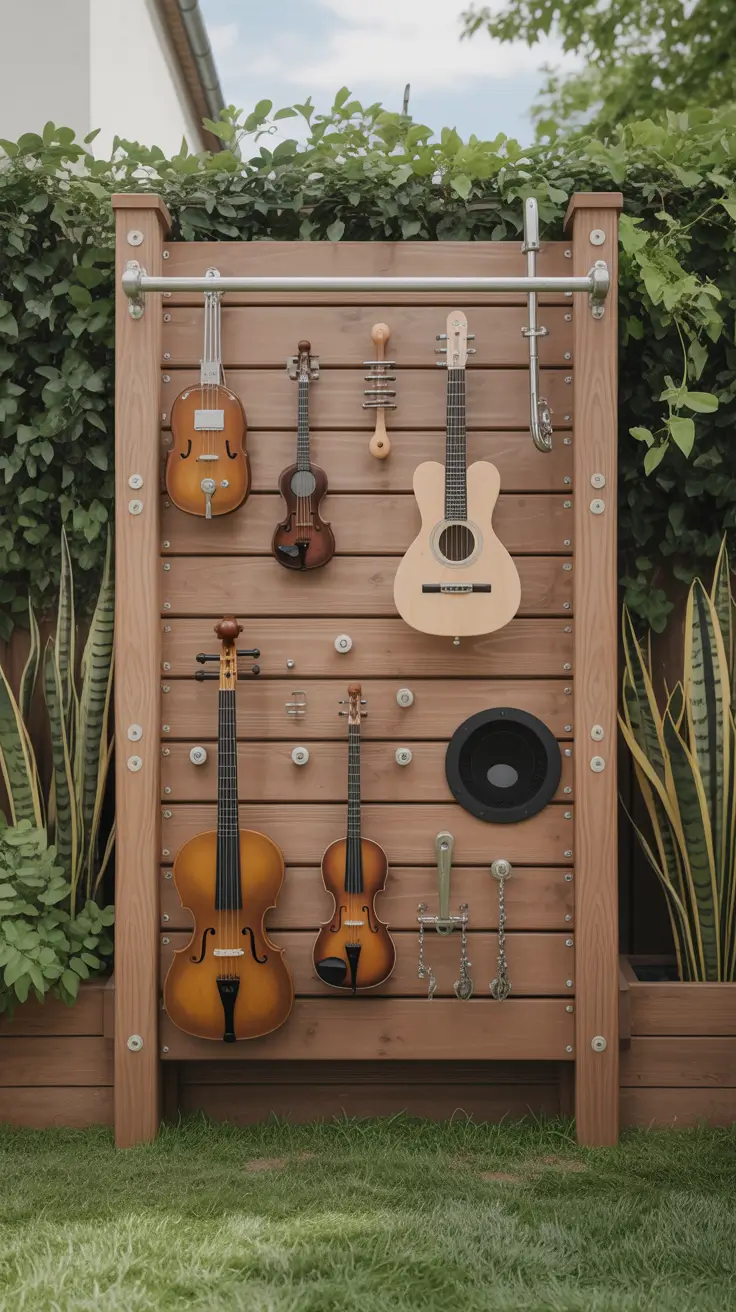
I include mounted instruments such as metal tubes, wooden xylophones, drums, and recycled items like pans. Natural wood frames and weather-resistant materials keep the design durable and visually cohesive with the rest of the backyard playground.
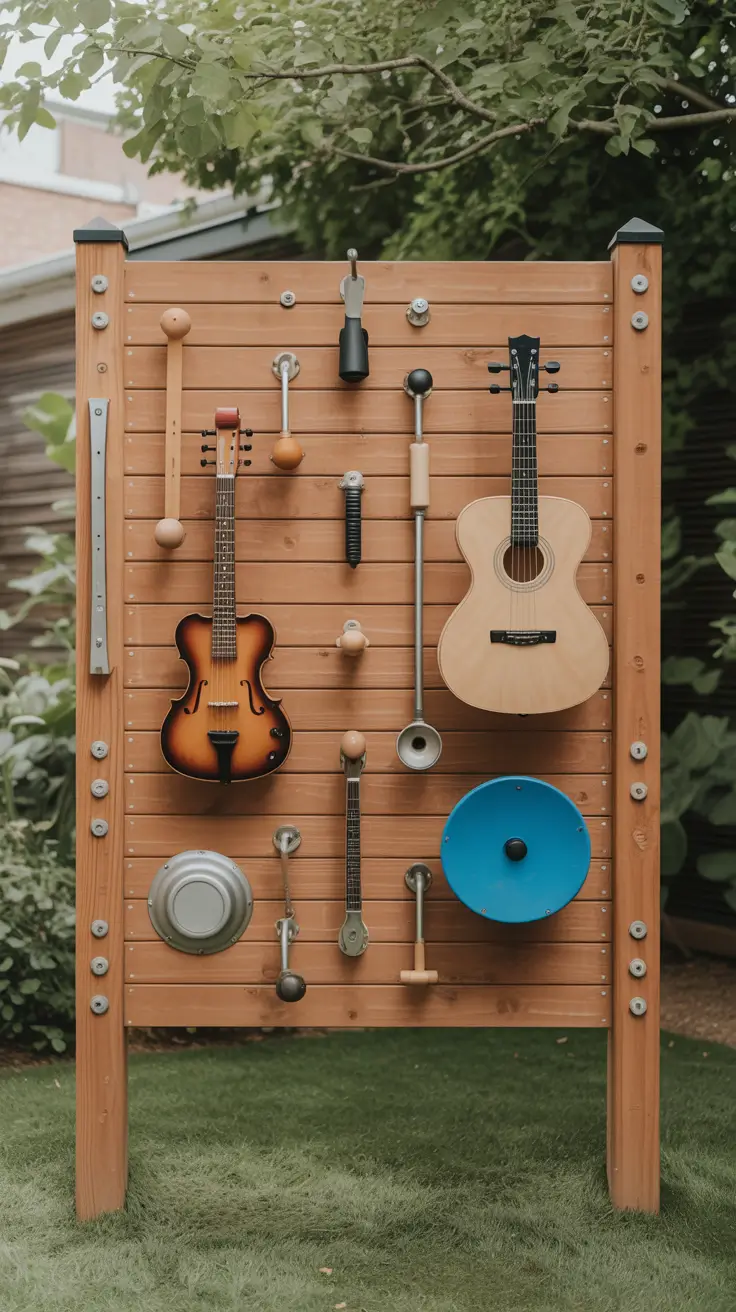
In my experience, music walls appeal to a wide age range and encourage social interaction. US design publications often note that outdoor music elements support creativity without requiring constant supervision, which I have found to be true in family settings.
To strengthen this feature, I recommend adding sound-dampening landscaping nearby. Shrubs or soft surfaces help balance noise levels while keeping the area enjoyable.
Garden Play Areas for Kids
Garden play areas blend learning and play, turning the backyard into an interactive outdoor classroom. I design these spaces to feel open and welcoming, with clear connections between planting zones and play elements. This approach supports both active play and quiet observation.
Key components include child-sized garden beds, watering stations, stepping paths, and simple seating. Natural wood edging and rubber tiles help define walkways while keeping the area safe. These designs fit well into a broader playground design plan.
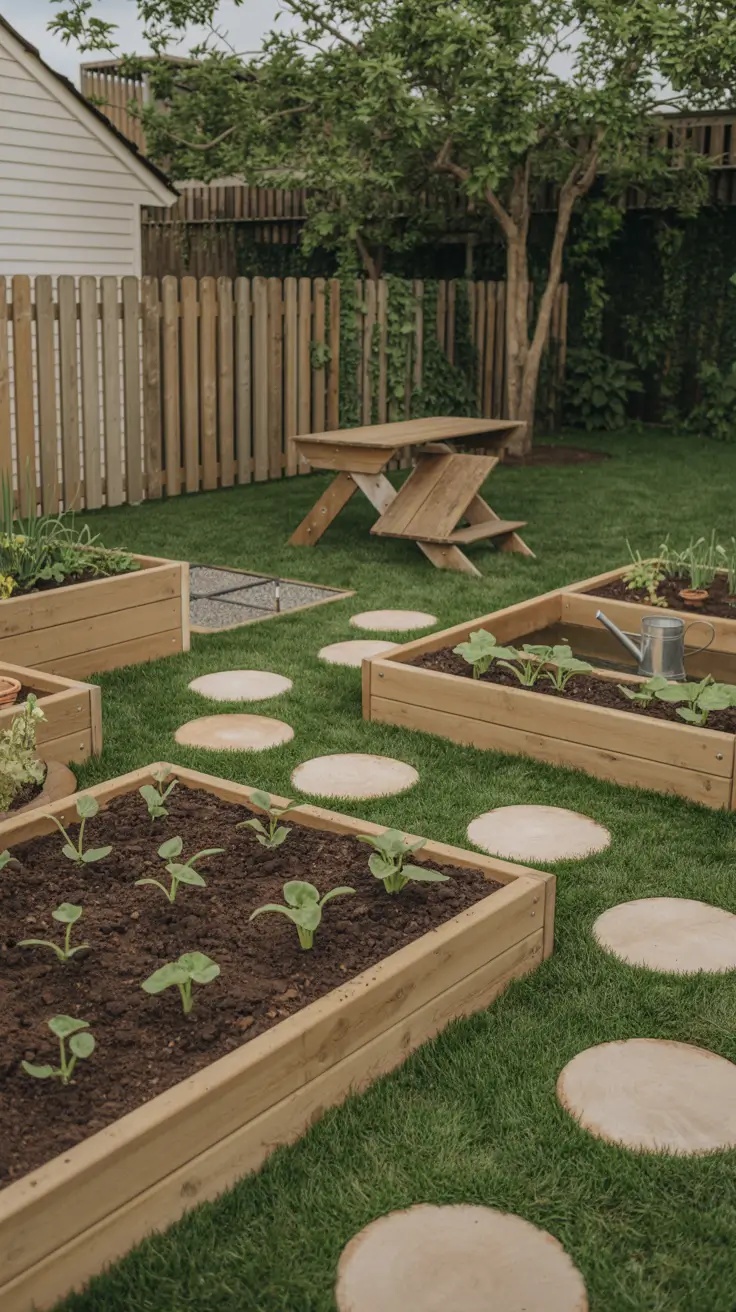
From my perspective, garden play areas teach responsibility and patience. Many US-based family lifestyle experts highlight gardening as a valuable activity for children, and I consistently see kids take pride in caring for plants.
What is often missing is seasonal planning. I suggest choosing plants that change throughout the year so the garden remains engaging in different seasons.
Simple and Easy Outdoor Play Ideas for Families
Simple easy outdoor play ideas focus on flexibility and low maintenance. I design these areas to be quickly set up and easily adapted, making them ideal for busy families who still value outdoor play. Open layouts and minimal fixed structures are central to this approach.
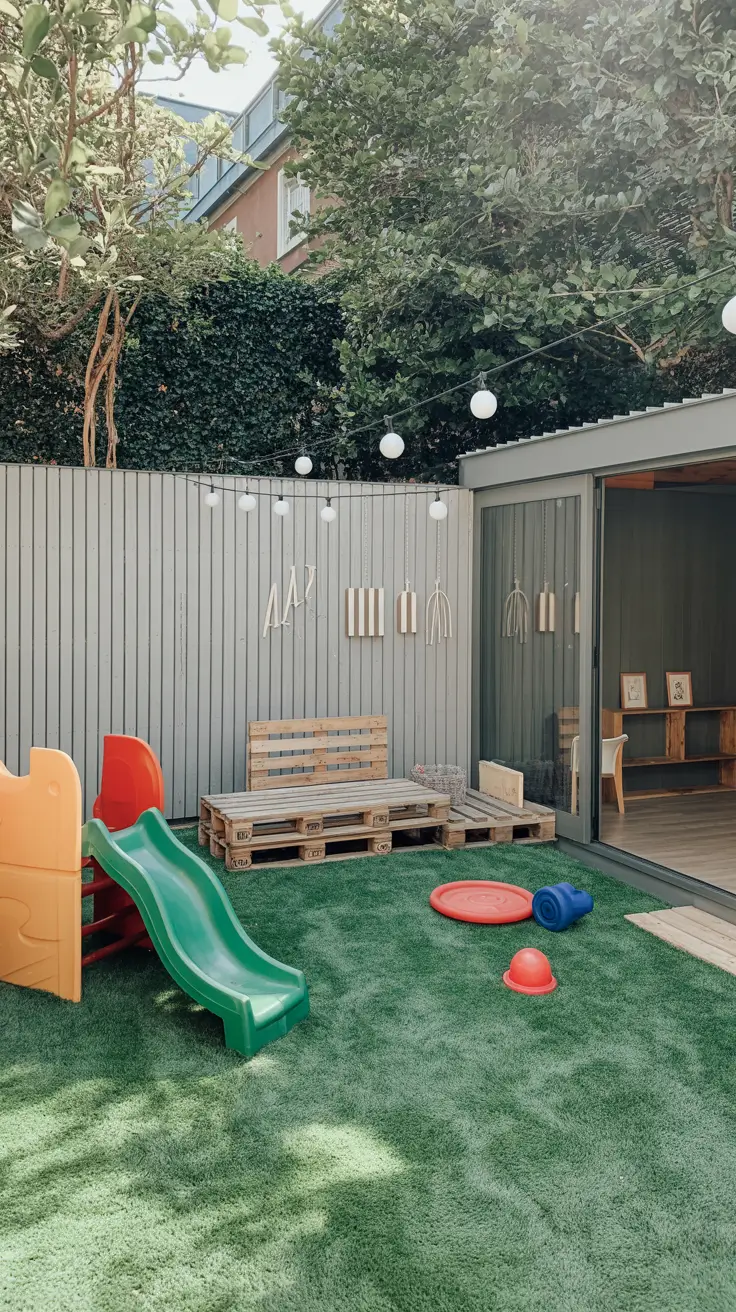
I include items like loose balls, balance boards, small climbing frames, and open lawn areas. Using pallets for benches and storage keeps costs low and supports a budget-friendly playground design.
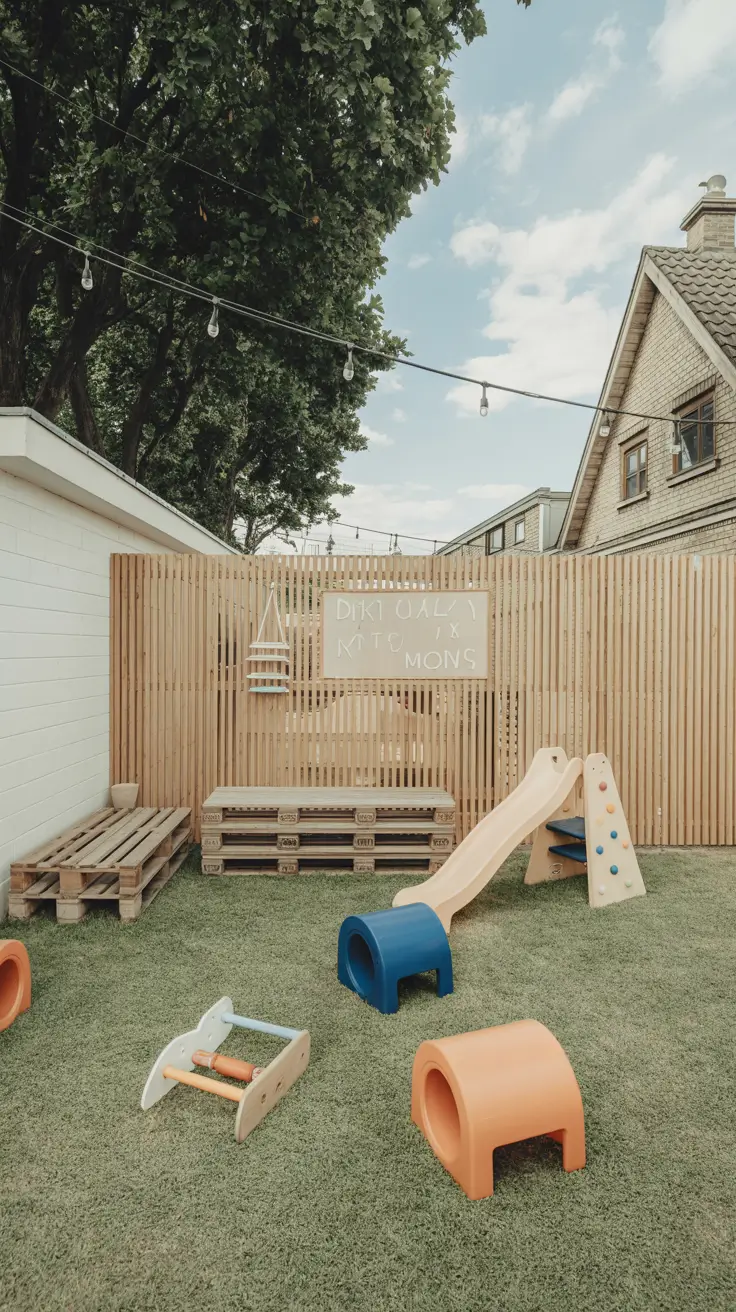
In my experience, simplicity often leads to longer play sessions. US home and family experts frequently note that children do not need complex equipment to stay engaged, and I fully agree based on real projects.
To enhance these spaces, I recommend clear storage solutions. Keeping toys organized helps maintain the simplicity of the design.
Playground Design Rubber Tiles and Rubber Mulch
Safe surfaces are a foundation of effective playground design in 2026. I plan outdoor play areas with rubber tiles and rubber mulch to balance safety, durability, and visual appeal. These materials work well in both small space and larger backyard playgrounds.
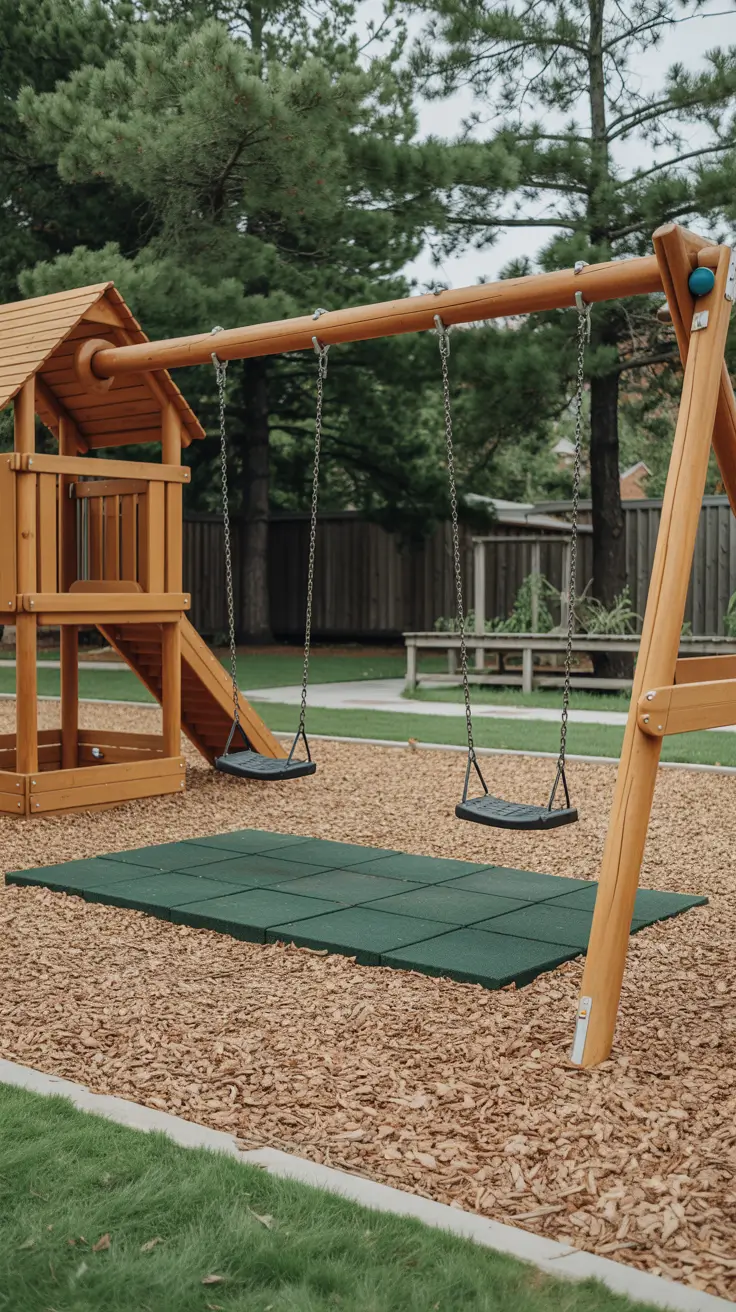
Rubber tiles are ideal under swings, climbing frames, and water play zones, while rubber mulch blends naturally into garden settings. Both options reduce injury risk and require minimal maintenance, making them practical for family use.
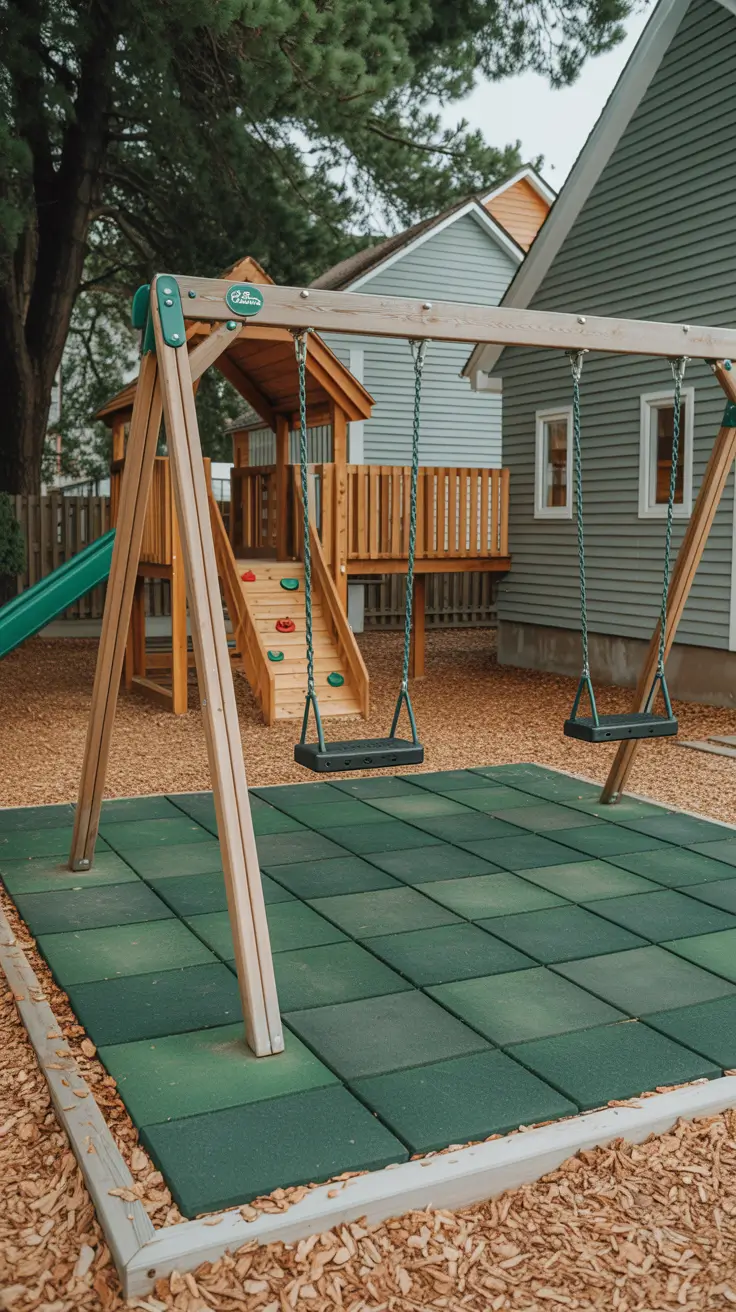
From my professional standpoint, investing in quality surfaces improves the longevity of the entire playground. Many US safety guidelines emphasize proper ground materials, and I consistently prioritize them in my designs.
What I would add here is color planning. Choosing neutral or nature-inspired tones helps the surface integrate seamlessly with the overall outdoor area design.
Sand Box Playground Design Ideas
I see sand box playground design as one of the most flexible and simple outdoor solutions for kids in 2026. A well-planned sand area fits easily into a backyard or small space and supports imaginative play, sensory development, and calm focus. I always design sand boxes as part of a broader playground design plan, making sure they visually connect with the garden and other play zones.
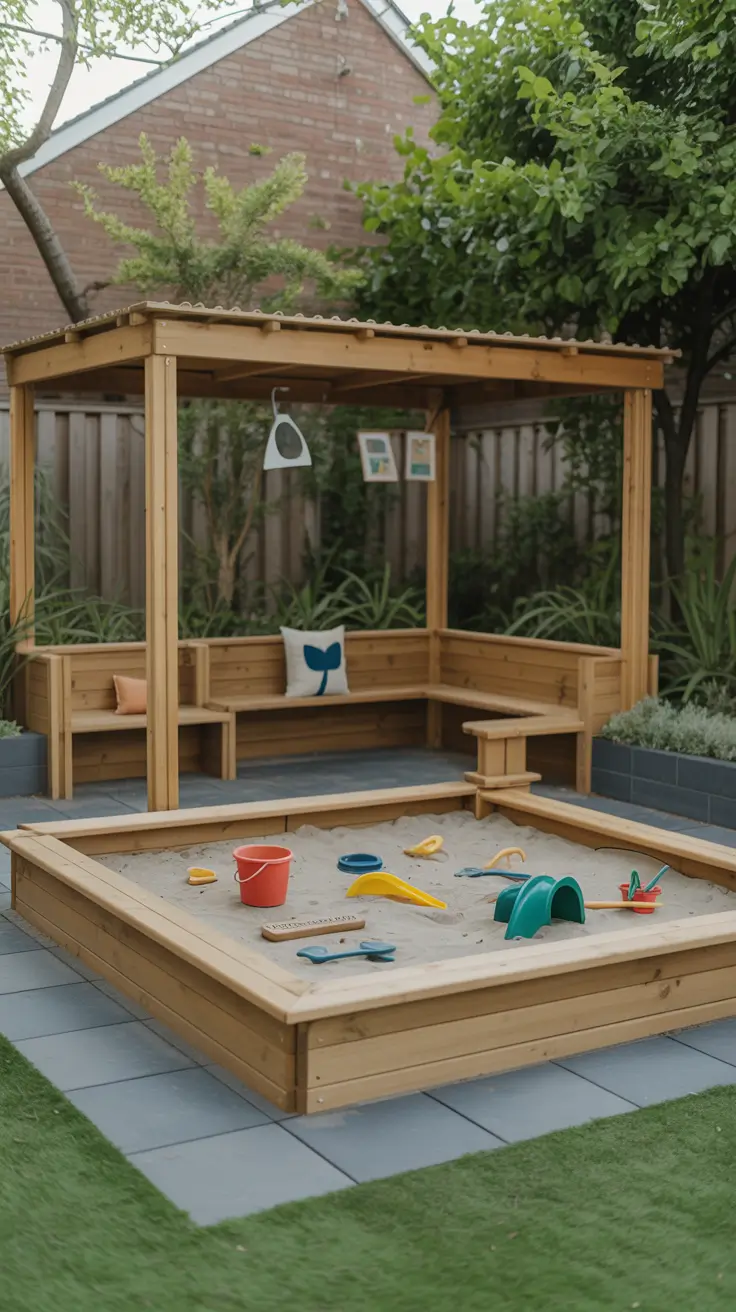
For furniture and structure, I recommend natural wood frames, smooth edges, and integrated seating. Covered sand boxes with sliding lids protect the sand and double as benches, which is ideal for family-friendly playground design. Adding simple tools like buckets, scoops, and molds encourages open-ended play without clutter. I also often include shade sails or pergolas to make the area usable throughout the day.
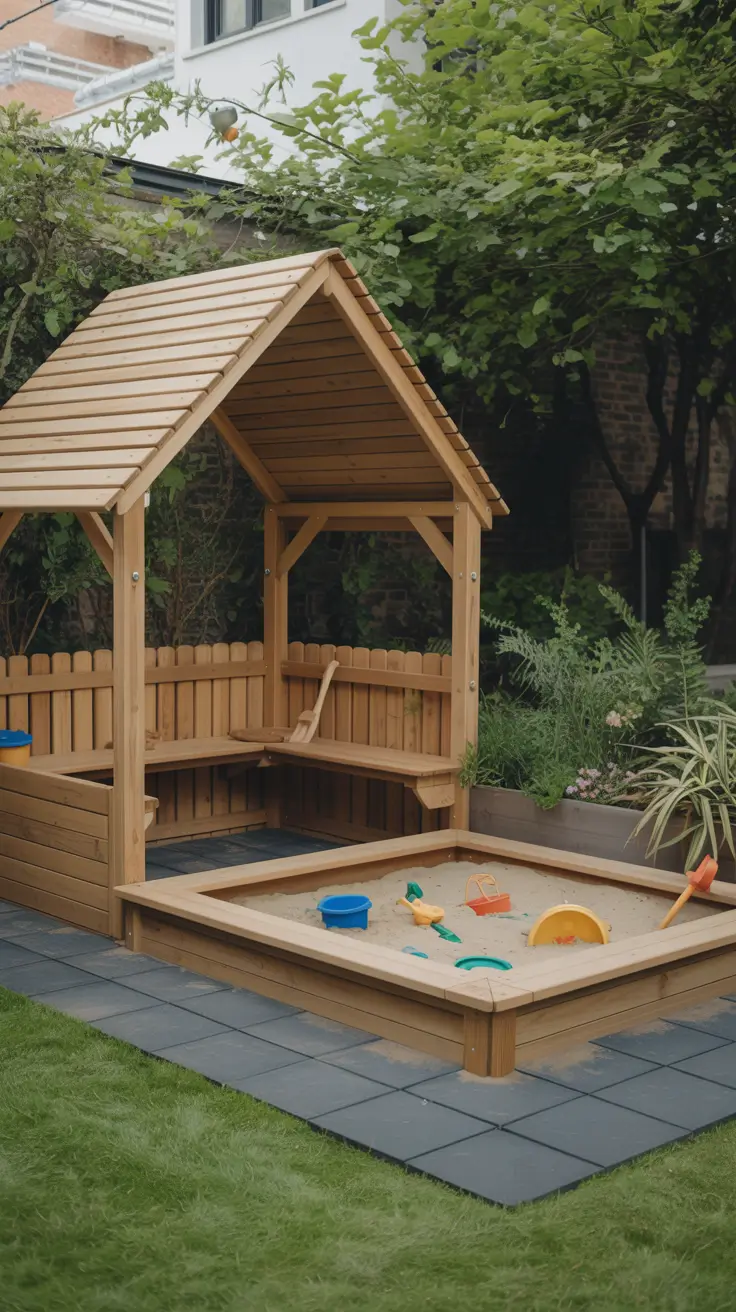
From my experience, sand play remains one of the most Montessori-aligned outdoor activities. Many US-based child development experts emphasize that sand boxes help children build fine motor skills and problem-solving abilities. I have seen kids return to sand play repeatedly because it feels simple, grounding, and creative at the same time.
What I would still add here is a clear drainage layer under the sand and a defined border using rubber tiles or natural stone. This improves safety, keeps the area clean, and makes long-term maintenance easier for parents.
Rubber Mulch Playground Design for Safety
Rubber mulch playground design is one of my preferred safety-focused solutions for modern playgrounds. In 2026, parents want playground design that balances soft landings with a clean, organized look. Rubber mulch works well in both garden playgrounds and backyard layouts, especially where swings or climbing elements are included.
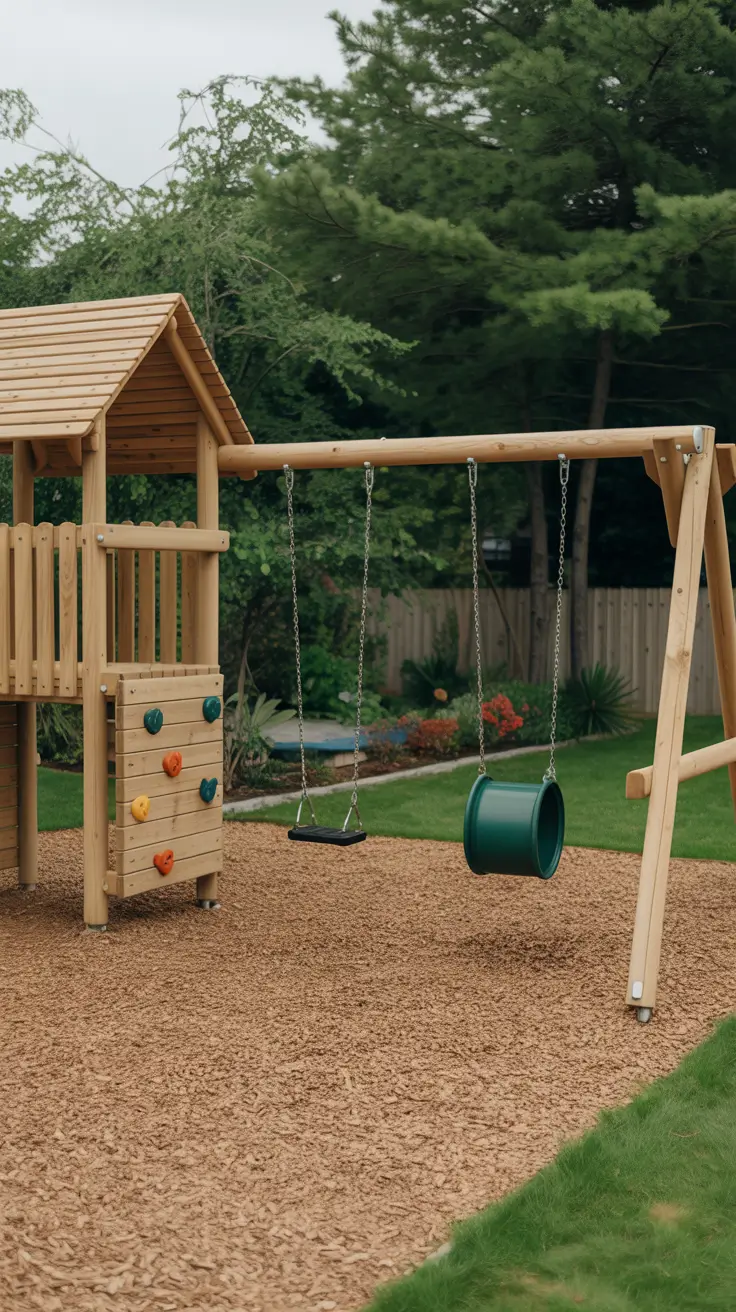
I usually combine rubber mulch with defined play zones and low-profile edging. It pairs well with playground design natural wood structures and simple metal frames. Rubber mulch is durable, drains well, and visually blends with nature-inspired playgrounds without feeling overly industrial.
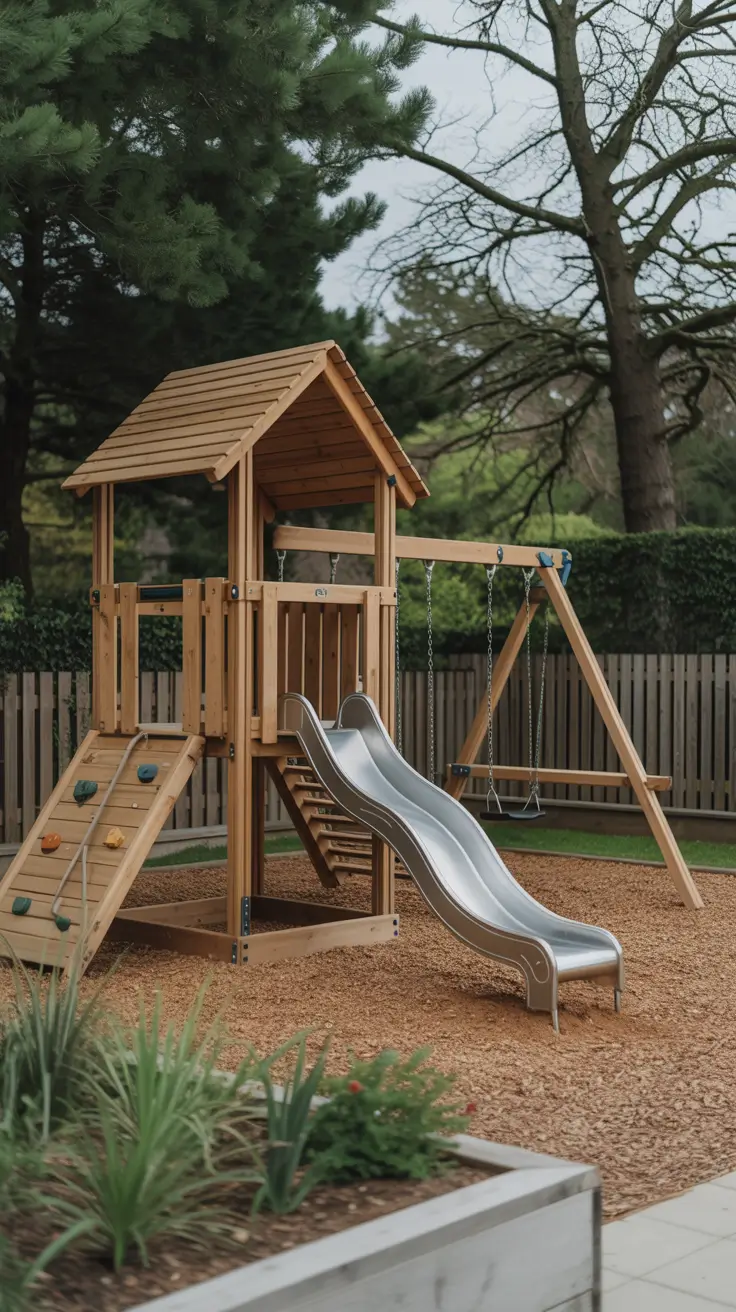
In my professional view, safety surfaces are often underestimated. Design professionals and child safety organizations in the US consistently highlight impact-absorbing materials as a top priority. I have personally seen how rubber mulch reduces injury risk while still allowing kids to run and explore freely.
To improve this section, I would add clear guidance on mulch depth and color selection. Choosing neutral tones helps the playground feel cohesive with the garden rather than visually overwhelming.
Rubber Tile Playground Flooring Ideas
Rubber tile playground flooring ideas are ideal when designing a playground in a small space or urban backyard. I like how rubber tiles create a clean, modern base while offering consistent safety. They work particularly well for water play zones, music walls, or toddler areas.
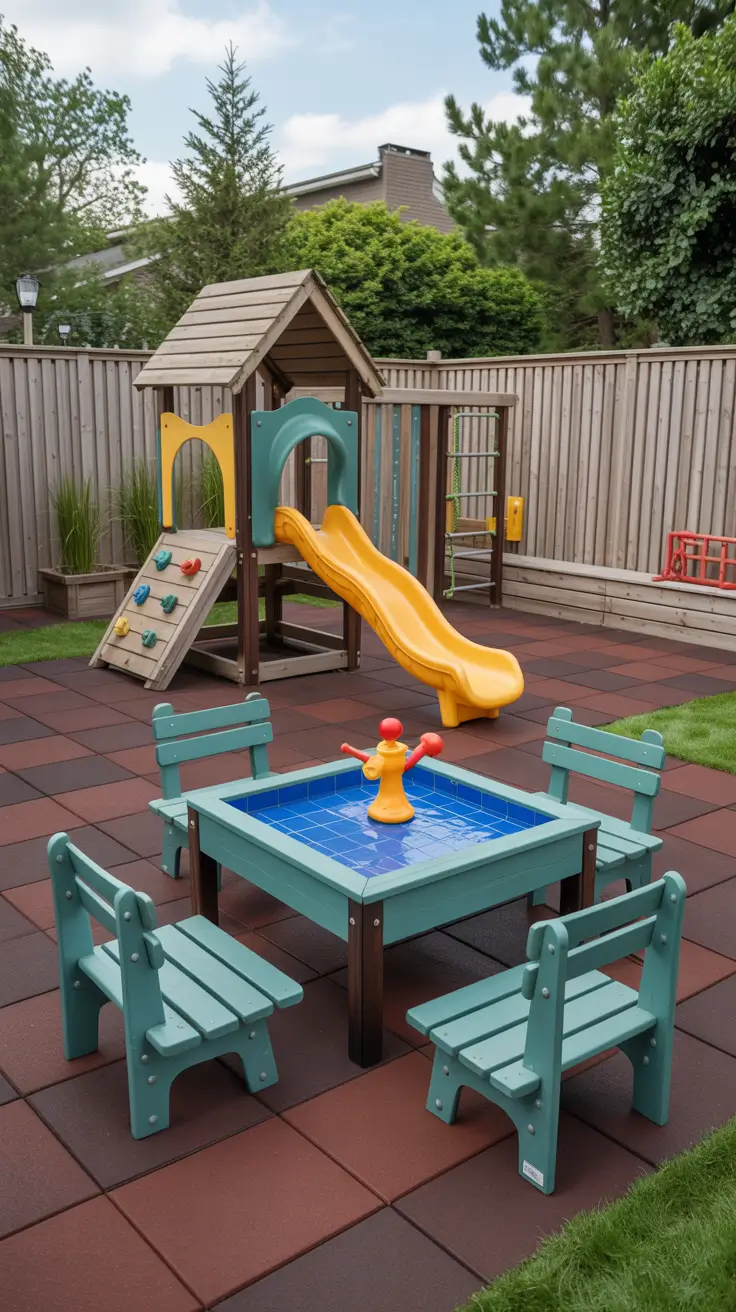
In terms of layout, I recommend modular rubber tiles that allow flexible playground design changes over time. These tiles pair well with simple outdoor furniture, low climbing frames, and movable play equipment. I often integrate them under slides, balance beams, or mud kitchen setups.
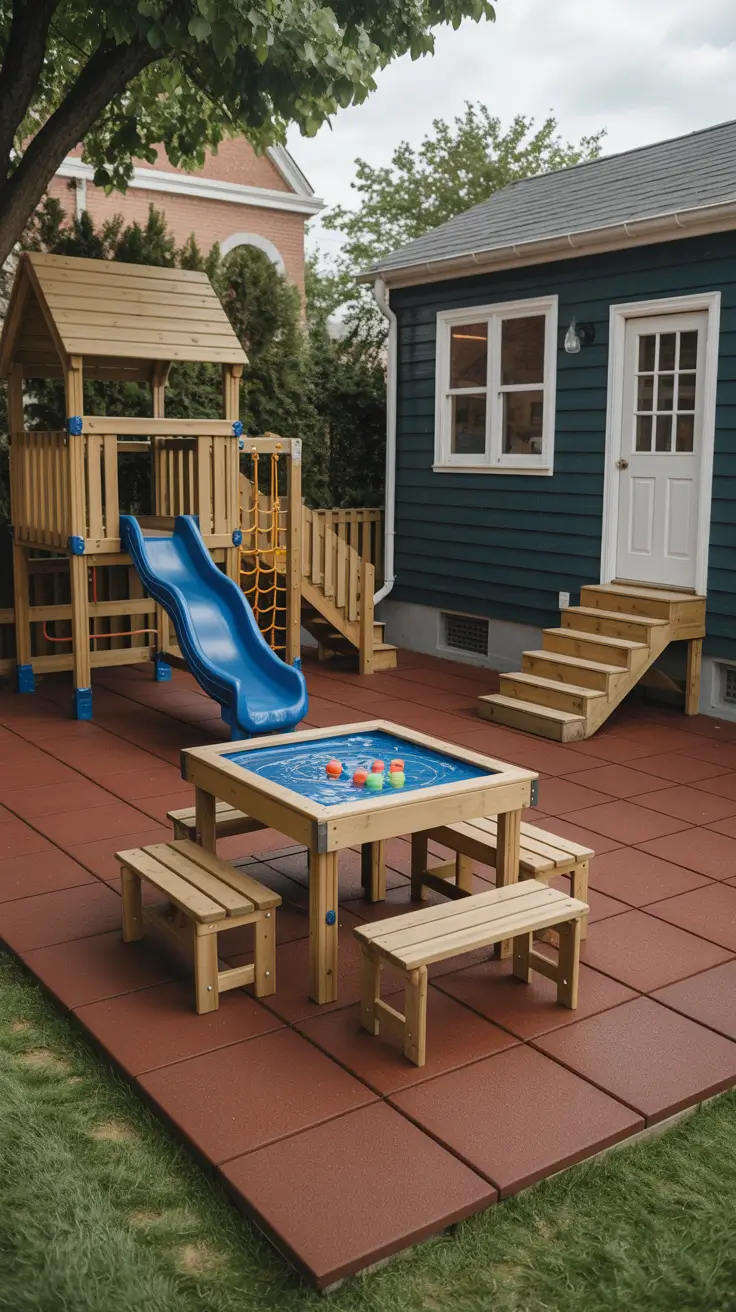
From my experience, rubber tiles are especially appreciated by parents who want a low-maintenance solution. Many landscape designers note that rubber tiles support long-term usability without frequent replacement. I have seen families enjoy how easy they are to clean and how well they define play areas.
What could be added here is a visual transition between rubber tiles and garden elements like grass or sensory garden paths. This softens the look and improves the overall outdoor design flow.
Natural Wood Playground Design Ideas
Natural wood playground design ideas continue to define outdoor area ideas for kids 2026. I focus on natural wood because it feels warm, timeless, and adaptable to different backyard sizes. It also supports a nature-inspired and Montessori-aligned play environment.
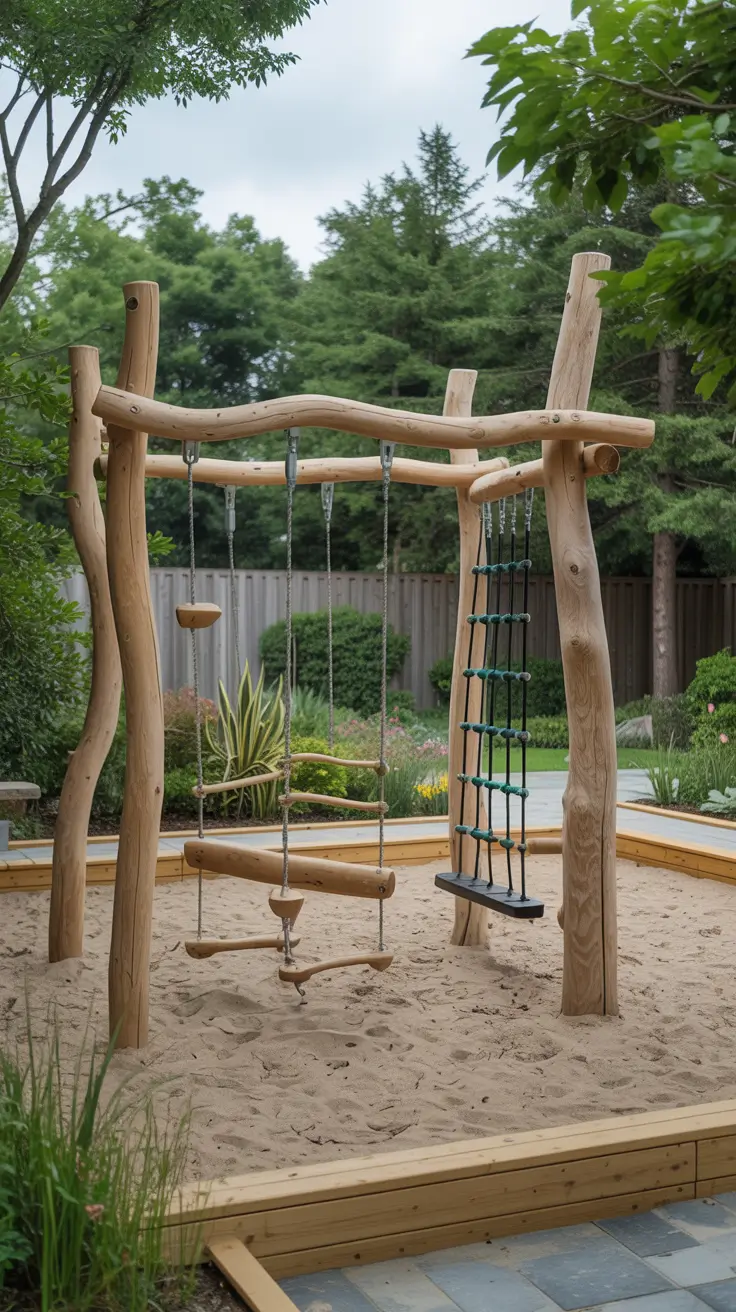
I typically include wooden climbing frames, balance logs, sand box borders, and simple seating made from treated wood. These elements integrate beautifully with garden landscapes and sensory garden concepts. Natural wood also pairs well with rubber mulch or sand for safety.
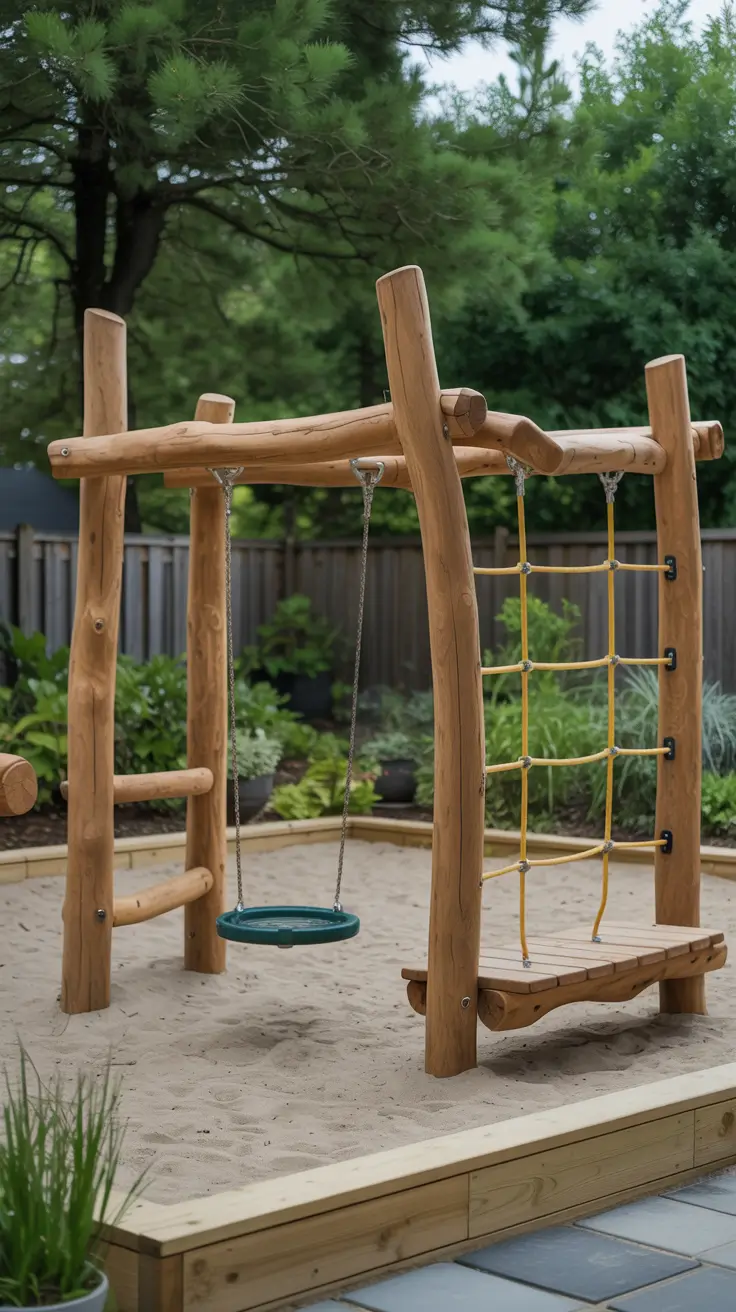
Personally, I find that kids respond more positively to natural materials. Many US interior and landscape designers advocate for natural textures in play environments to reduce overstimulation. I have seen children stay engaged longer in wooden playgrounds compared to plastic-heavy designs.
To complete this section, I would recommend adding protective finishes and maintenance advice. This ensures longevity and keeps the playground safe and visually appealing over time.
Play Garden Ideas for Learning and Fun
A play garden combines learning, movement, and sensory exploration in one cohesive outdoor space. When I design a play garden, I treat it as both a playground and a garden, blending play structures with plants, paths, and interactive zones.
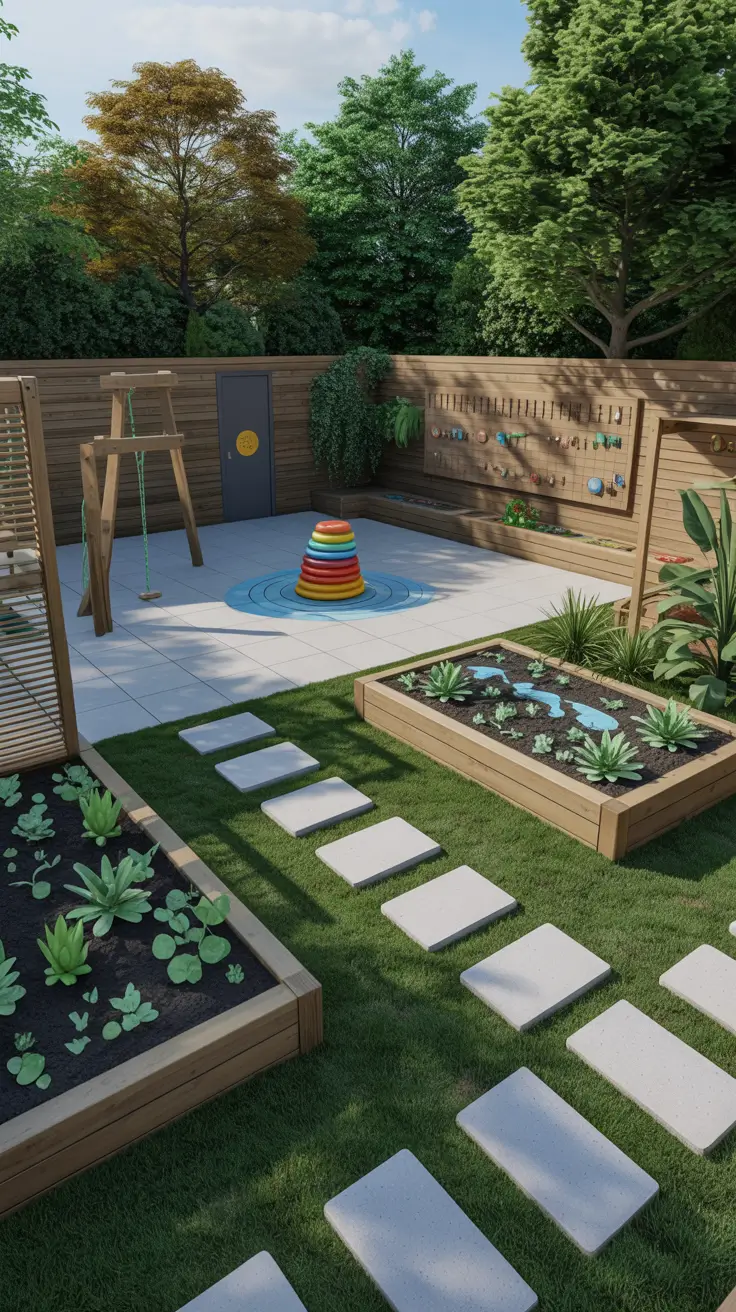
Key elements include raised garden beds, stepping stones, water play tables, and a small sensory garden with herbs and textures. I also like adding a playground design music wall using recycled materials, which fits well into a creative play garden.
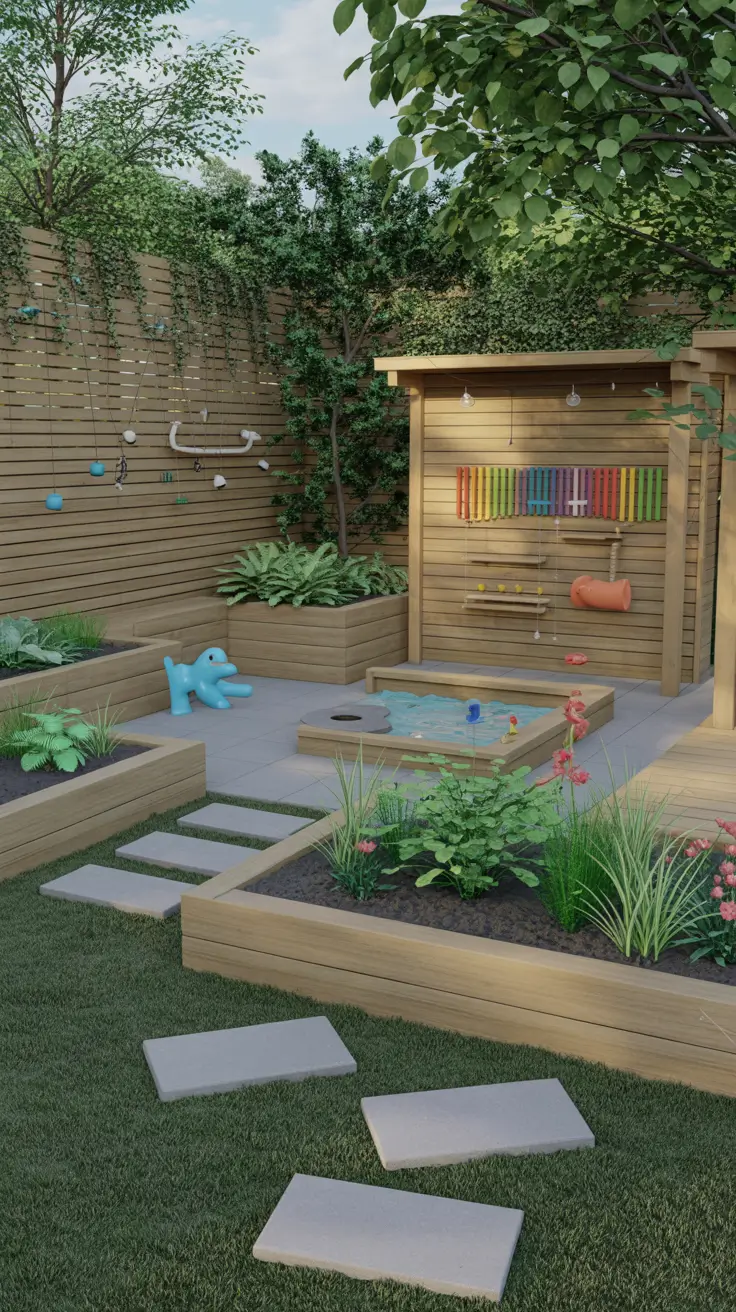
From my experience, play gardens encourage children to slow down and explore. Educational professionals often emphasize that outdoor learning environments support emotional regulation and curiosity. I have observed that kids develop a stronger connection to nature through hands-on garden play.
What I would add here is a seasonal planting plan. This helps families adapt the play garden throughout the year and keeps the space engaging beyond summer.
Backyard Playground Ideas Using Pallets
Backyard playground ideas using pallets are perfect for cheap diy and budget-friendly playground design. I see pallets as one of the most flexible materials for creating simple and functional play structures in 2026.
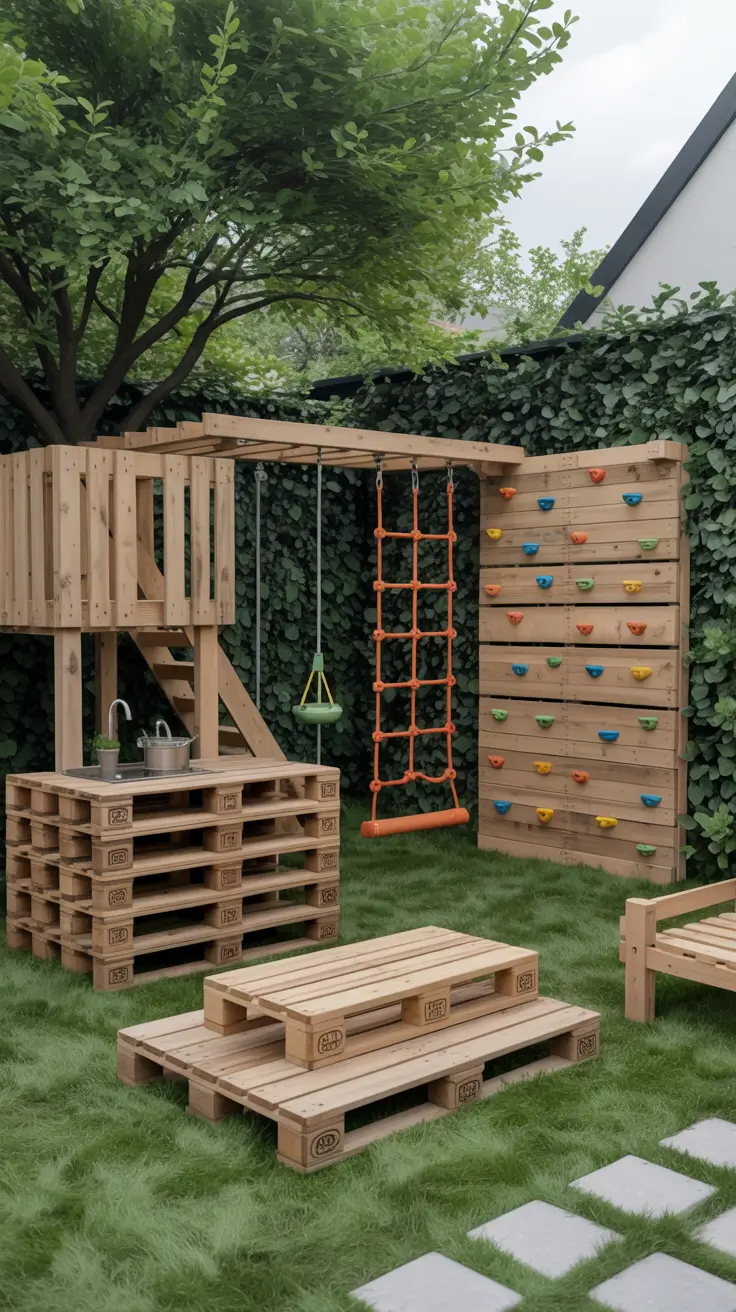
I often use pallets to build climbing walls, mud kitchens, seating platforms, and storage benches. When sanded and sealed properly, pallets fit well into a natural wood playground design and are easy to customize for small spaces.
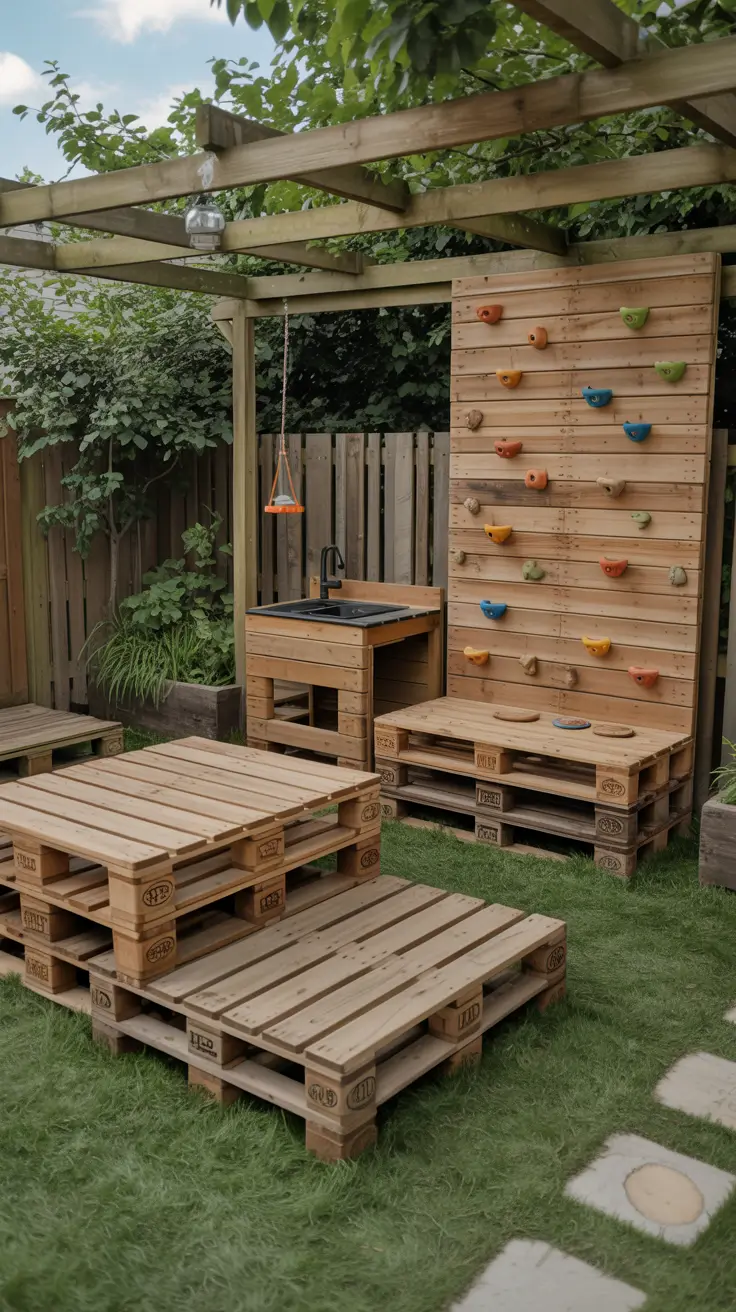
In my opinion, pallet playgrounds encourage creativity for both parents and kids. Many diy-focused US design communities highlight pallets as a sustainable and accessible solution. I have personally enjoyed seeing families adapt pallet designs as their children grow.
To improve this section, I would include clear safety checks and weight guidelines. This ensures pallet structures remain safe and durable over time.
Simple Outdoor Playground Ideas for Toddlers
Simple outdoor playground ideas for toddlers focus on safety, accessibility, and sensory engagement. I design these spaces with low heights, clear visibility, and soft surfaces, making them ideal for backyard or small garden areas.
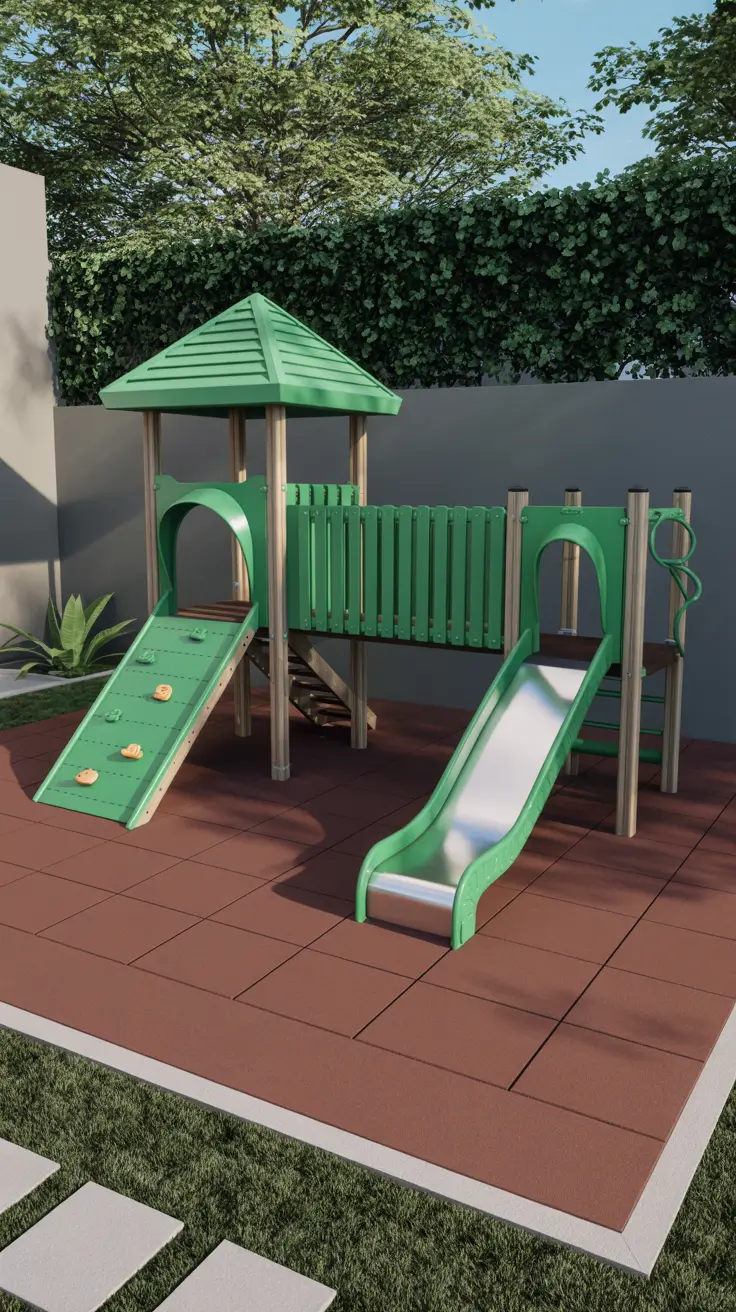
Essential items include sand boxes, rubber tile flooring, low slides, balance pads, and water play features. I also recommend playground design rubber mulch for added safety. Furniture should be scaled down and easy to move or reconfigure.
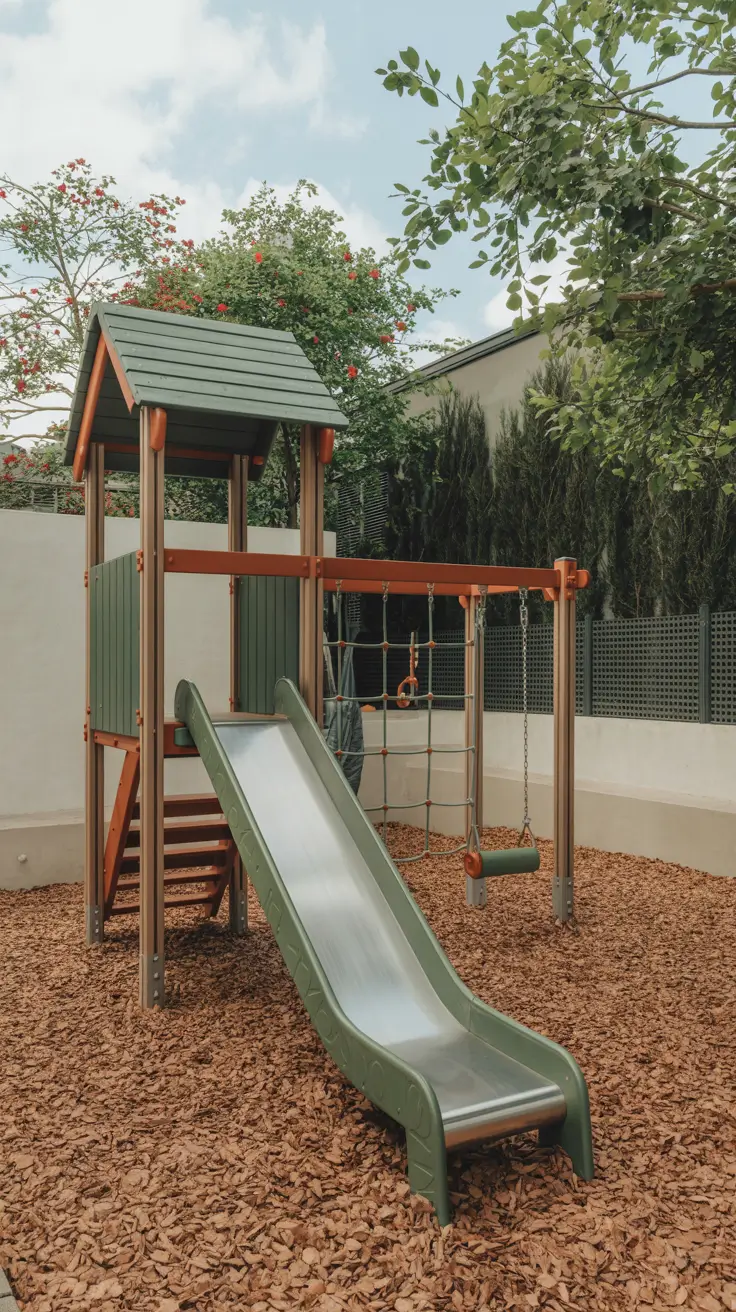
From my experience, toddlers benefit most from uncluttered environments. Child development specialists often stress the importance of simple, predictable layouts. I have seen toddlers gain confidence faster in spaces that feel calm and well-organized.
What I would add is shaded seating for caregivers within the play area. This improves supervision and makes the space more comfortable for families.
Budget-Friendly Playground Design Ideas
When I work on budget-friendly playground design ideas, I always start with zoning and reuse. In 2026, a budget does not mean compromising on creativity or safety. A well-organized backyard playground can feel complete even in a small space by combining simple layouts, multifunctional elements, and cheap diy solutions that fit naturally into a garden setting.
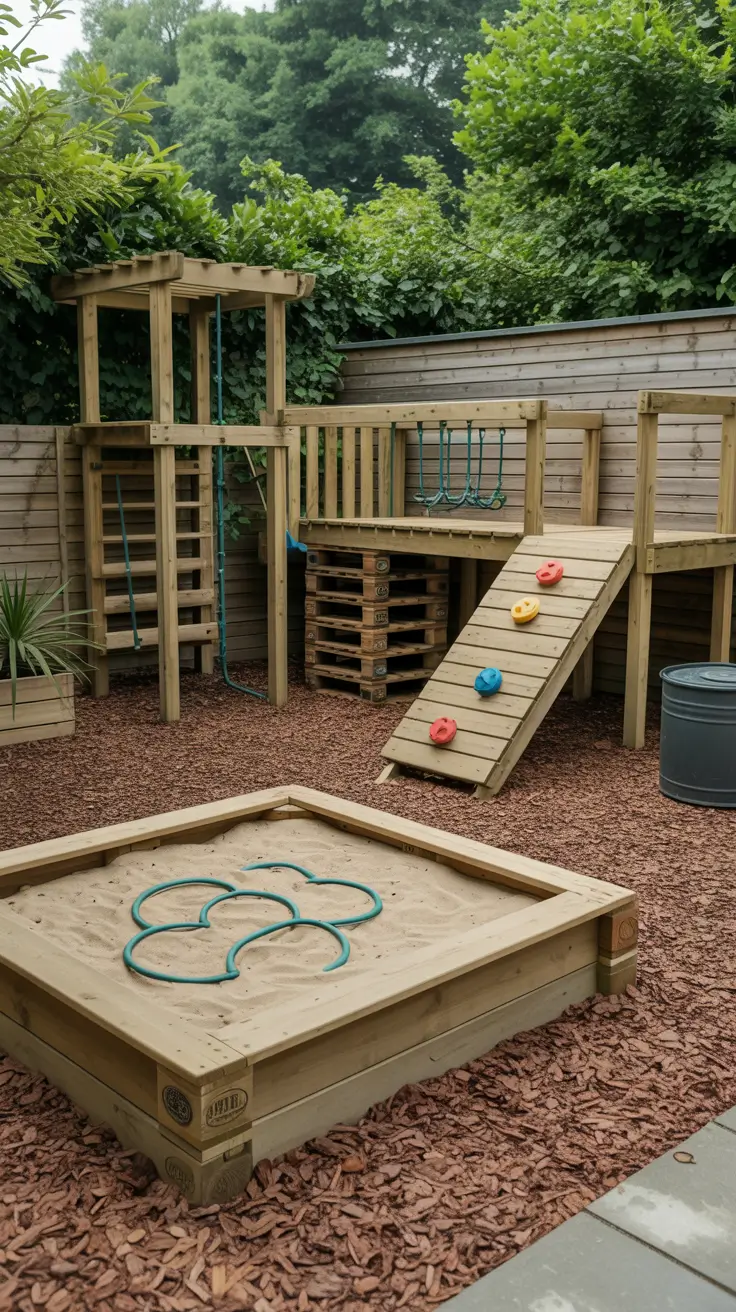
I recommend focusing on core elements like sand boxes, pallets for seating or climbing, and rubber mulch for safety. Using playground design natural wood instead of plastic helps keep costs down while maintaining a modern look. Modular items such as movable balance beams or stackable crates allow families to adapt the playground as children grow without rebuilding everything.
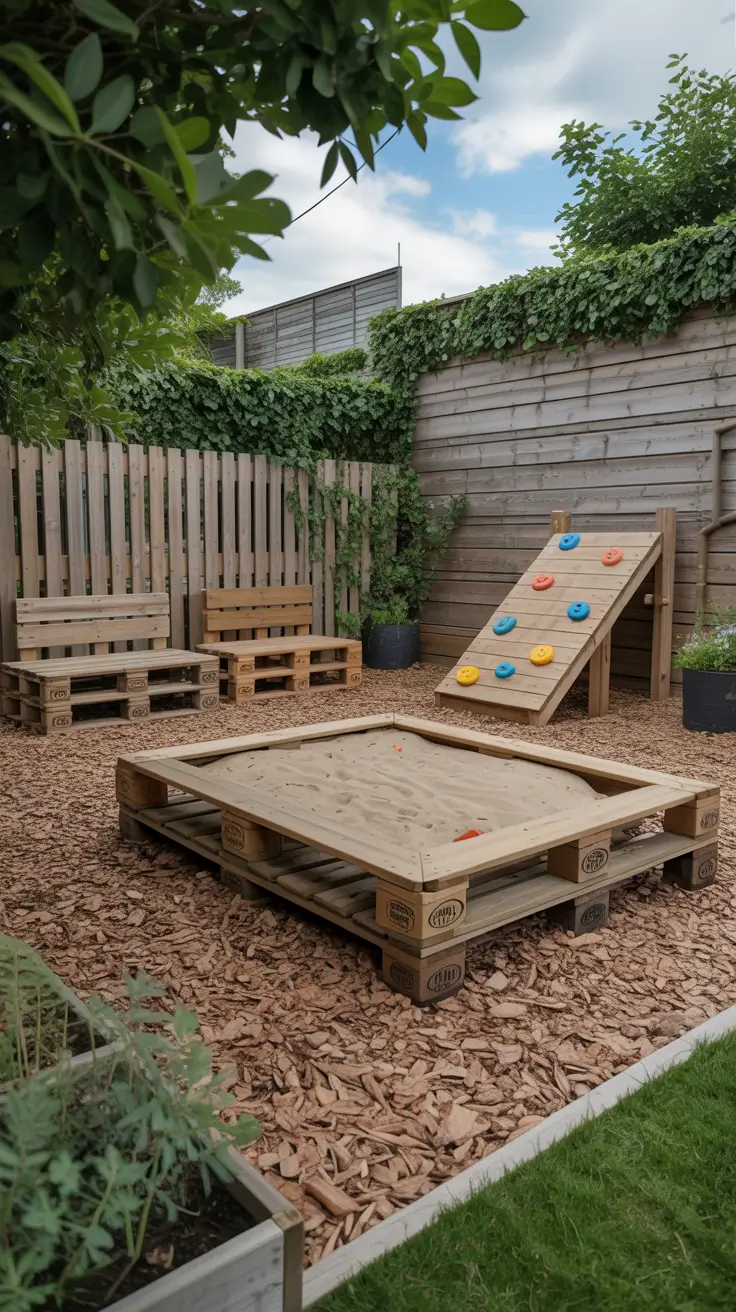
In my experience, budget-friendly designs are often the most successful long term. Many US-based landscape designers emphasize that starting small and expanding over time leads to better use of space and money. I have seen families enjoy these playgrounds more because they feel personal and flexible rather than overdesigned.
What is often missing in budget playgrounds is storage. I would add simple weather-resistant boxes or benches with hidden storage to keep toys organized and extend the life of the play area.
Family-Friendly Playground Design Plans
Family-friendly playground design plans focus on shared use and visibility. When I design these spaces, I make sure children of different ages can play safely while adults remain nearby and comfortable. The playground should feel like a natural extension of the backyard rather than a separate zone.
Key elements include wide open play surfaces, rubber tiles or rubber mulch for safety, and seating integrated into the playground design. I often include a mix of active zones like climbing or water play and calm zones such as a sensory garden or play garden corner. This balance supports different play styles and keeps the space usable for longer periods.
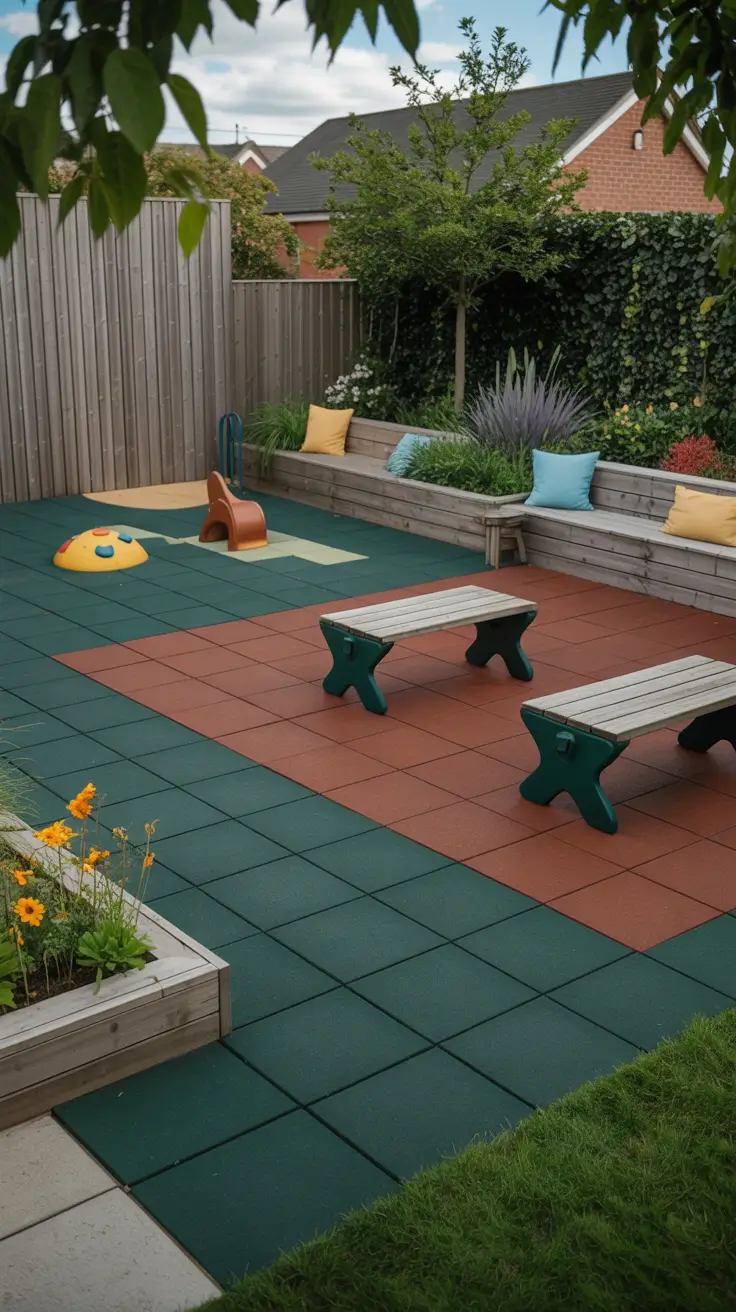
From my professional perspective, family-friendly design improves consistency of use. Interior and landscape experts in the US frequently highlight the importance of sightlines and shared circulation paths. I have noticed that when parents feel comfortable in the space, kids naturally play longer and more confidently.
To improve this section, I would add lighting planning. Soft, warm outdoor lighting extends usability into early evenings and improves overall safety without changing the playground atmosphere.
How to Design a Safe Outdoor Area for Kids in 2026
Designing a safe outdoor area for kids in 2026 starts with understanding modern safety standards and child behavior. I always approach safety as part of the overall playground design, not as an afterthought. A safe playground should still feel open, inviting, and fun.
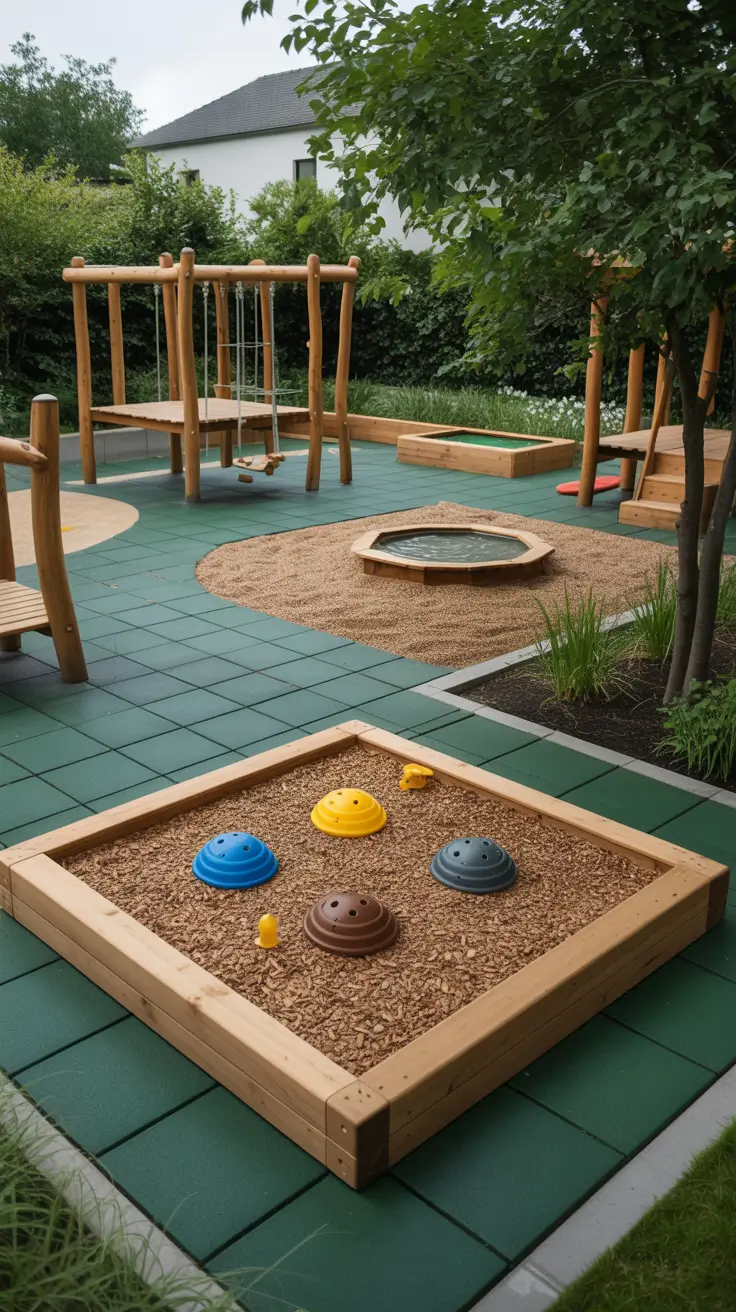
I focus on layered safety solutions such as playground design rubber tiles, rubber mulch, rounded natural wood edges, and clearly defined play zones. For water play and mud kitchen areas, proper drainage and slip-resistant surfaces are essential. Fencing and natural barriers like hedges help define boundaries without feeling restrictive.
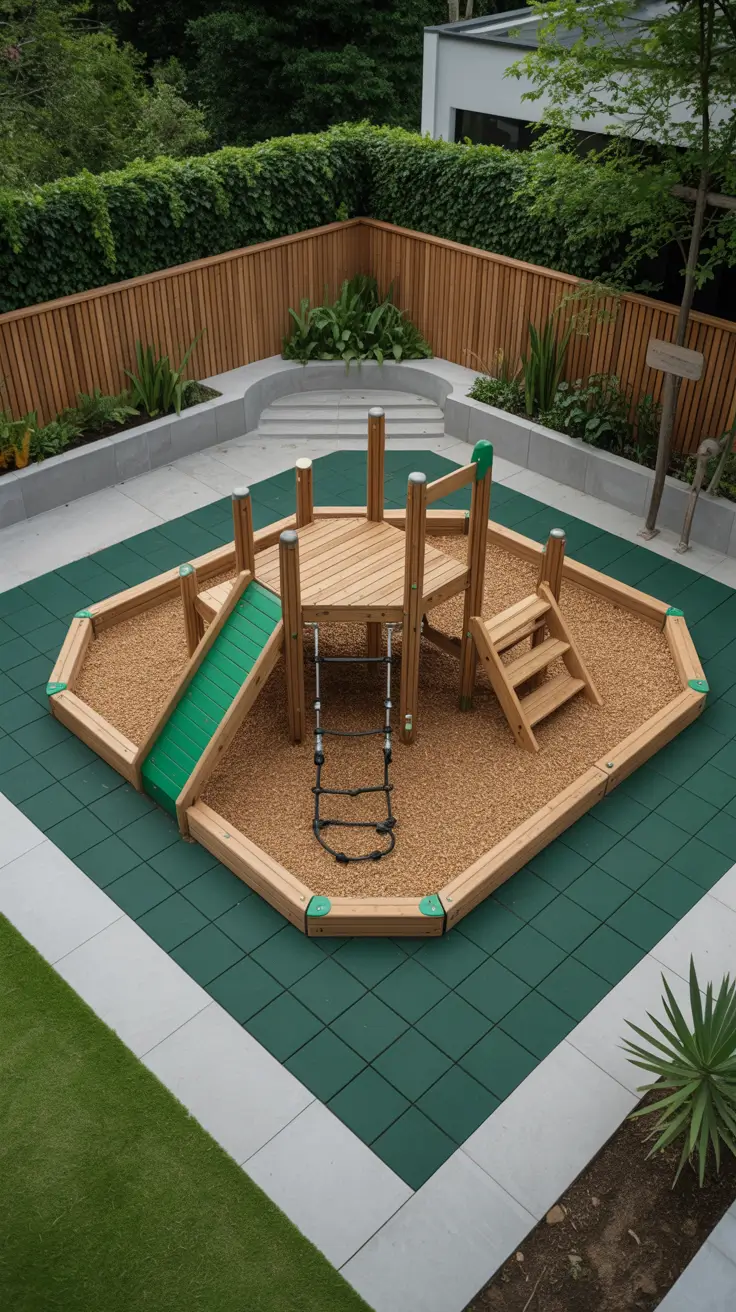
In my experience, the safest playgrounds are also the simplest. Child safety experts often advise reducing visual clutter and unpredictable obstacles. I have applied this approach many times and consistently see fewer accidents and more confident movement from children.
What I would add here is a routine safety review checklist. Seasonal inspections, surface checks, and equipment adjustments ensure the playground remains safe as kids grow and weather conditions change.