Can a thoughtfully designed outdoor yoga space 2026 truly transform your daily routine and mental clarity? How can outdoor yoga space backyards or even a compact outdoor yoga space balcony become a peaceful retreat at home? I will walk through practical outdoor yoga space design ideas, from patios and gardens to rooftop and porch solutions, showing how to create a calming, functional, and aesthetic environment that supports consistent practice and relaxation.
Outdoor Yoga Space Backyards – Modern Layout Ideas for Relaxing Garden Practice
I approach outdoor yoga space backyards as a balance between openness and intentional zoning. A well-planned backyard retreat should feel private yet connected to nature, with a defined yoga area that is visually separated using greenery, gravel paths, or subtle level changes. I often use natural lawn sections, wooden decks, or stone platforms to create a grounded practice surface while keeping the overall layout simple and calming.
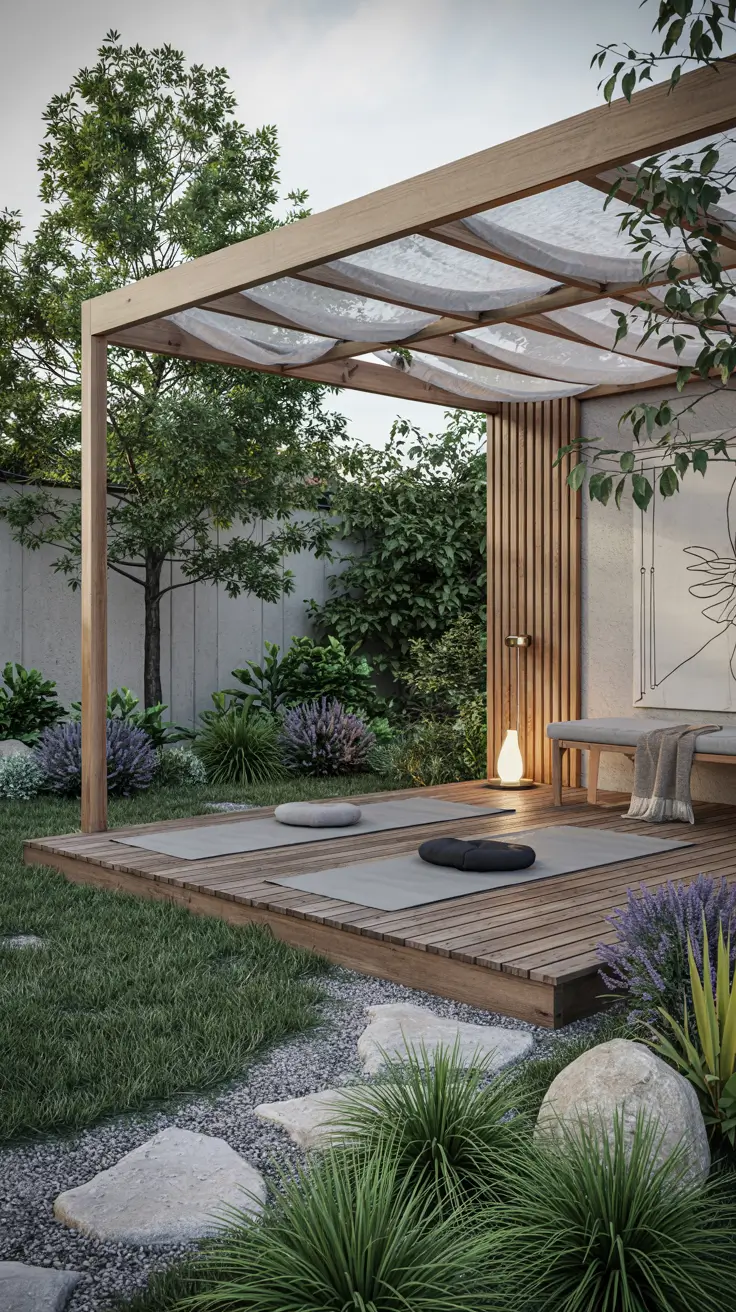
From a design perspective, I include weather-resistant yoga mats, low wooden platforms, and pergolas for partial shade. Outdoor cushions, a minimal bench, and planters with ornamental grasses or lavender enhance both comfort and sensory experience. I also recommend integrating soft lighting such as solar lanterns or low-voltage path lights to extend usability into early mornings and evenings.
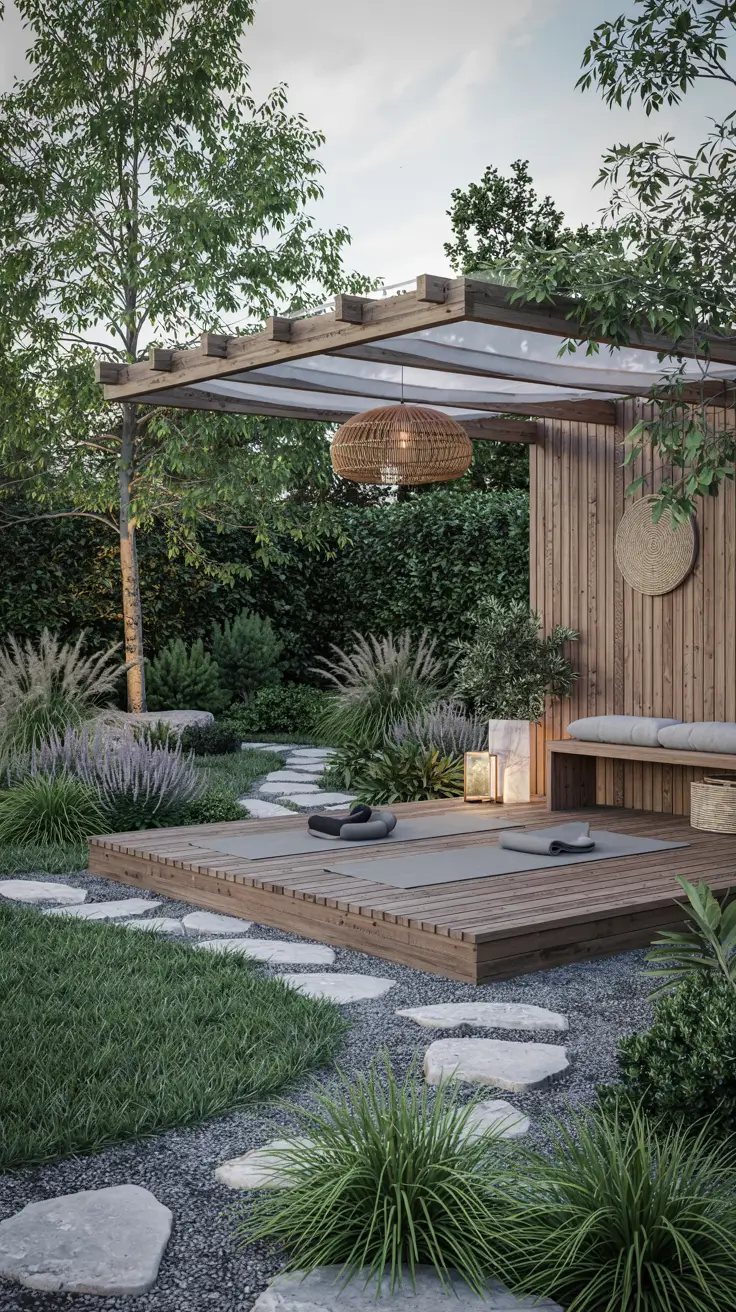
In my experience, publications like Architectural Digest emphasize the importance of blending structure with landscape rather than overpowering it. I follow this by keeping materials natural and tones neutral, allowing the greenery to be the focal point. This creates a truly immersive outdoor yoga space aesthetic.
What is often missing in such spaces is wind protection. I recommend adding slatted wood screens or hedges to reduce distractions and make the space more usable throughout different seasons.
Outdoor Yoga Space Design – Trends, Materials and Layouts for 2026
When I work on outdoor yoga space design for 2026, I focus on sustainability, texture, and modular layouts. The trend is shifting toward eco-conscious materials like bamboo decking, reclaimed wood, and natural stone. Layouts are becoming more flexible, allowing the same space to function as a yoga zone, meditation corner, or even a small gathering area.
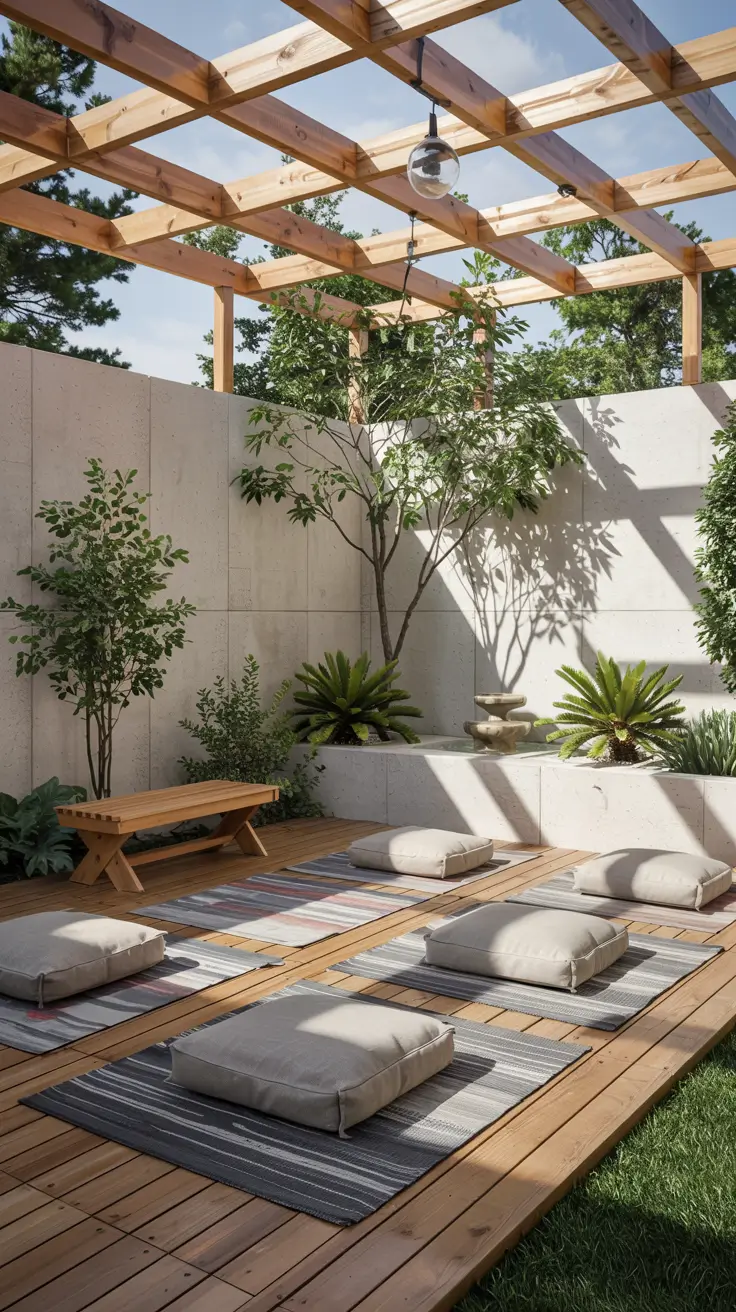
I incorporate modular furniture such as foldable benches, stackable floor cushions, and lightweight pergolas. Textiles play an important role, so I choose weatherproof rugs and organic cotton throws that add warmth without compromising durability. Neutral palettes with earthy tones dominate, reinforcing a calming and grounded environment.
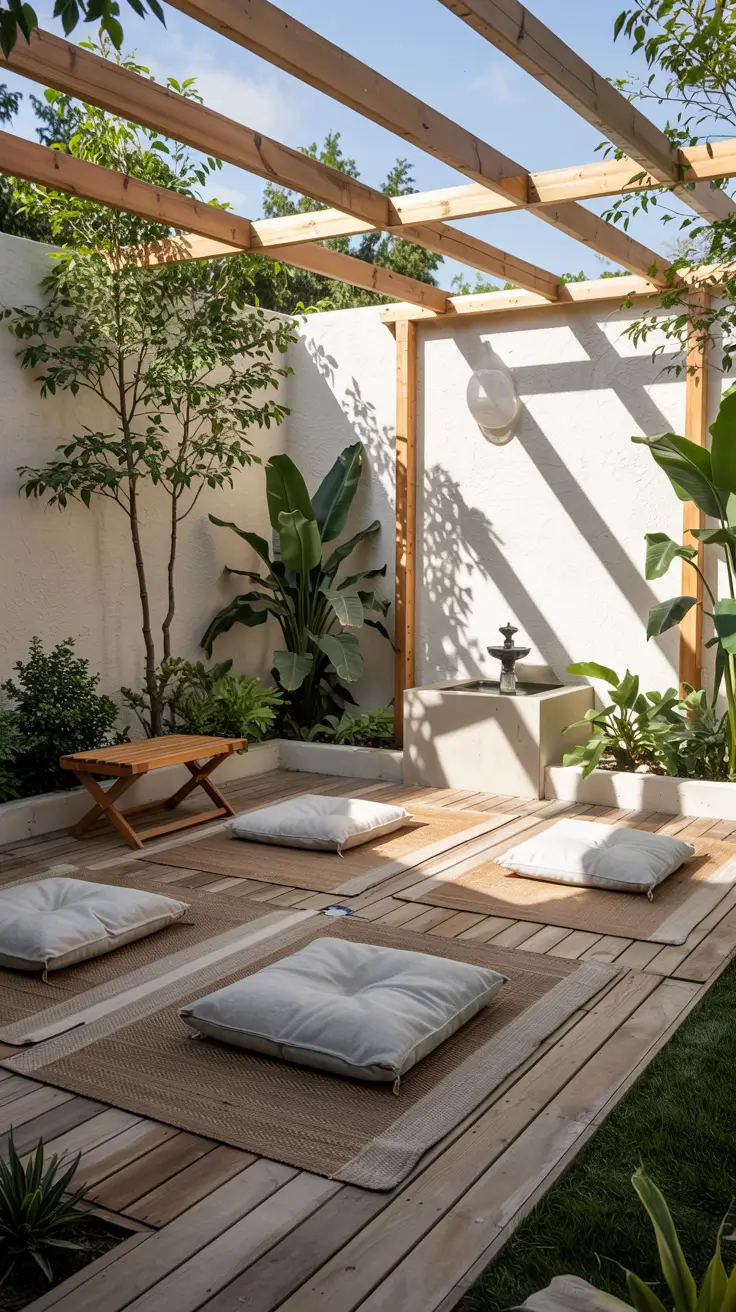
Personally, I find that combining natural materials with subtle architectural elements creates a timeless outdoor yoga space architecture. Design experts from Elle Decor often highlight layering textures as key to creating depth, and I fully agree with this approach when designing outdoor wellness spaces.
One element I always suggest adding is a water feature. Even a small fountain can significantly enhance the sensory experience and elevate the entire design.
Outdoor Yoga Space Ideas – Creative Concepts for Small and Large Spaces
Outdoor yoga space ideas should adapt to the scale of the space. In smaller areas, I focus on vertical design such as wall-mounted planters or climbing greenery, while in larger spaces I create dedicated zones for yoga, meditation, and relaxation. The goal is always to maintain flow and avoid visual clutter.
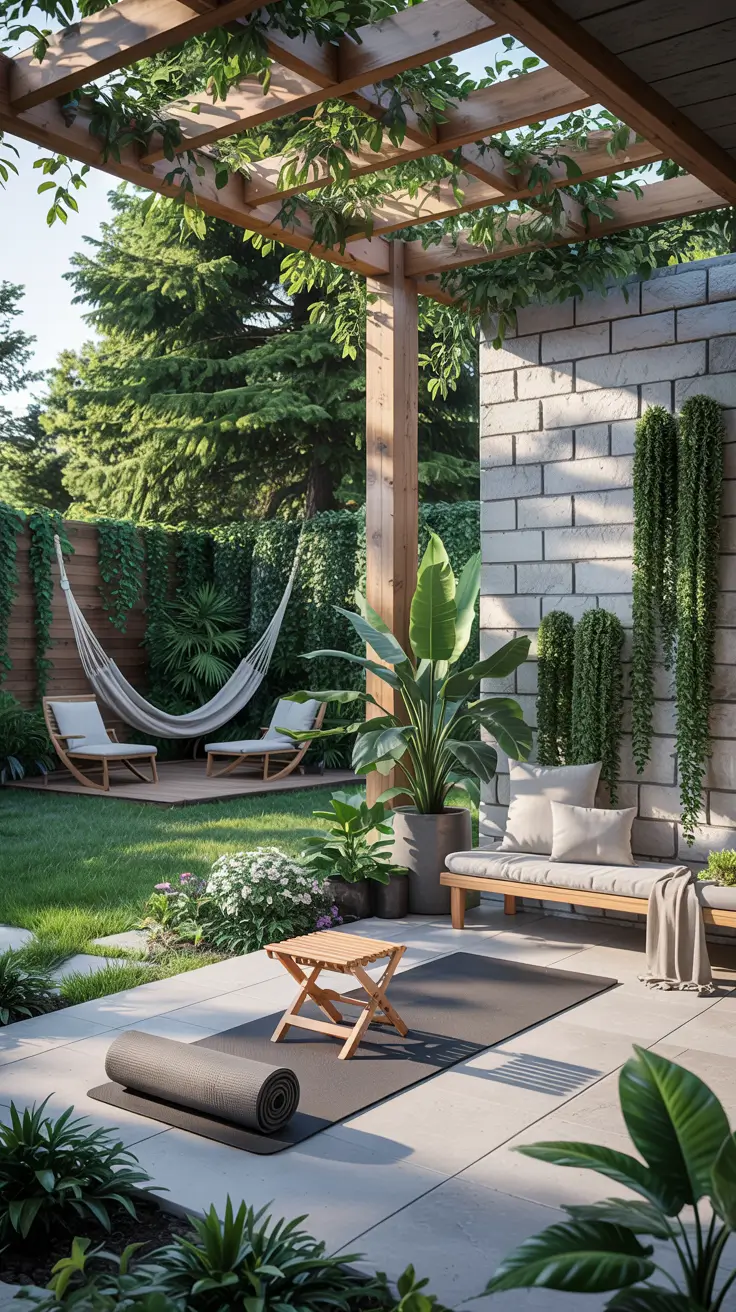
I use compact furniture like foldable mats, stackable stools, and corner benches for small patios or balconies. In larger backyards, I incorporate hammocks, lounge chairs, and even fire pits placed away from the main yoga area. This ensures versatility while keeping the yoga zone calm and distraction-free.
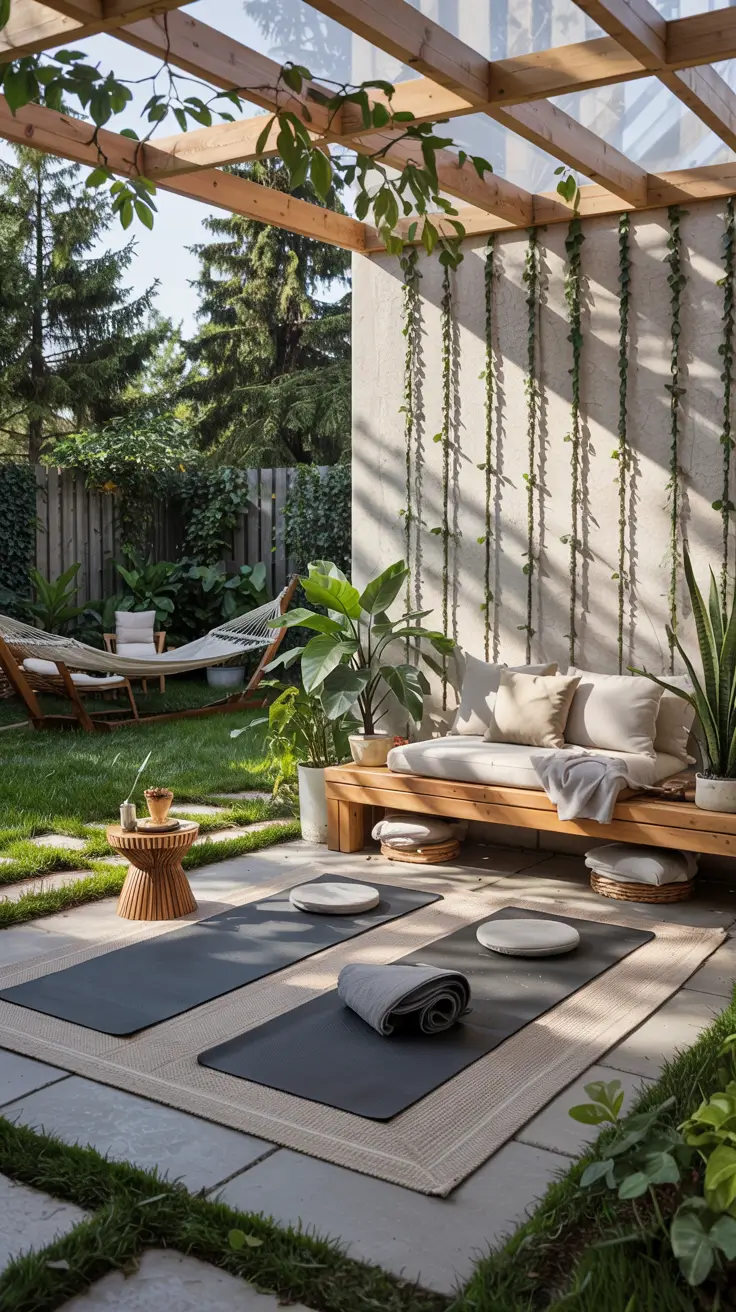
From my perspective, creativity comes from personalization. I encourage adding elements like a small altar, candles, or meaningful decor pieces. Designers often stress the importance of emotional connection in a space, and I see this as essential for maintaining a consistent yoga routine.
What is often overlooked is storage. I recommend discreet storage solutions such as built-in benches or waterproof boxes to keep the space organized and functional.
Outdoor Yoga Spaces – How to Transform Any Area Into a Zen Zone
I believe any area can become an outdoor yoga space with the right approach. Whether it is a rooftop, terrace, or garden corner, the key is defining the space and minimizing distractions. Even a semi-covered area can work perfectly if it provides enough light and airflow.
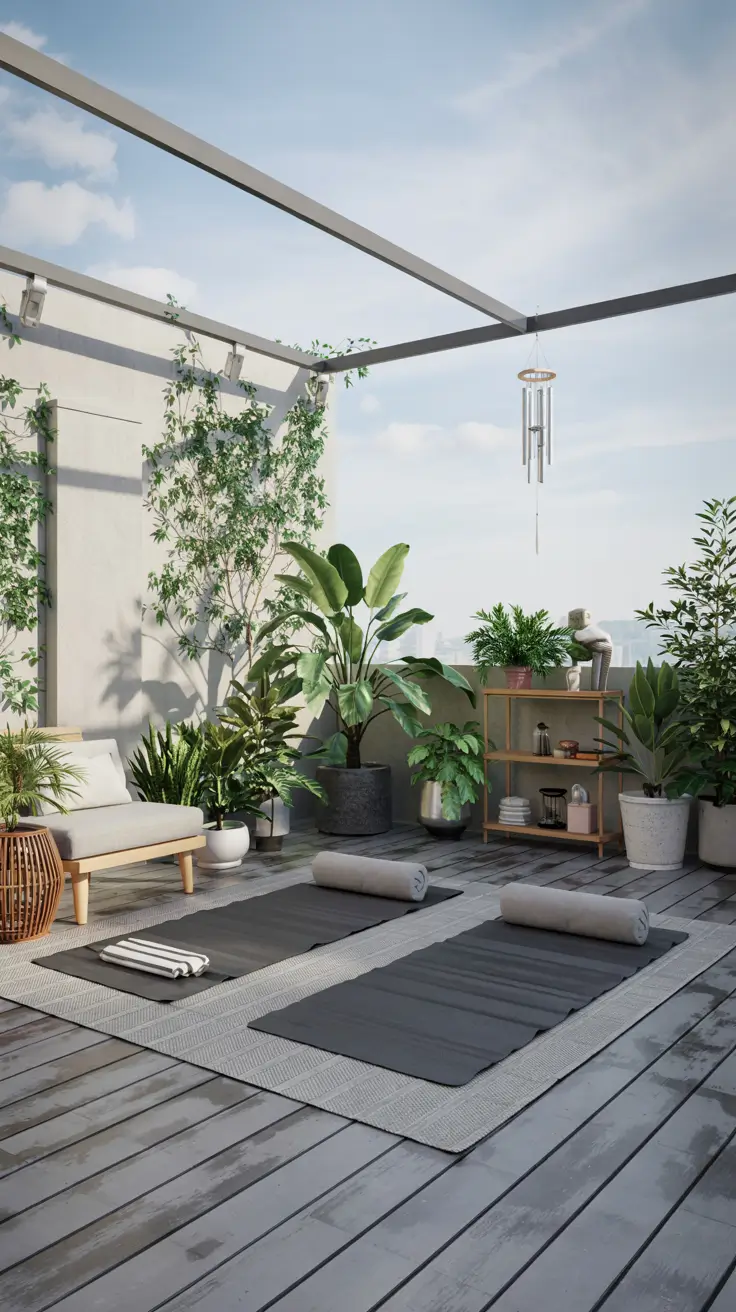
I typically start with a base layer such as a deck or outdoor rug, then add minimal furniture like a yoga mat, bolster, and a small side table. Plants are essential, so I include a mix of potted greenery and vertical elements to create a natural boundary.
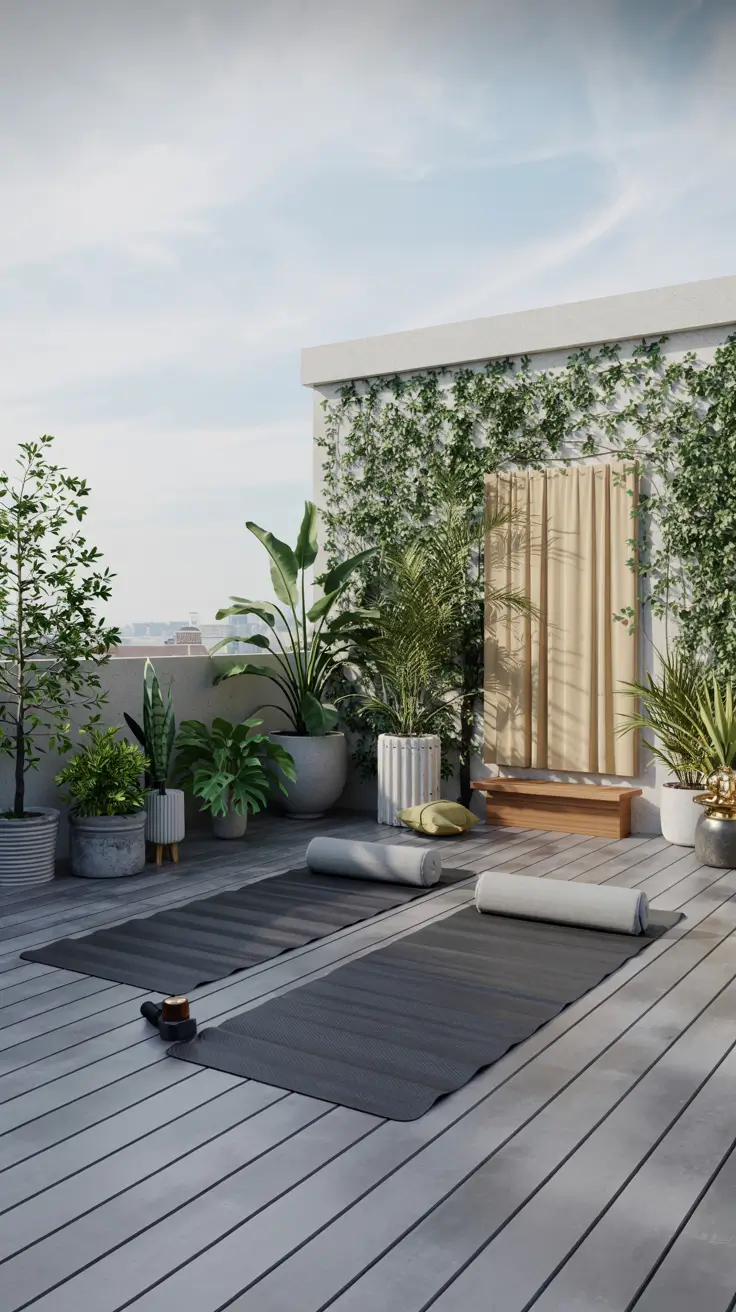
In my experience, simplicity is what defines a true zen zone. Many designers recommend reducing visual noise, and I follow this by limiting decor and focusing on quality over quantity. This approach makes the space feel intentional and calming.
One improvement I often suggest is adding subtle sound elements, such as wind chimes or a small speaker for ambient music, to enhance the overall atmosphere.
Outdoor Yoga Space Patio – Stylish and Functional Patio Yoga Setups
An outdoor yoga space patio offers a structured and practical solution for daily practice. I design patio yoga areas to feel like an extension of the home, using cohesive materials and colors that match the existing architecture. Covered patios are especially effective for year-round use.
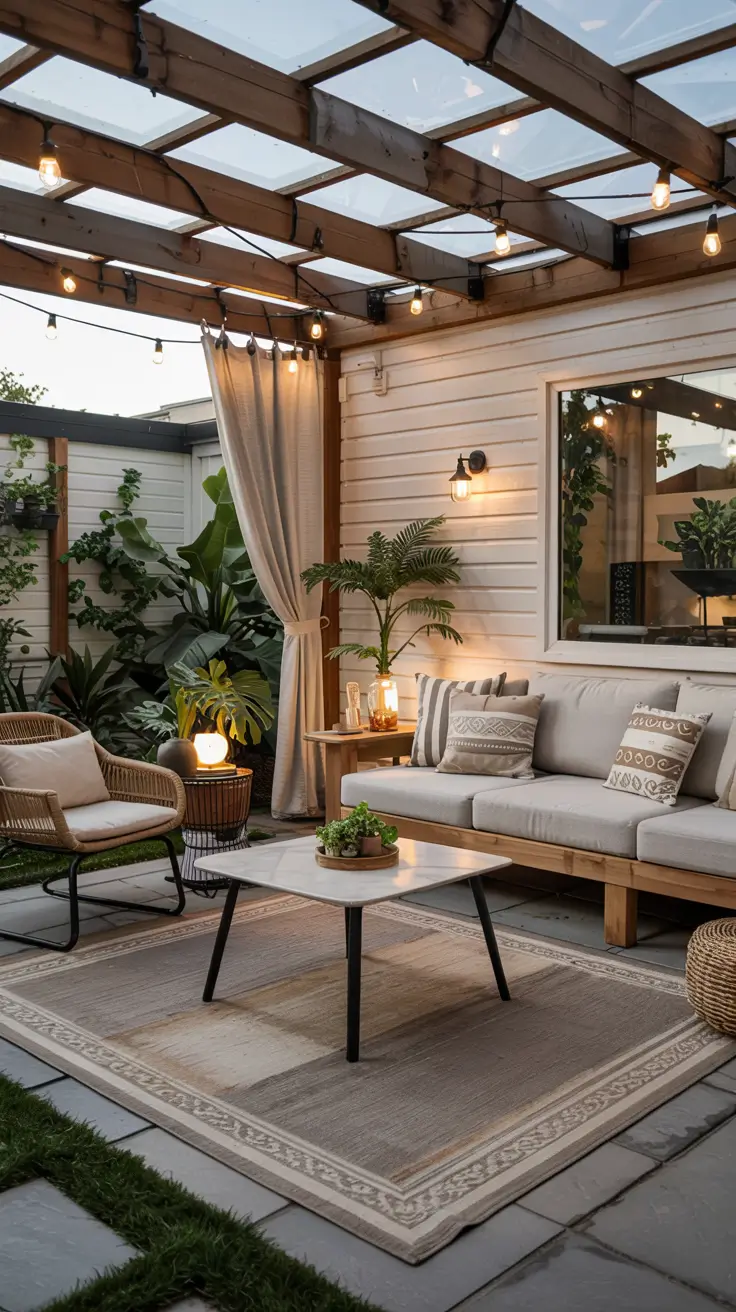
I include durable outdoor rugs, low-profile seating, and shade solutions like umbrellas or pergolas. Lighting is crucial, so I integrate wall sconces or string lights to create a warm and inviting atmosphere. I also recommend using slip-resistant surfaces for safety.
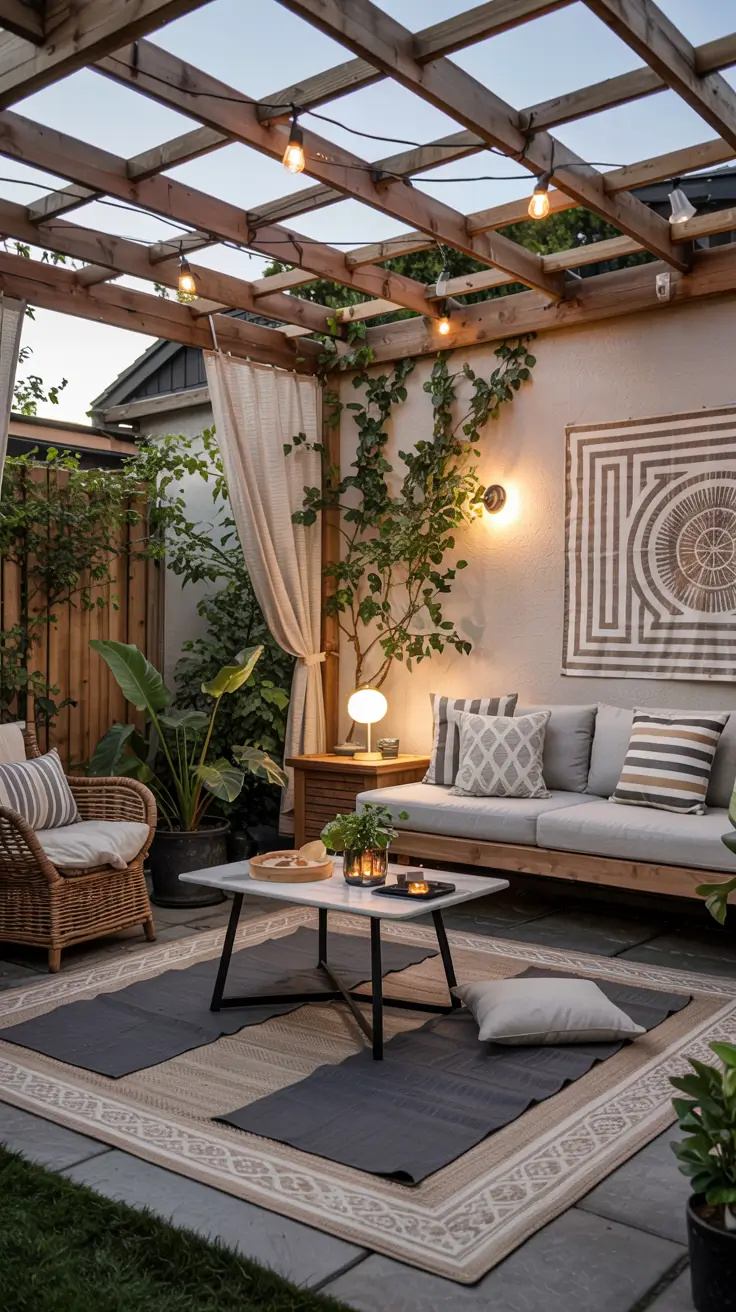
From my perspective, patios are the easiest spaces to maintain. Design experts often highlight functionality as a priority, and I ensure that every element serves a purpose without compromising aesthetics.
What can elevate this setup further is integrating smart lighting or heating elements, allowing the space to be used comfortably in different weather conditions.
Outdoor Yoga Space Architecture – Smart Structural Elements for Comfort and Privacy
Outdoor yoga space architecture focuses on structure and protection. I design spaces with pergolas, gazebos, or semi-covered roofs to provide shade and shelter while maintaining an open feel. These elements also help define the yoga area within a larger landscape.
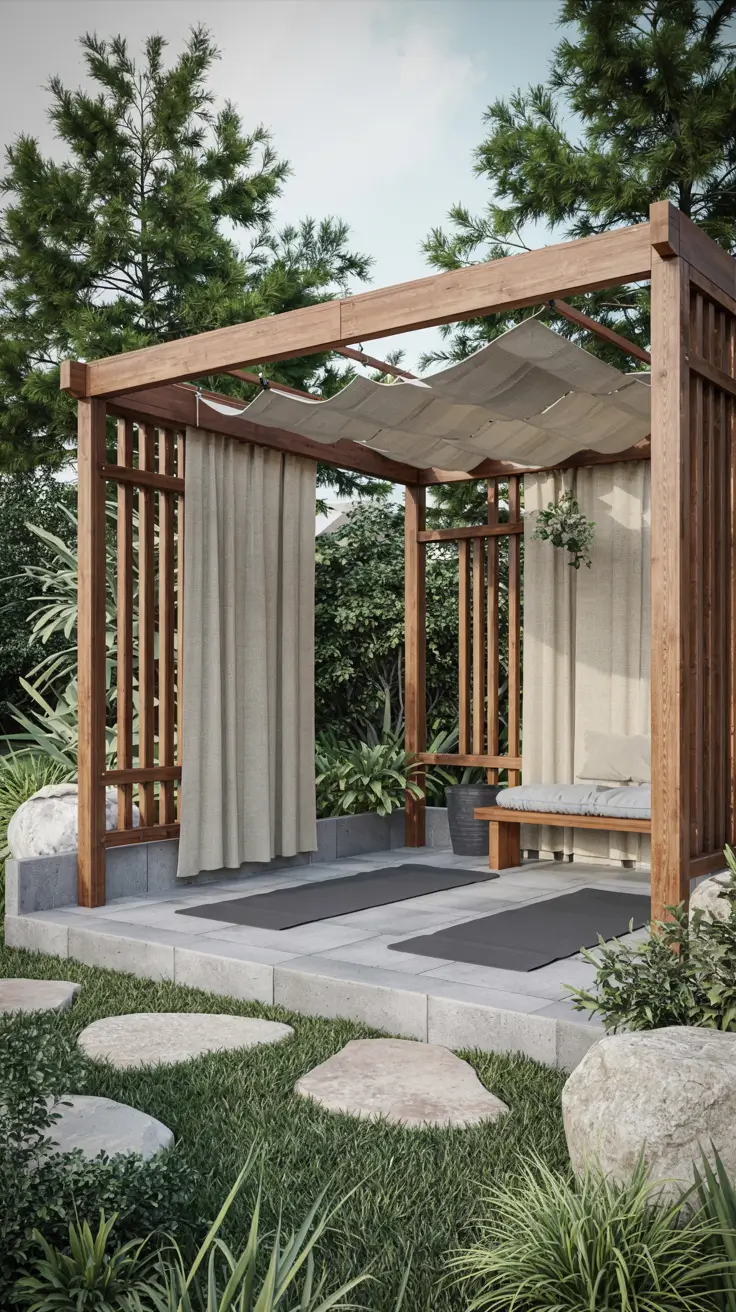
I choose materials like wood, metal, or composite structures depending on the environment. Privacy screens, vertical slats, or curtains are essential for creating a secluded atmosphere. Flooring should be stable and comfortable, such as wooden decking or stone tiles.
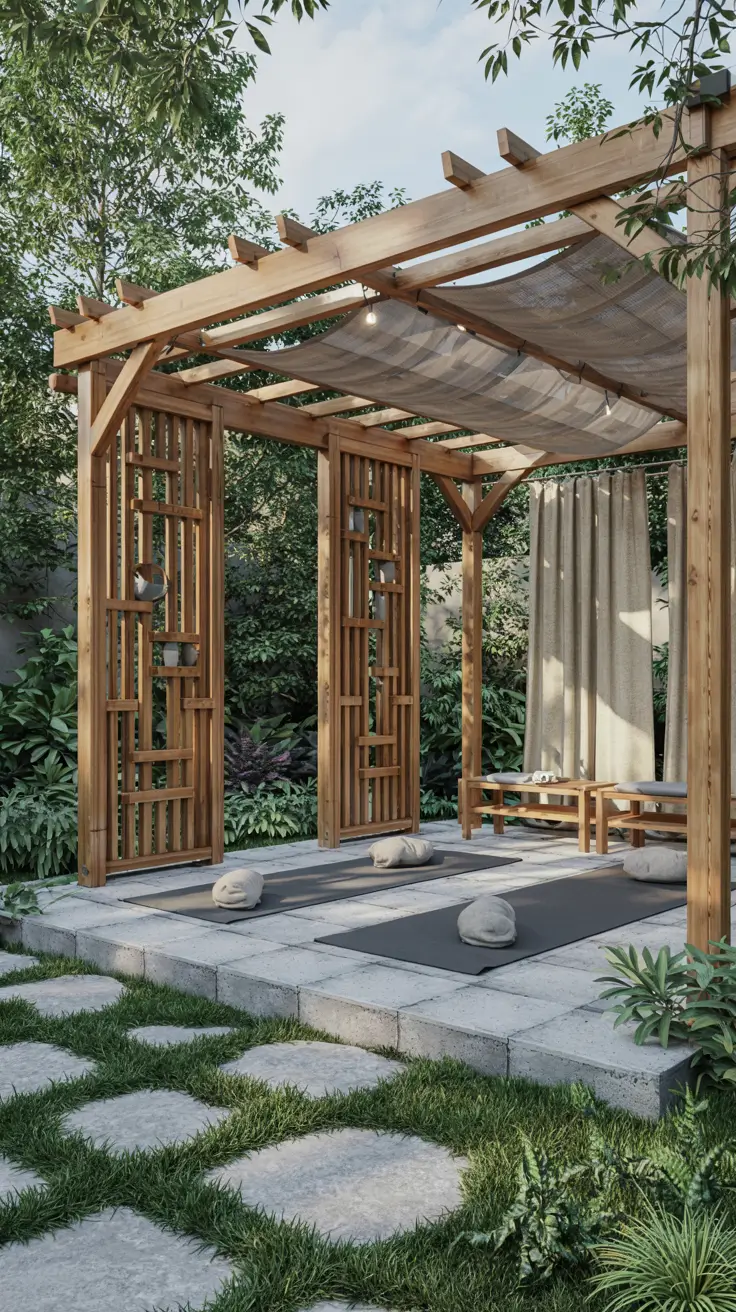
In my opinion, architectural elements are what transform a simple space into a dedicated retreat. Many professionals emphasize the importance of spatial definition, and I see this as crucial for creating a focused and distraction-free environment.
I also recommend incorporating adjustable elements like retractable shades to adapt the space to different times of day and weather conditions.
Outdoor Yoga Space Aesthetic – Minimalist, Boho and Natural Style Inspiration
The outdoor yoga space aesthetic defines the emotional impact of the space. I typically choose between minimalist, boho, or natural styles depending on the overall home design. Minimalist spaces focus on clean lines and neutral tones, while boho designs incorporate textures and layered decor.
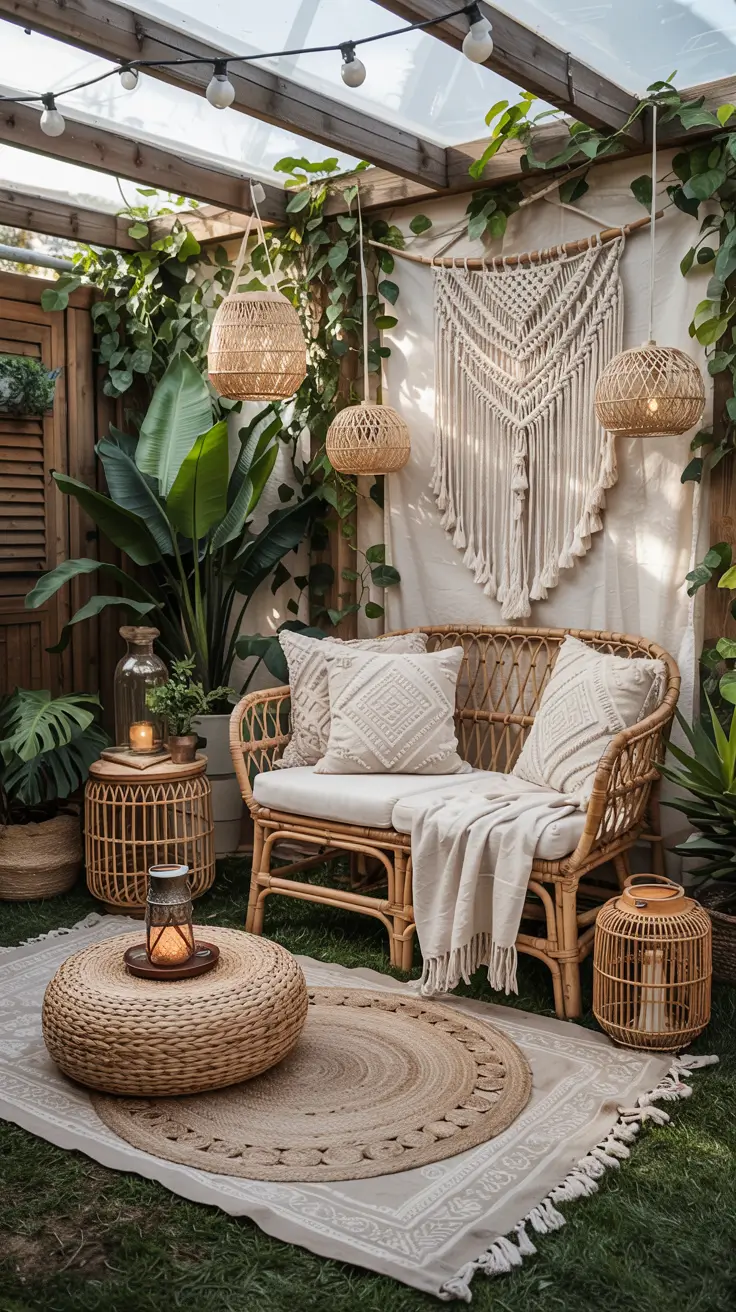
I use materials like rattan, wood, linen, and cotton to create a cohesive look. Accessories such as woven rugs, macrame, lanterns, and plants add warmth and personality. The key is to keep the design balanced and not overly decorative.
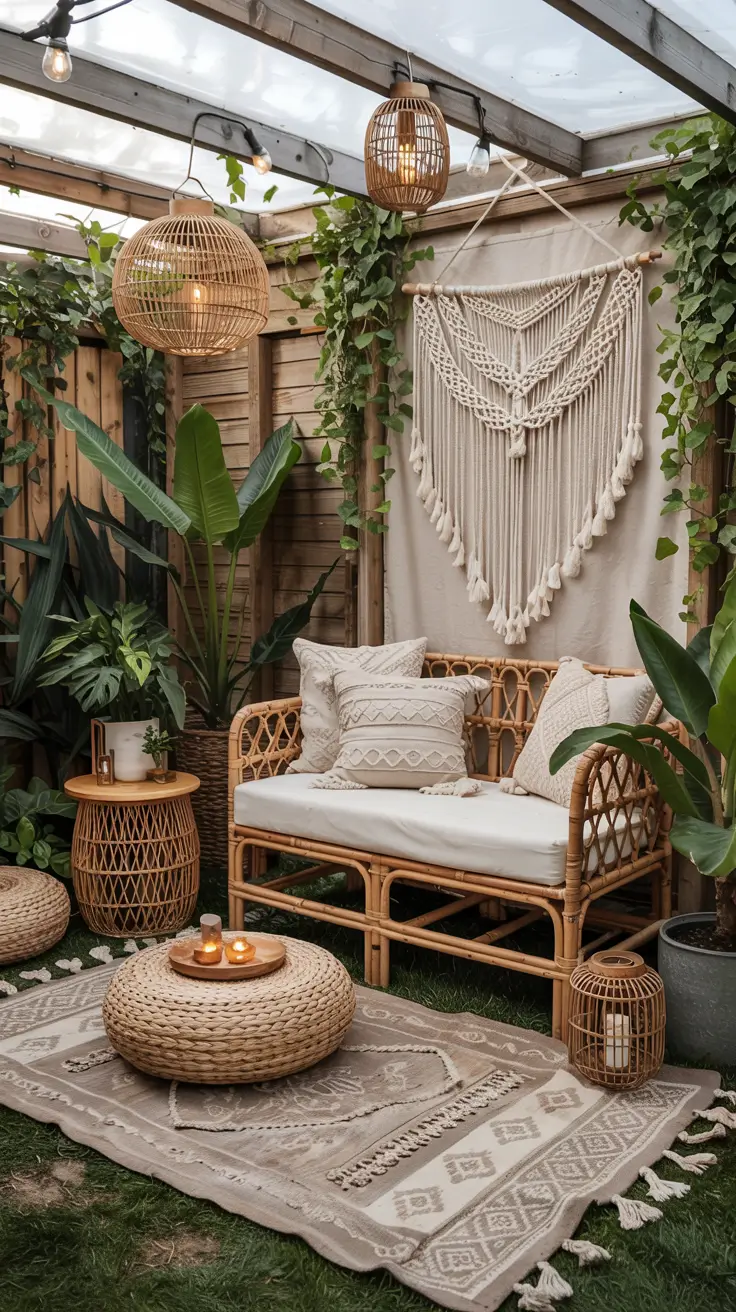
Personally, I find that natural styles work best for outdoor yoga spaces because they enhance the connection with nature. Designers often recommend using organic materials, and I consistently see how this improves both aesthetics and functionality.
What is sometimes missing is scent. I suggest adding elements like essential oil diffusers or fragrant plants to complete the sensory experience.
Outdoor Yoga Space at Home – Easy Ways to Build Your Personal Wellness Corner
I design an outdoor yoga space at home as a seamless extension of daily life, making it easy to step outside and begin a practice without preparation barriers. Whether it is a small terrace, backyard corner, or even a semi-covered porch, I focus on accessibility, comfort, and consistency. The layout should feel inviting and require minimal setup, which encourages regular use.
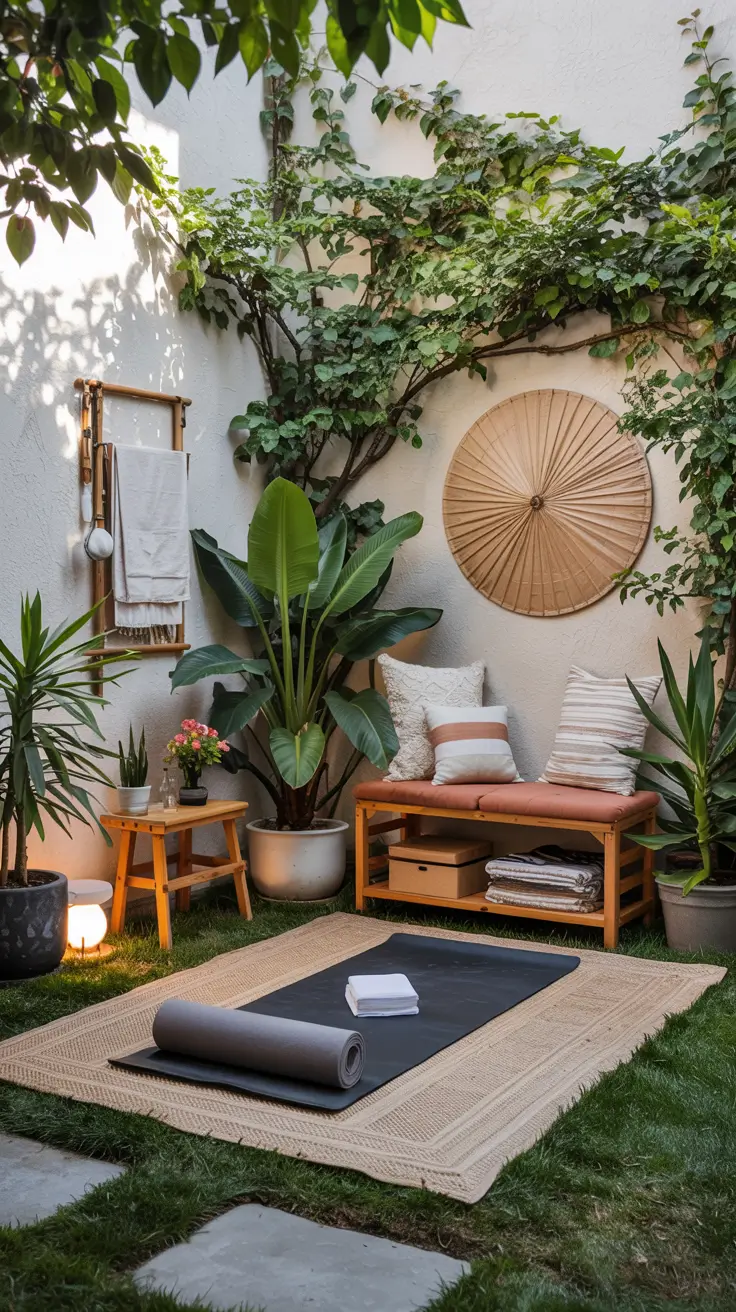
I typically include a permanent yoga mat area, a small storage bench for props, and a side table for essentials like water or a speaker. Adding a few potted plants or vertical greenery helps soften the space and create a calming environment. Shade solutions such as umbrellas or light pergolas make the space usable throughout the day.
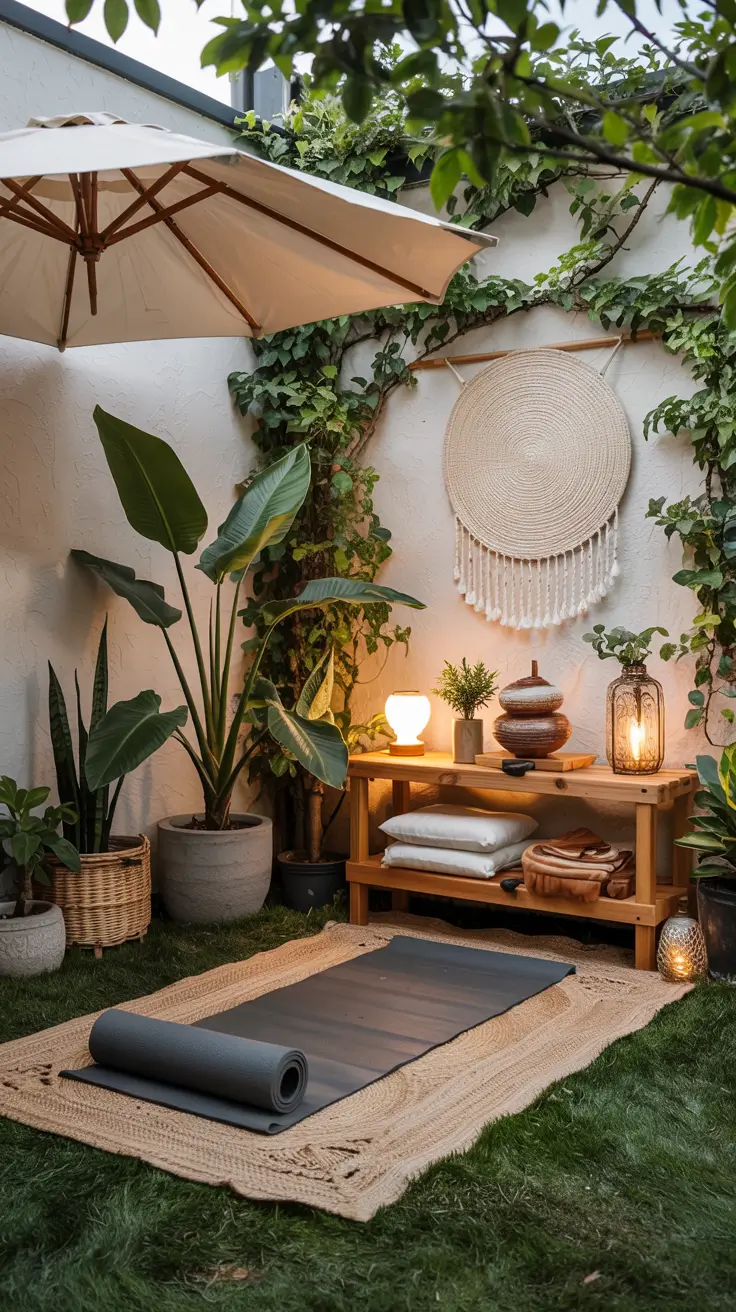
In my experience, the key to maintaining a consistent practice is convenience. Many wellness experts highlight the importance of reducing friction, and I apply this by keeping everything within reach and ready to use at any time.
What is often missing is personalization. I recommend adding meaningful decor like a small sculpture, candles, or a meditation cushion to create a deeper emotional connection with the space.
Outdoor Yoga Space Backyards DIY – Budget Friendly Projects for 2026
Outdoor yoga space backyards diy projects allow for creative and cost-effective solutions without compromising design quality. I focus on simple builds such as wooden pallet platforms, gravel yoga zones, or repurposed decking to define the practice area. These solutions are practical and easy to implement.
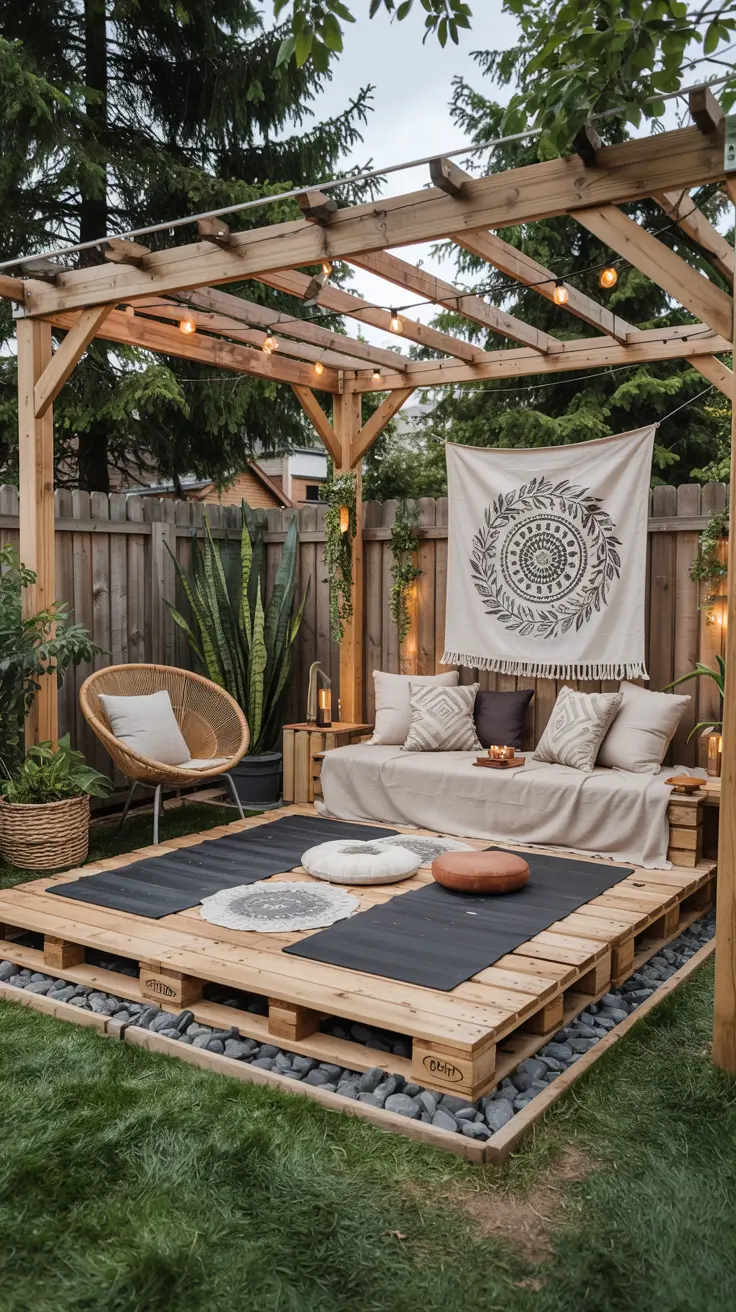
I often use affordable materials like reclaimed wood, outdoor rugs, and DIY planters. A simple pergola can be built using basic timber, while string lights and lanterns provide inexpensive yet effective lighting. These elements create a cozy and functional environment without requiring a large budget.
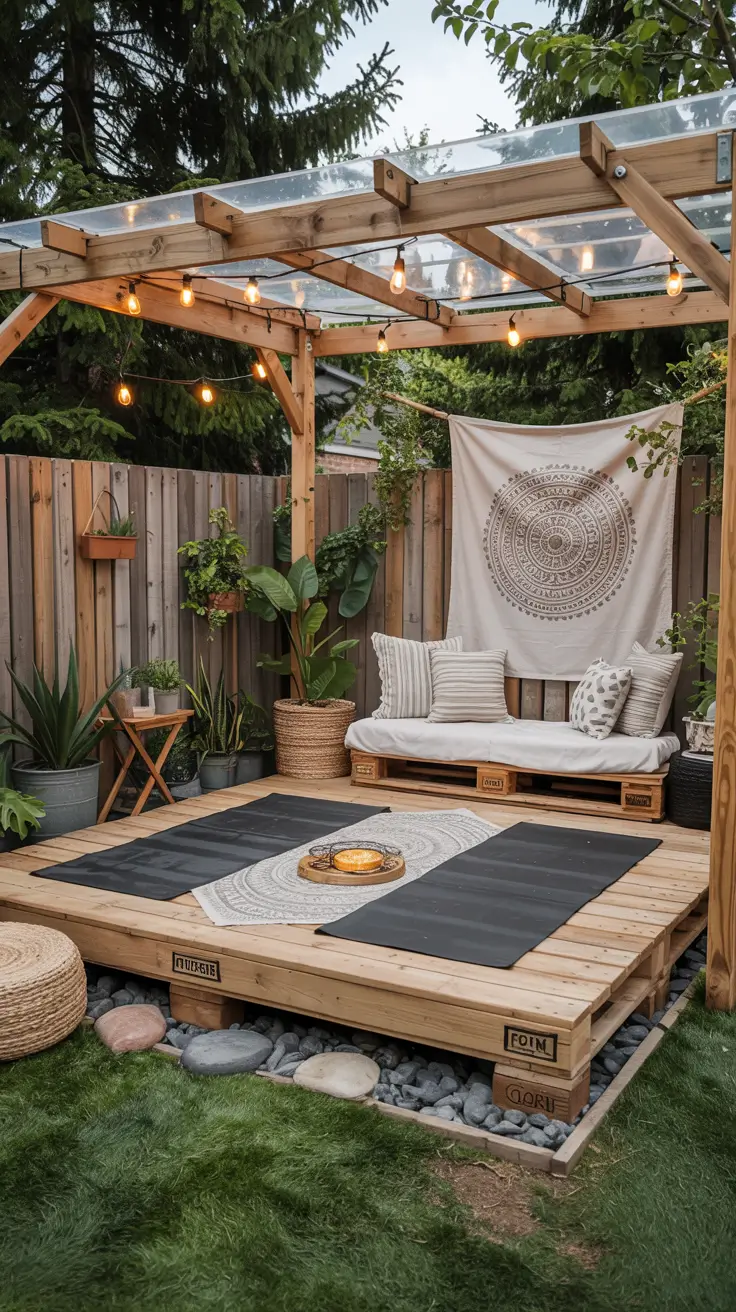
From my perspective, DIY spaces often feel more authentic and personal. Many design sources emphasize the value of handcrafted elements, and I see how these details enhance the overall outdoor yoga space aesthetic.
I suggest adding a weatherproof storage solution, as DIY setups often lack proper organization for mats and accessories.
Outdoor Yoga Space Design Ideas – Combining Nature, Light and Texture
When exploring outdoor yoga space design ideas, I prioritize the interaction between natural light, textures, and surrounding greenery. The goal is to create a layered environment that feels dynamic yet calming. I often position the yoga area to capture morning sunlight while avoiding harsh midday exposure.
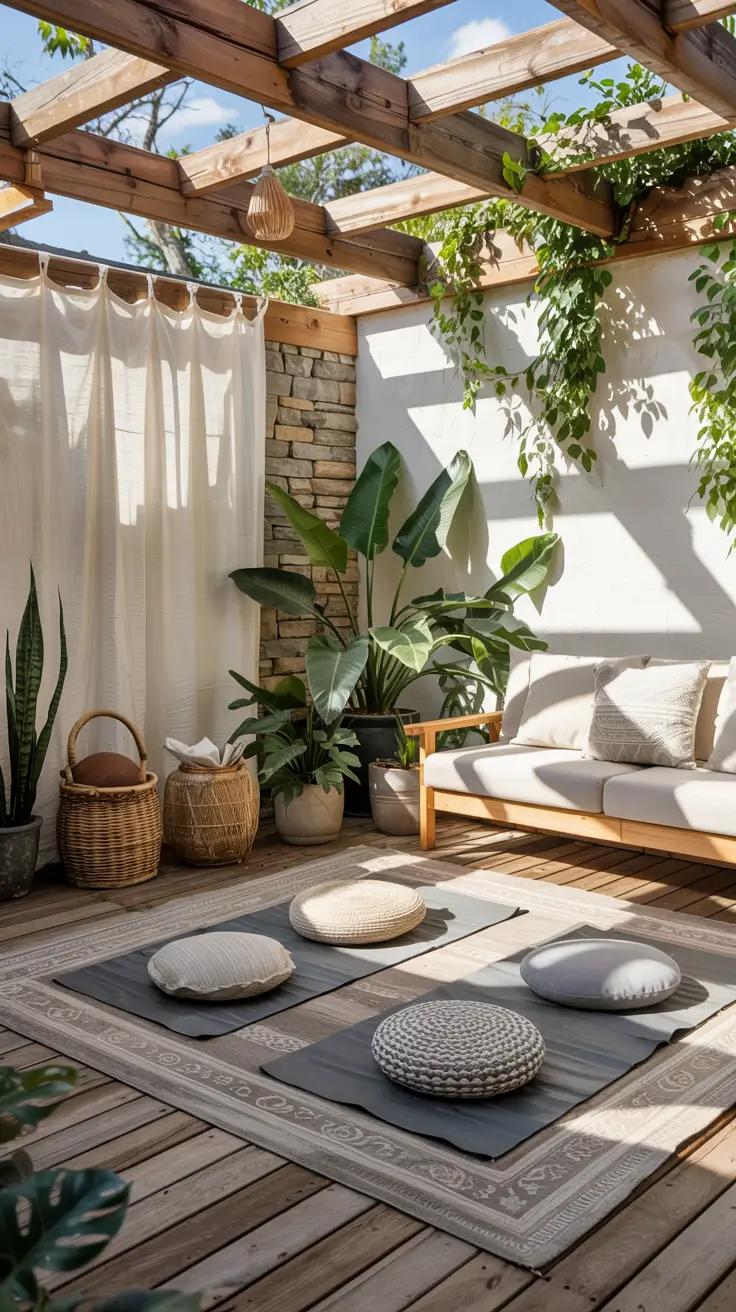
I combine materials such as wood decking, stone accents, and soft textiles like outdoor rugs and cushions. Plants are essential, so I include a mix of tall greenery, ground cover, and potted arrangements to create depth. Light fabrics and curtains can add movement and softness to the space.
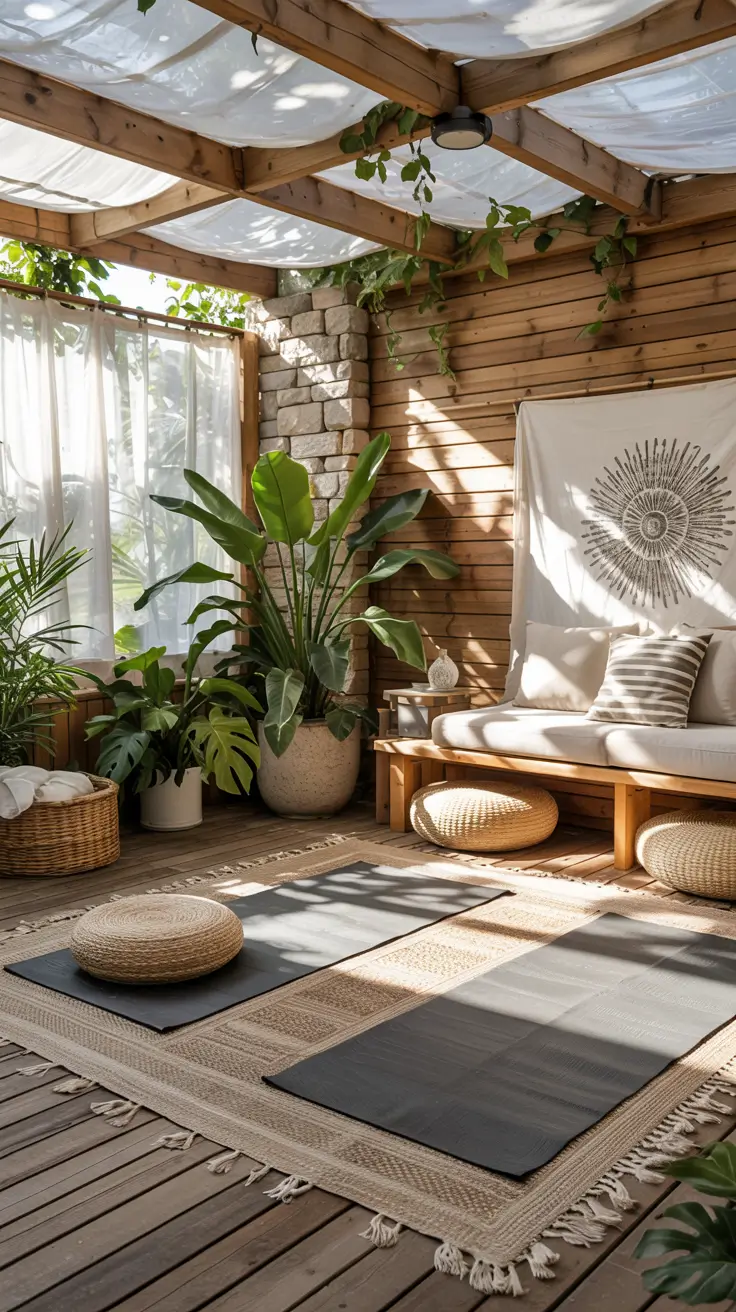
I find that balancing textures is what makes a space visually interesting without overwhelming it. Design professionals often highlight contrast as a key element, and I apply this through the combination of hard and soft materials.
What can enhance this section further is incorporating seasonal adaptability, such as removable covers or adjustable shade elements.
Outdoor Yoga Space Balcony – Compact Solutions for Urban Living
An outdoor yoga space balcony requires careful planning due to limited space, but it can still be highly effective. I focus on maximizing every square meter by keeping the layout minimal and functional. A clear, uncluttered floor area is essential for safe and comfortable practice.
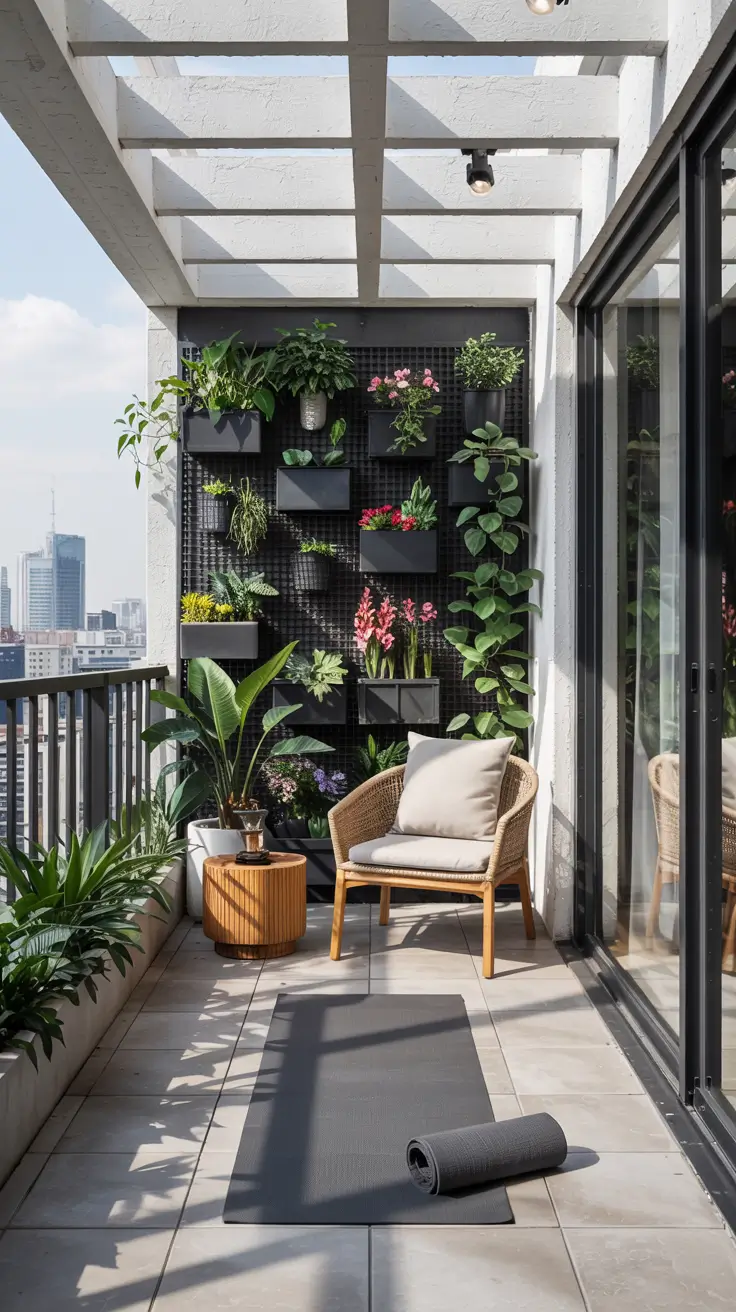
I use foldable yoga mats, stackable stools, and wall-mounted shelves to save space. Vertical gardens or railing planters add greenery without taking up floor space. Light curtains or screens can provide privacy while maintaining airflow and natural light.
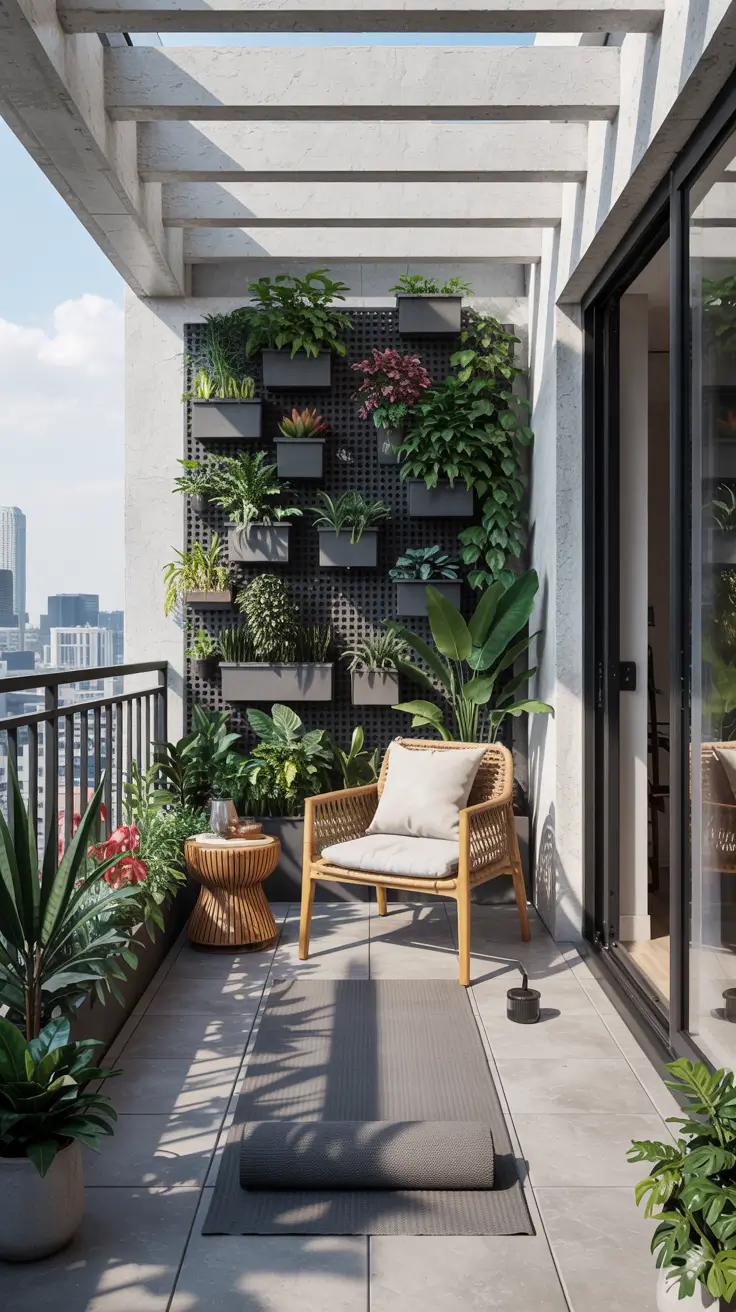
In my experience, balcony spaces benefit greatly from simplicity. Urban design experts often recommend decluttering small spaces, and I follow this by limiting furniture and focusing on essential elements only.
One improvement I suggest is adding soft flooring like interlocking deck tiles to improve comfort and define the yoga area.
Outdoor Yoga Space Porch – Cozy and Covered Yoga Corners
An outdoor yoga space porch offers a naturally sheltered environment that works well in various climates, including the UK. I design porch spaces to feel cozy and protected while still open enough to connect with the outdoors. Covered areas are especially useful for year-round practice.
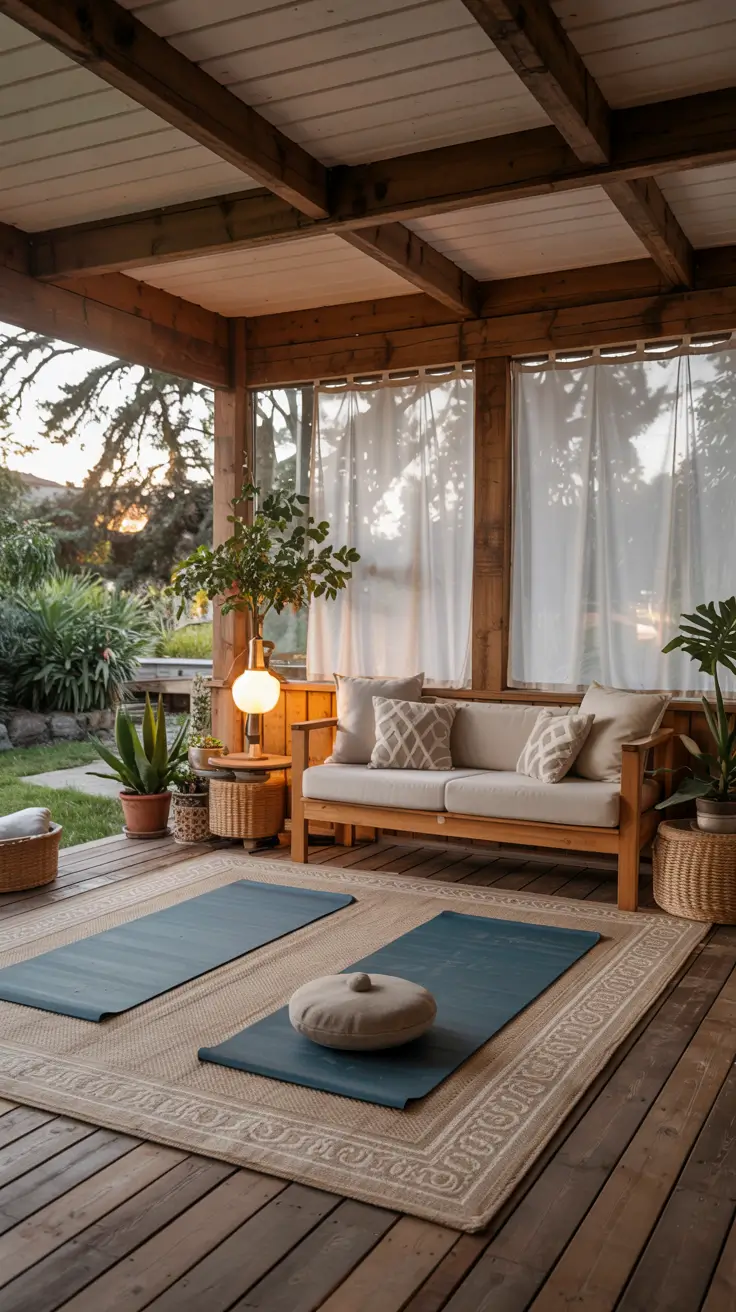
I include comfortable flooring such as outdoor rugs or wooden decking, along with soft seating like cushions or a small bench. Curtains or screens can be added for privacy, while warm lighting creates a relaxing atmosphere during early mornings or evenings.
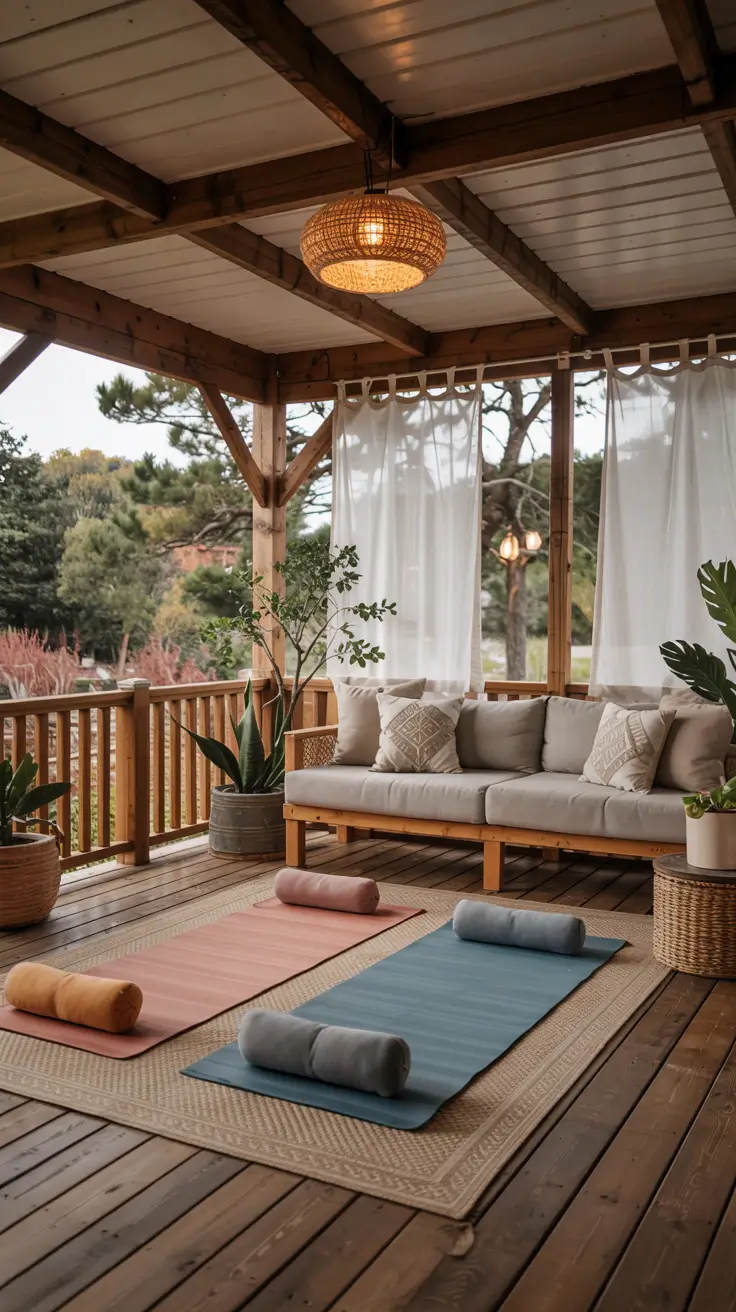
From my perspective, porch spaces strike the perfect balance between indoor and outdoor environments. Many designers highlight transitional spaces as highly versatile, and I see this as a major advantage for yoga setups.
I recommend adding subtle heating elements or blankets to make the space usable during colder seasons.
Outdoor Yoga Space Garden – Lush Green Retreats for Mindful Practice
An outdoor yoga space garden creates a deeply immersive experience by surrounding the practice area with nature. I design these spaces to feel like a private sanctuary, using dense greenery, natural pathways, and soft ground surfaces to enhance tranquility.
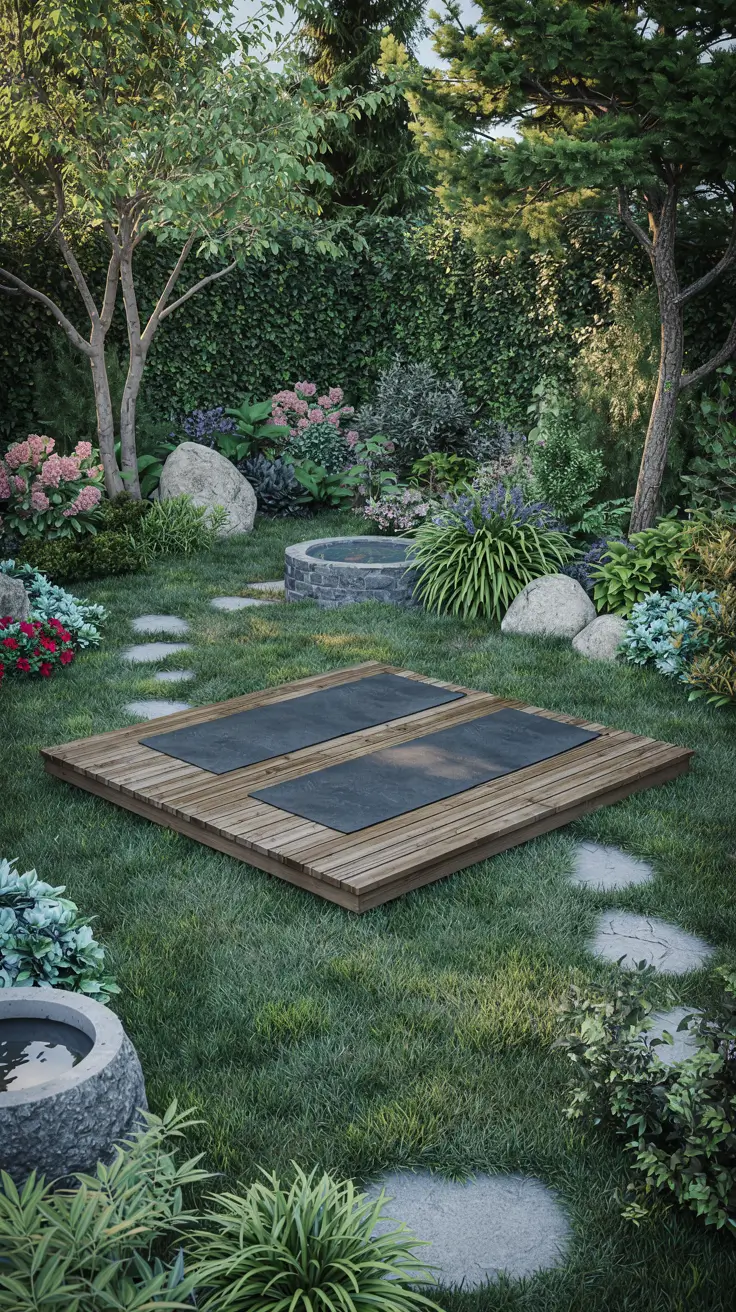
I incorporate elements such as grass or wooden platforms, along with a variety of plants including shrubs, flowers, and small trees. A water feature or stone path can add visual interest and improve the sensory experience. Seating areas can be placed nearby but kept separate from the main yoga zone.
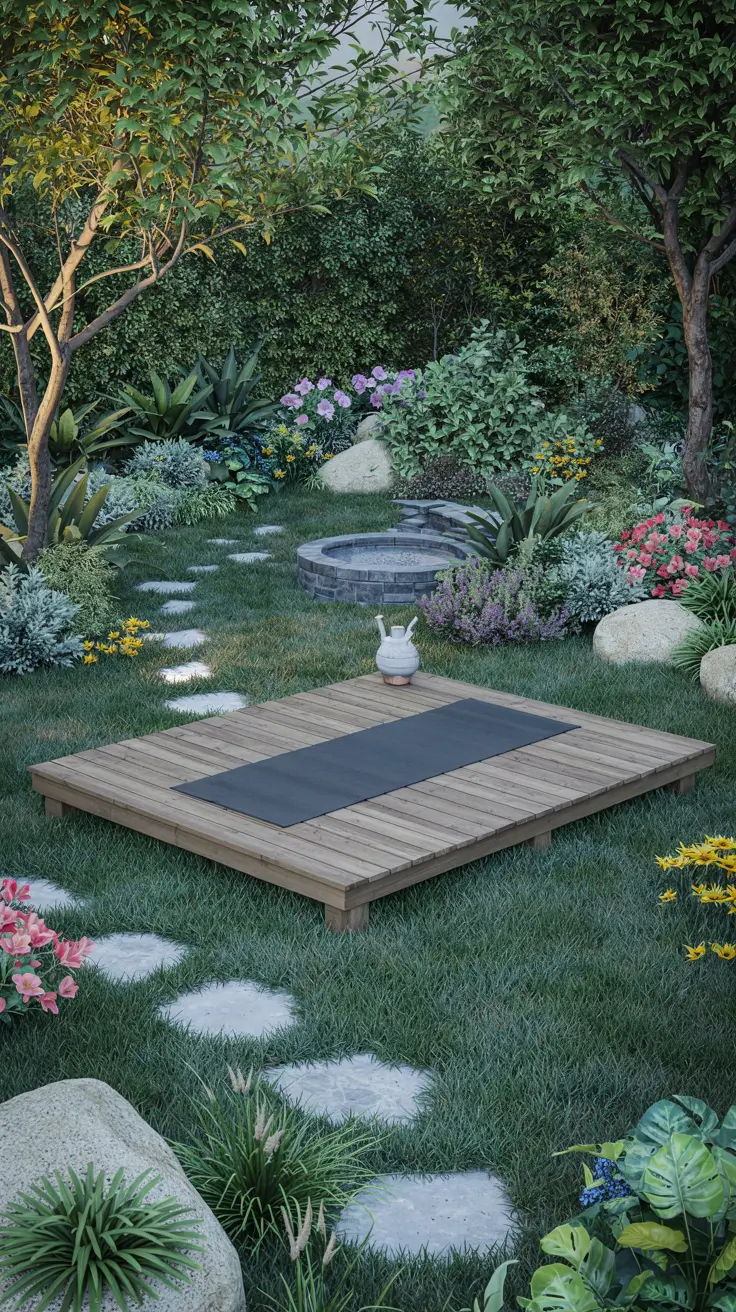
In my experience, garden spaces naturally support mindfulness and relaxation. Many landscape designers emphasize biophilic design, and I consistently see how this approach enhances both mental and physical well-being.
What is often missing is maintenance planning. I suggest choosing low-maintenance plants and materials to ensure the space remains enjoyable without excessive upkeep.
Outdoor Yoga Space Rooftop – Elevated Wellness with a View
A rooftop outdoor yoga space offers a unique opportunity to create a private retreat above the city. I design rooftop spaces to maximize views while maintaining safety and comfort. Wind protection and stable flooring are essential considerations.
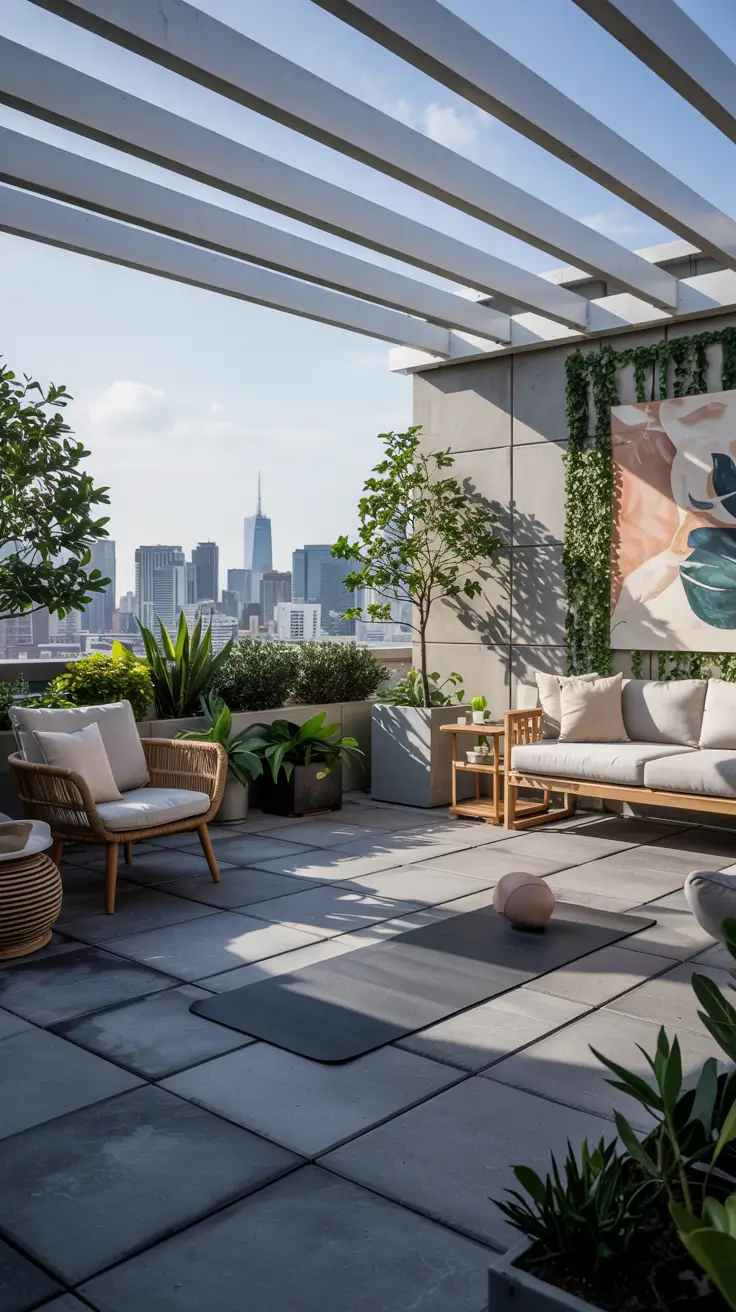
I use decking tiles, outdoor rugs, and minimal furniture such as a yoga mat, cushions, and a small table. Planters with taller greenery can act as natural barriers, while pergolas or umbrellas provide shade. Lighting should be subtle to maintain a calm evening atmosphere.
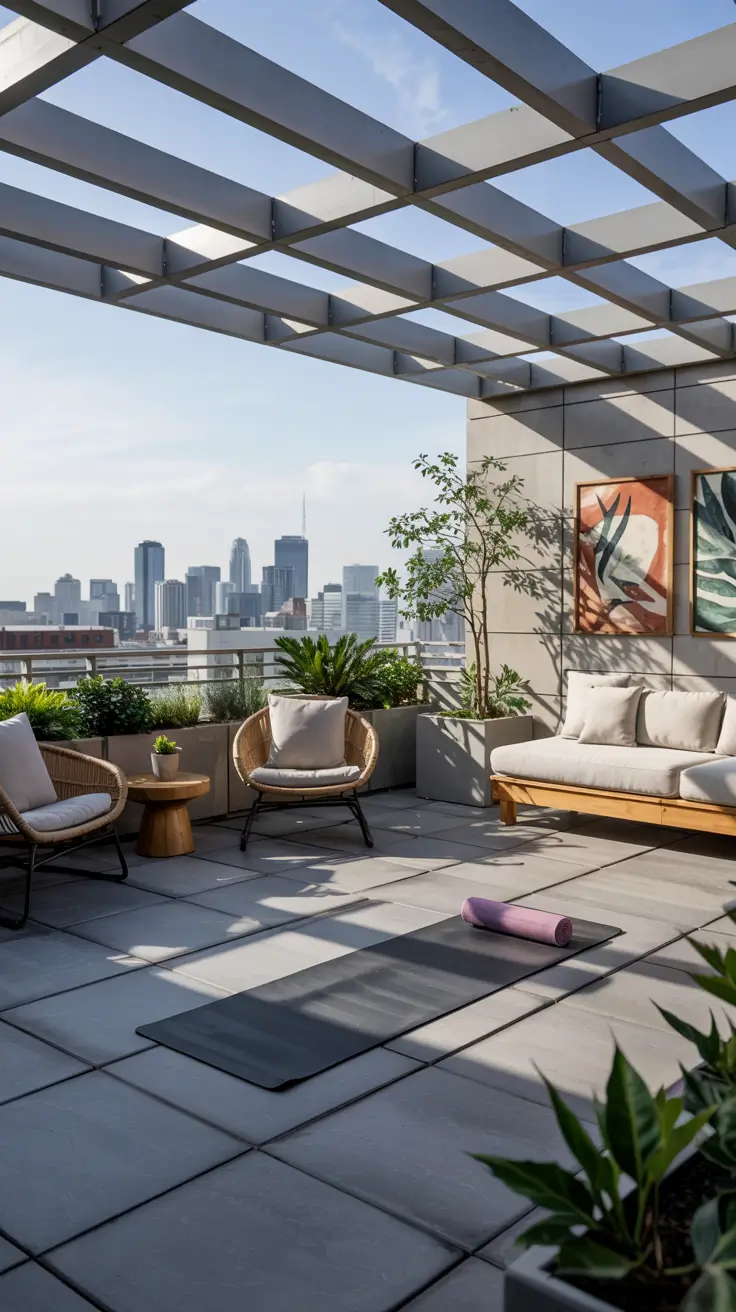
Personally, I find rooftop spaces to be incredibly inspiring due to their openness and perspective. Many modern design trends highlight rooftop living, and I see this as a perfect extension of wellness-focused design.
I recommend adding secure railings and wind screens to improve safety and usability in different weather conditions.
Outdoor Yoga Space Rooftop – Elevated Zen Spaces With a View
I find rooftop outdoor yoga spaces especially powerful in urban environments where ground-level gardens are limited. Designing an outdoor yoga space rooftop in 2026 is about maximizing openness while maintaining safety and comfort. I focus on clean layouts, non-slip decking, and wind-conscious furniture placement to create a stable and calming environment above the city.
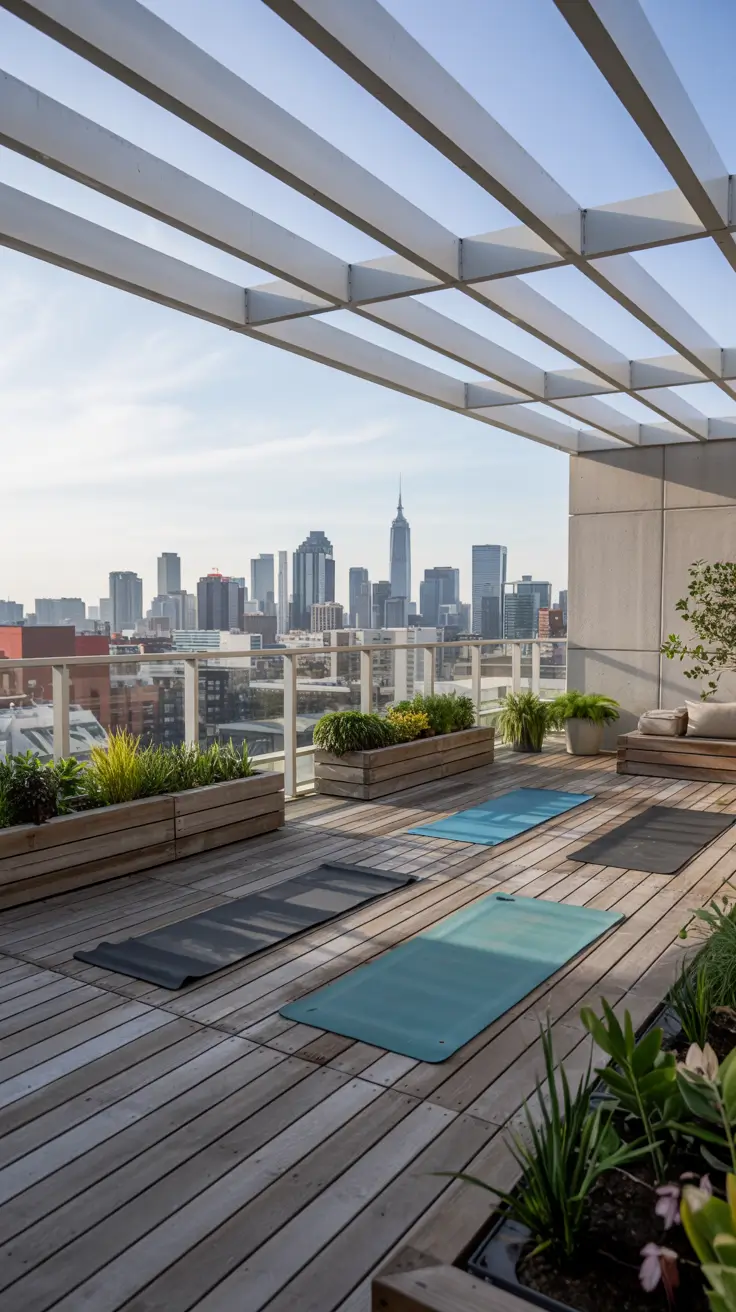
In my experience, low-profile furniture works best here – think foldable yoga platforms, weather-resistant mats, and built-in bench seating. I always include planters with ornamental grasses or small trees to soften the architecture and create a natural barrier. Shade elements like pergolas or retractable canopies are essential for usability throughout the day.
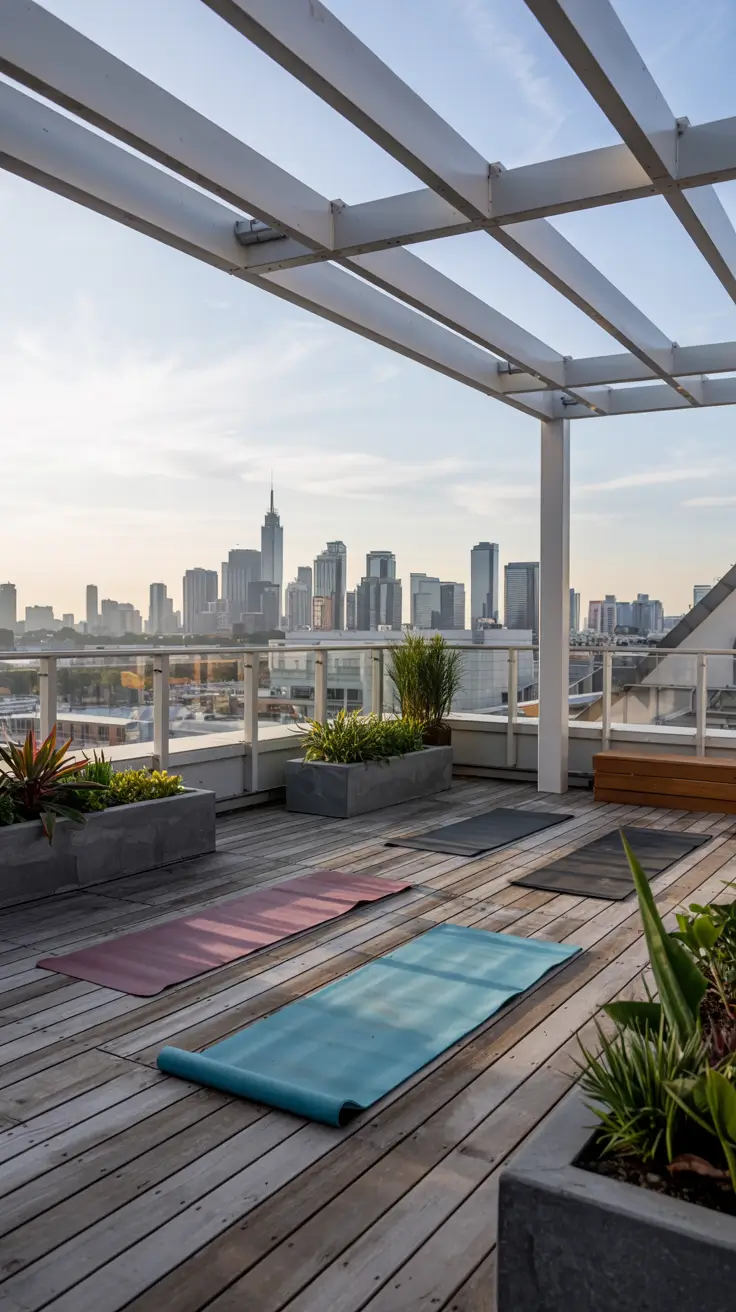
I personally prefer rooftop spaces because they naturally disconnect you from noise and distractions. Many designers, including recommendations from Architectural Digest, emphasize vertical living solutions, and I see rooftop yoga areas as a perfect extension of that philosophy.
What I would add here is integrated storage for mats and props, as rooftop exposure can quickly wear out materials if they are not properly protected.
Outdoor Yoga Space Terrace – Functional and Stylish Open Air Designs
When designing an outdoor yoga space terrace, I focus on balancing functionality with visual harmony. Terraces often act as a transition between indoor and outdoor environments, so I treat them as semi indoor yoga spaces with added natural benefits. In 2026, clean lines and neutral palettes dominate terrace design ideas.
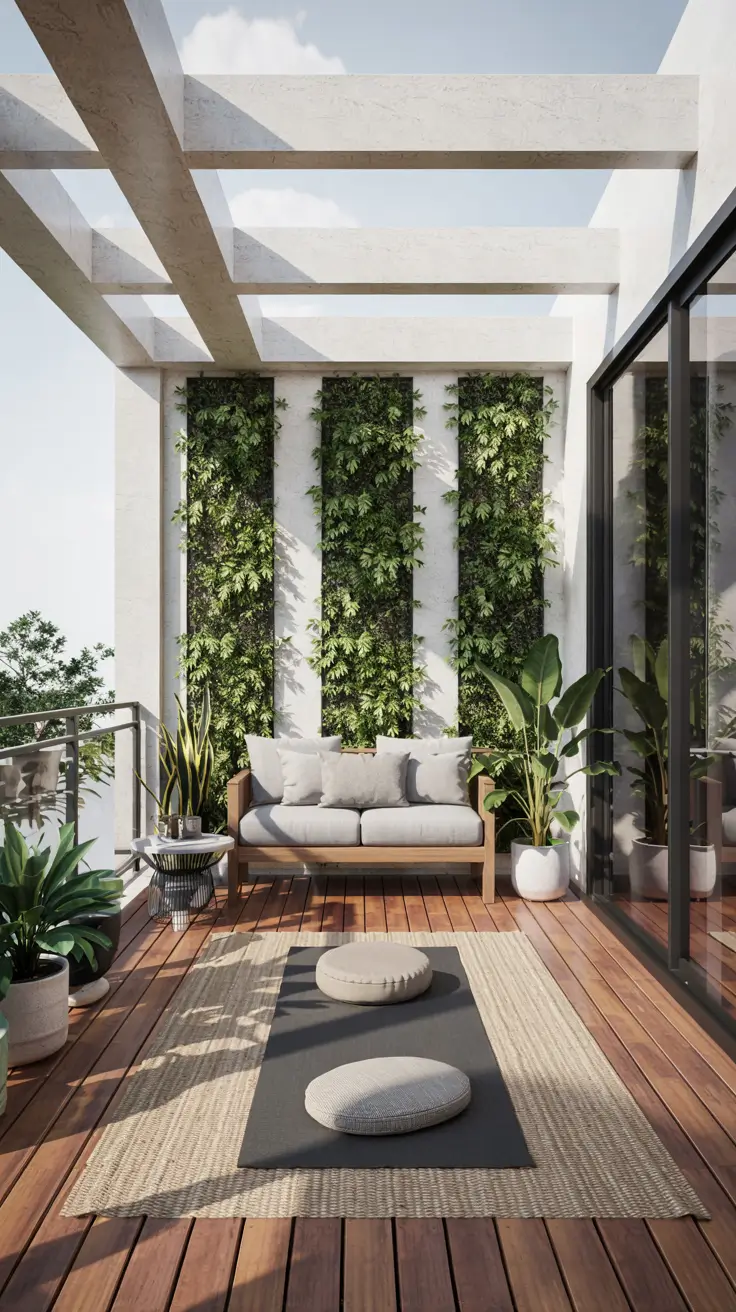
I typically include outdoor rugs, wooden decking tiles, and modular seating that can be moved easily. A small side table for water or candles and vertical greenery such as wall planters enhance both usability and aesthetic appeal. Glass railings are ideal to maintain openness without sacrificing safety.
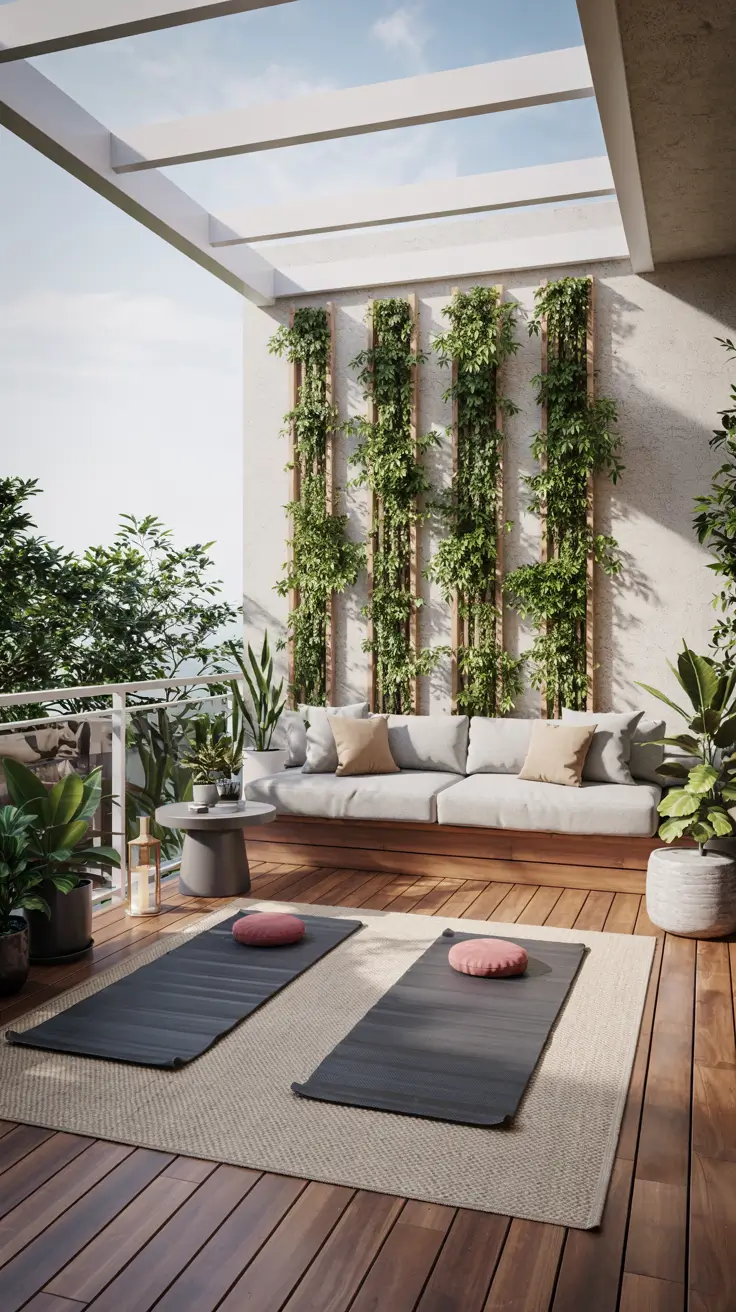
From my perspective, terraces offer one of the most flexible yoga environments. They allow for both private practice and social sessions. I often recommend layering textures like linen cushions and woven decor to make the space feel grounded and inviting.
What is often missing in terrace designs is proper lighting for early morning or evening practice. I always suggest adding soft LED strip lighting or lanterns to extend usability.
Outdoor Yoga Space Covered – Weather Protected Layouts for Year Round Use
A covered outdoor yoga space is one of the most practical design solutions I recommend, especially in climates with unpredictable weather. Covered patio or porch layouts allow consistent use while still maintaining a strong connection to the outdoors.
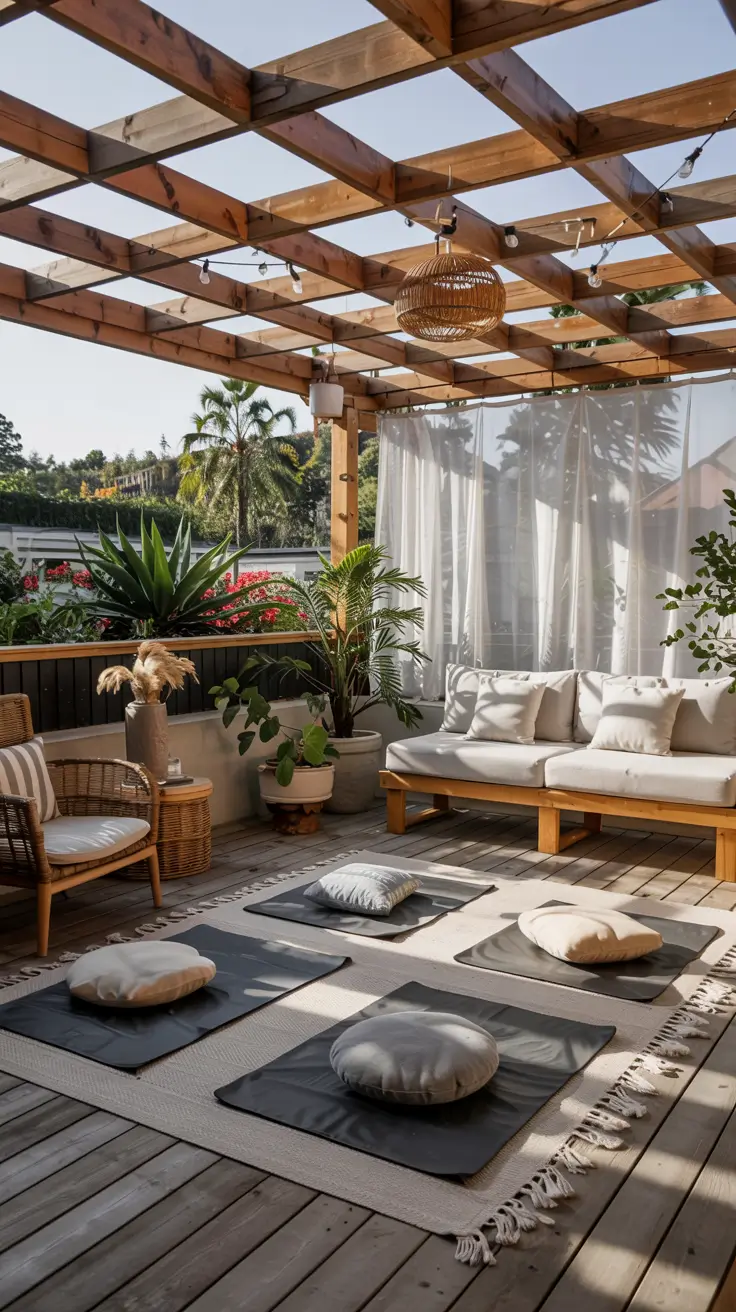
I usually design these spaces with pergolas, wooden beams, or modern aluminum structures combined with sheer curtains. Flooring is critical – I prefer natural wood or composite decking that remains comfortable underfoot. Adding outdoor heaters or fans ensures comfort across seasons.
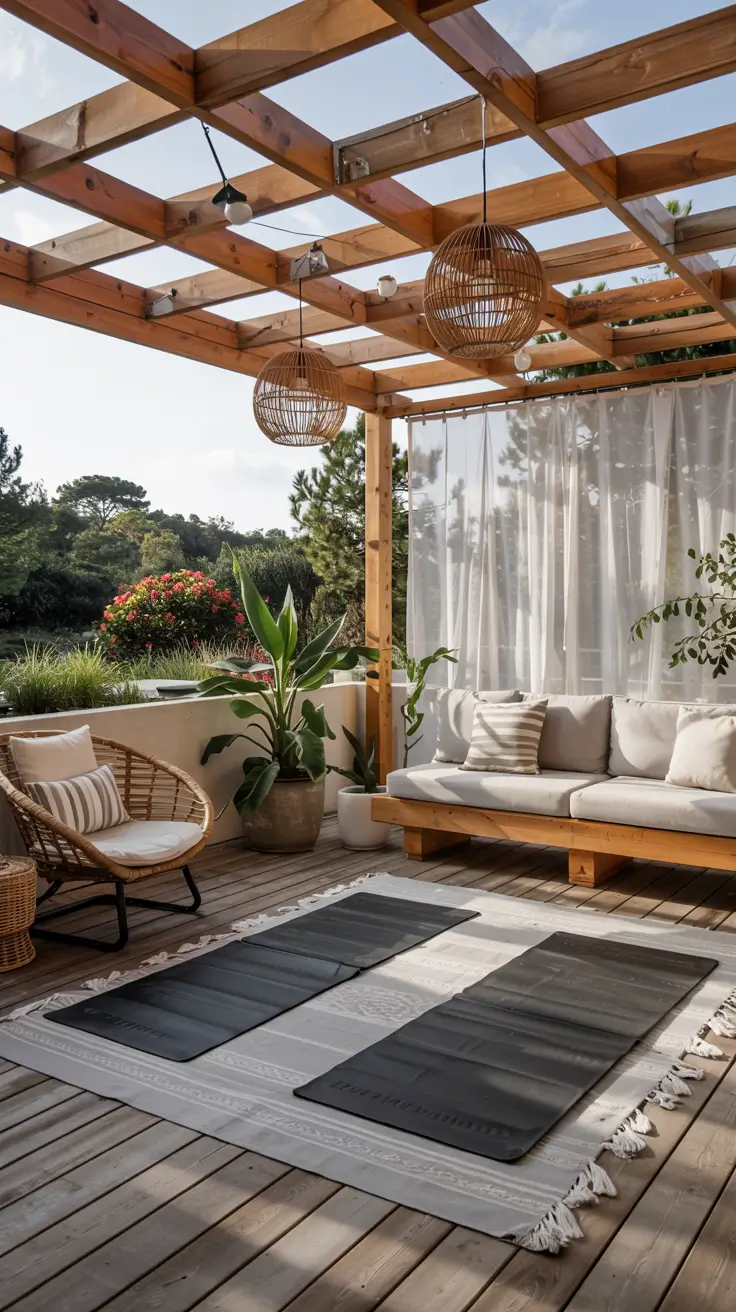
In my own projects, covered yoga spaces tend to be the most frequently used because they remove barriers like rain or excessive sun. Publications like Dwell often highlight the importance of adaptable outdoor living, and this aligns perfectly with covered yoga areas.
What I would improve here is acoustic consideration. Adding soft textiles or outdoor curtains can significantly reduce echo and external noise.
Outdoor Yoga Space Private – Creating Secluded and Quiet Environments
Privacy is essential when designing outdoor yoga spaces at home, especially in backyards. I approach outdoor yoga space private layouts by focusing on visual and acoustic separation from neighbors and busy surroundings.
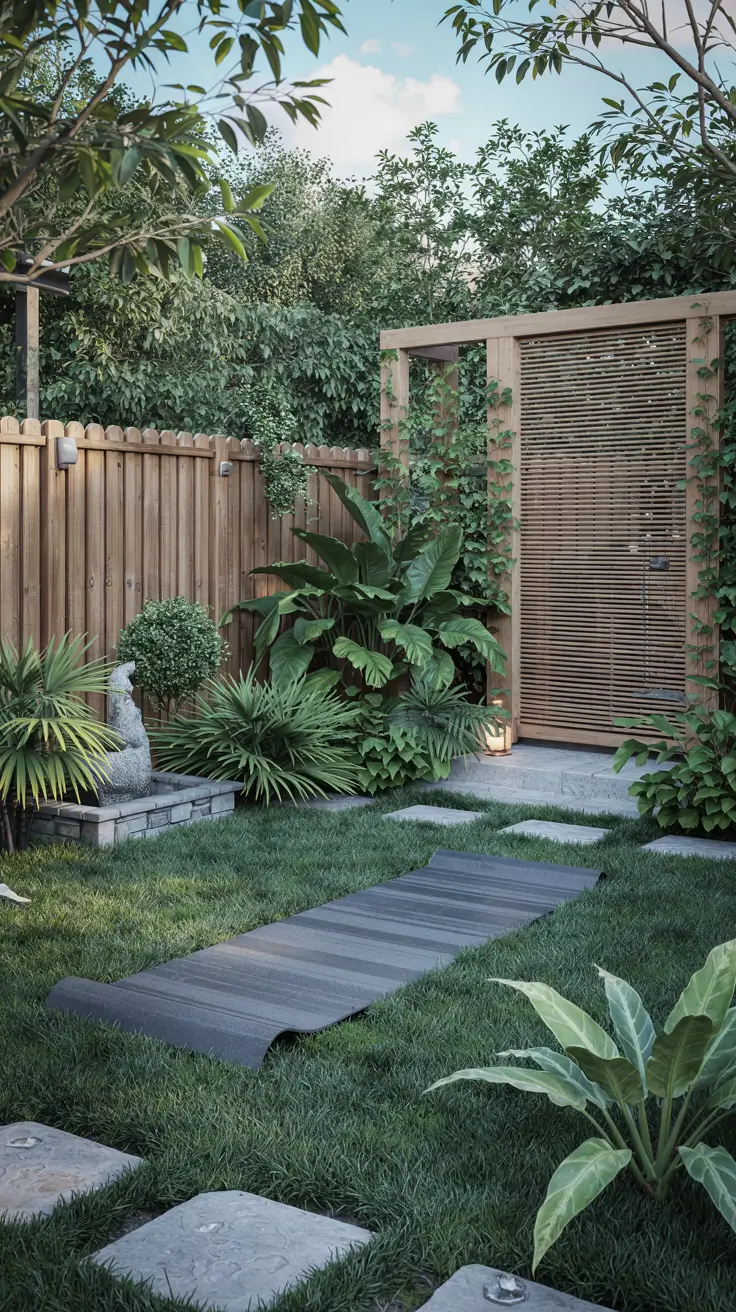
I use tall hedges, wooden slat fences, or bamboo screens to define the area. Layering plants of different heights creates a natural enclosure. I also include water features like small fountains to mask unwanted noise and enhance relaxation.
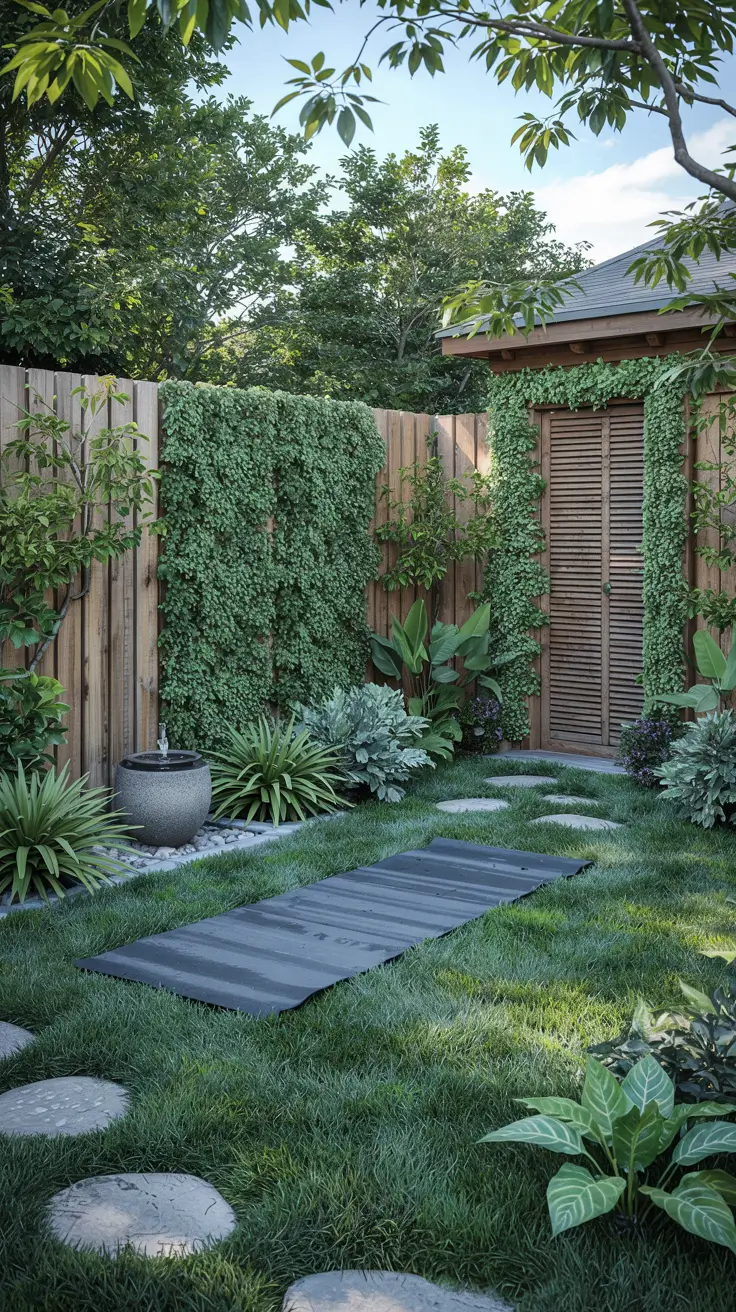
Personally, I believe privacy directly impacts the quality of practice. A secluded backyard retreat allows deeper focus and consistency. Many wellness experts emphasize minimizing distractions, and I fully agree with this approach.
What is often overlooked is entry design. I recommend creating a subtle pathway or transition zone that mentally prepares you before entering the yoga space.
Outdoor Yoga Space Simple – Minimal Setup With Maximum Comfort
A simple outdoor yoga space does not mean compromising on quality. In fact, I often find that minimalist setups are the most effective. The goal is to remove distractions and focus only on essential elements.
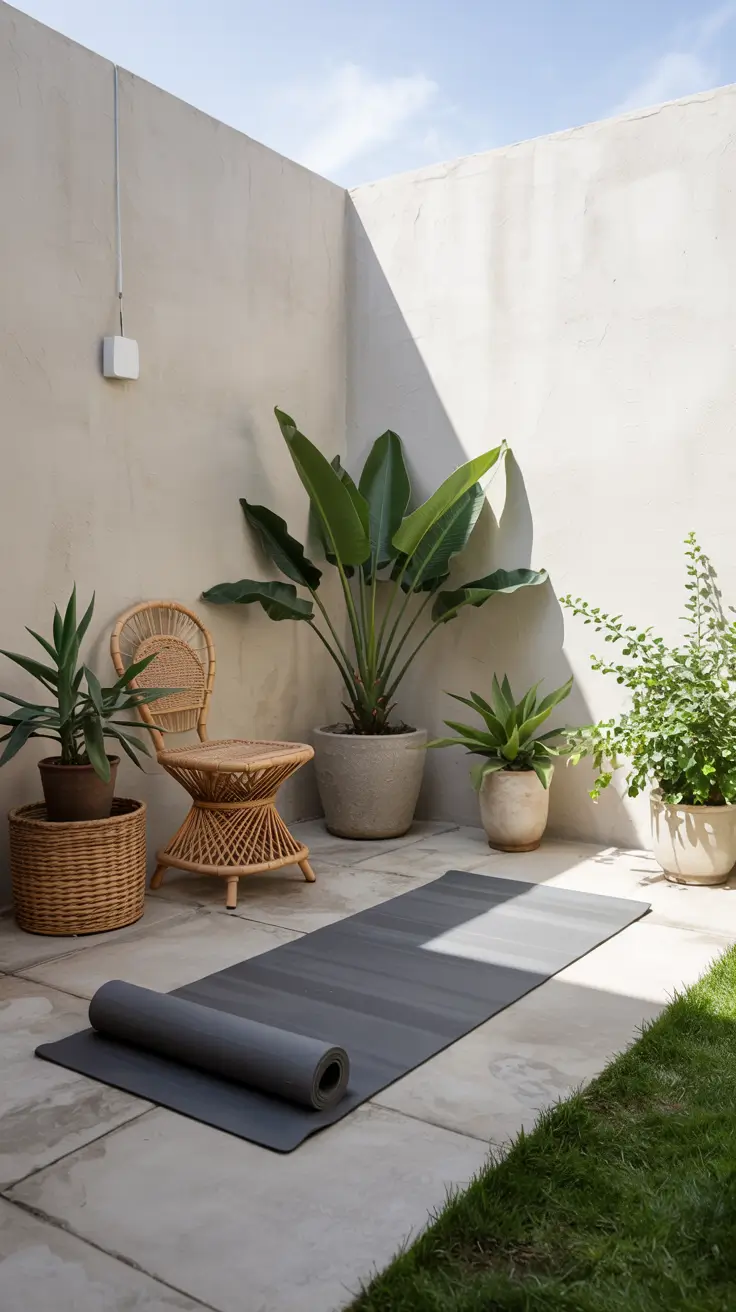
I typically use a clean surface, a high-quality mat, and perhaps one or two cushions or blocks. Neutral tones and natural materials such as wood or stone help create a calm atmosphere. Even a small balcony can be transformed with just a few thoughtful additions.
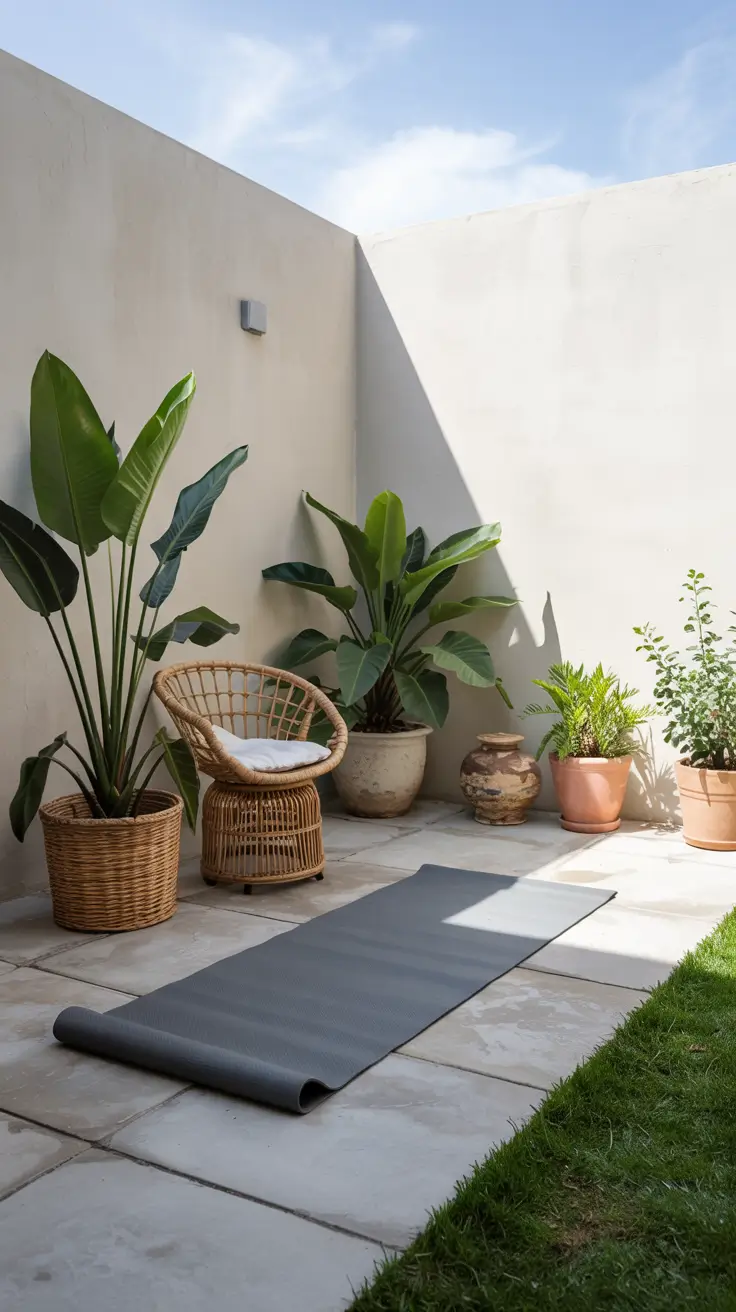
From my experience, simplicity enhances consistency. When the setup is easy and accessible, people are more likely to use the space daily. Minimalism, as highlighted in many 2026 design trends, continues to dominate wellness-focused interiors and exteriors.
What I would add is a small storage solution, even in simple designs, to keep the space organized and visually clean.
Outdoor Yoga Space Plan – How to Design Your Layout Step by Step
Planning is the foundation of any successful outdoor yoga space design. I always start with a clear layout that considers sun exposure, wind direction, and available space. Whether it is a backyard, balcony, or patio, each element should have a purpose.
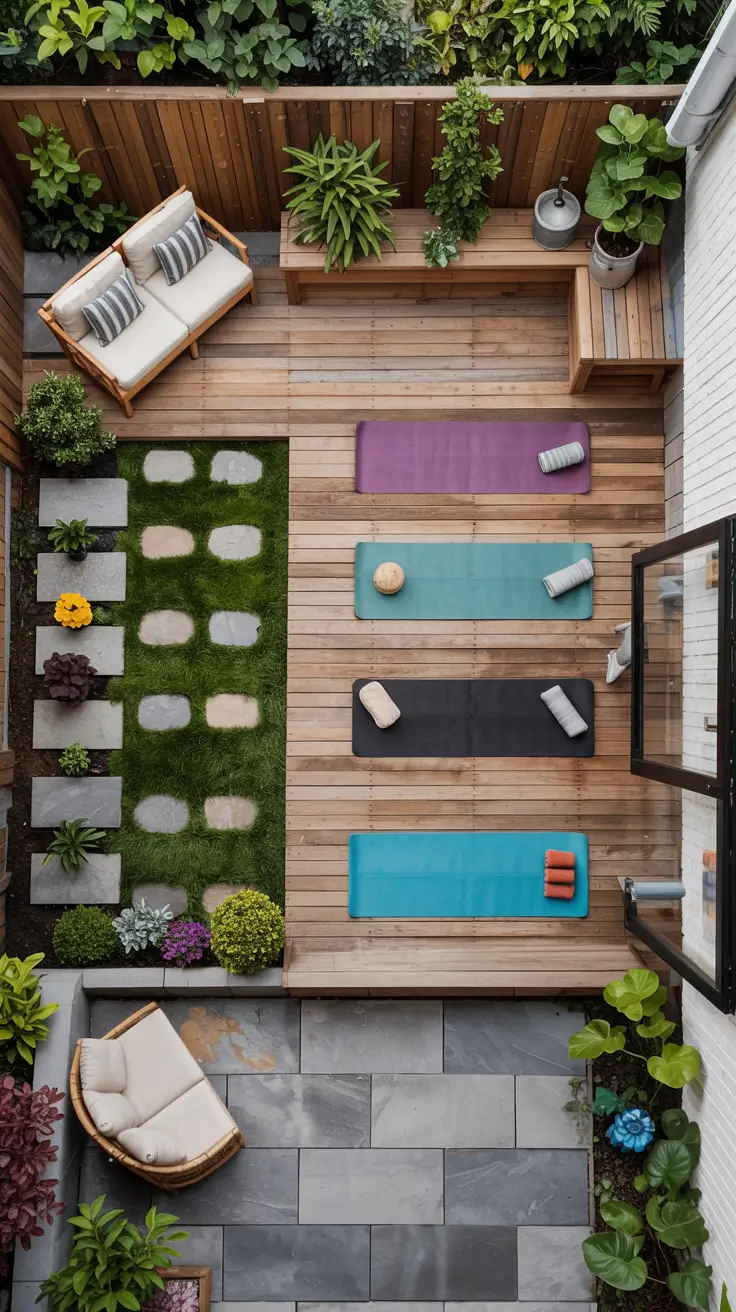
I divide the space into zones – practice area, storage, and relaxation corner. Measuring dimensions ensures that movement is not restricted. I also recommend sketching the layout beforehand, especially for backyards diy projects.
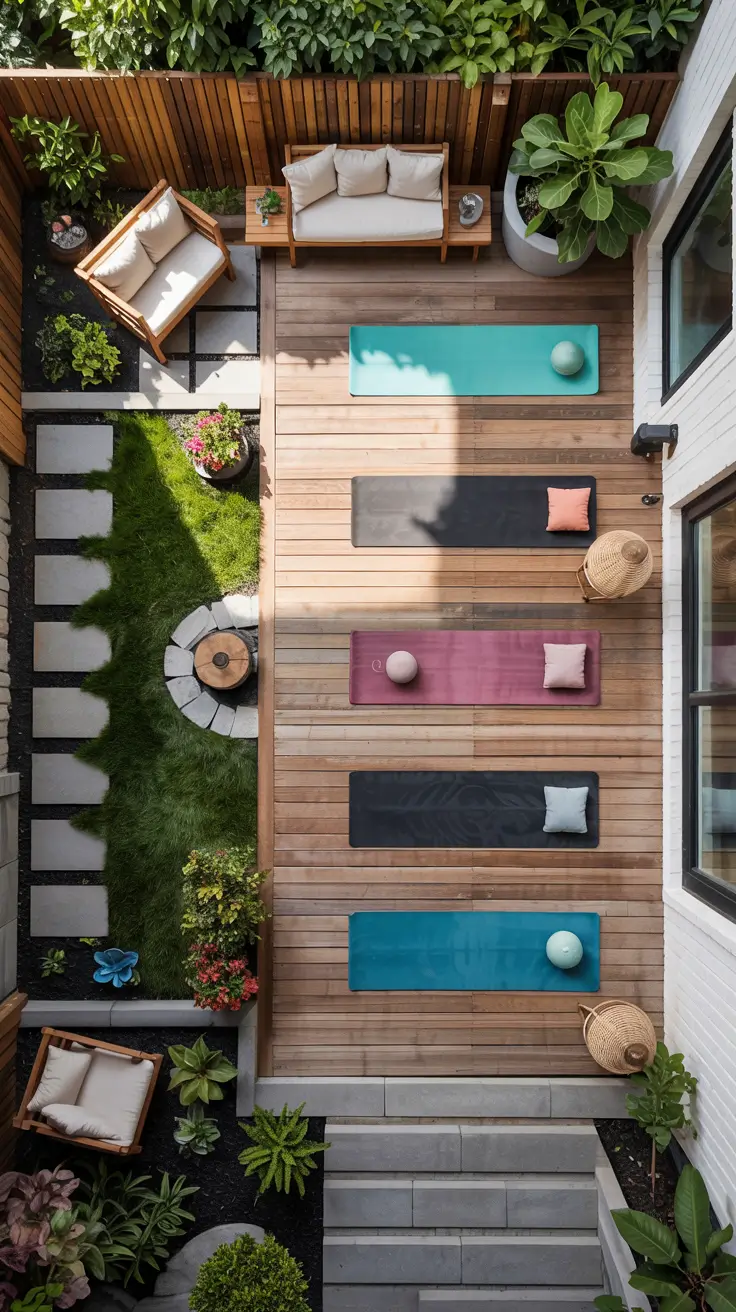
In my work, a structured plan prevents costly mistakes and ensures long-term usability. Many professional designers stress the importance of pre planning, and I have seen firsthand how it improves both aesthetics and function.
What is often missing is flexibility. I always leave room for future additions like seating, decor, or even a small garden feature.
Outdoor Yoga Space Creating a Peaceful Atmosphere – Lighting, Sound and Decor
Creating a peaceful atmosphere is the core of any outdoor yoga space aesthetic. I focus on sensory elements such as lighting, sound, and natural decor to enhance the experience.
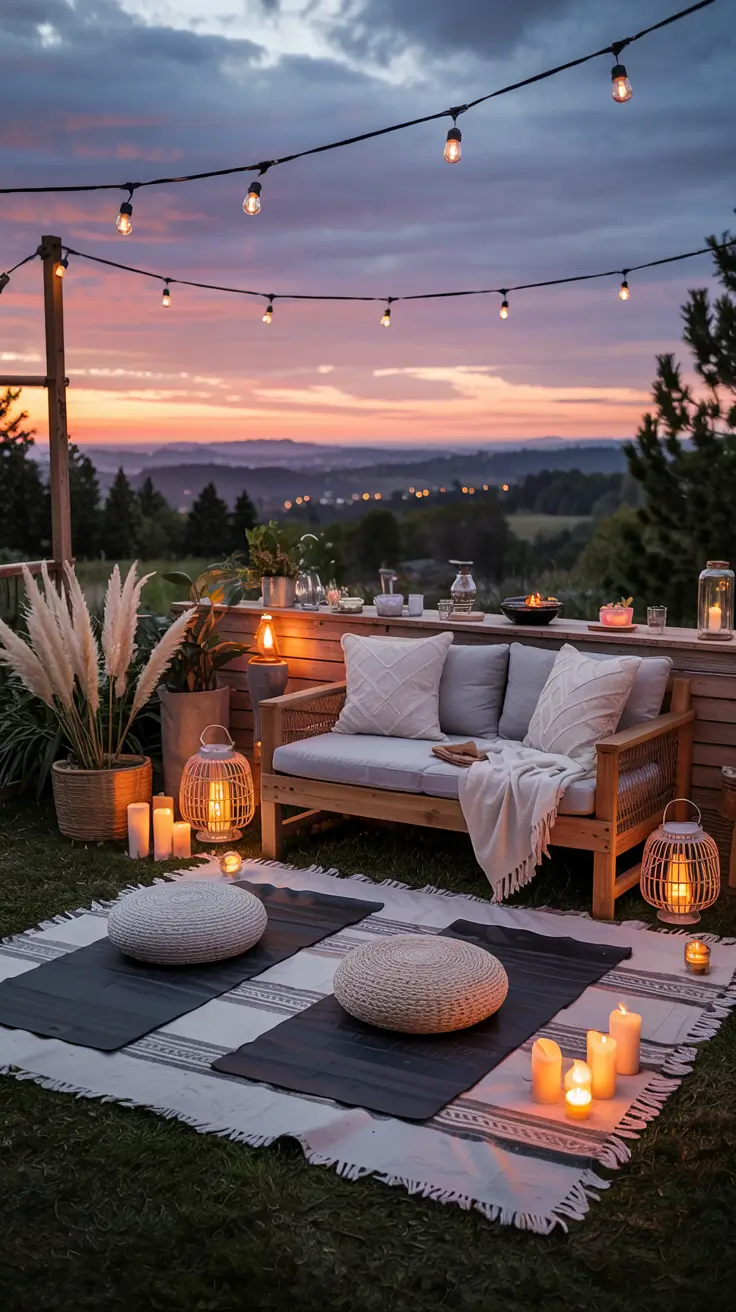
I use warm lighting like lanterns, solar lights, or string lights to create a soft ambiance. Sound elements such as wind chimes or water features add a calming background. Decor is kept minimal but intentional – think candles, textiles, and natural materials.
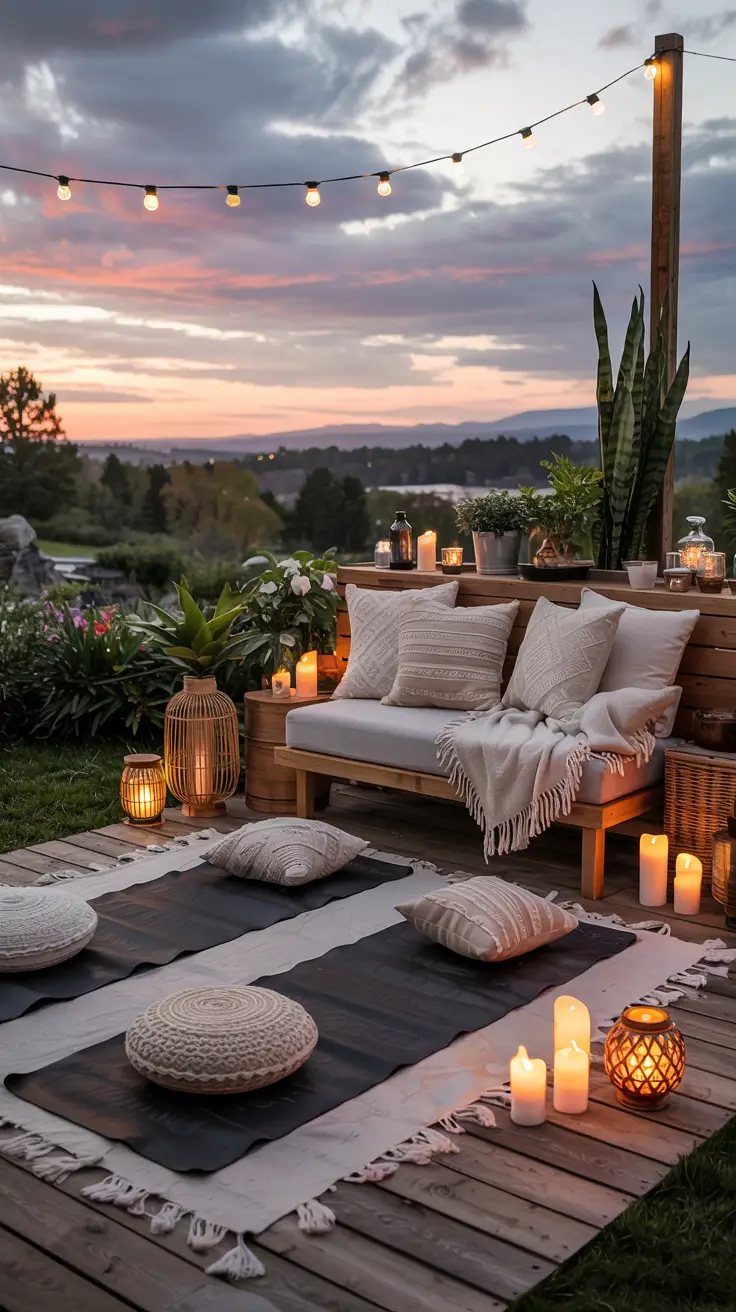
In my opinion, atmosphere is what transforms a functional space into a true retreat. Experts from wellness and interior design fields consistently highlight the importance of multisensory environments, and I strongly agree with this principle.
What I would enhance here is scent integration. Adding natural elements like lavender plants or essential oil diffusers can elevate the entire experience.
Outdoor Yoga Space Boho Style – Relaxed and Natural Design Inspiration
I approach a boho outdoor yoga space as a blend of freedom, texture, and natural harmony. In 2026, this style continues to evolve with more refined and neutral palettes while still embracing layered decor. I focus on creating a relaxed backyard retreat or terrace that feels organic and slightly unstructured, allowing for both movement and stillness.
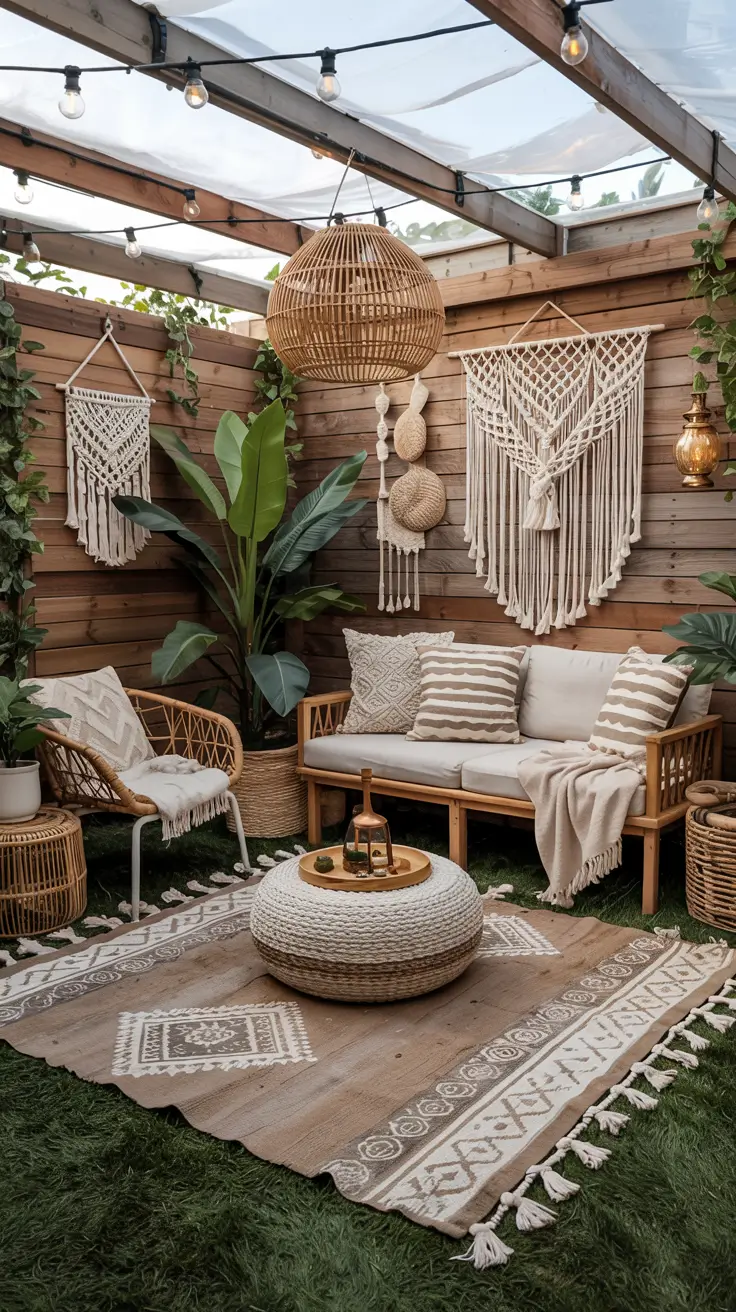
I typically include woven rugs, macrame wall hangings, floor cushions, and low wooden platforms. Rattan furniture, lanterns, and plenty of plants are essential to achieve that signature boho aesthetic. I also like to mix textures like linen, cotton, and jute to create depth without overwhelming the space.
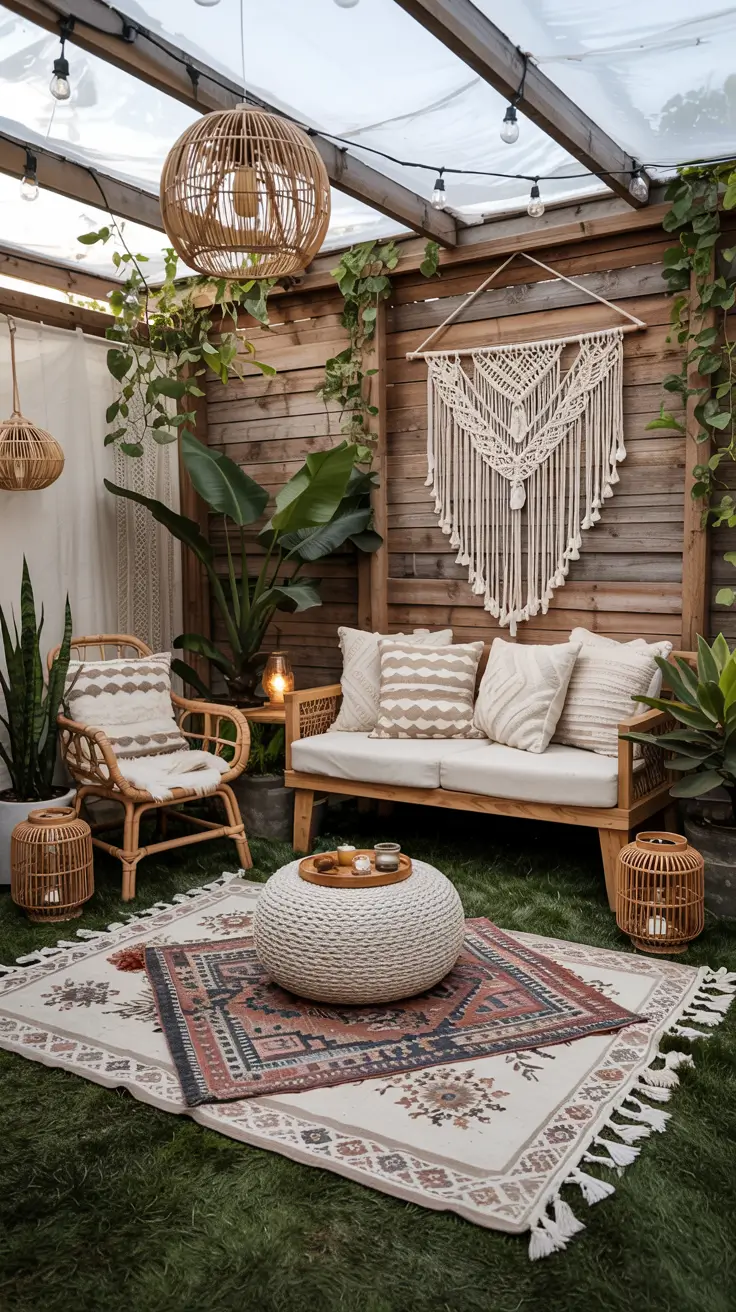
From my experience, boho spaces encourage longer and more mindful sessions because they feel warm and inviting. Designers often note that tactile materials enhance comfort, and I see this clearly in boho outdoor yoga spaces.
What I would add here is a subtle color balance. Even in boho designs, I recommend limiting the palette to earthy tones to avoid visual clutter.
Outdoor Yoga Space Sketch – Planning Your Dream Yoga Area Visually
Sketching an outdoor yoga space is one of the most underestimated steps in the design process. I always begin with a simple visual plan, whether digital or hand drawn, to map out proportions, furniture placement, and movement flow. This is especially useful for backyards diy and balcony projects.
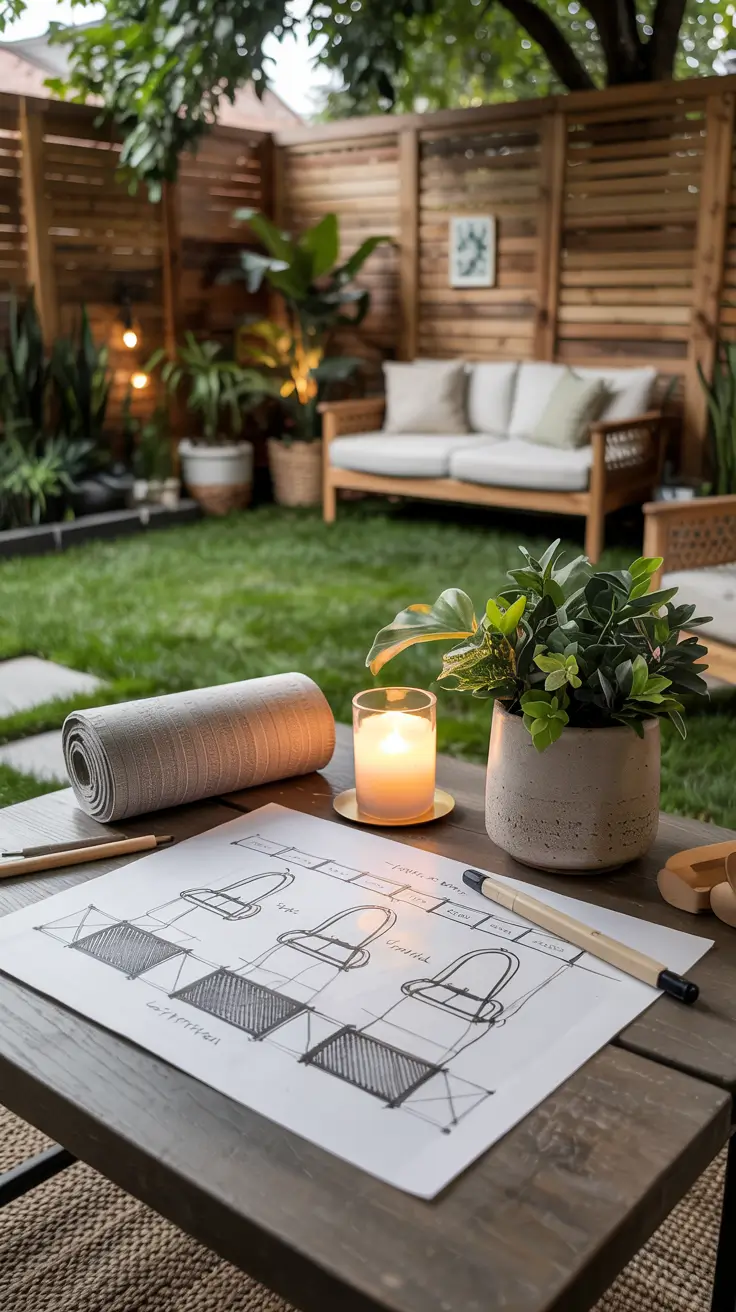
I include all key elements in the sketch – yoga area, greenery, seating, lighting, and pathways. Even a rough sketch helps identify potential issues like overcrowding or poor orientation. I also mark sun direction and shade zones to optimize comfort.
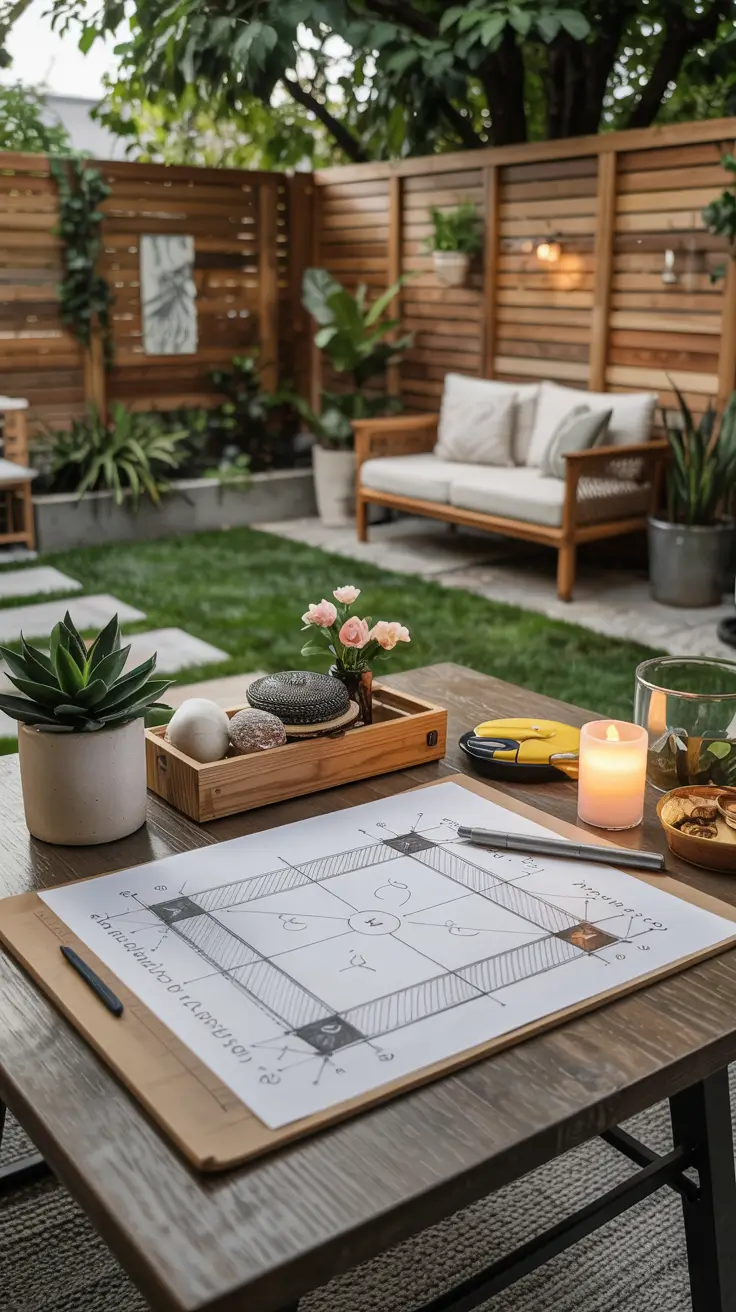
In my work, sketching saves time and ensures that the final design feels cohesive. Many architects emphasize visualization before execution, and I strongly rely on this method for outdoor yoga space design ideas.
What is often missing is scale accuracy. I always recommend adding basic measurements to the sketch to avoid mistakes during implementation.