Is sunken living room ideas layout, inspiration and design still relevant in 2026, and how can it be used in an open concept plan without being outdated? I discuss sunken living room modern practices, layout with fireplace options, railing ideas, and step ideas so you can decide what best fits your floor plan, size and your daily lifestyle. I discuss the minimum-maximalism to giant statement room, the Japandi and 70s-conversation-pit baccomixtation, and also practical refinements like split level railing concepts sunken living room concepts that make things safe and gorgeous.
Sunken Living Room Ideas 2026 – Complete Guide
I begin by consideration of a sunken zone as a deliberate alteration of the level that characterizes a wallless space. The most successful rooms in 2026 will be a combination of the sunken living room ideas design with real life flow as I will consider the traffic paths, stairways to a different part of the building and the pit is seated in front of the kitchen or within a larger open concept. When selecting the depth of the drop, I make the decision based on the comfort and ease of access and then align flooring concepts with the rest of the home to ensure that the transition of the level does not appear as a gimmick.
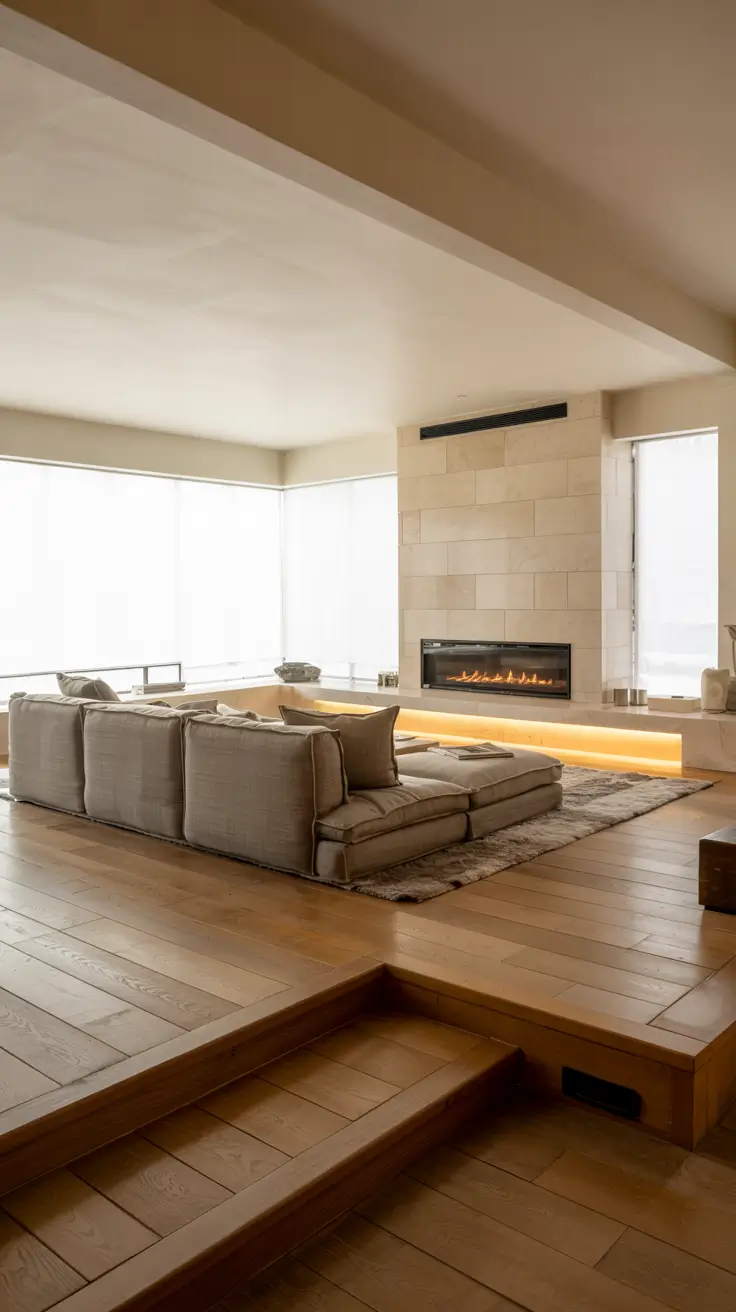
I itemize the must haves. Conversation pit setups are anchored by low profile modular seats and the design includes a layout that encloses a media wall or a fireplace. I indicate step nosings with slight contrast so they can be seen, provide a continuous handhold or sunken railing across the living room where the code requires it, and specify layered lighting with perimeter LED coves, floor lamps and dim-to-warm downlights. In large living room ideas sunken I introduce secondary perch seating on the upper rim and a large wool rug to occupy the zone.
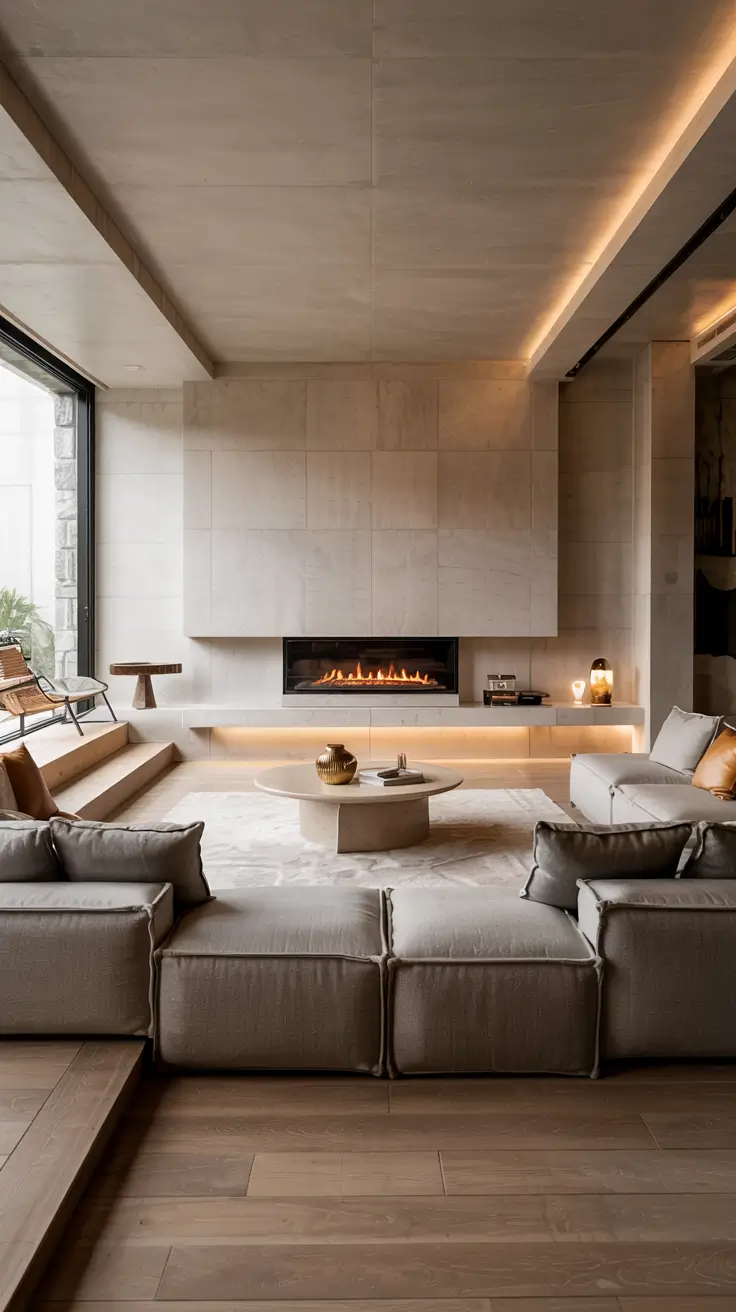
By experience, 6 to 12 inches in family places, and 18 in formal pits, is the most comfortable depth, and does not cause the feeling of enclosure to become too difficult to enter. I like two or three sweeps much better than a single rise, and I set the original riser by natural lines so the elevation is never suddenly changed, and guests will never be surprised by it. The level changes are usually suggested to be indicated by designers using material or light as a means of safety, and that is what I observe in successful projects.
To complete this part I include a checklist in a hurry on floor plan and dimensions, a word on the acoustic advantages of a sunken bowl and a reminder that power should be planned on the floor to support lamps and chargers. I also add instructions on child and pet safety like temporary gates or soft ottomans at the edges of a step.
Sunken Living Room Ideas – Layout Strategies
I plan the area concerning the kitchen, dining area and outdoors. A sunken living room opposite the kitchen can physically separate the cooking and the lounging and maintain sight lines open. In split level houses I coordinate the pit such that the stairs and landings bring you into the seating bowl in a natural way. In houses that target the 70s chat room atmosphere, I focus the seats at the centre at the expense of maintaining clear aisles of movement.
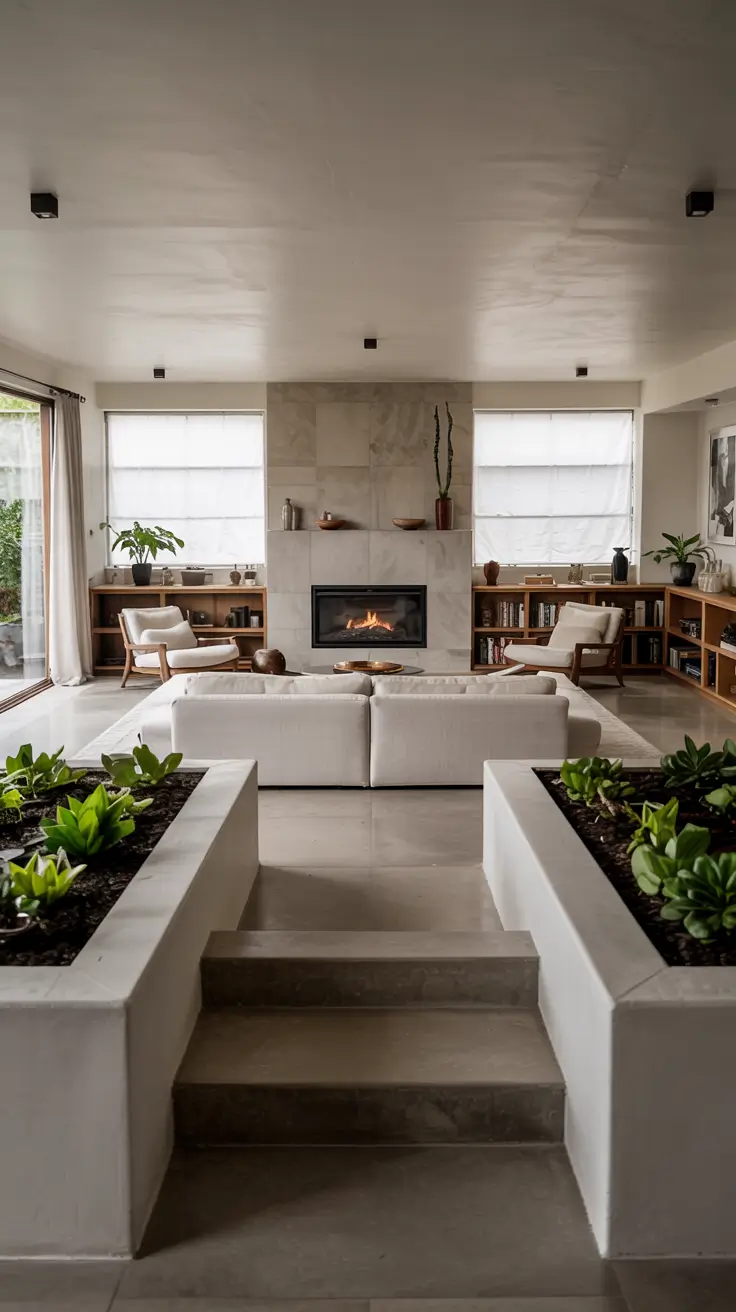
I choose a focal point and position furniture. In a layout with fireplace I would place a linear fire at eye level when sitting down, and then put sectional low-back sofas around the fire. In media-first layouts, a sofa is floated directly in front of the screen and complemented by the lounge chairs on the turn. I prefer a two step asymmetrical entry with built in bench, and a rim shelf to hold plants and task lamps. I formulate sunken living room railing concepts half walls that serve as book shelves or backs of a banquette where guard protection is required.
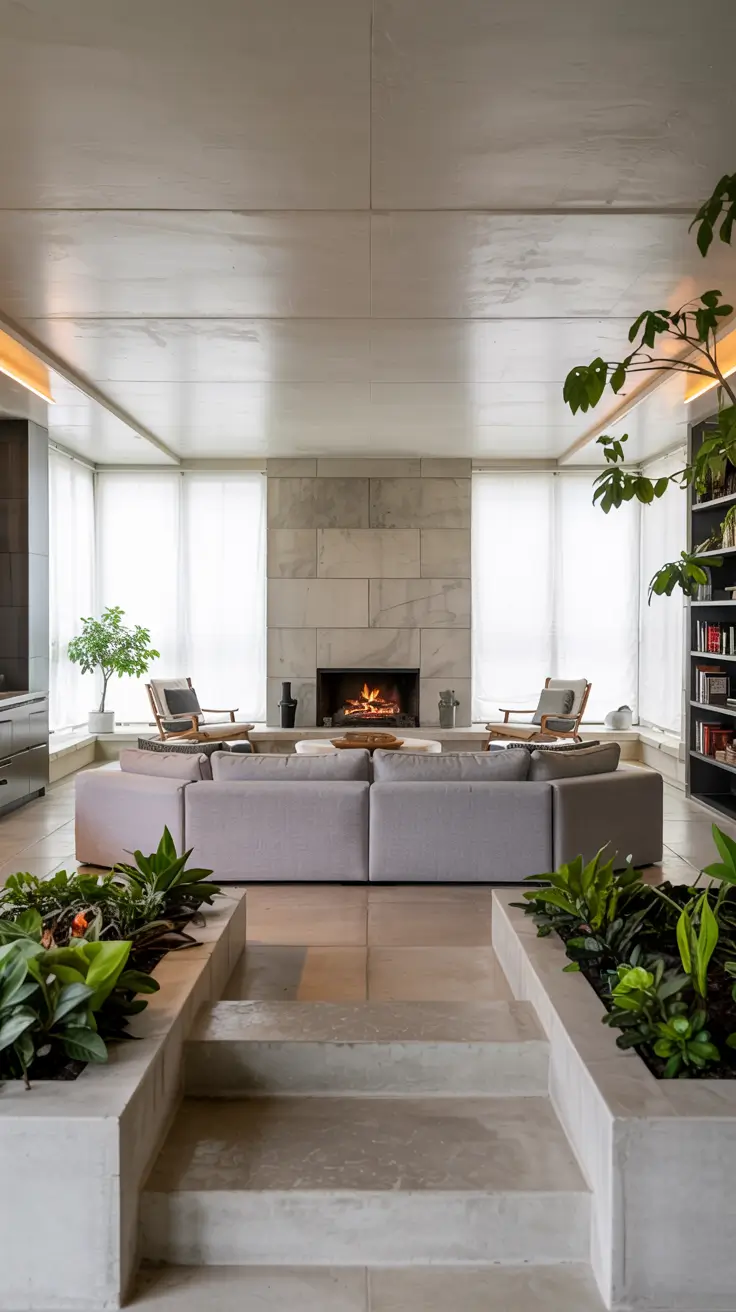
I have also learnt that conversation outwits symmetry in most pits. I also lean seating to one side to create the ideal view or to the fireplace and bring in movable ottomans to accommodate visitors. I also employ a change of floor texture where the rim of the shell is used in open concept shells, to serve as a threshold. It does not put walls on the zone to make it warm.
I include three situation diagrams, a small house version with one-step drop and built-in bench, a double height living room where the pit is scaled by scale, and an outdoor-adjacent version that is allied to patio doors. I include clearance and walkway-width rules of thumb, too.
Sunken Living Room Ideas – Design Fundamentals
I consider the level change as an element of architecture with the help of serene finishes and trustworthy details. I align flooring concepts to make the surface of the pit texture and warm then I do the same with stair treads to create continuity. I design light layers, acoustical suppression, and movable power to make the space day/night friendly.
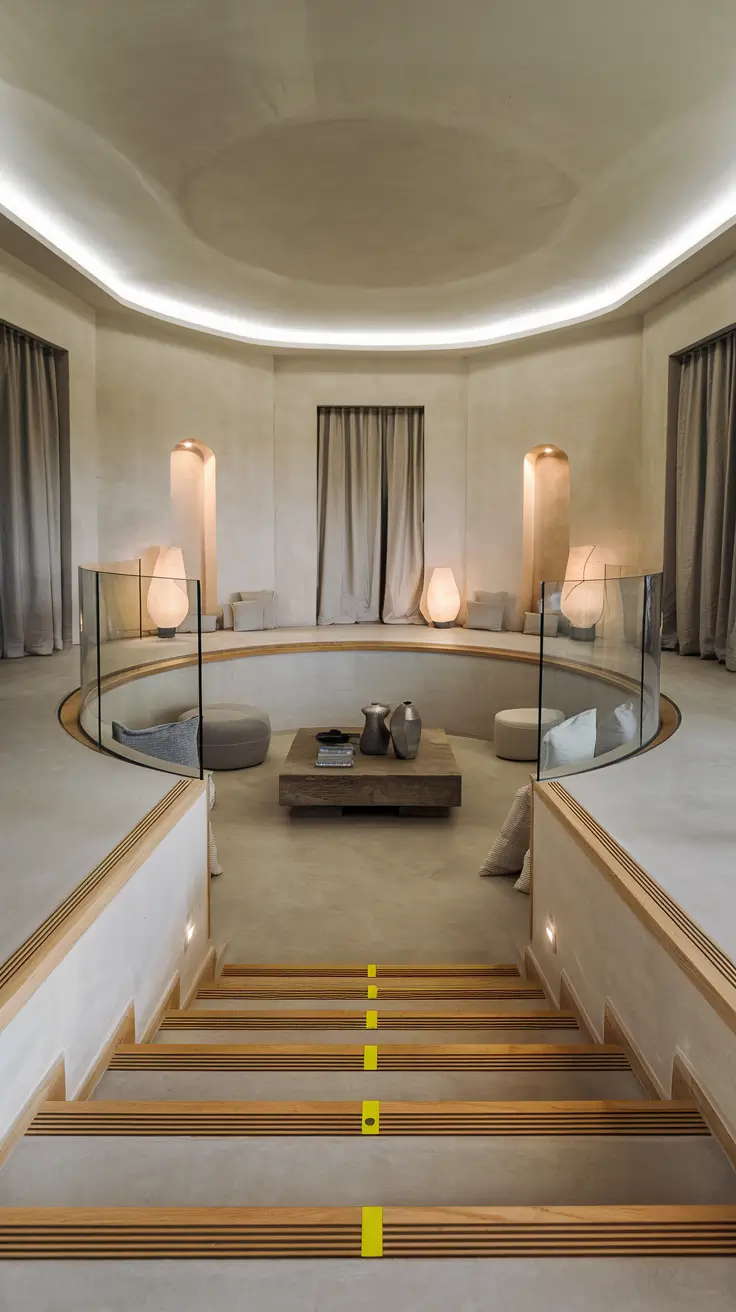
I select materials that are touch rewarding. Closet wool rugs, textured oak or engineered timber underfoot, and mineral plaster or limewash perimeter wall give the walls depth and depth but not clutter. I have low, heavy tables that will not tip on steps, add concealed drawers into the rim, and add a subtle handrail or graspable edge on matching wood. Where there is need of code guards I would use clear glass or slatted timber so that the railing is not visible.
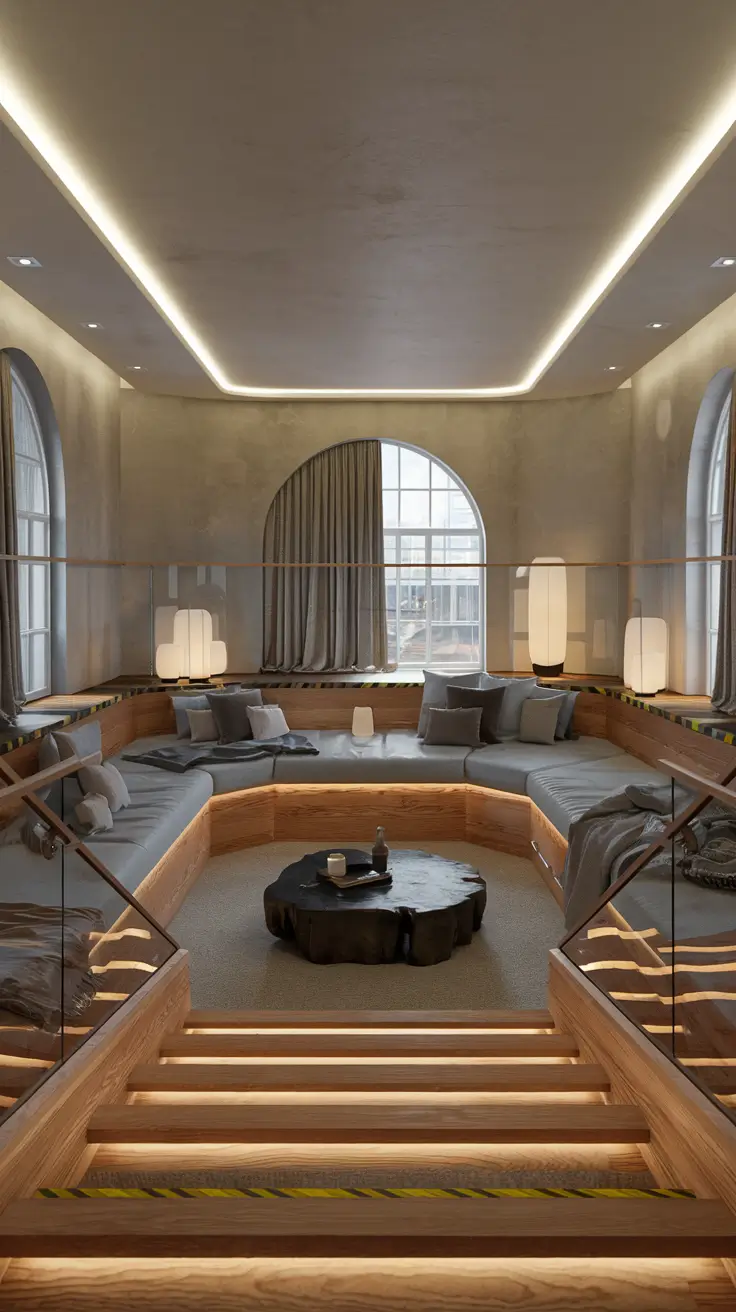
My starting point is quality simplicity. I do not use a lot of finishes since the pit itself has contrast. I maintain color groupings in one accent in pillows or art. In the event of a fireplace, I install noncombustible finishes surrounding the fireplace and I monitor the seating distances that do not interfere with comfort and safety.
An additional detail set that I include relates to the stair nosing profiles, slip resistance rating and recommended step lighting positions. I also add a note on the thickness of tempered glass where there is a guard and instructions on how to incorporate the HVAC registers in the risers.
Sunken Living Room Ideas – Inspiration Gallery
I edit between styles so that you can visualize what will work in your house. I feature modern luxury using stone and brass, minimalism using pale oak and linen, rustic using warm timbers and stacked stone, Japandi using low platform and natural fiber, MCM using walnut and geometric textiles, Indian using carved wood and jali and Bali using rattan and tropical vegetation and soft lime-plaster walls. In both examples, a sunken bowl is used to add intimate without sealing the plan.
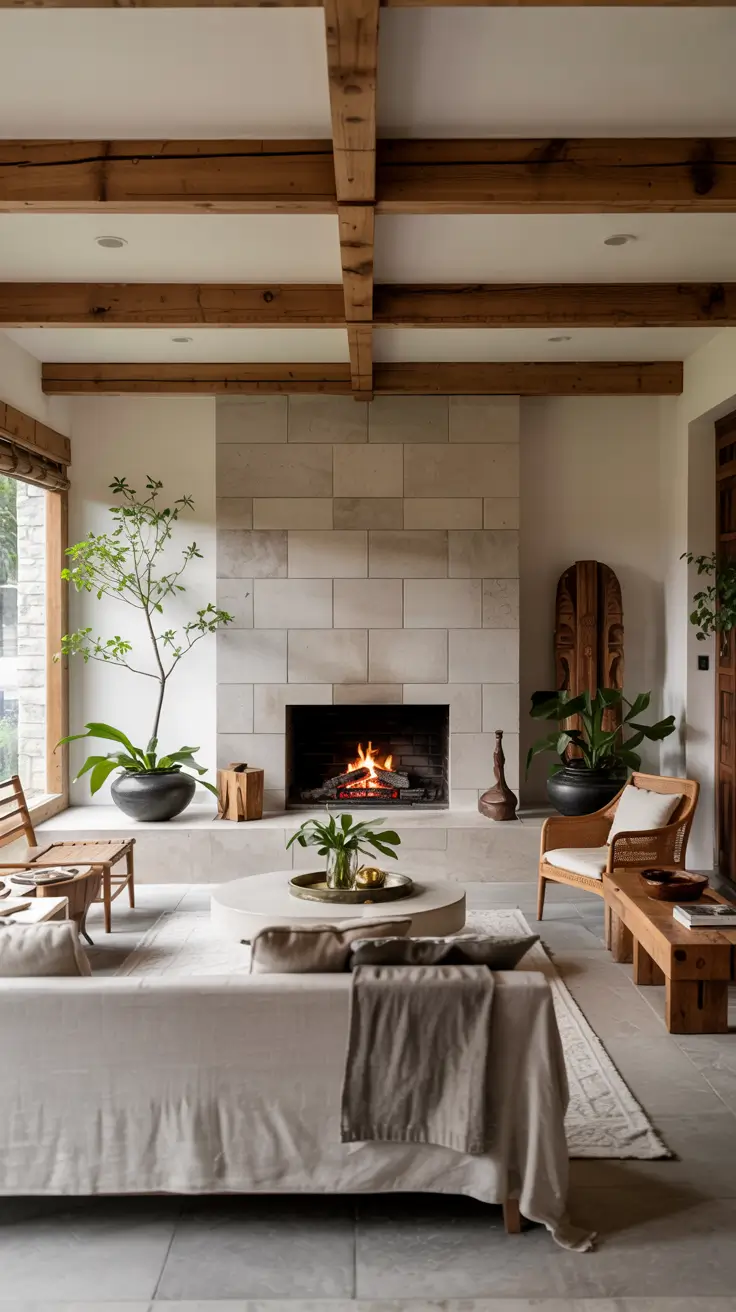
I divide signature pieces into moods. Modern receives a glass guard, slim, and swivel chairs that are sculptural. Minimalist applications incorporate a built-in bench, concealed storage and a neutral tight palette. Rustic includes beams, a rough hearth and textile weaves. Japandi emphasises on low sofas, shoji-inspired screens, and tatami-like mats. MCM carries tapered leg chairs and graphic rugs. The Indian influences include Indian dhurries and brass decorations. Bali is sloping on rattan loungers, teaks and planners.
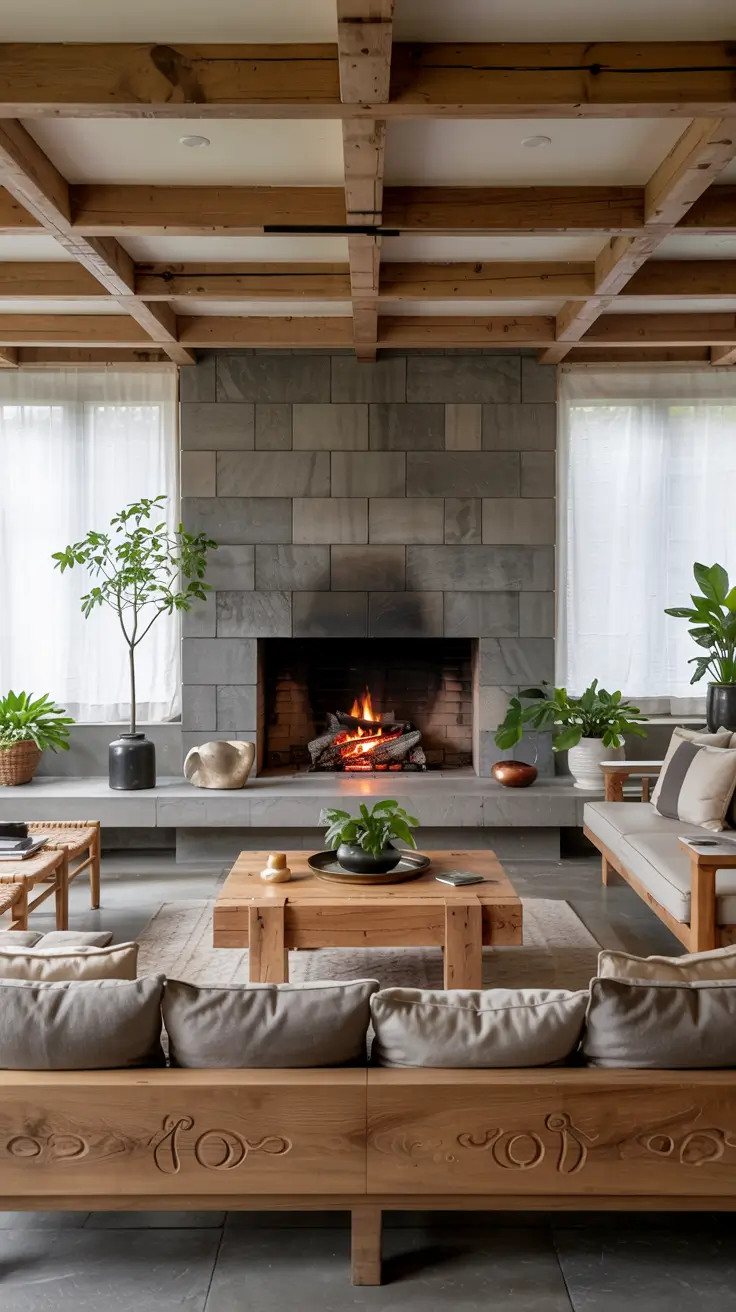
I often mix elements. A Japandi sofa and an MCM walnut rim say up to date and relaxed. Bali vegetation smoothes contemporary forms. The pit serves as canvas to the layered identity and the level change holds it all together. I do not put away accessories, which means that sunken geometry is the star.
I include notes that highlight why this composition and why this composition works and what to repeat at home, such as names of paint, size of a rug, and height of seating. I also include a comment about finding ethical textiles and FSC wood.
Sunken Living Room Modern Concepts
I plan multi use living where technology and comfort intersect. Modern sunken living room ideas design prefers clean lines, built-in light and well-organized storage facilities. In little house designs I cut the drop down to one (step) to make it feel based and not claustrophobic, and I steal light through the other windows to make the pit bright.
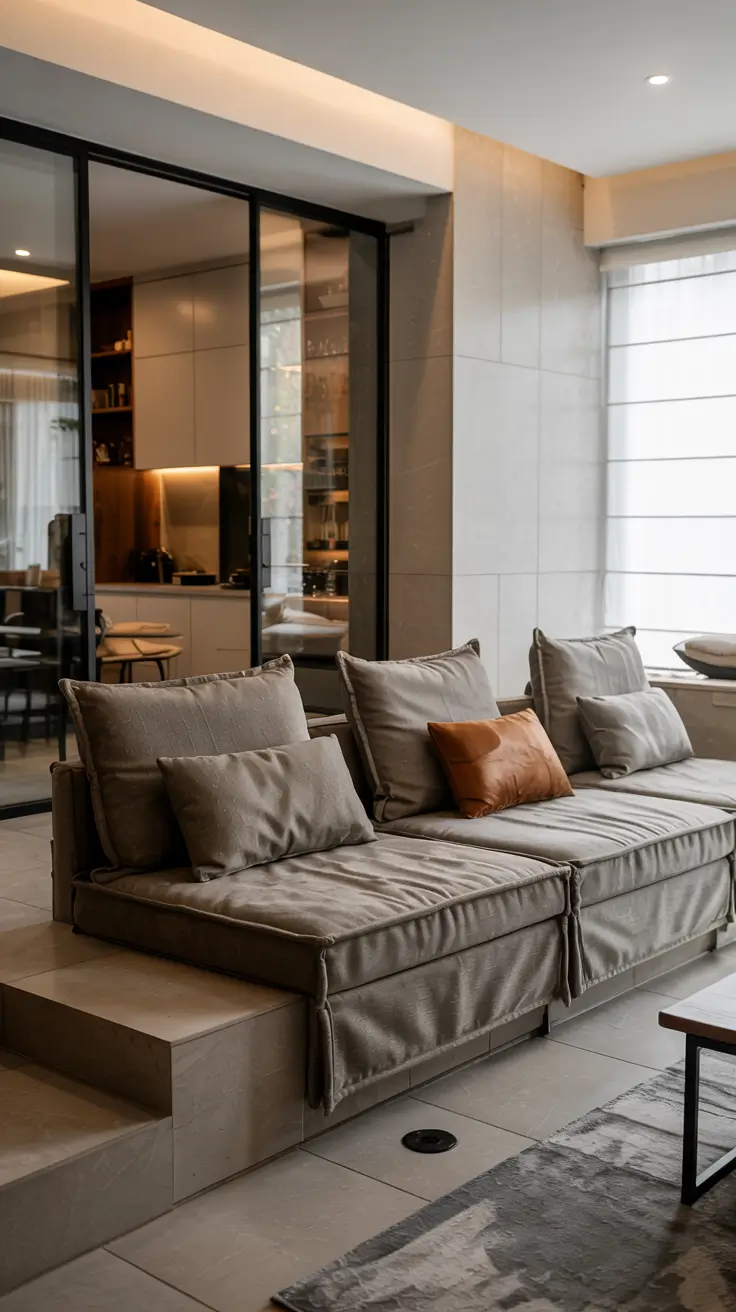
I define modular sofas with repositionable backs, motorised shades and low-key-warm lights. A flush linear fireplace offers a bulk free focal point. On the side of guards, I would use an eye glass kitchen railing wall in cases where the pit is close to cooking areas and use a low masonry half wall which doubles up as a seating area. I lay wiring along the pit floor to create the appearance of a clutter free view and add acoustic panels which are disguised as art work.
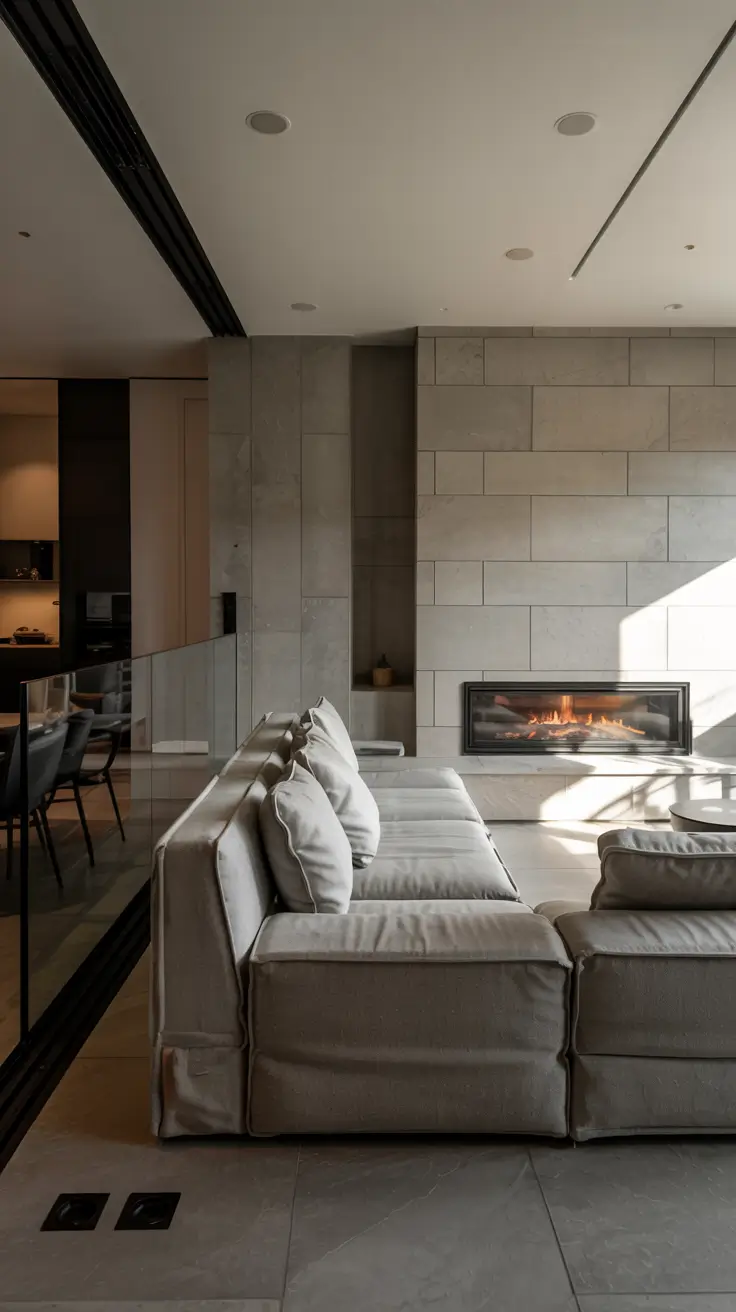
The thing I admire about the contemporary ideas is the clarity. Each work comes with its own pay and circulation remains self evident. The pit can accommodate huge volumes particularly in rooms with a double height and the pit can frame an art or landscape view. I make finishes matte to prevent glare at level changes.
I add a planning note of smart home integration as it involves disguised outlets in the rim, low voltage step lights, and paths to upgrades in the future. I am also adding sample palettes of cool modern and warm modern schemes.
Modern Luxury Sunken Living Rooms
I do not think about luxury as noisy boasting. I strike the fine stone, hand-planed oak and custom upholstery against the vast negative space. A contemporary luxury fireplace usually combines with a floor-to-ceiling fireplace and an integrated media shelf such that the room switches to motion pictures one moment and fireside conversation the next.
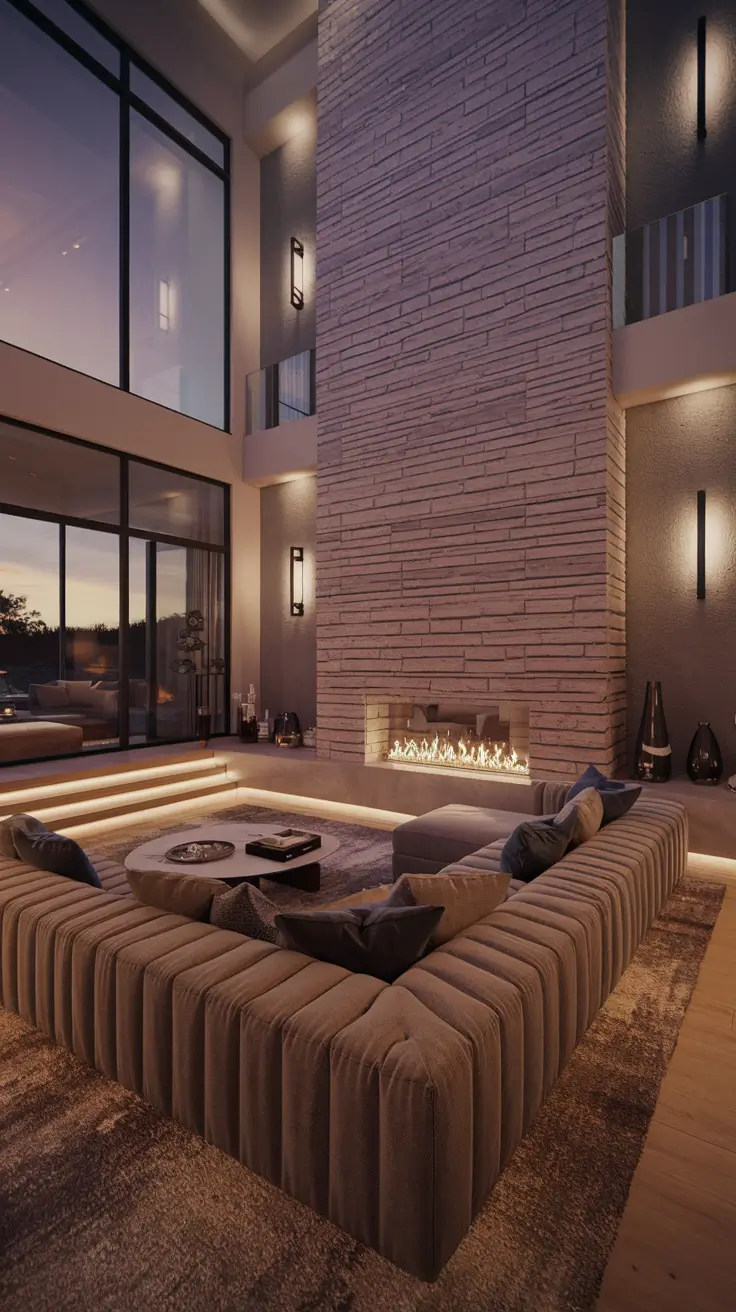
I choose a dark sectional with exquisite tailoring, a plush custom carpet about the size of the inner footprint and two sculptural swivel chairs to maintain sight lines. I describe a stone or micro cement step with a shadow reveal, a slim bronze handrail and I finish the rim a low plinth that supports art and lighting. In the case of railing I would use starphire glass, or timber screen that coincides with ceiling battens.
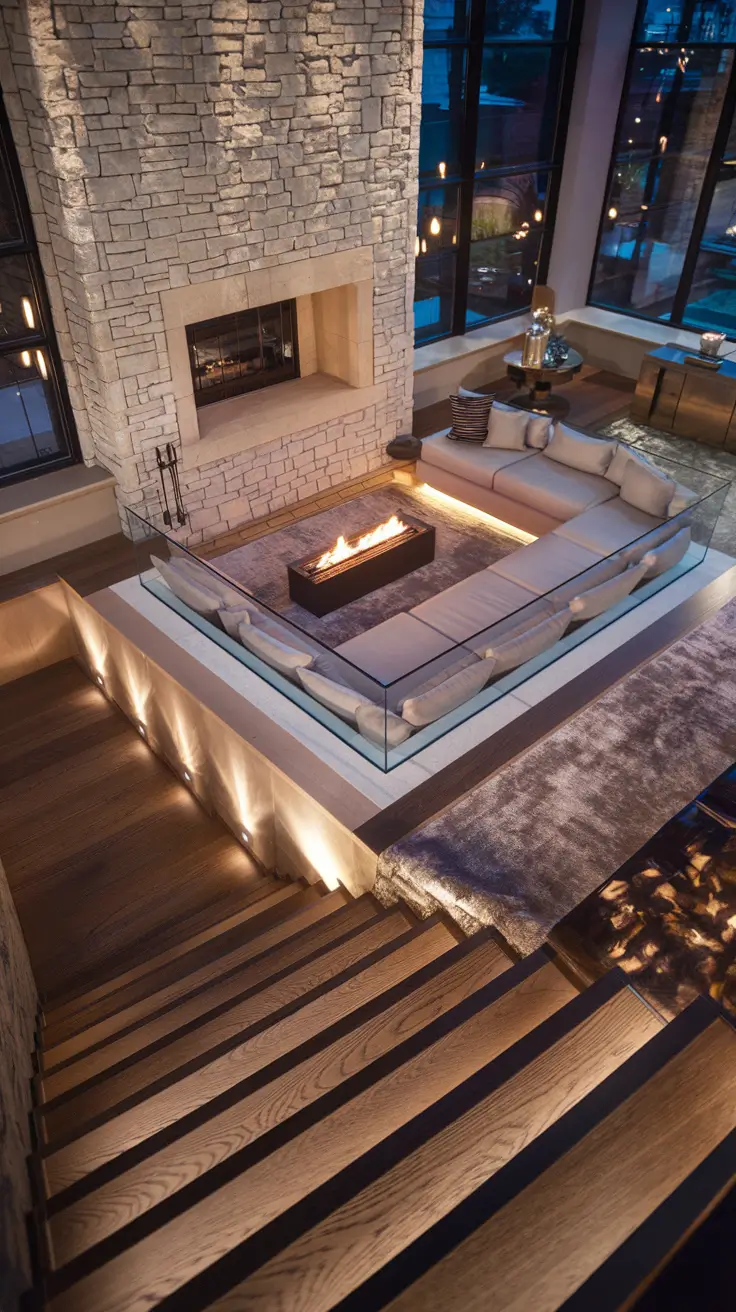
Practically, restraint renders it costly. I keep the palette down to two main materials and a metal, and leave the mood to be transmitted by texture. The rest is done by lighting, a linear flame, washes of light and glow at the floor, to outline the steps.
I include a sourcing plan which includes artisan carpets, customized upholstry lead times and stone maintenance. I also have a contingency design of families, which include performance textiles and rectangular edge table without compromising the raised feel.
Minimalist Sunken Living Room Ideas
I begin with cold geometry and practical warmth. Minimalist ideas of the sunken living room are based on proportion, light and texture rather than on ornament. I maintain the drop low, the sitting low and the palette gentle so the pit appears a quiet pocket amid an open concept plan.
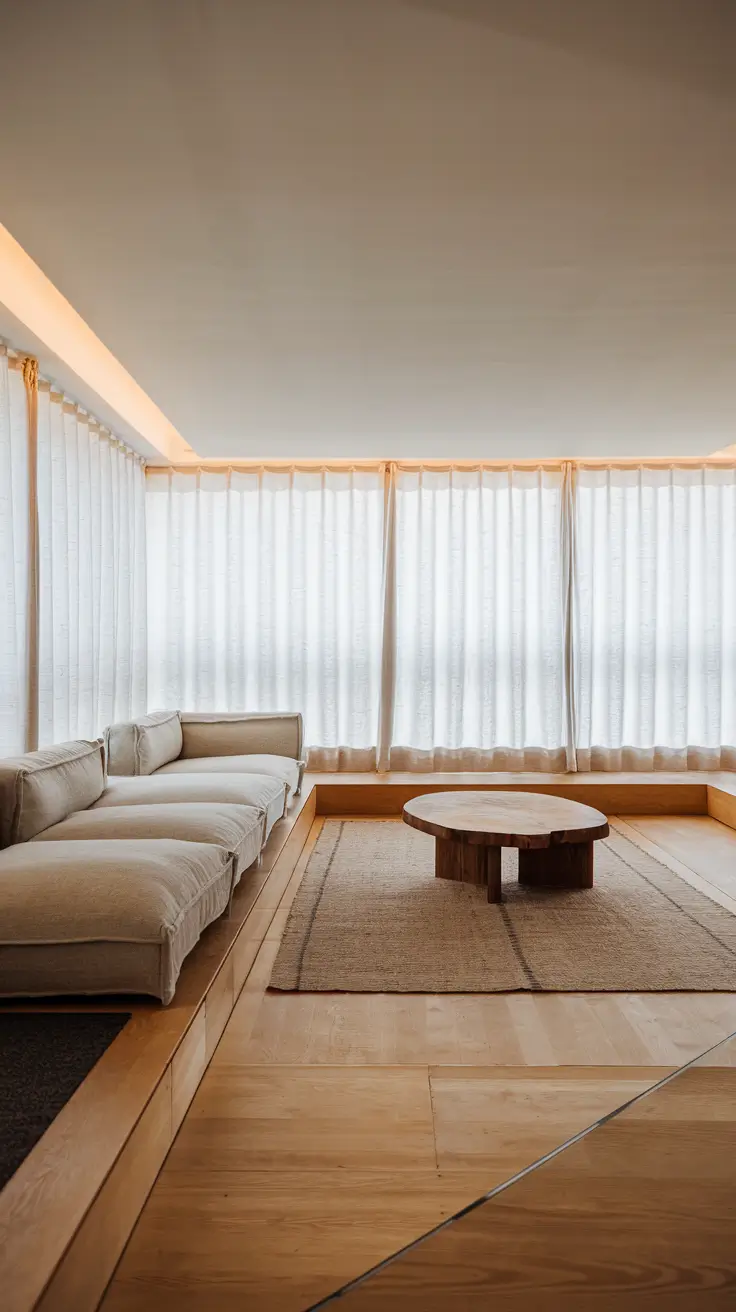
I select a low modular sofa, one timber coffee table and a big undyed wool rug. Storage hides in the rim. Treatments on the windows are plain linen linens. When a guard must be provided I cut a thin steel rail, painted to blend with the wall or a low half wall of similar plaster. Continuity on the flooring In the case of flooring, the wide oak boards extend into the pit.
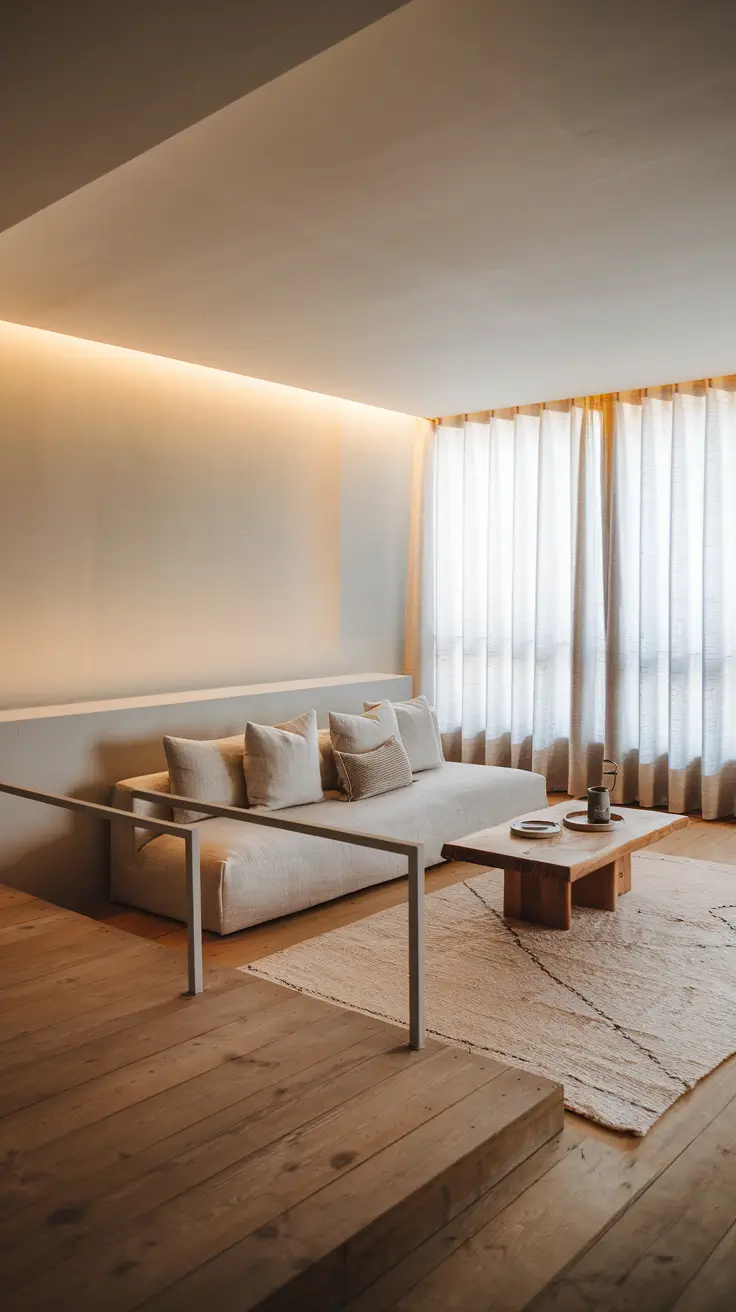
I believe less is more and minimalism is flourishing on detail. It is in flush baseboards, adjusted joints and silent hardware. I limit decor to a single object such as a ceramic vessel or a large artwork in one frame and I employ the use of warm white lighting to prevent a clinical appearance.
I include a decluttering checklist, cable management and built in charging to keep the space clean. I also provide recommendations of sustainable materials and low VOC finishes to promote the minimalist spirit.
Japandi Sunken Living Room Aesthetics
I add little; sunken living room concepts with silent coziness into the mix to create a Japandi atmosphere that will be trendy in 2026. This style leans toward a subtle color scheme, straightforward materials, and open flow without a sense of tension, thus the transition between levels is like a swell bowl instead of a hole. I plan the floor plan in such a way that the circulation goes around the edge of the rim too beautifully and I orient the steps with the natural lines to the kitchen or terrace to make the plan intuitive.
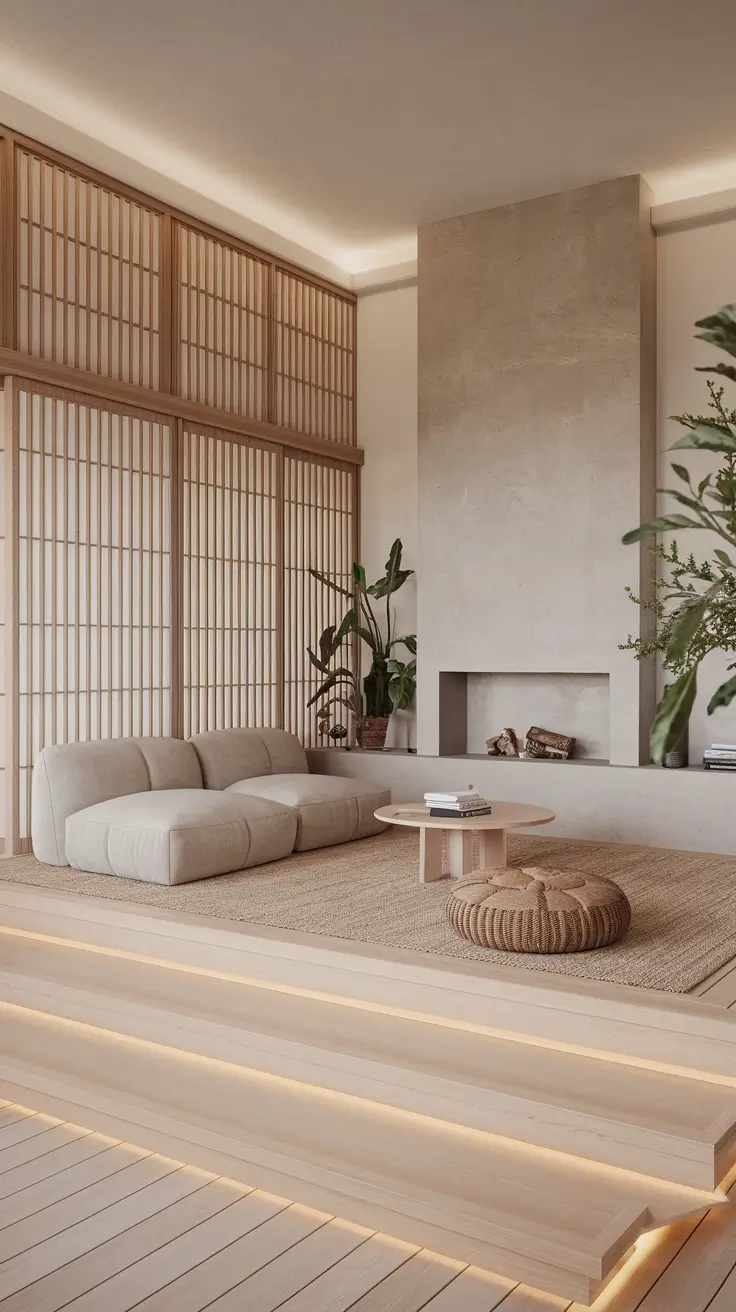
I choose low-profile seating, of soft linen slipcovers, a pale oak platform edge, and a tight-weave wool or jute rug. The profile is quieted by a plastered fireplace and a low horizontal opening and subtle safety is offered by a thin steel sunken living room railing or half wall in the same plaster. The shoji-inspired screens include panels or slats of ribbed oak that conceal the adjacent areas without obstructing light and the floor-level LED step lights are functional, yet non-obtrusive.
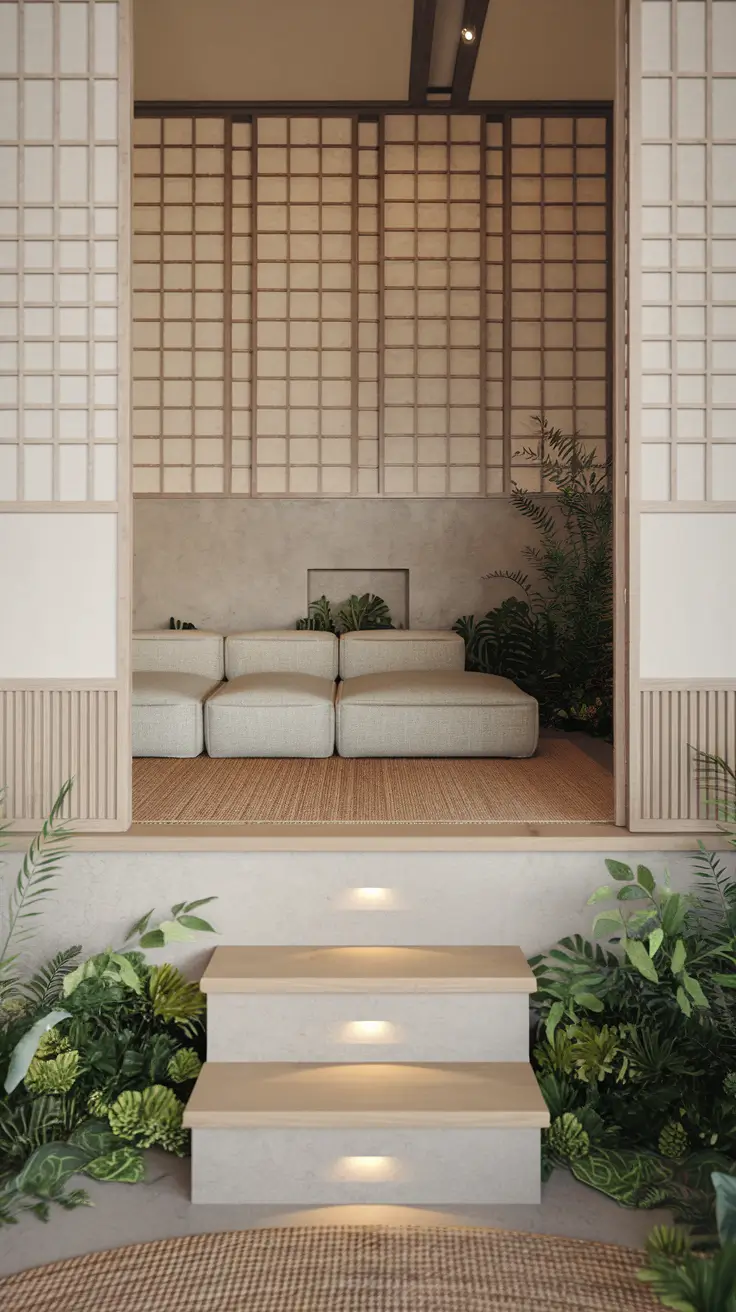
Japandi in my case is more of proportion than ornament. I maintain a shallow dimension and broad steps to invite barefoot lounging and I echo a single wood in the flooring to the rim and stair nosings to maintain a sense of coherence. In cases where the clients want a piece of inspiration, I will point them to light matte finishes, one accent ceramic and greenery with sculptural leaves so that the eye remains on the form.
I would include a brief specification note on slip resistance on timber treads, a cable plan of floor outlets concealed under the coffee table and information on selecting dim-to-warm lighting so that evening scenes remain as warm as possible, not scary.
Rustic Sunken Living Room Warmth
I embrace rustic sunken living room ideas design by leaning into the texture, a fireplace take center stage and layered light which accentuates nature materials. The reduced level concentrates immediately heat and conversation and therefore is a perfect match with the fireplace concepts that display stone, brick or hand-troweled plaster. I maintain the floor plan minimalistic, two or three steps that are generous to walk on.
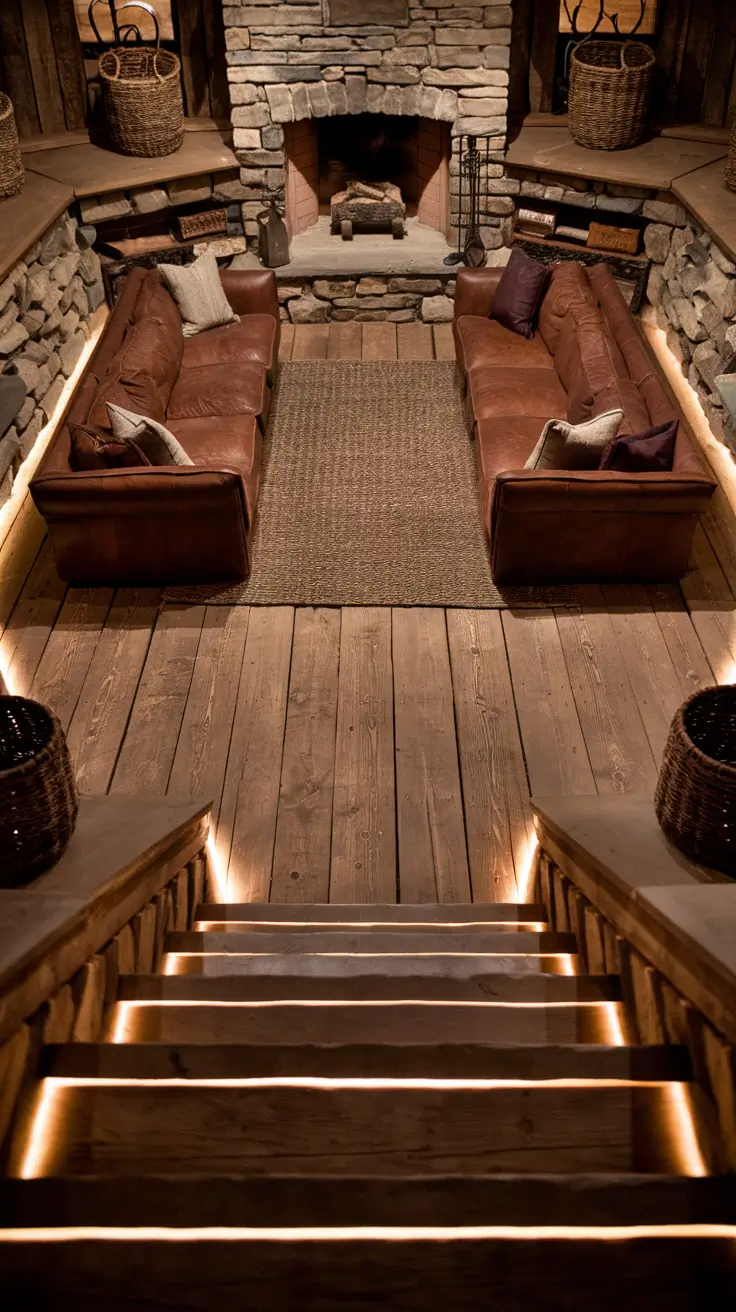
I mention broad plank oak or hand-scraped timber flooring concepts within the bowl, massy beam mantel, and plush, forgiving performance tweed or leather sofas. The ground is accented by woven baskets used to store wood underneath the rim and iron decorations on a slim railing or a half height pony wall. The palette of touch is reinforced by a wool carpet, plaid blankets, and hammered metal side tables.
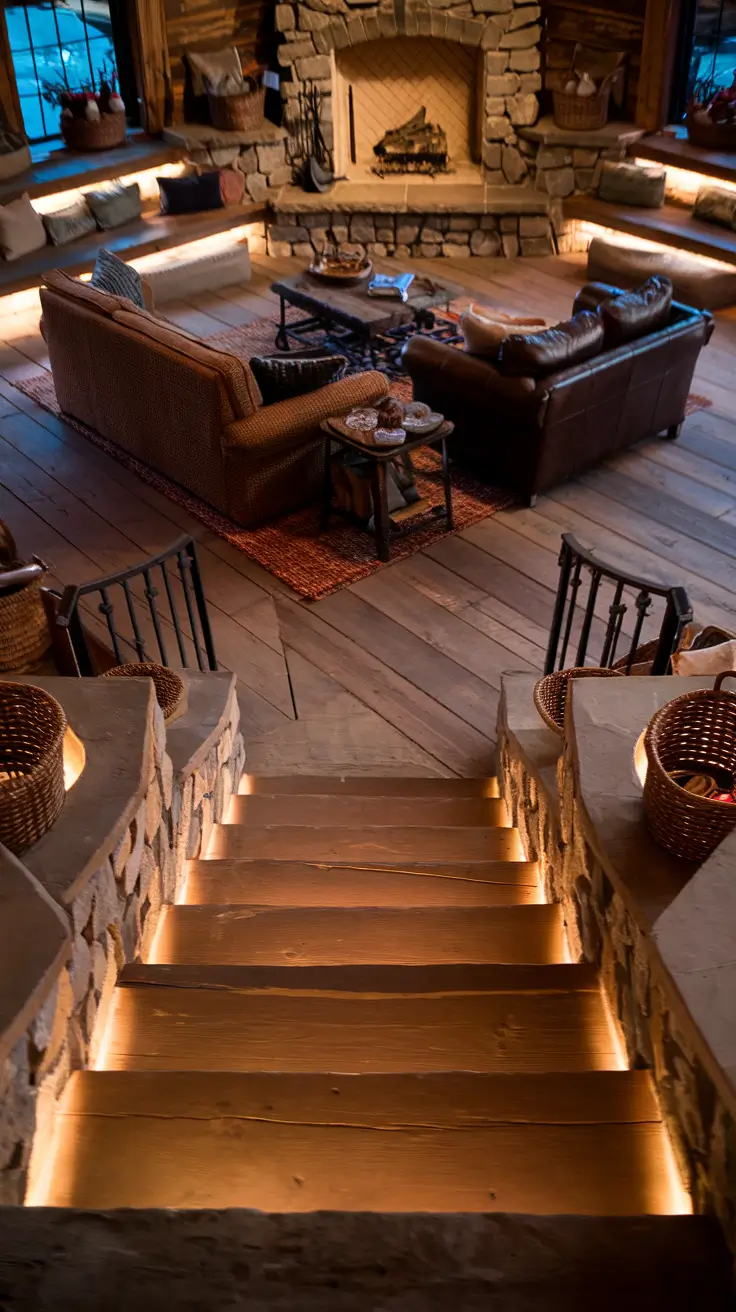
The fail-safe trick in my book is heft and softness. The architecture is made present by the presence of the pit but I contrast heavy stone with warm lamp light, casual fabrics and a low coffee table with rounded edges. To conceal the visible fixtures I place step lighting in the shadow reveal under the tread and to preserve the rustic story.
I would include some maintenance advice such as soot staining natural stone close to the fire, a message about sealing timber against embers and visible contrast on the stair edges to keep safe without disturbing the rustic effect.
MCM Sunken Living Rooms
I consider MCM sunken living room modern updates an opportunity to glorify the use of walnut tones, graphic carpets, and sculptural shapes. It is echoing the floor plan experiments of the 60s and 70s and I make it fresh by streamlining profiles and making the views to the garden sharper. I would arrange the design to have a conversation pit around either a fire place or low media credenza without any clutters.
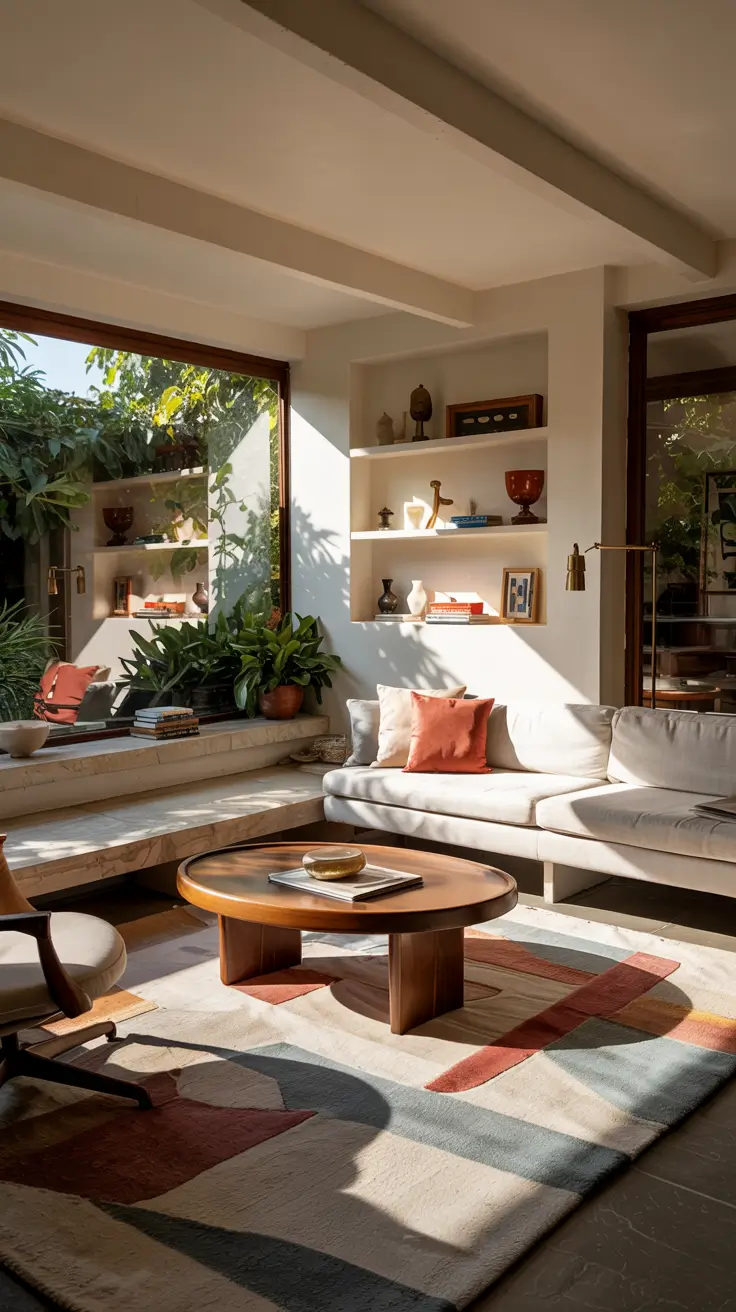
I select a tight-back sectional, tapered legs, a geometric carpet, a low oval coffee table in walnut and a pair of swivel chairs with slender arms. A starphire glass sunken living room railing visually disappears where guard protection is necessary and stepped built-ins along the rim show books and ceramics as do the true MCM way. The scene is topped with brass pull lamps and a balanced art composition.
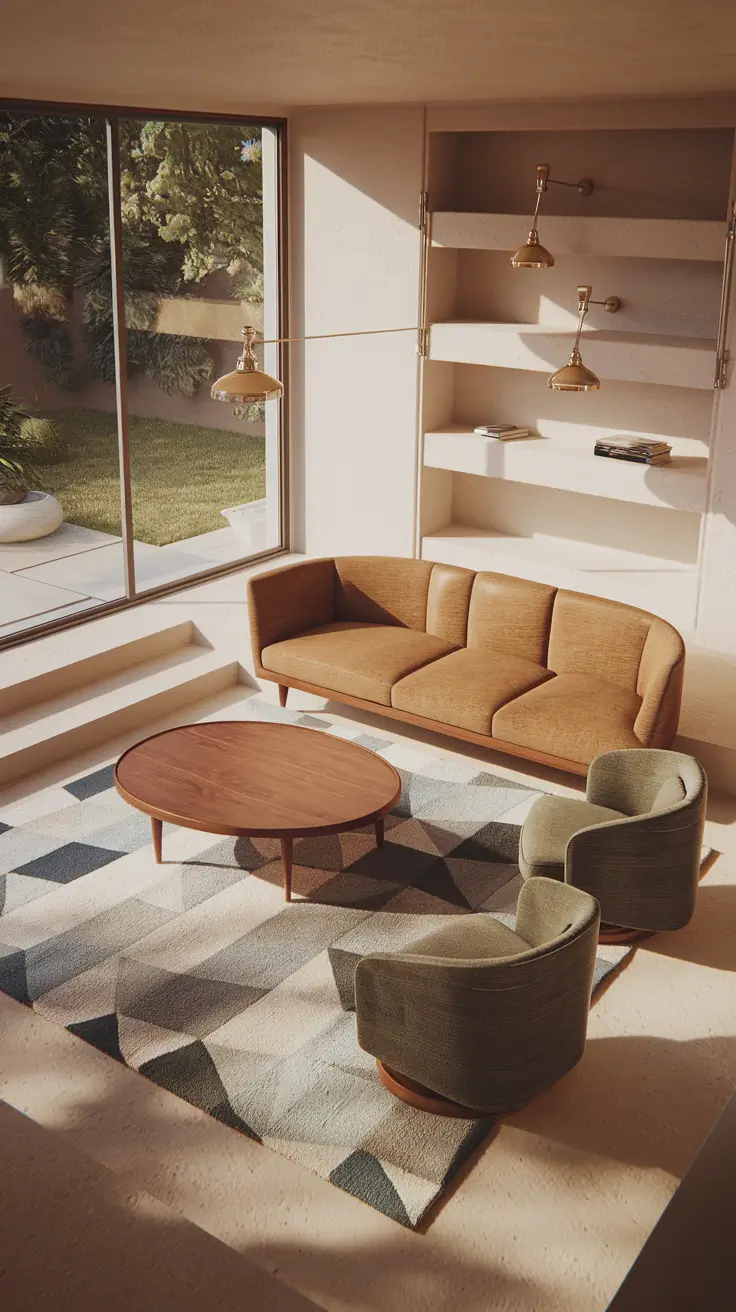
I do not use the rule of nostalgia overflow. I restrain the color accents to one or two saturated color and leave wood and texture in the lead. Should a 70s allusion appear, such as a shag accent pillow, I balance it with brightness and sharp-cut furniture so that the room is more of a curated than a theme room.
I would include a wiring plan of hidden speakers and media lift together with advice on the size of the rugs to anchor the seating bowl without engulfing the edges of the steps.
70s Conversation Pit Revival
I revive the same concepts of 70s conversation pits by emphasizing on conviviality, clear circulation and a depth that allows one to relax without stumbling to enter it. The revival performs best in open concept shells with a double height ceiling in which the scale is stabilized. I begin by using dimensions, preferring a drop of 8 to 12 inches and I match steps in order to place guests into the center in a natural way.
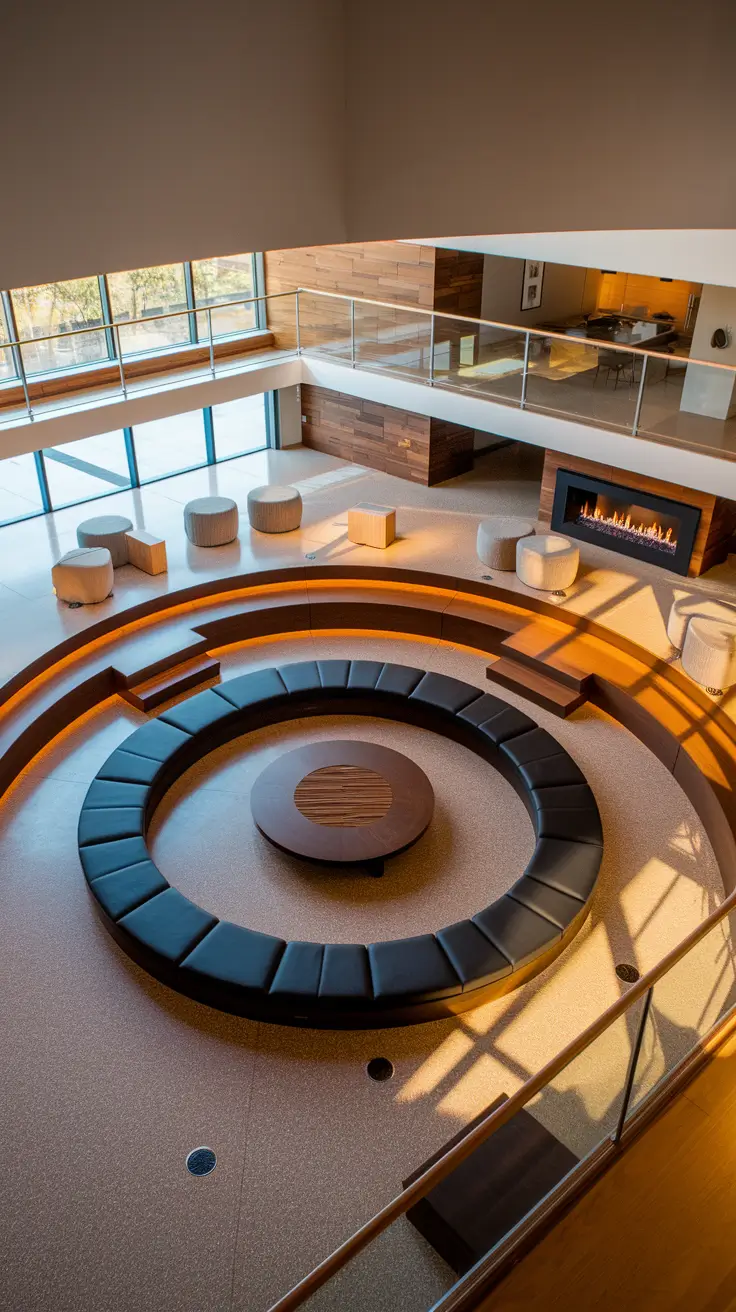
I construct bench type chairs on the perimeter of the inside to make sure the posture is comfortable by stacking soft cushions on hard cushions. A magnetic fireplace is a low, linear or round fireplace, and floor sockets of the lamp and charging sockets are constructed into the center island or table. I combine a nice railing or half wall (where necessary in code) which doubles up as a bench on which to place drinks or books.
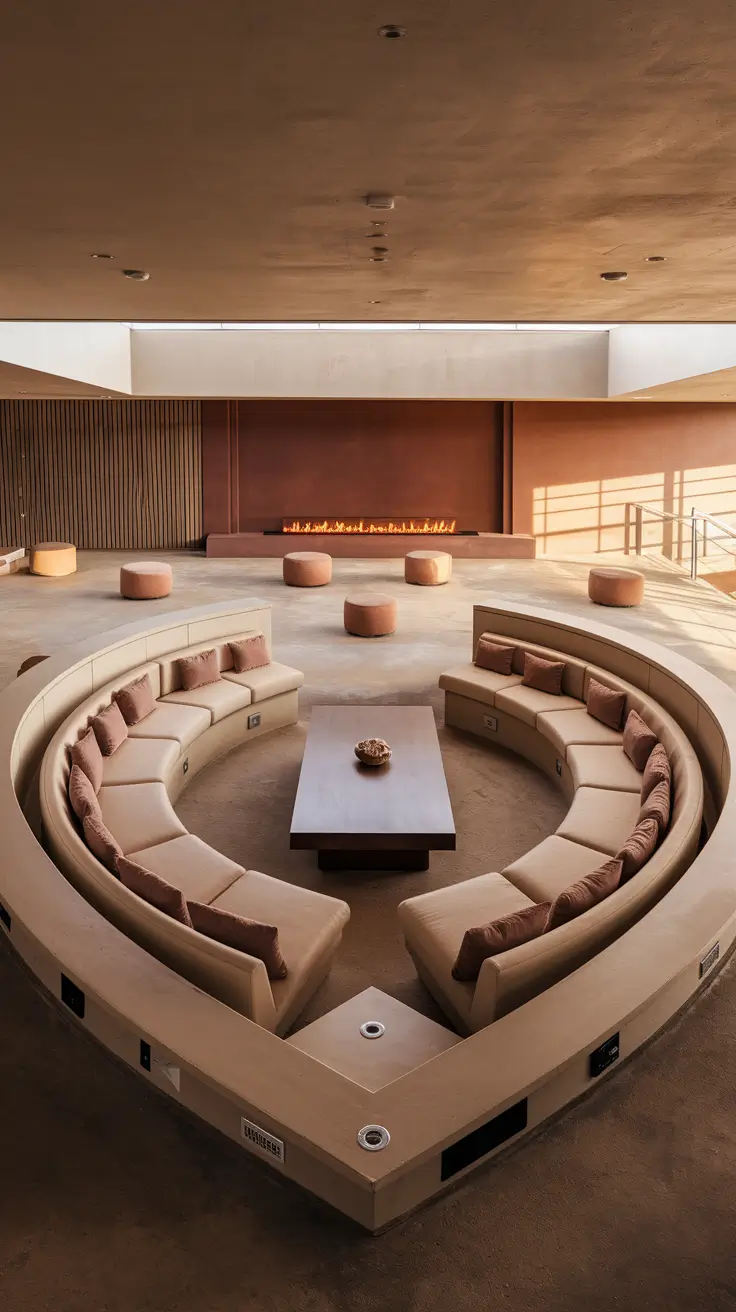
In my opinion the secret is flexible perching. I provide movable ottomans that can either reside on the rim or slide the ottoman into the pit and I ensure that the coffee table is large enough to accommodate everyone without straining to reach. I do not use tall backs that obstruct eye lines throughout the open space.
I would add a fast sketch at the end of the steps about the widths of the steps, the recommended heights of the seat when fitting inbuilt seats, and a note about the ventilation should the pit be based on a fire-burning stove.
70s Conversation Pit – Cozy Textures
I give a comfortable 70s conversation pit a modern touch with textile and matte finishes and soft lighting. The acoustics of the lowered plane are heightened hence soft materials are necessary to be comfortable. I strike a balance between nostalgia and restraints keeping a couple of hero textures instead of little patterns.
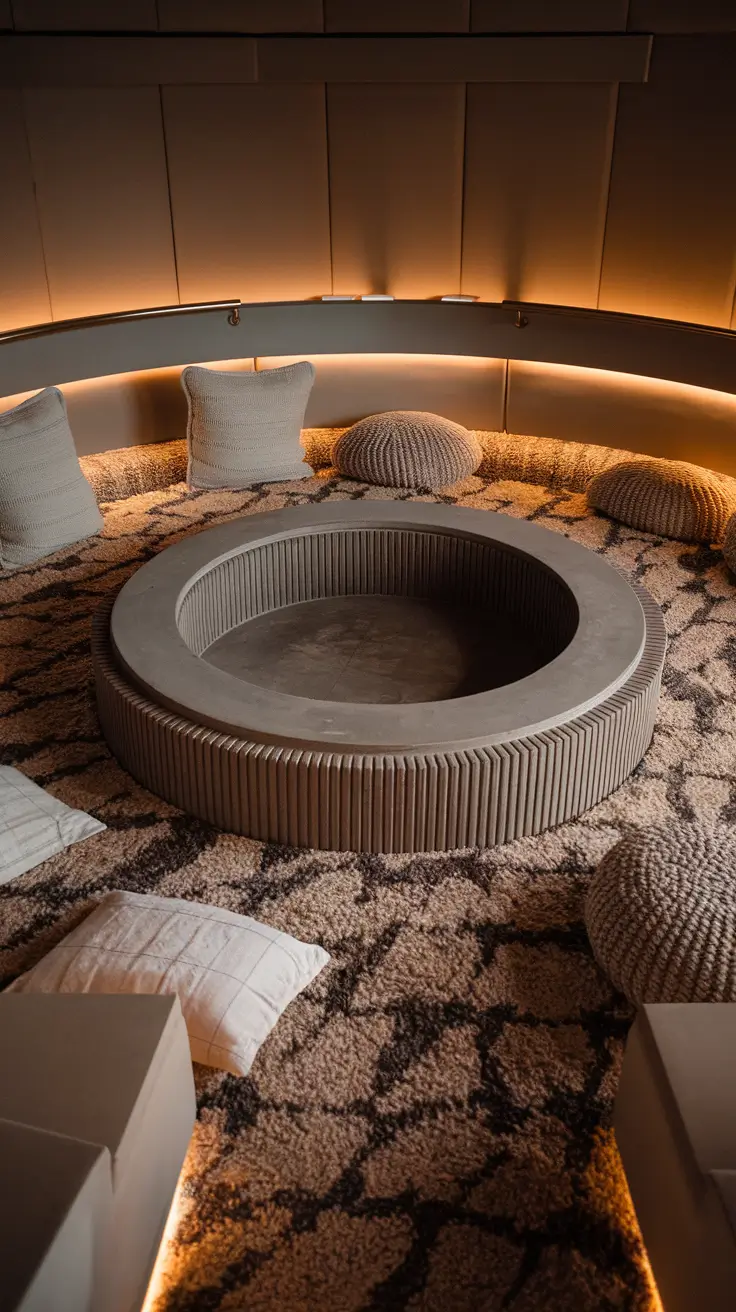
I suggest a thick wool or modern shag rug, deep cushions on benches of boucle or chenille, and combination of large pillows with removable, washable covers. Modern is a plaster or microcement hearth, with ribbed wood cladding on the rim. To be safe and stylish I use a very slim handrail or a low half wall that is upholstered on the inner face.
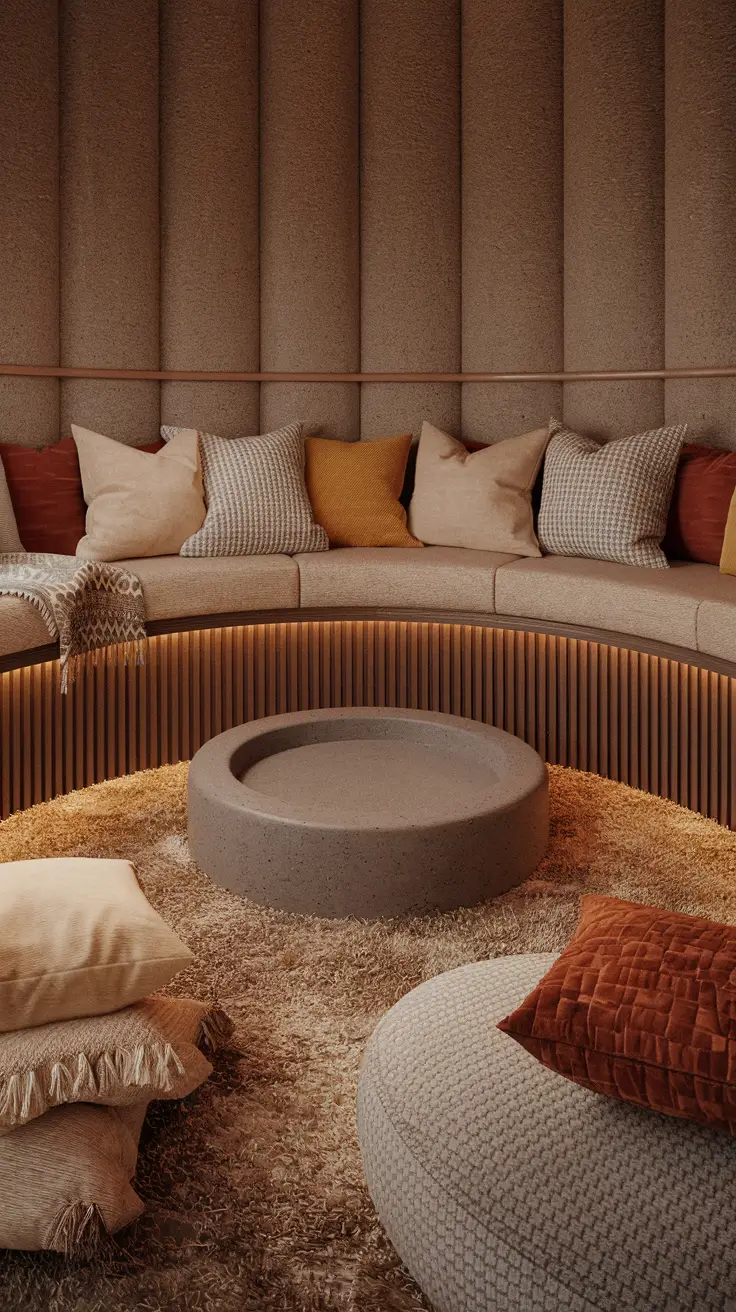
I have realized color temperature is the most important material that dictates mood more than any other material. Boucle and wood are illuminated with dim-to-warm LEDs that shift to 2700K in the evening and a low, wide table ensures the atmosphere is easygoing. I have big and few accessories – a ceramic bowl, a green plant, one tall standing lamp – to allow the textures to breathe.
I would introduce care notes related to the high-pile rugs, a scheme of underground storage of seasonal coverlets, and advice on contrasting edges of stairs so that the comfortable palette never interferes with the wayfinding.
70s Conversation Pit – Modern Update
I do not only update old pits by sharpening of edges, enhancing lighting but also adding light and durable materials that are challenging to wear after every day. The idea is to maintain the conversation-first form, but enhance the safety, comfort and connectivity with a contemporary kitchen or workspace in the same area. I consider the floor plan to make sure that steps are placed in areas that the current circulation needs in the home.
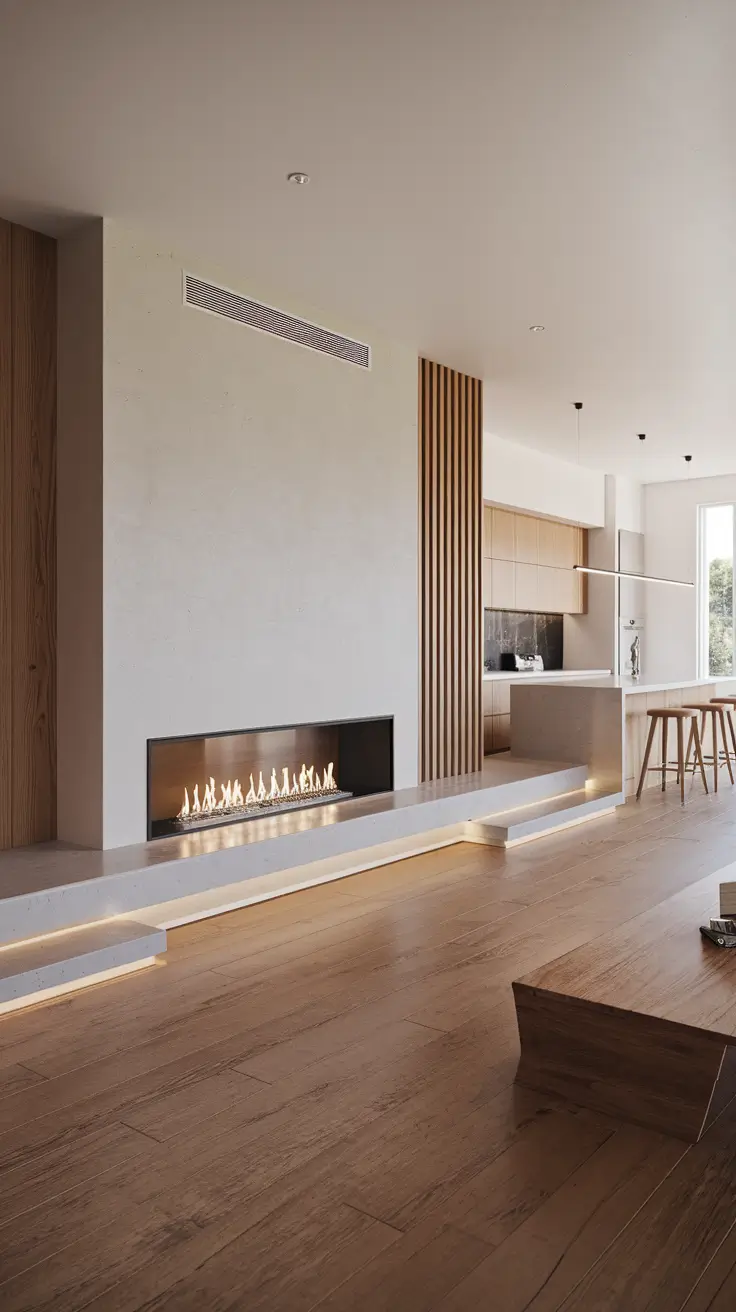
I use engineered oak or tough wool tile or carpet instead of outdated tile or carpet, redesign the hearth to a sleek linear insert, and place a glass or slatted-wood sunken living room railing which fades away. I incorporate step lights and floor outlets and then I hide media and speakers such that the bowl can be film night and a quiet talk. When there is a continuity of a wall, I match kitchen rails with the wall.
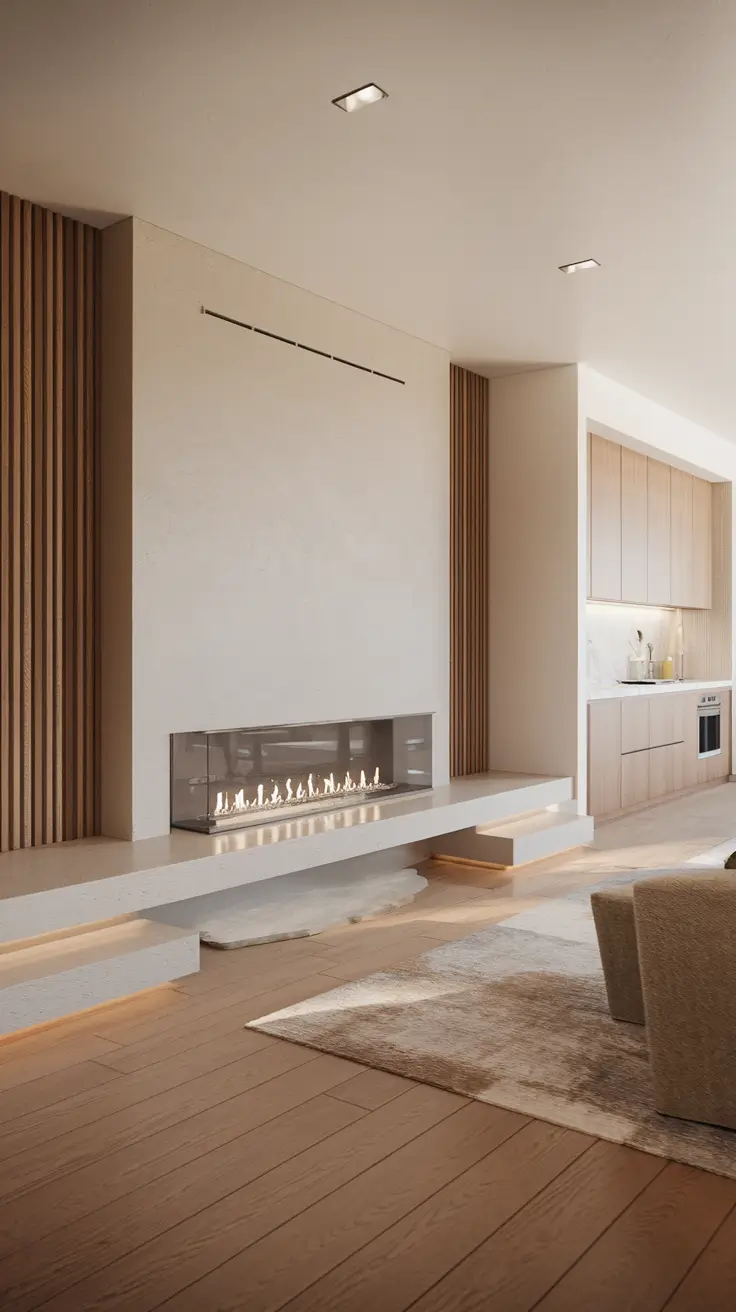
Moderation always raises these updates. I maintain low silhouettes, open the bowl to natural light, and concentrate on three harmonious materials – wood, plaster and stone or metal. I would benchmark and benchmark the seat height and depth of the steps with the family before concluding the millwork to ensure that the ergonomics are easy.
I would put a list of punches onto retrofits: inspect subfloor to ensure that lighting runs are placed where needed- under steps, ensure that guard heights are appropriate where needed, and have a small, vented area to run electronics in case media is built into the pit.
Open Concept Sunken Living Rooms
I begin by considering an open concept sunken living room as the anchor that is used to define zones with no walls. Dropping the floor 2 or 3 steps down gives me a natural conversation pit feel inspired by the classic 70s, but I keep surfaces modern with wide-plank flooring, low-line seating and clean sightlines to dining and kitchen. This is a good approach for families who want to have visual connection, but still want to enjoy an intimate lounge. It also goes well with sunken living room moderns and mixed-use lofts where the pit is like a room within a room.
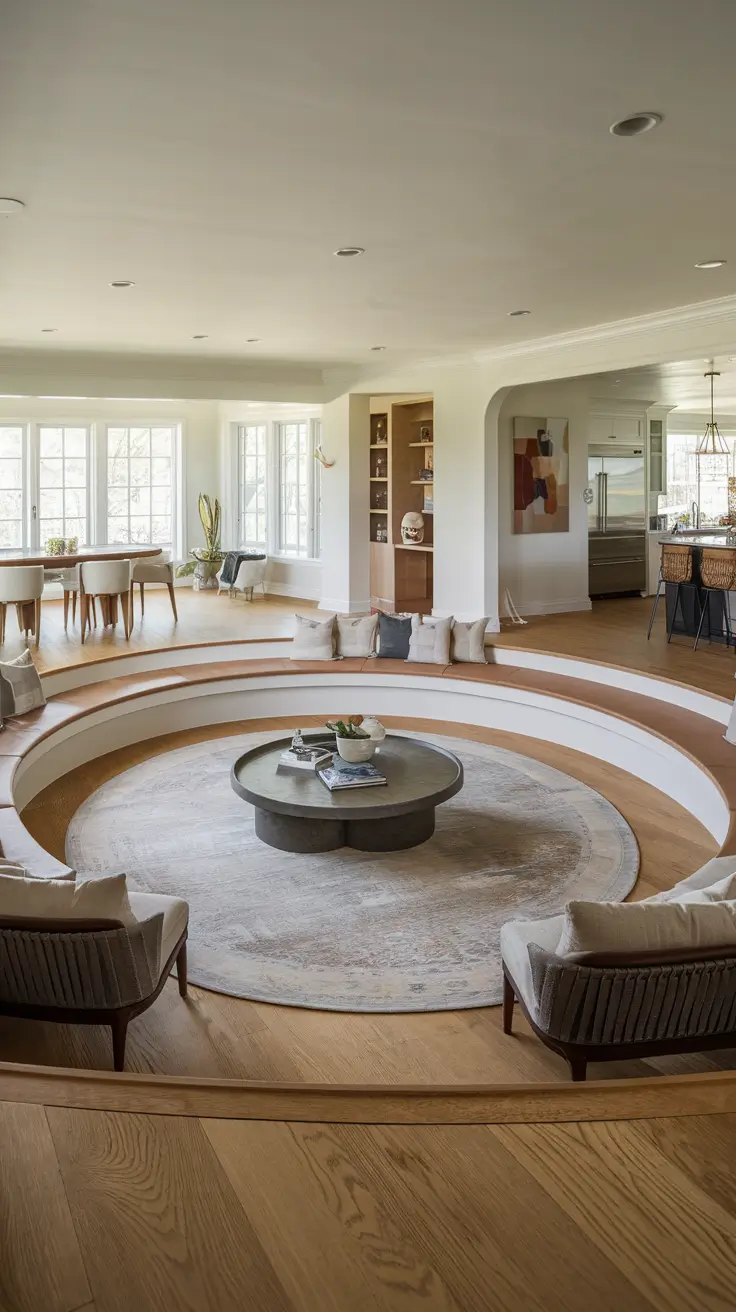
For furnishings, I focus on having a sectional with a low back to maintain views, round coffee table to soften edges and invisible step lighting for safety. A perimeter ledge is made into a functional display/extra seating during gatherings I often add slender console on the high side to ground out traffic and a large flat-weave rug to define the core. If acoustics are lively, I add wool textiles and drapery on adjacent glazing to mute echo.
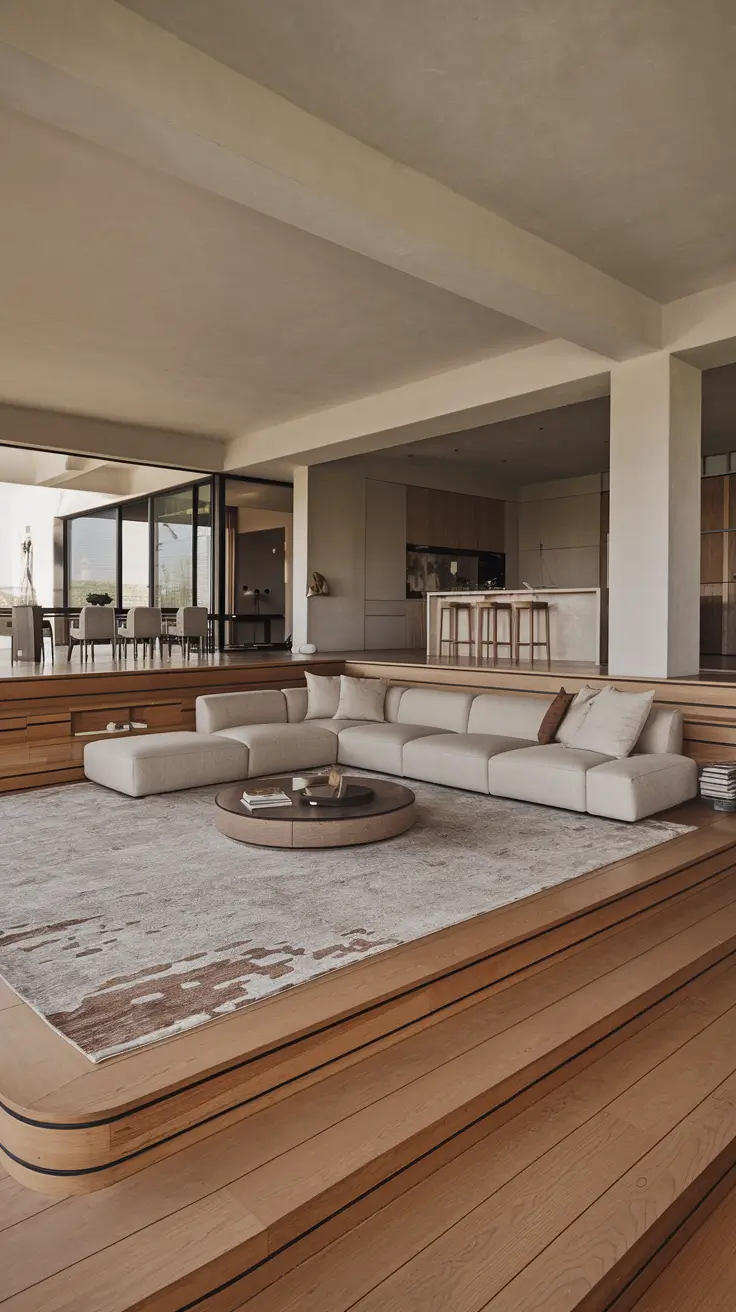
From experience, the most successful open concept pits are a balance of contrast and cohesion. I keep material palettes in line with the upper level for continuity, then change the intensity of the textures in the pit to indicate a change in mood. Many editors in US design media note that layered texture is carrying 2026 – think boucle upholstery, limewash walls and matte oak – and I agree because these finishes absorb light and sound without visual clutter.
What I would also add here is to have a plan for circulation. I indicate at least one generously two-step entry on the main path, and a secondary access on the other side, to avoid bottlenecks. If the space is big I add a third perch or reading corner so the pit produces more than one activity zone.
Sunken Living Room Off Kitchen
When the pit is directly off the kitchen I use the drop as a comfort sign – prep and cook up top, relax down there. This keeps conversation flowing and lounge mess out of the chef’s zone. I like to have a half-step landing between the kitchen and first full step so transitions feel natural and I place the pit axis in line with the kitchen island for symmetry and sightlines.
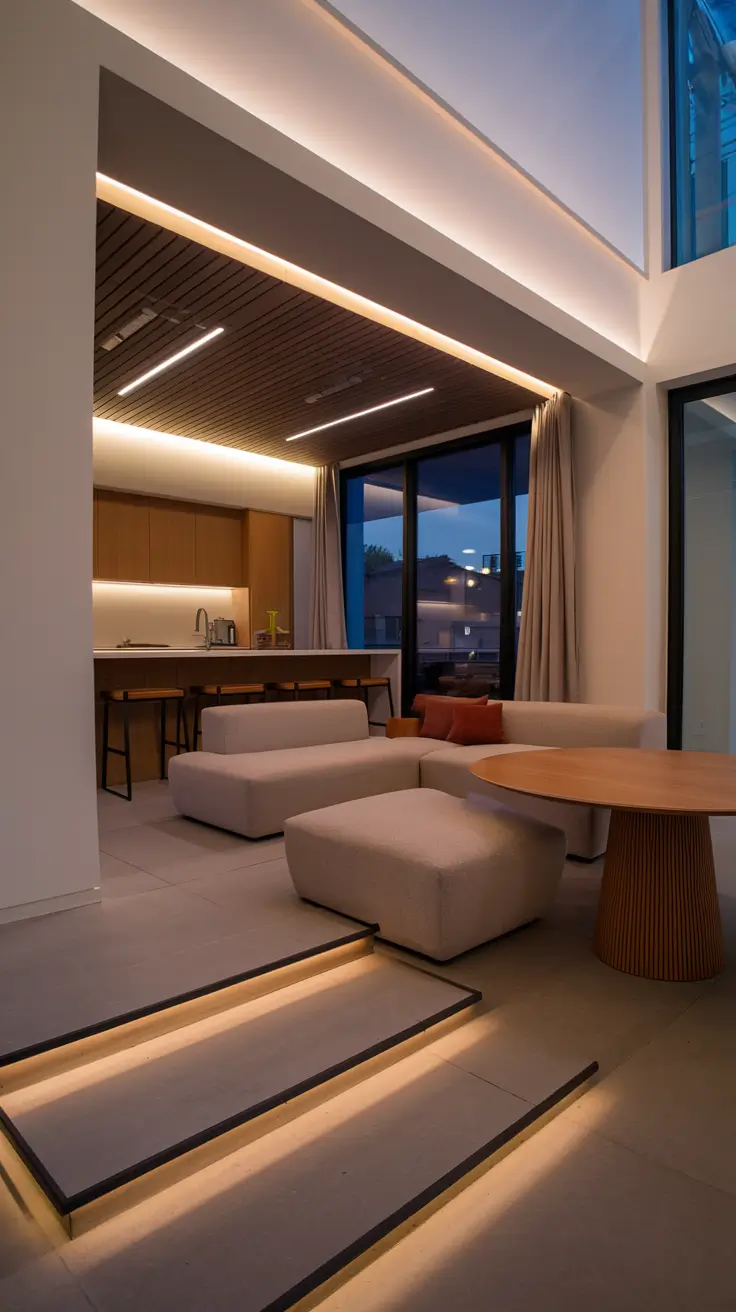
I’ve specified performance textiles for kitchen-adjacent upholstery, a closed-base sectional to conceal crumbs, and a wipeable round table for snacks. Task dimmers keep the culinary brightness from the lounging warmth. I like slatted wood soffit or beam detail over the pit to visually nest it. If clients are looking for more separation, I introduce sunken living room railing ideas such as a slim metal guard with timber cap, which doubles as a perch for drinks.
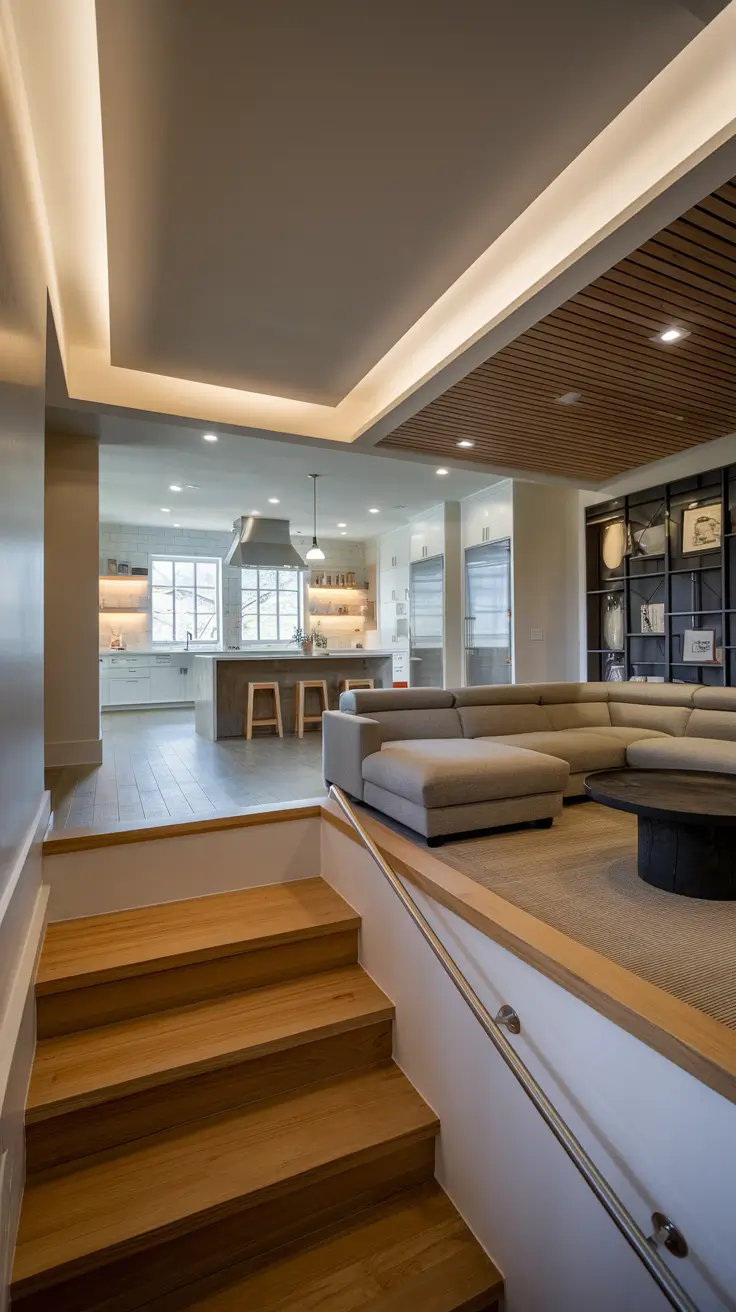
I find households enjoy this arrangement, because it supports everyday living – cooking, homework and screen time – all in one panorama. Practical advice that I have followed from US kitchen and living pros is to keep walkways clear around islands and pit edges; I keep comfortable passes so that collision points are avoided during family rush hours.
I would add the plan for ventilation and sound. A stronger but quiet range hood and soft flooring in the pit help to control cooking noise and aromas. I also include close storage for throws and chargers, so that the lounge doesn’t look all over the place even though kitchen spillover is allowed.
Kitchen Railing Wall Ideas for Sunken Spaces
Where needs code or comfort demand a barrier, I like a hybrid solution along the edge of the kitchen: a half wall with a slim rail atop. The wall provides a splash and clutter screen and the rail provides airiness and handhold support. This is ideal for families that want a defined boundary without losing the connection of sunken living room off kitchen plans.
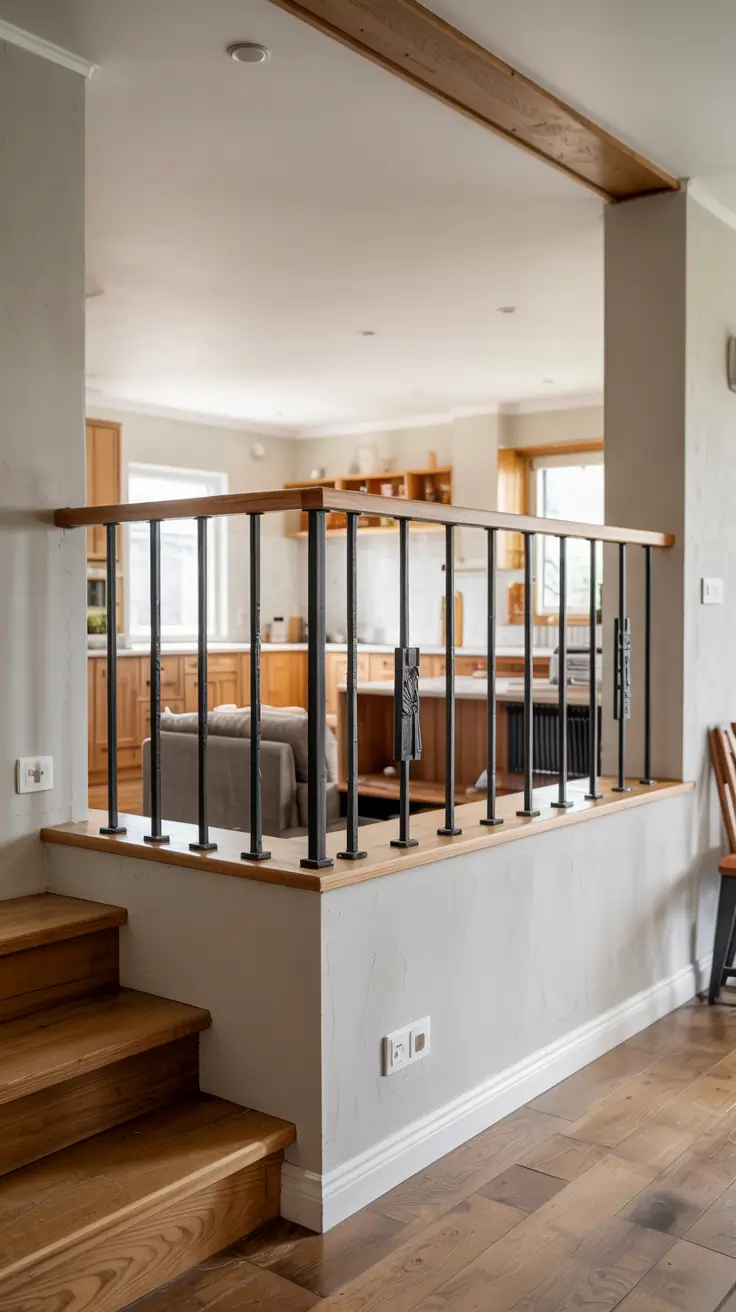
I detail the half wall at about counter height, stained in cabinet colour, or microcement finish to be durable in the kitchen. Above it, I add a minimal metal rail or wood cap – just enough for grip and decor – in a similar line of thinking to sunken living room railing ideas half walls. LED light integrated in the cap can wash the wall at night. If there are kids around, I don’t use wide horizontal slats that invite climbing and I use narrow vertical pickets.
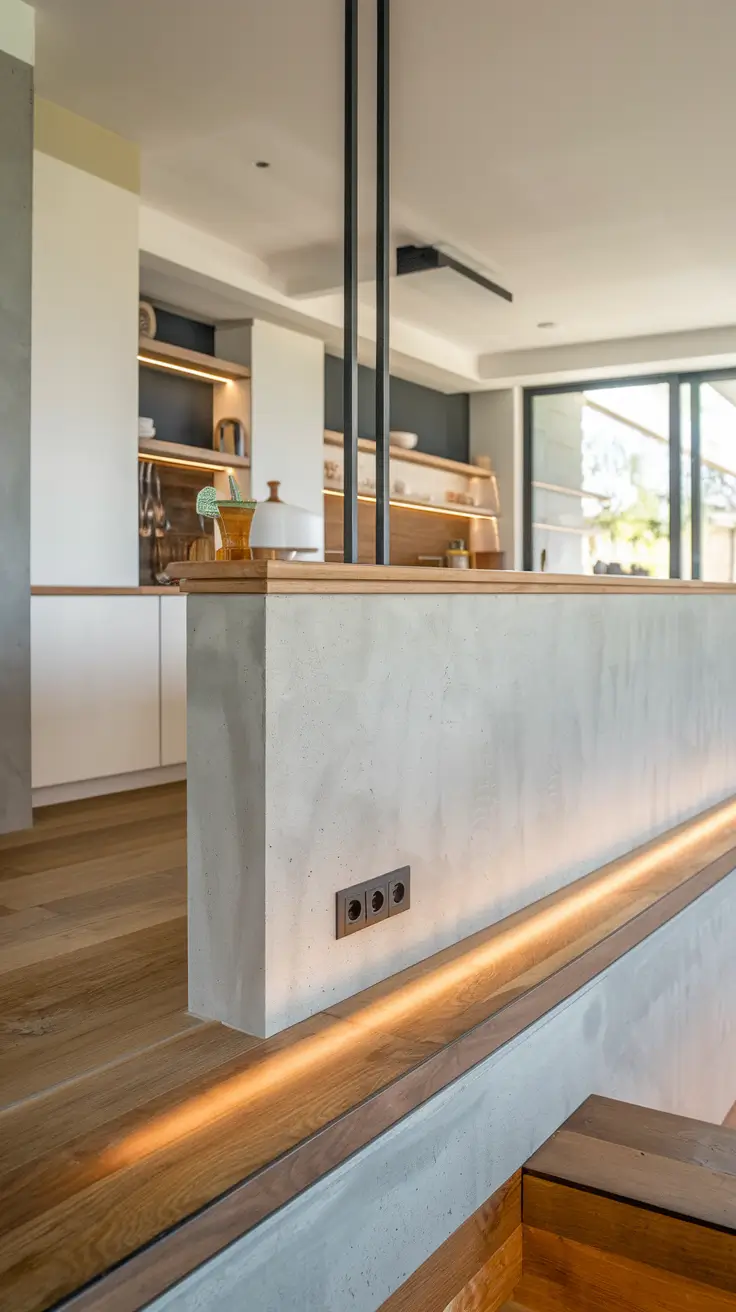
professionally speaking, I like elements that do double duty. The half wall can be the place for power outlets, a bookshelf facing the pit, or banquette-style backrests along the kitchen side. Many remodel features focus on storage at level changes as a smart move for 2026, and I’ve seen it keep counters clear and lounges uncluttered.
I would add tactile contrast. A soft wood cap encourages touching where the body sits naturally while a hard lacquer or plaster on the wall face takes care of the cleaning. This little sensory detail makes the boundary feel intentional rather than just brought along for the ride.
Sunken Living Room Fireplace Ideas
Fireplaces and conversation pits are classic partners and 2026 leans to linear gas or electric units that stretch the length of the pit. I centre the flame at the seated eye level (not standing) to respect the shift in vertical. Flanking niches or low benches make a hearth lounge that’s intimate without heavy masonry.
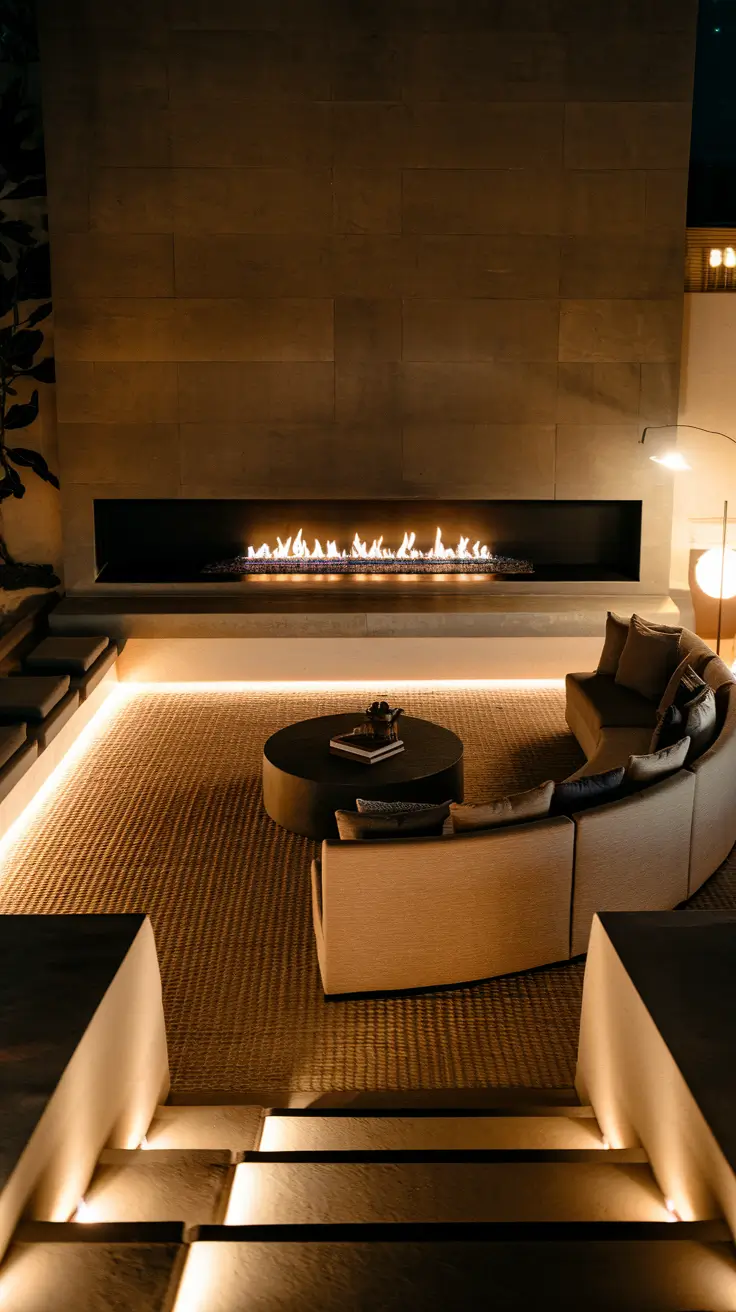
I use a combination of long, matte surround in stone or porcelain with a flush TV recess if required with careful offsetting of heat and electronics. An elevated fender bench allows additional seating and a space to place trays. If clients desire tradition I indicate shallow modern box with narrow mantel. For tighter homes, a sealed direct-vent gas unit provides real flame with less clearances, matching sunken living room fireplace ideas that are safe and dramatic.
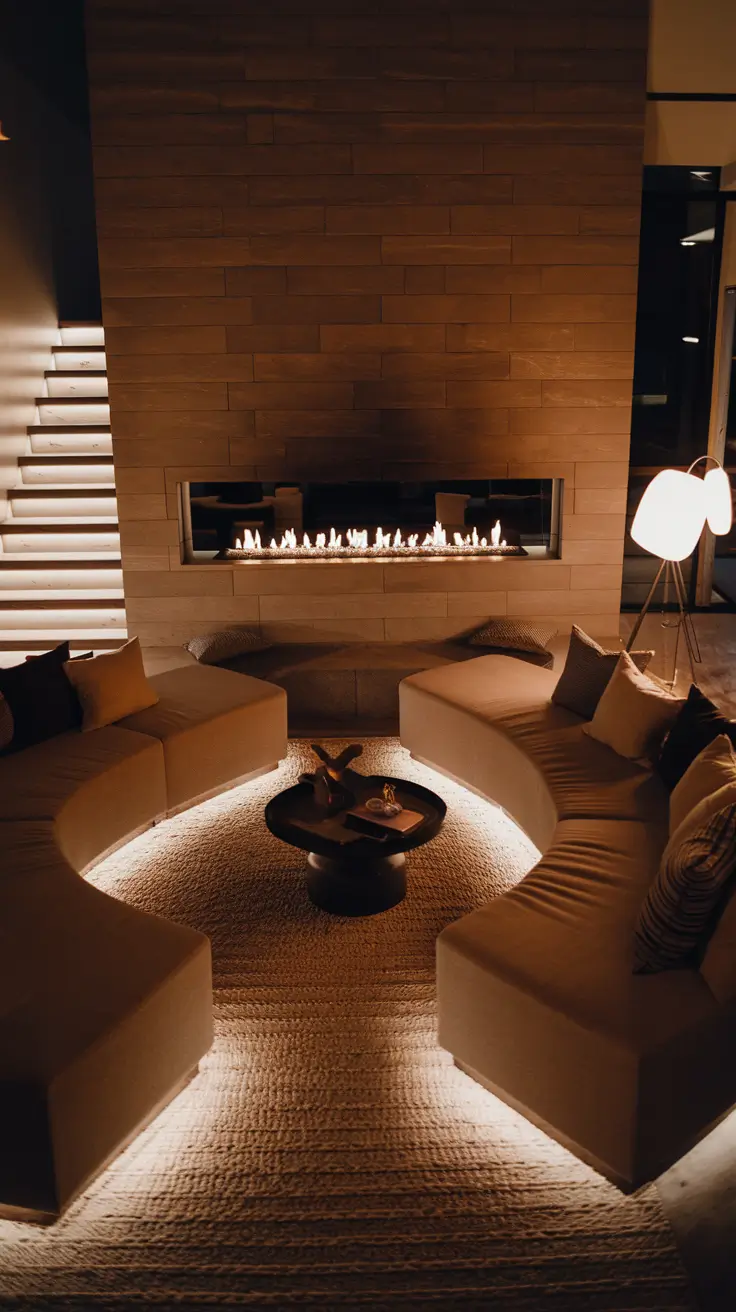
In my practice, the ideal fireplace pits have balanced lighting – ceiling ambient on dimmers, low-level stair lights and lamp pools at reading chairs. US building advice often recommends attention to clearances around the firebox and edges of steps; I take that to mean a hearth plan with wide traffic lanes and non-slip flooring.
I would add combustion awareness and combustion controls. For gas I include oxygen depletion sensors as required and a dedicated shutoff within reach from seating. For electric, I specify realistic ember beds and soft crackle audio to be able to surmount the cozy effect without fumes.
Layout With Fireplace for Sunken Living Rooms
If it’s a fireplace driving the plan, I construct the seating bowl to its centerline. A curved sectional or two facing sofas with swivels holds views flexible. The drop helps the fire read a focal point from the upper level too, a smart move in sunken living room ideas layout where multiple vantage points matter.
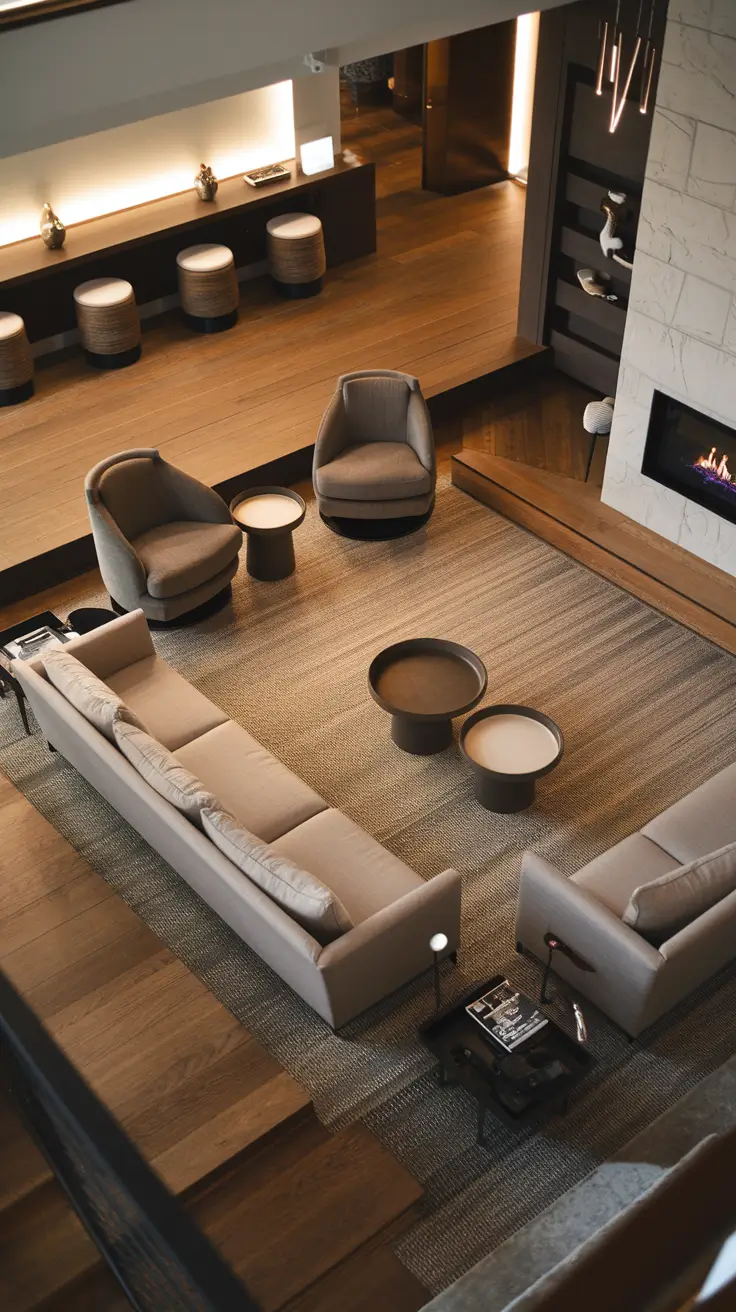
I prefer low profile lounge pieces so the flame can be seen across the pit and beyond. A nesting table set is for both the sofas. If the room is large I add a secondary perch behind the main seating – perhaps a console with stools on the high edge to enjoy the view down into the pit. Layering a textured rug underfoot defines the hearth zone, and absorbs sound.
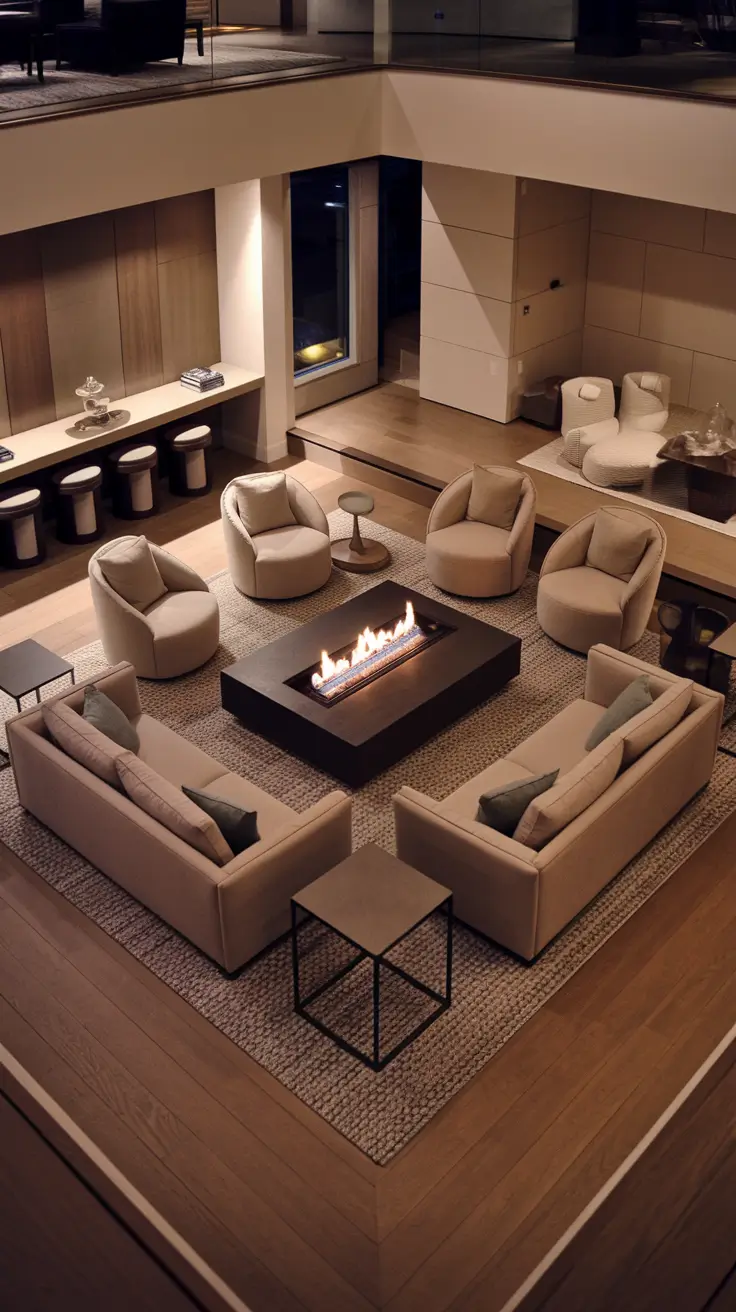
I like layouts that invite circulation around the fire rather than dead-end into the fire. Designers often suggest flexible seating in multiuse rooms, and swivel chairs are my go-to here because they pivot between fire and TV and conversation without having to move any footprints.
I would add a seasonal plan. I include blinds or sun control if afternoon glare competes with the flame visuals, and I program lighting scenes for movie night, reading and entertaining so the fireplace never is too bright or too dim for the task.
Sunken Living Room Railing Ideas
Guardrails may be sculptural elements in their own right. I weigh options from frameless glass for clean modern look to warm wood pickets that work well with Rustic or Japandi palettes. In areas with kids or pets, I prefer sturdy vertical balusters to open horizontal runs. For split level railing ideas sunken living room conditions, a uniform detail across the stairs and perimeter ties the entire floor together.
I spec rail heights to local code with continuous grips at stairs and returns at landings. Materials include oiled oak for a tactile warmth, powder coated steel for durability or laminated glass for transparency. I frequently add LED handrail lighting to guide night-time steps without the harsh overheads. Where privacy helps, sandblasted glass at the kitchen side screens the mess while keeping the light.
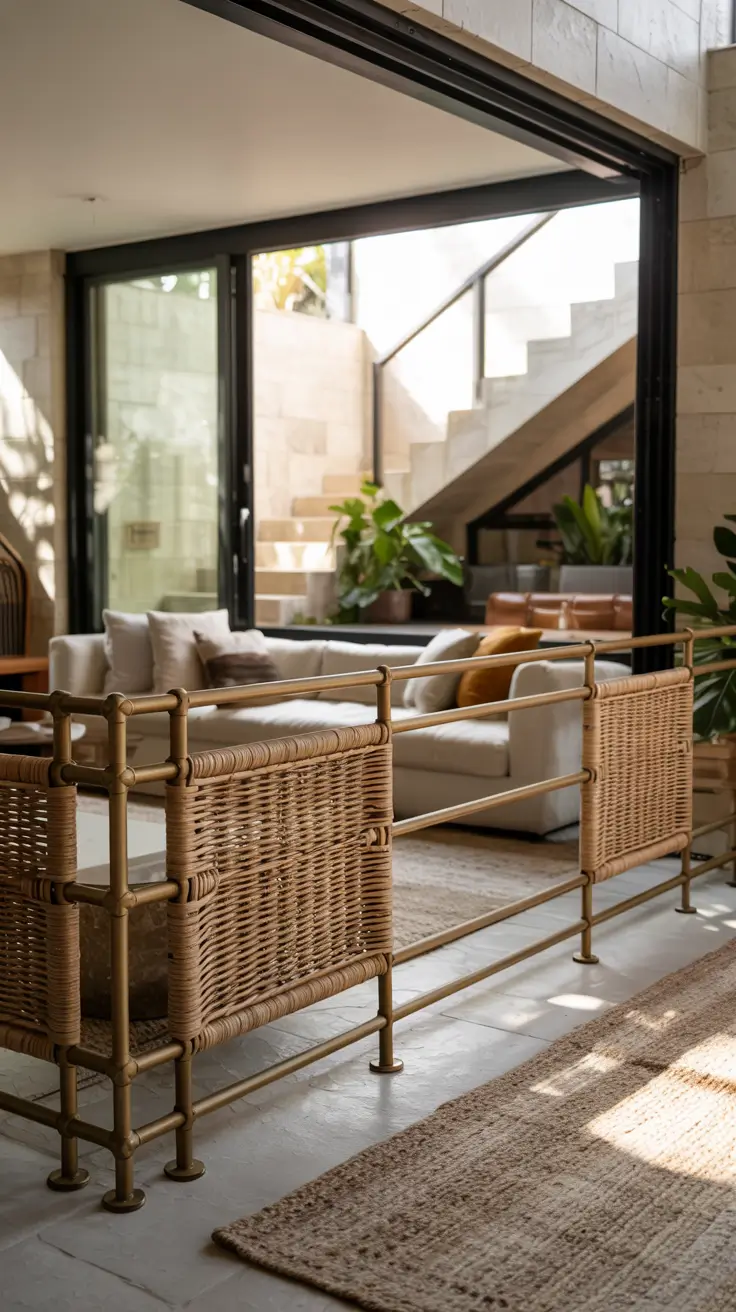
In my experiences the best railings vanish when you want views and re-emerge when you need support. With seated and standing, I test sightlines to ensure that the rail does not compromise safety, but allows for respect of drama. Publications profiling 2026 interiors show a swing towards honest materials, and subtle detail – and it’s something I repeat with simple profiles, tight joints and quiet finishes.
I would add futurity maintenance notes. I call out replaceable LED strips, removable glass panels for cleaning, and touch-up kits for metal rails so the installation will remain crisp for years.
Half Walls and Railings for Sunken Living Rooms
Half walls may substitute for or compliment railings in an effort to balance safety, storage and style. I use them to build up a visual base around the pit, especially in large sunken living room ideas where mass helps proportions. They also hold up furniture in the upper level, function like the back of a banquette or console.
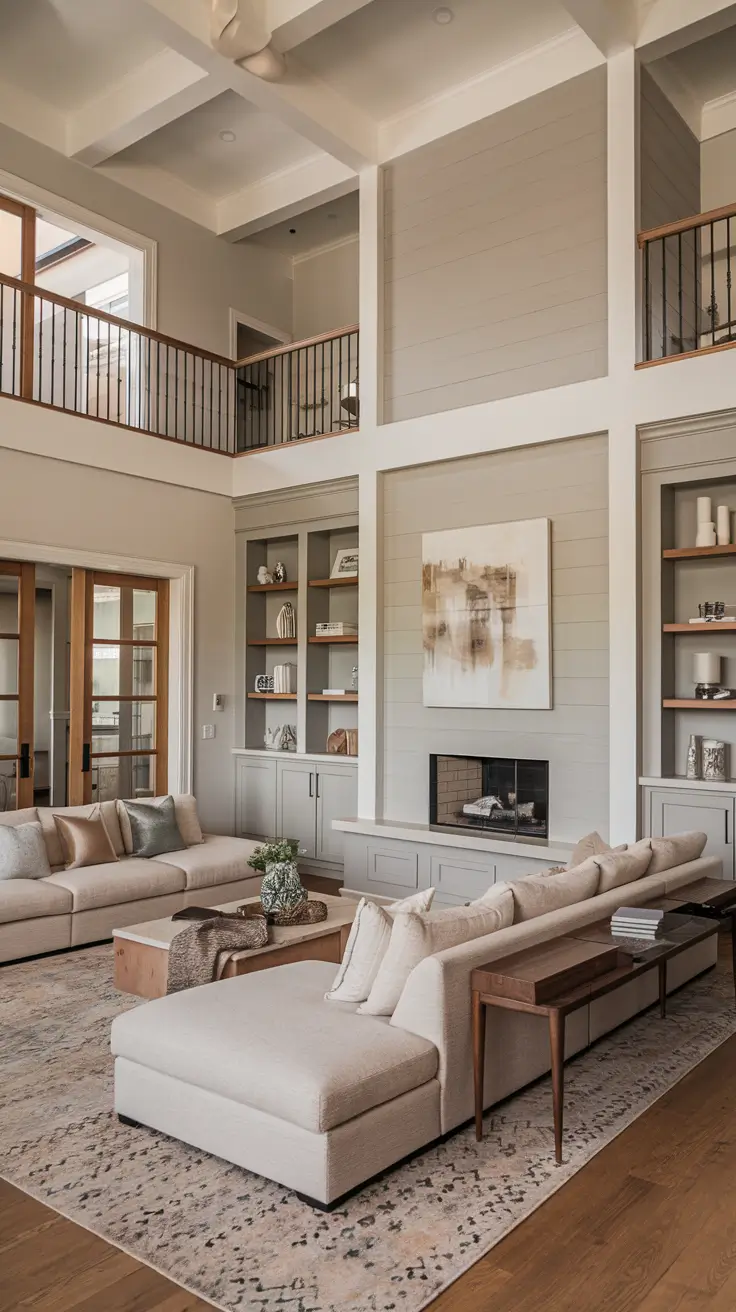
I design half walls at seat-back height or counter height depending on adjacency. Built-ins to the pit may accommodate books and media, while the side of the upper level may accommodate a console or planter line. Finishes vary at one end from painted millwork to troweled plaster or microcement, with a timber cap for comfort. This is consistent with sunken living room railing ideas half walls that look intentional not just functional.
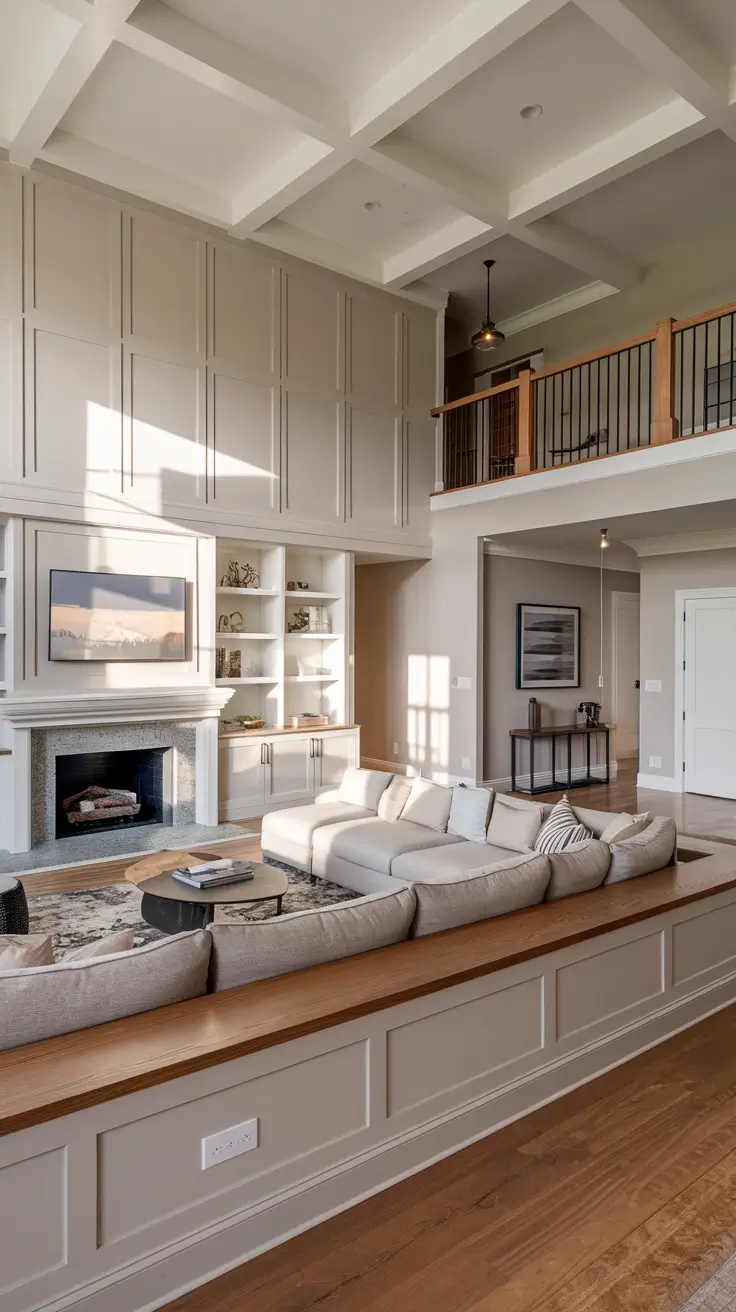
I like how half walls frame views and tame open plans. Done well, they make the conversation pit cozy but not closed off. Many US remodelers point to the value of integrated storage at level changes to reduce clutter – my clients always love the extra shelves for remotes, games and blankets.
I would add integrated power, smart home touches. I have outlets, USB-C as well as control keypads in discrete locations along the cap so that charging and scene control is always at hand without having cords snaking over steps.
Split Level Railing Ideas for Sunken Living Rooms
I approach split levels by making the railing detail do two jobs at once – unify the upper floor and protect the drop into the pit. A repetitive rhythm that wraps stairs and the edge of the pit, this reads cohesive and helps the eye make sense of the change in level. In modern plans this supports split level railing ideas sunken living room while keeping views open to the lounge. When the home leans warm or Rustic I tune profiles toward wood and matte finishes so the guard is a crafted accent rather than a barrier.
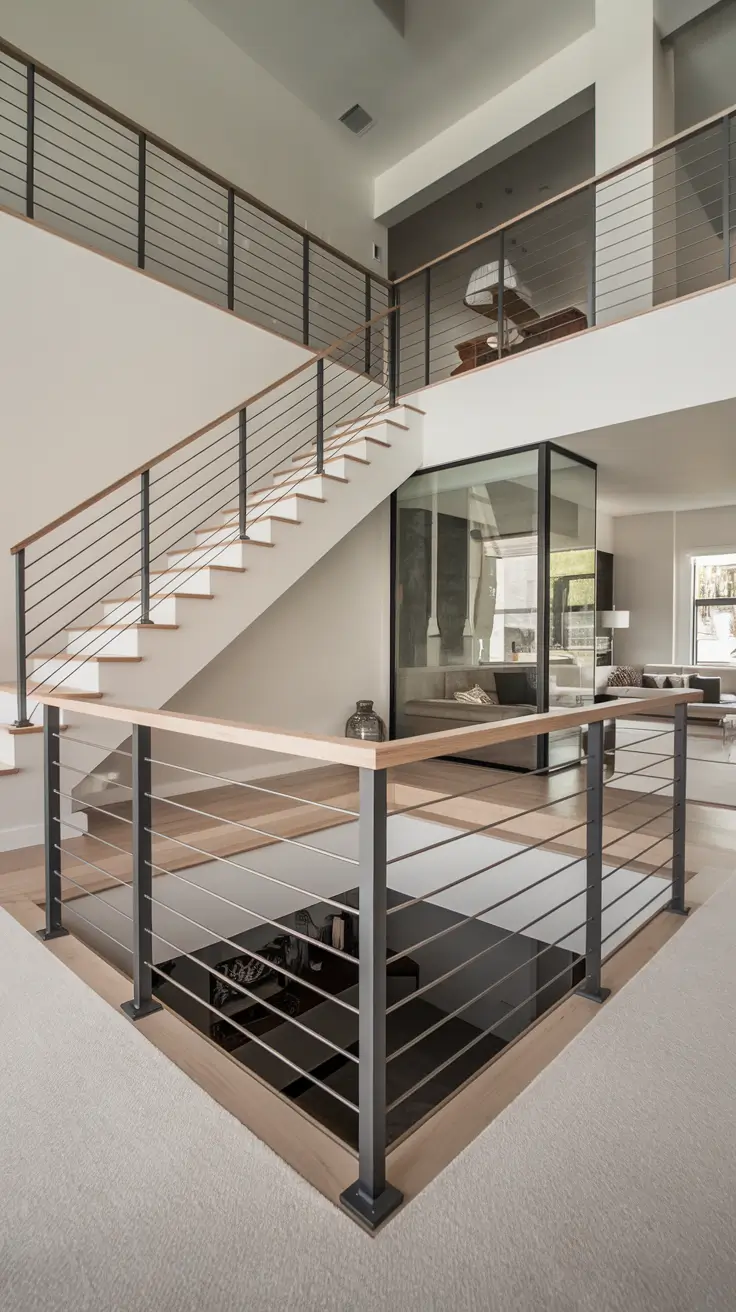
I specify a consistent profile of a handrail in the flight with perimeters and returns at landings and a clear grasp at turns. Materials I like are slim powder coated steel pickets, oiled white oak caps and laminated glass corners where I want transparency. For sunken living room railing that is also for displaying, I sometimes add a shallow ledge on the high side for books or plants. LED under a cap of wood creates a soft wash that makes it intuitive to navigate at night without glare.
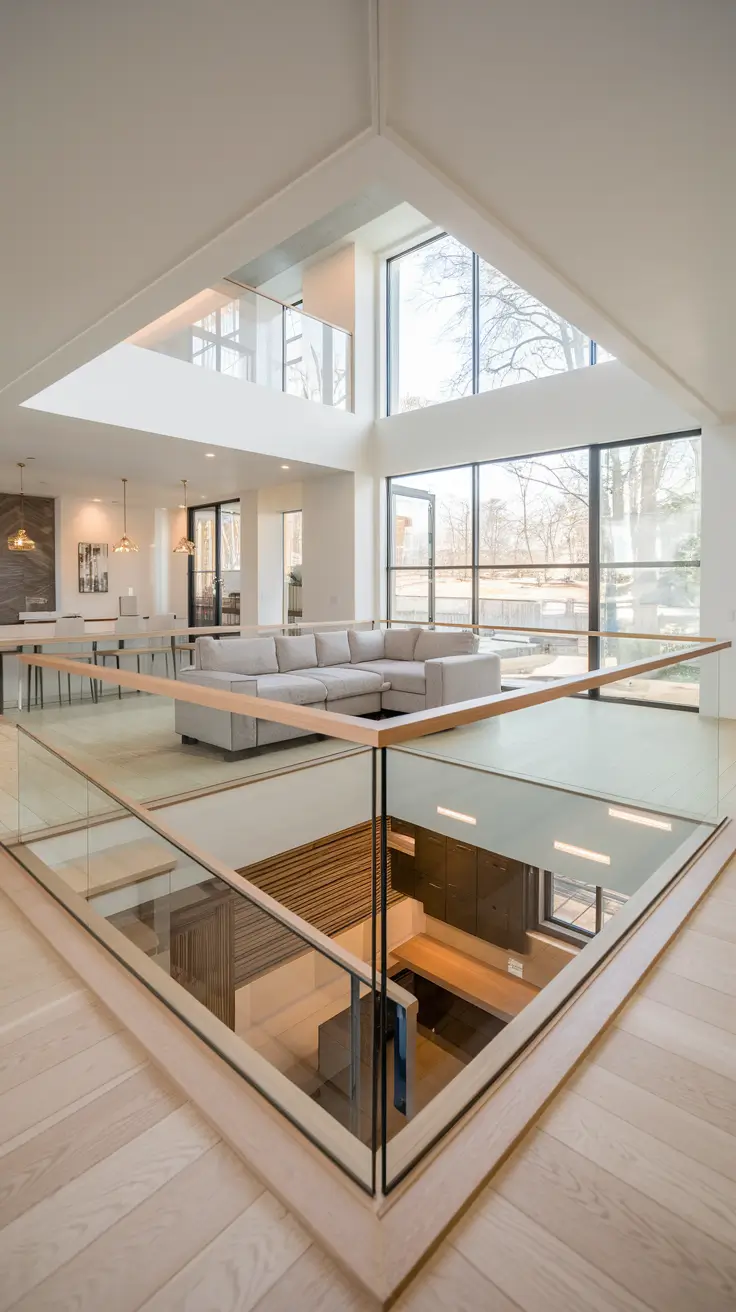
From practice I find the best split level guards align baluster spacing to a common module so transitions never look improvised. Designers across US media consistently emphasise honest materials in 2026 and I agree – simple, well joined parts outlast trends and look calm beside a modern pit.
I would include access to maintenance. I design away glass panels which are removable and specify field replaceable LED light strips so future service does not disturb finishes.
Sunken Living Room Step Ideas
Steps are the handshake to a pit so I treat them as a little piece of architecture. A wide entry step engages people to stop and look, corner steps invite diagonal movement and open up furniture layouts. For sunken living room step ideas in minimalist homes I make profiles crisp with shadow reveals. In family spaces I make nosings soft and add subtle contrast so edges will read clearly in all light.
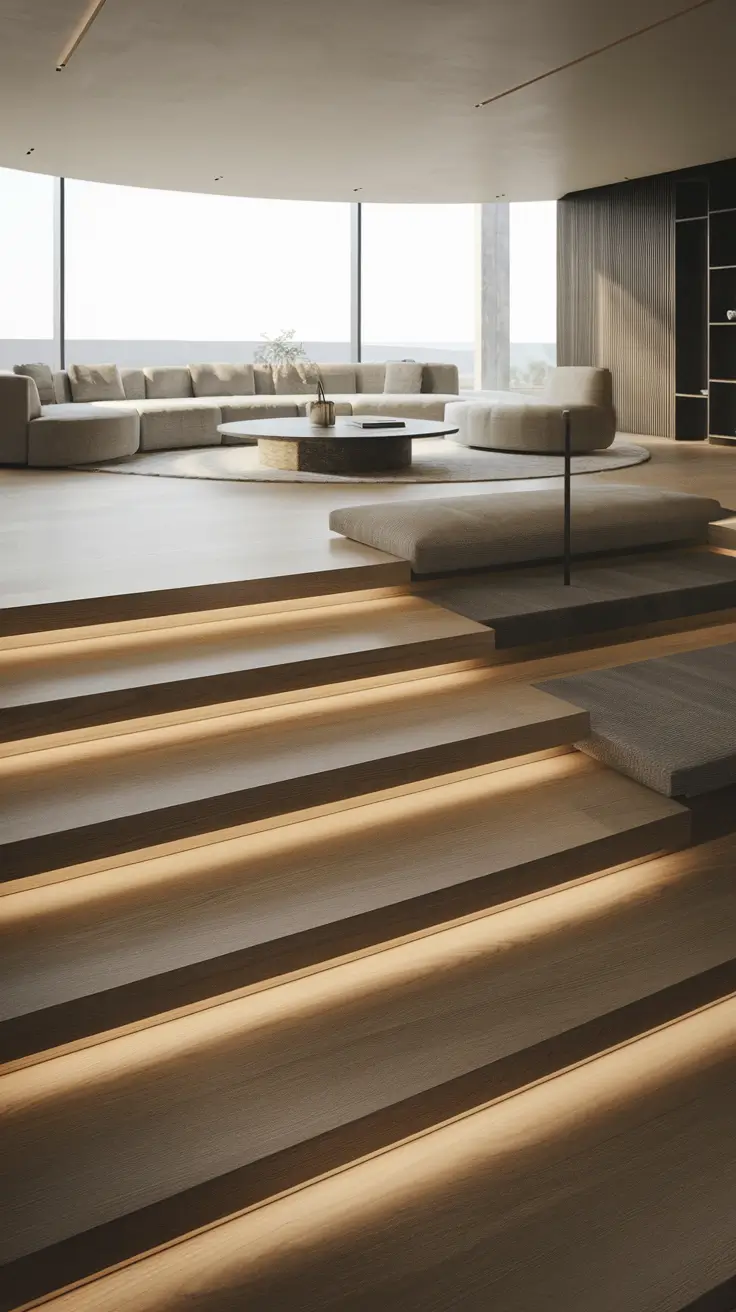
I have a preference for solid wood treads or stone with a non slip finish, risers matched to flooring or a slightly darker shade for legibility and continuous step lighting tucked below nosings. A good amount of starter step can function double duty as casual seating for gatherings. Where the pit is deep, I break the drop with a landing that is aligned to a furniture path and then continue the drop so that traffic doesn’t cut through the center of the conversation zone.
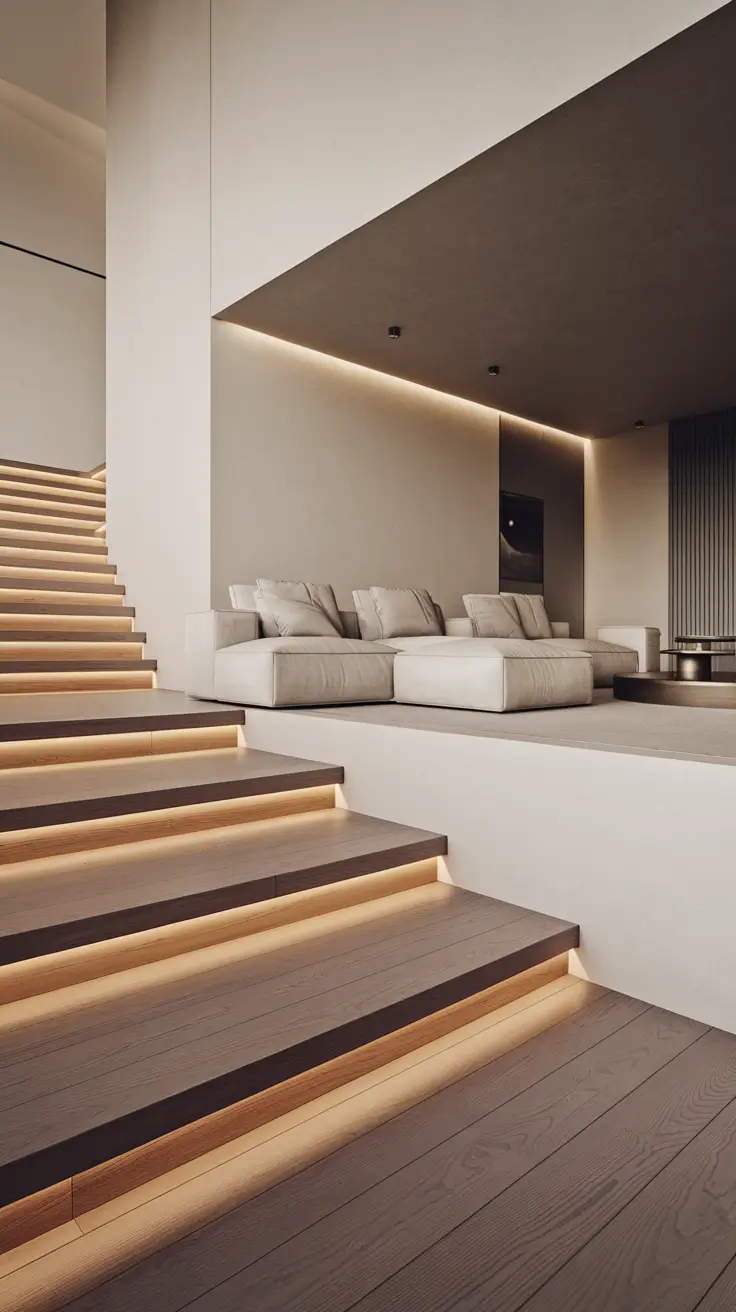
In my experience comfortable domestic steps often keep the risers in the seven inch zone and treads in the eleven inch zone, always checked to local code. I also respect that people carry trays, and pets, and kids up and down – clear visual cues and handholds are important rather than a sculptural moment that’s hard to read.
I’d consider adding a tactile strip at the top edge where flooring is similar tone. A narrow band of textured wood or micro rib tile alerts a change before the foot goes down.
Stairs to a Sunken Living Room
If the stair is providing access down into a pit from a hall or entry, I will design it as a slow reveal. A quarter turn stair with one open side can present the lounge like a stage, which suits sunken living room ideas inspiration in homes that host often. If the stair approaches from a side wall, I line it up so that I don’t walk into the middle of conversation and instead intersect the pit at a natural traffic corner.
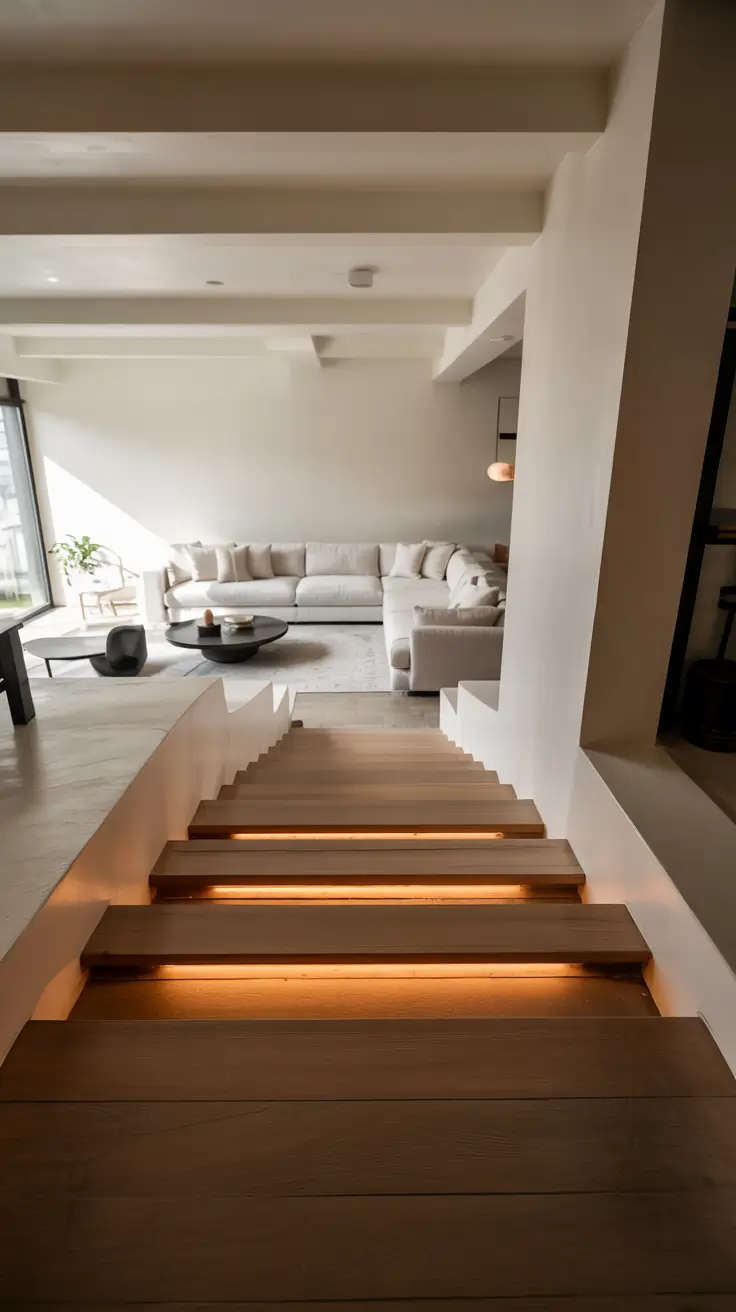
I list closed risers for quieter acoustics, continuous graspable rail and open or solid stringers depending on style. For mid century or MCM leaning spaces I like slim steel stringers and timber treads. For Japandi or Minimalist I like boxed treads and soft plaster returns. At the bottom, I flare out the last tread to make a little meet and greet zone so people don’t step into seating.
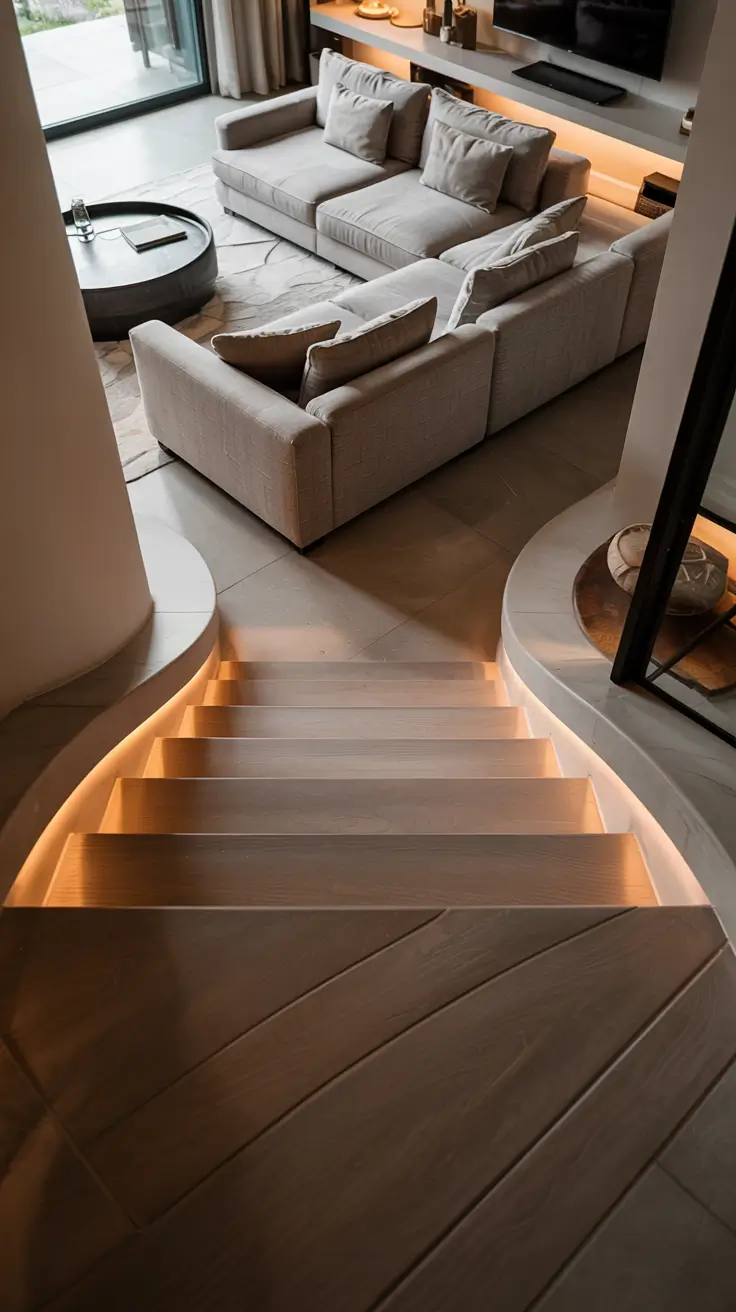
Professionally I aim to have a stair that is comfortable to run up with a drink in hand and a child by your side. Many US builders advocate for consistent riser heights and clear headroom to prevent stumbles and I follow suit and check sightlines sitting and standing before I finalize the section.
I would add a lighting scene devoted to arrivals. Wall washers or trimless step light run helps the space feel safe without turning on the full overhead scheme.
Steps and Tiered Conversation Pits
Tiered pits allow me to combine a sense of nostalgia and contemporary living. Instead of one floor drop, I construct one or two continuous tiers of benches which act as stadium seating. This is a nod to sunken living room 70s conversation pit ideas but with an update on comfort through proper back cushions and integrated power for devices. In double height rooms the tiers function like built in amphitheater steps facing a view, fireplace, or projector.
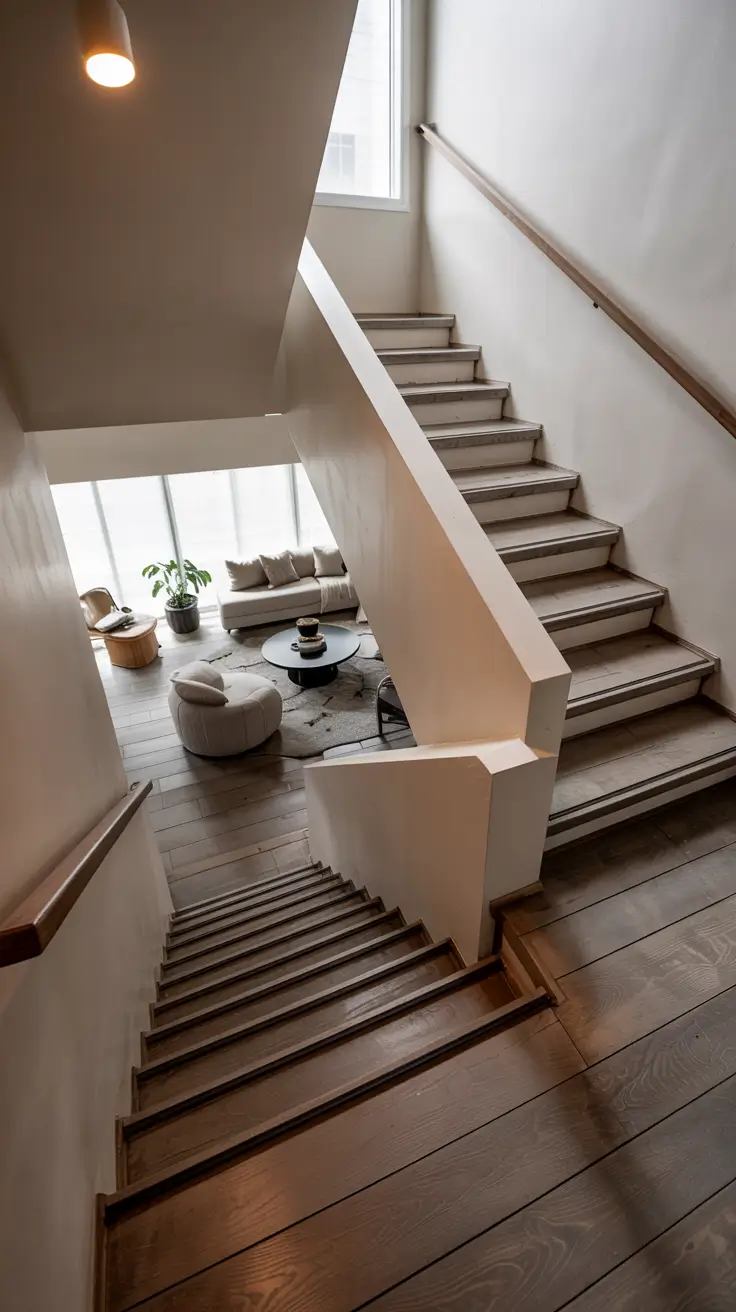
I build high platforms at 12 to 18 inches high surrounding a central rug, add upholstered toppers and tuck drawers under for blankets. Corner backrests become reading nooks while a movable round table is for game nights. For families, I make use of long lasting performance textiles and removable covers. The outermost tier becomes a casual perch that will also assist wayfinding as you move from the main floor down into the lounge.
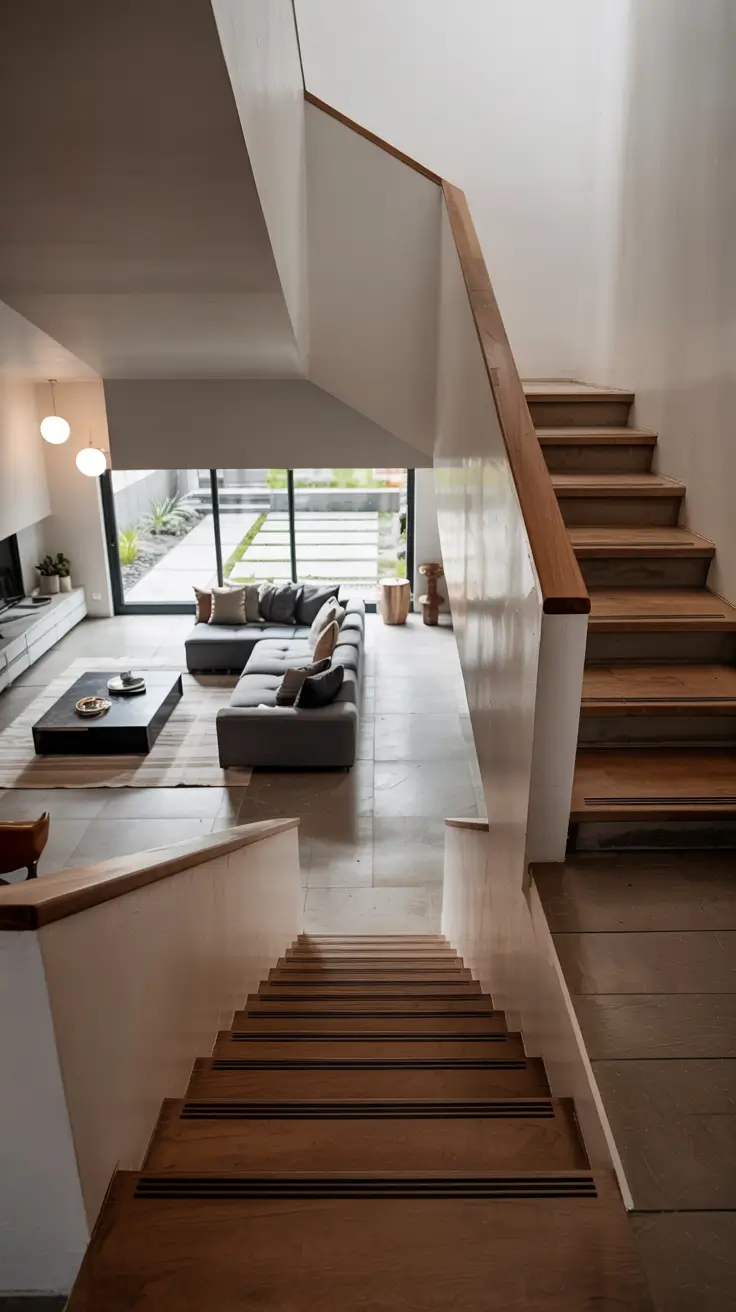
I have learned that tiered pits work great when there is a focal point and an alternative activity (i.e., reading or listening to music); A number of design editors highlight layered lighting in 2026 – I answer with step LEDs, wall washers and low lamps to shift from lively to cozy with out touching furniture.
I would add a plan for airflow. If the room has a fireplace or a lot of bodies on movie night, discreet floor or low wall supply and return keeps temperatures even across tiers.
Sunken Living Room Floor Plan Options
I put floor plan strategies into groups according to lifestyle. Open concept layouts keep the pit in visual connection with the dining and kitchen, but a partial wrap of half walls provides a calmer core for reading or audio. For sunken living room floor plan in small home I minimize the drop and leave only one wide entry to provide most seating. In large sunken living room ideas I add a secondary zone such as a desk nook or game table on the high perimeter to allow the pit to be used for multiple activities at once.
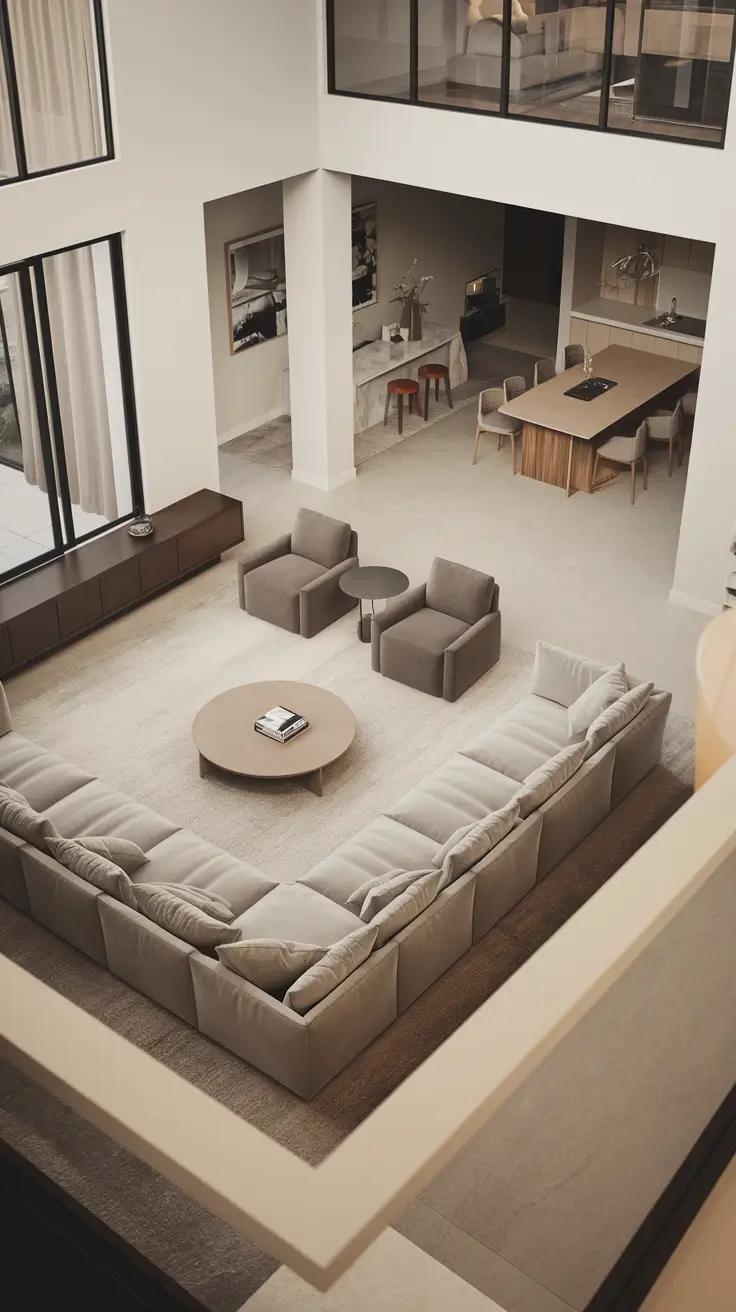
I put main seating across from a focal point like a window, art wall, or fireplace and then set chair pairs on the flanks so movement around the coffee table is clear. Storage lives in low credenzas on the high edge or in built ins under tiers. If the plan is sunken living room open concept, the back of the couch becomes a soft boundary and the shape of the coffee table mediates the traffic – round for diagonal traffic, rectangular for axial.
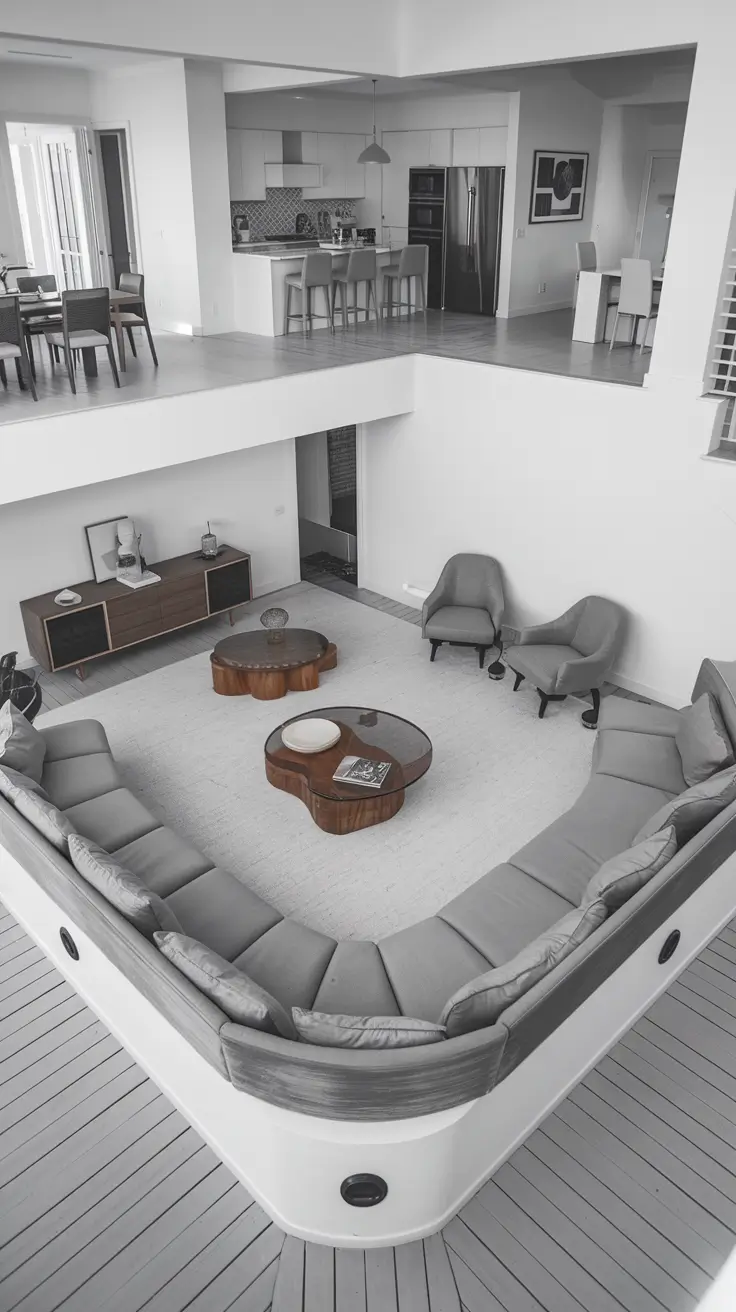
I find that successful plans put circulation on predictable paths and never require guests to work their way through the middle of a conversation. It is a good reminder to designers to test sightlines for screens and views before purchasing a sectional – I do a sketch of these cones of vision early on so no one buys the worst seat.
I would add acoustic thought. Rugs, lined drapery, textured plaster and upholstered pieces in the pit will dampen echo and make open plans feel civilized.
Floor Plan Dimensions and Clearances
Dimensions are where comfort appears. I look for a pit depth that will accommodate furniture scale, often a 12 to 24 inch total drop so steps will feel natural and proportions will remain friendly. In tighter rooms I keep the drop modest to keep headroom at windows. For sunken living room design that reads modern luxury, I allow more negative space around the seating bowl so the drop doesn’t feel squeezed in, but intentional.
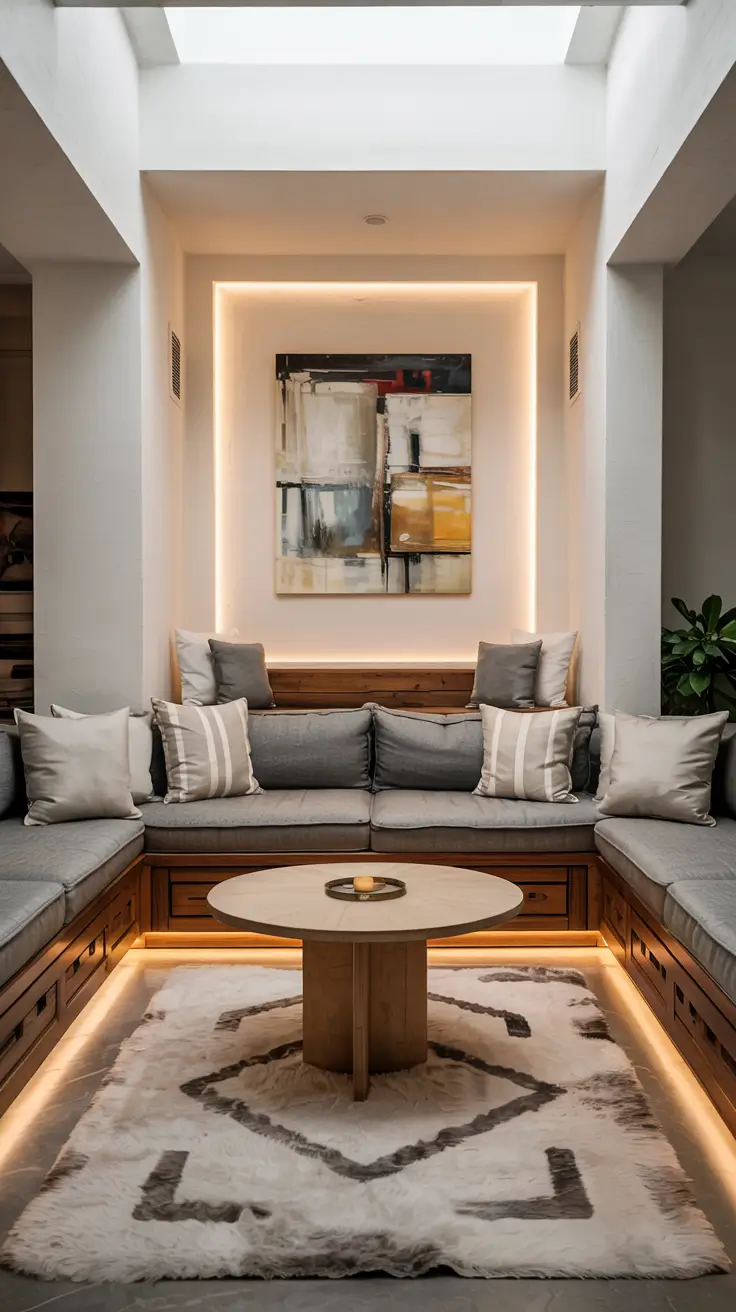
I keep the width of my walkways around the pit edge at about three feet where feasible, the length between sofa and coffee table around the eighteen inch mark (for ease of reach) and conversation distances around eight to ten feet across for larger groups. If there is a fireplace, I keep manufacturer clearances and a safe hearth zone. Rail height is per local code, generally three to three and one-half feet, and glass thickness or picket spacing is by safety standards.
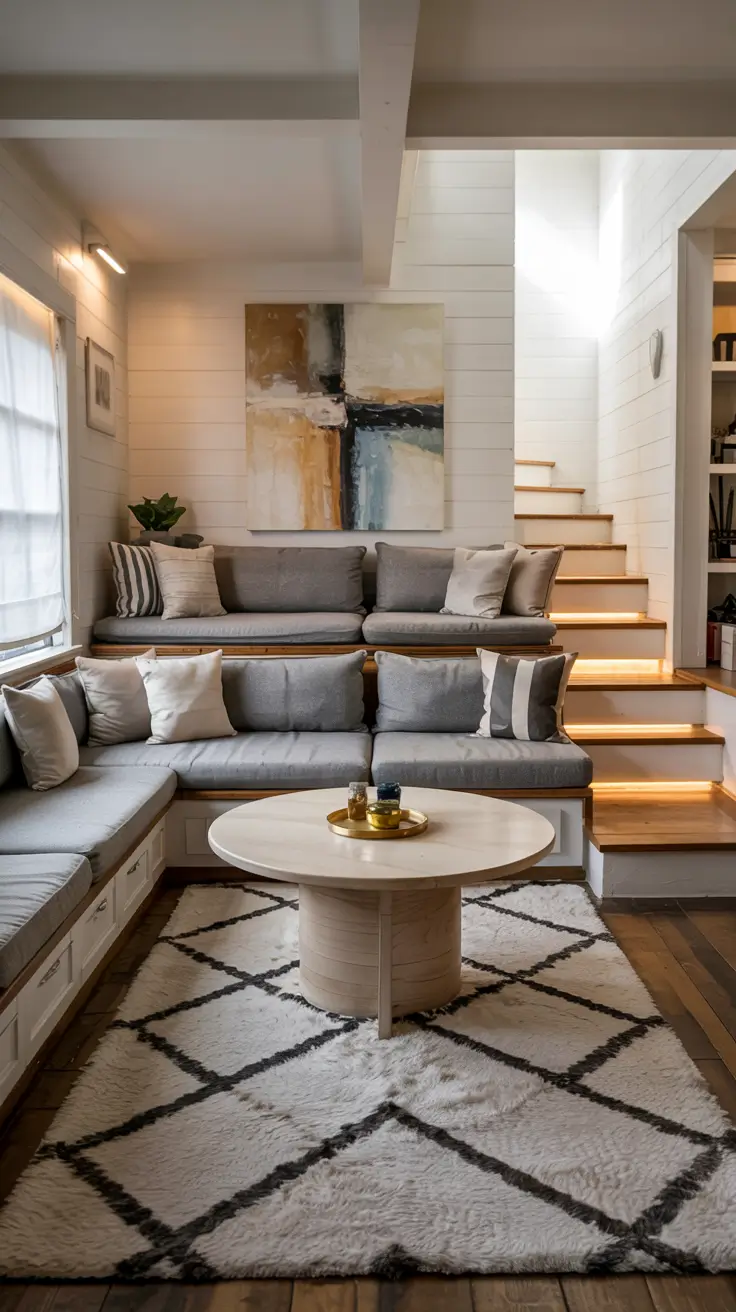
Based on experience, a slight change in clearances can mean the difference between day to day use. I mock up sofa size using painter’s tape and boxes, before we order, then check stair landings with a tray in hand. Many US remodel sources encourage this kind of full scale testing, and I have seen it head off costly rework.
I would add a note of the future flexibility. I leave a little extra room at the high edge for a console or stools (to allow the room to evolve), and I pre wire floor outlets where lamps and chargers will live so there aren’t cords along steps.
Flooring Ideas for Sunken Living Rooms
Surface use of the pit – I start flooring decisions by mapping how the pit is used throughout the day as surfaces drive comfort, acoustics and maintenance. In a sunken living room modern scheme I often mix a warm perimeter floor with a softer inset so the pit reads like a destination. For clients who love texture, I lean into Flooring ideas that mix wood treads, large format tile landings and a plush rug to visually ground seating. This approach maintains the sunken living room design throughout an open concept plan and makes circulation more safe on steps.
Material by material, I call out matte finish engineered oak for warmth, rectified porcelain tile for durability and solution dyed loop carpet or a flatweave rug for resilience. I detail stair nosings with anti slip profiles and detail flush transition strips to make the floor feel continuous. If the room leans towards Minimalist or Japandi, I keep grains and grout lines low key and lean towards low pile rugs that work with tight seat heights. For a Rustic mood I will accept more variation in boards, and pair it with stone look tile on the hearth.
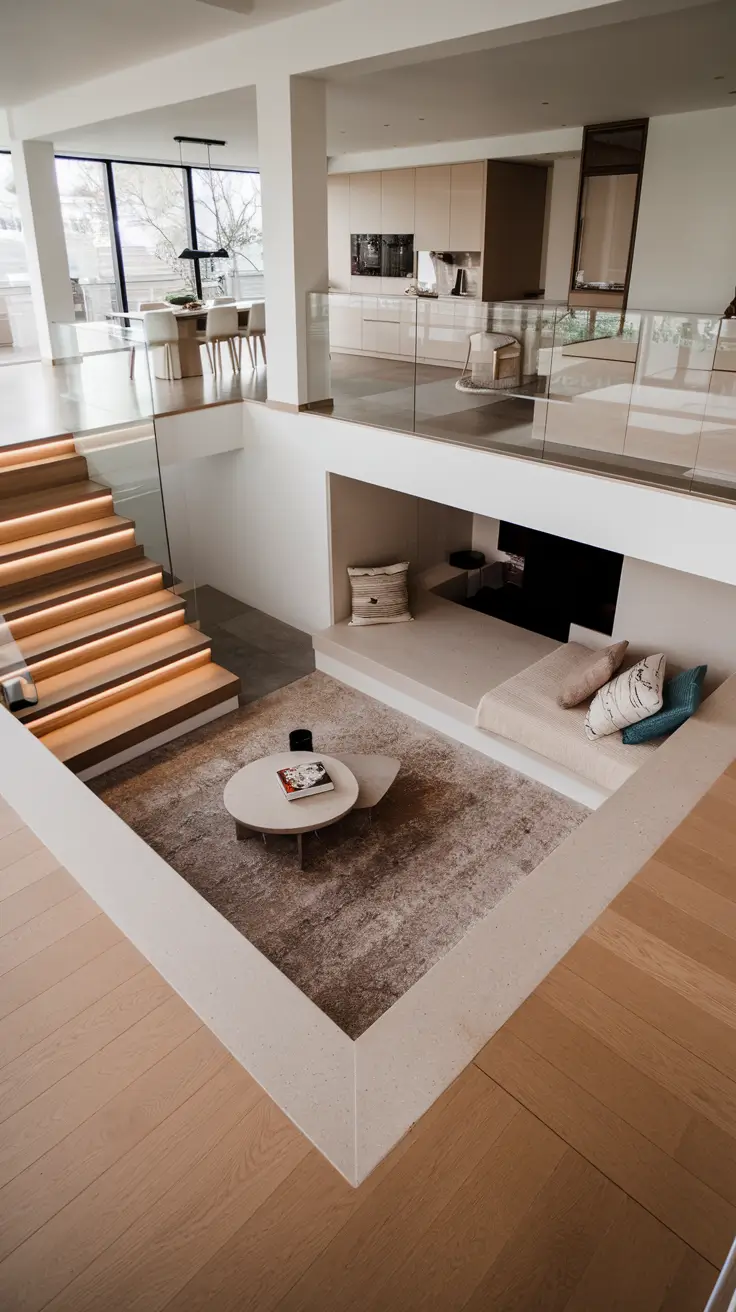
In my experience the most comfortable pits are soft underfoot with just enough texture to grip. With the Steps edge, I prioritize slip resistance and recommend use of an underlayment that quietens footfall especially in a Double height volume where sound can bounce. Designers in US publications often remind us to test samples under real light; to check how rugs sit against nosings so there’s no trip lip in the aisle.
What I would add to this at this point is some plan for exacting thresholds, including drawing of step bullnose profiles and exact rug sizes. I also include a schedule for maintenance that complements the materials you choose so the finish will always look fresh through the year.
Sunken Living Room Flooring – Wood Tile Carpet
When clients ask me to compare surfaces right off, I try to frame the decision in terms of comfort and performance. Wood reads warm and looks seamless visually, tile is bulletproof in high traffic zones and carpet offers the best acoustic and cozy feel for a conversation pit. For sunken living room ideas that lean refined, I could run wood throughout the home and drop a custom bound wool rug into the pit. For an active household I sometimes tile the pit floor and layer a large rug for a still soft look.
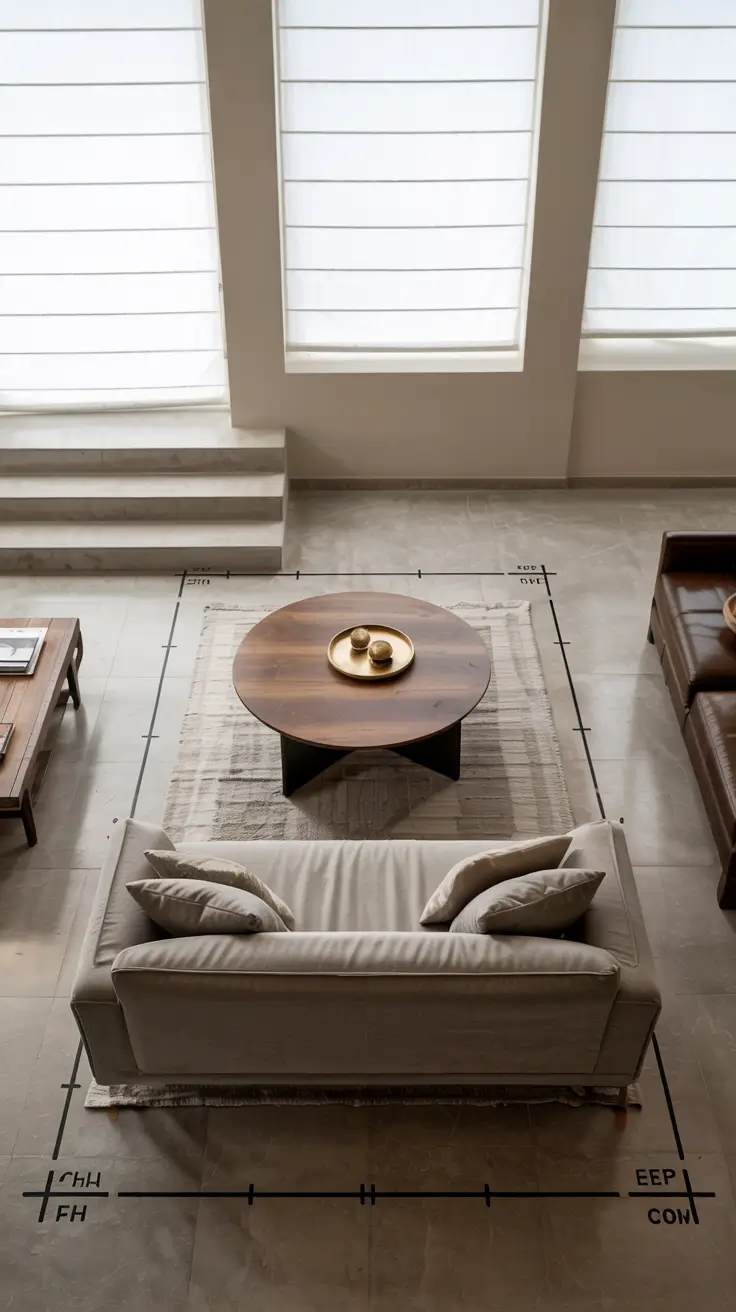
On a specification level, I select engineered wood with a tough finish, tile in 24 by 48 inch or larger formats to reduce grout and carpet in solution dyed fibers for stain resistance. I coordinate stair nosings to each surface and have risers consistent so the Stairs feel safe. If radiant heat is planned, I check for compatibility for each product.
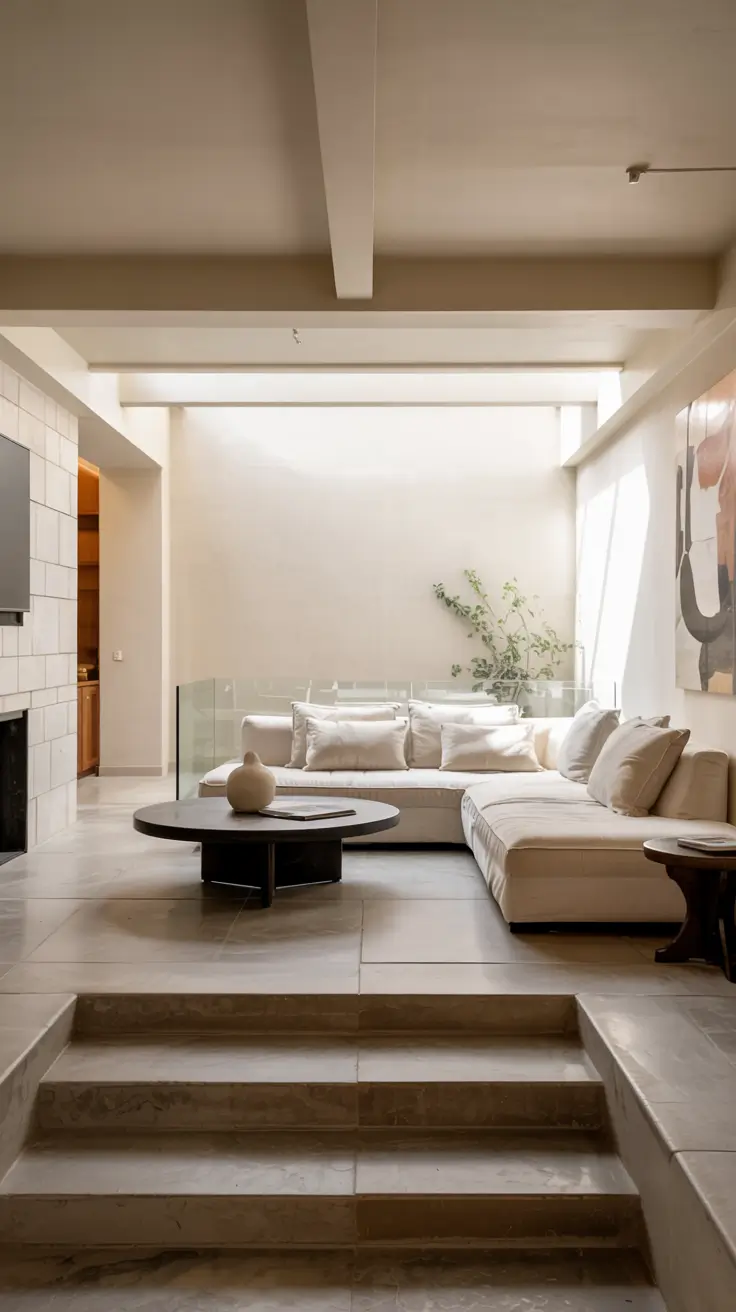
My rule of thumb is simple. Wood makes the pit feel that it is part of the architecture, tile makes the pit invincible and carpet makes it instantly livable. For Modern luxury it’s hard to beat wide plank oak plus a dense rug. For a 70s conversation pit modern look a continuous textured carpet under low seating nails the era without feeling dated.
But what I’d add is mockups that test for glare and slip in daylight and at night. I also include exact color references so the wood, tile, and carpet colors match the sunken living room floor plan.
Large Sunken Living Room Ideas
Large rooms lend themselves to bold gestures, so I consider the sunken area a sculpted island for gathering. I scale the pit to allow for a full U shape sectional or opposing sofas and I leave a clear 36 inch walkway around the pit for traffic to flow cleanly. In expansive homes a centered hearth or double sided fireplace makes the pivot for seating and art which suits big sunken living room ideas that must feel intimate inside big volumes.
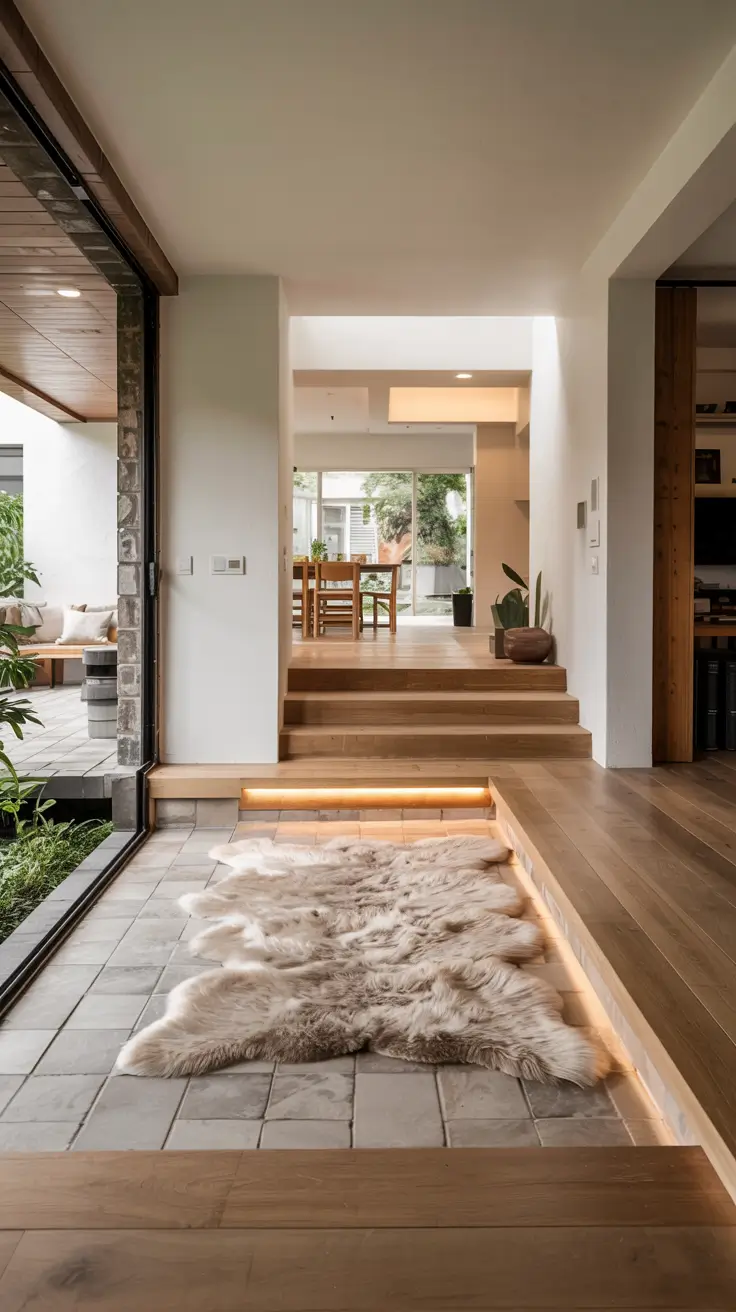
I specify generous modular pieces, integrated end tables and swivel chairs so that conversation works from every angle. Tiered Steps can also double as casual perches if I widen them out to bench depth. For lighting I layer a broad pendant to denote the void, washers for texture, and low level step lighting for safety. If it’s a two-story ceiling, I think of acoustic panels that look like art.
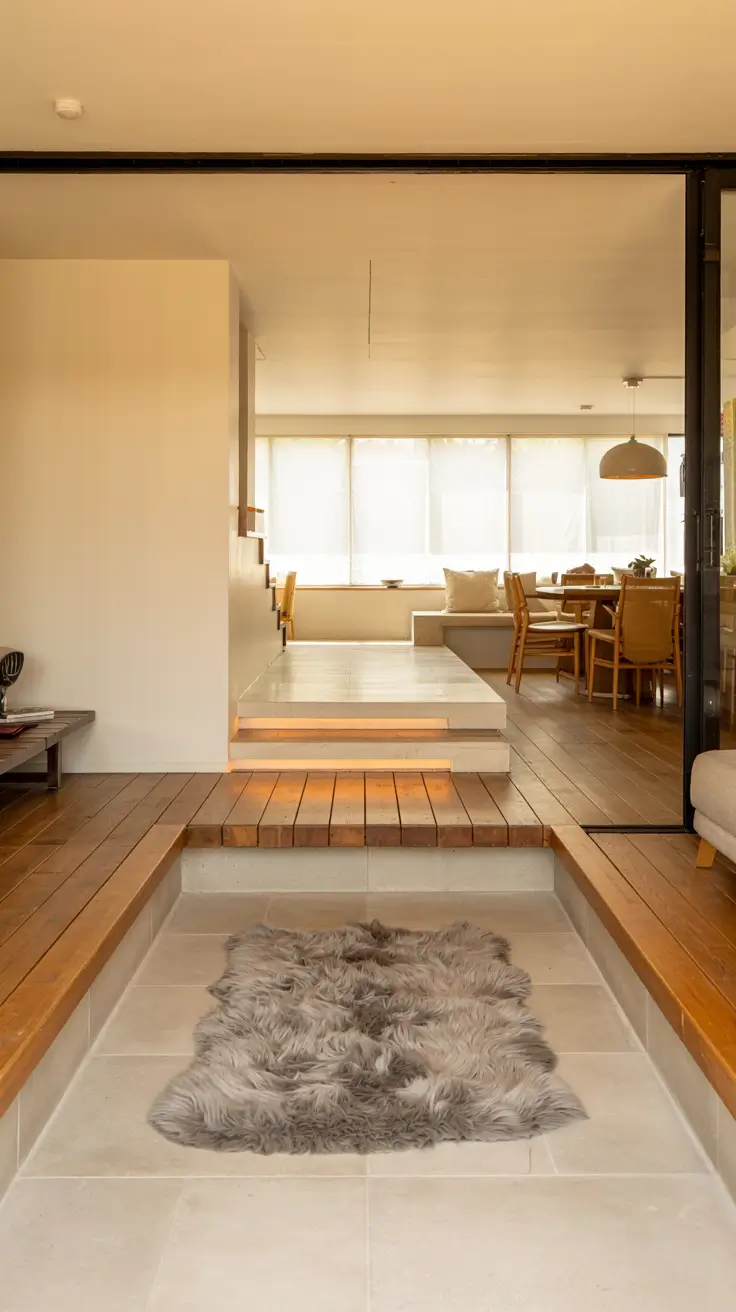
From experience deep seat sofas at 15 to 17 inch seat height feel right in a pit, especially with a rug that extends under all front legs. A discrete sunken living room railing or Glass guard at outer edge, maintains sightlines in Open concept spaces. When clients are feeling a 70s vibe, I’ve added a sunken planter or terrazzo hearth for a small nod.
What I would add is a scaled plan of the furniture with clear dimensions, as well as options of a media wall and hidden cord management so lamps could live in the middle without the hazard of tripping.
Small House Sunken Living Room Solutions
In compact homes, I use the pit to borrow visual height, and to zone without walls. Dropping the floor a mere step can result in separation from a dining nook or a sunken living room off of kitchen without losing openness. For small footprints I’m keeping the drop modest so circulation is easy and I align the pit edge with cabinetry lines so the geometry is intentional.
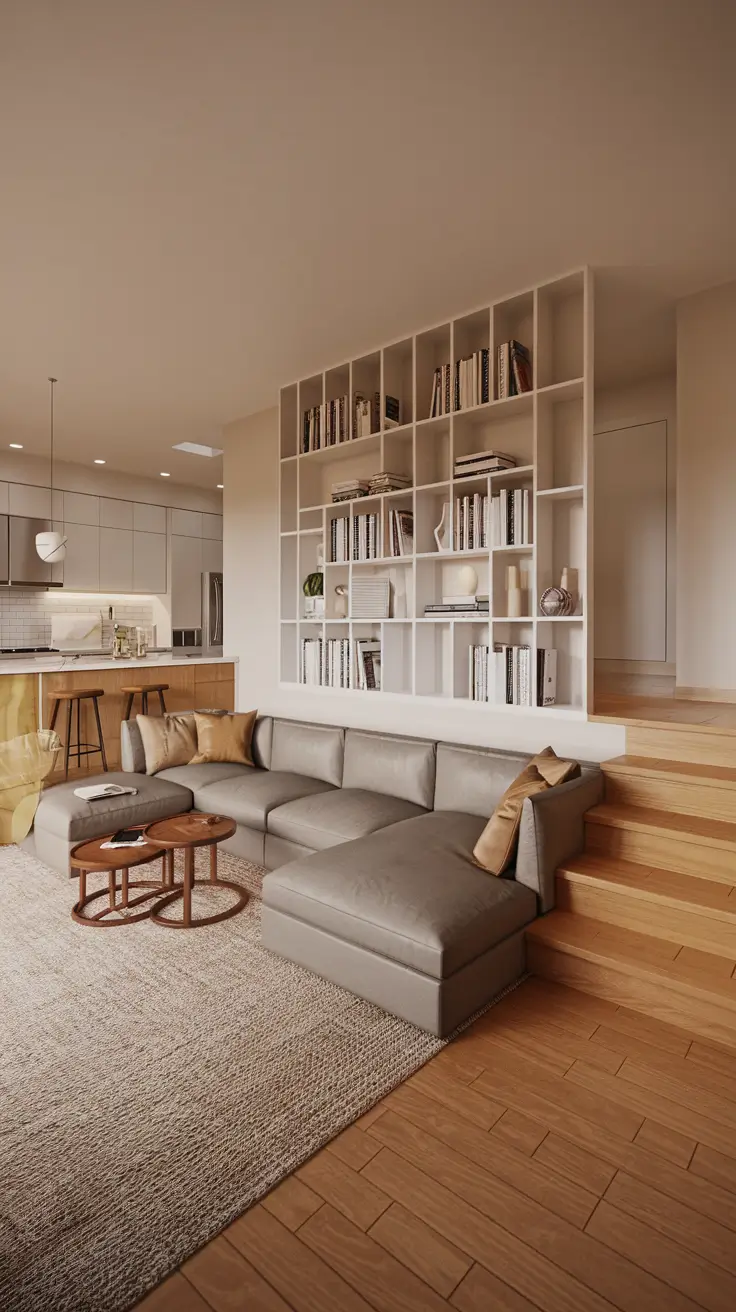
Every piece has to earn its place. I like a tight sectional, nesting coffee table, and built in step storage for throws and remotes. Where code allows, I use sunken living room railing ideas half walls or low bookcase guards in the place of bulky balustrades. On split levels I look split level railing ideas sunken living room that rely on clear tempered glass or slim metal to keep the look light.
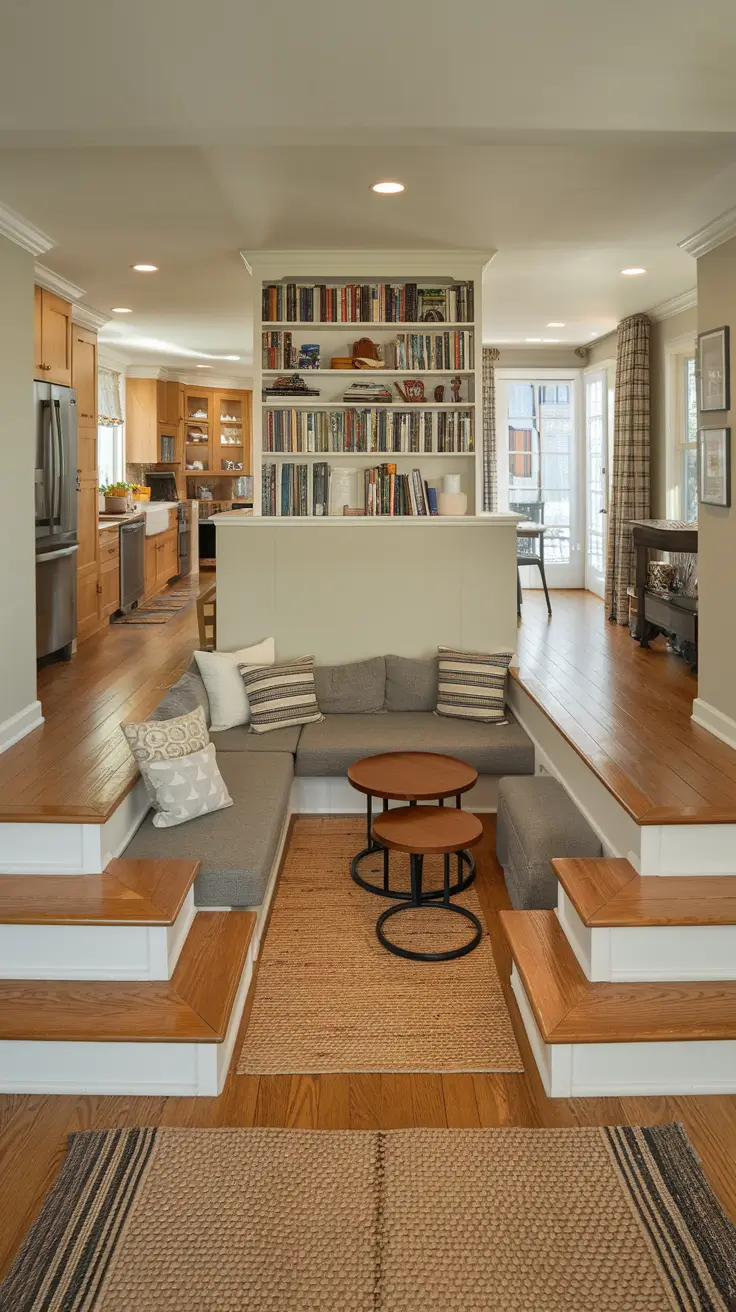
I’ve found that even small spaces can be home to a cozy conversation pit, provided I keep seat backs low and lighting layered to avoid glare. In kitchens, there’s a short guard wall that serves as a banquette back to stop bar stools and pit seating from running into each other, which works well for families and entertaining.
What I would add would be a combined lighting and power plan including outlets in the floor of the pit and step lights. I also add a traffic diagram to make sure there isn’t a pinch point between the Kitchen and seating.
House Plans Featuring Sunken Living Rooms
When I am reviewing or creating House plans I begin by seeking out the pit where ceiling height, daylight and traffic make sense. In most plans that is near main view wall and between entry and Kitchen so social zones connects. I like plans that view the pit as the living core, with dining adjacent and circulation skirting the edge so you’re never forced through the seating zone.
I coordinate structure early. The drop calls for careful framing and insulating, and I check to see that spans, joists and any radiant heat or ducts go with the lower floor. Waterproofing and vapor control are also confirmed by me if the pit is over a slab or crawlspace. For the families, I add sightlines from kitchen to pit so supervision is effortless.
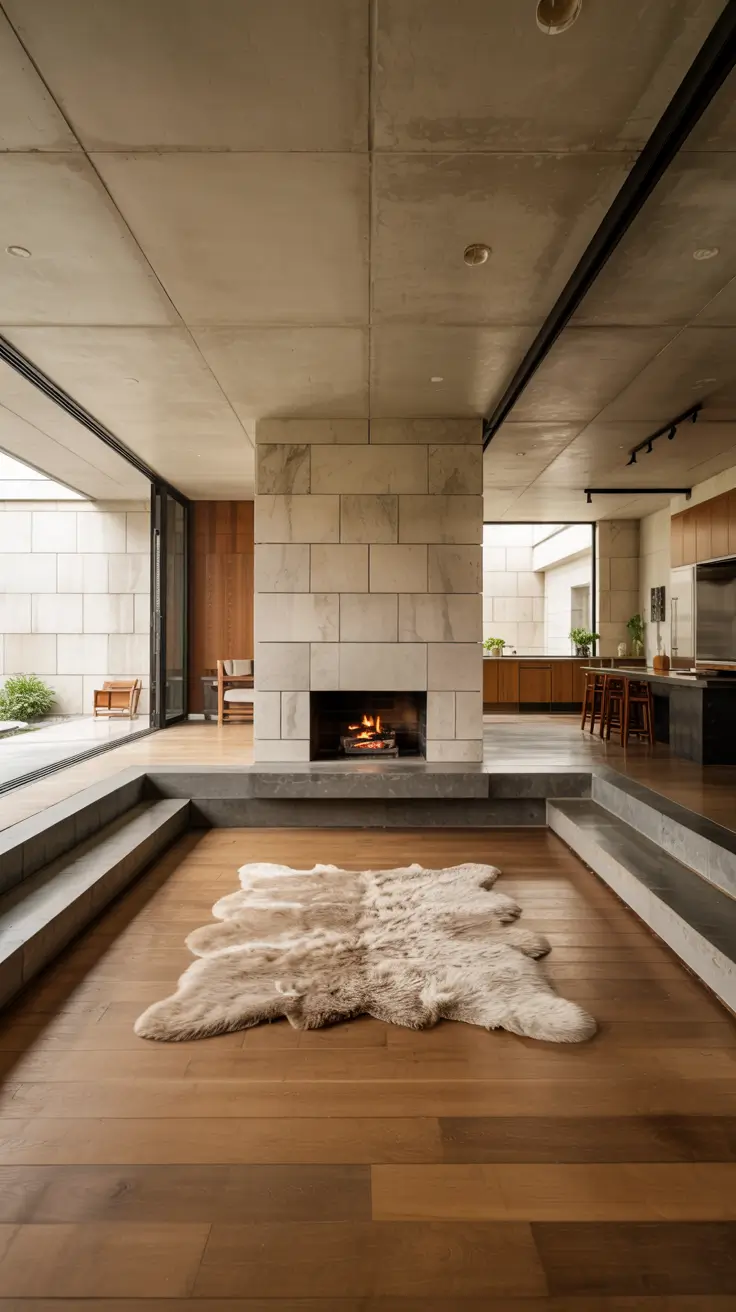
My view is that the most successful sunken living room floor plan employs symmetrical or a recognizable axis to make the space easy to furnish. If clients want Layout with fireplace, I center the hearth or offset with balanced cabinetry so the seating reads as deliberate.
What I would add is a set of alternate pit dimensions so the plan can flex as construction occurs, plus options for a future lift platform if the accessibility need changes over time.
Sunken Living Room Design Inspiration
I curate mood boards across eras so my clients see how different a pit can be. For calm, the Japandi combination of light wood, limewash and low profile seating is timeless. For character, Mcm silhouettes and terrazzo beautifully go together with a gentle 70s conversation pit cozy palette. If the fleeting calls for polish, Modern luxury approaches with velvet, stone, and bronze detailing make the sunken area the star.
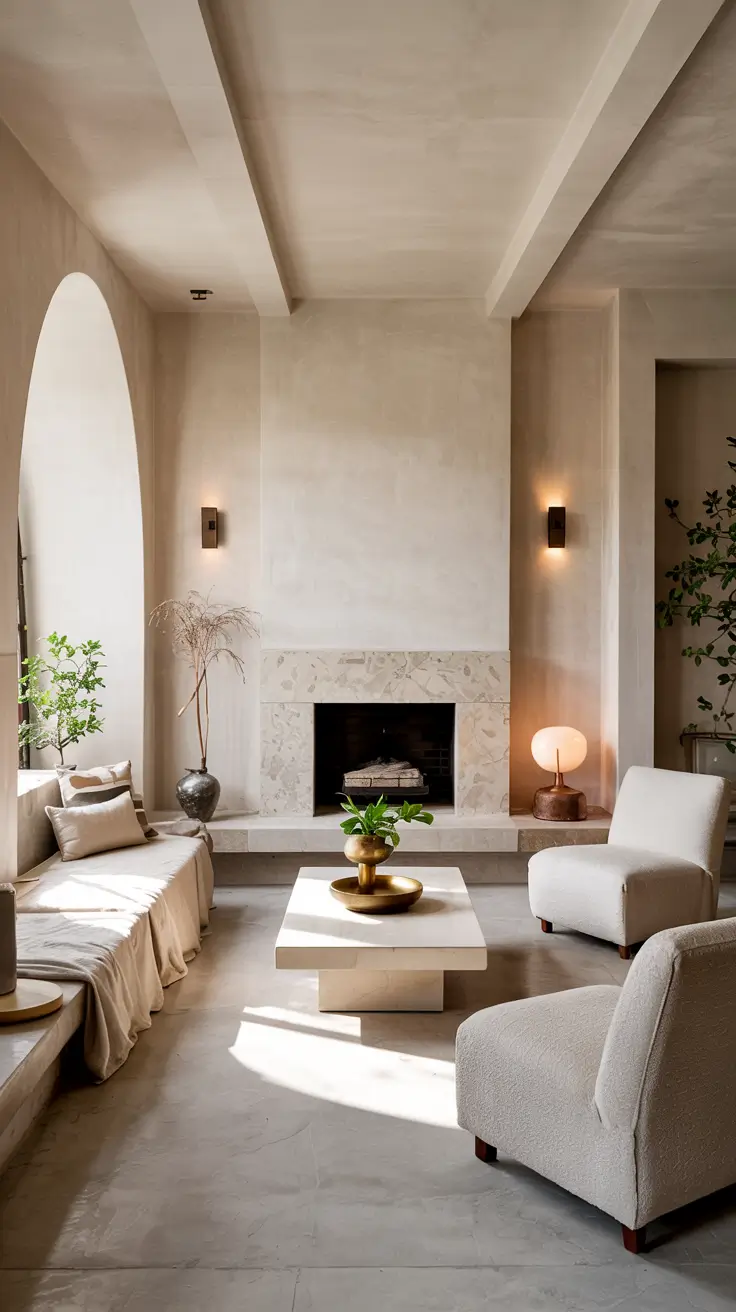
I translate inspiration to real spec list. That could include a wood slat ceiling detail, a sculptural pendant, and a built in media wall with concealed speakers. I add tactile elements of boucle on lounge chairs, and a ribbed stone on the hearth. Art and plants help the pit feel like a destination, and not a hole.
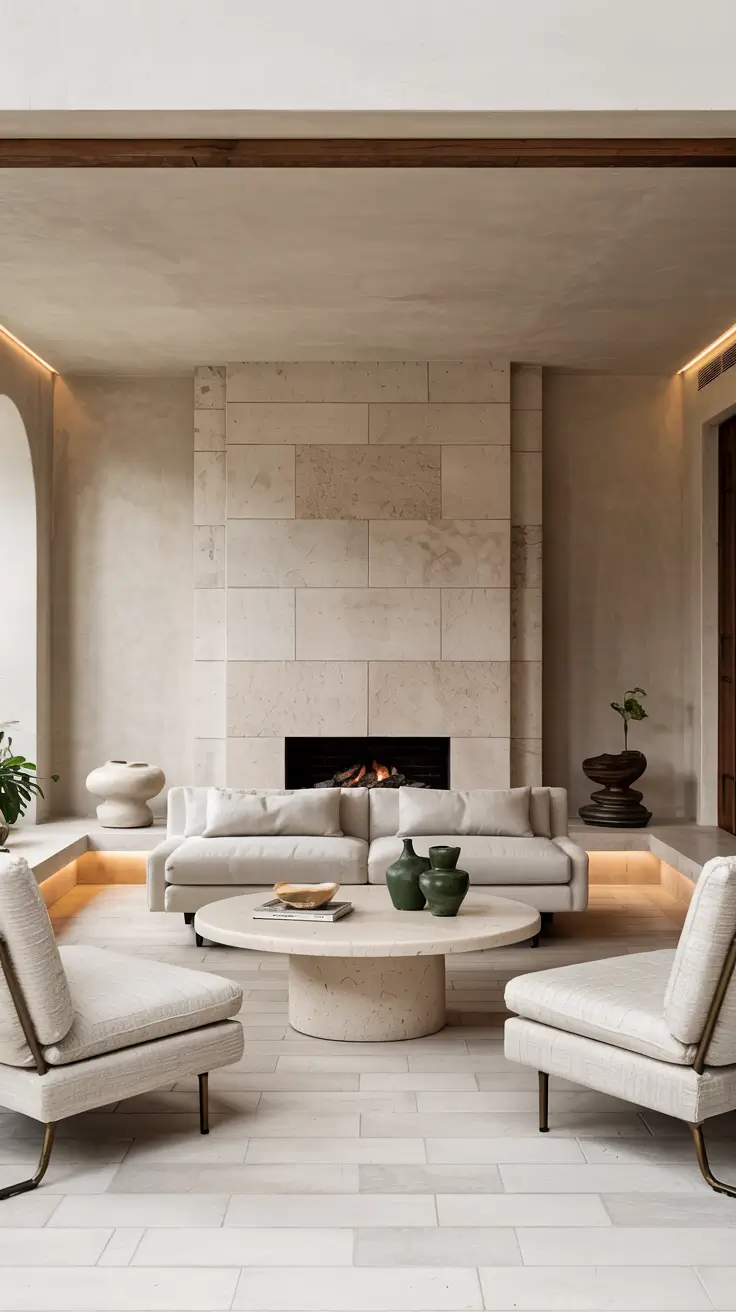
In practice, I find the clients respond to layered neutrals with one confident color that repeats in pillows and art. This keeps the pit photogenic, but practical. If someone has a retro 70s conversation pit that they love, I update them with durable performance fabrics and LED step lights so it reads fresh.
What I would add is a precise palette with names of paint and fabric references as well as sources of list that is within the budget range we set early on.
Sunken Living Room Ideas Layout Examples
Layout is where a pit succeeds or fails so I sketch possibilities before shopping. In an open concept home, a perpendicular sofa to kitchen forms a natural edge for a Kitchen railing wall or bookcase guard, with a second sofa and two swivels completing conversation square. In fireplace focused rooms I center seating on the hearth and keep aisles wide so that wood storage and traffic don’t clash.
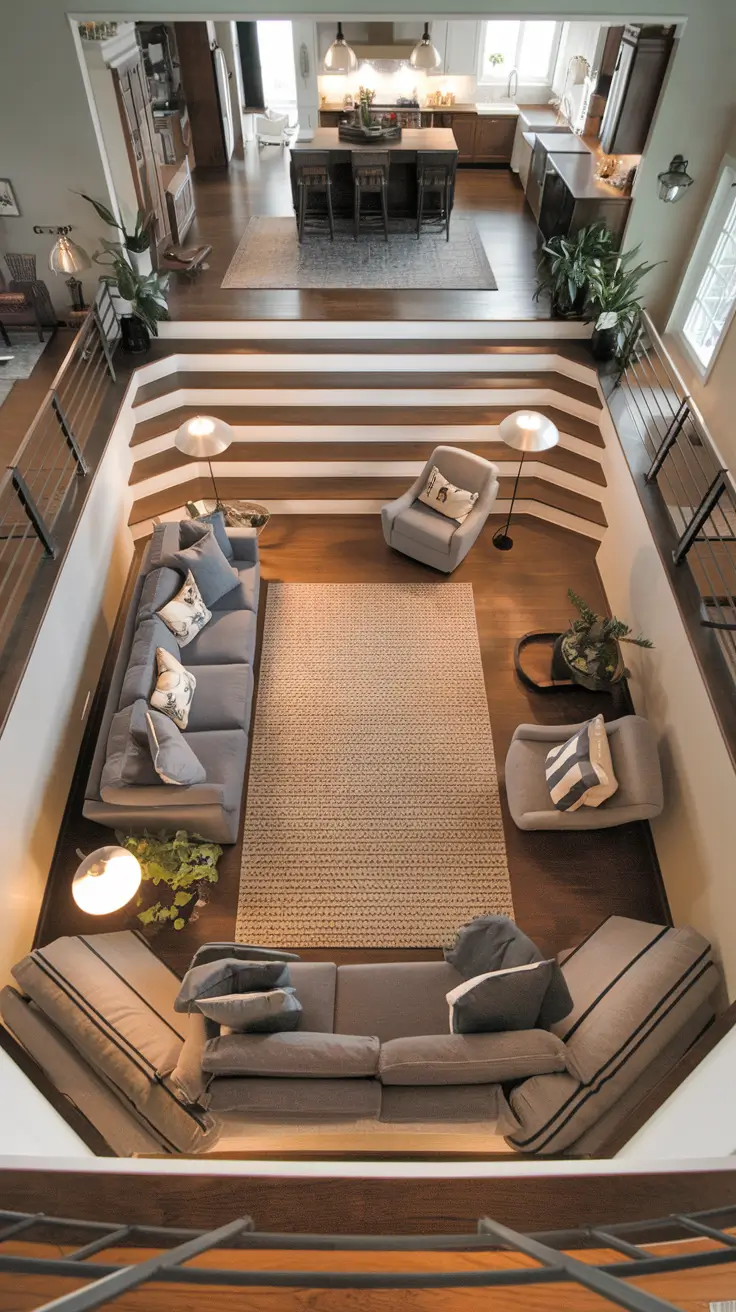
I place pieces with intent. A 9 by 12 or larger rug typically anchors the main group, nesting tables provide flexibility and a low media console keeps sightlines clear over the edge of the pit. For sunken living room step ideas, I prefer two or three wide treads instead of lots of short steps, and a handhold where the drop is significant. If a guard is needed a slim Railing in metal or glass preserves the view.
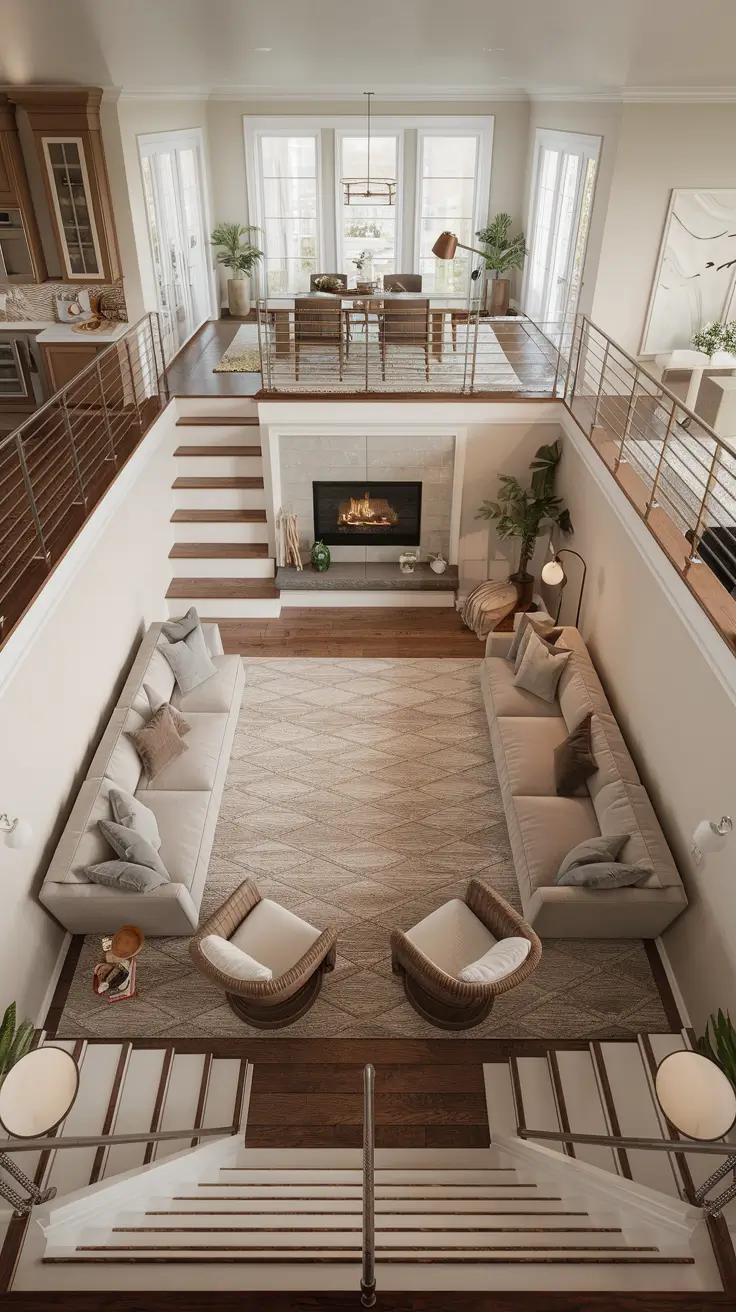
From my projects, the best performing layout left one side of the pit free for a natural walkway so guests are not forced through the seating. Corners can be used for a floor lamp or plant to help soften the geometry. If the client’s desire is for a hearth centric plan that evokes the past, I keep seat heights low with ample cushions for that classic pit comfort.
What I would add is an annotated plan of furniture with clear dimensions, aisle widths, and notes on the swing of doors and operation of windows, so that every piece fits before ordering.
Sunken Living Room Design Detailing
I look at detailing as the difference between a good pit and a great one, stitching together finishes, lighting, and safety to make it an environment that looks designed, not dug. My baseline for a clean sunken living room design is a crisp shadow reveal at the edge of the pit and similar nosings on each of the treads. When there is a hearth, I incorporate small hints of sunken living room fireplace ideas such as a low limestone slab with flush metal trim that frames the fire without any visual clutter. Careful consideration of outlet placement, HVAC returns, and step lighting, keeps the experience calm in day-to-day use.
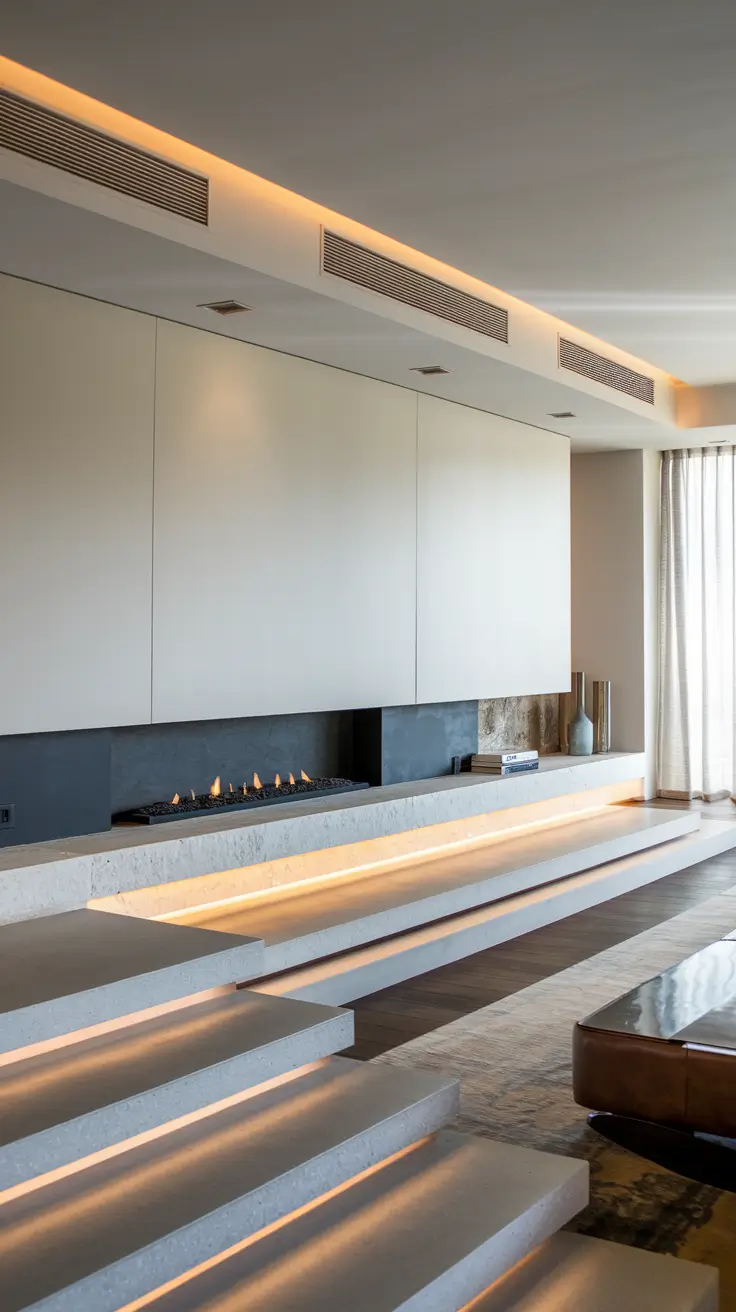
Piece by piece, I specify 3 to 5 mm metal edge trims at step transitions, warm dim LED strips under overhangs and continuous handhold where the drop is above comfort. I coordinate heights of coffee tables with the lowered seat plane to keep reach distances in the ergonomic range, and coordinate millwork reveals with grout or plank modules so that the geometry reads intentional. A low media cabinet that follows the pit contour could conceal power and AV without obstructions of sightlines.
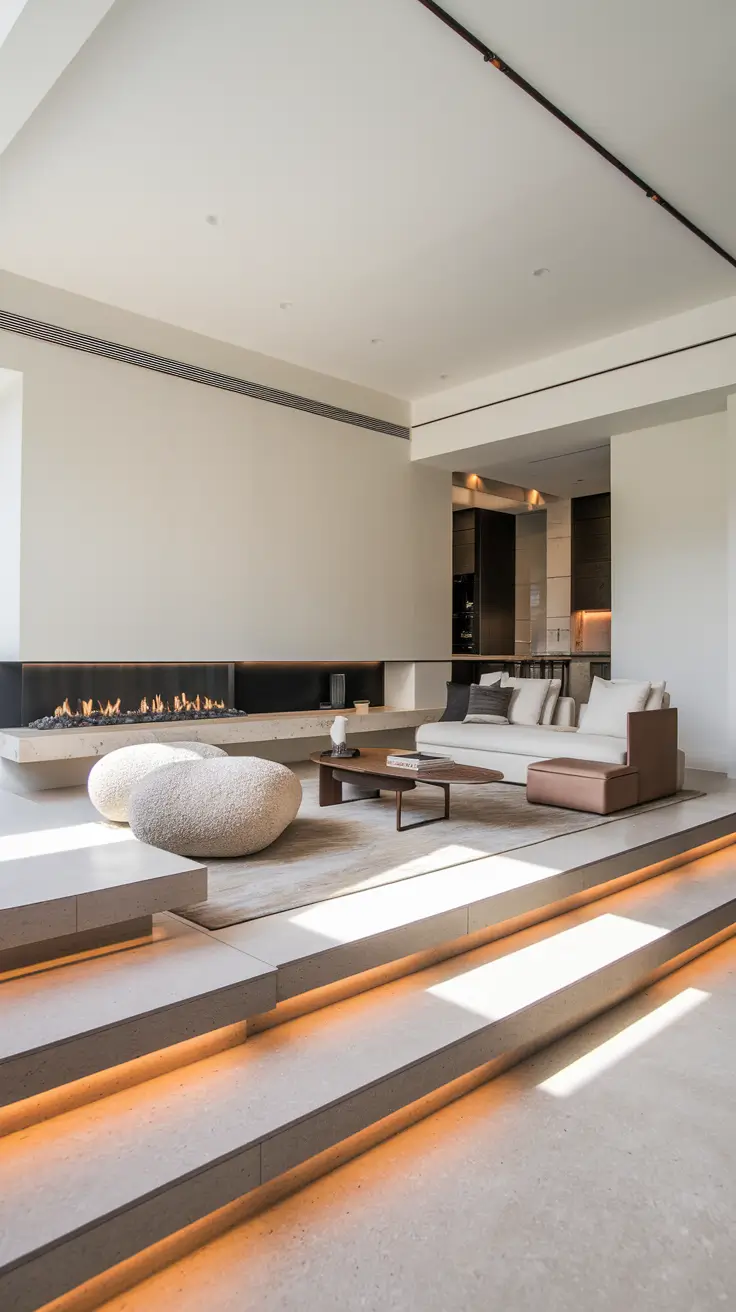
In practice I find that it’s the restrained materials and precision of the joints that make the pit timeless. As design media in the US often note, a conversation zone lives or dies on comfort, hence I keep seat heights in the 15 to 17 inch range and I avoid glossy nosings that glow at night. When clients are looking for a little touch to link us to history, I try to add a terrazzo, or brick lip, which plays well with the Mcm and 70s influences, while standing well with modern life.
What I would add here is a coordinated detail set with full size stair sections, lighting circuits and a dimensioned furniture plan. I also have a note on cleaning and maintenance for each finish so the crisp detailing is not muddy.
Sunken Living Room Railing Materials and Heights
Guard solutions determine the degree of finish the pit will have, so I try to confirm with the local requirements for guard height and openings before sketching options. For lightness my go to sunken living room railing ideas are clear tempered glass with minimal top cap or slender steel pickets that echo on stair balusters. In small homes, sunken living room railing ideas half walls double as bookcases, while in split level entries I look at split level railing ideas sunken living room that keep views open from foyer to living.
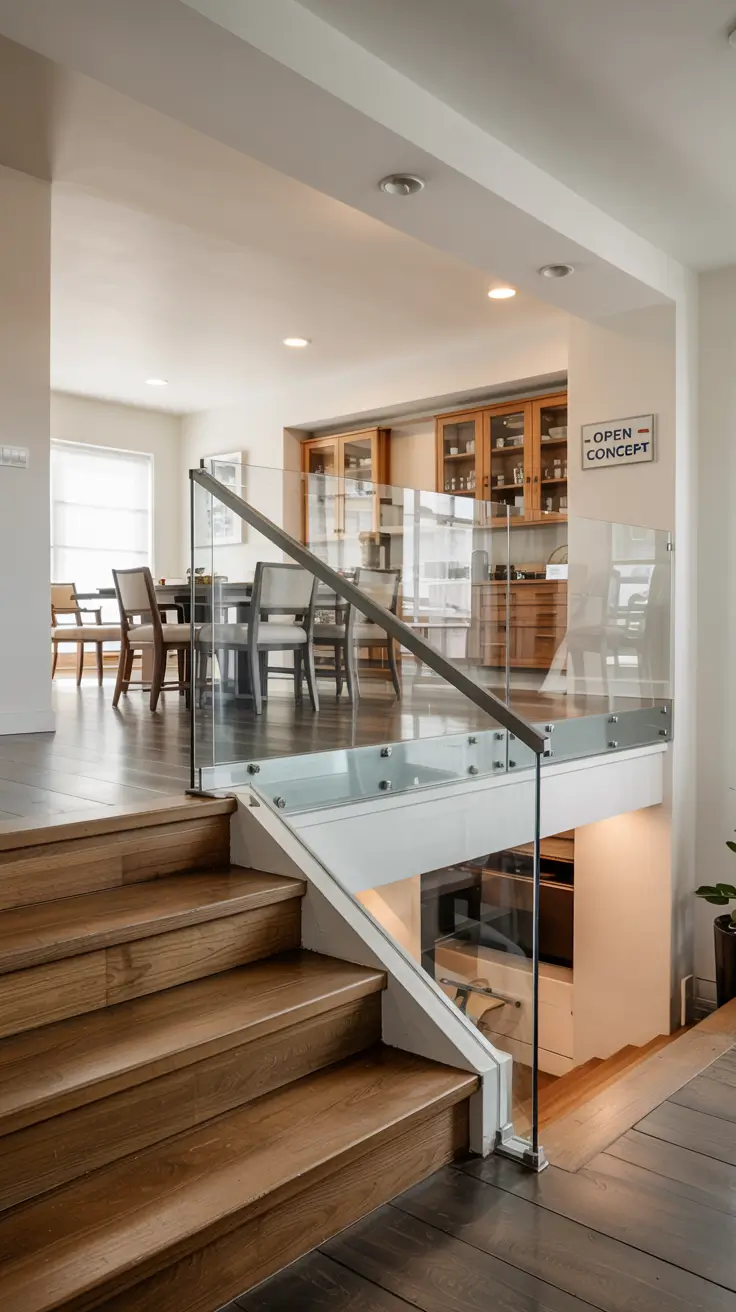
Material by material, I use 12mm glass for the spans with discreet standoff mounts, powder coated steel for durability near entries and solid oak caps where a tactile handhold is desired. In kitchens, a short, counter-high Kitchen railing wall can help protect the edge, while providing a logical back to stools. Where possible, I try to have a continuous return so that I don’t have odd end posts and I try to match the posting spacing to the rhythm of furniture so views through the guard are organized.
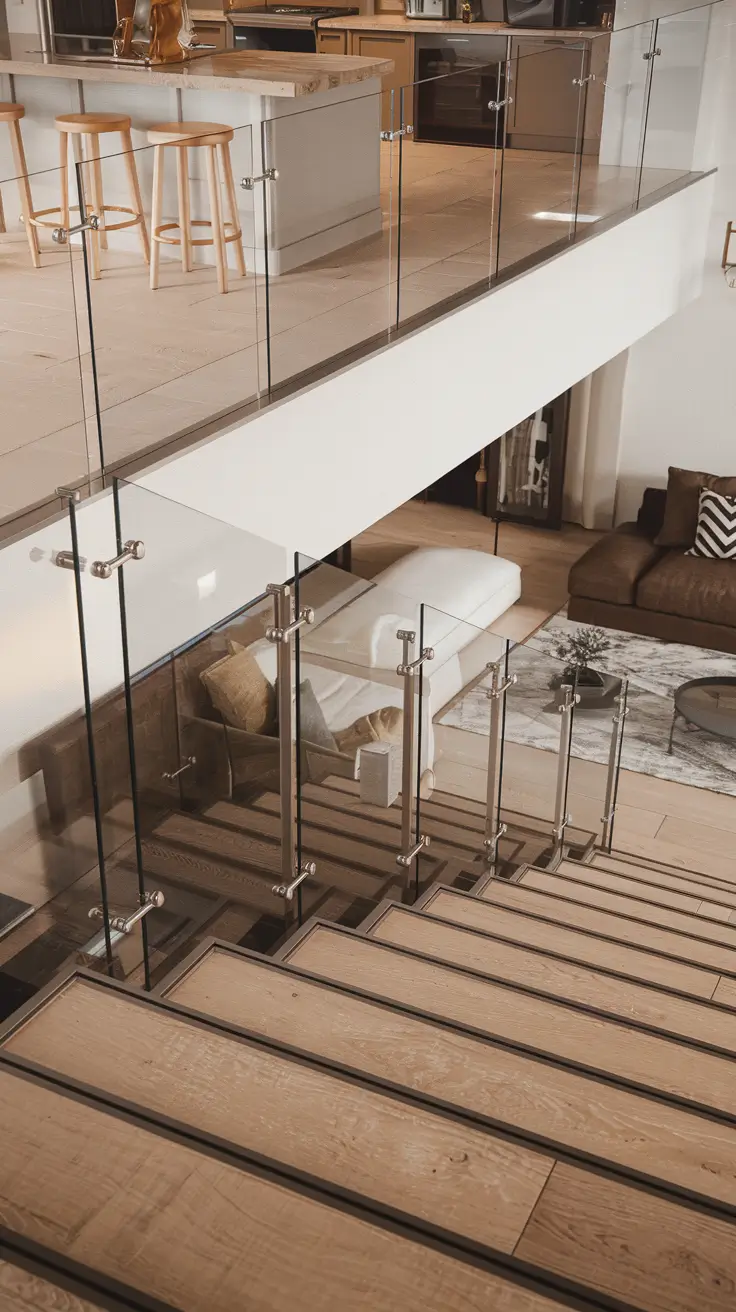
From experience, guards feel best when their visual quietness is combined with physical obviousness to the touch. I stay away from heavy intermediate rails that block sightlines to a hearth or TV. In open concept plans I often let the edge of the pit do the zoning and keep the guard low profile so the living, dining and Kitchen remain visually connected.
What I would add is a mockup on site to test the height and grip, and shop drawings which lock-in glass sizes, hardware finish, and connection details to subfloor framing.
Conversation Pit Seating Layouts
Layout drives sociability, and so I start by laying out the main focal point. If the fireplace is star I center a U shape around it and leave a big aisle on the traffic side. For media first homes I balance screen size and viewing distance with a sectional plus two swivels. When clients request a retro nod, I draw up 70s conversation pit ideas that utilize continuous bench cushions but update the look with stain resistant textiles for a 70s conversation pit modern look.
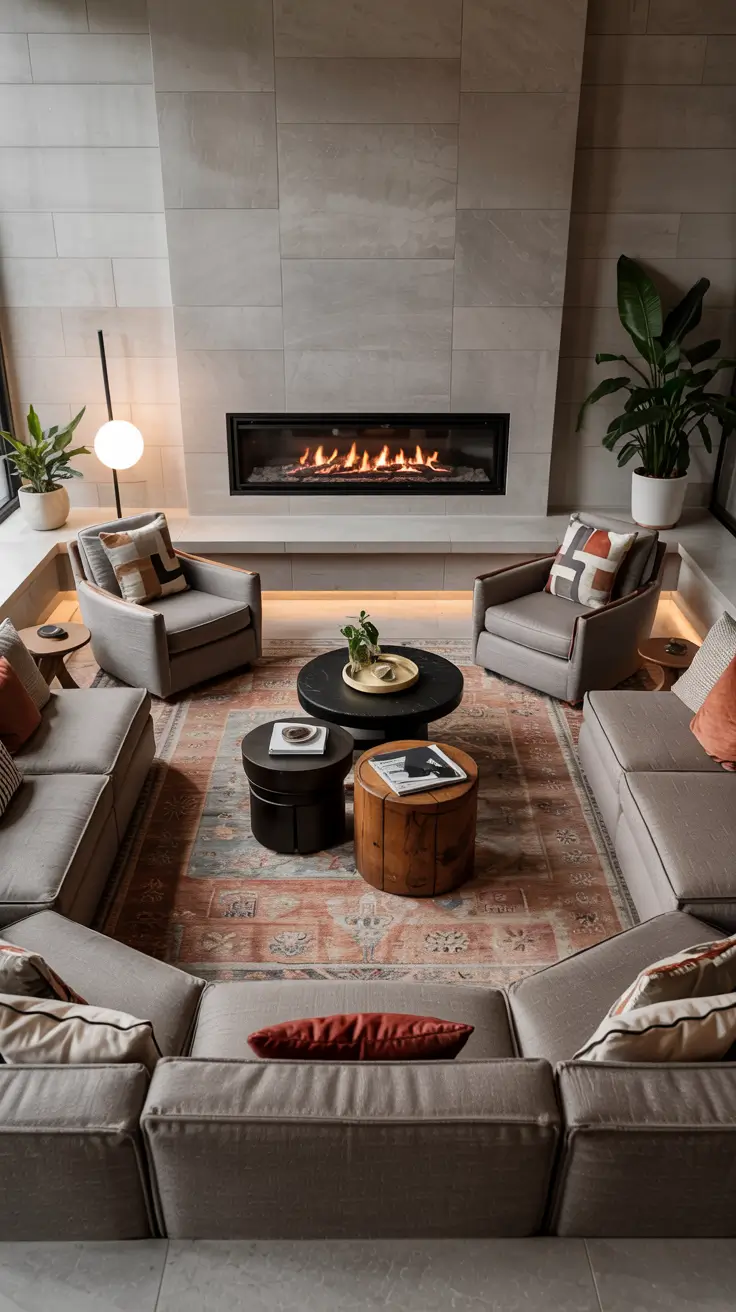
I specify modular pieces that can be reconfigured as needs differ. A low profile sectional anchors the long side, lounge chairs swivel to include or exclude the kitchen and nesting tables flex for snacks or laptops. Integrated end tables at step landings save floor space. I size the rug to fit under all primary seating and extend to at least the front posts of accent chairs in order to make the group feel united.
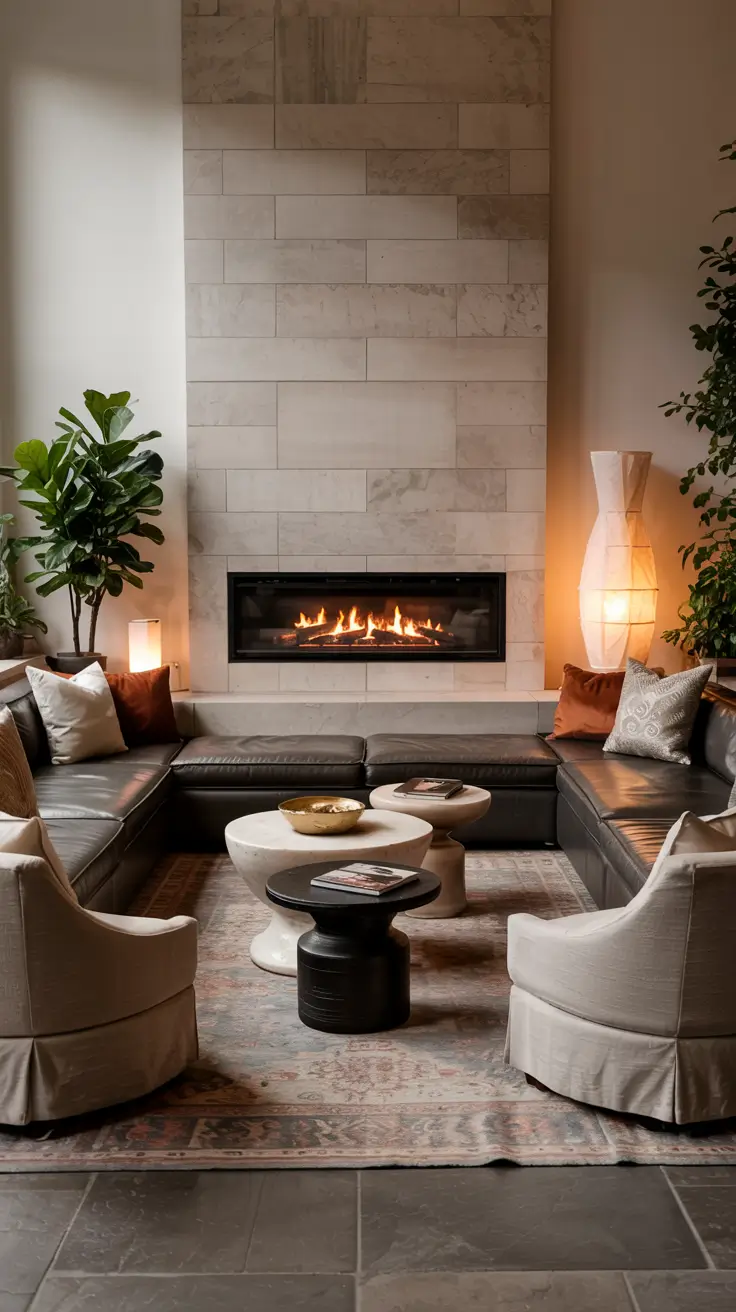
My take is that comfort wins. Deep seats, generous pillows, and a centered table at a reachable height make the conversations easy. For families, I often include one upright reading chair to support a variety of postures over the years. When the brief is Minimalist, I streamline to an L shape + sculptural chair and keep the colour palette tight so forms read.
What I would add is a dimensioned diagram that tests clearances, reach distances and sightlines from any seat, including how the layout behaves on party nights vs. quiet evenings.
Double Height Sunken Living Rooms
Double height spaces exaggerate drama and acoustics so I use the pit to humanize scale. A lowered floor establishes an embrace within the tall volume, and a powerful vertical anchor such as a stone clad chimney provides the eye with a place to rest. In big homes, this is often where big sunken living room ideas can come to life with a centered pendant cluster and washers on the walls that celebrate texture.
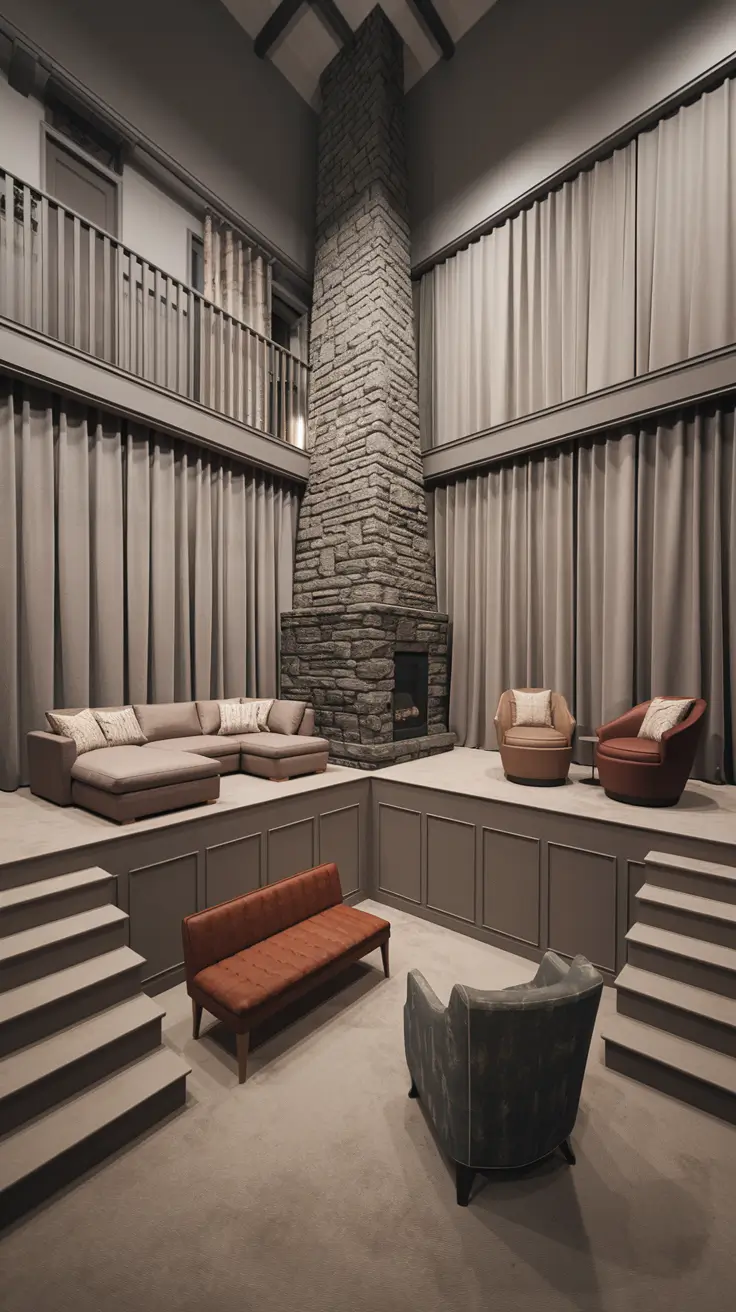
I piece together the room by using a generously-scaled sectional, two accent chairs and built in benches along wide Steps that double as overflow seating. Acoustic panels or heavy drapery tame the echo without shouting about it. A narrow Railing on the mezzanine and pit edge maintains viewpoints and floor outlets keep lamp cords away from walkways.
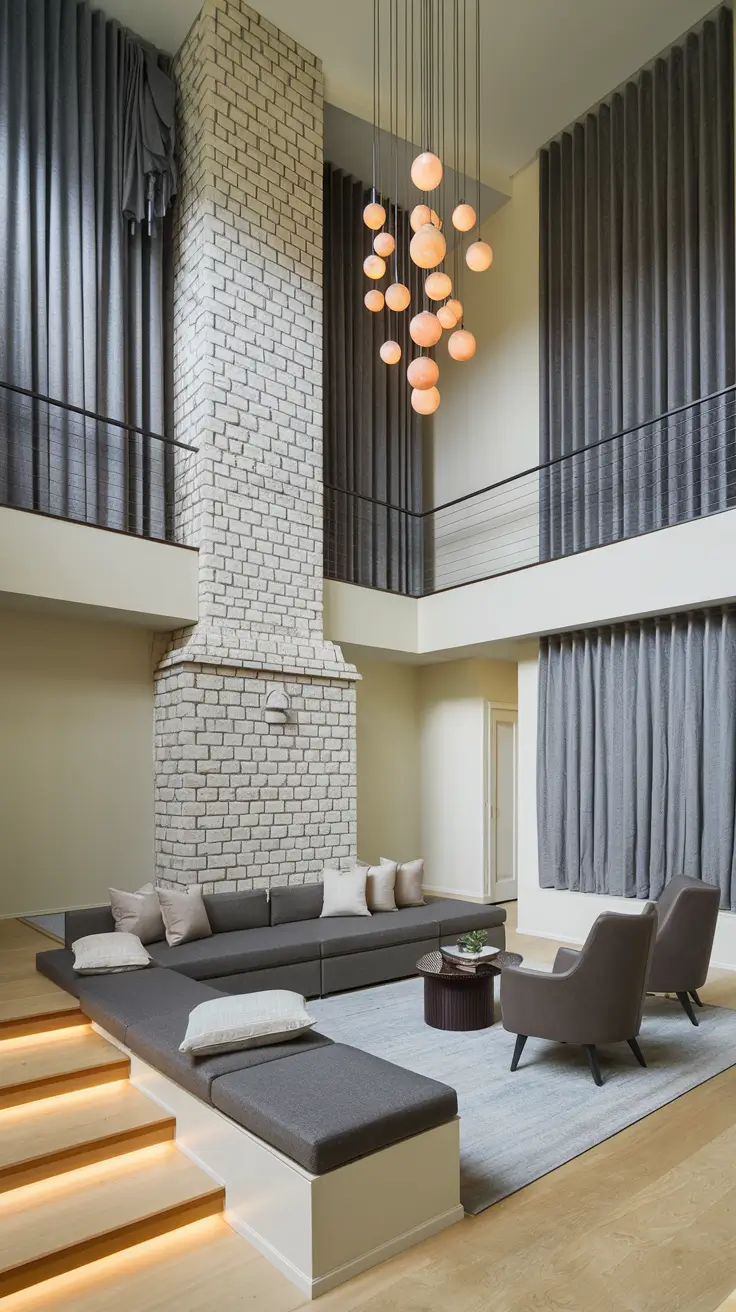
From my projects proportion is everything. Fixtures should not be sized to seat below, but void. A linear fireplace that extends across the width of the seating visually anchors the height. For Open concept living, I allowed the pit to define the lounge while the void connects living, dining and upstairs circulation into one architectural story.
What I would add is an acoustic plan and lighting aiming diagram that indicates lux levels at task zones and stairs, and a maintenance plan for cleaning tall fixtures safely.
Minecraft Sunken Living Room Prototyping
When clients are having trouble visualizing the scale, I will sometimes create a quick block model within Minecraft as a way of prototyping the pit. The grid makes it easy to test Dimensions, and sightlines, and get a feel for different drops to make sure that you are committing to the final Floor plan. Walking avatars down the Stairs to the location of the pit, determines where aisles pinch or steps want to widen.
Block by block, I calculated the volume of the room, the pit at different depths and placed simplified furniture for the tests of reach and distance of conversation. I drop in a hearth, a Layout with fireplace and check that stair runs align with actual doors and windows. Screenshots become a common language to decide between options.
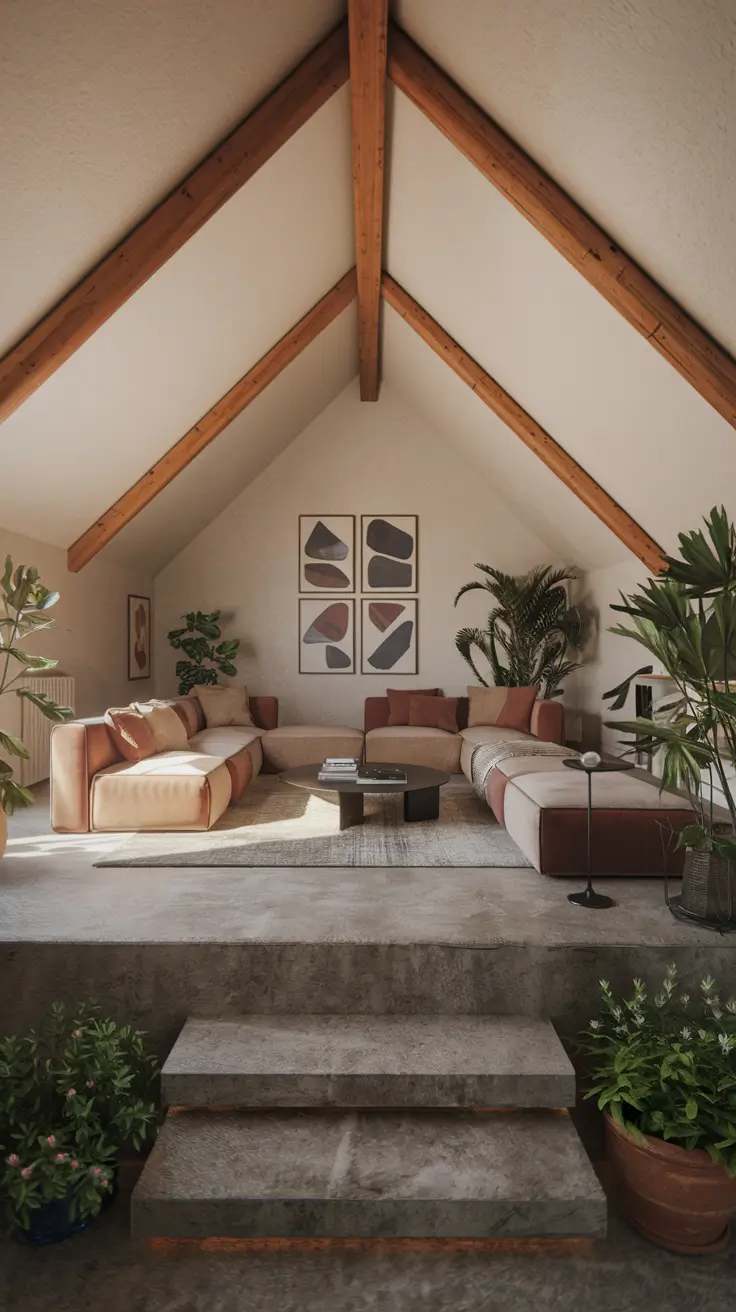
My experience is that simple models help accelerate decisions, especially with clients that think spatially but are not fluent in CAD. Prototyping also uncovers opportunities, such as making one step into a bench or moving a railing to clear up a view axis.
What I would add is a pass in a traditional drafting tool to translate the winning Minecraft sketch into measured drawings and a quick materials palette to get the digital blockiness to evolve into a real mood.
Bali and Indian Sunken Lounge Inspiration
For the client who loves that feeling of a resort, I borrow from Balinese lounges-with low platforms, natural stone and lots of greenery. A pit covered with teak, limewashed walls and a view to a garden to create that indoor outdoor ease. For cultural richness I look to the Indian baithak style seating where the recessed area is for conversation and tea, translated to a modern sunken living room with durable textiles and inbuilt storage.
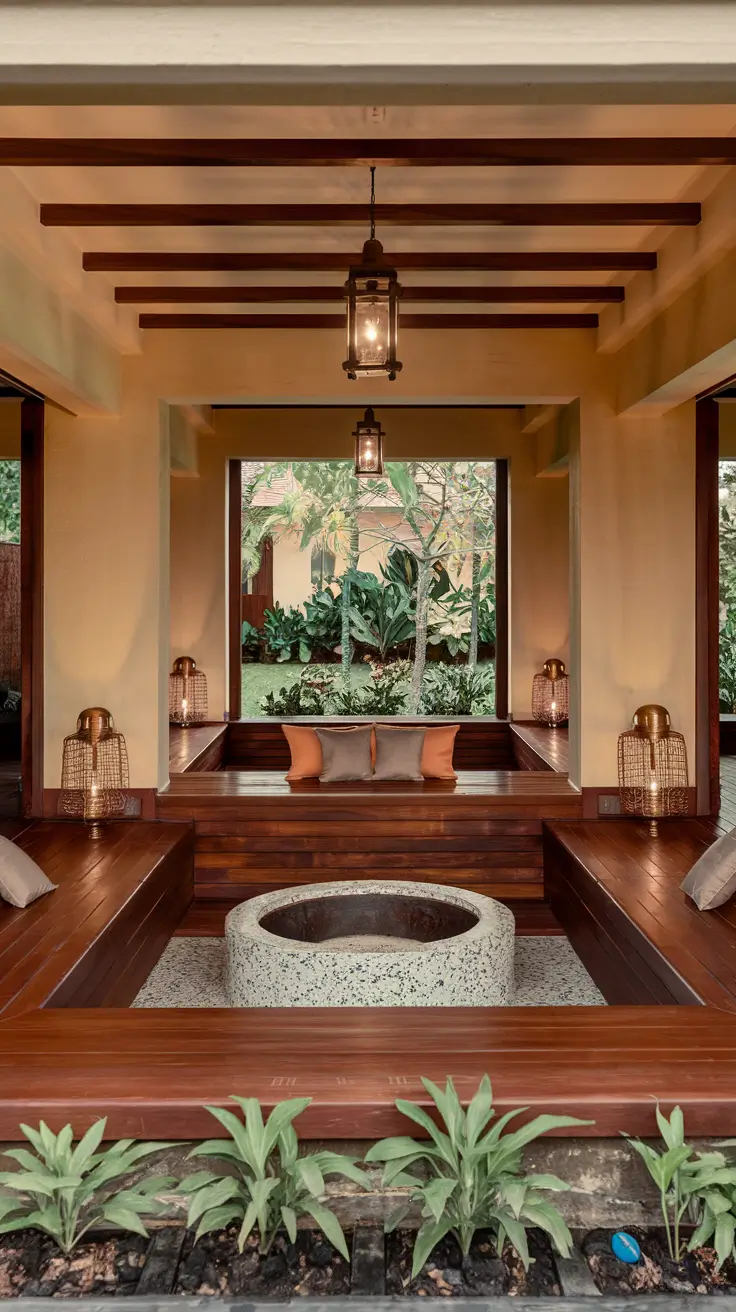
In the hearth I piece the palette together with warm woods, hand loomed rugs, cane accents and stone or terrazzo. Low sofas or floor cushions keep views open, and carved screens or slatted dividers provide privacy without feeling heavy. Brass or matte black fixtures add a touch of shine, and layered lanterns create a relaxed mood.
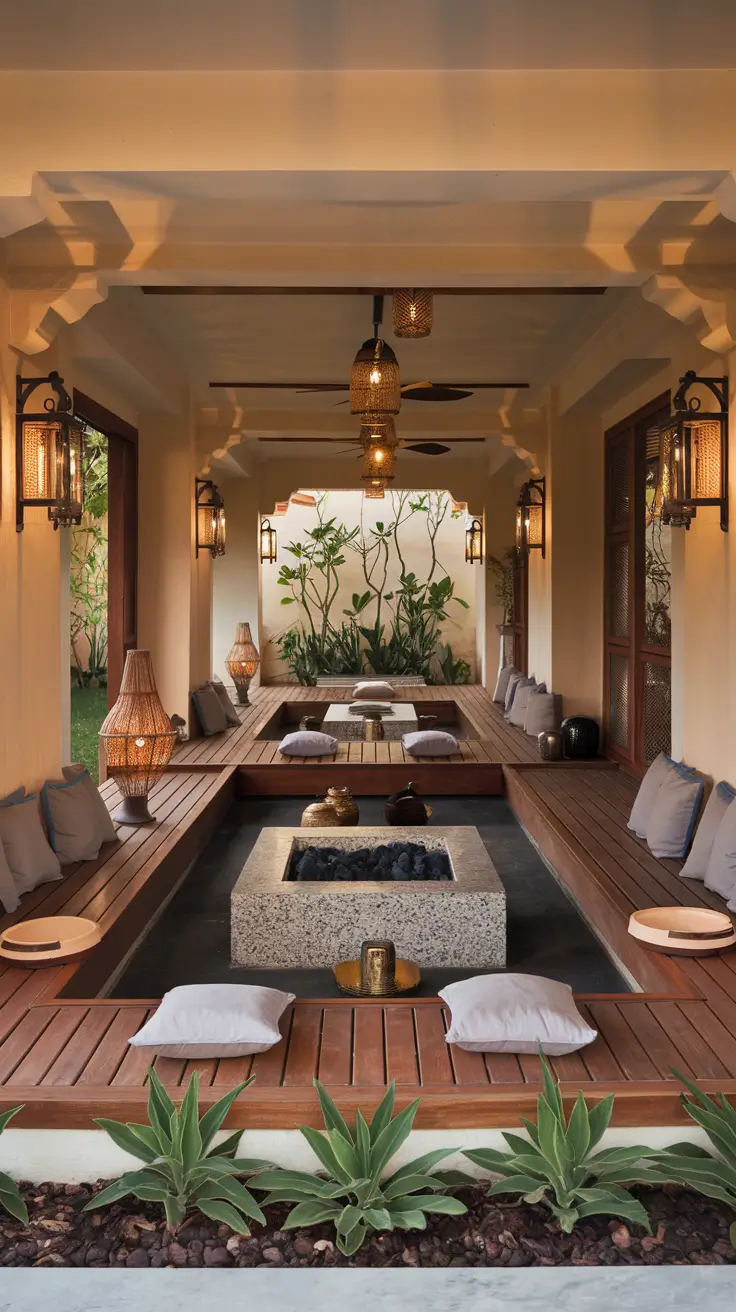
In my opinion, these references go beautifully with Japandi restraint or Rustic textures to produce a grounded yet modern lounge. Indoor planters at the pit edge give life to drop and echo garden courtyards. For travel loving clients, a curated art wall with textiles or prints keeps the story personal rather than thematic.
What I would add is a sourcing list with regionally appropriate vendors and performance fabric equivalents, also with a seasonal care plan for wood and plants so the oasis remains fresh.