
So what do the best walk in pantry ideas actually look like in real homes and how do I turn a narrow or tiny kitchen into a highly functional zone without blowing the budget. I chart out walk in pantry ideas layout in terms of layout size and layout small corner, layout with window, layout shelves and layout with fridge to plan a minimalist or modern solution that suits your kitchen.
I concentrate on real-life limitations and intelligent storage in layouts so that every square inch is utilized. You will learn how various shaped rooms work, which counter tops are suitable within a pantry, and how to future-proof power and ventilation of fridges or freezers.
Walk in pantry ideas – smart storage that fits real homes
I plan a walk in pantry as a small and efficient workroom and not a closet of confusion. In actual homes speed of visibility, speed of access, and speed of reset after cooking are the objectives. I begin by organizing the zones of staples, breakfast, baking, snacks, and small appliances to keep the kitchen free. A clean circulation path with shelves sized to the contents keep everything serene and minimal even in a small footprint or tiny layout.
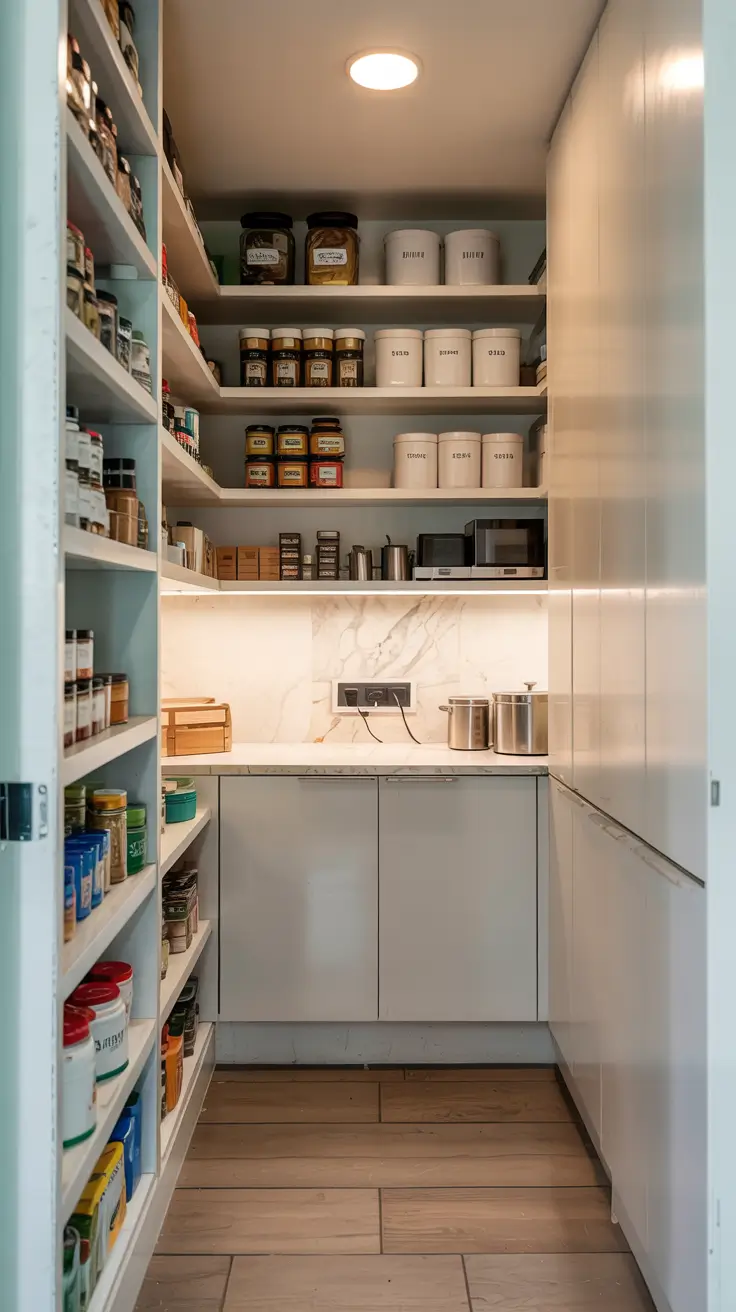
I design shallow shelves to hold cans and jars so nothing is hidden, deeper bays to store bulk, and a short run of counter tops to drop bags and do small prep. Clear bins contain categories, lidded baskets contain backstock, and pull-out drawers contain lightweight packets. Aprons hang on hooks, trays and cutting boards are in a rail, and a narrow ladder hangs on a wall in case ceilings are high.
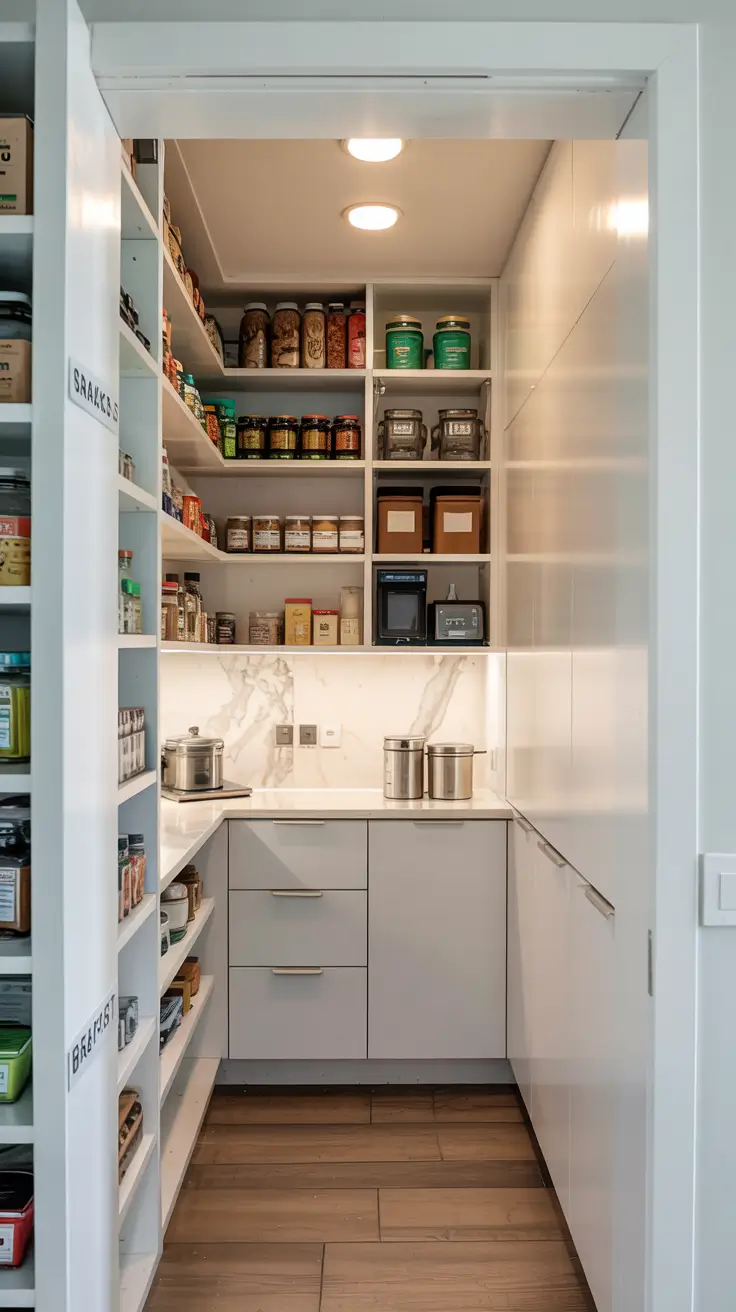
From experience, the simplest solutions last the longest. I make the finishes easy to clean and light to reflect the visibility, install LED strips under all shelf runs, and quiet-close hardware so everyday use feels luxurious. To avoid overpurchasing, Pro organizers usually suggest establishing a par level per category, and a label rail or clip-on label works better than sticker labels when categories vary with the seasons.
The backup plan I would add here is an overflow backup. I use one of the upper shelves as a flexible holiday storage and have a folding crate on the floor to bring back to the kitchen weekly, which makes the system flexible without constant reworking.
Walk in pantry ideas layout – planning zones for grab-and-go
When I plot a walk in pantry ideas layout, I start with traffic. The most frequently moving items must be placed between hip and shoulder height at the entrance to make the grab-and-go process really fast. I put breakfast and snacks nearest the door, bake in the middle of the run, and rarely used appliances at the top or bottom. A minimalist plan does not have deep dead ends and has a clear turn radius to enter, pivot, and exit within seconds.
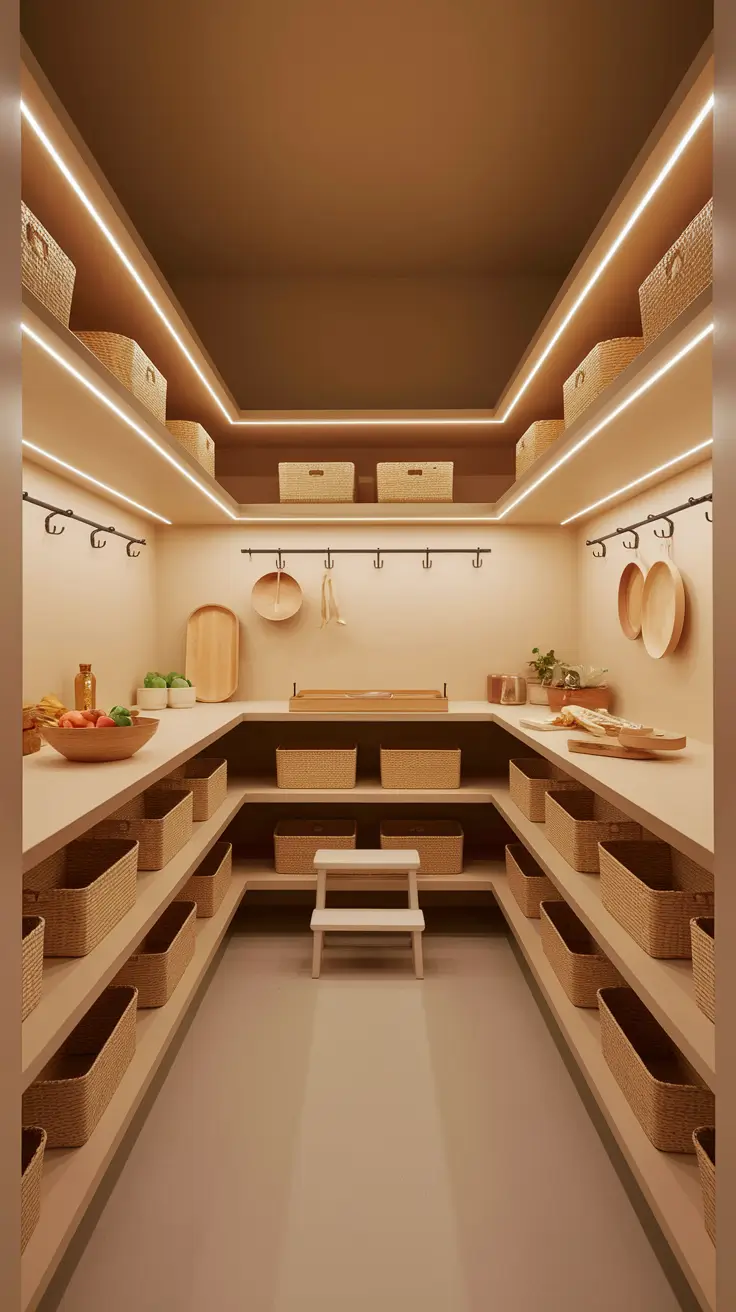
I divide storage into vertical bands by task. Left wall dry goods with 12-14 inch deep shelves, back wall appliances over 24 inch counter, right wall tall items like cereal, paper rolls and tray dividers. I put a fridge or freezer on the back or end wall to limit door interference. I would target at least 30 to 36 inches of landing zone on layout counter tops.
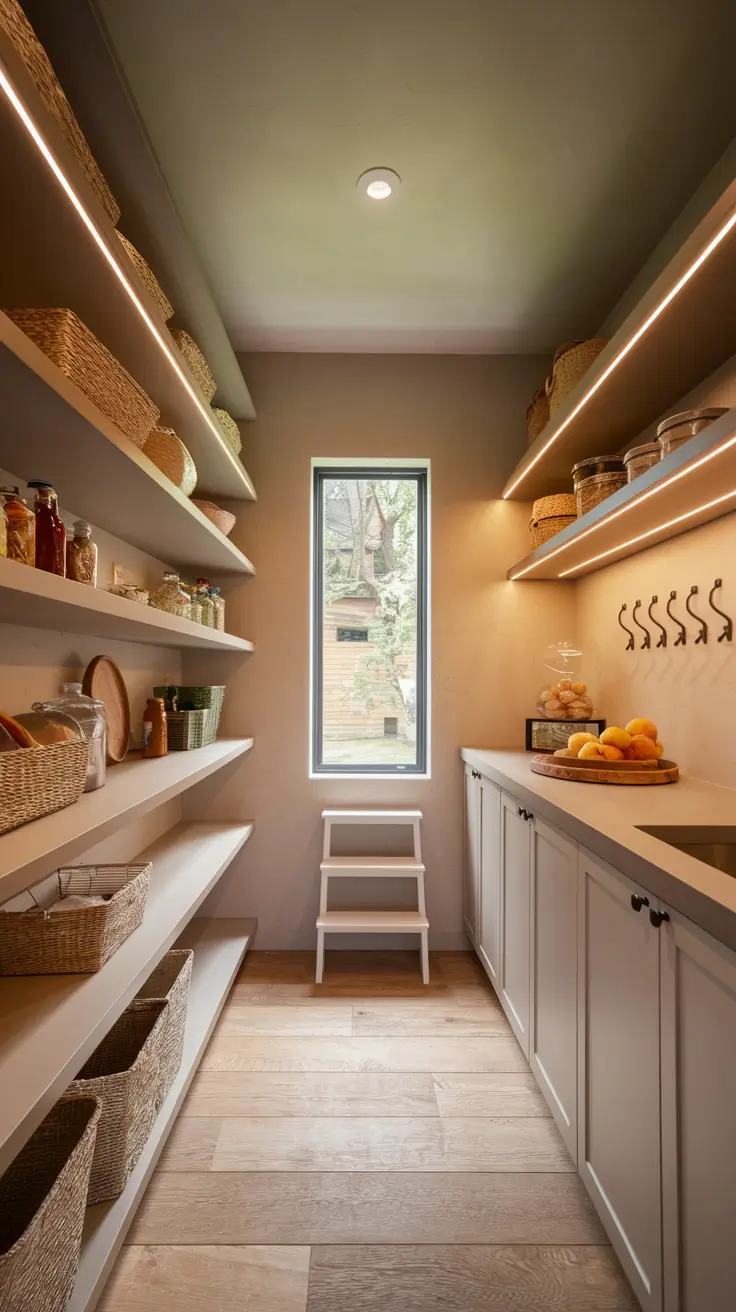
I like to name the plan as a small shop. The words on shelf fronts make decisions faster and less rummaging. A pocket door or outswing door that clears interior shelves is a soft-close pocket door that improves flow. If you meal-prep, a pegboard or rail above the counter will help you keep scoops and measuring cups handy so the work triangle feels natural.
To reinforce this area, I would include a charging shelf to hold handheld vacs and thermometers and a two-outlet strip to be used by small appliances. That small upgrade keeps cords neat and is future-proof with no rewiring.
Walk in pantry ideas layout small corner – make dead space work
A tiny corner pantry can easily beat a larger room provided I use the corner as a hinge rather than a black hole. I surround shelves on both sides and make depths moderate, and I use the real corner only for the low-frequency, large items. The circulation is in front of me so I do not need to walk around obstacles. This strategy makes layout small corner constraints an advantage
My staple kit consists of a row of 10 to 12 inch deep shelves to store everyday items, followed by a diagonal or L-shaped corner shelf at 16 to 18 inches deep to store bulkier items, such as appliances, stock pots, or bins. A narrow rolling cart may be kept against one wall to carry heavy items to the kitchen. To store layout I prefer narrow stacks of drawers to store tea, spices and snacks that would otherwise get lost.
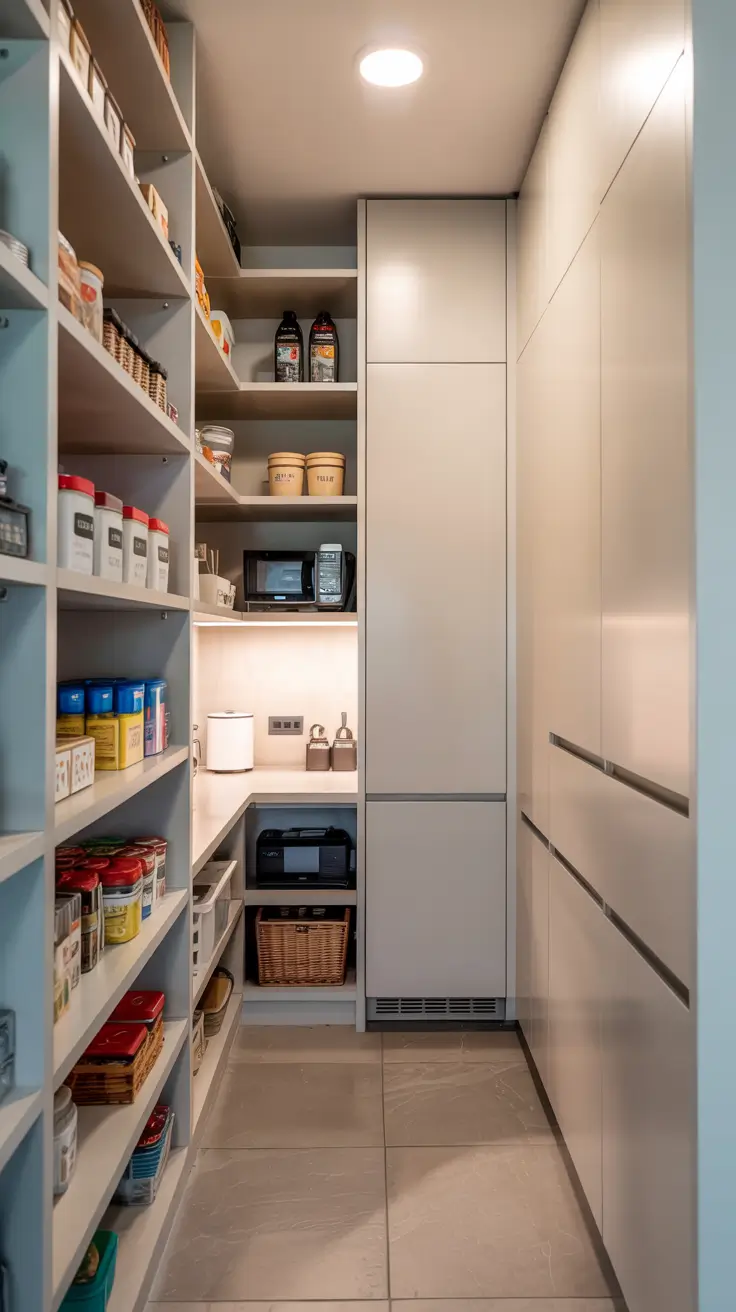
In practice, I have found the best results to have the lowest shelf at 12 inches off the floor to provide a lined floor zone to place crates and bottled water. I also like a motion sensor light in small corners so that you do not have to go searching a switch with full hands. In case the corner is without a window, a high-reflectance paint and satin finish maintain the space bright.
I would add a door strategy. A bi-fold or pocket door can be used in a tight kitchen to keep the aisle open, and a standard door that swings out into a less-busy space prevents running into the interior shelves.
Walk in pantry ideas layout with window – light, privacy, and shelving
When a pantry is illuminated by a window, I use daylight as an aid to visibility and cover light-sensitive foods. I do not keep oils and spices in direct sunlight and UV-filter shades to balance the light and privacy. The opening can still be framed by shallow shelves without obstructing ventilation as long as the window wall can work hard.
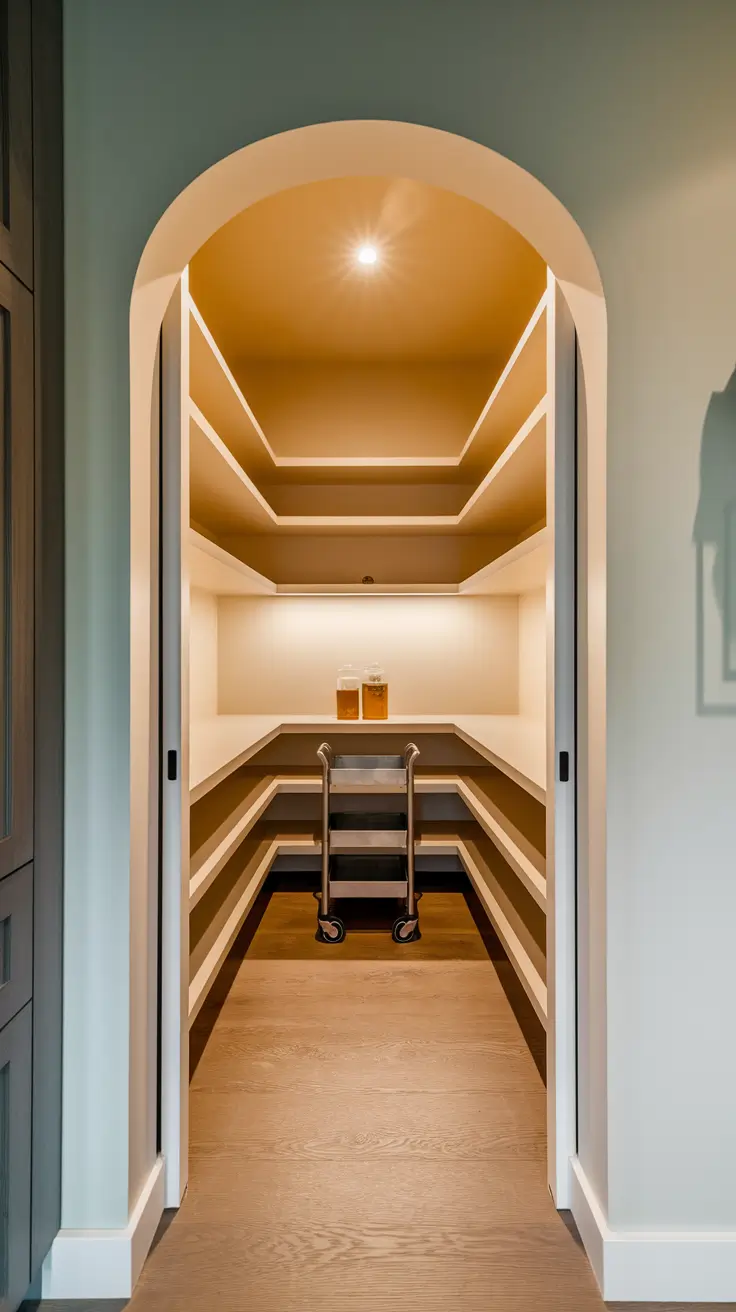
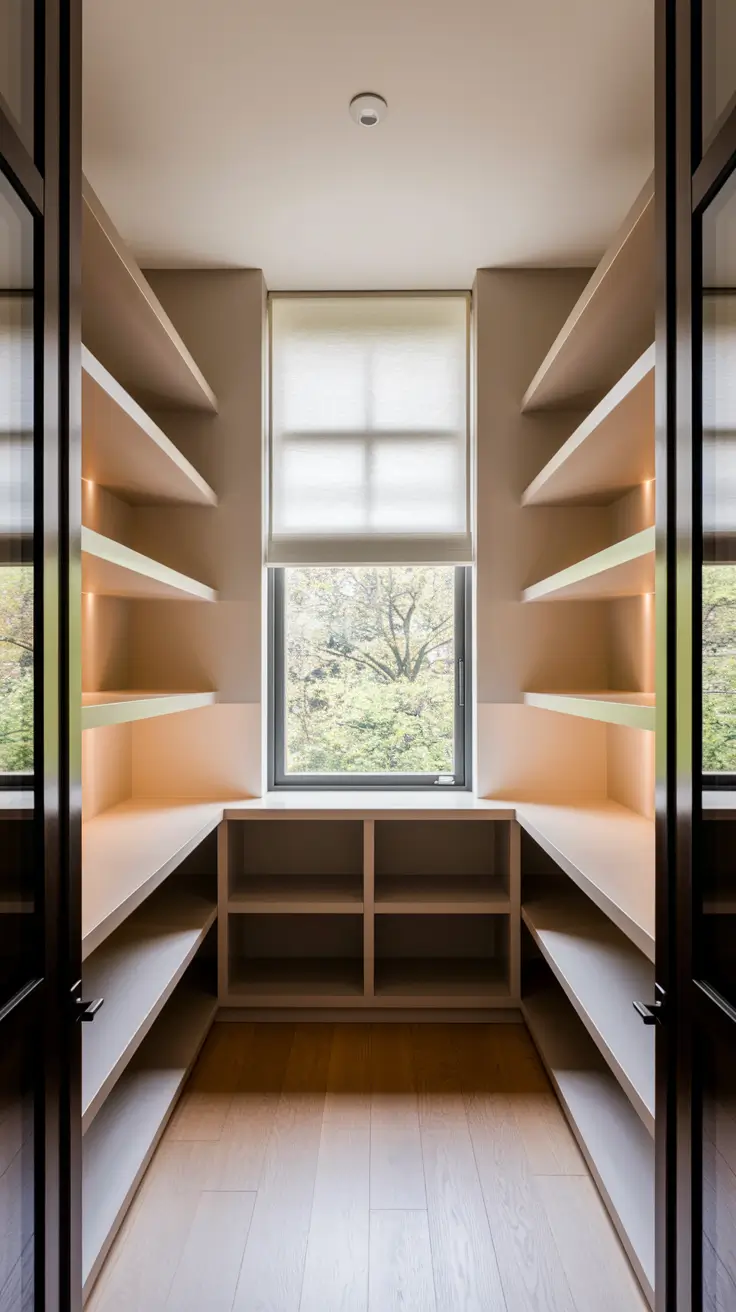
I use side walls deeper shelves and the window wall 6 to 8 inch spice ledges, narrow can risers, or a thin rail to hold utensils. A counter beneath the window is a natural place to pack or prepare dough, and I extend a backsplash material up to the sill so it can be easily washed. On the window wall I provide only narrow clearances to the layout shelves so that the view and swing of any casement are not obstructed.
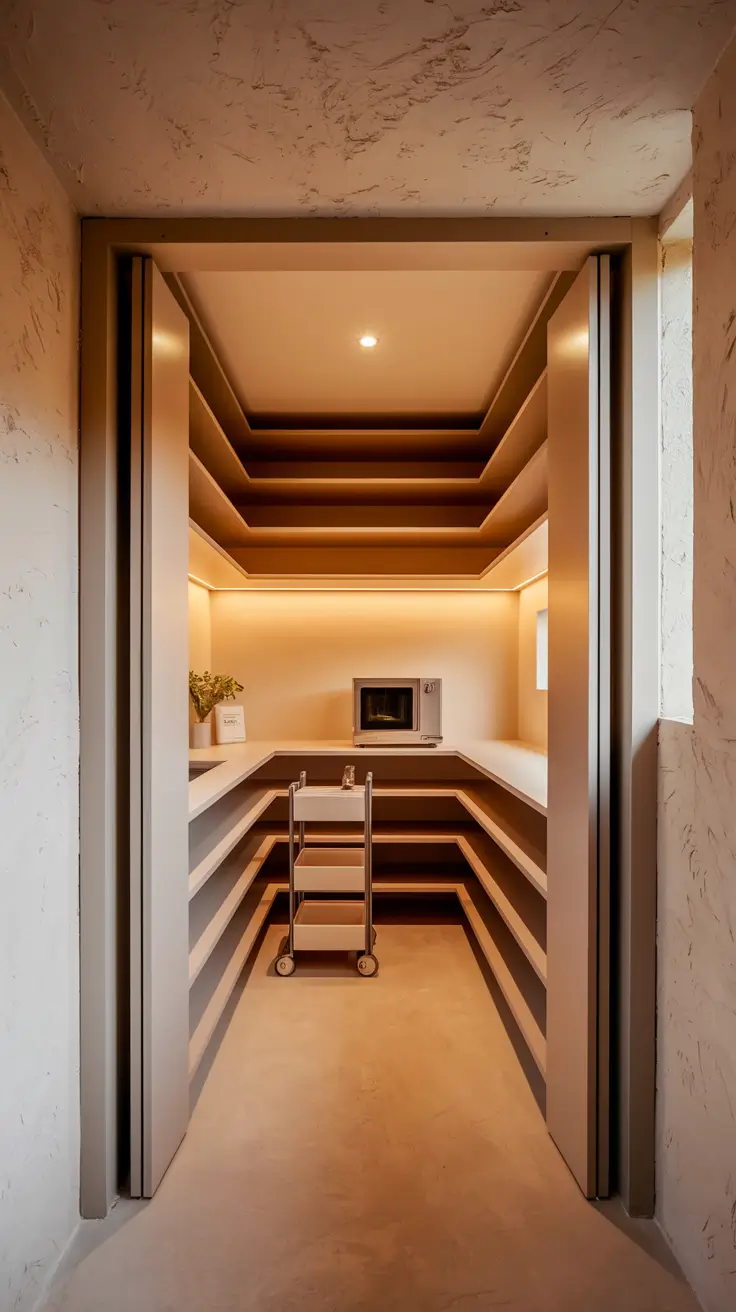
I like a top-down bottom-up cellular shade because it is highly flexible to control, particularly in modern or minimalist designs. I suggest a vent or a small, quiet fan to keep the humidity off dry goods in case condensation is a risk. The light colored cabinetry and matte counter tops minimize glare but still maintain that airy open atmosphere.
I would also have a dedicated light shelf above the window line with an LED strip pointed down. This keeps the counter lit at night without the use of the ceiling, and it prevents shadows of your body as you work.
Walk in pantry ideas layout size – how big is big enough
Right-sizing is what makes the difference between a handy pantry and a space waster. In the average house I would suggest a clear interior of 40 to 48 inches, with a minimum 36 inch aisle when really tight. In planning the size of layout, linear feet of shelf run are more important than room area and I use continuous, shallow shelves.
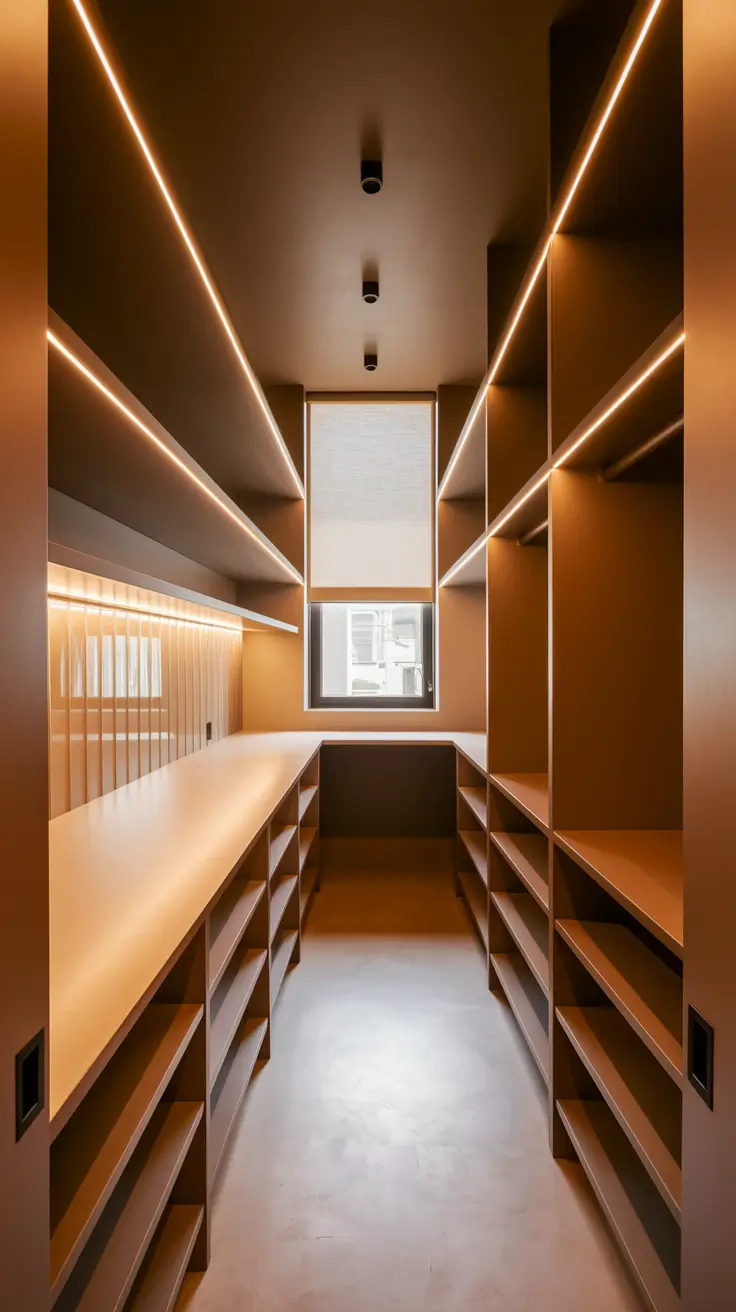
I break the room into modules. Shelves at 12 to 14 inches deep to store everyday items, 16 to 18 inches deep to hold appliances and servingware, and 24 inches deep to hold a counter run with outlets. Vertical spacing is between 8 and 12 inches on cans and jars, 14 inches on cereal and 18 inches and up on appliances. Where possible, I add a high seasonal shelf to hold infrequently used kit.
By far the most frequent error is the pursuit of an oversized pantry that robs the kitchen of light or prep space. I would prefer to have the pantry small and manageable, and have an overflow cabinet close to the dining room that will hold beverages or table linens. That division ensures that daily flow is tight and that there is no wastage of steps.
What I would add is an early inventory exercise. List your real categories and volumes per normal week and per holidays, then assign linear shelf inches to each. This will make the layout size fit your real life and not an estimate.
Walk in pantry ideas layout with fridge – integrate cooling without clutter
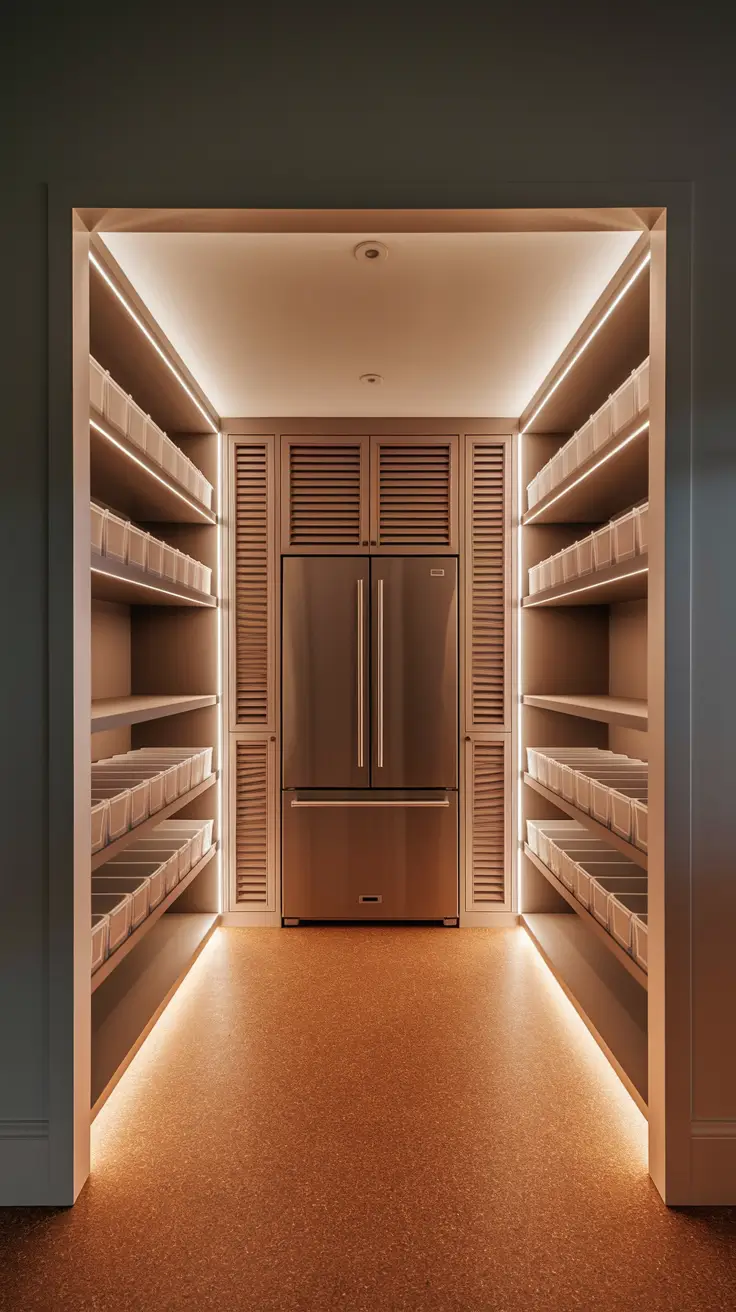
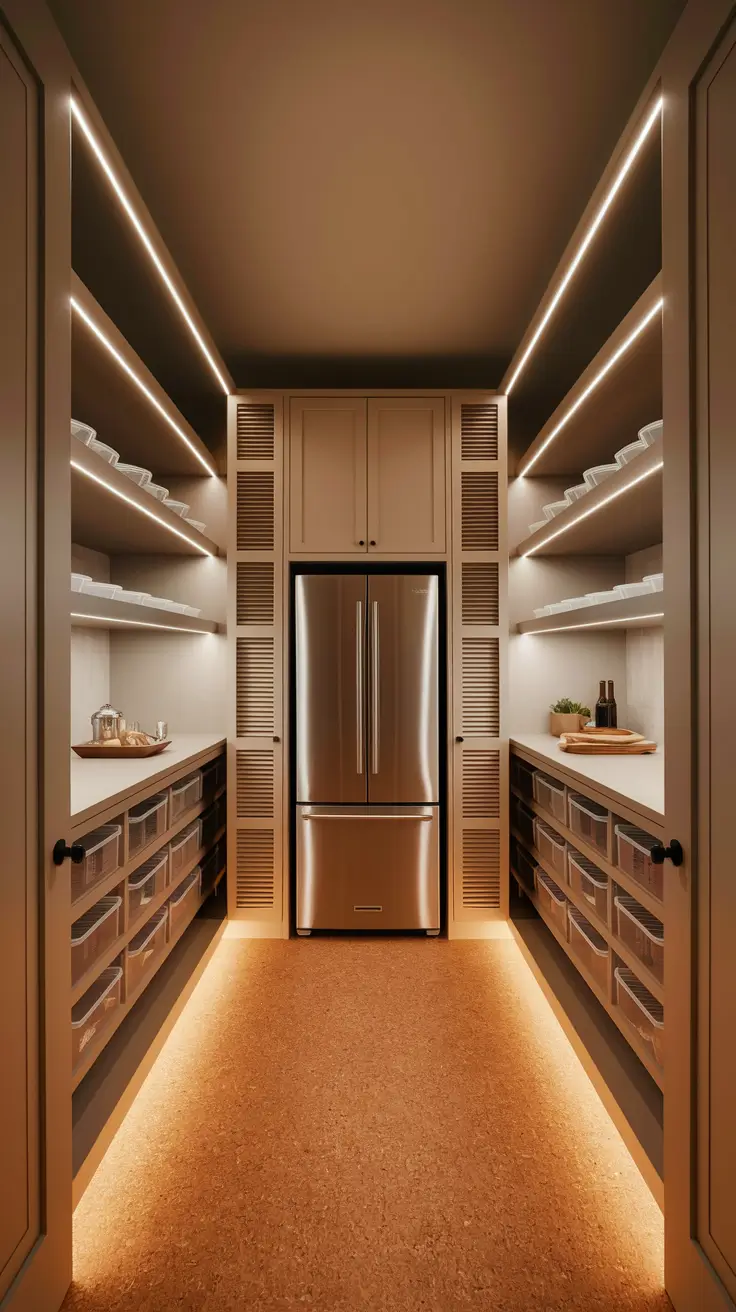
A fridge in the pantry is a wonderful idea when I think about doors, landings, and ventilation first. I put the unit at the back or end of the wall so that the open door does not obstruct entry and I maintain at least 18 inches of layout counter tops adjacent to it, to load and sort. If I add a freezer, the same rule applies. This makes the kitchen less noisy and the pantry very efficient.
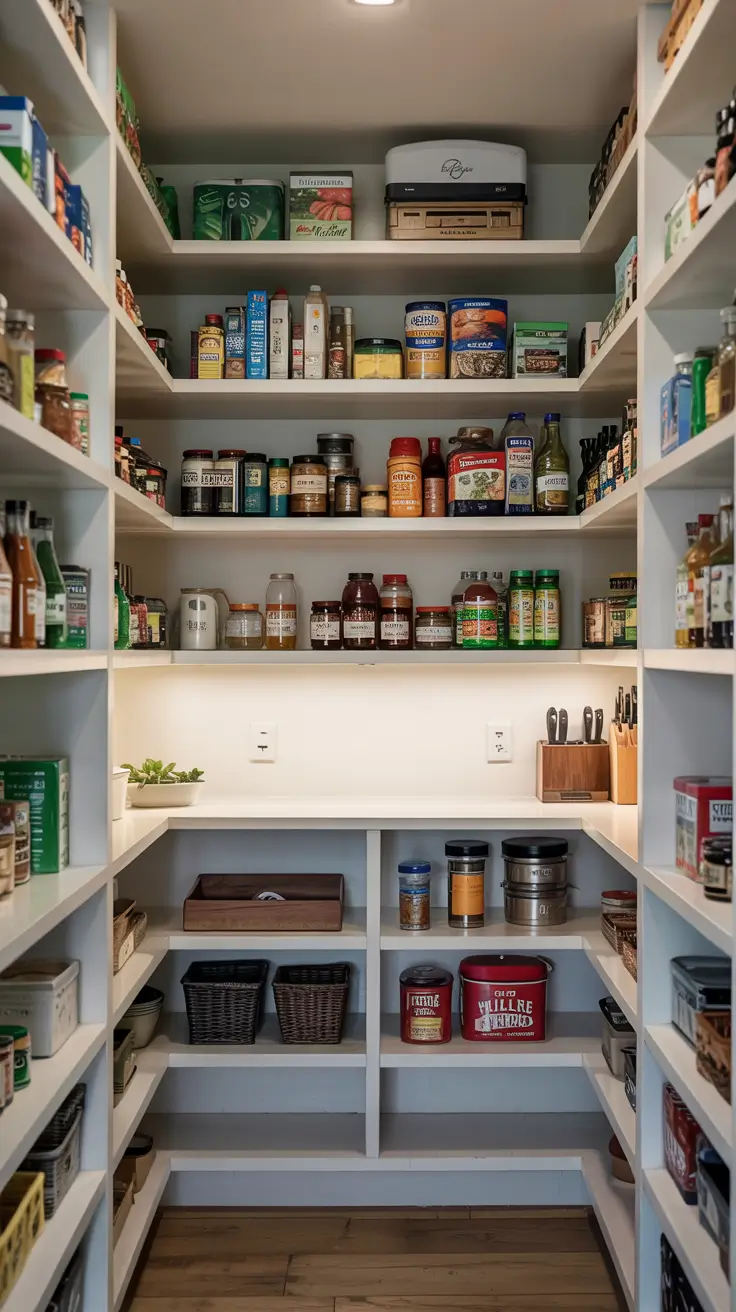
I prefer a counter-depth or built-in panel model to help minimize visual bulk and door swing. A 24 inch deep landing cabinet next to the fridge contains snacks and drinks that move fast, and tall shelves opposite contain paper goods. I add a special circuit and verify that the door swing does not hit shelves. I would use a floor protector tray and a water leak sensor as a precautionary measure when it comes to layout with fridge.
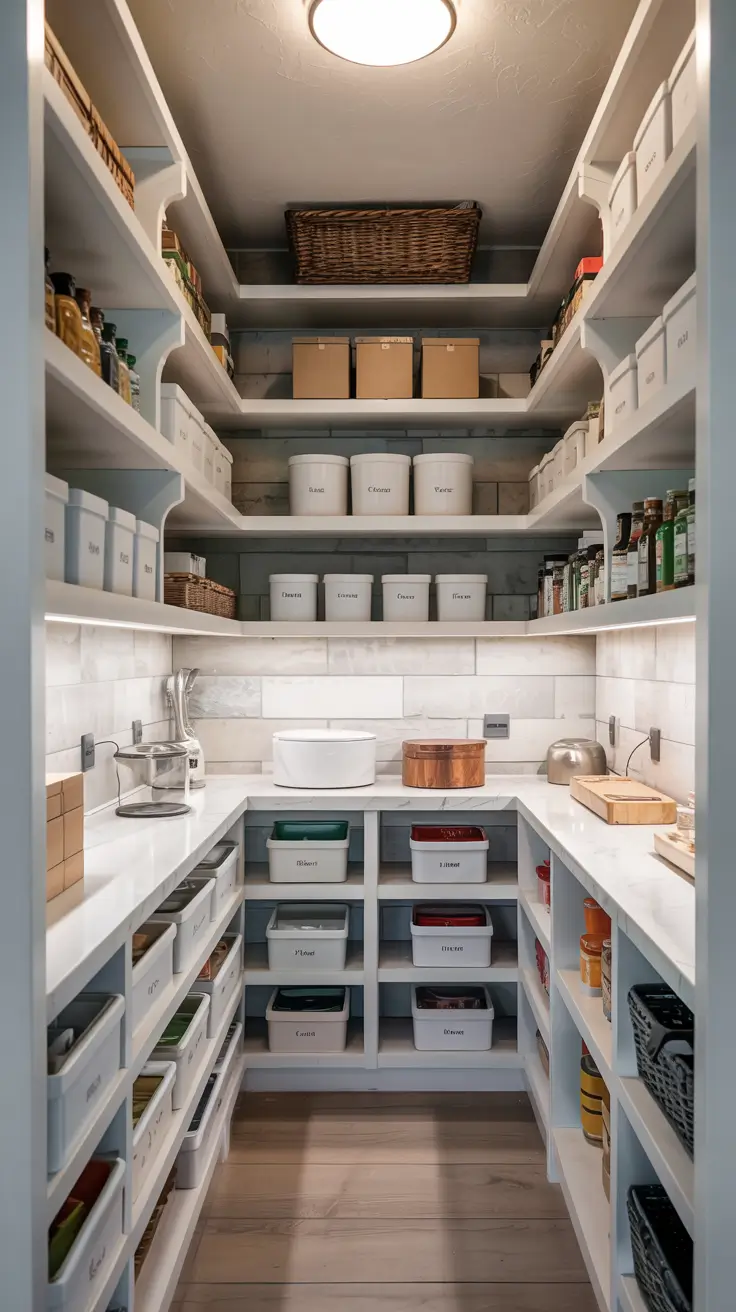
I have discovered that a small undercounter fridge may be even more suitable to beverages, leaving the main kitchen fridge to cooking. When families snack regularly, I lower the shelf height of the beverage area and put clear bins so that kids can self-serve. A magnetic whiteboard on the side panel records backstock and minimizes duplicating purchases.
I would add an airflow check. Leave at least the recommended space of the manufacturer behind and above the unit and do not box it in with tight side panels that trap heat.
Walk in pantry ideas layout shelves – depths, heights, materials
Shelves are make or break to usability, so I size them to contents, not to arbitrary numbers. In the majority of walk in pantry ideas, shelves that are 12 to 14 inches deep do not allow a second row and keep the labels visible. I place the eye-level run of everyday items and I use adjustable uprights so layout shelves can change. A sleek, contemporary appearance is achieved through uniform spacing and a high level of lighting.
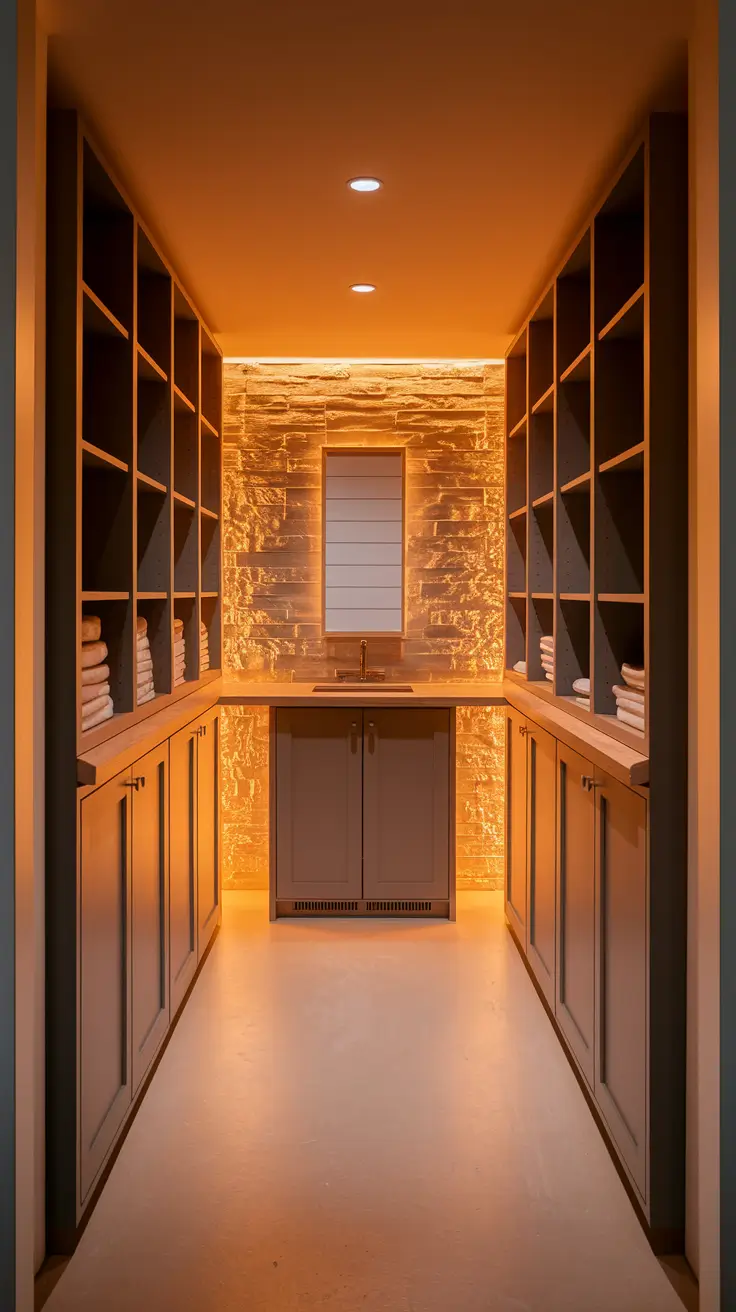
I use laminated plywood or solid wood with a hard edge to give it a warm feel, or powder-coated metal when it needs to take a heavy load. Melamine is functional when edges are guarded and spans are supported. To keep costs down, I usually use Ikea IVAR pine with back rails added or BROR metal at higher capacities. To avoid sagging, shelf spans must be interrupted with vertical supports at 32 to 36-inch intervals.
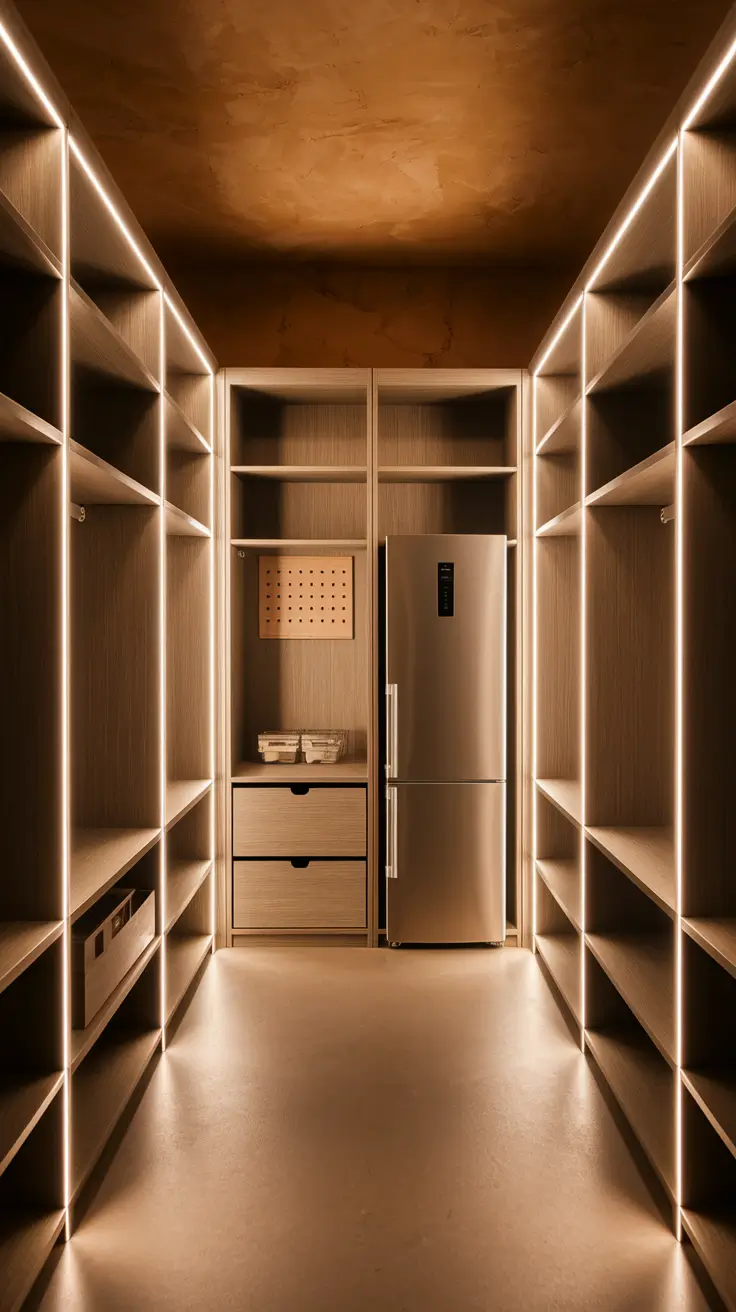
In practice, I insert risers to cans, pull-out trays to snacks and vertical dividers to baking sheets. A 1 inch lip keeps the rolls in place without sacrificing visibility. The under-shelf LED strips are connected to a door switch so that the lights turn on immediately without having to search the controls. This keeps the space feeling modern and tidy.
I would add a materials map in your notes. Walls are painted with wipeable paint, wood shelves are painted with satin polyurethane and the two lowest shelves have removable washable liners to catch scuffs and spills.
Walk in pantry ideas layout counter tops – surfaces for prep and drop zones
I use counter tops in a walk in pantry as mini workstations that free up the main kitchen. The 24 inch deep continuous surface allows me to display groceries, decant bulk staples, or park a mixer without crowding. I will land zones next to doors, fridges, or freezers so that the flow is not interrupted in everyday use. This is where walk in pantry ideas layout counter tops come in really handy, particularly in narrow or small rooms that require clever surfaces.
I choose materials based on tasks. Quartz gives wipe-clean durability for decanting and snack prep. Butcher block makes a cold scheme warmer and gentler on glass jars. Stainless near a beverage fridge shrugs off drips. I incorporate a low splash to make cleaning easier, a rail or pegboard above to hang scoops and a power strip mounted vertically so that the plugs do not compete.
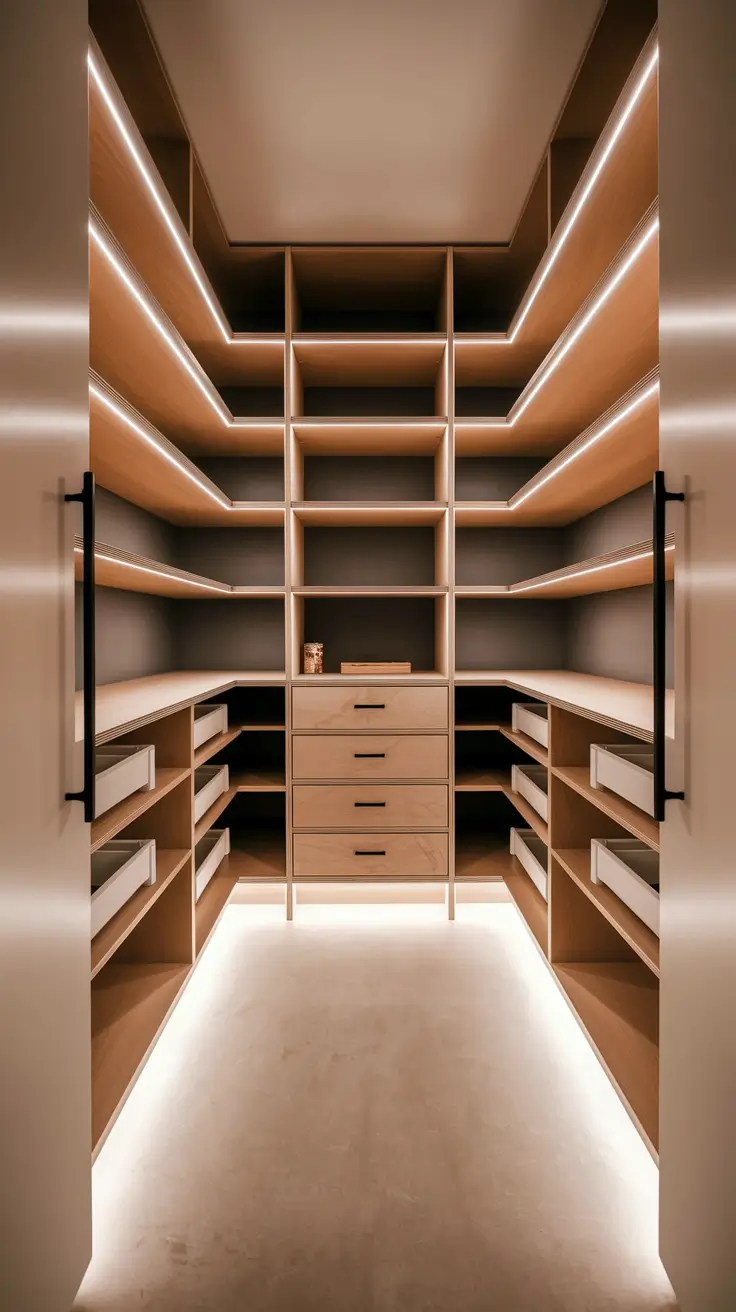
Based on experience, the NKBA advice of providing each appliance with a landing space also applies in the pantry. I allow 18 inches of clearance on one side of a fridge or layout with freezer and 30 inches of open counter to drop a bag. A modern house will have a motion sensor switch and under cabinet LEDs so late night raids are easy without illuminating the entire kitchen.
I would include a charging shelf at eye level with a hidden cable tray. That little boost drives labelers, scales, and handheld vacs without making the counter tops busy to the eye.
Walk in pantry ideas layout storage – bins, baskets, drawers, and doors
Storage is the heart of any walk in pantry ideas plan, and I plan it as a mini-shop. Clear bins eliminate mystery inventory, woven baskets add softness to the look and deep drawers hold heavy dry goods without strain. Store door handles spices, wraps and foil to free shelves. This layering technique is applicable in small, rectangular, and large spaces.
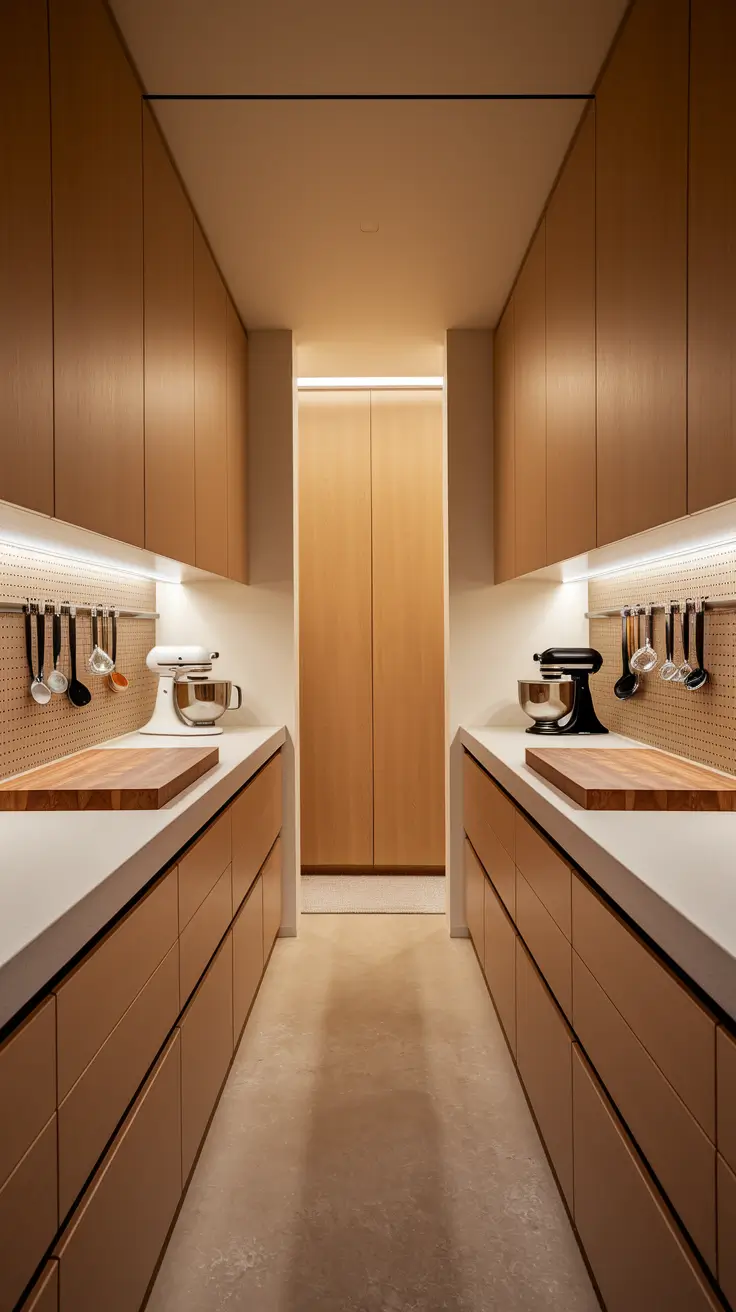
I map every category to the right container. Airtight canisters to store flour and sugar, low bins to store snacks, tall bins to store pasta, and file-style dividers to store baking sheets. The counter tops have soft-close drawers to store heavy items and the full height shelves behind the doors hold bulk paper products. To save money, Ikea VARIERA bins and KUGGIS boxes, BROR or IVAR components can be used along with custom carpentry.
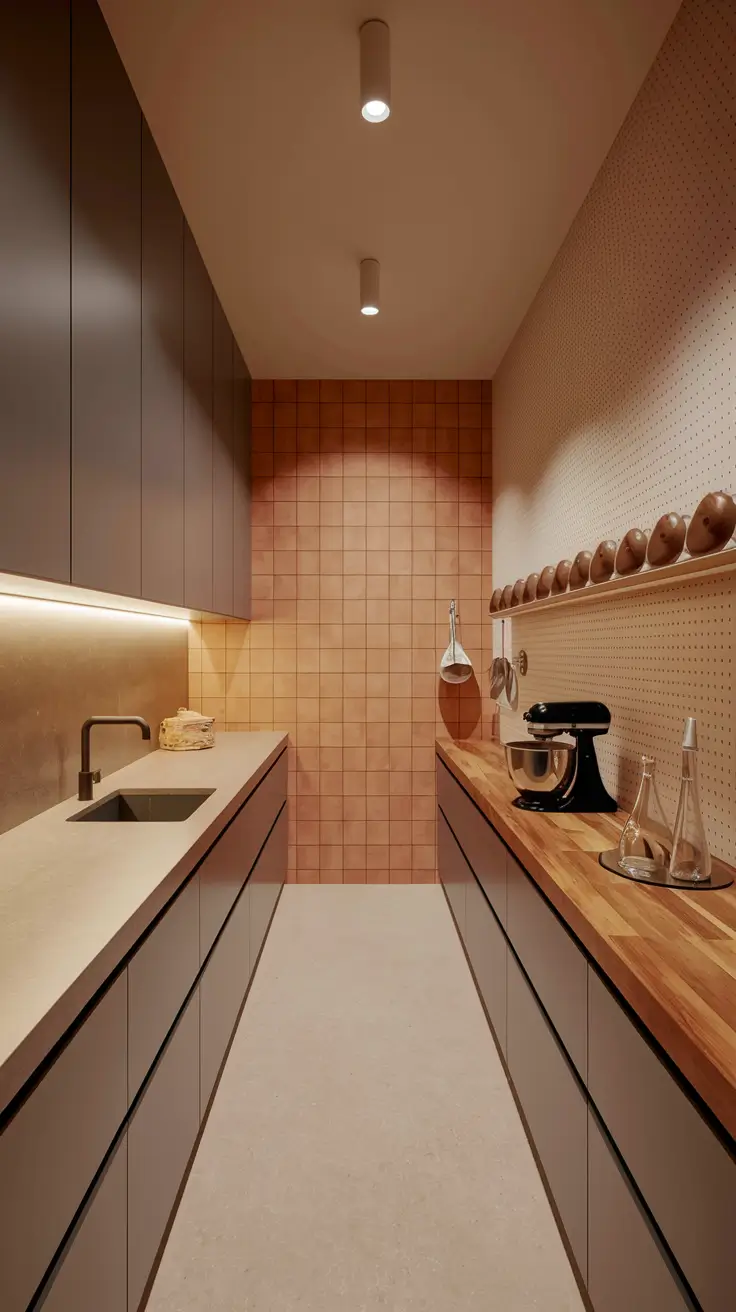
In practice, labels are non negotiable. I have clip on label rails as opposed to stickers, so it is easy to change the season. A first in first out habit preserves food and a two minute reset every week keeps the system going. When children serve themselves, I reduce the height of snack areas and raise glass. A thin step stool on hooks is parked to reach the top seasonal shelf without any visual clutter.
I would add a backstock plan. One top shelf labeled overflow keeps the main levels from swelling, and a small dry erase list on the inside of the door keeps the kitchen fridge free of duplicates.
Walk in pantry ideas layout house plans – place, plumbing, and power
The location of the pantry in the house plans is as significant as its appearance. I put it close to the kitchen but not in the main lines of view so that the space can conceal everyday clutter but still be near the cook area. The garage or entry is a straight shot making grocery drops quicker. In small houses, a niche or under stairs space can be fashioned into a small but contemporary walk in.
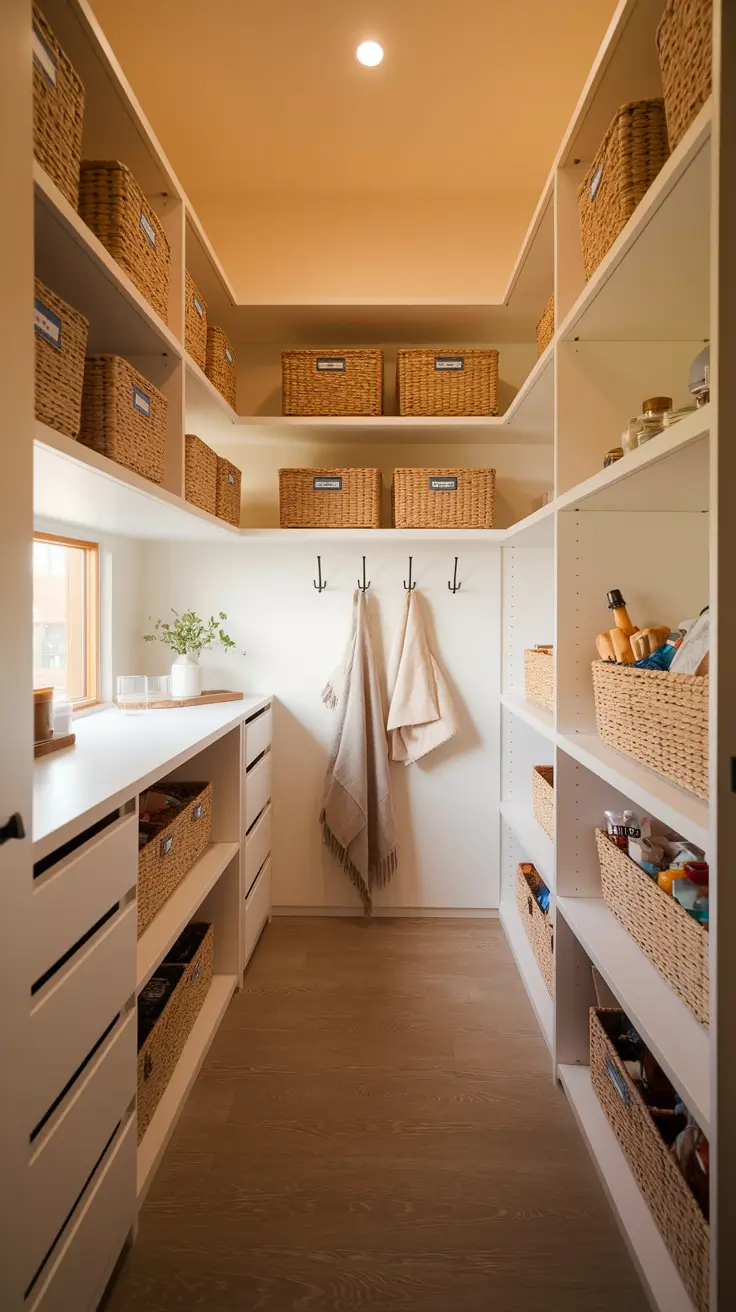
I rough in utilities early. I have a fridge dedicated circuit and layout with freezer, two to four countertop outlets and a low voltage line to a door switch light as my minimum. Provided the brief allows a small sink, I will vent and floor drain clearance, then select a small 18 inch dishwasher only where it will help the workflow. Good ventilation prevents the presence of humidity on dry goods, particularly in the case of a non conditioned room.
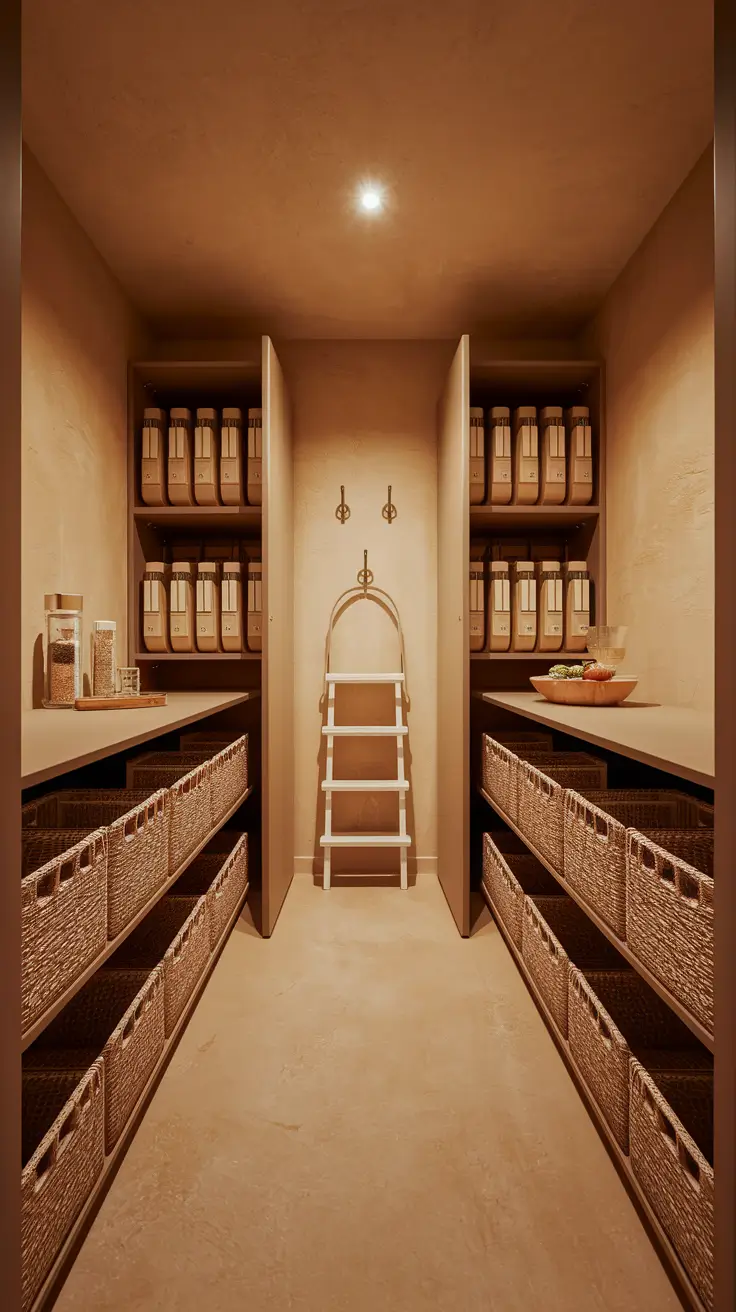
My rule is to give first consideration to aisle width and door swing in the plan set. I like a pocket or outswing door so interior shelves never get blocked When the pantry is next to a kitchen window, I occasionally have a transom to steal light without revealing clutter. In a bigger house, a second door to the dining side can make the pantry a service corridor during entertaining.
I would add future proofing. Leave a capped water line and an additional conduit in the wall so that a future fridge, filter or ice maker can be added without destroying finishes. That pre-planning does not cost much on paper and saves a lot of headache later.
Walk in pantry ideas with fridge – tall vs undercounter choices
I only design a pantry with a refrigerator when it actually helps the workflow in the kitchen. In a small or small footprint, I would choose an undercounter unit to keep clearances open, but in a large shaped or L shaped pantry a tall, column style fridge works well along a short wall with landing space nearby. The idea is to locate cold storage in such a way that it does not hinder the daily operations, but rather where it does not cause traffic and does not take away shelving. Among the walk in pantry ideas, this one is one of those that can change morning routines, especially when kids are able to reach snacks without having to cut through the cooking area.
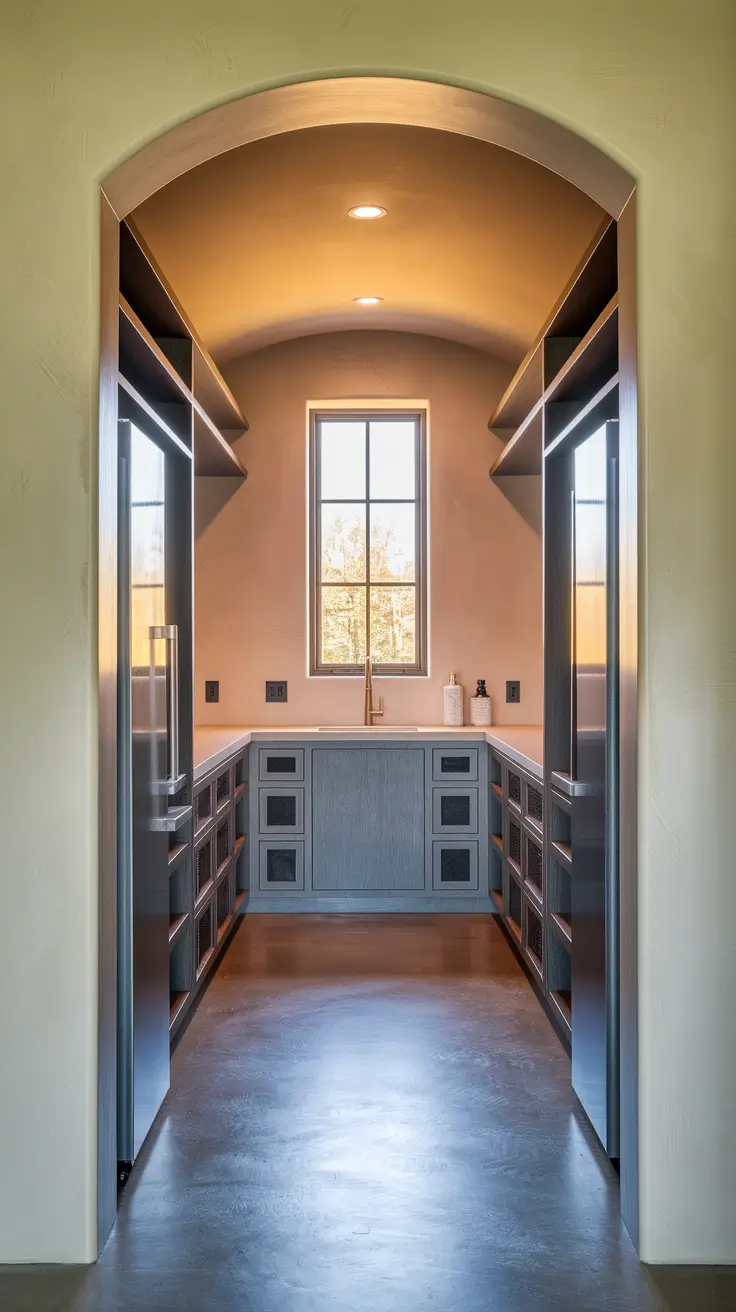
When I specify appliances, I give precise dimensions, door swing, hinge side and required ventilation. A tall column fridge requires at least 24 inches of clear floor depth in front of the appliance past the door thickness in order to pass trays. I put a 24 to 30 inch wide counter top landing on one side and have layout shelves nearby to store produce baskets. When I select an undercounter fridge I place it close to the door so it does not require a deep traffic to the pantry to get quick access and use it with a 15 to 18 inch pull out to hold drinks.
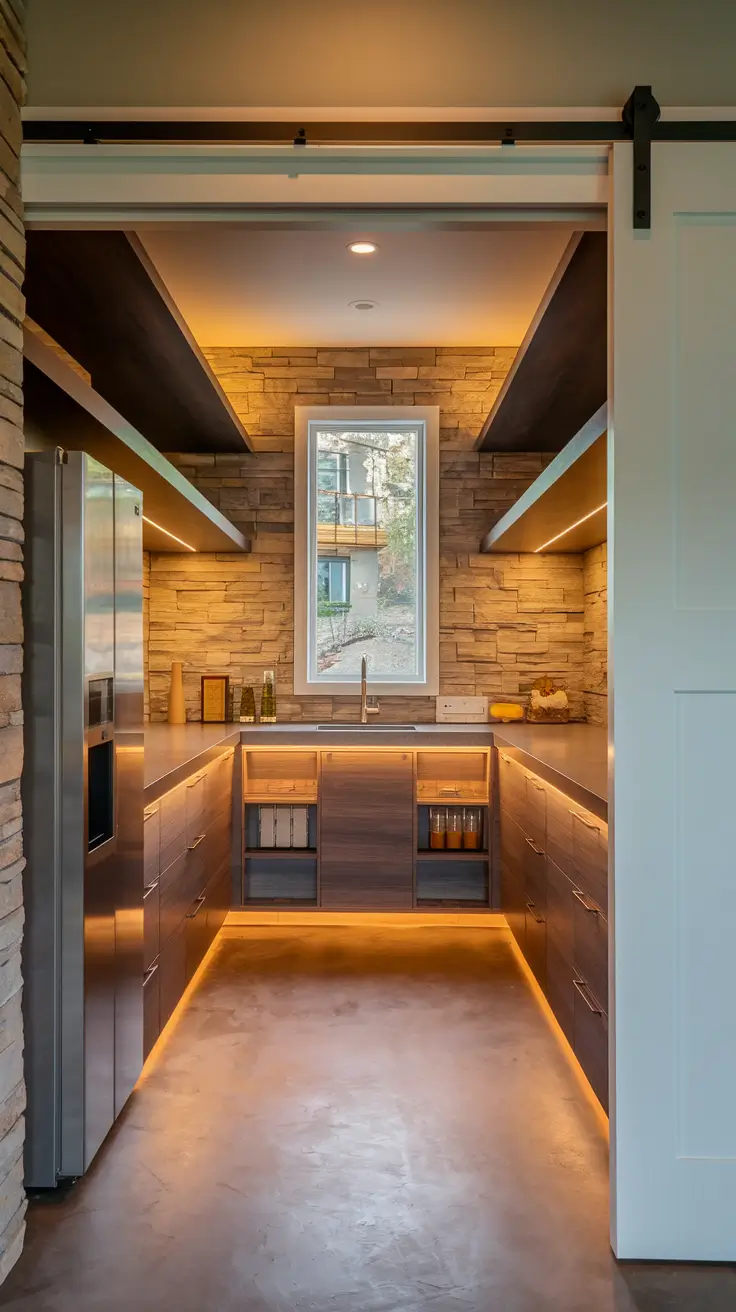
Personally, it is best to decide based on the size of the household and the size of the layout. Couples usually have an undercounter beverage fridge in the pantry and the main kitchen fridge. In big families, a high-rise secondary fridge in the pantry minimizes the overflow in the kitchen. One of the industry guidelines that I adhere to is that there should be at least 36 inches of walkway clearance and a landing zone should be provided next to any cold appliance to avoid bottlenecks.
I would supplement this with a motion sensored LED strip at toe kick height to make late night access safer and a floor pan with drain under tall units where local code permits. I also intend to have an open rail with labeled baskets so that the things that do not require chilling are still close to the fridge area.
Walk in pantry ideas layout with freezer – upright vs chest in tight spaces
Freezers are bulk heroes, but they consume space when they are not organized. In a small corner pantry I usually choose an upright freezer because of its small footprint and front access. A chest freezer can be efficient in a large or non conditioned space, but in a conditioned, finished pantry an upright next to deep layout shelves keeps heavy lifting low. I also attempt to match the swing of the freezer door with that of the pantry door so that they can both open without hitting each other.
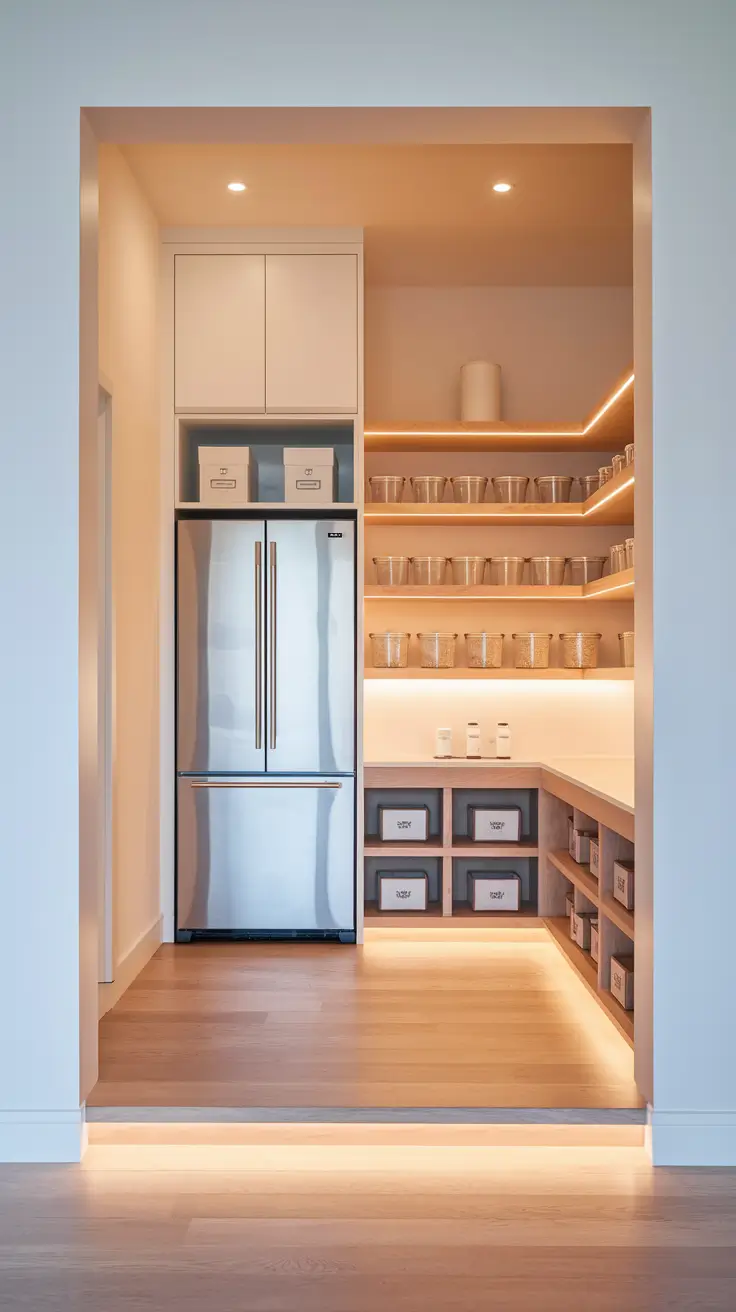
An upright requires airflow and a flat wall, so I keep 1 to 2 inches side clearance according to the model manual and 3 inches at the back. I put a 24 inch deep counter top nearby to stage and separate the opposite wall with 12 to 16 inch deep shelves of dry goods. A chest freezer allows me to add a wall mounted rack above to hold lightweight items and I use bins with rigid handles. Either, I add a thin broom closet pull out to store utility items as pantries that serve as utility hubs are more practical each day.
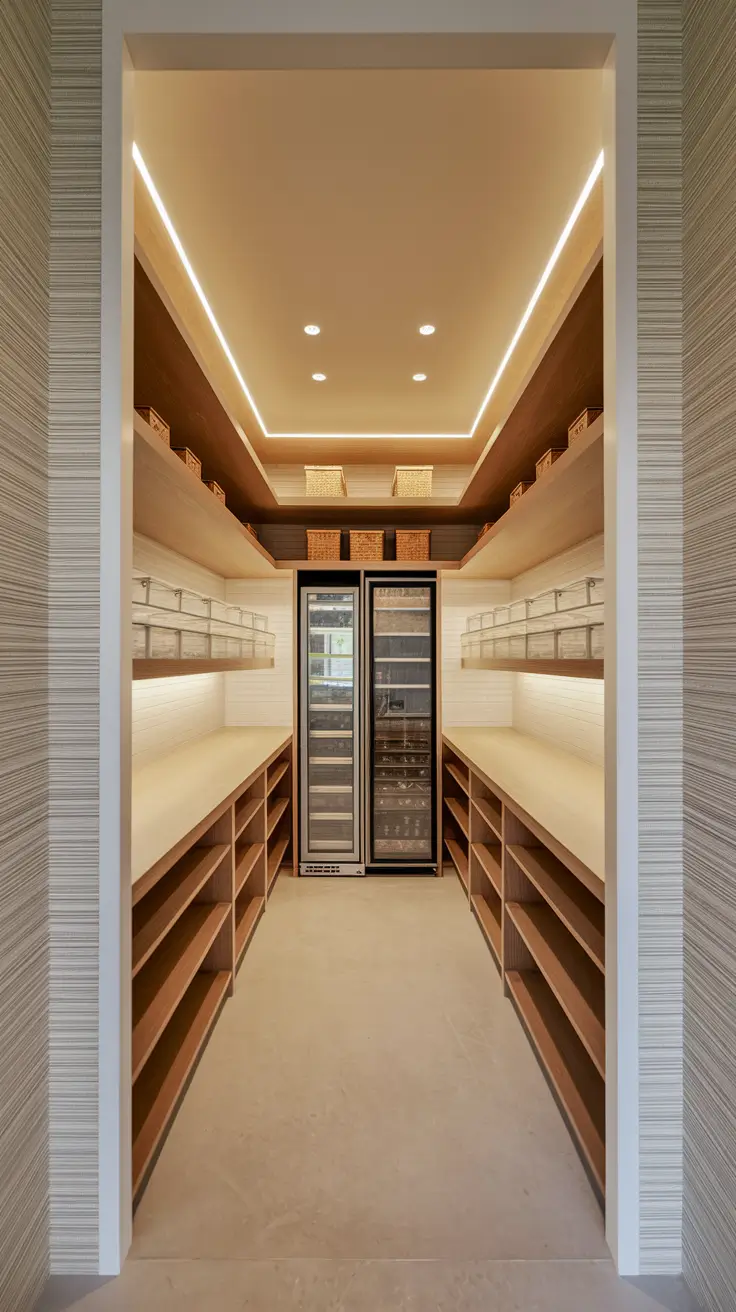
I have experienced the mess of a freezer that is not zoned. My rule is an inventory sheet laminated on the inside of the door and clear stackable bins by type of food. Homes that entertain frequently, I like an upright so that anyone can find things without having to unstack.
I would also add a dedicated outlet on a separate circuit with audible alarm plug and a small leak sensor on the floor. These low cost additions cover much food and can be serviced easily in the future.
Layout – start with traffic flow and door swings
Before shelves, I solve movement. I sketch the pantry as a small room with paths between the kitchen, fridge, and freezer and the most frequently used areas. I label the swing of the doors of both the pantry and any appliance within. Pocket or barn doors eliminate battles in tight layouts, and an outswing hinged door leaves the interior space unobstructed. A smooth, bump free route is the distinction between concepts that look great on paper and a design that performs on the track.
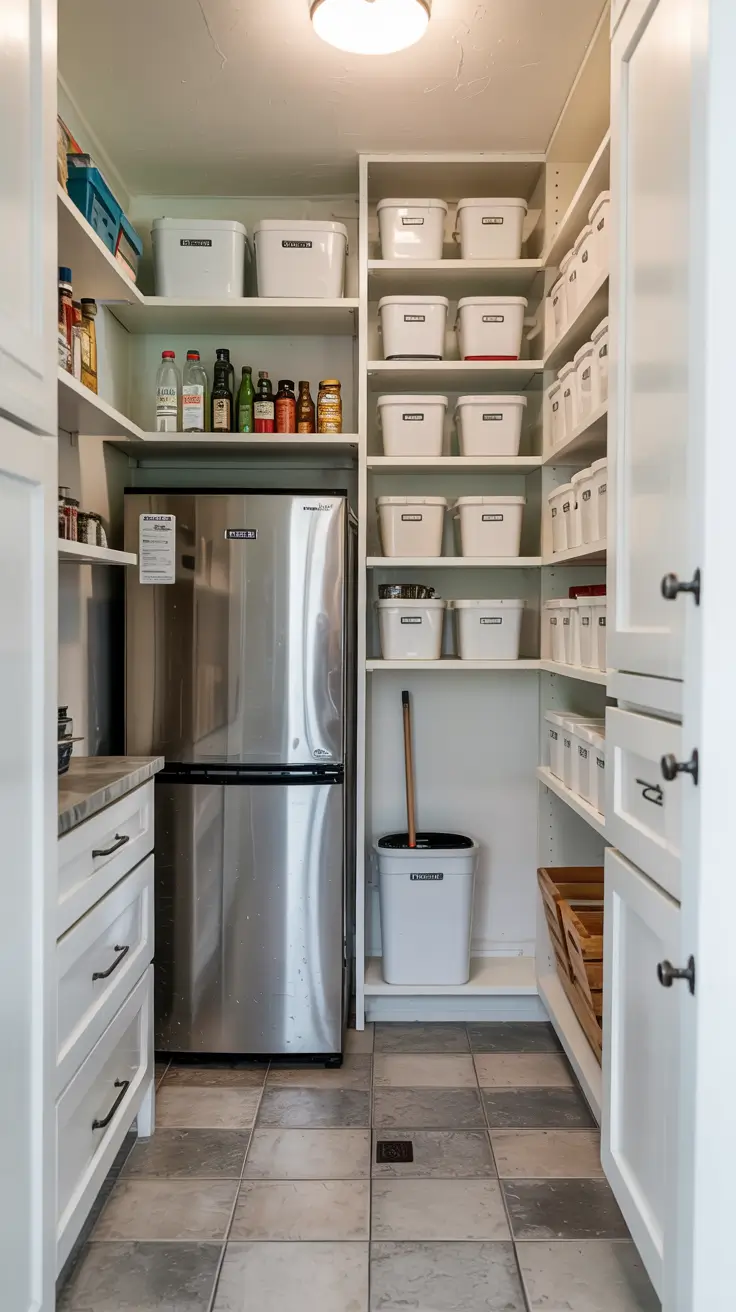
I design the room based on three fundamentals: a 36 inch minimum walkway, a landing counter that is close to any appliance, and shelves that fit what you are storing. Heavy daily items are placed on 12 to 14 inch deep adjustable shelves between 24 and 60 inches above the floor so that reaching is easy. Bulk paper goods are placed on 18 to 24 inch shelves low and near the door. I only use closed base cabinets when I need a hidden charging draw or to store small appliances because open shelves provide faster visual inventory.
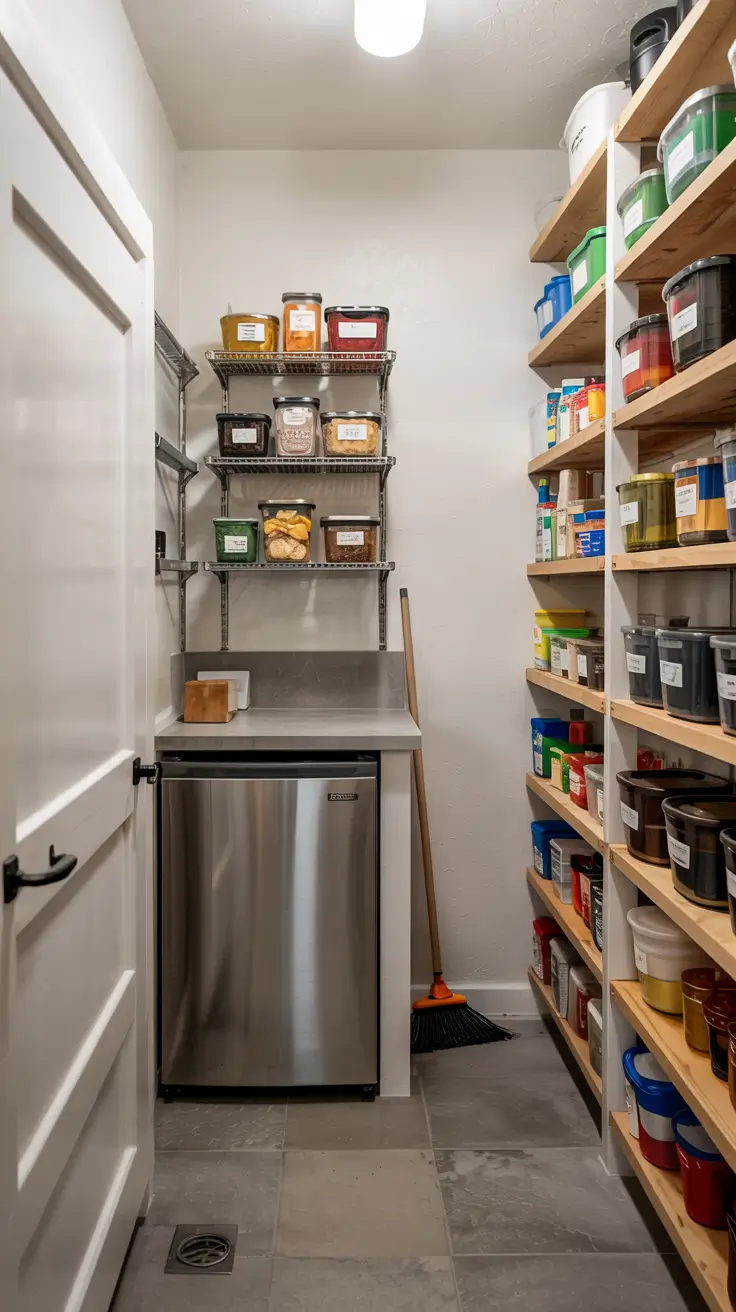
In practice, I adhere to the kitchen association guidelines which suggest a 42 inch wide aisle to easily pass and at least 36 inches wide aisle in cramped rooms. When a swing door still pinches things I substitute a pocket door, which has been the single best improvement I have made in tiny pantries in older houses.
I would add a threshold free entry where flooring heights permit, so that carts and vacuum bots can roll in. With ample headroom, a low top shelf around the perimeter to hold rarely used entertaining items would provide storage without closing in the space.
Layout size – square footage, clearances, and reach
Pantry sizing is not a generic square footage number, but rather what is in it and who will be using it. A 3 by 5 foot walk in with 12 inch shelves on two sides can feel large in a small kitchen provided it is planned. In larger homes, a U shaped layout of 5 by 7 feet provides space to accommodate a counter top and appliance garage. I place reach and bending first, then designate areas of baking, snacks, breakfast, beverages, and entertaining.
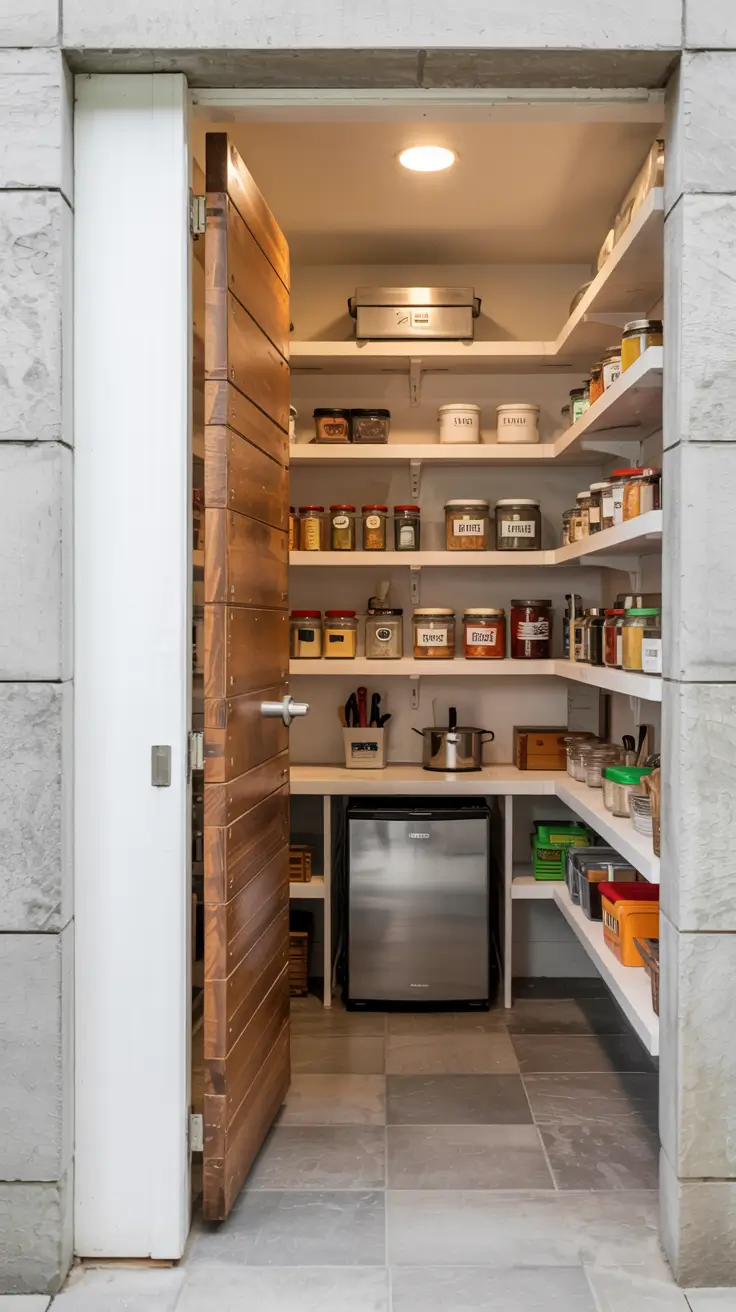
Shelves matter more than walls. Upper shelves at 12 to 14 inches deep do not allow the loss of items. Mid level shelves at 14 to 16 inches are used to store cereal and canisters. Bulk is carried on deep bottom shelves of 18 to 24 inches. I maintain the counter at normal height of 36 inches and 24 inches deep to accommodate small appliances. Lighting is bright and even so labels read clearly.
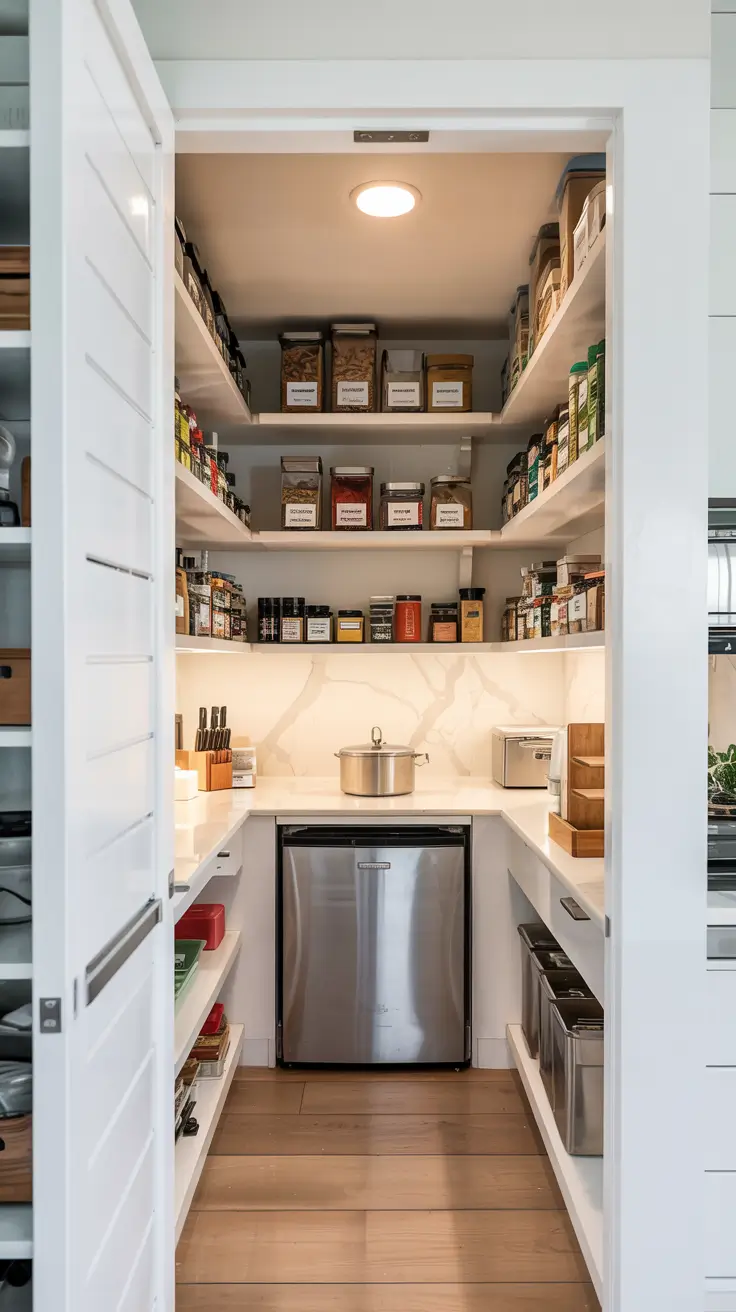
My working rule set is simple. Store items you use everyday between shoulder and knee height, have 1 inch of clearance above canisters so they are easily pulled, and do not store shelves deeper than the items they are holding. In family homes, I will lower one shelf down to allow kids to self serve breakfast and snacks.
I would add a recycle pull out close to the door and a shallow message rail or a chalk panel to put lists. When you construct new, put in layout house plans that indicate stud locations so that you can move shelves later without a lot of work.
Layout small corner – L shaped turns that hold more
Corners can be storage traps if shelves collide. I like an L shape with continuous shelves that come back around the corner at the same depth in a small corner. I minimize the depth of the corners by 2 inches to maintain sight lines and I do not use diagonal corner cabinets that are space wasters. This leaves the room open and turns the small corner into a high capacity location instead of a dark cave.
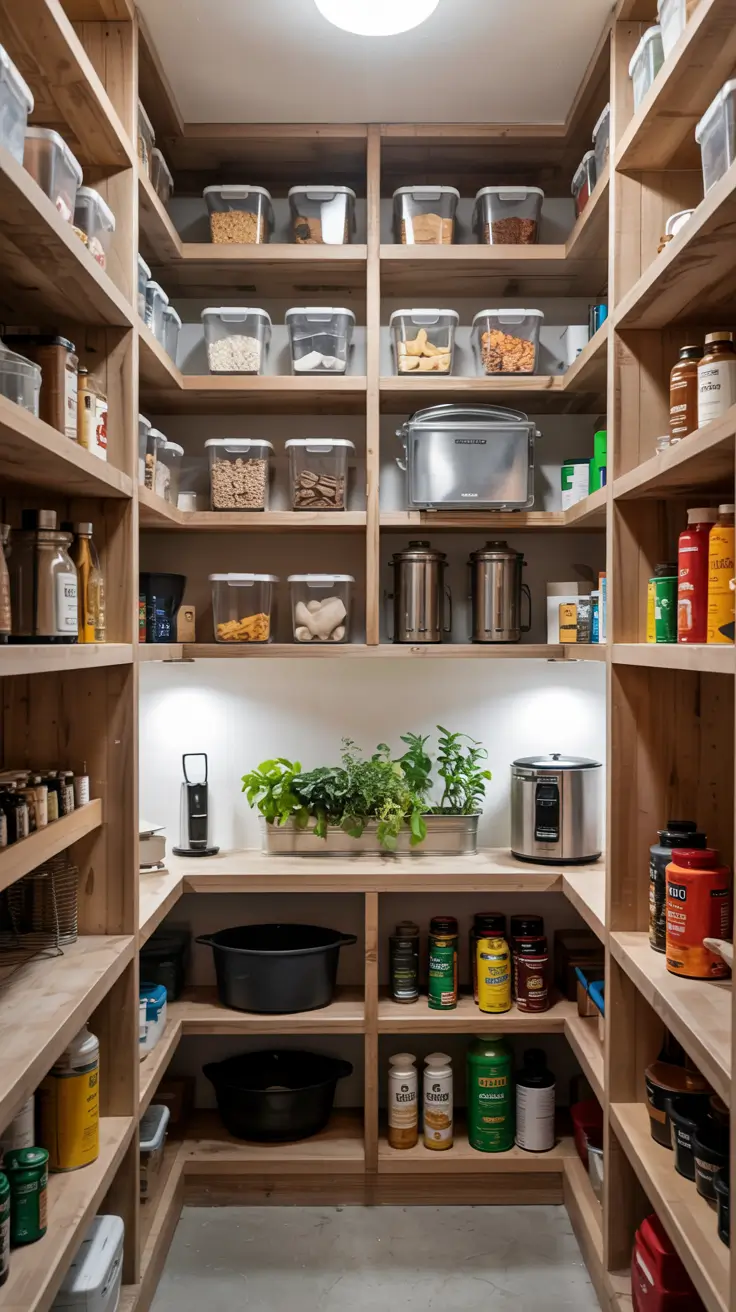
I use full length batten cleats on walls to provide good support and movable continuous adjustable standards to allow shelves to move with time. On the short leg of the L I put 10 to 12 inch shelves to hold jars and spices. On the long leg I place 14 to 16 inch shelves to have canisters and baskets. A floor level platform is used to keep heavy appliances like mixers off the ground and toe kicks are used to protect walls against bins.
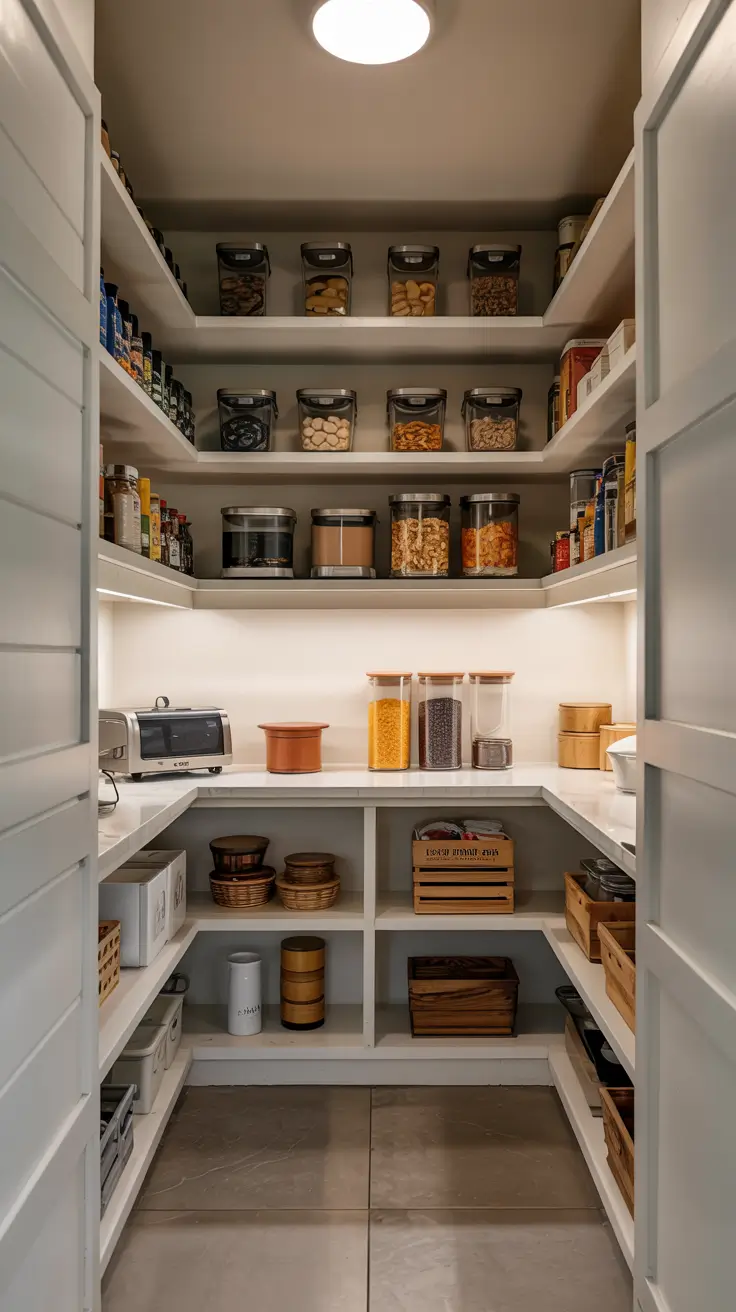
I have tried lazy susans in corners and I do not often like them in pantries. A straightforward L with clear bins with categories labeled is quicker to scan and re-stock. When the space is tight, I cut depths of shelves by an inch per level as they ascend to enhance visibility without sacrificing capacity.
I would also include a sheet pan divider that is vertical and is close to the corner and a rail of hooks to hang aprons or reusable bags. These narrow elements transform dead air into fast access storage
Layout small kitchen – pantries that double as utility hubs
In small kitchen renovations and compact apartments the pantry has to work harder. I use it as a micro utility room with areas of cleaning, recycling, charging, and overflow dry goods. A narrow format with 12 inch shelves on the opposite side of a shallow counter top provides a landing area without crowding. This method makes layout storage a common day problem solver
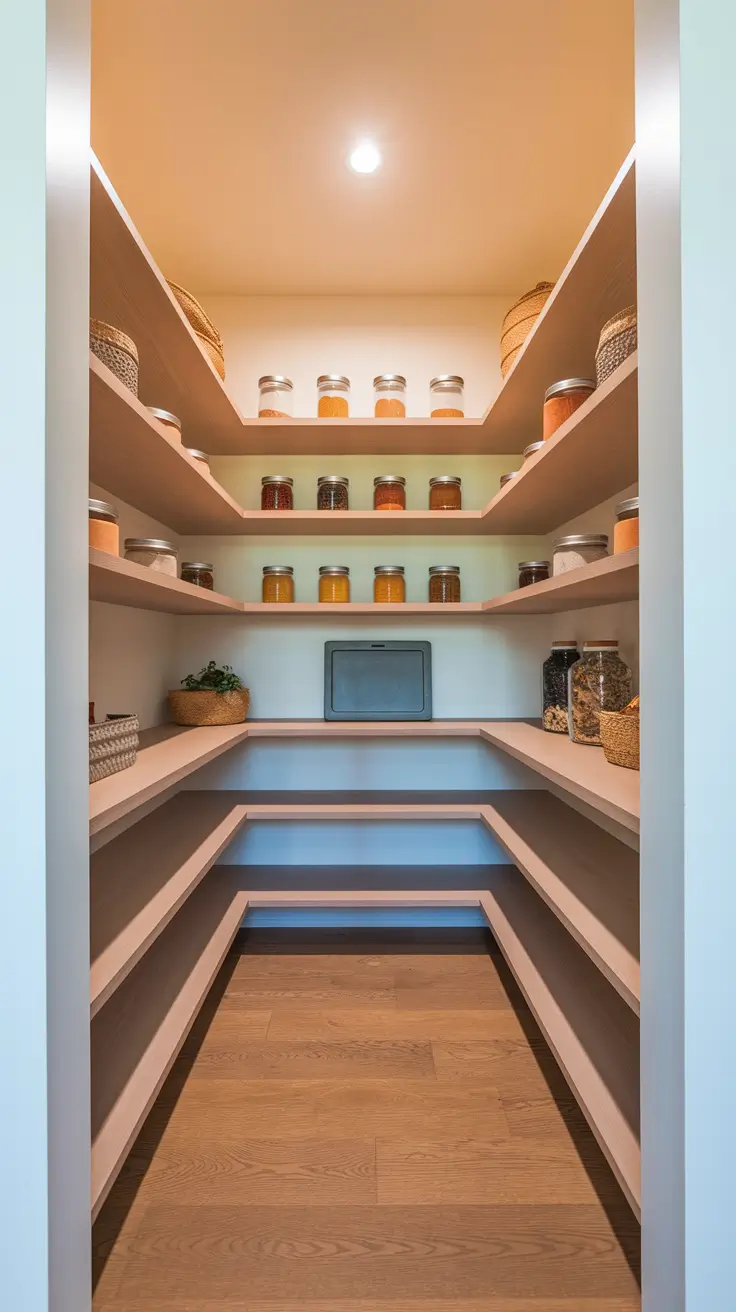
I include a pull out broom closet, a drawer to store household tools, and a ventilated cubby to hold a cordless vacuum. I placed one outlet strip along the backsplash to charge small appliances and a closed upper cabinet to create visual calm. I use either a pocket door or a full height cabinet style door to match the kitchen, so that the small kitchen feel is cohesive.
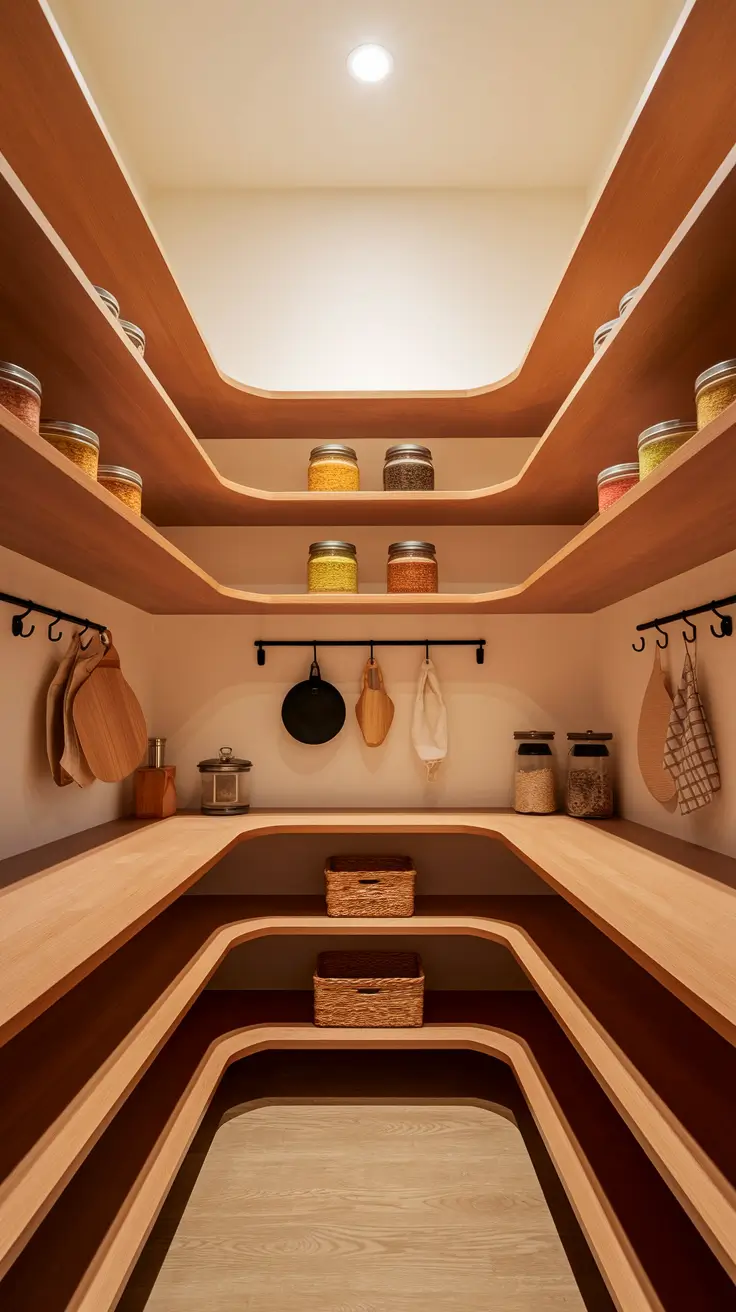
After years of doing city projects, I have discovered that utility functions in the pantry can free main kitchen cabinets to hold pots and dishes. A small recycle pull out close to the door accelerates cleanup Clients like the fact that everything that is messy has a place with a door that closes.
What I would include is a small tilt out hamper to hold towels and a narrow tray divider to hold cutting boards. A shallow shelf above the door head is used to store picnic totes and seasonal items when height permits.
Simple – clean fixes that boost order fast
Not every pantry needs a gut renovation. I begin with small victories that can be seen in a weekend. The first is a tune up of the layout shelves, replacing the mix of depths with a consistent 12 to 14 inch run at eye level and a single deep 18 to 20 inch shelf down low to hold bulk. Second is a layout counter tops strip of small appliances and labeling of zones by meal type. Third is a door swing check and a switch to pocket or outswing in case collisions continue.
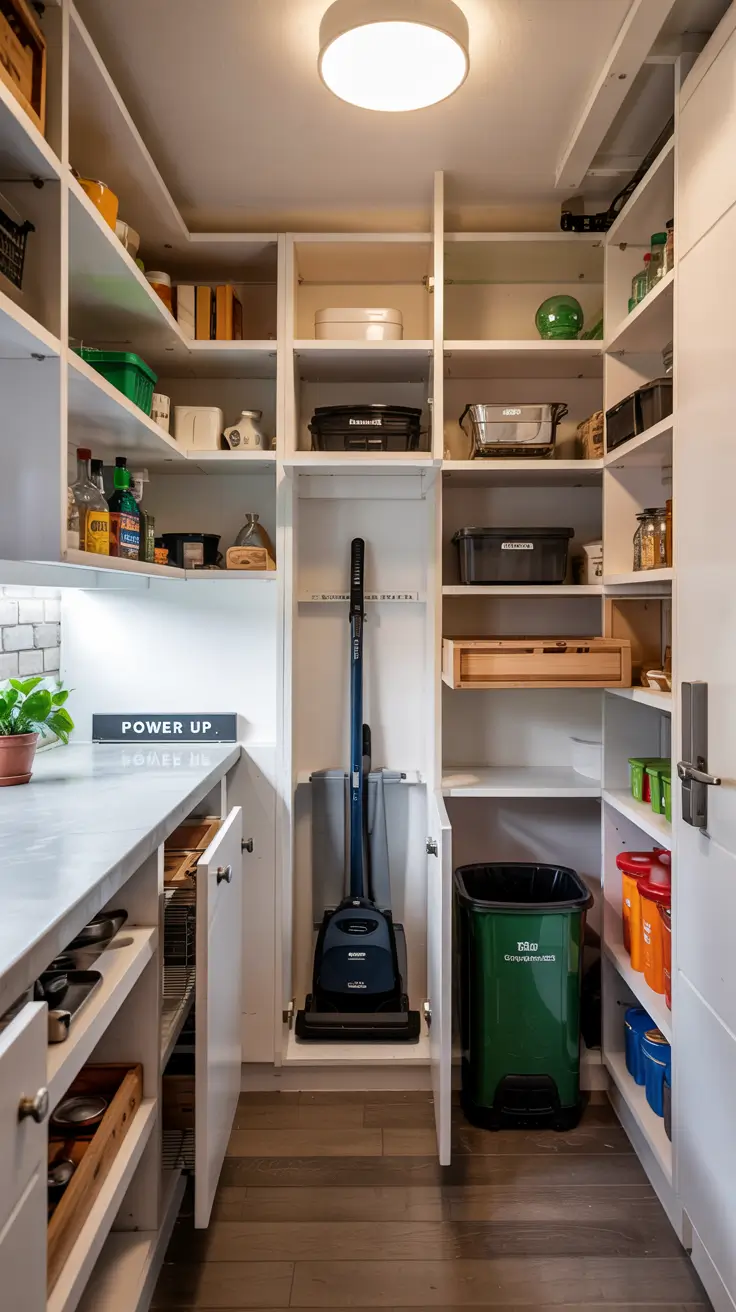
My favorite easy upgrades are can risers, two or three lazy susans to organize oils and sauces, under shelf baskets to hold wraps and foils, and a set of clear, square canisters which actually fit the shelf depth. I maintain a uniform size of baskets to fit neatly on top of each other and I incorporate a dimmable ceiling light and a motion sensor toe kick strip to give the room a sense of purpose.
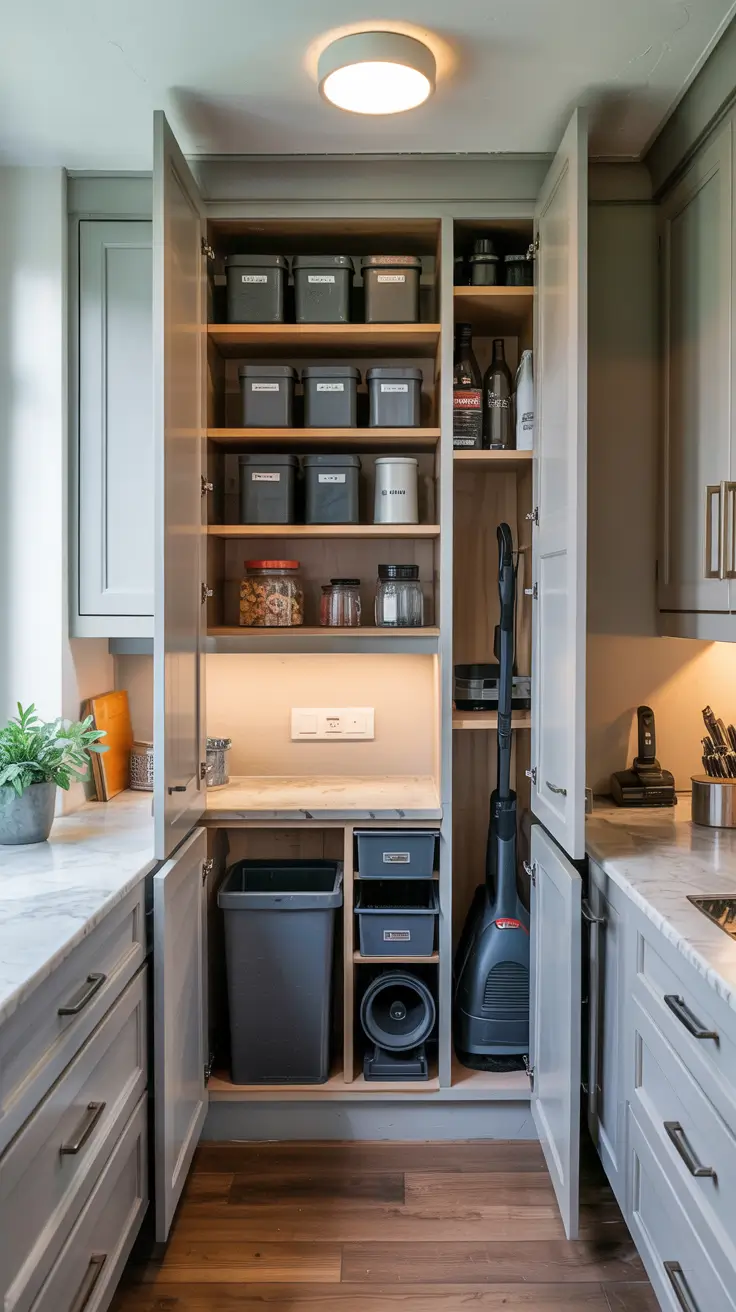
I have discovered that the quickest way to a minimalist look is to edit quantity. There is a small donation bin in the pantry that makes it easy to maintain. I go back to the system after a month and shift shelves to reflect reality instead of pushing a plan that seemed to work on day one.
I would add a narrow chalk or magnetic list panel and a shallow tray to hold mail in case the pantry is close to the entry. When a fridge or freezer is indoors, a small landing board that folds down on the wall provides immediate counter space without taking up floor space.
Minimalist – fewer lines, more function
The minimalist walk in pantry ideas are effective as they make maintenance quicker and decrease the visual clutter. I begin by restricting finishes to two at most and keeping lines unbroken so that the room reads serene even when crammed to the gills. This solution is suitable in small and narrow rooms where the clutter accumulates easily and a layout shelves plan that is easy to scan in a glance.
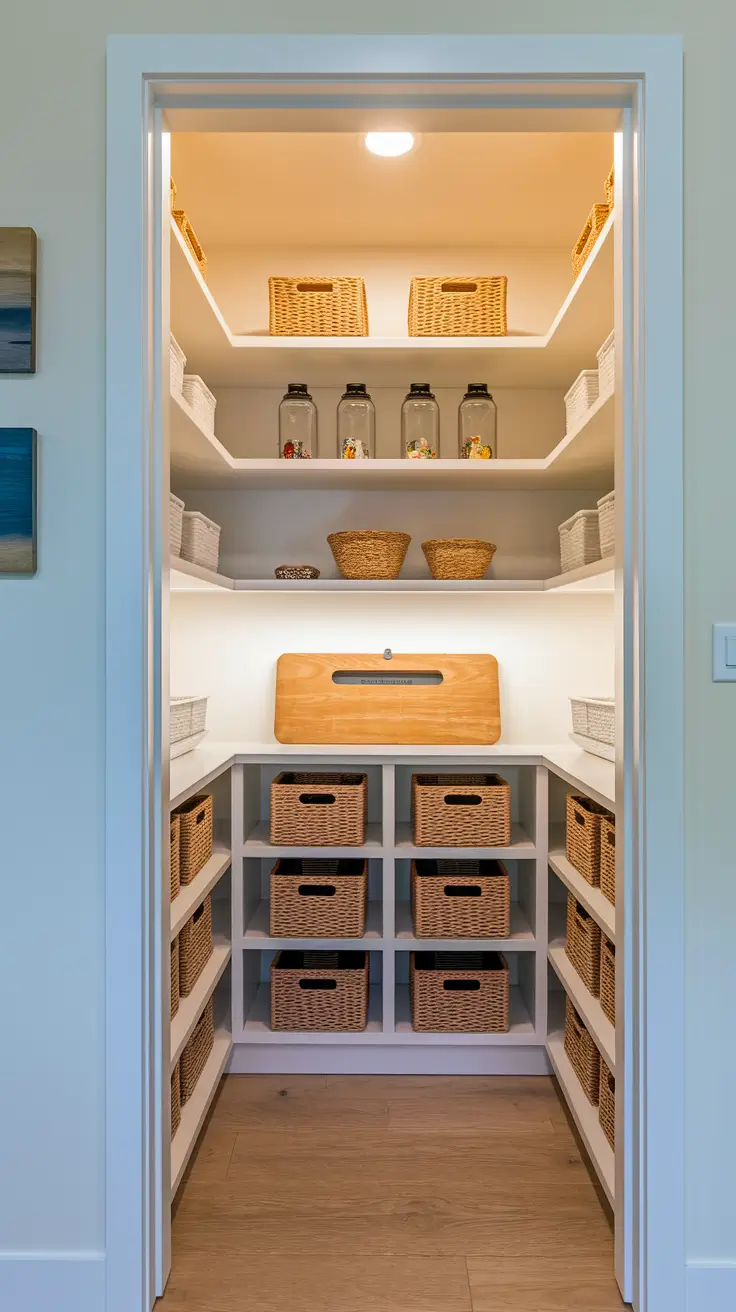
I employ slab cabinet fronts or open birch shelving, subtle finger pulls, and a continuous 36 inch high layout counter tops that run to accommodate small appliances. Clear square canisters in two sizes maintain order in the rows, and a low undercounter fridge fits in without interrupting the line of sight. Lighting is one bright ceiling light and LED strips under shelves to highlight labels without glare. The storage areas of the layout are marked according to the type of meals to make restocking automatic
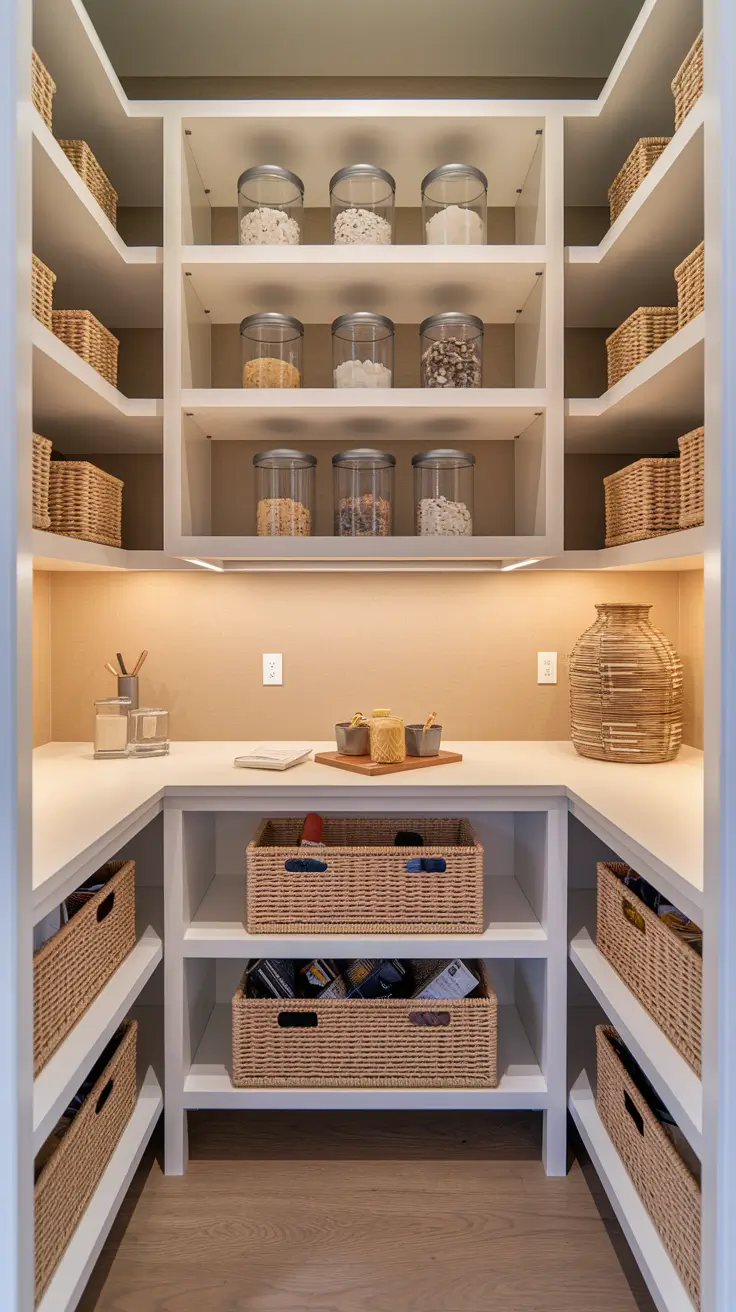
In my experience, it is better to select one container family and one basket type than any color coding system. I adjust shelf depths to suit requirements – 12 to 14 inches at eye level, 16 inches on cereal and 18 to 20 inches low on bulk. A minimalist plan is not less storage – it is storage that fits the inventory without extras that cause friction.
I would add a thin, wall mounted rail with two hooks to hang aprons and one foldable step stool. I would also include a small matte black magnetic list panel inside the door so the minimalist exterior stays quiet
Layout with window – glare control and shelf planning
A pantry window can be a gift when it is well planned. I use the wall with the window as a work area and create a shallow counter below it to sort and do quick prep. To avoid heat and UV on food, I use a light filtering roller shade and move sensitive items out of the glass. This makes walk in pantry ideas layout with window a cool, practical nook instead of a hot spot.
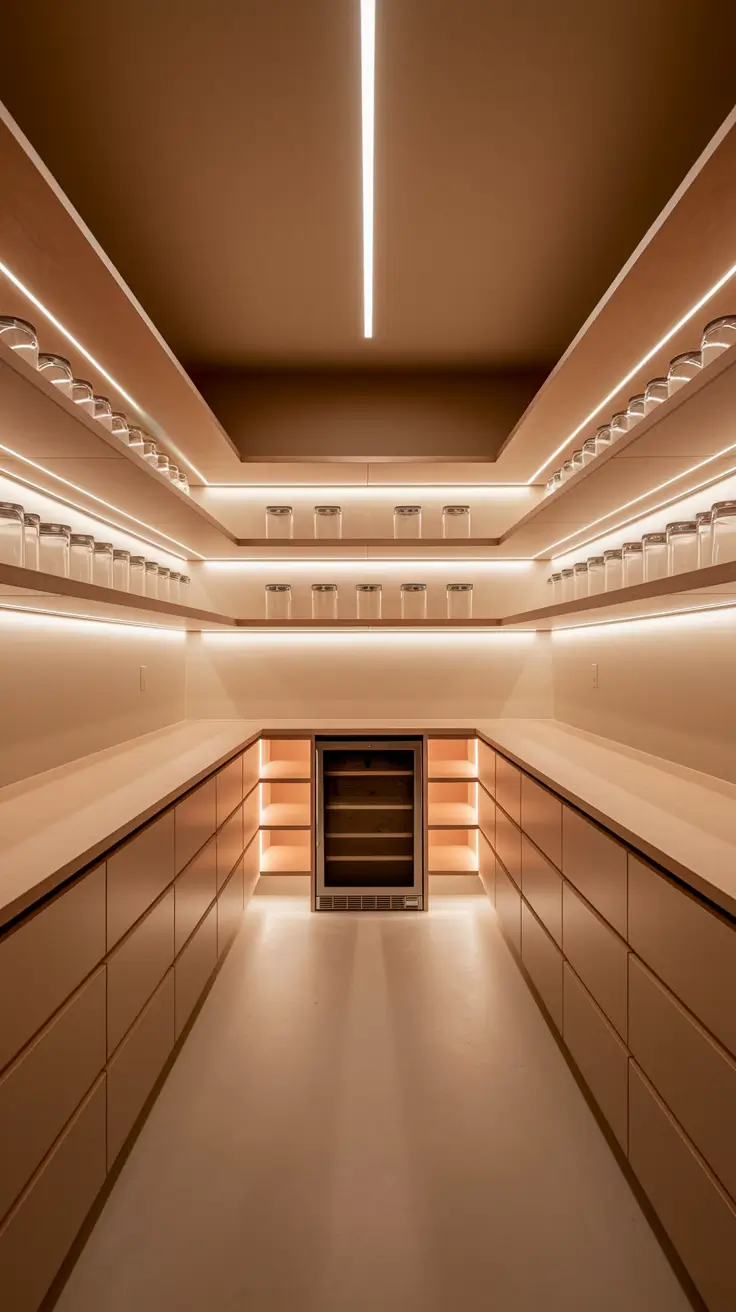
I surround the window with 10 to 12 inch deep layout shelves so jars and canisters are not in deep shadow in even daylight. The counter below the sill is 24 inches deep with a low profile backsplash and I keep electrical outlets just off the window line. In case the room is spacious, I introduce 14 to 16 inch shelves on the other walls to keep the wall with a window light. The layout counter tops area under the window is ideal to place a mixer or bread station.
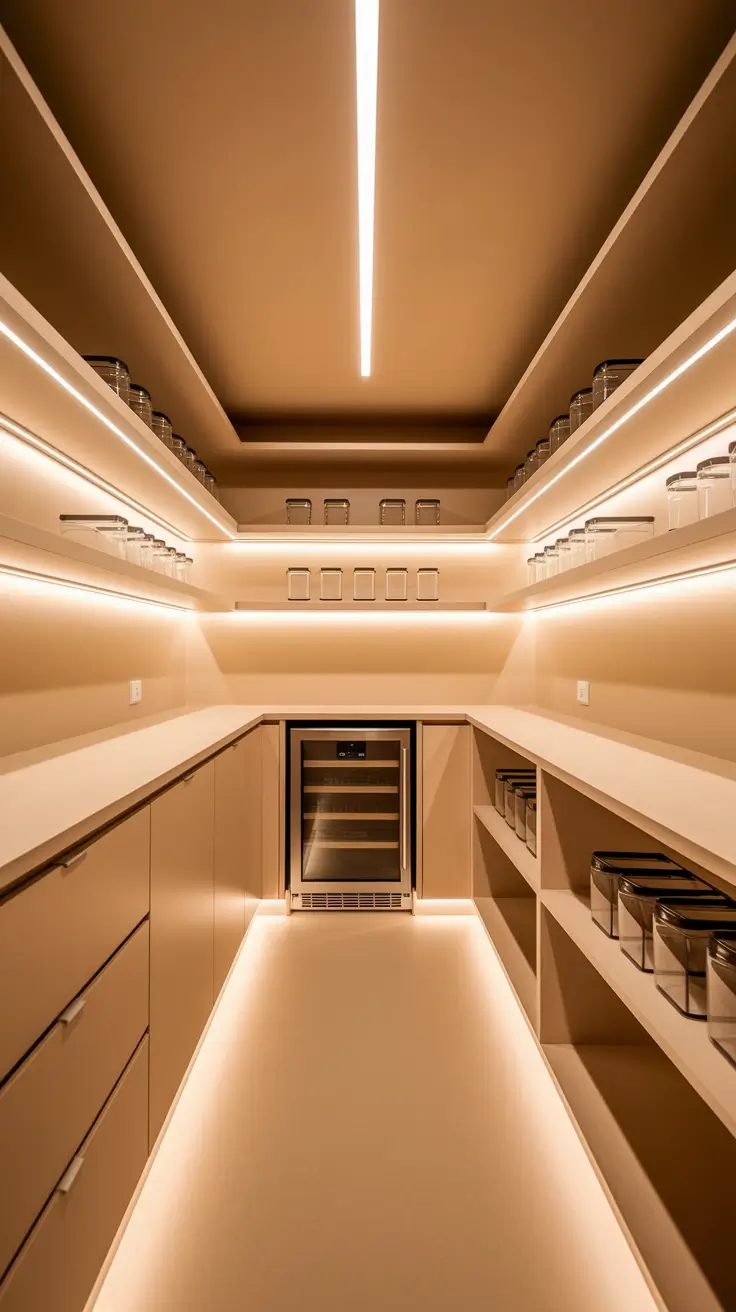
In practice, direct sun is not the villain but uncontrolled glare. A solar shade on a simple bracket eliminates glare without obscuring the view, and is easier to clean than fabric curtains. I also mention light colored shelves close to the window to reflect light further into the room.
I would add a narrow planter style caddy on the sill to house herbs that can tolerate less light and a shallow knife safe to open packages. In case privacy is an issue, the bottom third of the glass is covered with frosted film which lets the daylight in but conceals stored items.
Layout shelves – adjustable systems that evolve
The most long-lasting walk in pantry ideas layout shelves plan is entirely adjustable. I design with wall standards and brackets or a cleat and shelf pin system so heights can be adjusted as needs change. The depth of the shelf is motivated by inventory – not habit – so I measure what the household actually purchases and size to that. This makes the room efficient regardless of whether it is small, shaped or large.
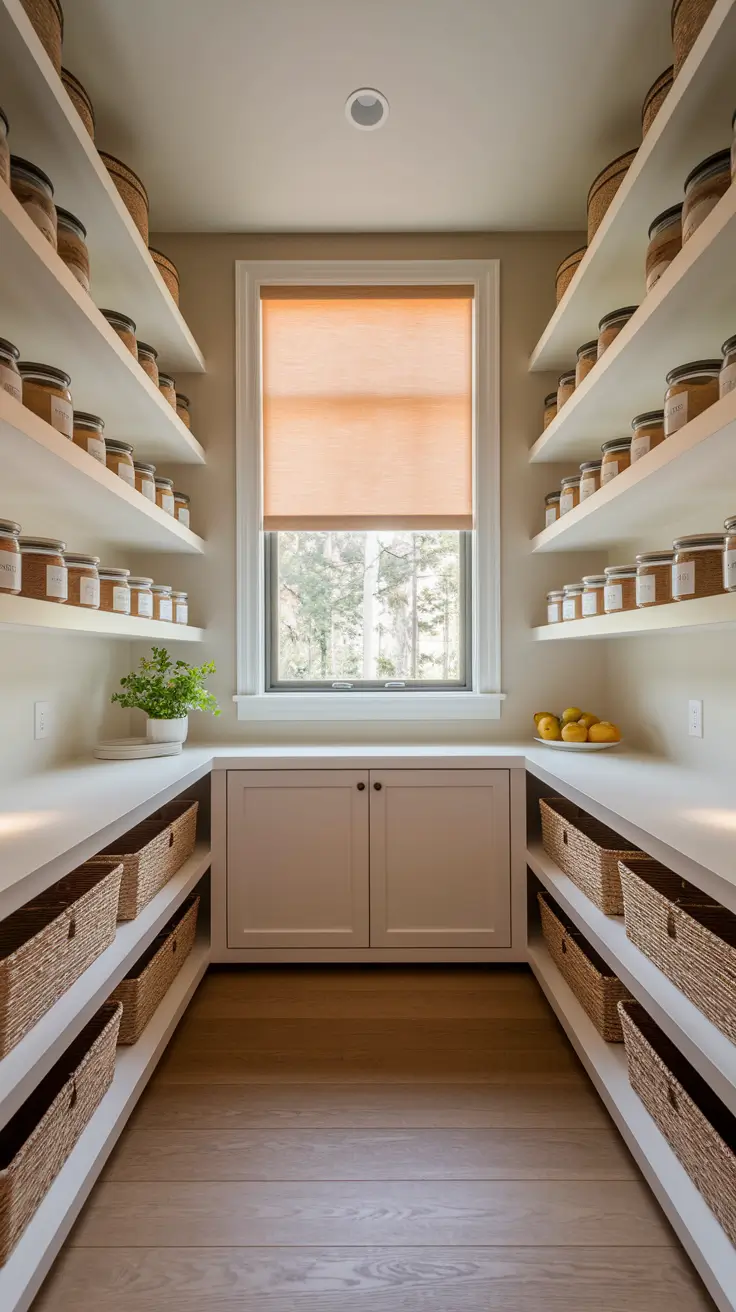
I place top shelves at 10 to 12 inches with light items, 12 to 14 inches with daily goods, 14 to 16 inches with cereal and canisters and 18 to 24 inches low with appliances and bulk. Shelf material may be plywood with edge banding to add strength, melamine to be easily wiped down, or powder coated metal to give it a utilitarian feel. I include a continuous front edge lip of 1 to 2 millimeters on deep lower shelves to prevent roll off. Dividers make vertical files of trays and boards at the point of use.
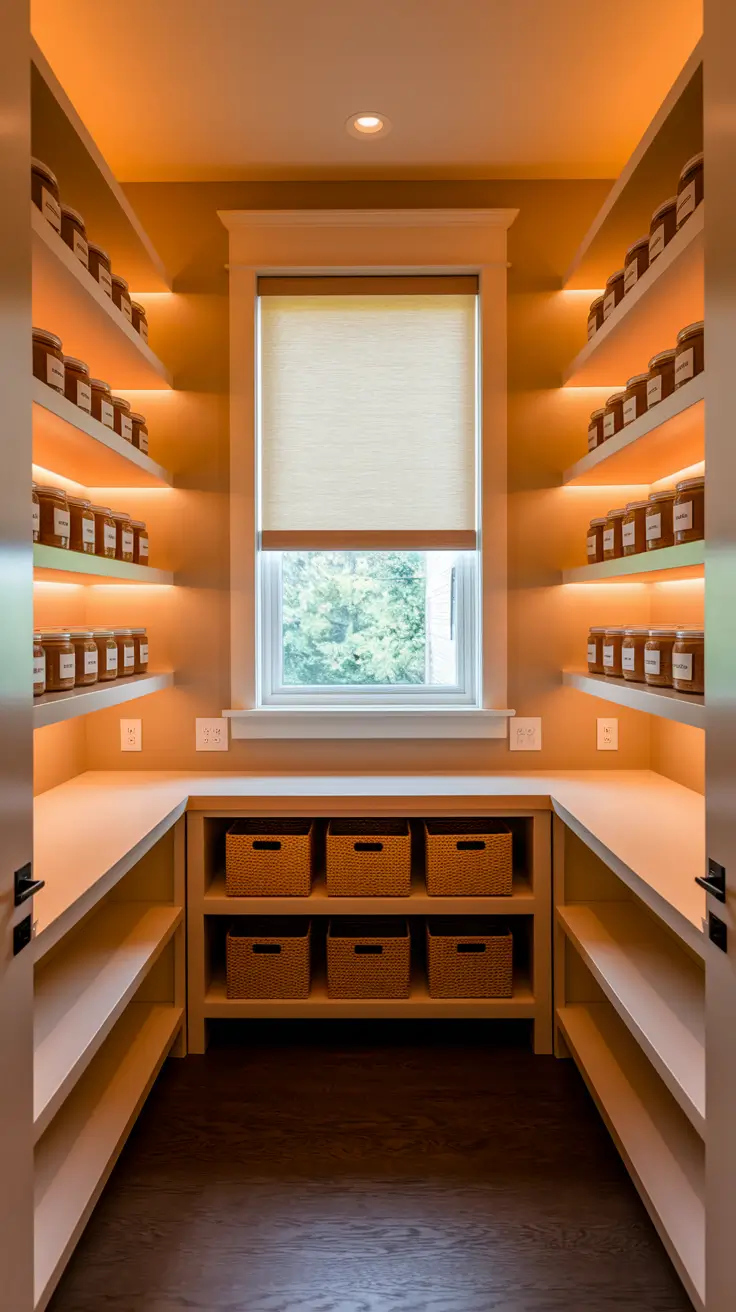
I have found that a 1 inch height adjustment is the sweet spot to adjust without over drilling. Label rails at the front of the shelves make resets fast and pull out bins at knee level keep heavy items under control. In narrow rooms I also cut the depth of upper shelves by an inch as they rise to increase visibility without sacrificing capacity.
I would add a short shelf placement guide that is printed and taped inside the door: list the current shelf heights and the zones. As seasons change I can rearrange brackets in minutes and the layout storage remains true to real life.
Layout with fridge – ventilation, power, and noise
When starting any pantry with a refrigerator, I begin by mapping the airflow, the location of outlets and the swing of the doors. A built-in or counter-depth unit can be the most space-efficient and silent solution to a walk in pantry ideas layout with fridge in a compact footprint. I leave a little gap around the appliance to ensure warm air has a way to escape and incorporate sound-absorbing materials such as cork underlayment or soft-close cabinetry to dampen hums and rattles. This is where a measured Layout beats guesswork.
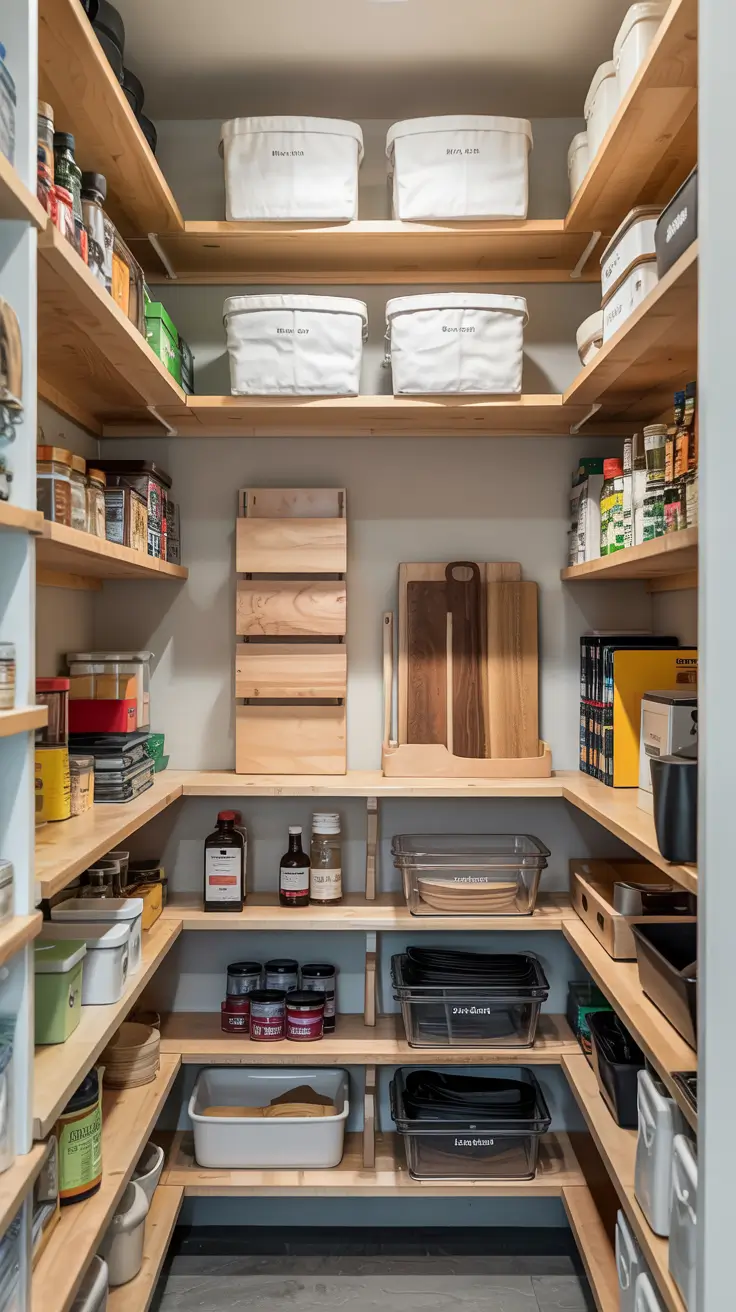
Of hardware and furniture, I require a vented cabinet surround, a dedicated grounded outlet on its own circuit, and rubber leveling feet to control vibration. I put LED task lights on the sides of the niche so that the interior can be seen without opening kitchen lights. Shelves on either side contain back-up drinks and condiments, and a shallow tray cabinet contains fridge-sized bins. These specifics render walk in pantry ideas with fridge functional, not just a dream.
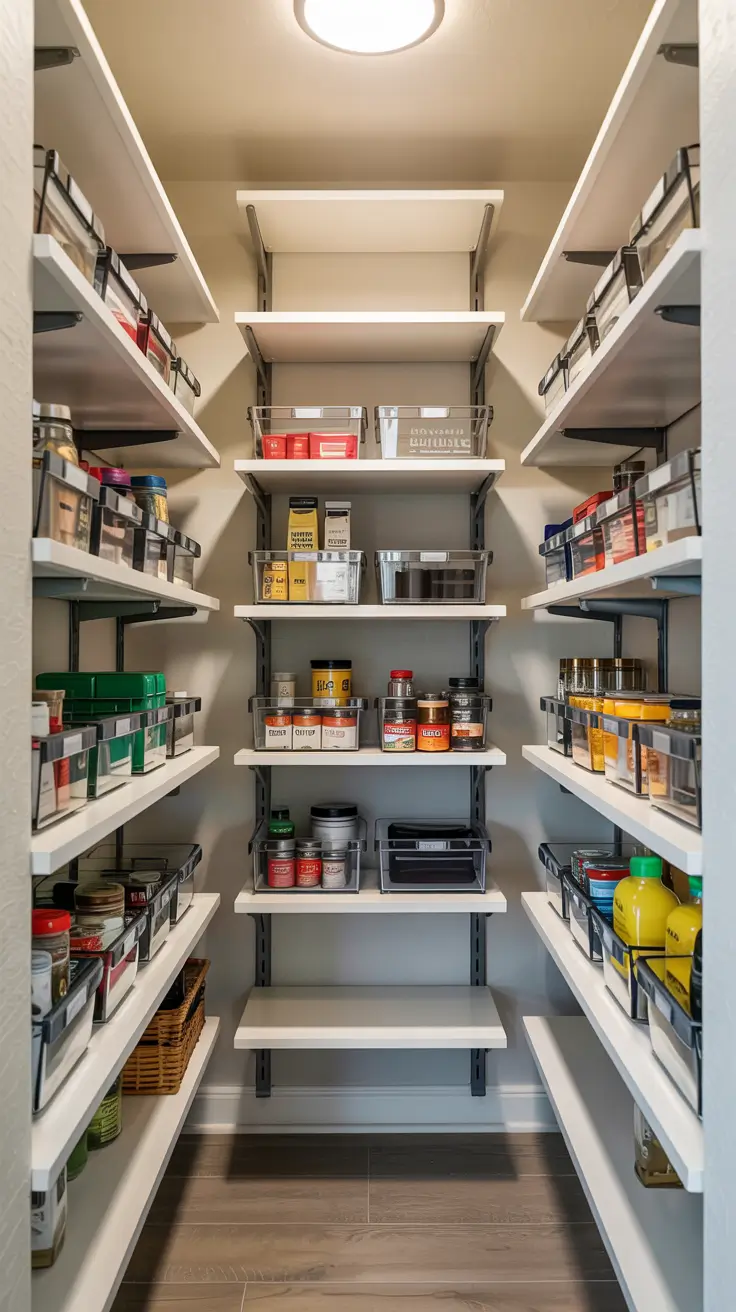
In reality, I have discovered that locating the fridge at the entrance of the pantry saves on the distance to access drinks and breakfast foods and maintains the meal-prep traffic. When clients request information about noise, I refer them to lower decibel rated models and recommend they refer to the clearance specs provided by the manufacturer instead of using rules of thumb. Low noise, good ventilation and correct door swing enhance long term satisfaction.
I would still incorporate here a thin broom or utility pull-out between the fridge and the wall to create ventilation gaps with extra storage. A glass door fridge would be preferred; in a bright pantry I would use dimmable lighting and UV-protective glass film to reduce glare and heat gain.
Layout house plans – new build vs retrofit tips
On a new build, I design the pantry at schematic design stage so that traffic flows between kitchen, dining, and garage entry are intuitive. The pantry ideas layout house plans way of doing things allows me to make doorways large enough, place the pantry alongside the refrigerator wall, and have a secondary sink or microwave where it actually fits. In a retrofit, I examine the current plumbing and structural spans and the pantry is expanded upon what the house permits.
I prefer a 36 inch clear walkway where possible, a pocket or outswing door to eliminate bottlenecks, and adjustable shelving systems that can grow. I install light switches at the latch side and motion sensors above so that hands-free access is assured. A bag landing counter by the door can be time and mess saving, provided the plan permits.
In practice, the most successful renovations are those that do not interfere with the original house grid. I tend to replicate cabinet reveals and toe-kick heights in the kitchen in the pantry so the pantry feels like an extension of the kitchen and not an afterthought. In uncertain cases, I position the pantry on the cool side of the house and do not run it across major duct chases to keep costs and noise down.
To further bolster this section, I would include a basic decision matrix of new build and retrofit priorities including access, plumbing proximity, and daylight, so a homeowner can make tradeoffs in a short amount of time before finalizing drawings.
Layout counter tops – standing height vs appliance garage
Counters inside a pantry change everything. I have a standard 36 inch standing height and a lower zone just in case there are heavy appliances to be lifted more safely. A run of durable, easy-clean material in a walk pantry ideas layout counter tops plan becomes the drop zone, charging nook or baking bench that keeps flour out of the kitchen. In case of a Layout with window, I place the counter beneath the window to have natural task light.
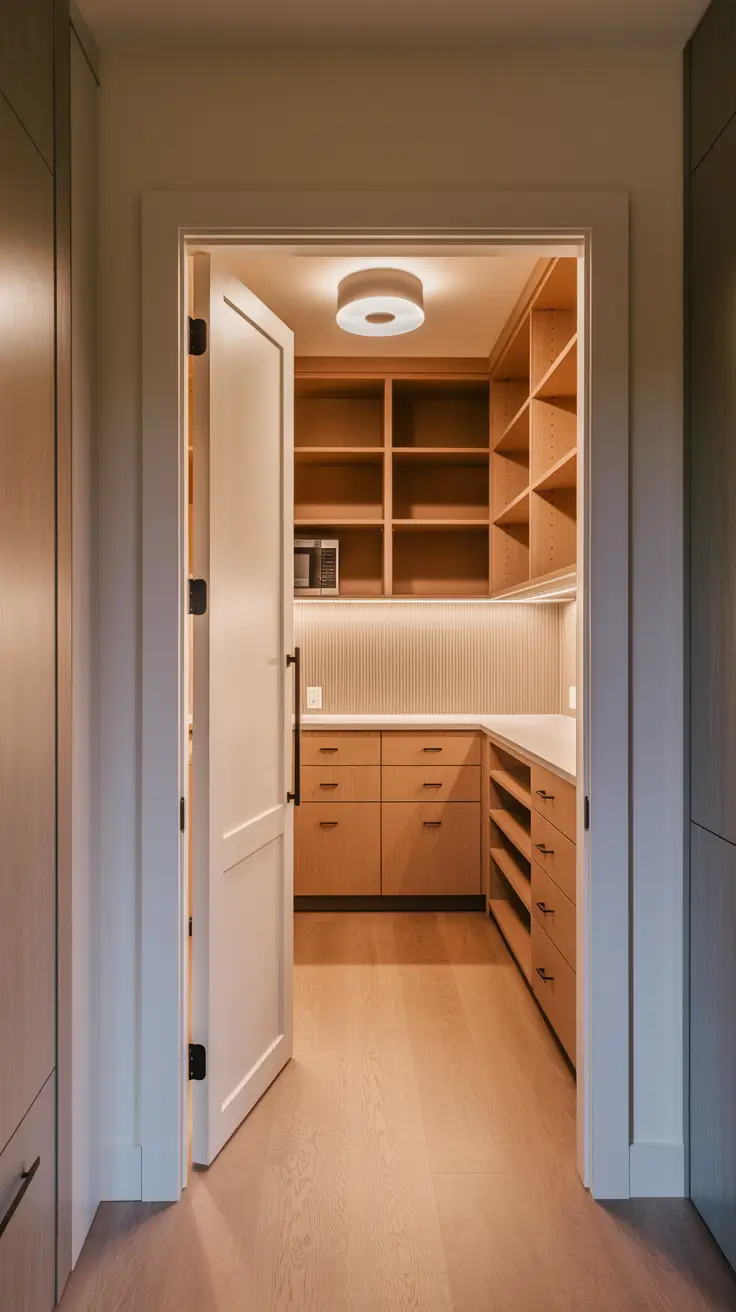
I am specifying 24 inch depth counters to fit mixers and toaster ovens and a shallower 18 to 20 inch depth counters to fit compact walls. An appliance garage with a lift-up or tambour door conceals the visual clutter and keeps cords at the ready. I include a backsplash rail with hooks and a magnetic strip to hold scoops, and a power strip with built-in USB to power scales and thermometers.
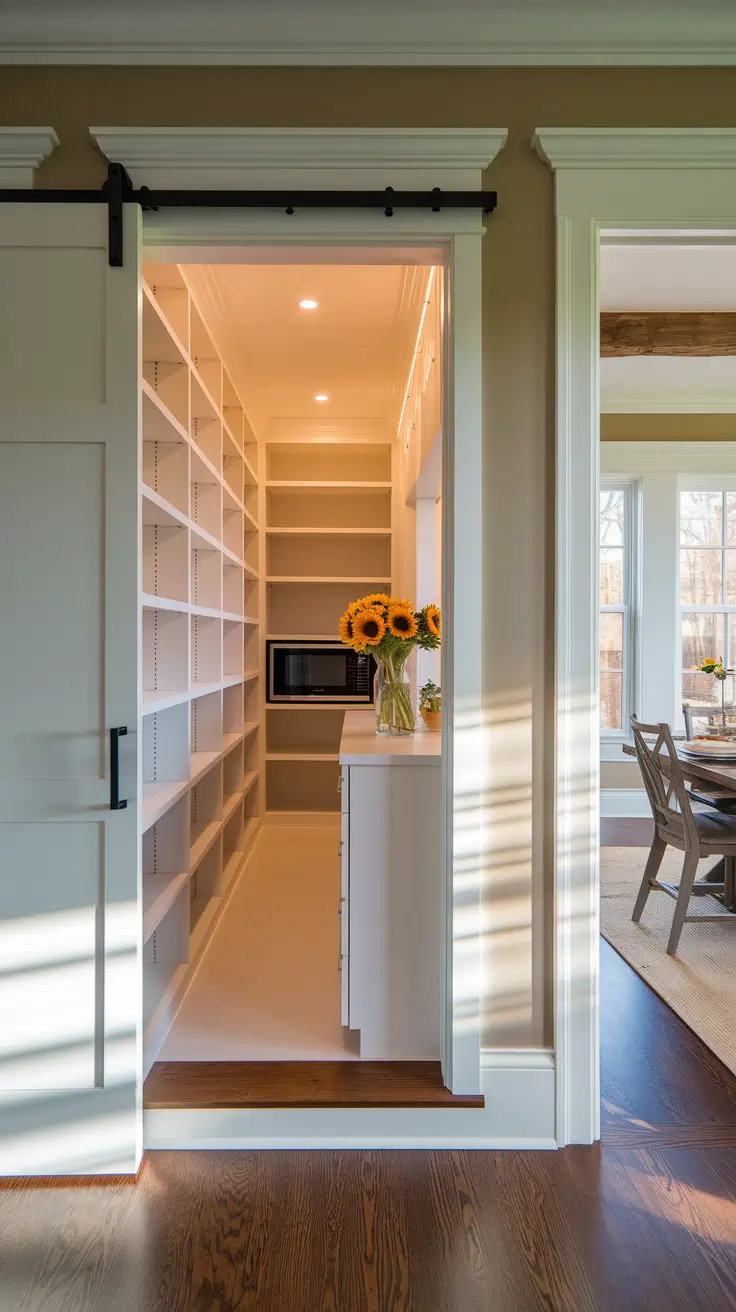
At work, I like matte, honed finishes that conceal fingerprints and combine them with under-cabinet lighting to keep the lines of vision clean. A small stool under the counter can make this a quiet coffee corner when visitors come to visit. The idea is to ensure that counters are functional as a mini workroom without taking the center stage away of the kitchen.
I would still include a heat-resistant landing pad to any small oven or air fryer and a silicone cord channel under the wall cabinets to keep cable clutter in order.
Non – non-traditional pantry doors, glass, and curtains
When circulation is cramped by a swing door, I consider non-traditional closures. To create a sophisticated stroll in pantry ideas design, reeded glass sliders or a linen curtain on a track on the ceiling provides privacy and allows light to enter. This is particularly useful where the pantry is off a hallway or dining room and must feel customized. A soft closure may also help to save weight and cost in retrofits.
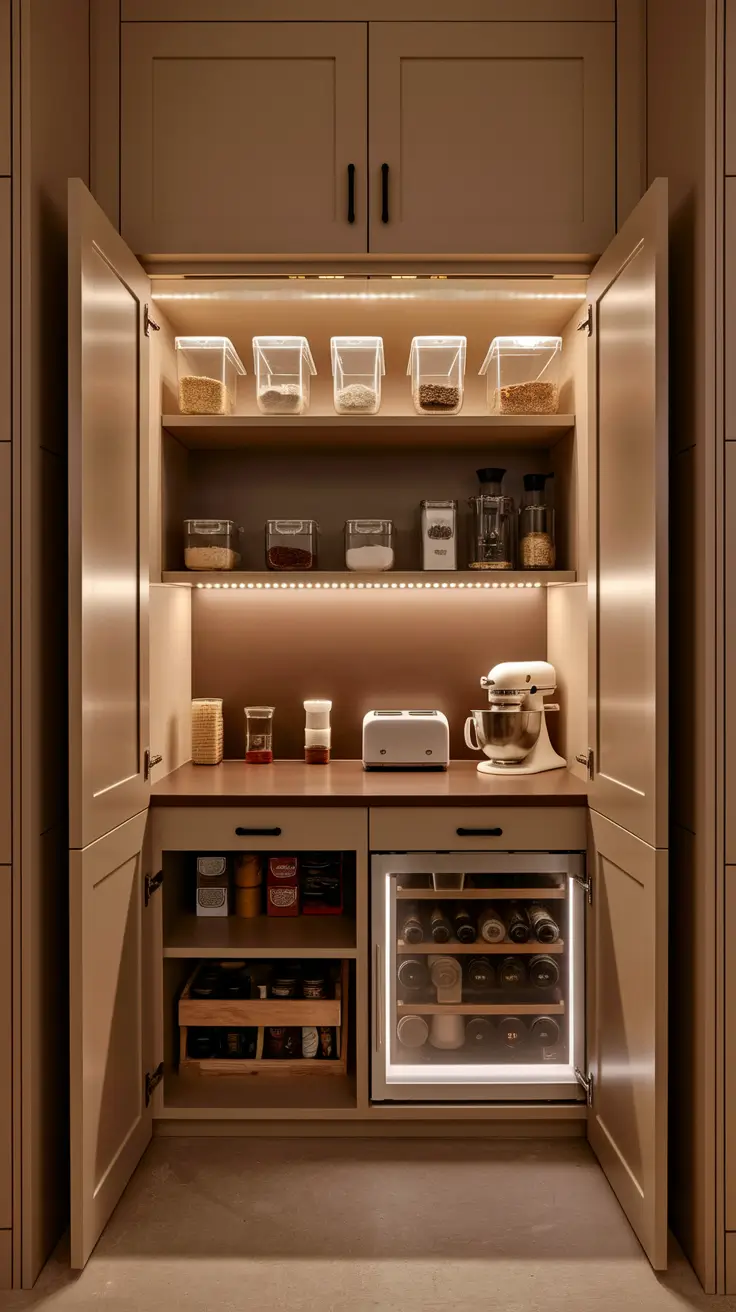
I prefer a soft-stop track on sliders, or a two-layer curtain with blackout lining on the pantry side to cover shelves when required. Glass choices such as fluted or frosted diffuse the sight and reflect light back into a dark kitchen. Handles are minimal and edges have minimal pulls to keep the look light and modern.
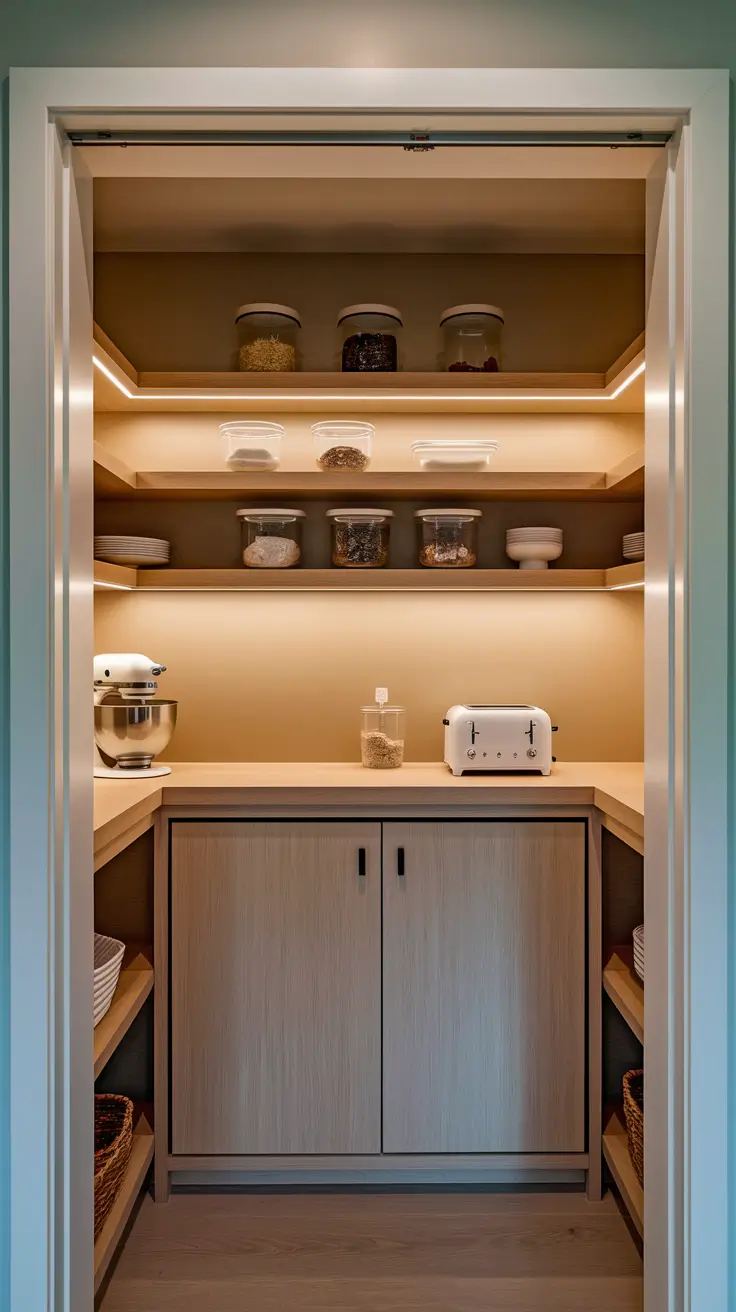
In my projects, clients are receptive to doors that are the same color as the wall or millwork so the pantry is not a focal point. My favorite tiny footprints are a curtain because it can be hidden completely, it covers baseboards, and it can be washed. Translucent textures, as House Beautiful and other design editors frequently point out, are a convenient method of ensuring that storage does not feel like back-of-house.
My final touch to this idea would be an automatic door-bottom or threshold brush to control sound and dust under sliders and a discreet magnetic catch behind a curtain to prevent drafts and swaying.
Kitchen – linking pantry and kitchen for speed
Speed comes from adjacency. I keep the pantry near the cooking triangle and establish direct visibility to the pantry entrance, fridge, and sink. A connected Kitchen and pantry can save you several minutes each day. In a service-oriented walk in pantry ideas layout, I prefer a two-way entry when space permits so that traffic can flow instead of being terminated.
I indicate pass-through shelving on bulk items that are exposed to the pantry on one side and a coffee or breakfast station on the kitchen side. A pocket door keeps the noise to a minimum in case someone is blending or microwaving and others are cooking A whiteboard or rail to leave shopping lists at the entrance makes the threshold a command post.
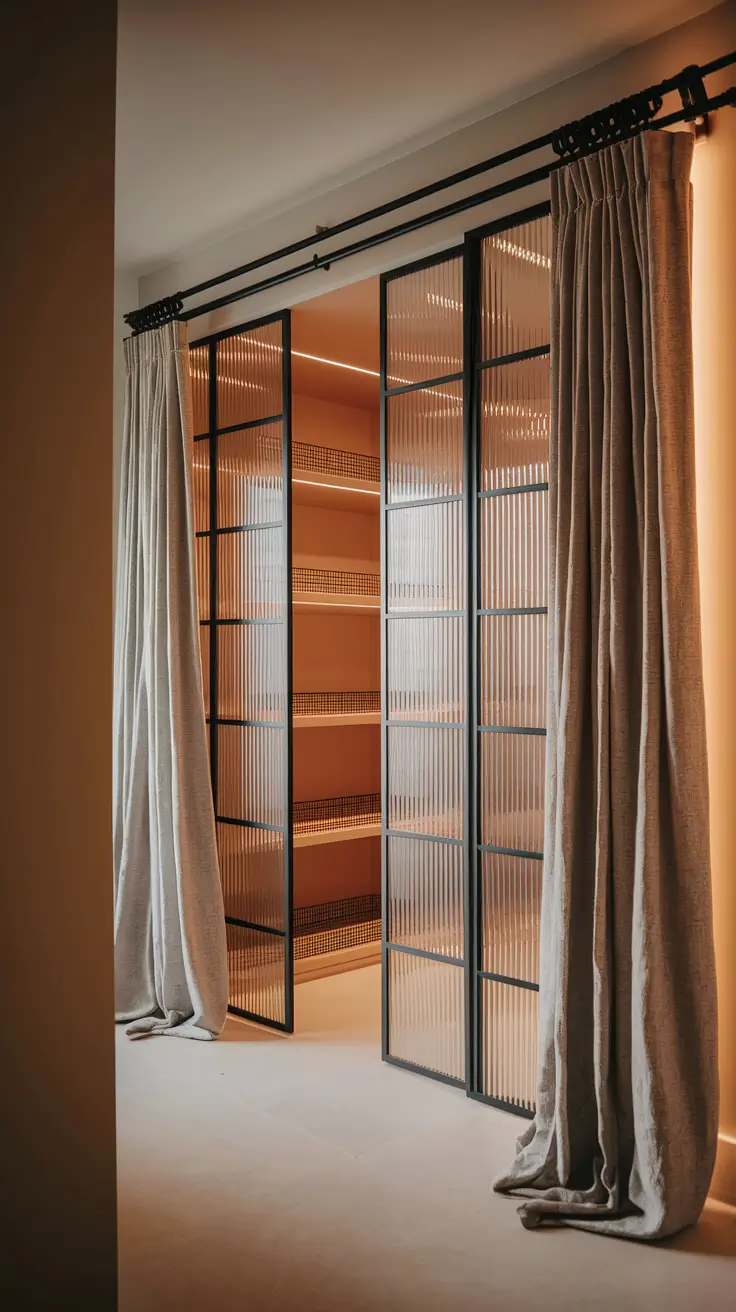
Based on practice, the most effective links are those that have matching flooring and continuous ceiling lines making it feel like one zone. When the kitchen is hectic, I add motion lighting to the pantry so that a quick snatch does not necessitate the need to flip a switch. The outcome is a pantry that acts like a backstage helper, rather than a room.
I would still introduce a recessed floor mat well at the pantry door to collect crumbs and a narrow recycling pull-out just inside the entry so that traffic to the main bin is minimized.
Tiny – micro pantries that still feel big
Small homes benefit most from disciplined planning. On such a small footprint, I use every inch as a chance, leaning into shallow shelves, mirrored backs, and bright vertical lighting. A walk in pantry ideas layout small corner or Layout small kitchen can be made to feel spacious when depth is managed and corners are engaged with angled shelving. The key phrases here are Simple and Minimalist so the eye is reading clarity, not clutter.
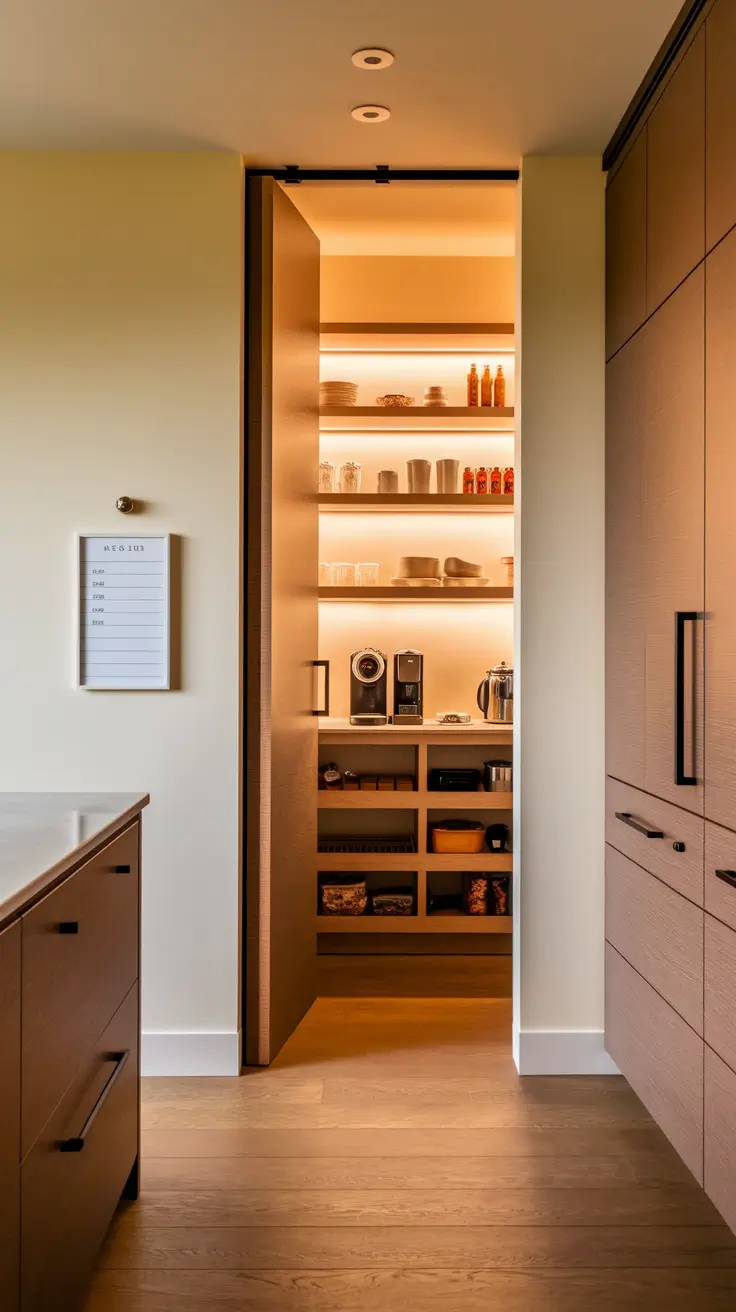
I have 10 to 12 inch deep shelves to store cans and jars and back-stopped them with clear bins. Spice racks are mounted on the doors, saving space on the shelves, and a fold-down panel of the counter provides a spot prep when required. Lightweight baskets are hung on hooks high on the wall and a small step stool is attached to a French cleat.
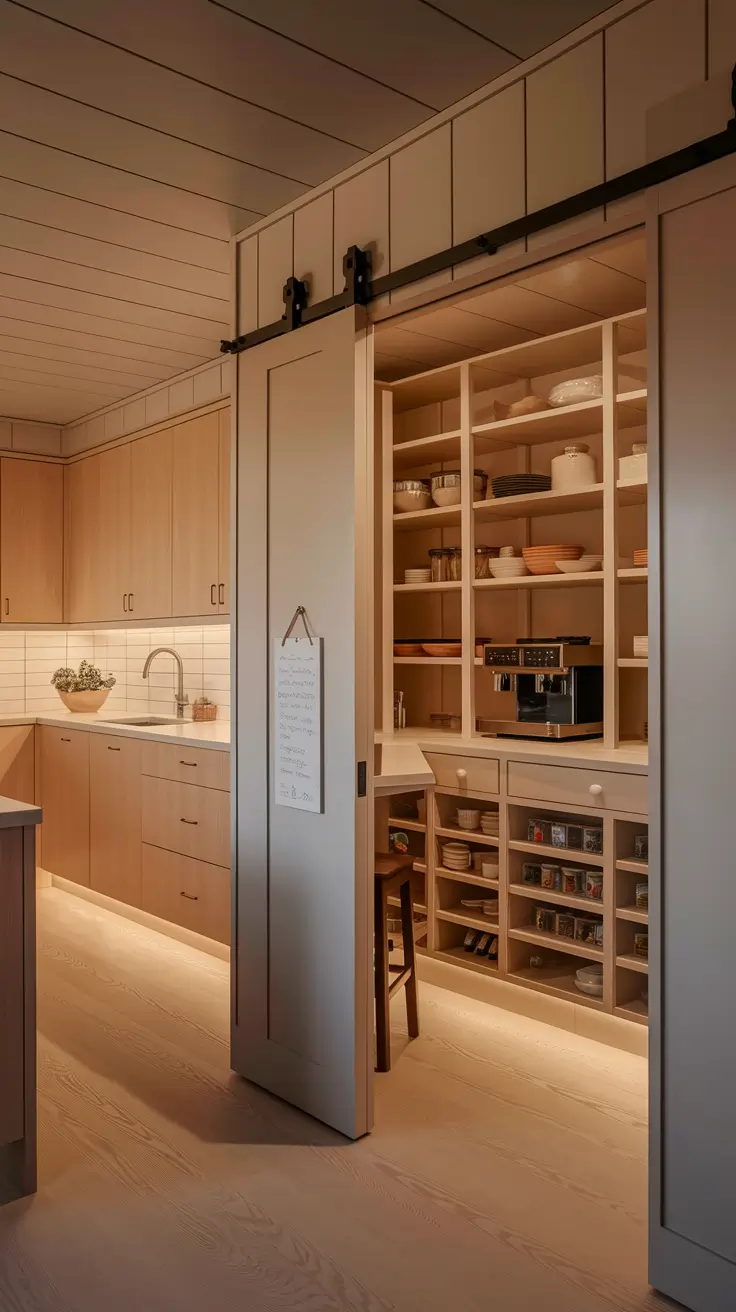
I have also witnessed numerous times small pantries work as long as the owners are dedicated to category zoning and one-in-one-out policies. White paint or light wood with uninterrupted LED strips eliminates darkness. I cover goods with UV film and place only low-risk items near a source of daylight, even when it is a small window or transom.
I would include a ceiling-mounted lazy rack to store very light packaging or paper goods and a narrow rolling cart that can dock between shelves to store overflow during holidays and can park elsewhere.
Modern – sleek finishes and hidden hardware
A modern pantry is clean, calm and connected to modern kitchens. I keep lines straight, reveals tight, and finishes consistent. To make a decision on a walk in pantry ideas layout shelves, I prefer thick floating shelves or thin-edged laminates which look architectural. The visual rhythm is kept quiet with push-latch doors, integrated pulls, and concealed hinges. The plan nods to technology without shouting.
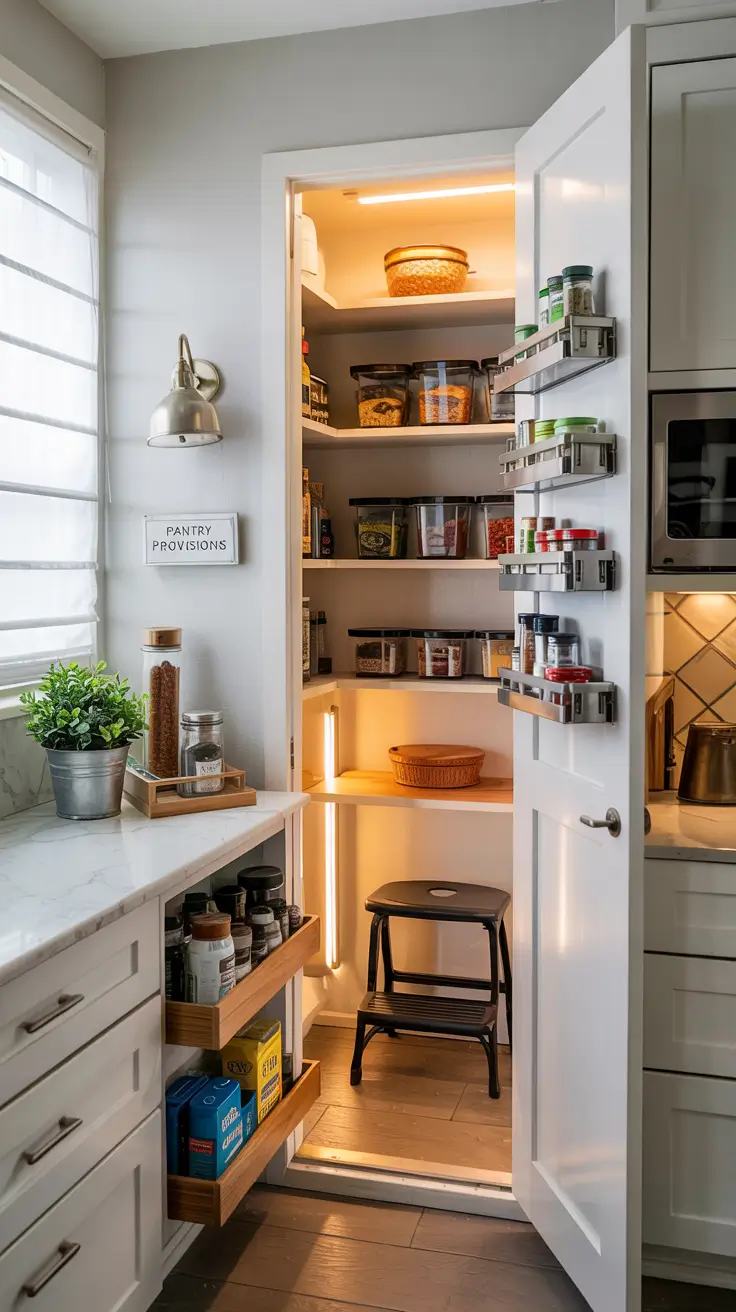
I usually order slab fronts, matte laminates, or rift-cut oak with little grain, and continuous LED channel lighting with a sensor at the door. Square containers are aligned like a library and labels are printed in one font to create graphic calm. Floors in seamless vinyl or large-format tile reduce grout lines and movement.
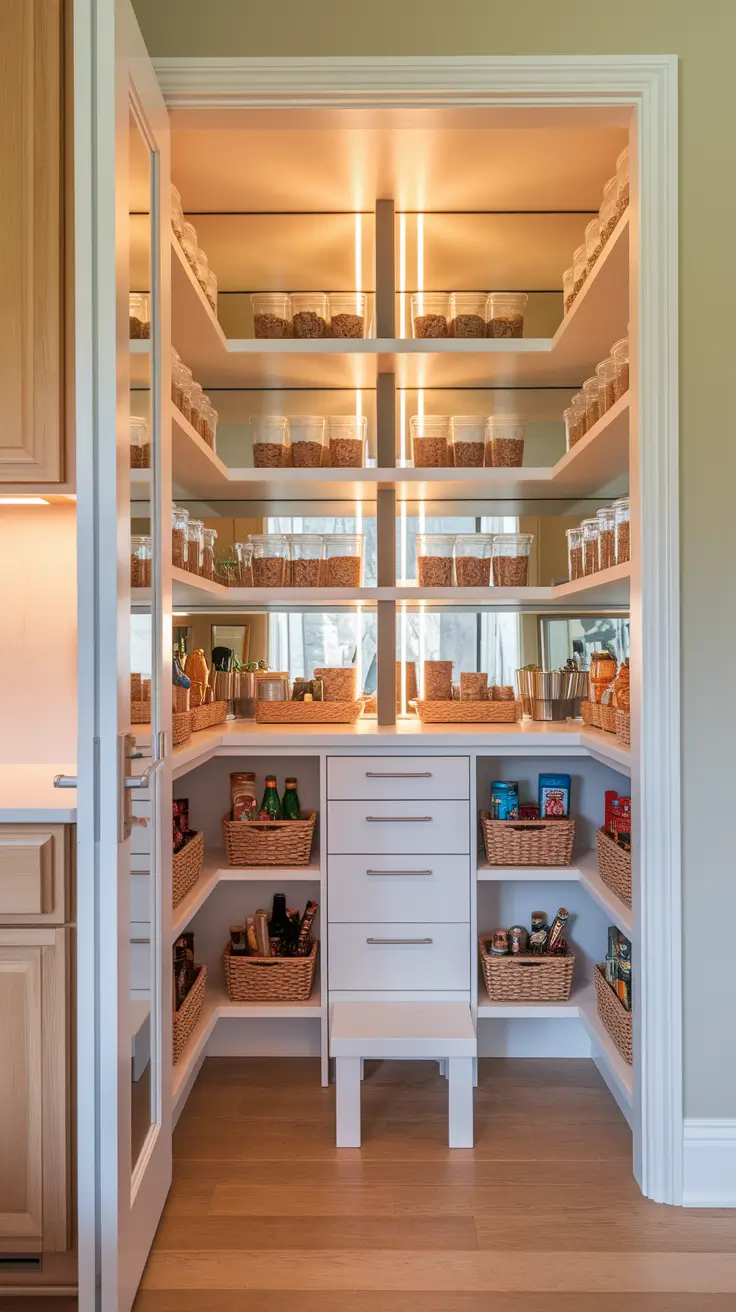
I prefer one accent – a stone or sintered surface along the counter or a colored interior in one shelf bay – to provide the eye a place to go. There is hidden charging in a drawer and a small undercounter fridge that can be accommodated without disrupting the minimal aesthetic. The outcome is a contemporary pantry that complements the kitchen as opposed to competing with it.
To take this a step further, I would put soft felt liners in drawers to dampen clinks, and a hidden rail under the lowest shelf to hang tea towels or lightweight tools that otherwise clutter the counter.
Layout storage – vertical thinking and lazy susans
Storage layout is where capacity is won. I plan my design ceiling to the floor, with the top shelf being the least-used appliances and bulk paper goods. To achieve a strong walk in pantry ideas layout storage, I place categories on top of each other and front to back so that commonly used items are between the shoulder and hip level. Corners are turned into possibilities with L-shelves or turntables, and the plan takes into consideration the actual size of packages.
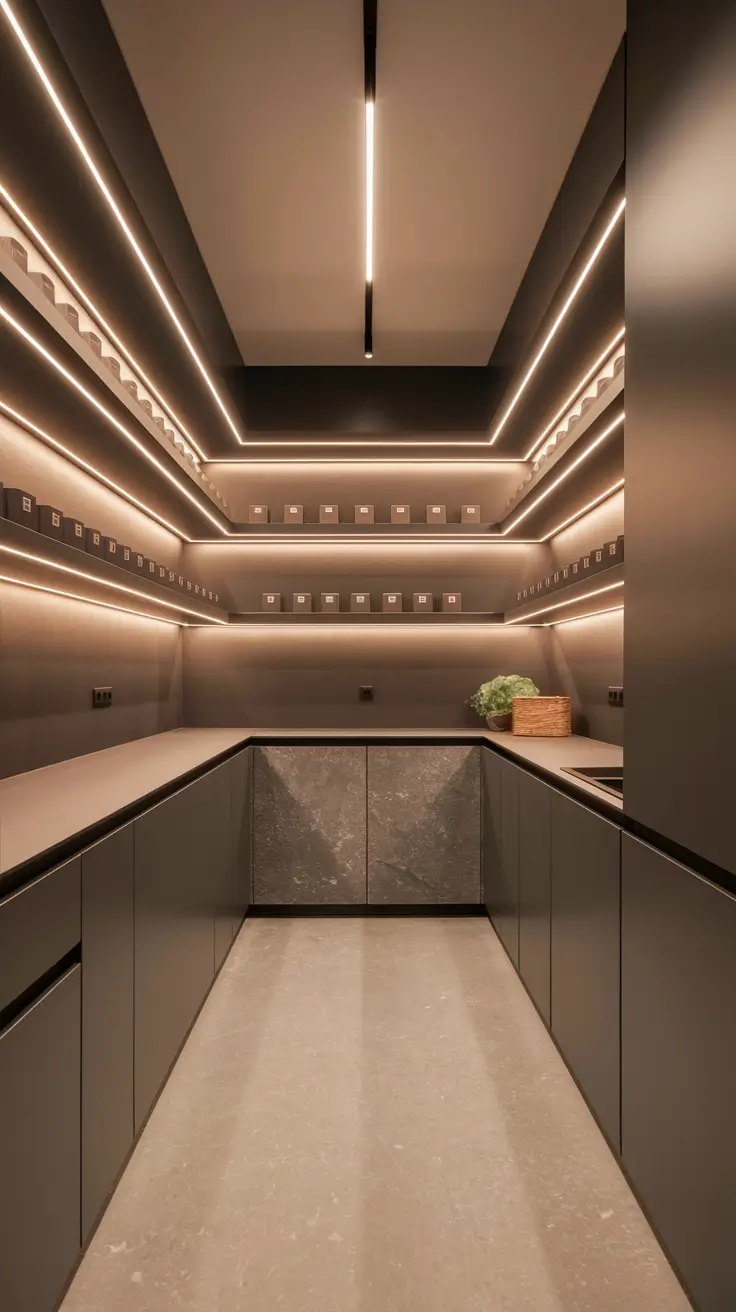
I include adjustable uprights, full-extension drawers to store snacks and baking, and two shelf depths shallow to store cans and deep to store appliances. Lazy susans in corners hold oils and condiments in view and tall dividers stand baking trays on their sides. Clear bins are like drawers in shelves which prevents items drifting to the back and being lost.
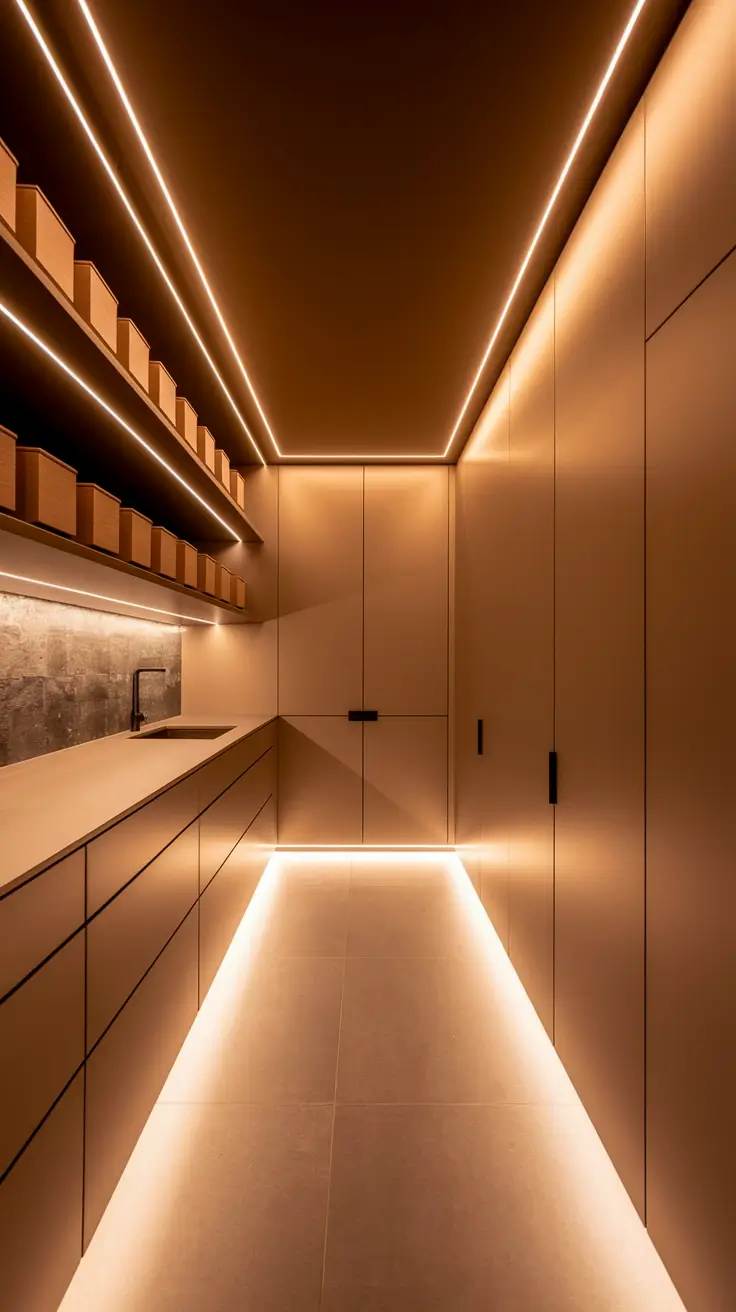
In practice, I have discovered that fewer, larger bins are better than many small ones in that the larger bins are easy to put back. I also put an inventory clipboard or a digital QR system on the inside of the door to keep track of staples. Good storage is not about quantity it is about the right thing in the right place all the time.
I would still include a narrow vertical pull-out for wraps and foils close to the counter and a ventilated crate section with a wipeable liner so that produce does not mingle odors.
Narrow – galley pantries that glide
To have a small footprint, I create a galley layout that is fast and frictionless. The key to a smart walk in pantry ideas layout is shallow shelves and an open center aisle so you do not snag anything as you walk past. In a small kitchen layout I would keep shelf depths to 10 or 12 inches so that the labels are facing out and the aisle is about 36 inches clear. This maintains a clear view and makes a narrow area appear bigger than it really is.
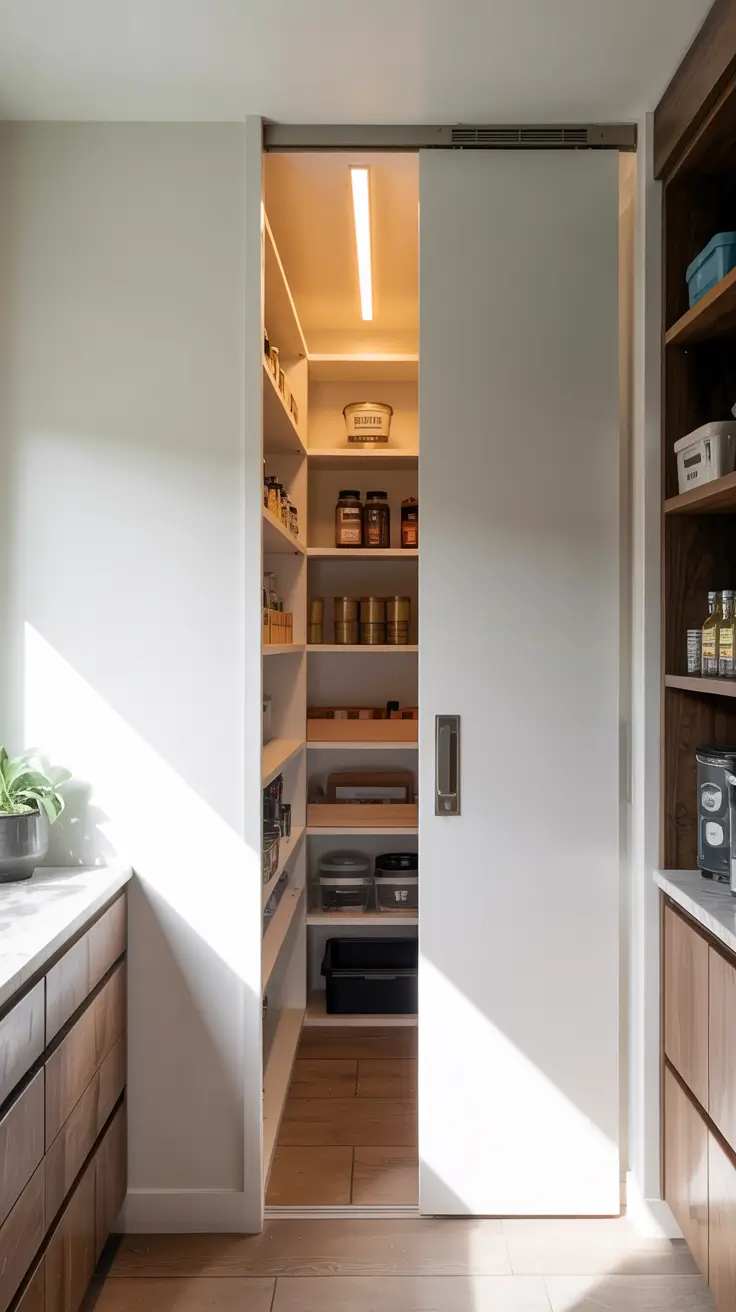
I am specifying full height adjustable uprights, shallow drawers to store snacks and rail lighting that runs vertically at the front of each bay so that the products are lit without shadows. Pull handles remain low profile and I put heavier items at hip height. When doors take inches, I take a pocket or sliding door. This design is suitable to layout shelves and layout storage objectives without visual bulk.
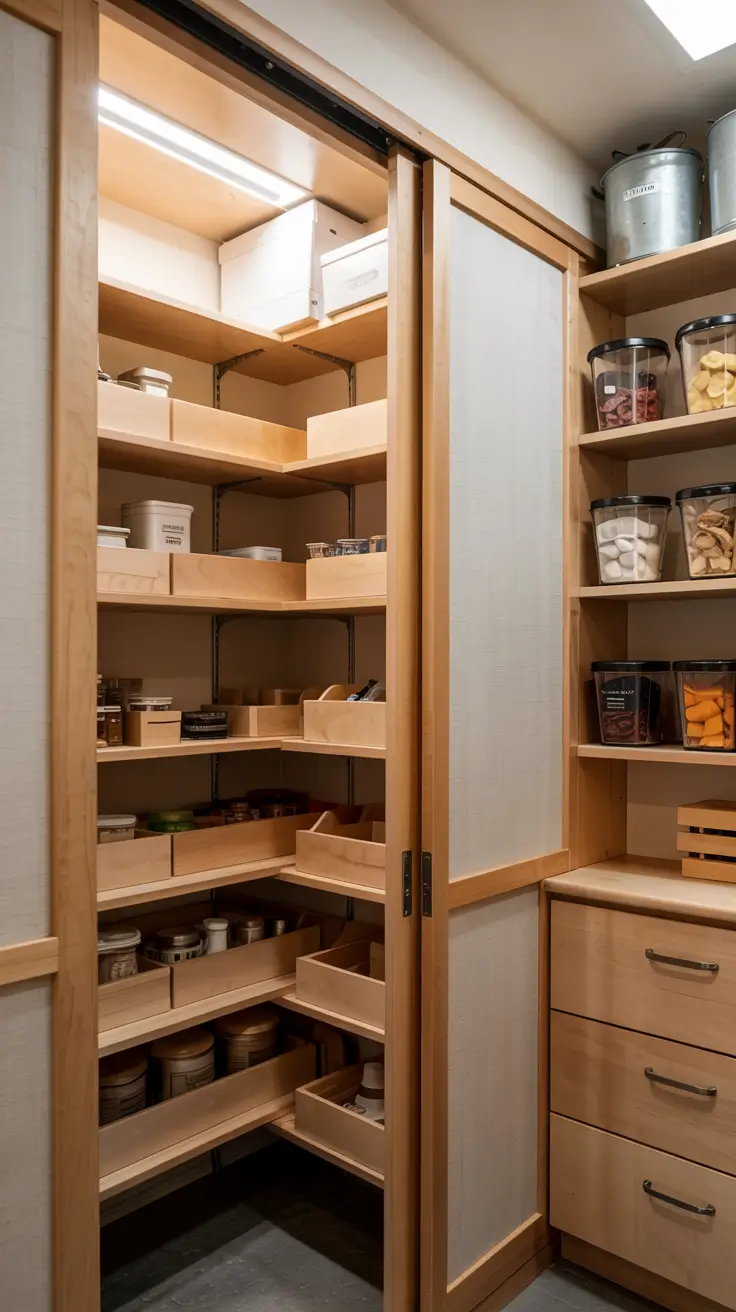
In practice, a narrow pantry is best when the categories repeat themselves symmetrically on both sides so that muscle memory can take over. I place a narrow rolling cart at the back end to hold overflow and a chalk or dry-erase strip at the entry to hold running lists. The room is bare and minimalistic in its execution, which is the idea in a small layout.
I would still include anti-tip brackets on tall pull-outs, a soft threshold to pick up crumbs at the entry, and felt bumpers on the door channel to keep the movement quiet in a narrow corridor.
Shaped – L shaped, U shaped, and walk through options
When the room bends, I lean into it. L shaped or U shaped walk in pantry ideas design transforms corners into space through turntables, diagonal shelves, or clipped corners that maintain the aisle. In a layout, I do not have deep blind zones, I use open or canted shelves so you see everything at a glance. The two-door walk through option forms a natural loop that accelerates traffic between the kitchen and the pantry.
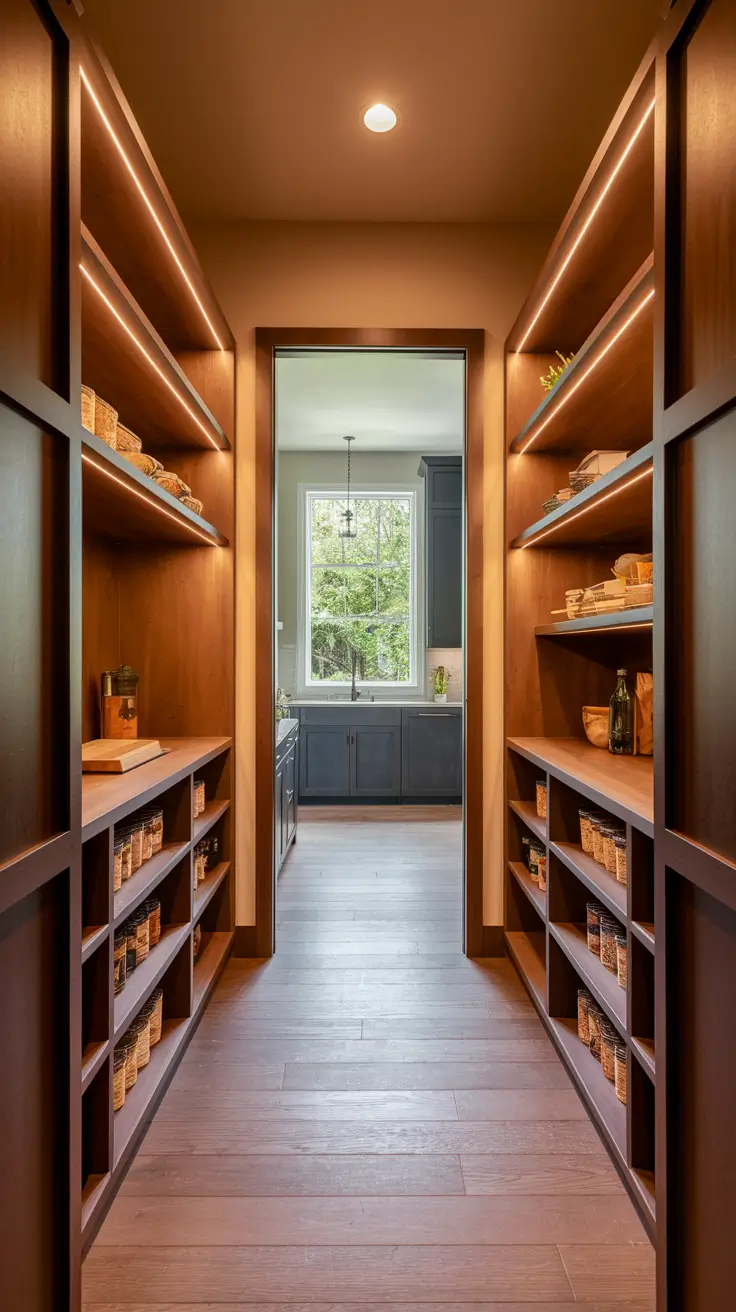
I only provide 24 inch deep runs where the appliances are parked and keep other shelves at 12 to 16 inches. Corners are used to get lazy susans to hold oils and condiments or tray dividers to hold baking sheets. I stagger the heights of shelves so that tall bottles fall on turns and shorter goods on straight runs. The light tools are placed on under-shelf rails to free the counter space.
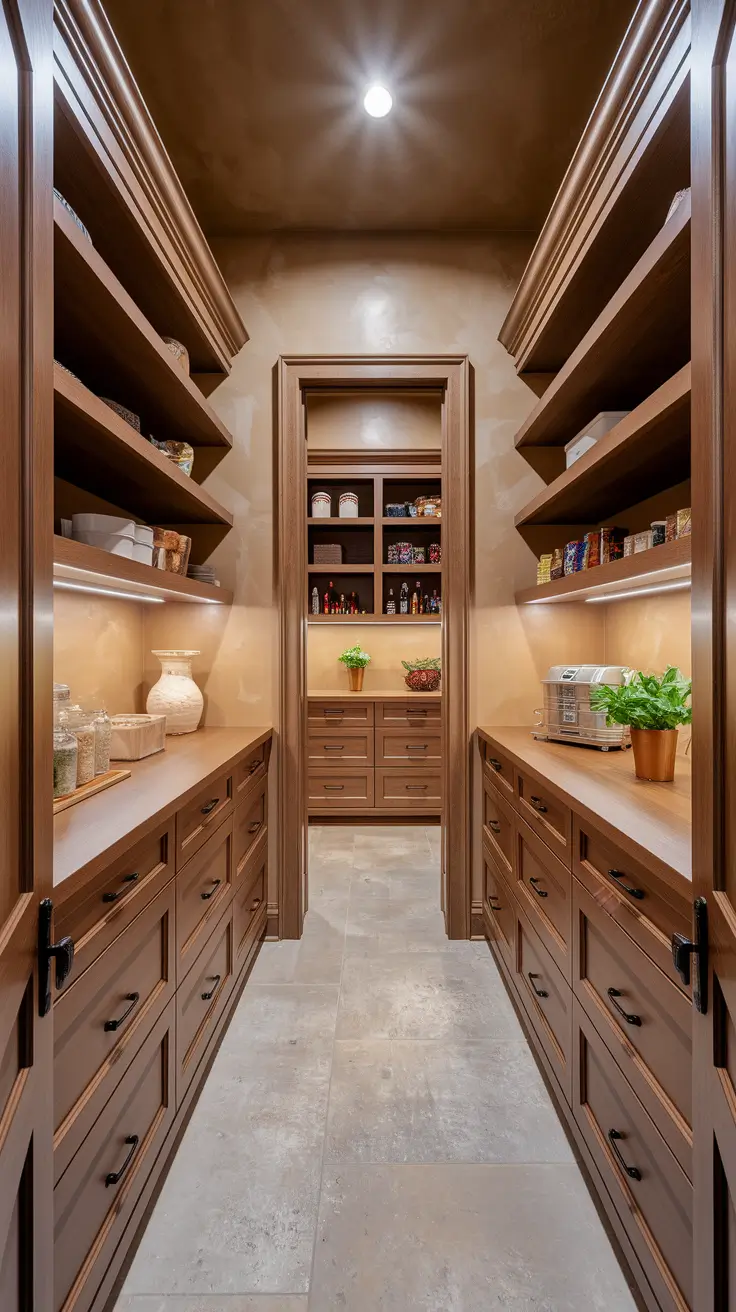
The U shaped room should have the entry facing the shortest wall and the counter should be placed on the long leg under task lighting in my experience. L shaped rooms work best when the short leg is a beverage or baking area It is more important to keep turns bright and open than to squeeze in one more shelf.
I would also incorporate a shallow message niche at the turn to put recipes and labels, and a ceiling exhaust in case the room is closed with a door so odors do not get trapped in the corners.
Large – room sized pantries that host appliances
A large pantry can behave like a mini workroom. To allow a generous walk in pantry ideas layout size, I divide the room into prep, storage, and cleanup areas to allow multiple people to work without colliding. The plan will usually have a second sink, undercounter glassware dishwasher, and space to put small appliances. By using the appropriate layout counter tops, the pantry can serve as a secondary kitchen during holidays.
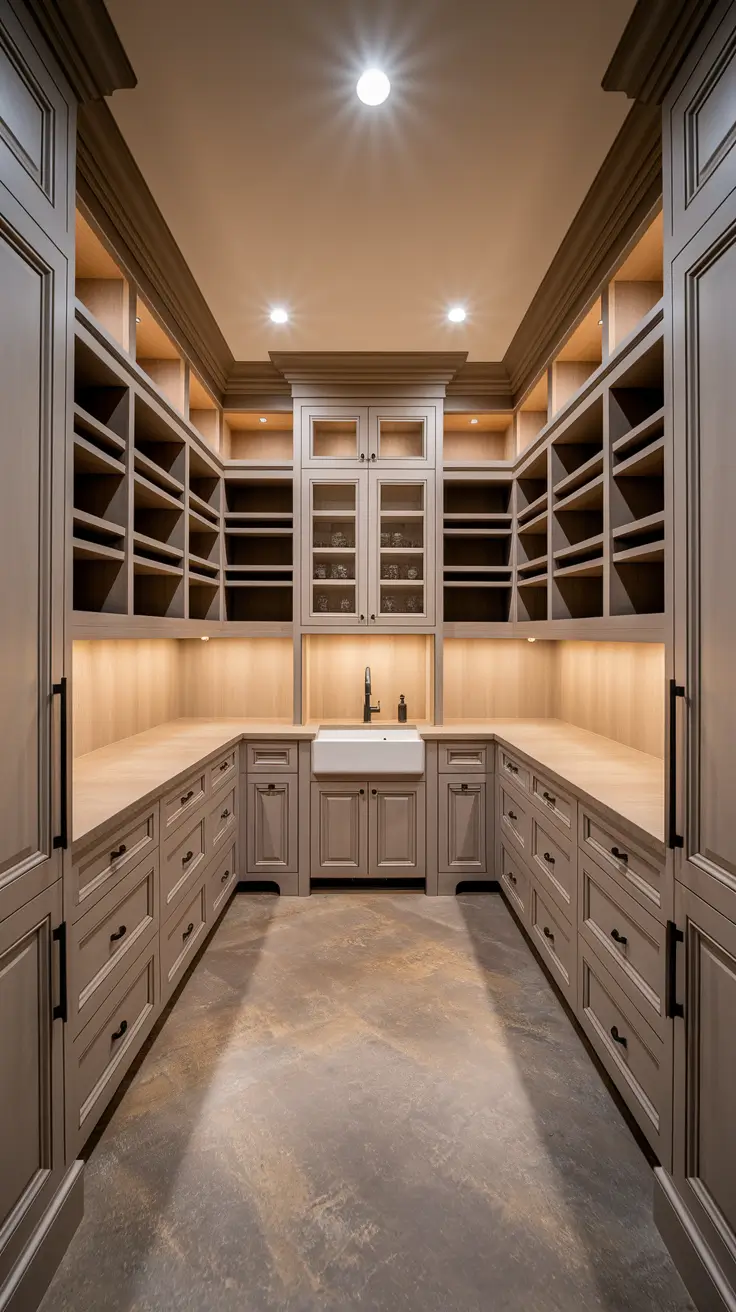
I specify two counter heights where baking is a priority, tall dividers to hold trays and a bank of full-extension drawers to hold dry goods. A microwave or convection appliance is on its own 20 amp circuit, and water lines are shutoff valves that are accessible. Floors should be non-slippery, durable and have a soft mat in front of the main counter.
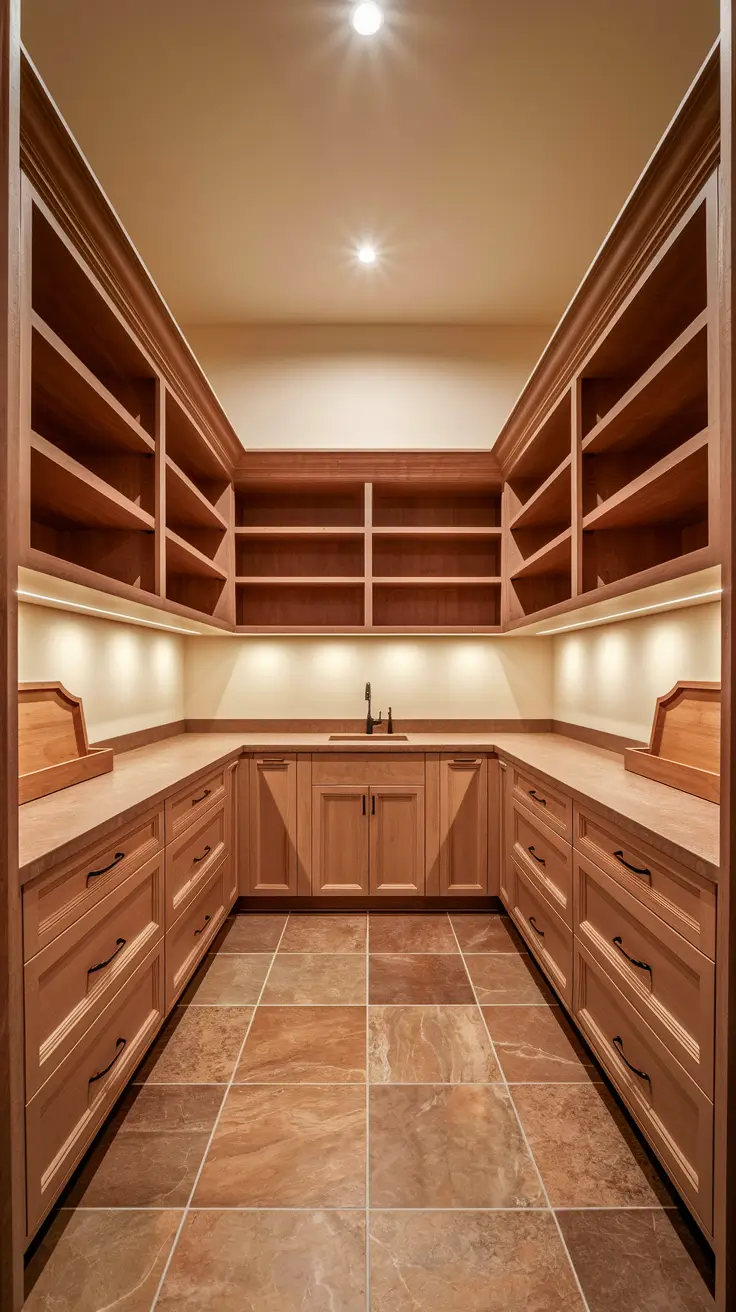
Professionally, I prefer to reflect kitchen materials so the pantry does not feel like a utility annex but a part of the house. Individual task and ambient lighting make the room functional both in the day and night. When equipment is in this location, I consider ventilation and make-up air so that heat does not accumulate.
I would still include acoustic treatment behind walls of appliances, a rack on the wall where pans are frequently used and a mini recycling center so that one does not have to make a trip back to the kitchen.
Layout with freezer – safety, seals, and spacing
When a freezer is added to the plan, I focus on safety, seals, and spacing. In a freezer layout, I give the manufacturer clearance on all sides and position the unit so that the door swing will not interfere with the aisle. Upright models guard access in a walk in pantry ideas design, and chest freezers only work when there is space to swing open without banging into shelves. Humidity is important, so I do not go in direct sunlight or high-humidity areas.
I use a grounded circuit, level the cabinet properly, and put a drip tray or floor protector to prevent condensation. I plan gasket quality and hinge direction and leave 2 to 3 inches behind in case coils and airflow is necessary. A compact temperature monitor with alerts gives you peace of mind.
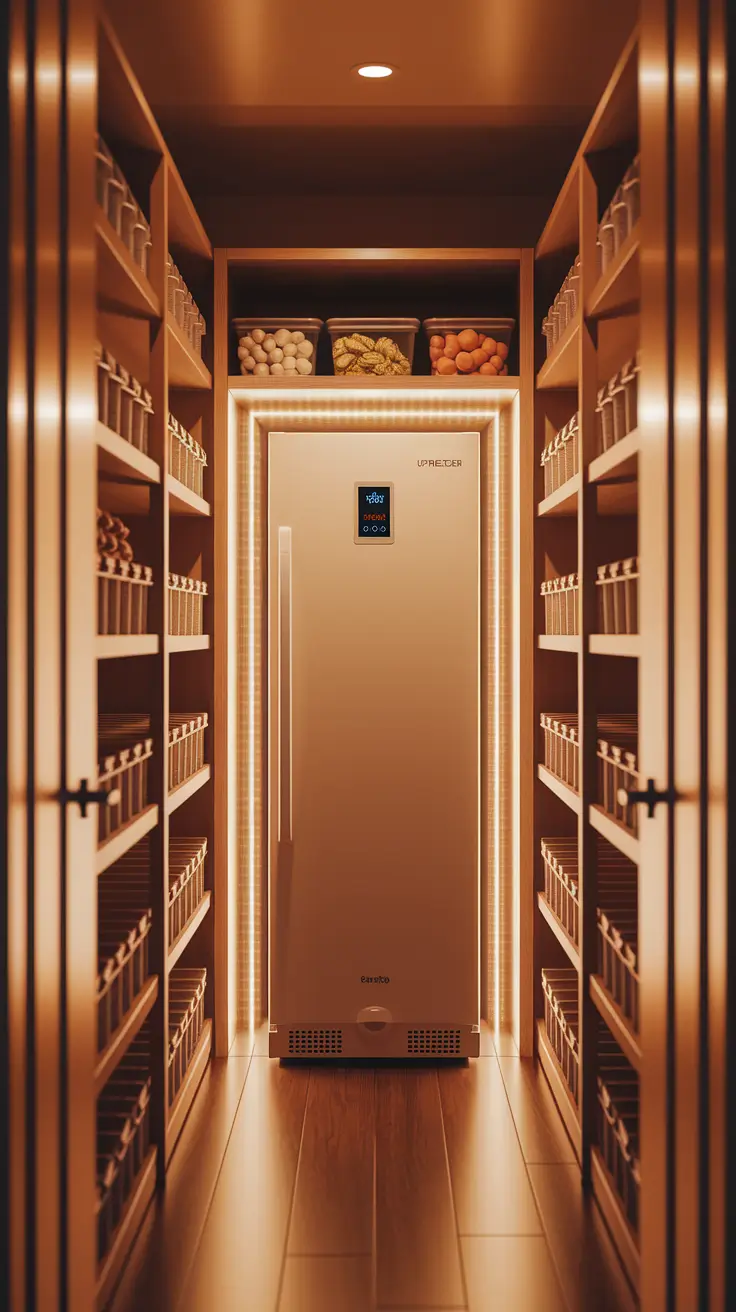
Personally, I keep raw proteins in the bottom and covered, and have a bin system to file by type and date. Storing a laminated inventory close to the door will curb overload Freezers are noisy, so I put vibration pads and soft-close doors around them to reduce noise.
I would also include a low profile threshold ramp in case the freezer is heavy and a battery backup to the monitor. A pull-out between freezer and wall can be narrow enough to maintain required clearance and hold wraps and vacuum-seal bags.
Fridge – best locations and specs to watch
Fridge placement makes or breaks daily flow. To create a walk in pantry ideas layout with fridge, I placed the refrigerator nearest the entry so that it does not drag you into the room on quick grabs. Counter-depth units guard the aisle in a small layout footprint, and right or left hinge options must be compatible with the approach path. The goal is fast access with minimal door conflict.
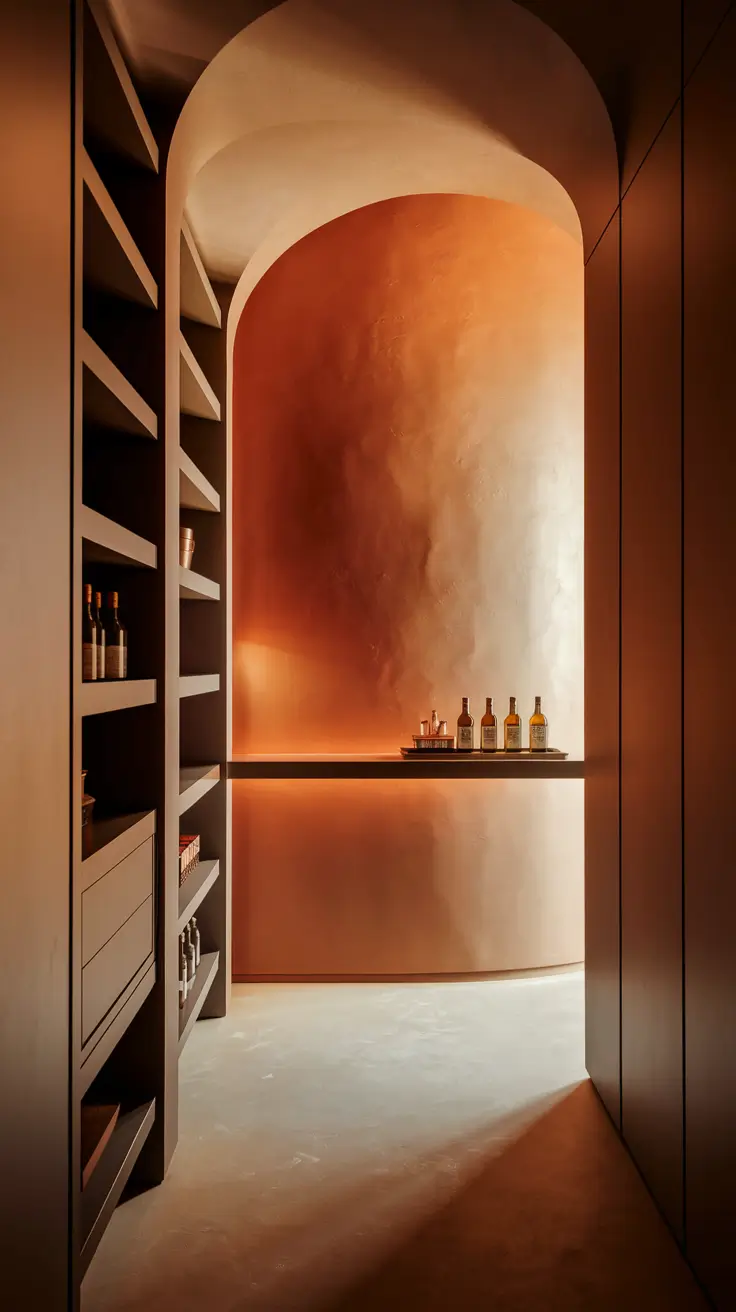
I request Energy Star models with low decibel ratings, well lit interior and adjustable shelves. I add a dedicated circuit, verify the clearances to ventilation, and place a shallow tray cabinet next to the unit to store bottles and backup condiments. A water line with easy access shutoff and a floor pan where possible code permits will minimize the risk.
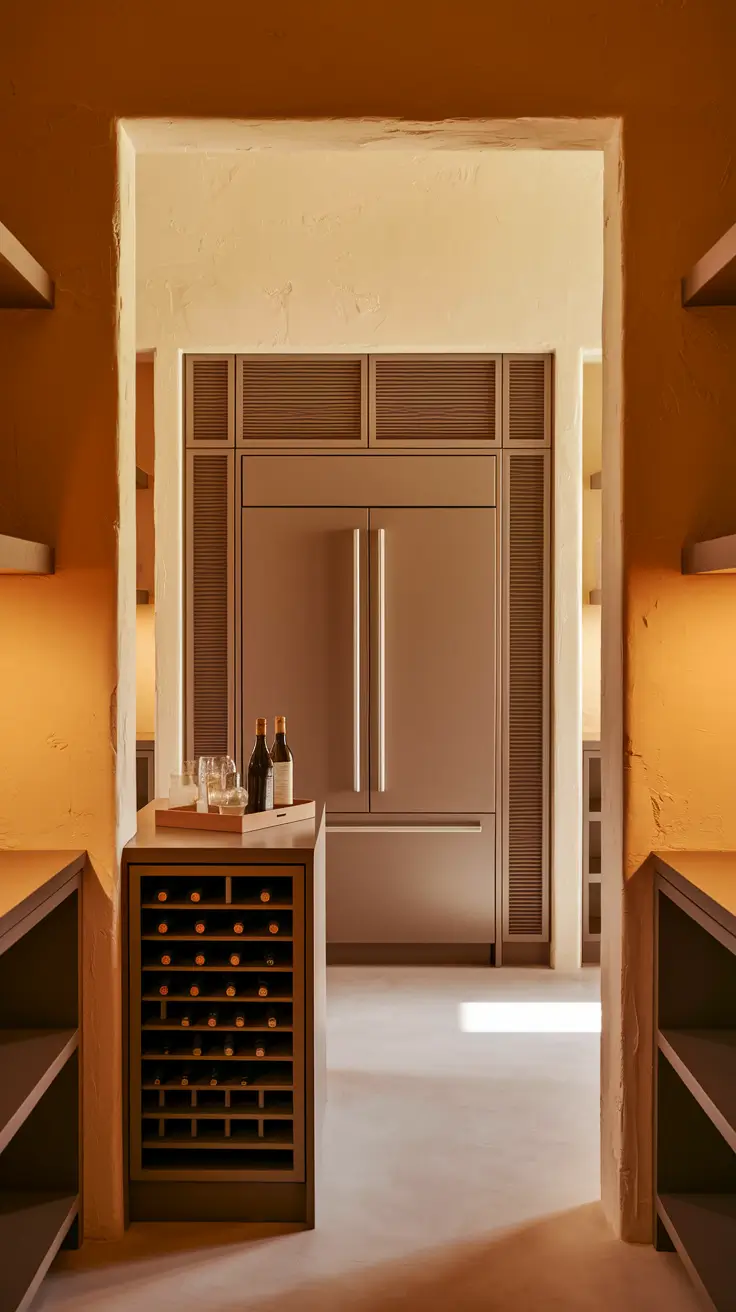
In reality, placing the fridge close to a landing counter or cart makes unloading garage or entry easier. I like textured or matte finishes that do not show fingerprints and design the surround with vented panels. Door swing must have clearance and not hit handles across the aisle, so I test this on plan.
I would still include a thin broom or utility pull-out to act as a spacer to airflow, felt pads to cushion against adjacent panels, and door-stop protection on the opposite wall to cushion handles.
Ikea – modular hacks that look custom
Ikea parts create a quick, adaptable pantry that can be made to look custom with the proper details. I employ Sektion boxes to provide structure, maximize with drawer interiors and then cover with panels that extend to the ceiling to achieve a built-in appearance. This is a solution that suits walk in pantry concepts where the budget is matched with speed and can be modified to storage requirements with time.
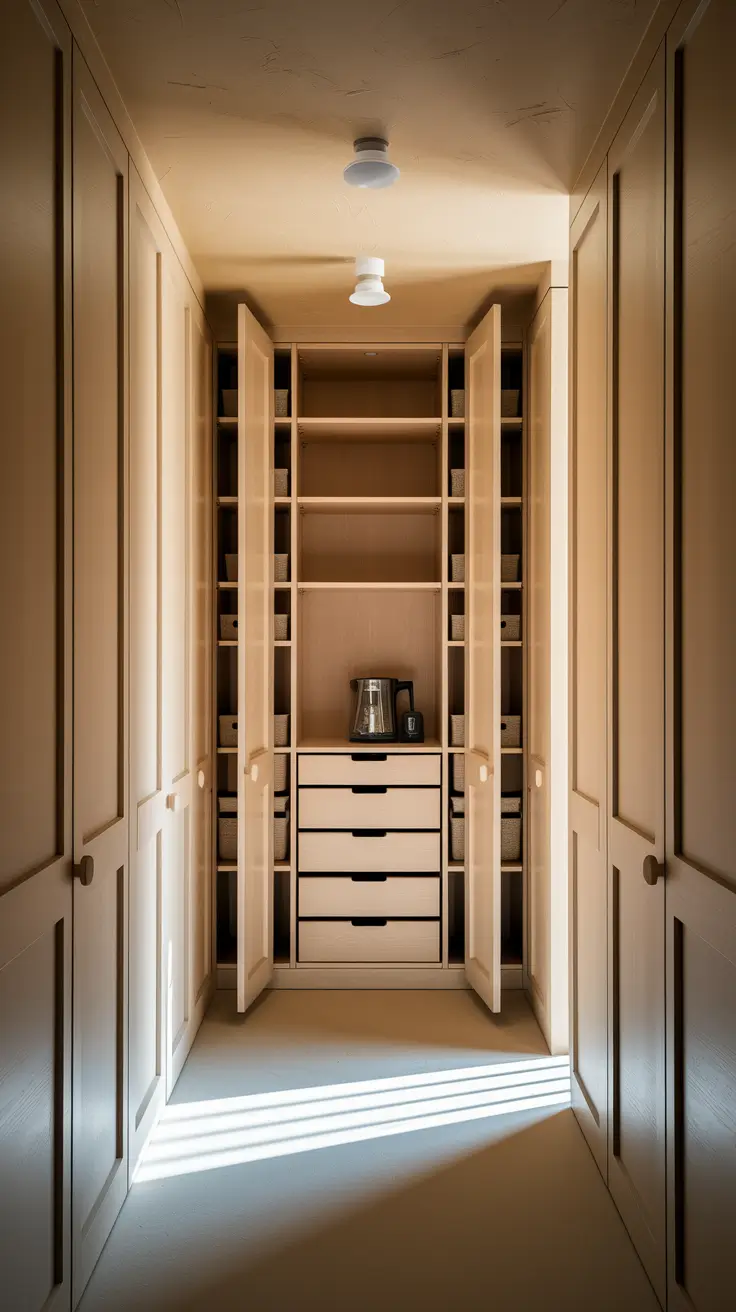
I use Maximera drawers behind doors in deep shelves that are like pull-outs. Utrusta lift-up doors turn into compact appliance garages, and Variera organizers store lids and trays in a vertical position. Filler strips and extended toe kicks conceal wall-floor gaps, and integrated lighting tracks tidy up the appearance.
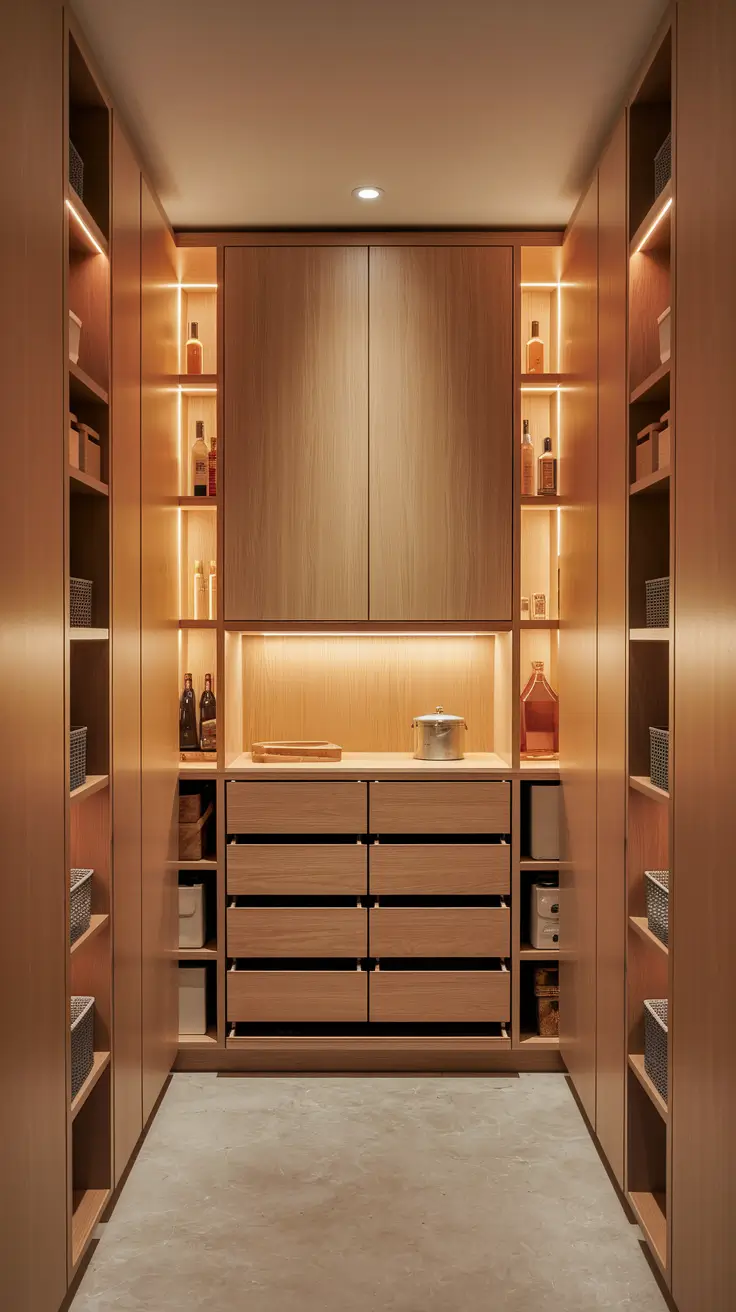
In my projects, replacing stock fronts with custom or painted fronts is the most dramatic change. I prefer continuous pulls or push latches to maintain lines up to date. The chassis is the boxes and the custom look is sold by the finishes.
I would still include a scribe panel on walls to provide a smooth fit, a finished end panel where runs end in sight and a top cap to seal the gap in the ceiling so that dust is not deposited.
Layout with window – light, privacy, and product safety
A window has the ability of making a pantry look serene and bright when it is properly planned. In a pantry ideas layout with a window, I place the shelves in such a way that the daylight falls on the counters and floors but not directly on oils and grains that are light sensitive. I like closed fronts or opaque bins on layout shelves that are close to a window with vulnerable goods.
I list UV-filter film, light-blocking shade and glare-controlled LED task lighting to make the room functional after dark. The counters under the window are perfect landing pads to herbs, scales, or a quiet tea station. When the weather is favorable, a little awning or operable sash will remove heat and keep the air fresh.
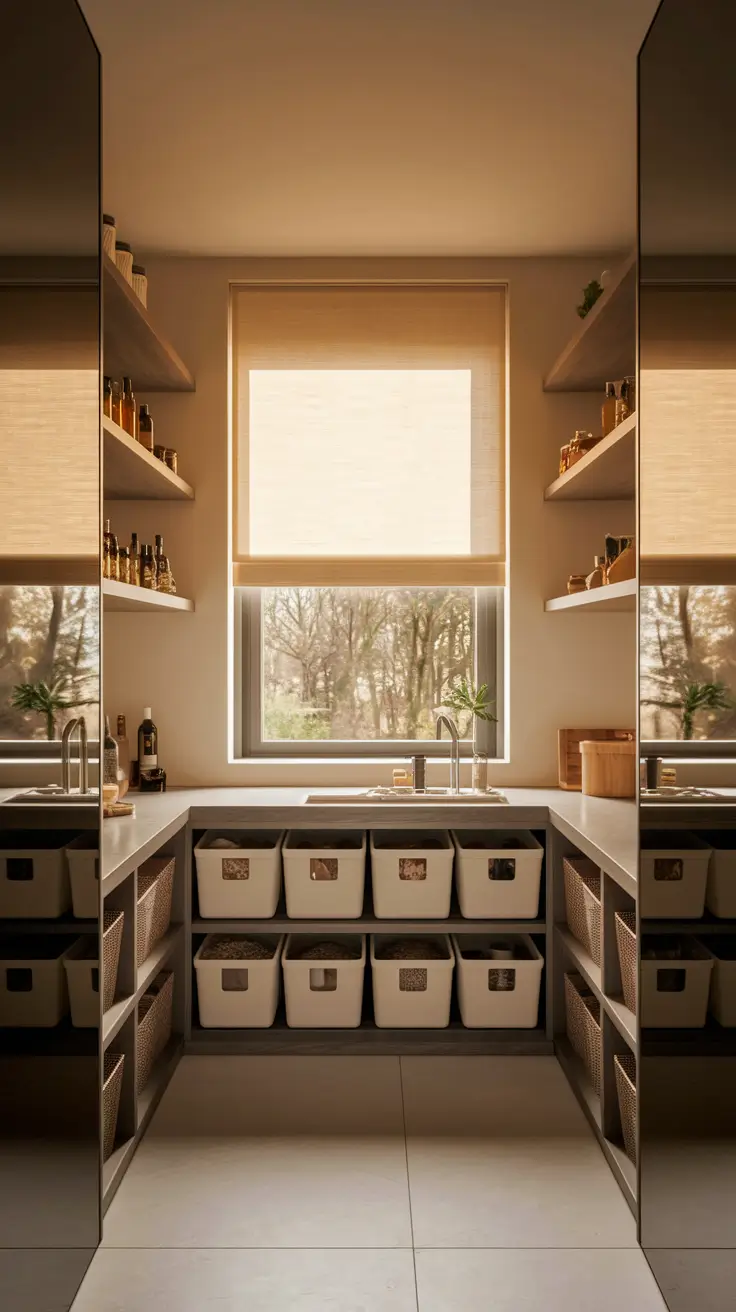
Through experience, the natural light alters behavior in an optimal manner. Clients are more likely to maintain these pantries in a more orderly fashion since the room does not look like a closet, but more like a small studio. I continue to store appliances and perishables out of direct light and use light colors to reflect light to balance the image.
I would still incorporate a shallow radiator or heat-source shield in case one is beneath the window, a moisture sensor somewhere near the sill, and a wipeable window stool so that cleaning is easy and products remain safe.


I love that the space you are working with speaks to you. You definitely nailed each concept, thoughtful of all the space will allow and figuring out the pitfalls and resolving them. I can usually do this as well but I purchased a home that is almost 100 years old and the kitchen is long and narrow with a division and then the laundry/utility space but I would love a walk in pantry and at the same time I’m trying to respect the era of the home. You have some great ideas and I hope I can find a solution through your post. Thanks for your vision and for this post.