Kitchen rugs 2026 are no longer just a soft surface underfoot – they are a key part of kitchen rugs decor, combining comfort, style, and smart placement. Have you ever wondered how the right kitchen rugs and mats can completely change the feel of your space while also making daily routines easier? In this guide, I will explore practical kitchen rugs ideas, modern layouts, and design choices that bring both function and aesthetic value into your kitchen.
Modern Kitchen Rugs 2026 Trends That Transform Everyday Spaces
I see modern kitchen rugs in 2026 as an essential design layer that connects cabinetry, flooring, and lighting into one cohesive environment. The focus is on clean lines, subtle textures, and balanced placement layout that enhances movement throughout the kitchen. These rugs are often placed near prep zones or islands, where comfort meets functionality without disrupting the flow.
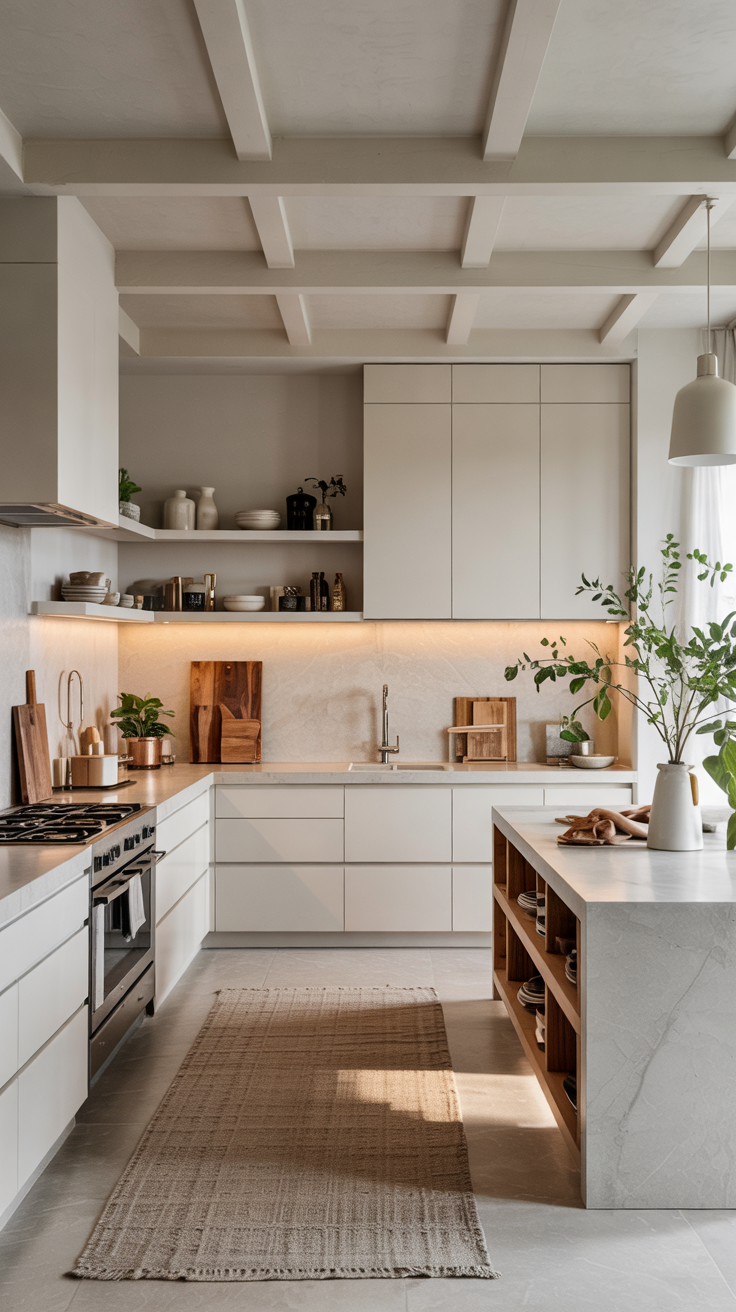
From my experience, materials matter just as much as design. I prefer washable kitchen rugs with low pile construction, as they are practical for everyday spills. Neutral tones like beige, gray, and muted green dominate, but I also notice an increase in bold accents such as black or deep blue rugs that anchor minimalist kitchens.
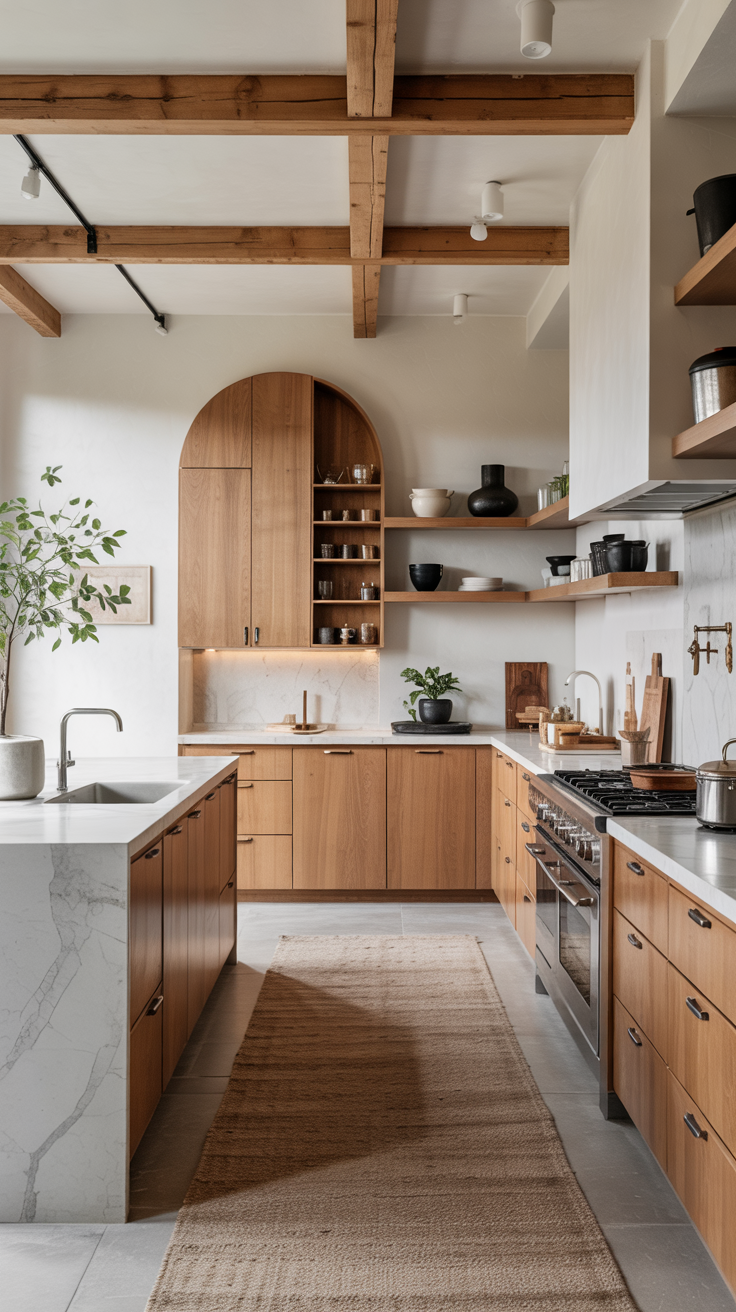
Personally, I find that modern rugs work best when they complement rather than compete with cabinetry and countertops. Many designers featured in Architectural Digest emphasize restraint in modern kitchens, and I follow that approach by choosing rugs that enhance the space rather than overwhelm it.
What I would add here is a deeper focus on layering techniques, especially how to combine multiple small mats instead of one large rug to improve both flexibility and maintenance.
Creative Kitchen Rugs Ideas for a Fresh and Inviting Look
When I design kitchens, I often use creative kitchen rugs ideas to introduce personality into otherwise neutral interiors. A colorful or checkered rug can instantly make the space feel more inviting, especially in open-plan kitchens where visual warmth is important. Placement near entry points or under a small table can subtly define zones.
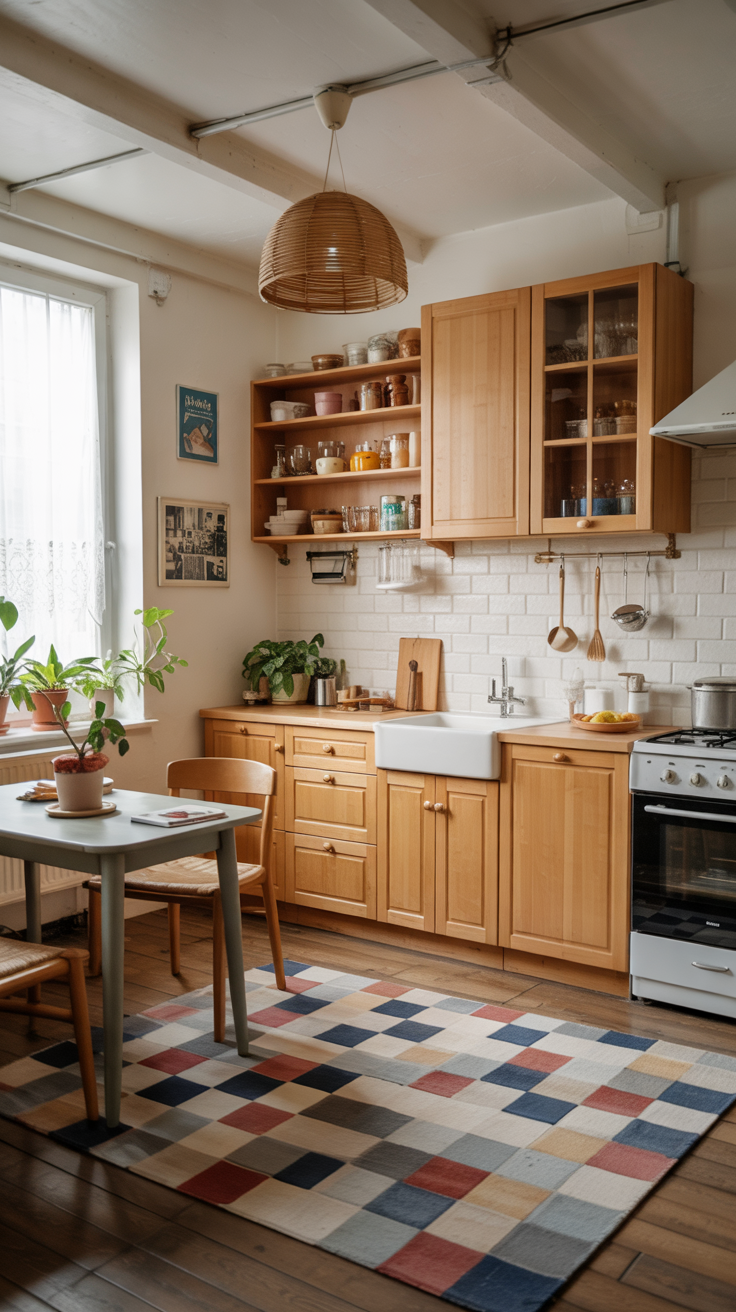
I usually recommend experimenting with patterns like checkered, colorful, or even pink tones to bring energy into the space. Materials such as jute or crochet rugs add texture, while still keeping the look grounded. The key is to balance bold design with practical placement so the rug feels intentional.
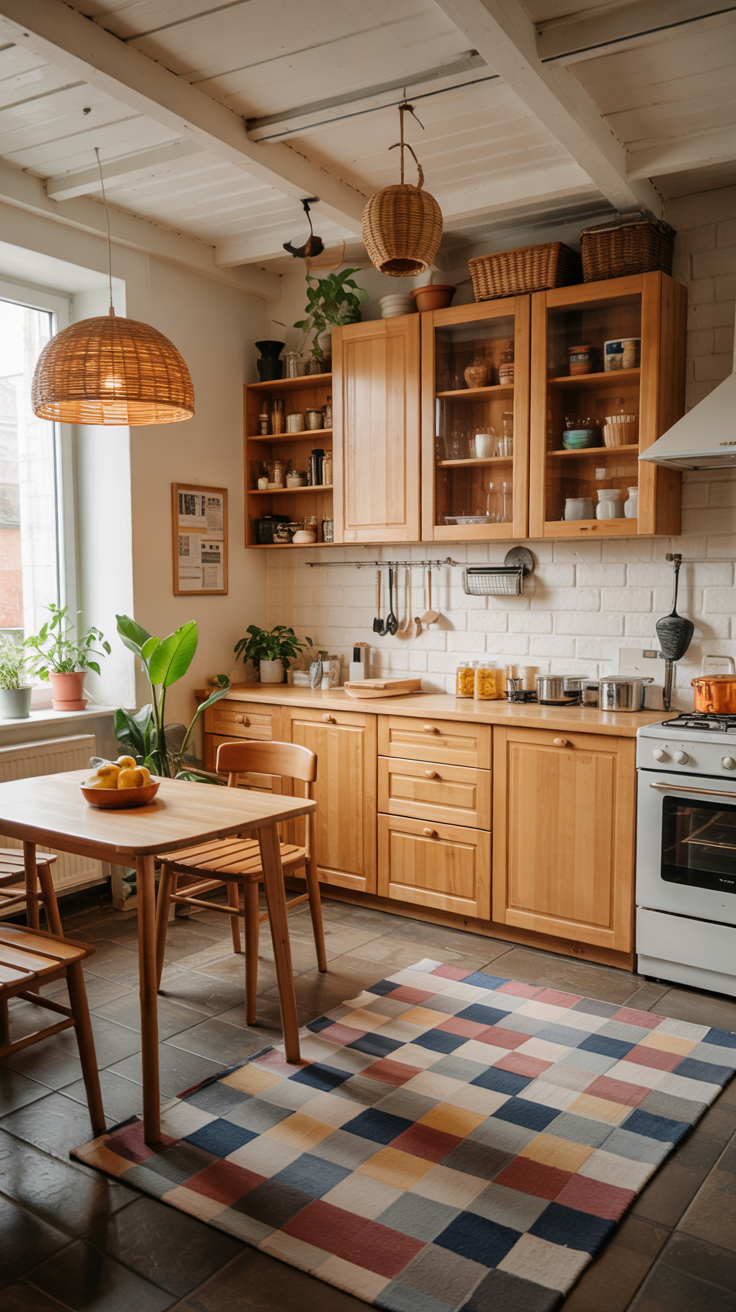
In my opinion, creativity in kitchen rugs decor should always serve a purpose. I have found that rugs with playful patterns work especially well in family kitchens, where the goal is to create a welcoming and relaxed atmosphere.
To improve this section, I would include more examples of combining rugs with wall decals or decor elements like decals bloxburg-inspired styling for a more cohesive visual story.
How Kitchen Rugs and Mats Improve Comfort and Practicality
I always emphasize that kitchen rugs and mats are not only decorative but also highly functional. Standing for long periods while cooking can be tiring, and well-placed mats provide essential cushioning. I often position them near sinks and stoves where comfort is most needed.
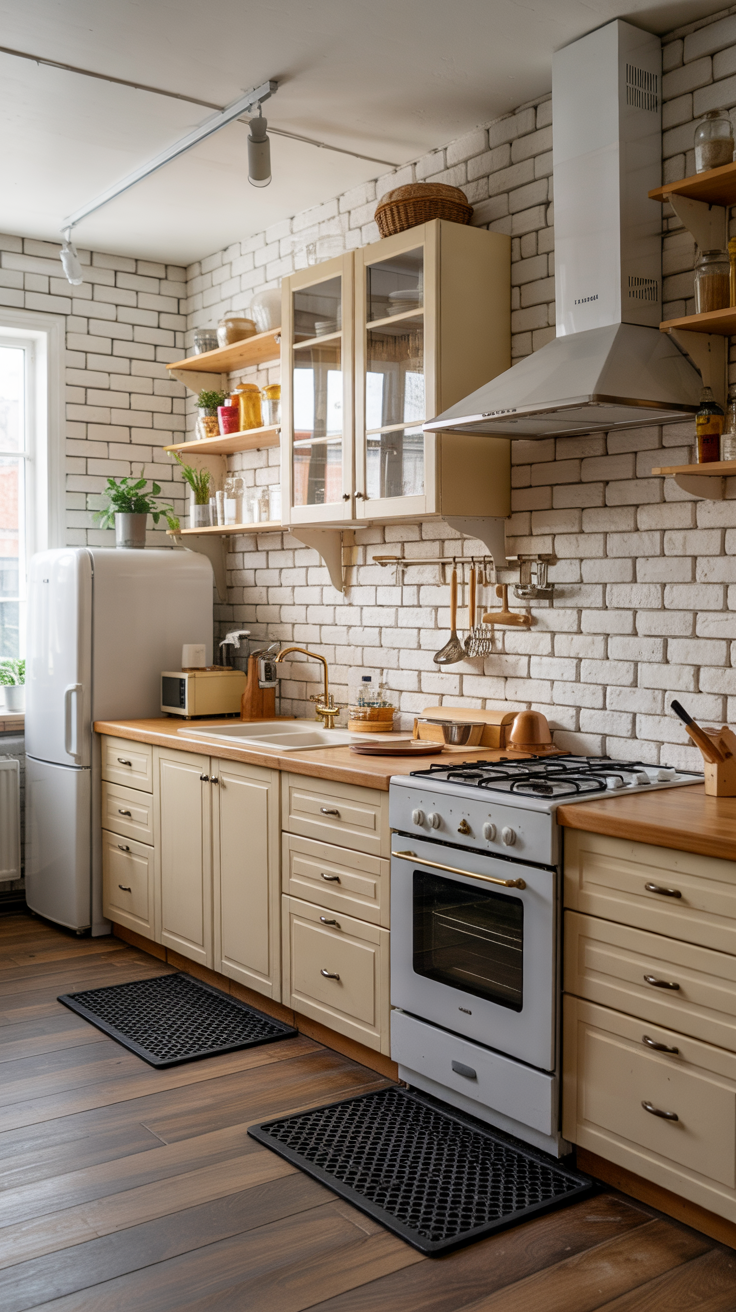
From a practical standpoint, I choose washable mats with anti-slip backing to ensure safety and easy maintenance. Long runner rugs are ideal for galley kitchens, while smaller mats work better in compact layouts. The goal is to support daily movement without cluttering the space.
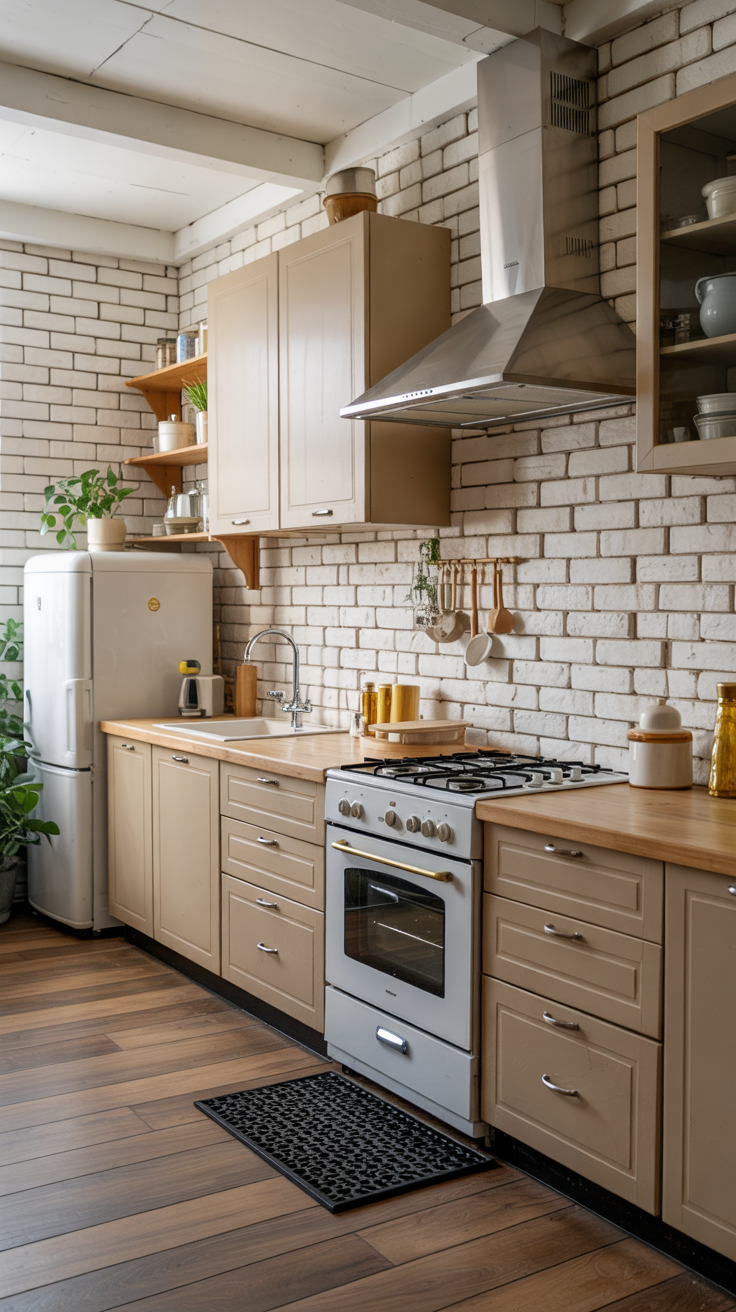
In my experience, investing in high-quality mats significantly improves the usability of a kitchen. Many professional designers recommend prioritizing ergonomics in kitchen design, and I fully agree with that approach.
What is missing here is a comparison between foam mats and textile rugs, which would help readers better understand which option suits their lifestyle.
Kitchen Rugs Decor Ideas That Instantly Elevate Your Interior
I approach kitchen rugs decor as a finishing touch that ties the entire room together. Whether the kitchen features modern cabinetry or a farmhouse aesthetic, the right rug can unify the design. I often use rugs to introduce subtle color accents like red, blue, or green.
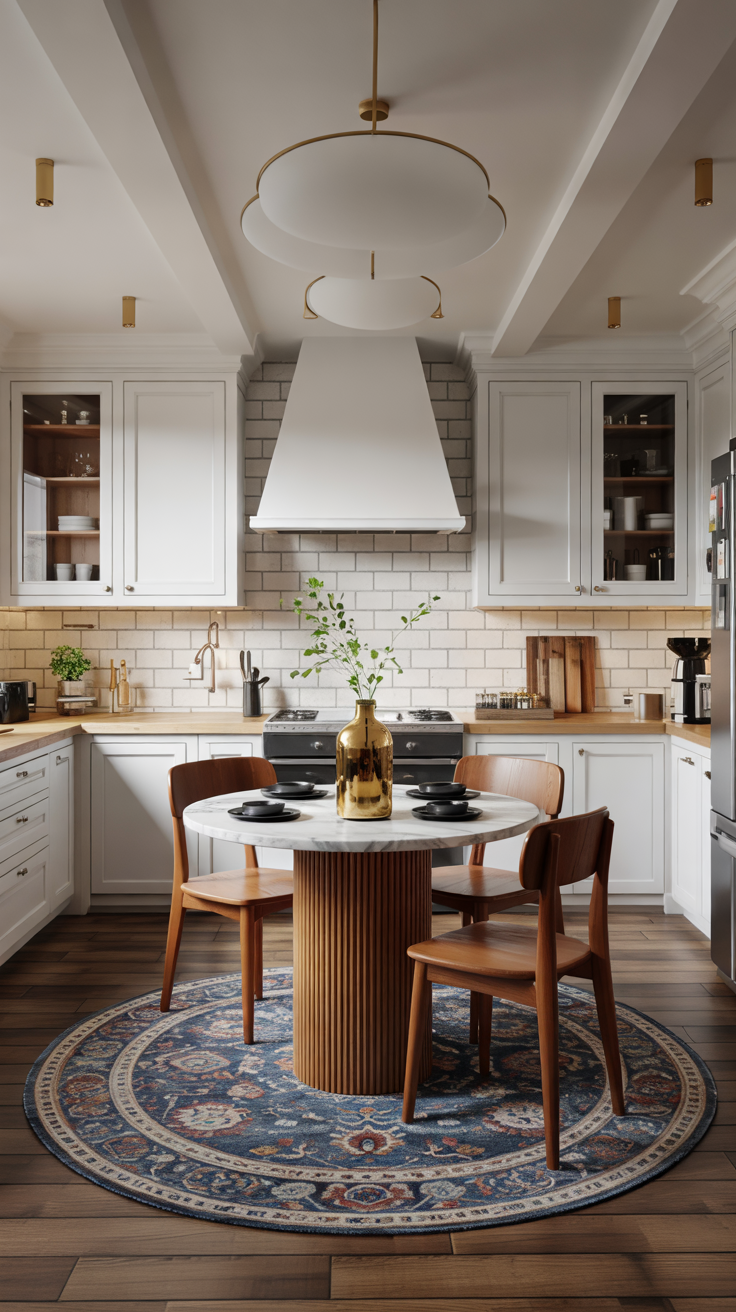
In terms of furniture and layout, I make sure the rug aligns with key elements such as the dining table or island. A round rug under a small table can soften the space, while a rectangular rug works better for linear layouts. Every piece should feel intentional and balanced.
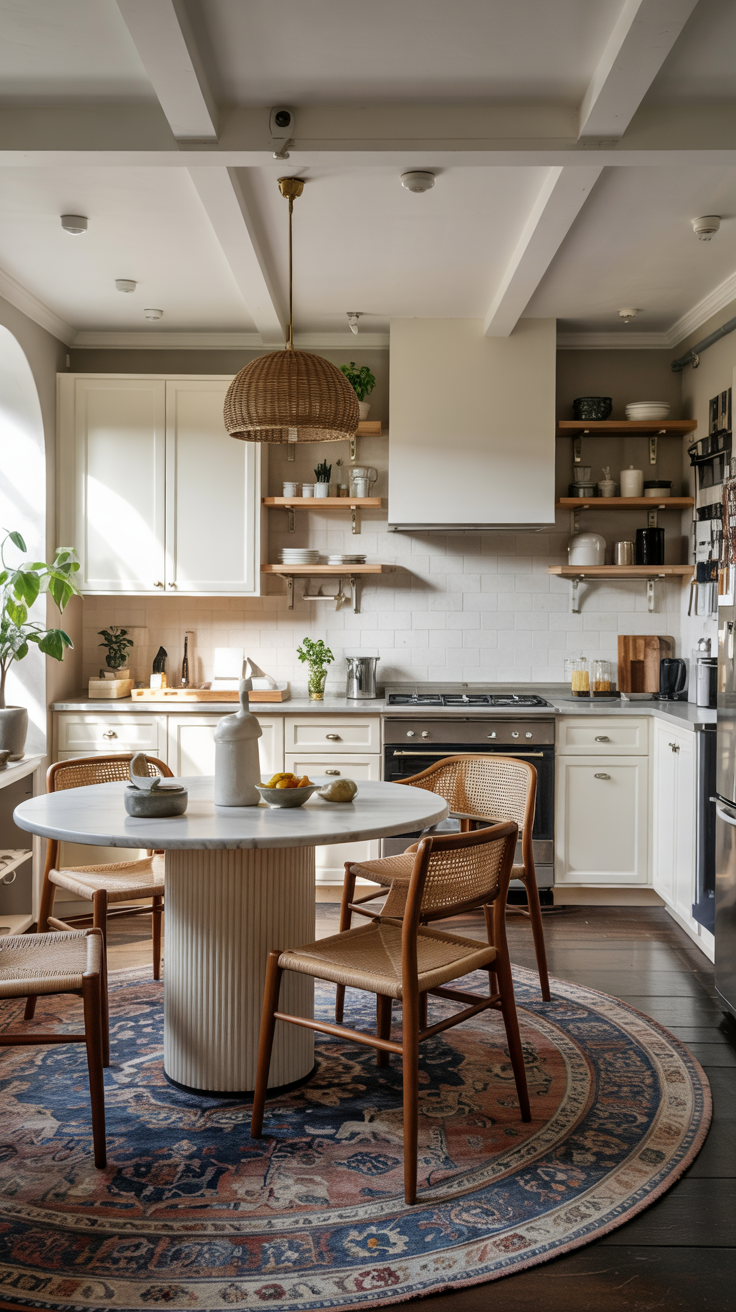
Personally, I believe that rugs are one of the easiest ways to refresh a kitchen without a full renovation. I often reference design insights from House Beautiful, which highlight how small decor updates can have a big visual impact.
To enhance this section, I would include more guidance on seasonal decor changes, such as incorporating Christmas-themed rugs for a festive touch.
Modern Kitchen Rugs That Balance Style and Minimalism
Minimalist kitchens benefit greatly from carefully selected rugs that add warmth without clutter. I prefer simple designs with subtle patterns or solid colors that complement the overall palette. Placement is usually strategic, focusing on high-use areas.
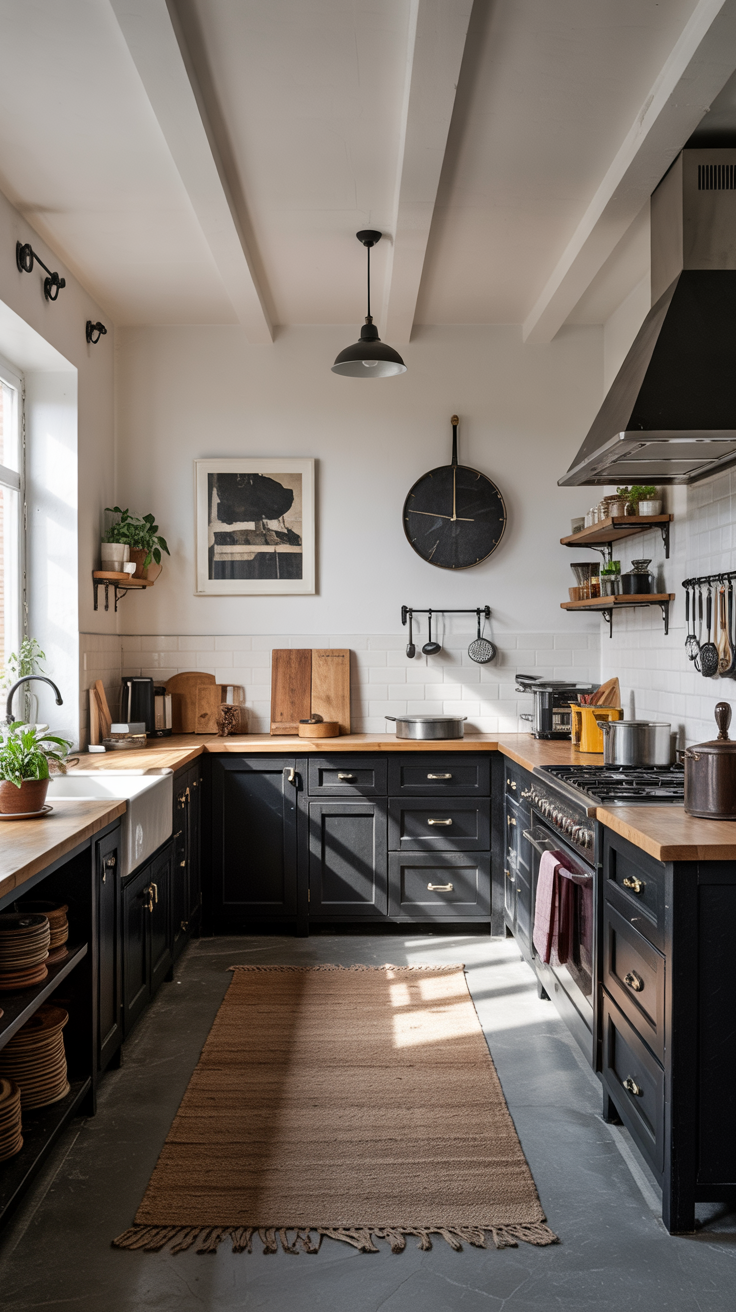
I often choose black, gray, or neutral-toned rugs for minimalist kitchens, as they maintain a clean and uncluttered look. Materials like flat-weave cotton or synthetic blends work well because they are both durable and easy to clean.
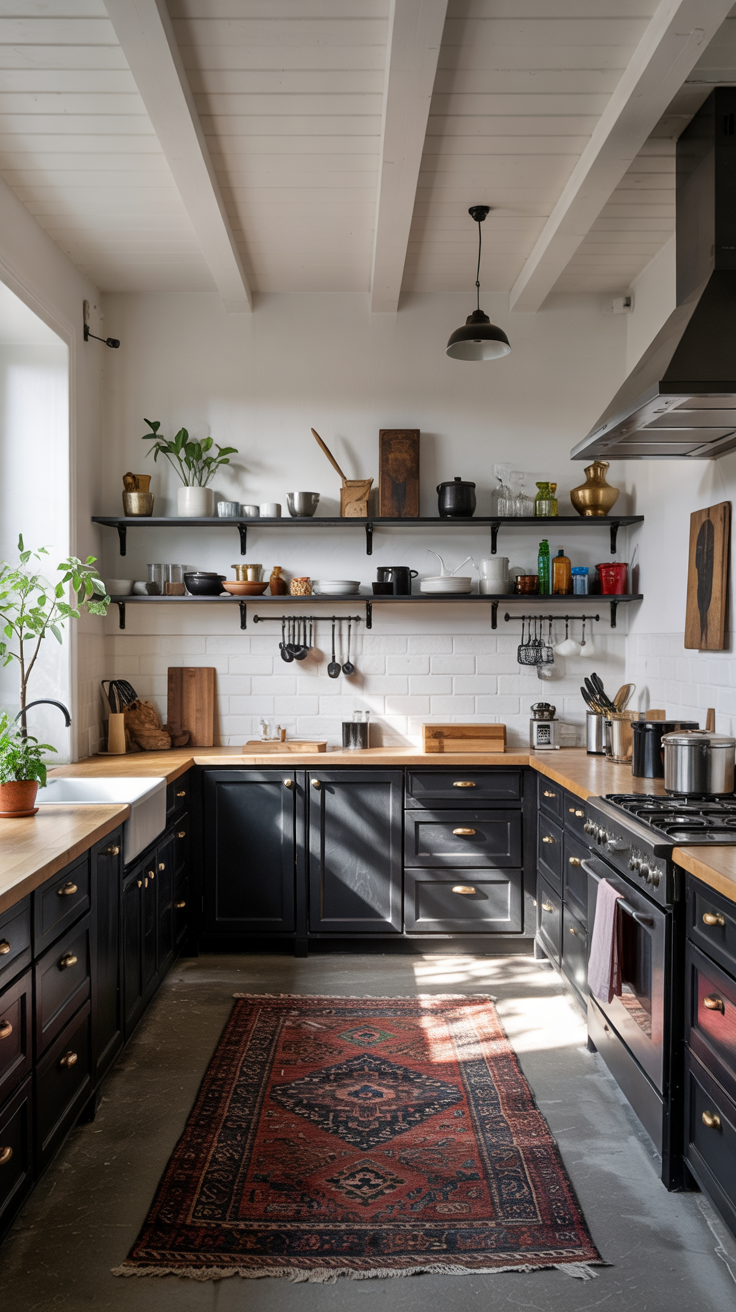
From my perspective, the key to balancing style and minimalism is restraint. I avoid overly decorative rugs and instead focus on texture and quality. This aligns with modern design principles that prioritize simplicity and function.
What could be added here is advice on integrating rugs with smart lighting to enhance texture and depth in minimalist interiors.
Washable Kitchen Rugs for Easy Maintenance and Everyday Use
In my projects, washable kitchen rugs are a must-have, especially in busy households. They allow for easy cleaning and long-term use without compromising on style. I typically recommend placing them in areas prone to spills, such as near sinks or cooking zones.
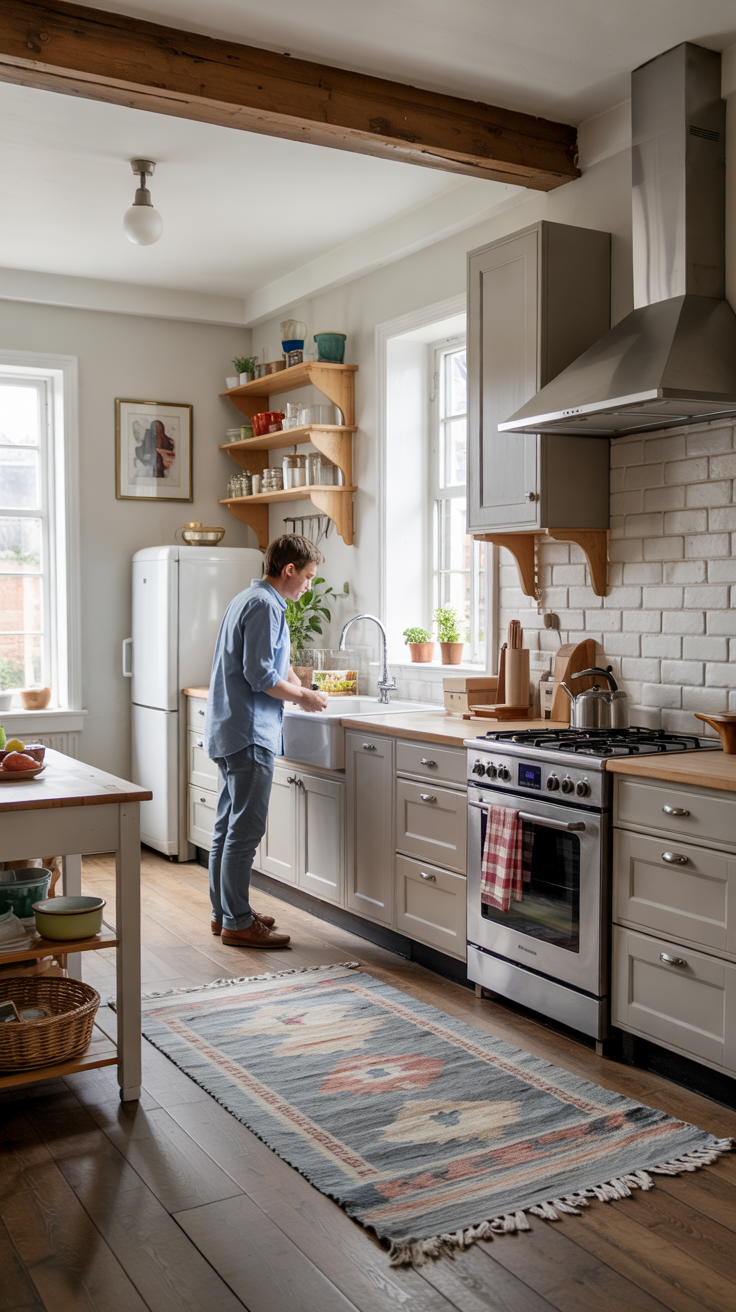
I select materials that can withstand frequent washing while maintaining their appearance. Synthetic blends and treated cotton are excellent options. Large rugs can also be practical if they are lightweight and easy to handle.
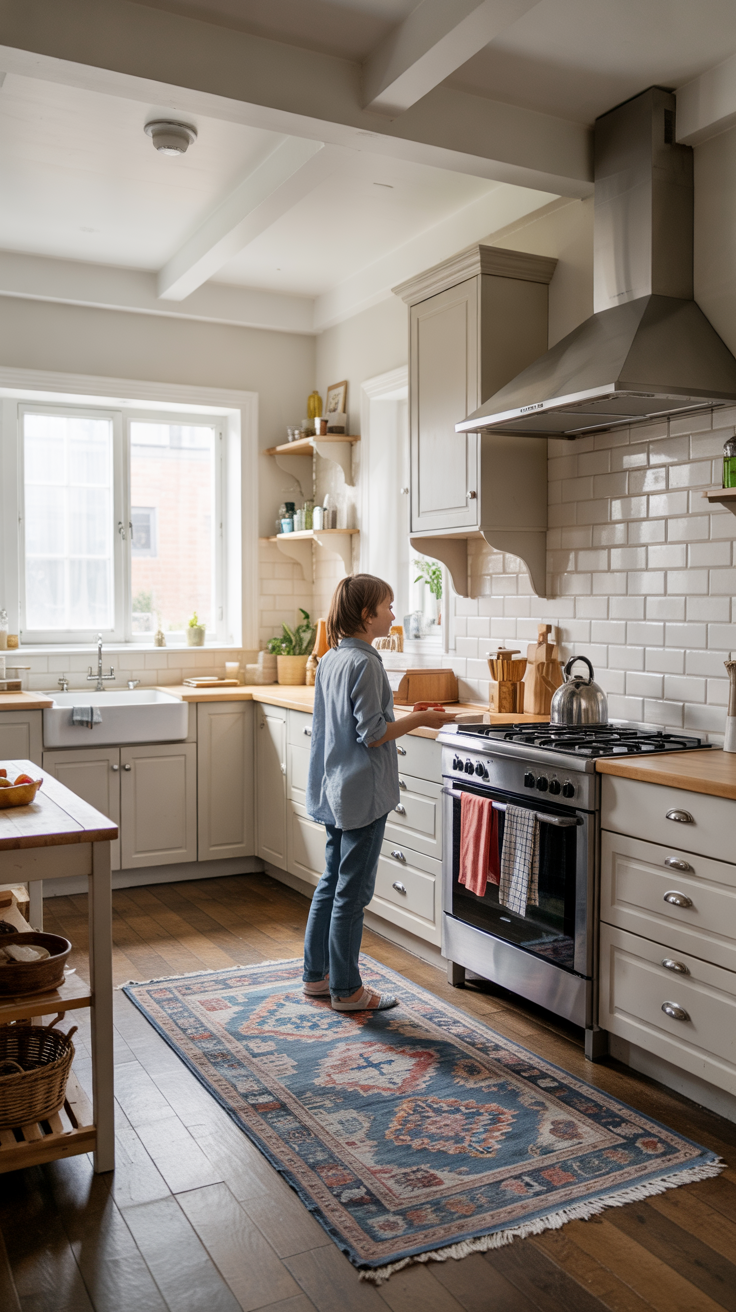
I have found that clients appreciate the convenience of washable rugs, particularly in homes with children or pets. Experts often highlight the importance of low-maintenance design, and I always incorporate that principle.
To improve this section, I would include specific care tips and washing frequency recommendations to extend the lifespan of these rugs.
Aesthetic Kitchen Rugs That Bring Personality Into Your Kitchen
Aesthetic kitchen rugs are all about expressing individuality. I like to use them to introduce unique colors, patterns, or textures that reflect the homeowner’s personality. Whether it is a soft pastel palette or a bold colorful design, the rug becomes a focal point.
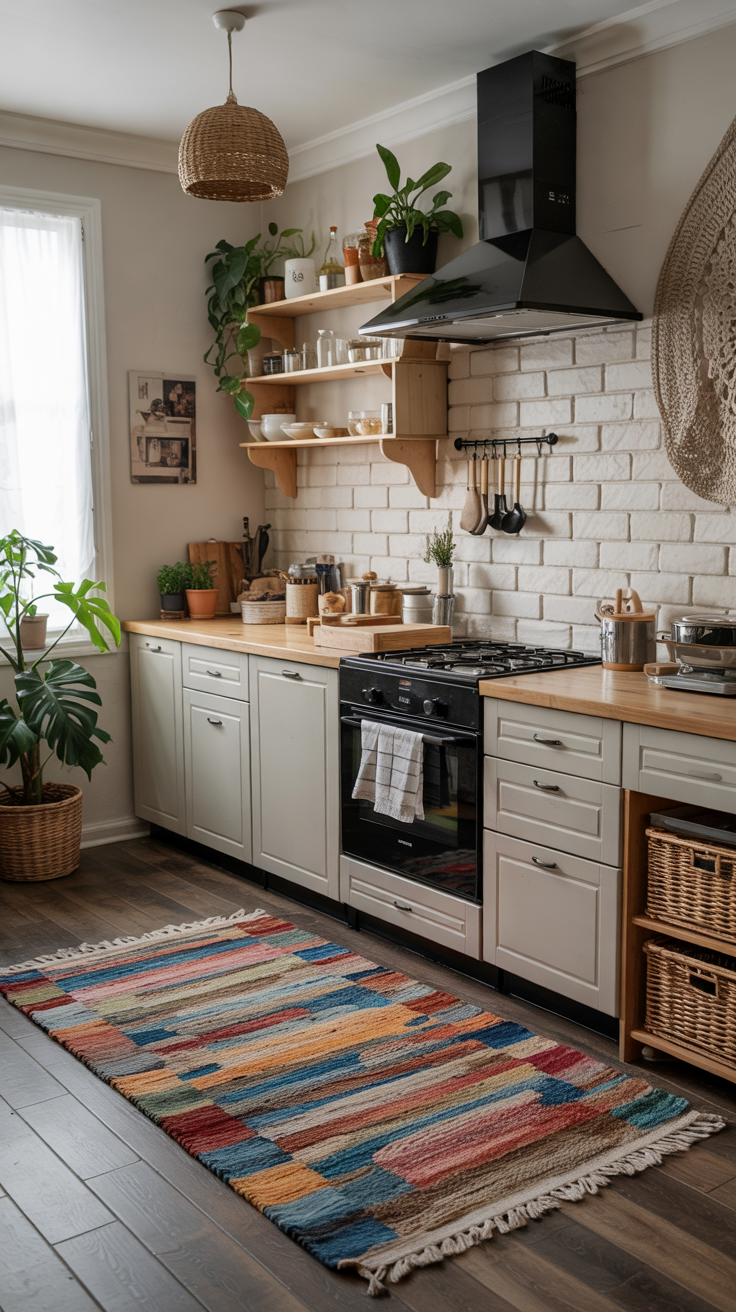
I often incorporate elements like crochet details, jute textures, or vibrant hues such as pink or green. These choices create a layered and visually interesting space. Placement under a table or along a walkway enhances both function and style.
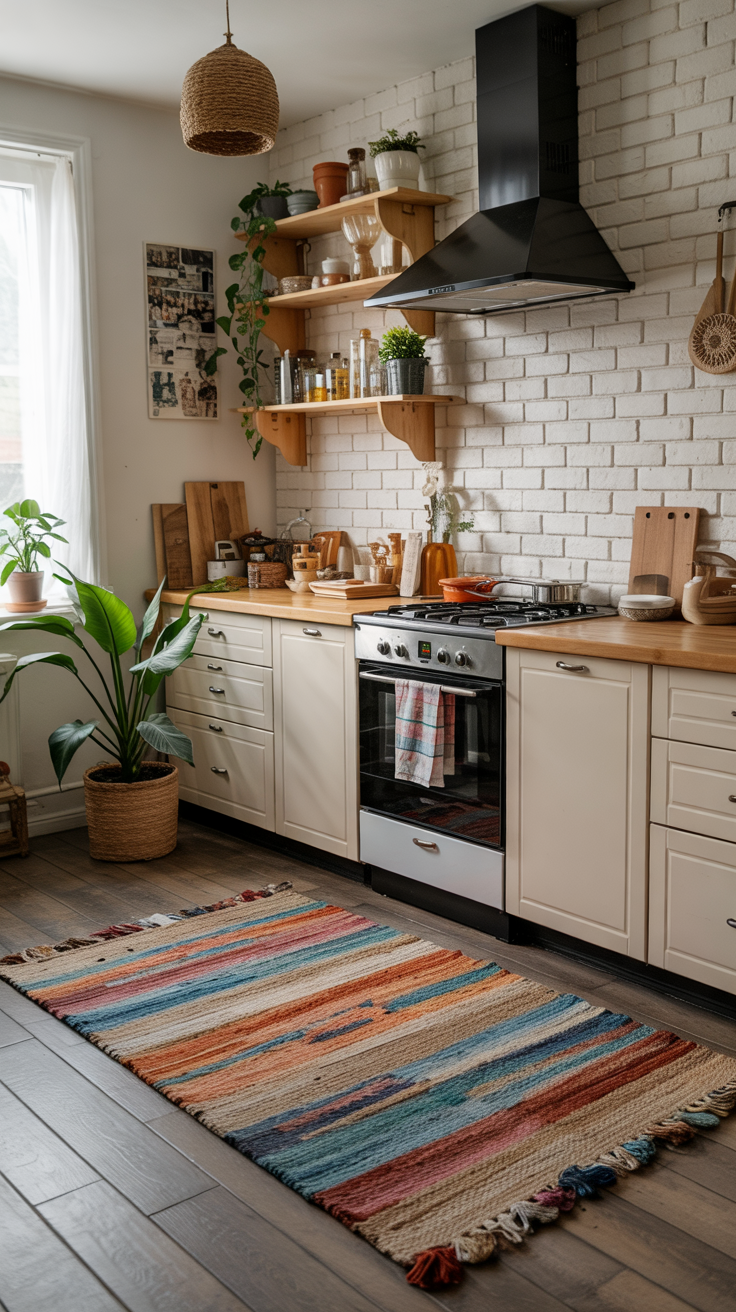
In my opinion, aesthetic rugs are where creativity truly shines. I enjoy experimenting with different combinations to achieve a look that feels both curated and comfortable.
What I would add here is more discussion on mixing multiple rug styles within one kitchen to create a dynamic and personalized layout.
Kitchen Runner Rugs for Long and Narrow Layouts
I often work with kitchens that have long and narrow layouts, and in these spaces, a kitchen rugs runner becomes an essential design element. It helps visually elongate the room while also guiding movement through the space. I typically place a long runner along the main walkway, ensuring it aligns with cabinetry and does not interfere with high-traffic zones.
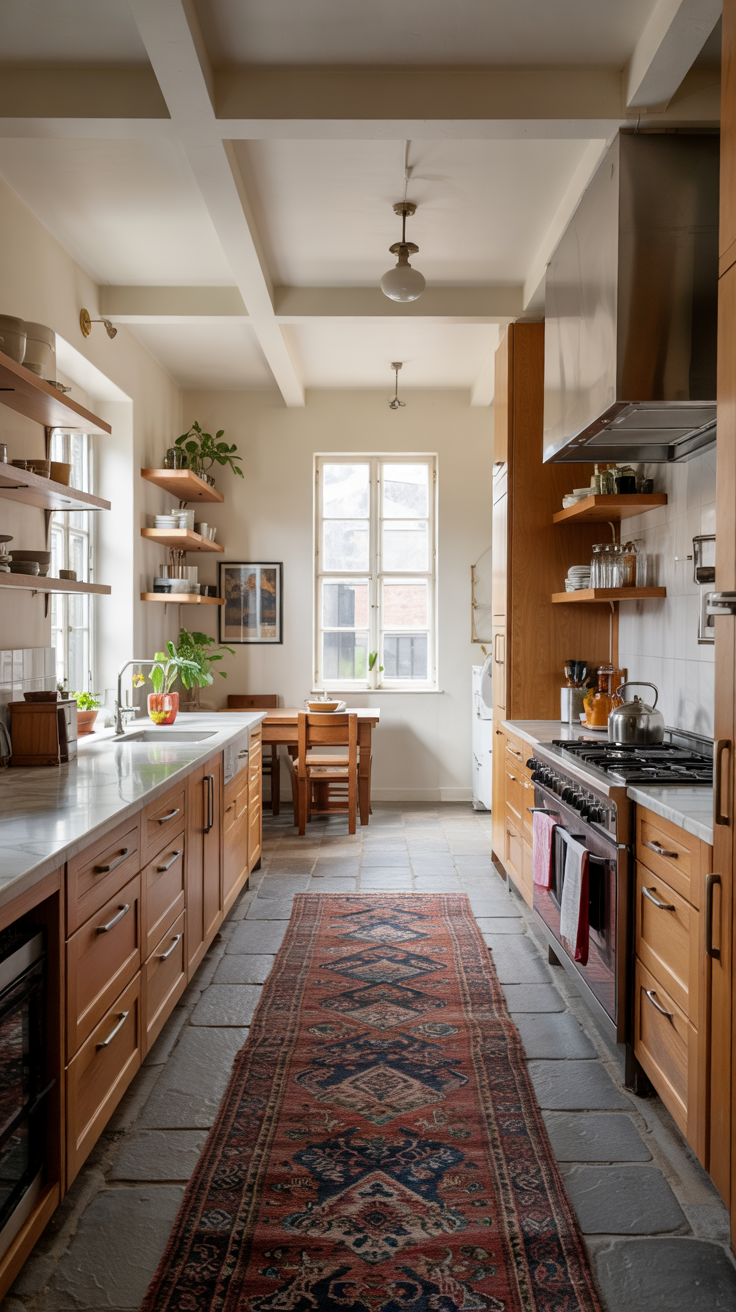
When selecting a runner, I focus on durability and proportion. A long, narrow rug with a low pile works best, especially in busy kitchens. I prefer designs that subtly complement the cabinetry, such as striped or lightly patterned runners in neutral or muted tones like green or blue. Anti-slip backing is also critical to maintain safety.
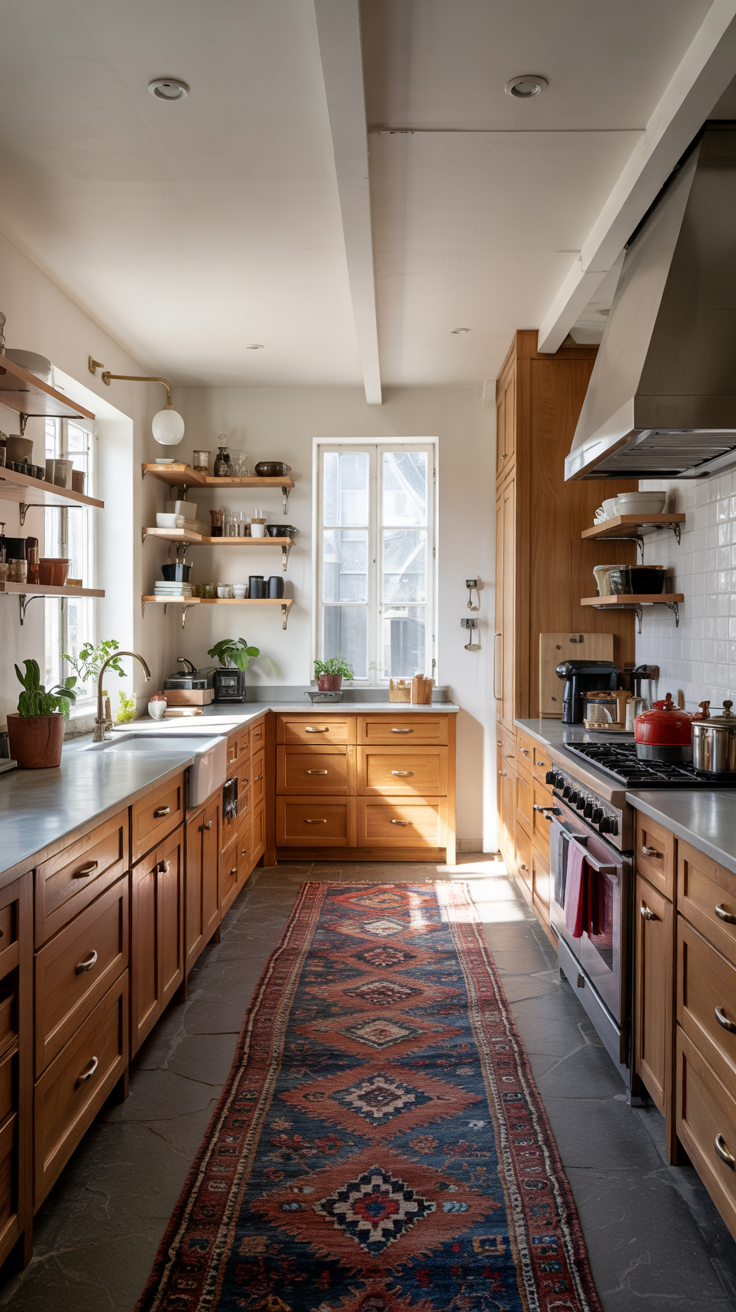
From my experience, runners are one of the easiest ways to add both comfort and structure to narrow kitchens. Designers often recommend using runners to visually define pathways, and I have seen how effective this can be in both small apartments and larger homes.
What I would add here is a more detailed explanation of sizing rules, especially how much space to leave between the runner and cabinetry for a balanced placement layout.
Best Kitchen Rugs Under Table for Dining Comfort and Style
In kitchens that include a dining area, I always consider how kitchen rugs under table can enhance both comfort and visual cohesion. A well-chosen rug anchors the table and creates a defined dining zone within the kitchen. I usually center the rug so that it extends beyond the table on all sides.
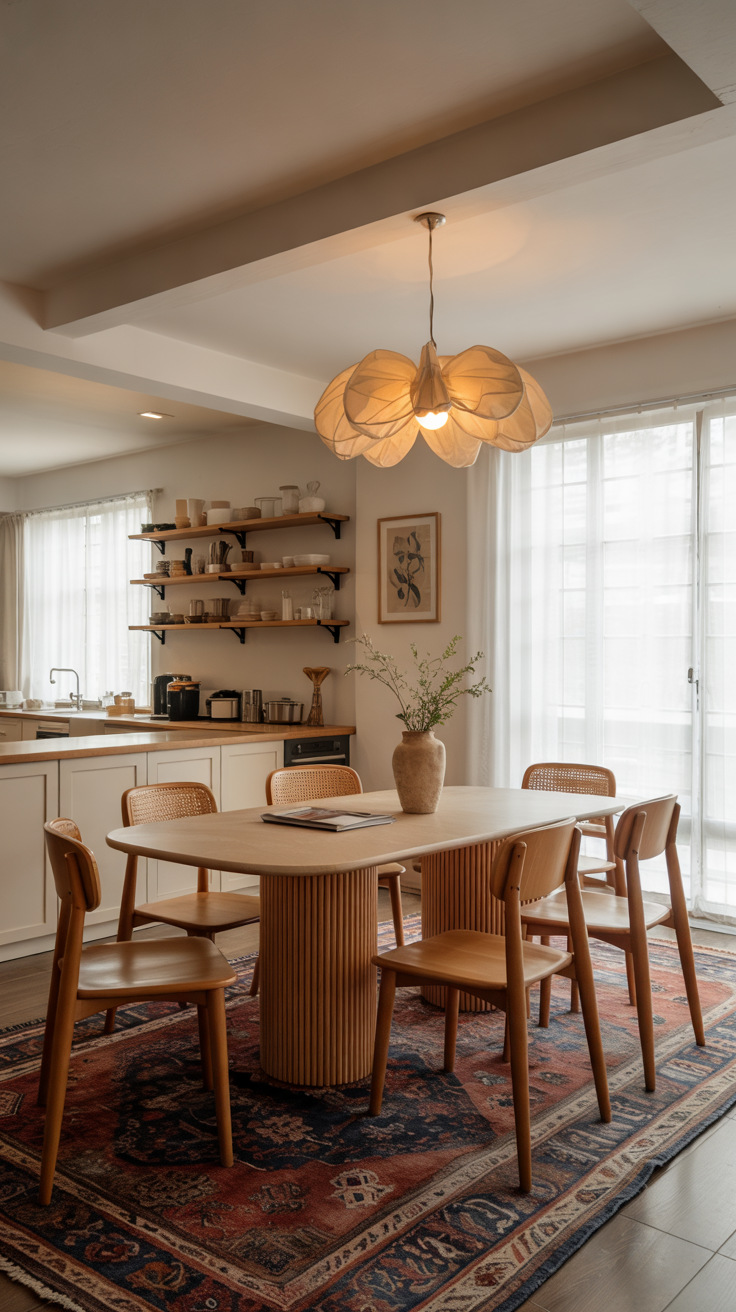
I recommend using larger rugs that allow chairs to move freely without catching on the edges. Round rugs work beautifully with circular tables, while rectangular rugs suit traditional dining setups. Materials should be easy to clean, especially in areas prone to spills.
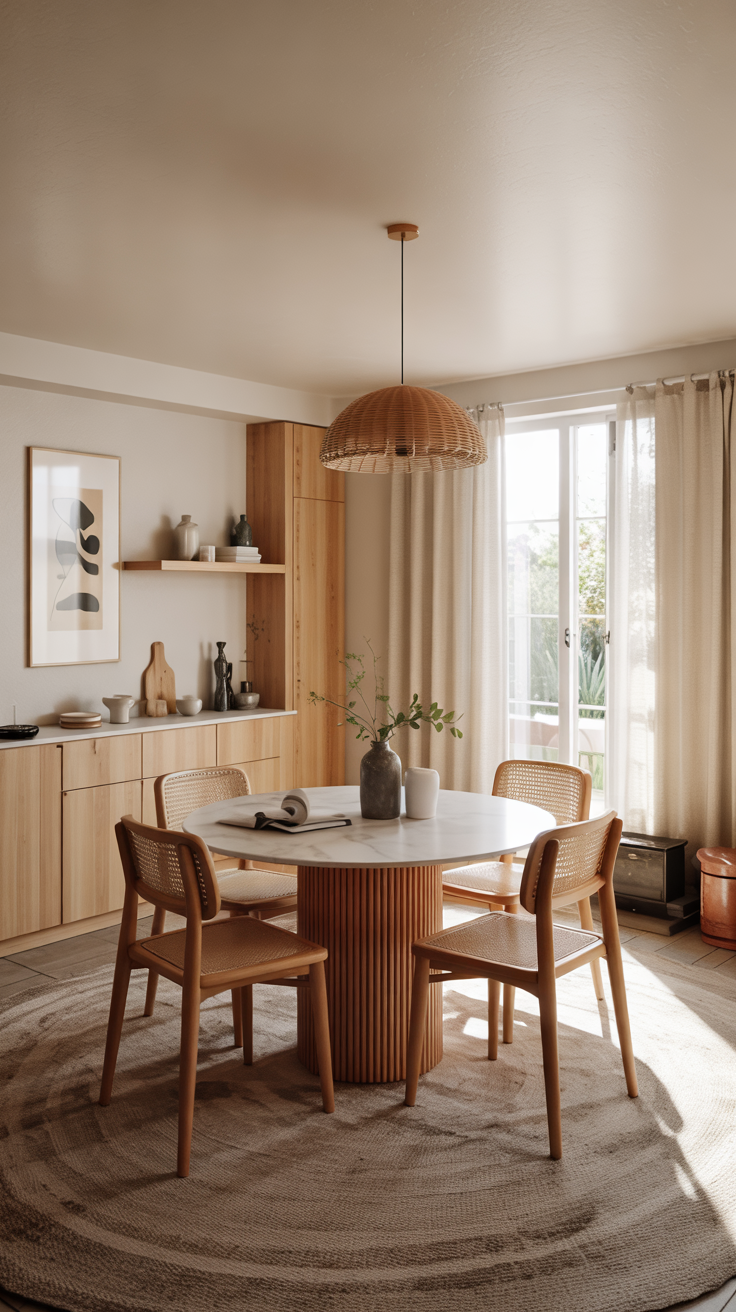
Personally, I find that rugs under tables make the kitchen feel more complete and intentional. Many interior design publications highlight the importance of defining zones in open-plan spaces, and I consistently apply that principle.
To improve this section, I would include advice on choosing patterns that can hide stains and wear, which is especially useful for families.
Kitchen Rugs and Mats Ideas for Smart and Functional Design
When planning a kitchen layout, I always integrate kitchen rugs and mats ideas that prioritize both function and aesthetics. Strategic placement near work zones ensures comfort while maintaining a clean and organized look. I often use multiple mats instead of one large rug to improve flexibility.
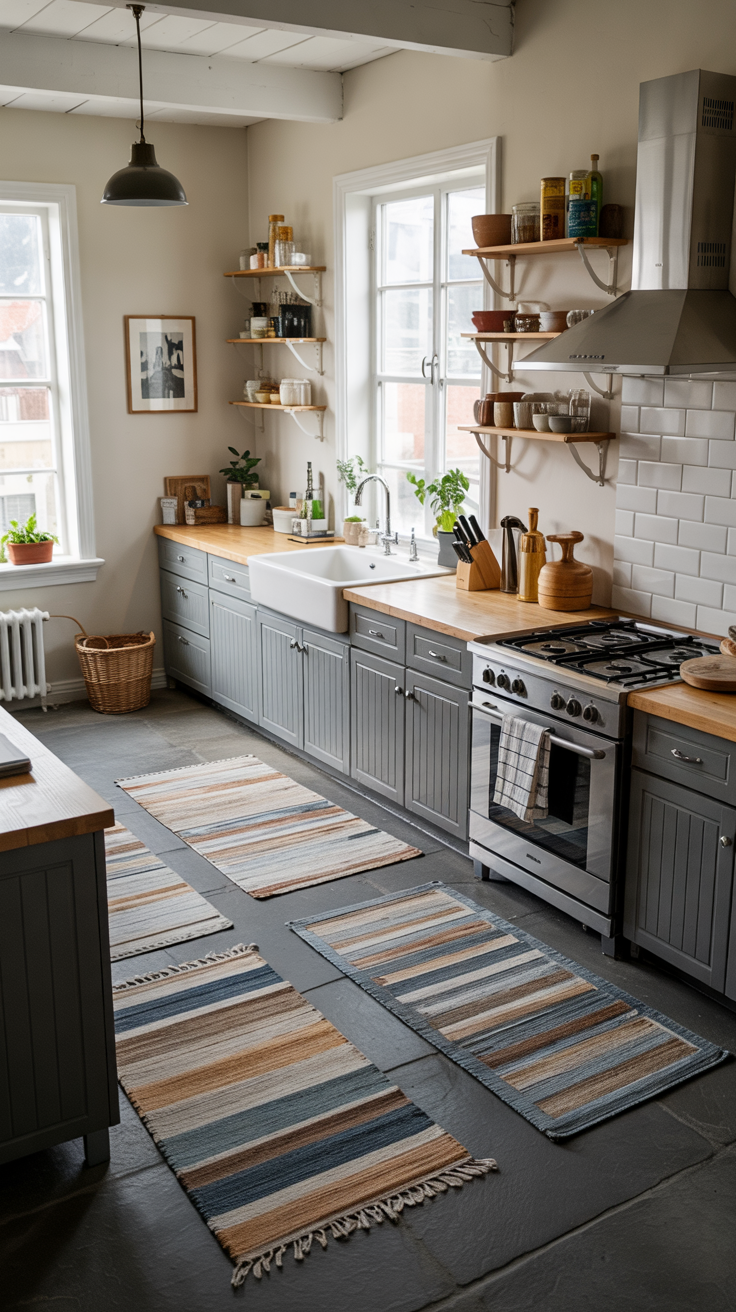
I typically combine different rug types, such as a runner for the main walkway and smaller mats near the sink or stove. This layered approach allows each area to serve a specific purpose while maintaining visual harmony. Materials should be washable and durable.
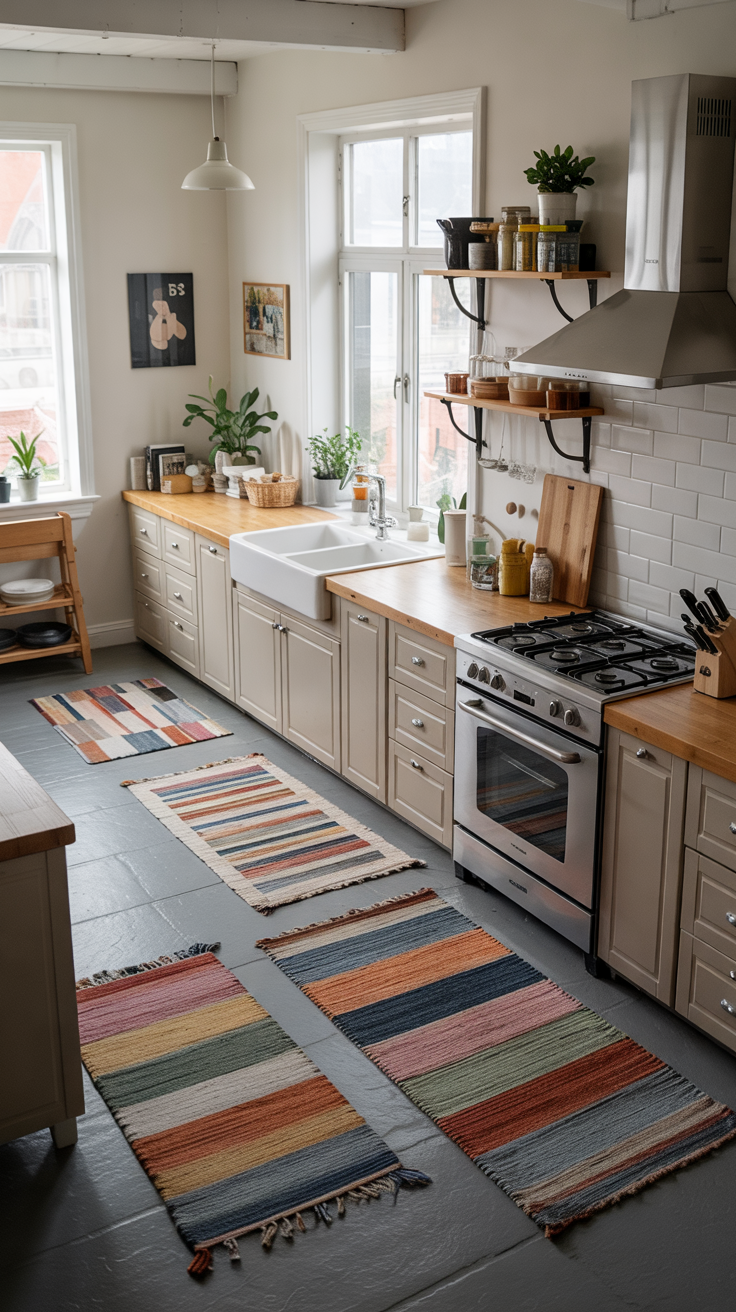
In my opinion, a smart rug layout can significantly improve how a kitchen feels and functions. I have seen how thoughtful placement can reduce fatigue and enhance workflow, making everyday tasks more enjoyable.
What I would add here is a visual guide or layout examples to help readers better understand how to combine multiple rugs effectively.
Farmhouse Kitchen Rugs That Add Warmth and Rustic Charm
Farmhouse kitchens benefit greatly from rugs that emphasize warmth and texture. I often use kitchen rugs farmhouse style to create a cozy and inviting atmosphere. These rugs typically feature natural tones, subtle patterns, and materials like jute or cotton.
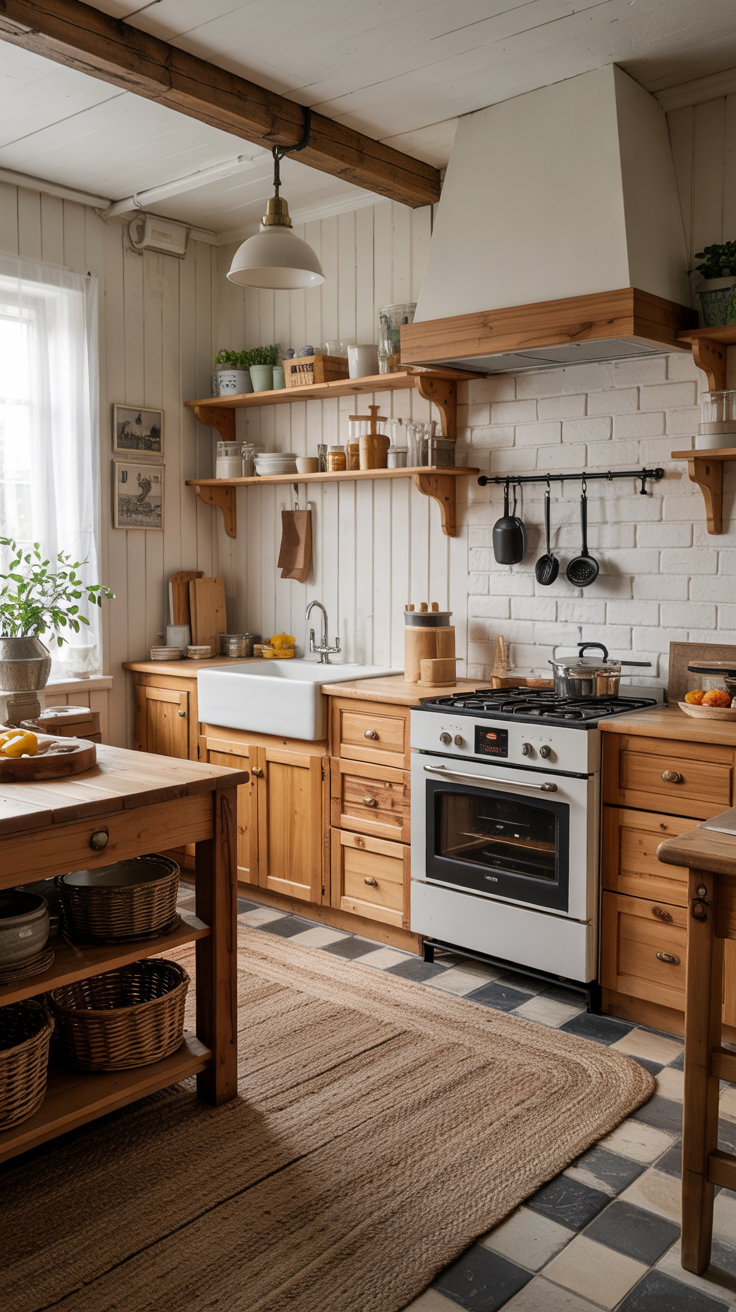
I like to pair farmhouse rugs with wooden furniture, open shelving, and vintage-inspired decor. A slightly distressed rug or a classic checkered pattern can reinforce the rustic aesthetic while still feeling modern. Placement near the sink or under a table works particularly well.
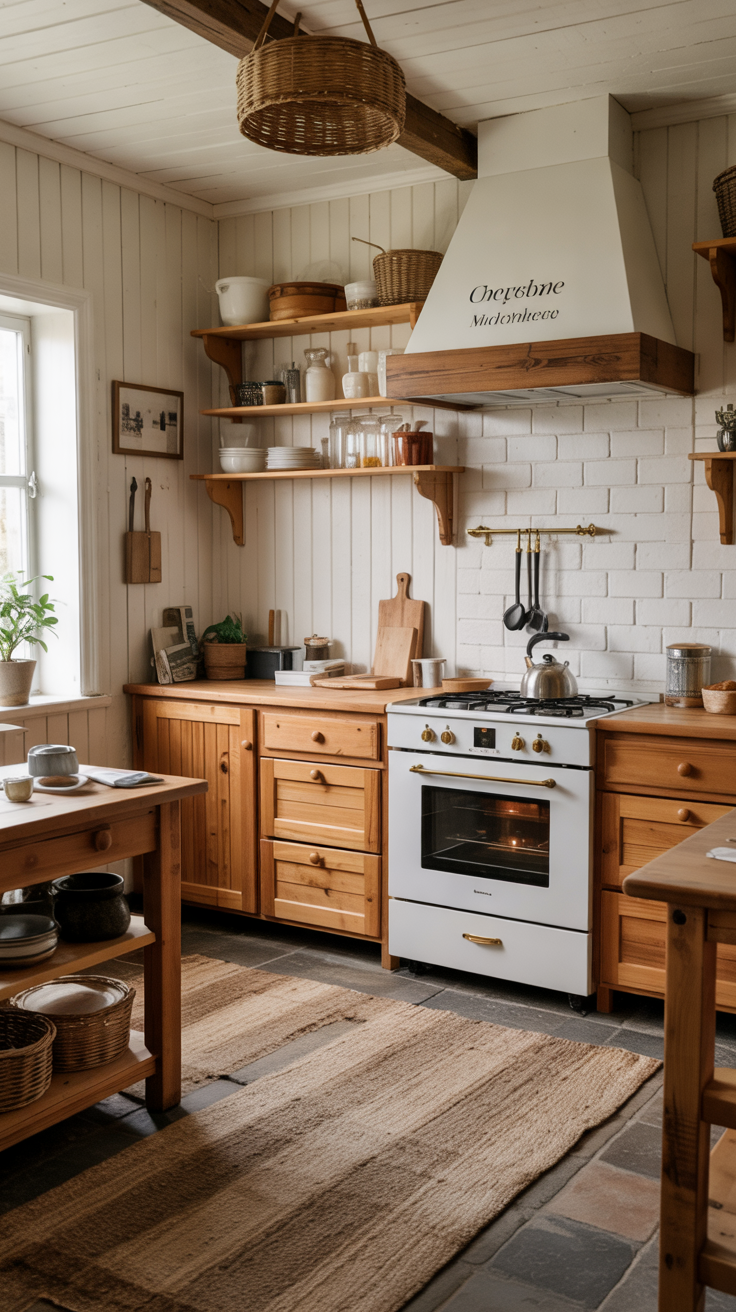
From my experience, farmhouse rugs bring a sense of comfort that is hard to achieve with other styles. Many designers highlight the importance of texture in rustic interiors, and I always make it a priority.
To enhance this section, I would include tips on mixing farmhouse rugs with modern appliances to maintain a balanced look.
Choosing the Perfect Mats for Busy Kitchen Areas
In high-traffic kitchens, selecting the right mats is crucial. I focus on areas where people spend the most time standing, such as near the sink, stove, or prep areas. Mats in these zones should provide cushioning and support.
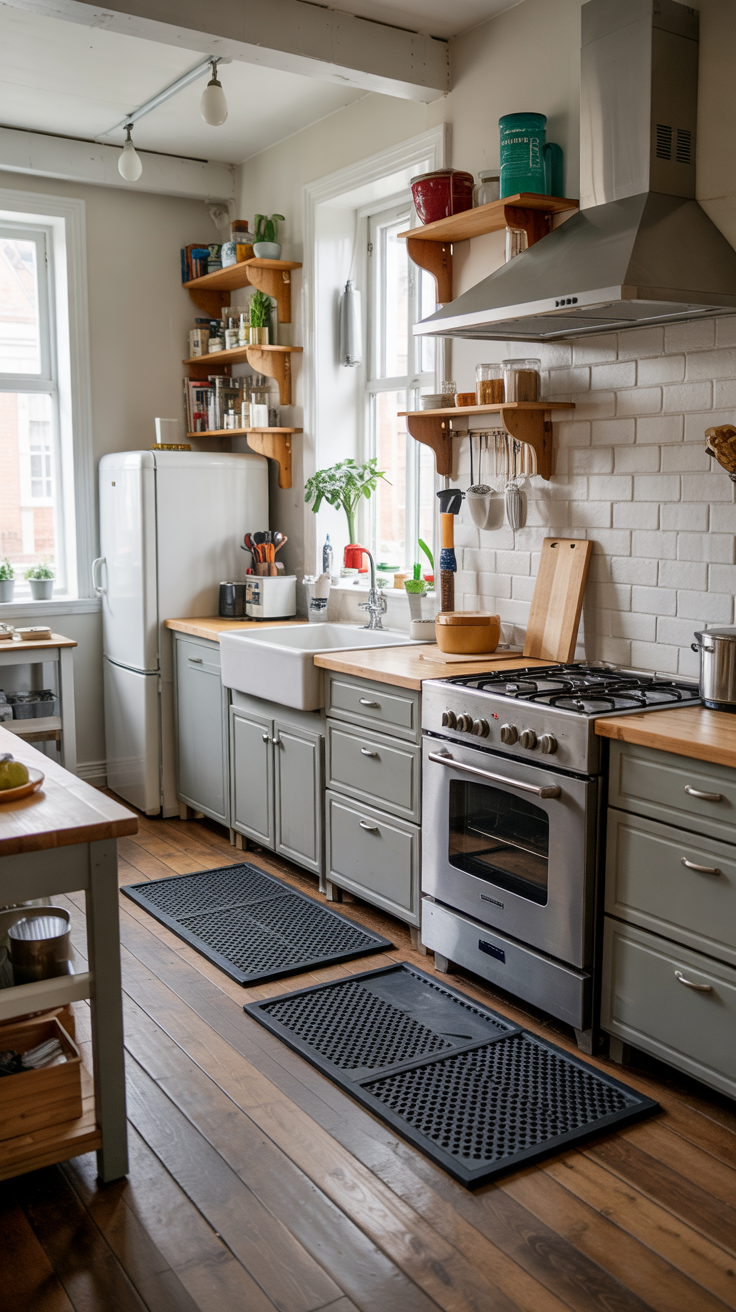
I prefer mats with anti-fatigue properties and non-slip backing. Materials should be easy to clean and resistant to wear. Neutral or dark colors like black or gray are practical choices, as they hide stains and maintain a clean appearance.
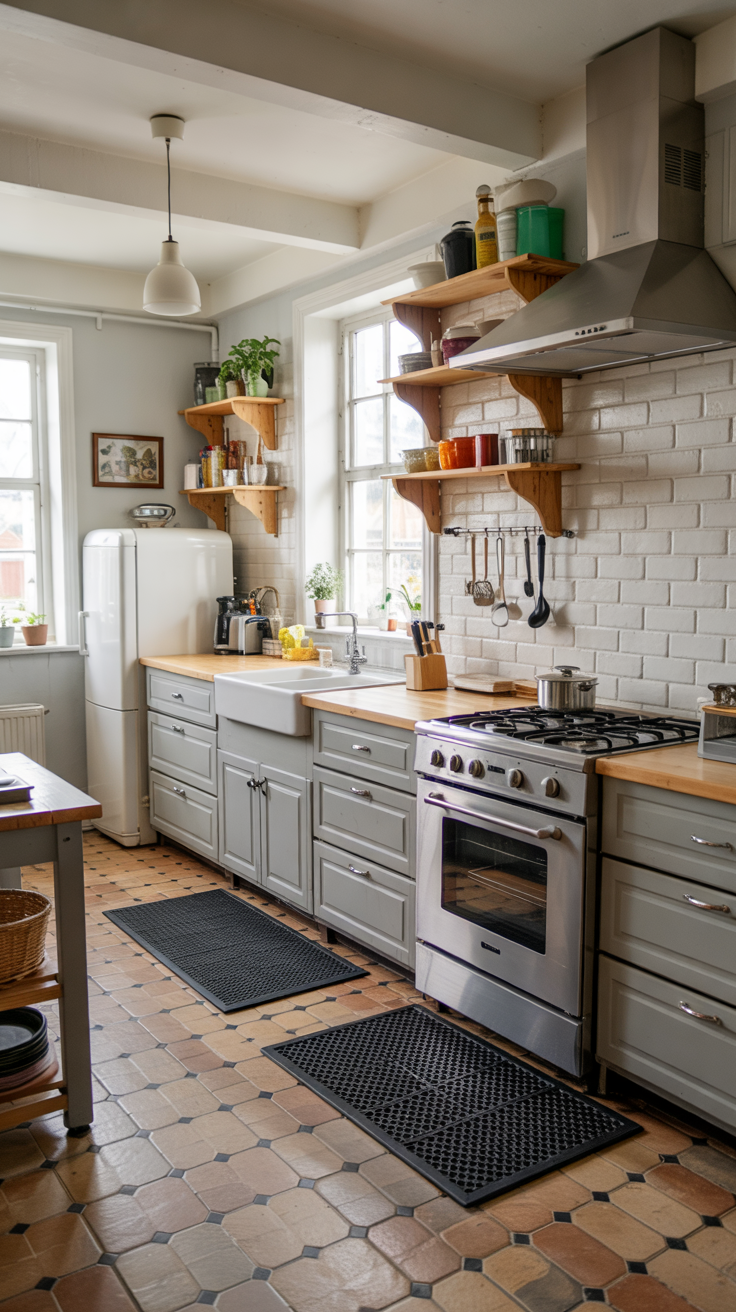
Personally, I consider mats an investment in comfort. Many professionals emphasize ergonomics in kitchen design, and I always ensure that mats contribute to a healthier and more comfortable environment.
What is missing here is a breakdown of different mat thickness levels and how they affect comfort and usability.
Runner Rugs vs Area Rugs – What Works Best in 2026 Kitchens
Choosing between runner rugs and area rugs depends largely on the kitchen layout. I evaluate the space carefully before deciding which option will work best. Runners are ideal for narrow kitchens, while area rugs suit open layouts.
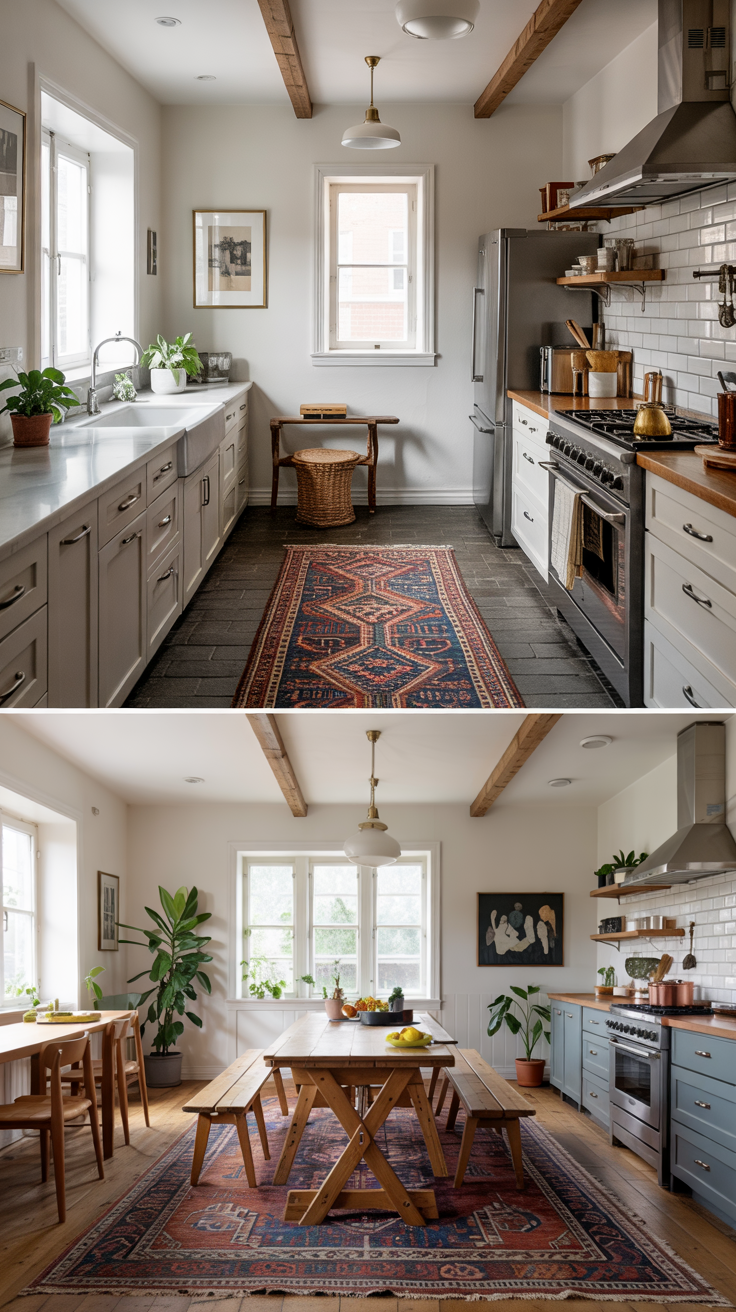
I often use runners to guide movement and area rugs to define zones. For example, a large rug under a table can create a dining area, while a runner can connect different parts of the kitchen. The key is to maintain balance and avoid overcrowding.
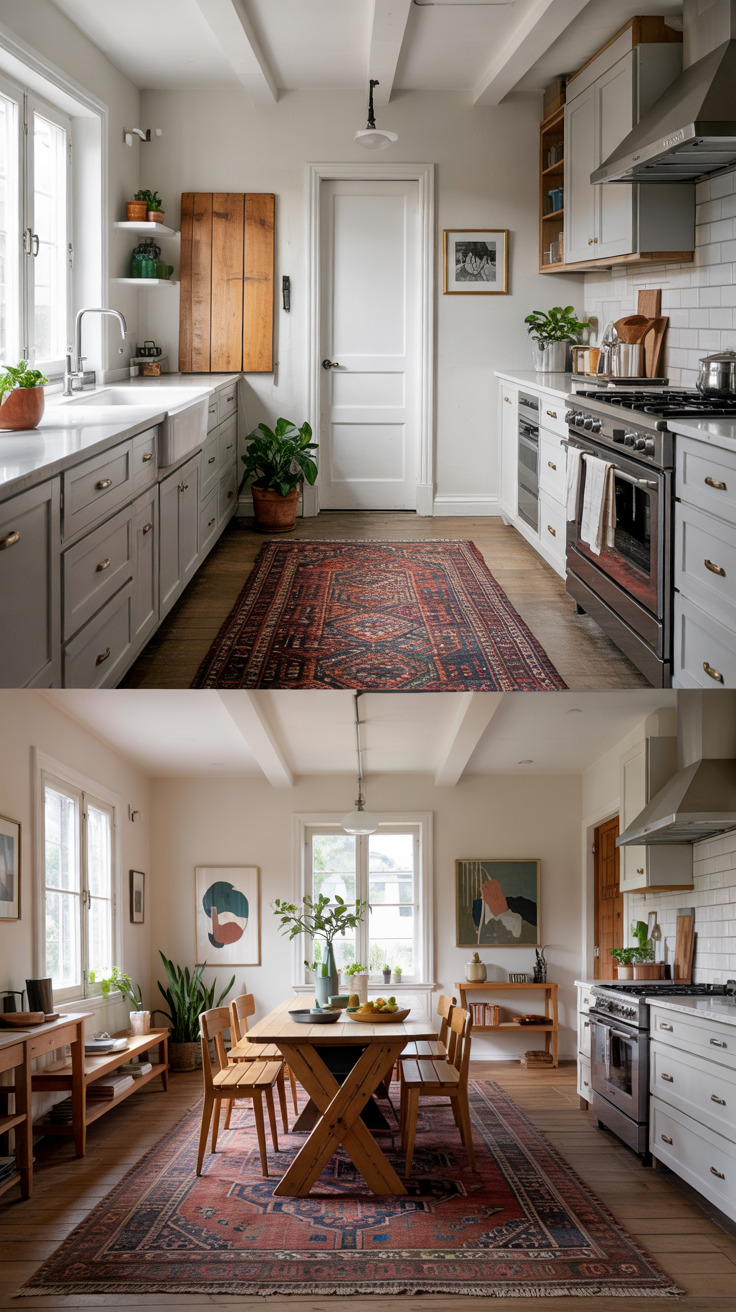
In my experience, both options have their advantages, and the best choice depends on how the kitchen is used. Designers frequently recommend adapting rug choices to the specific needs of the space, and I fully support that approach.
To improve this section, I would include a comparison chart outlining the pros and cons of each option for different kitchen types.
Colorful Kitchen Rugs That Add Energy and Character
Colorful kitchen rugs are one of my favorite ways to bring life into a space. Whether it is a bold red, soft pink, or vibrant blue rug, color can instantly transform the atmosphere. I often use colorful rugs to create contrast in neutral kitchens.
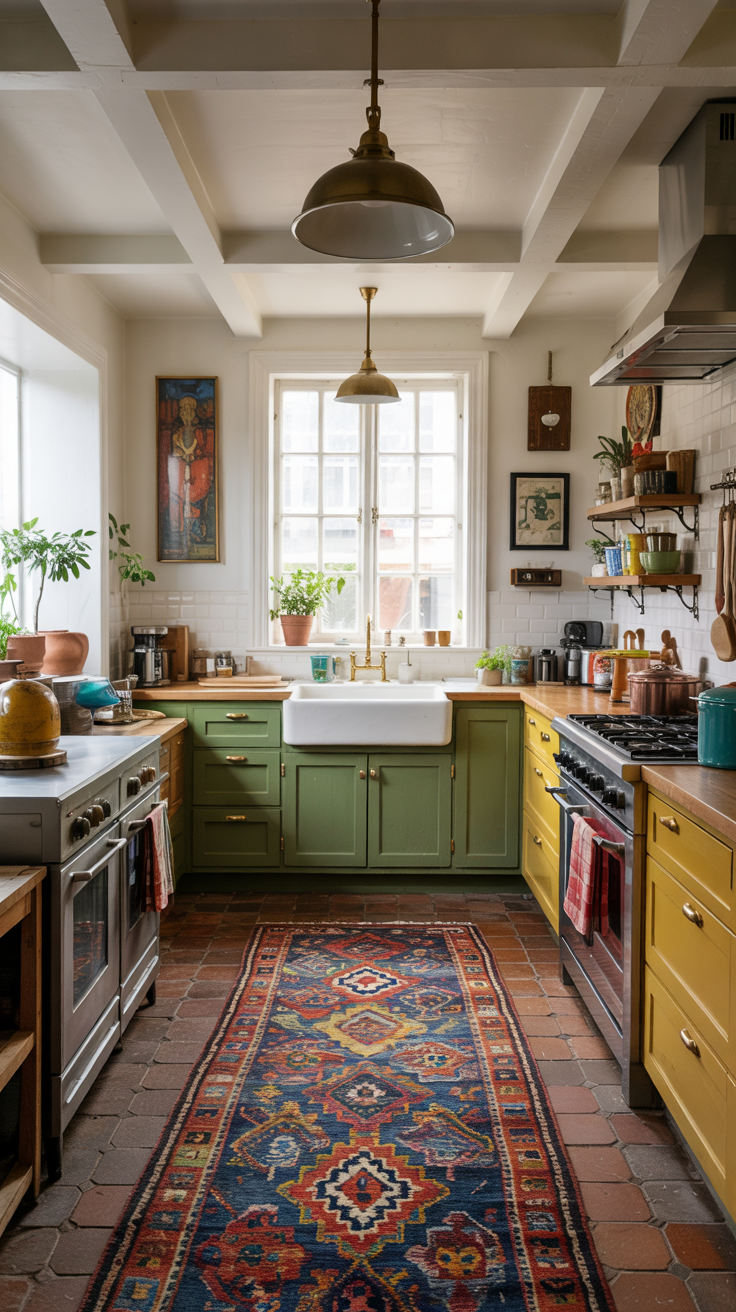
I like to coordinate rug colors with small decor elements such as cushions, wall art, or kitchen accessories. This creates a cohesive look without overwhelming the space. Patterns like checkered or geometric designs can add even more visual interest.
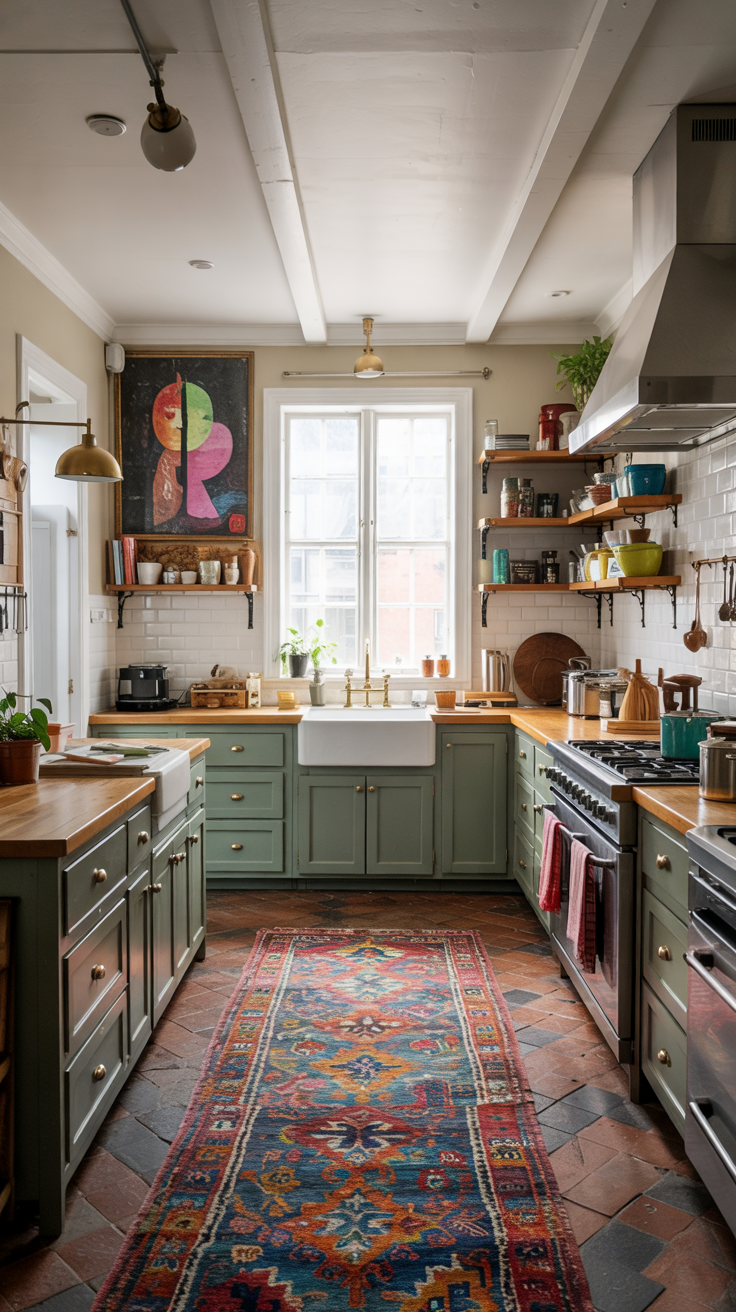
In my opinion, colorful rugs are perfect for homeowners who want to express personality through design. I enjoy experimenting with different color combinations to achieve a unique and dynamic look.
What I would add here is guidance on balancing bold colors with neutral elements to prevent the space from feeling too busy.
Kitchen Rug Placement Tips for a Balanced and Practical Layout
I always start with placement because even the most beautiful kitchen rugs aesthetic will fail if positioned incorrectly. In 2026, the focus is on smart placement layout that enhances workflow. I place kitchen rugs and mats near high-traffic zones such as the sink, stove, and prep areas, ensuring comfort underfoot while maintaining a balanced visual composition.
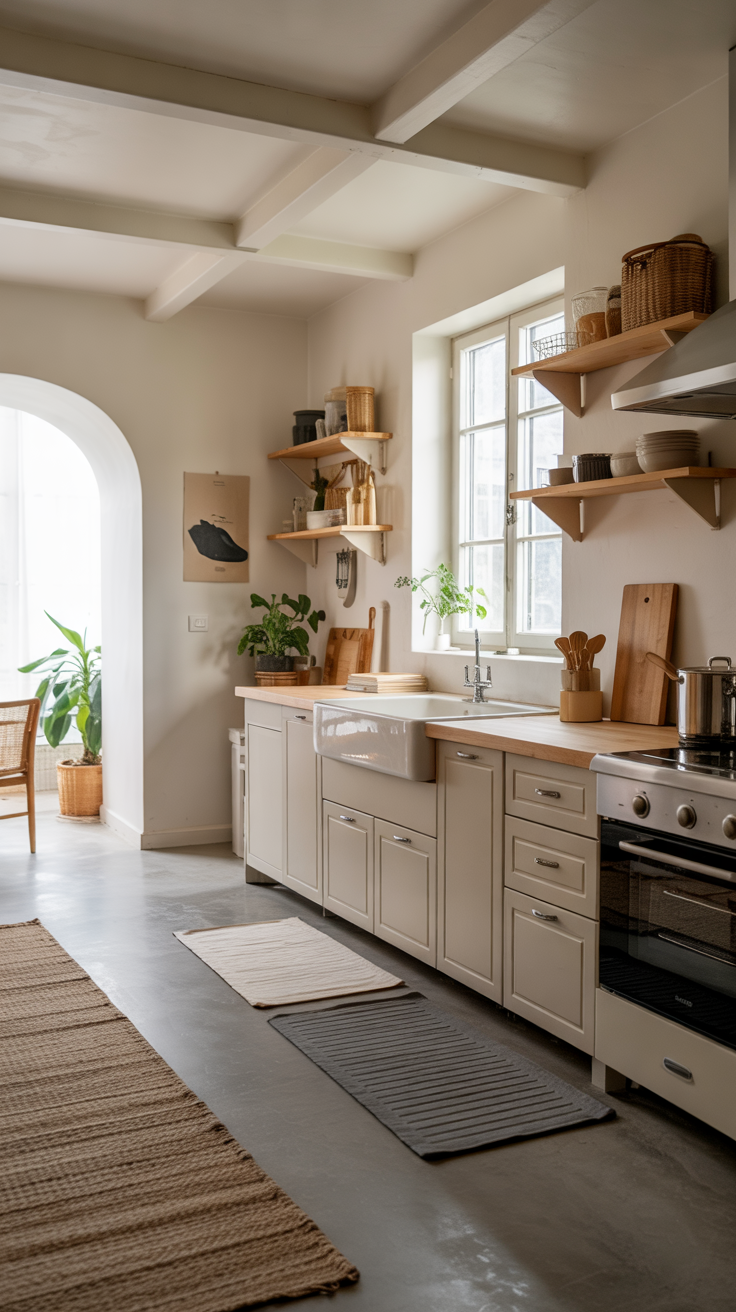
From my experience, a well-thought-out placement includes a runner along the main walkway, a smaller mat near the sink, and sometimes a rug under table zones. I prefer washable materials because kitchens are prone to spills. The combination of practical placement and durable kitchen rugs washable options ensures longevity without sacrificing style.
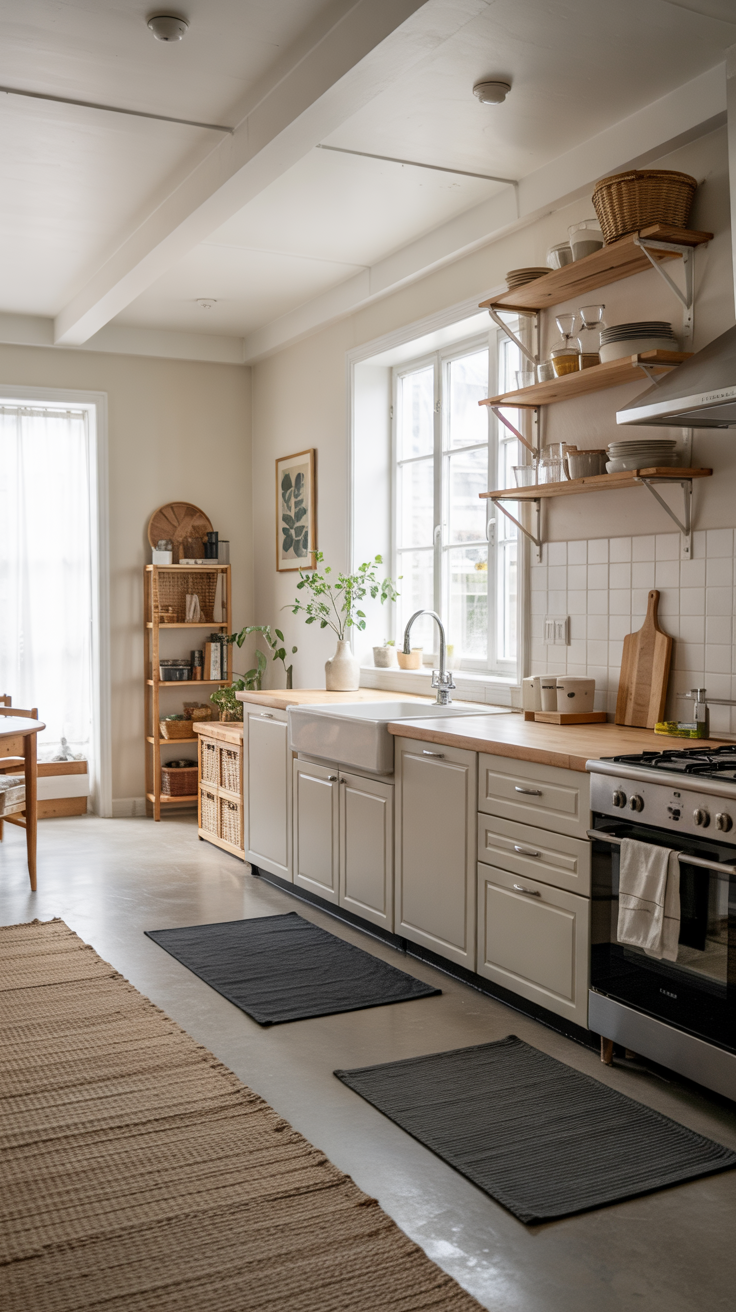
Personally, I find that following guidance similar to recommendations from design publications like Architectural Digest helps maintain both aesthetics and usability. I always test placement by walking through the space, ensuring the rugs do not interfere with movement or cabinetry.
What I would add here is a clearer zoning strategy based on kitchen size, especially for small kitchens where overlapping rugs can create clutter instead of harmony.
Smart Kitchen Rug Placement Layout Ideas for Any Space
When designing kitchen rugs ideas layout for different kitchen sizes, I adapt the arrangement to the space. In smaller kitchens, I use a single long runner, while in open layouts I combine large rugs with smaller mats to define functional zones. This approach creates a cohesive yet dynamic environment.
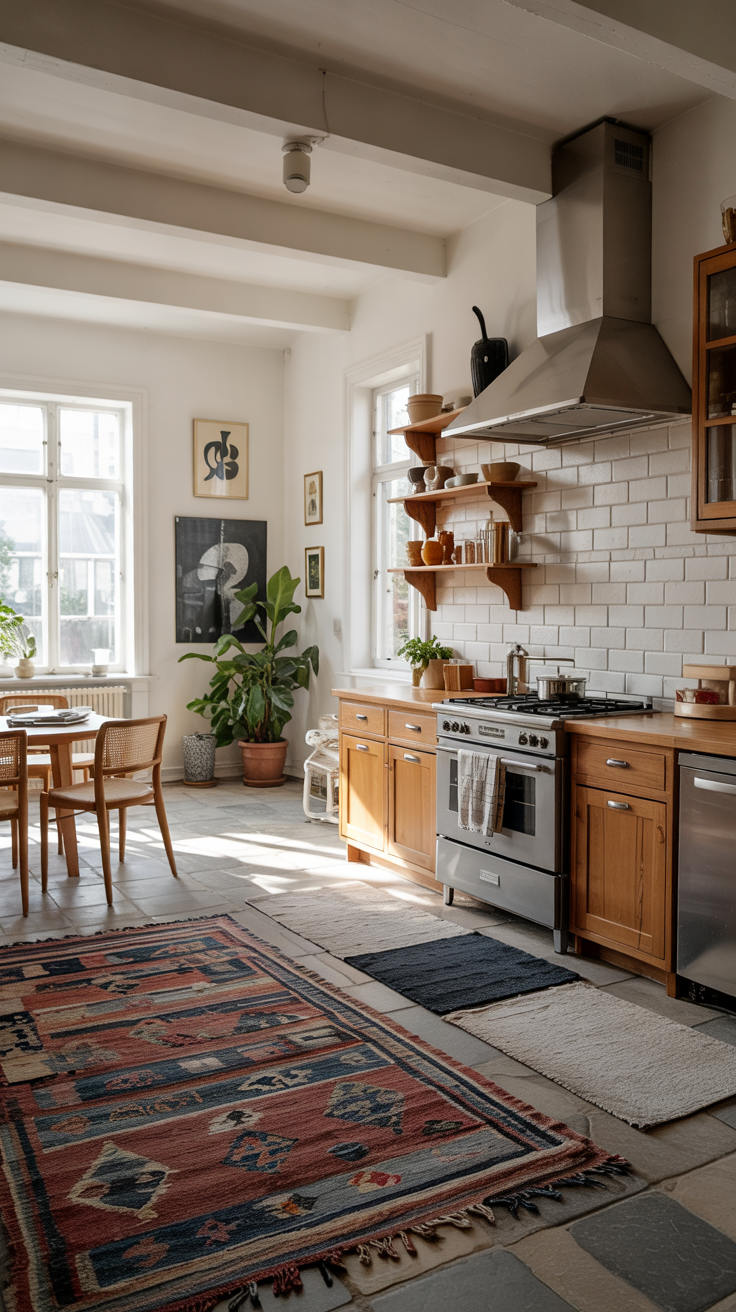
I carefully select kitchen rugs modern designs that align with cabinetry and flooring. For example, in minimalist kitchens, I prefer neutral tones like black, blue, or subtle checkered patterns. In more expressive interiors, colorful rugs or even pink accents can add personality without overwhelming the space.
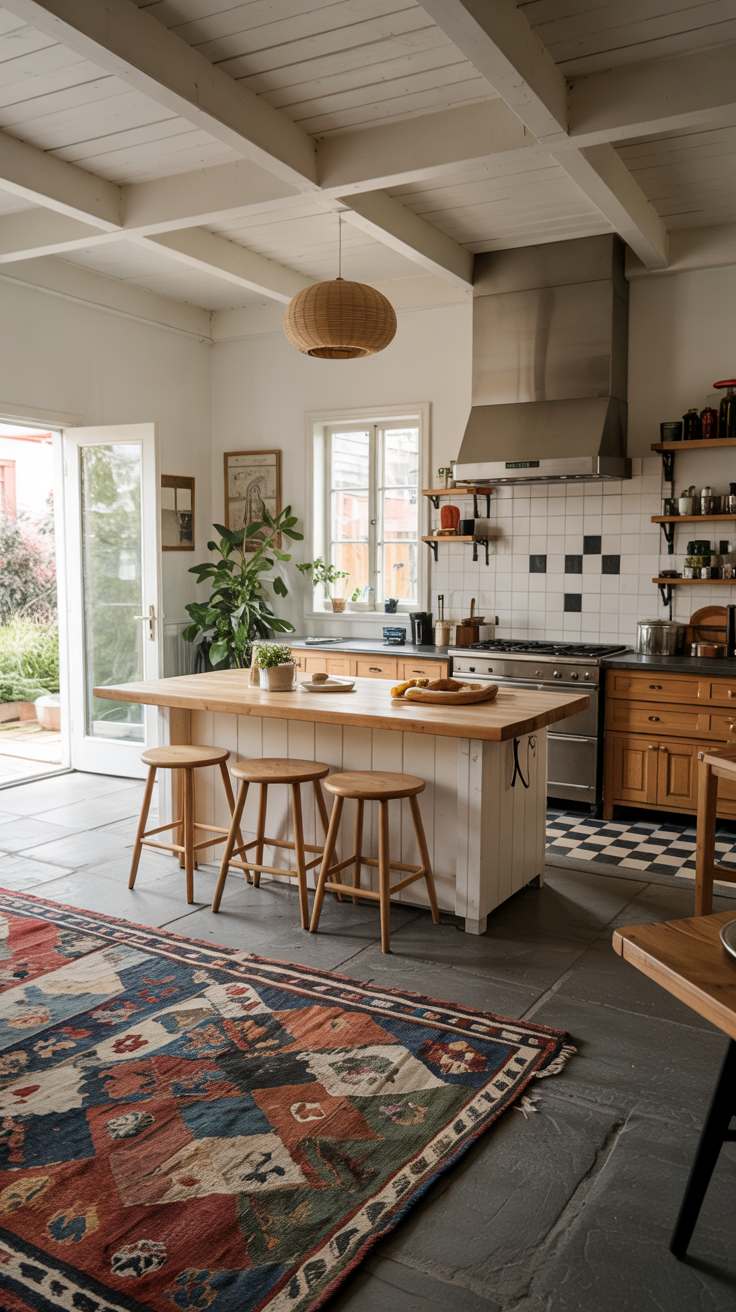
In my opinion, flexibility is key. I often rearrange rugs seasonally or when updating decor. This allows me to refresh the space without major renovations, keeping the kitchen visually engaging.
What is missing here is a discussion of safety features such as non-slip backing, which is essential for maintaining both comfort and security in any layout.
Why Washable Rugs Are a Must-Have Kitchen Trend in 2026
I consider kitchen rugs washable to be one of the most practical innovations in recent years. With daily cooking, spills are inevitable, and washable rugs make maintenance effortless. In 2026, this feature is no longer optional but essential.
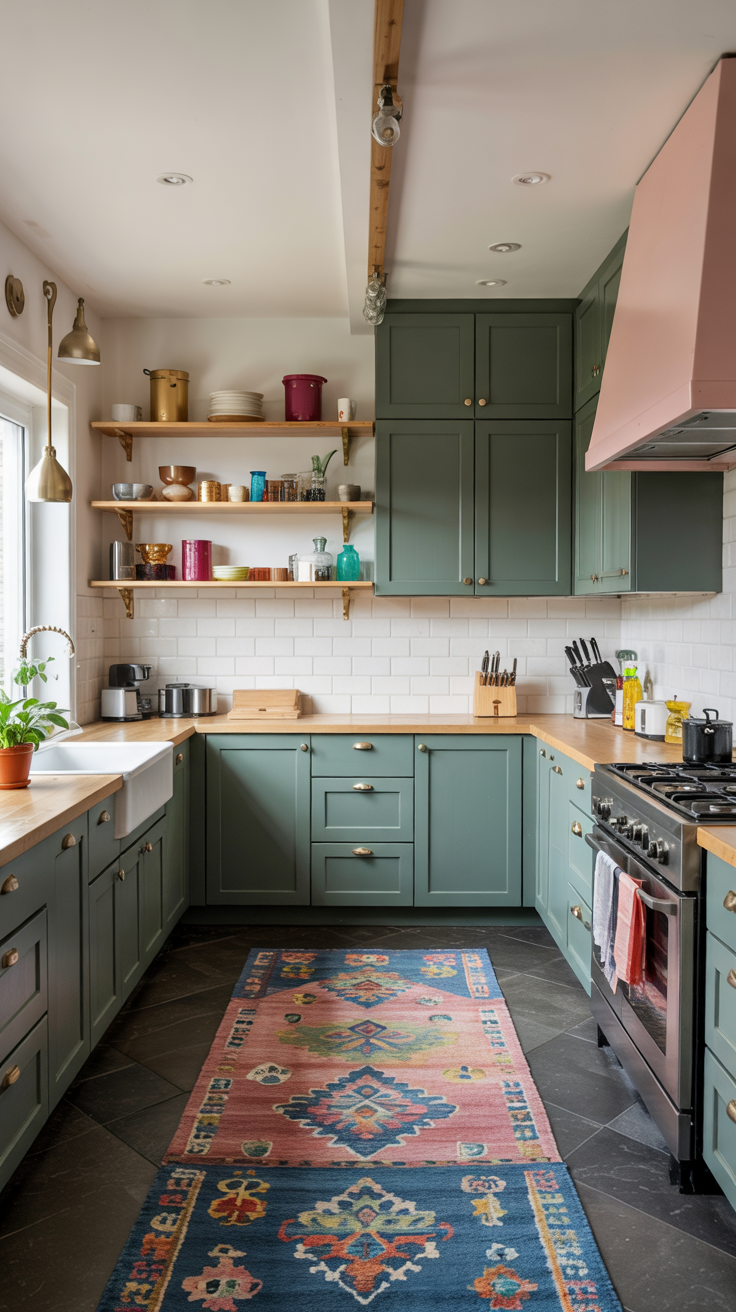
I usually choose materials that can be machine-washed without losing color or texture. Cotton blends, synthetic fibers, and even some jute alternatives now offer washable options. These rugs maintain their aesthetic while providing convenience.
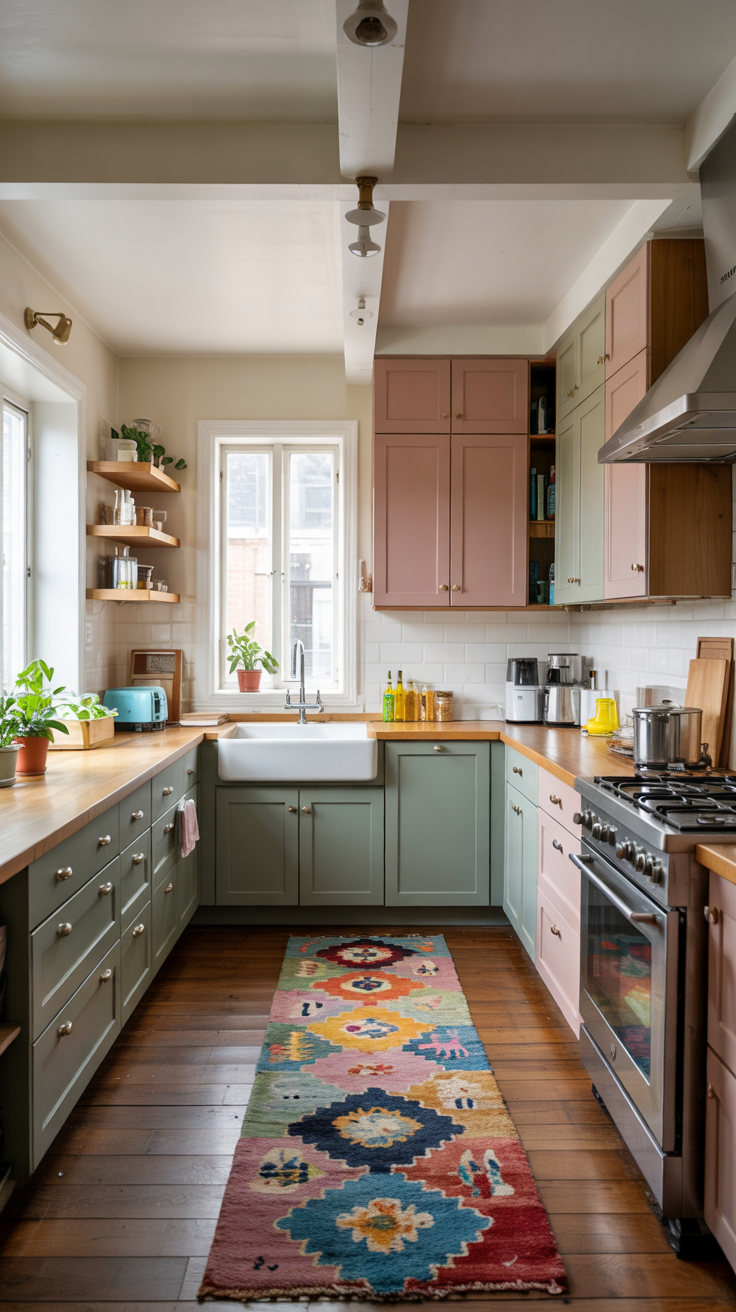
From my experience, investing in washable kitchen rugs and mats saves both time and money in the long run. It allows me to experiment with lighter colors like green or even red without worrying about permanent stains.
What I would improve in this section is a deeper comparison of different washable materials and how they perform over time under heavy kitchen use.
Large Kitchen Rugs for Open-Concept and Spacious Layouts
In open-concept kitchens, I rely on large rugs to anchor the space. These rugs define the kitchen area within a broader living environment, creating visual boundaries without walls. This is especially useful in modern homes.
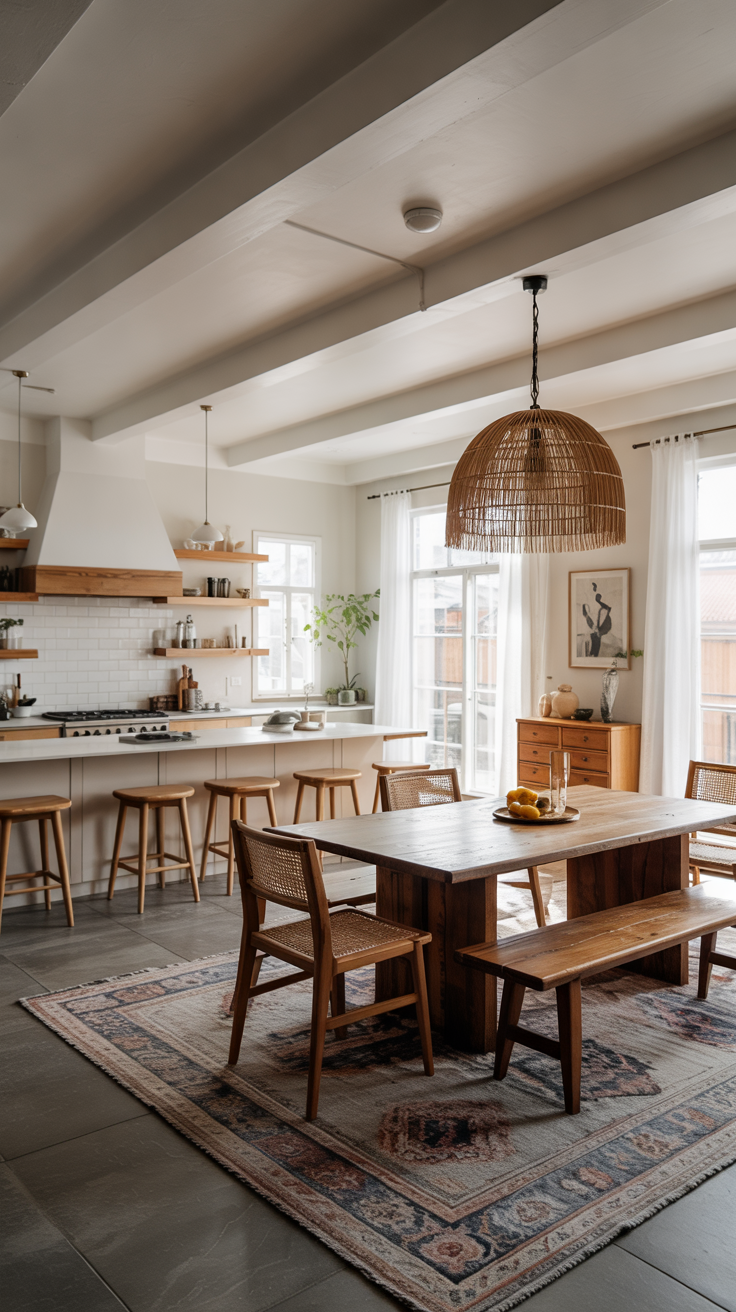
I often use large rugs under table areas or islands, ensuring they are proportional to the furniture. A large rug should extend beyond the table to maintain balance and avoid awkward edges. Neutral tones or subtle patterns work best in these expansive layouts.
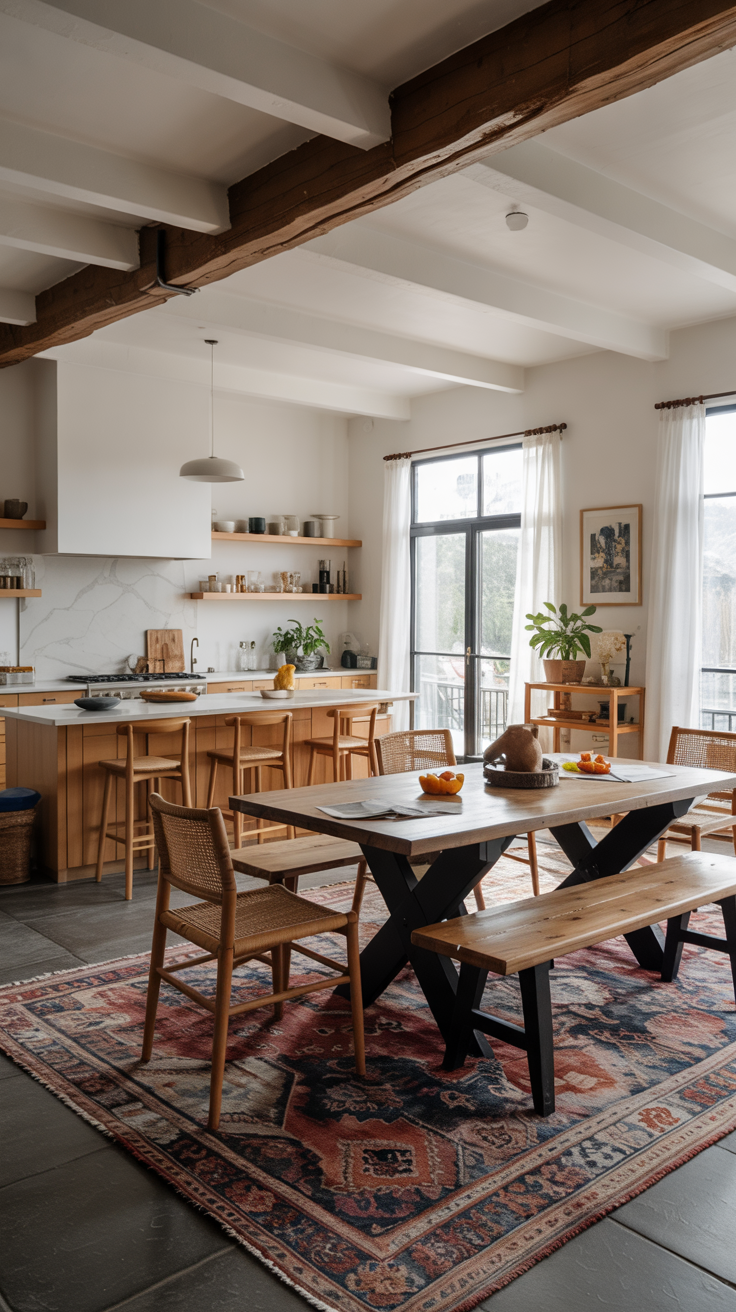
Personally, I find that large rugs bring warmth to otherwise sleek and modern kitchens. They soften hard surfaces and improve acoustics, making the space more inviting.
What could be added here is guidance on choosing the correct size relative to room dimensions, as improper sizing can disrupt the entire layout.
Crochet Kitchen Rugs for Handmade Charm and Texture
Crochet rugs bring a unique handmade quality that contrasts beautifully with modern kitchen rugs decor. I use them to introduce texture and warmth, especially in farmhouse or cozy interiors.
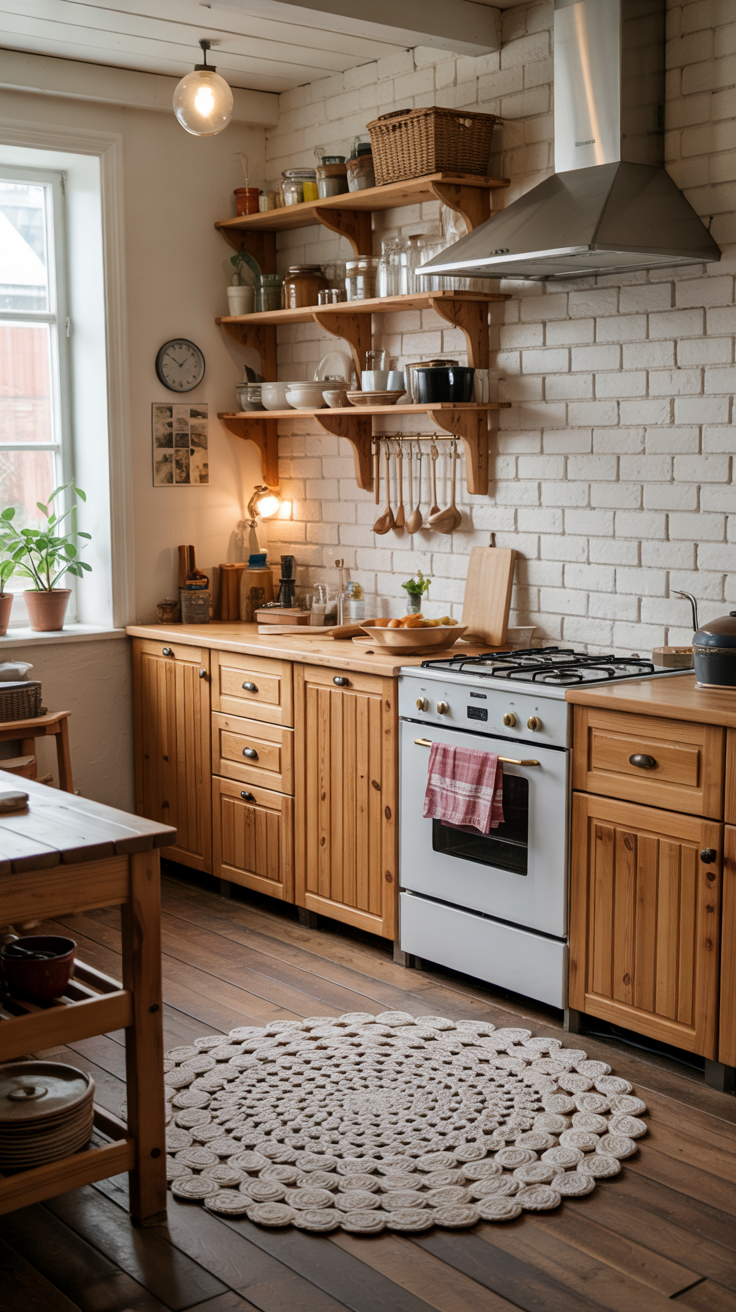
I typically pair crochet rugs with wooden furniture, open shelving, and soft lighting. These rugs work well in smaller areas or as accent pieces rather than main runners. They are particularly effective in adding a cute and personalized touch.
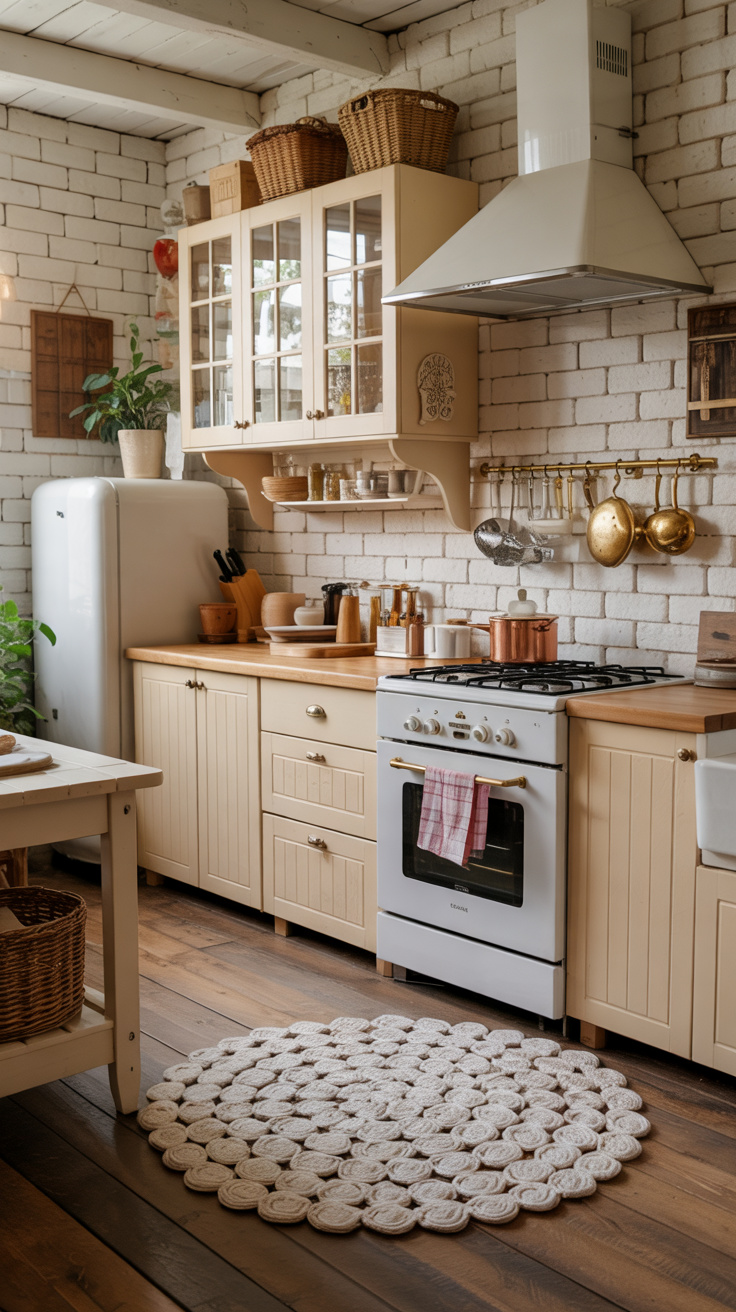
In my opinion, crochet rugs reflect individuality. They feel more personal than mass-produced options, and they can be customized in color and pattern to match the overall design.
What is missing here is advice on maintaining crochet rugs, as they require more delicate care compared to standard washable rugs.
Round Kitchen Rugs That Soften Sharp Kitchen Lines
Round rugs are an excellent solution for breaking up rigid kitchen layouts filled with straight lines and sharp angles. I use them to create visual contrast and soften the overall design.
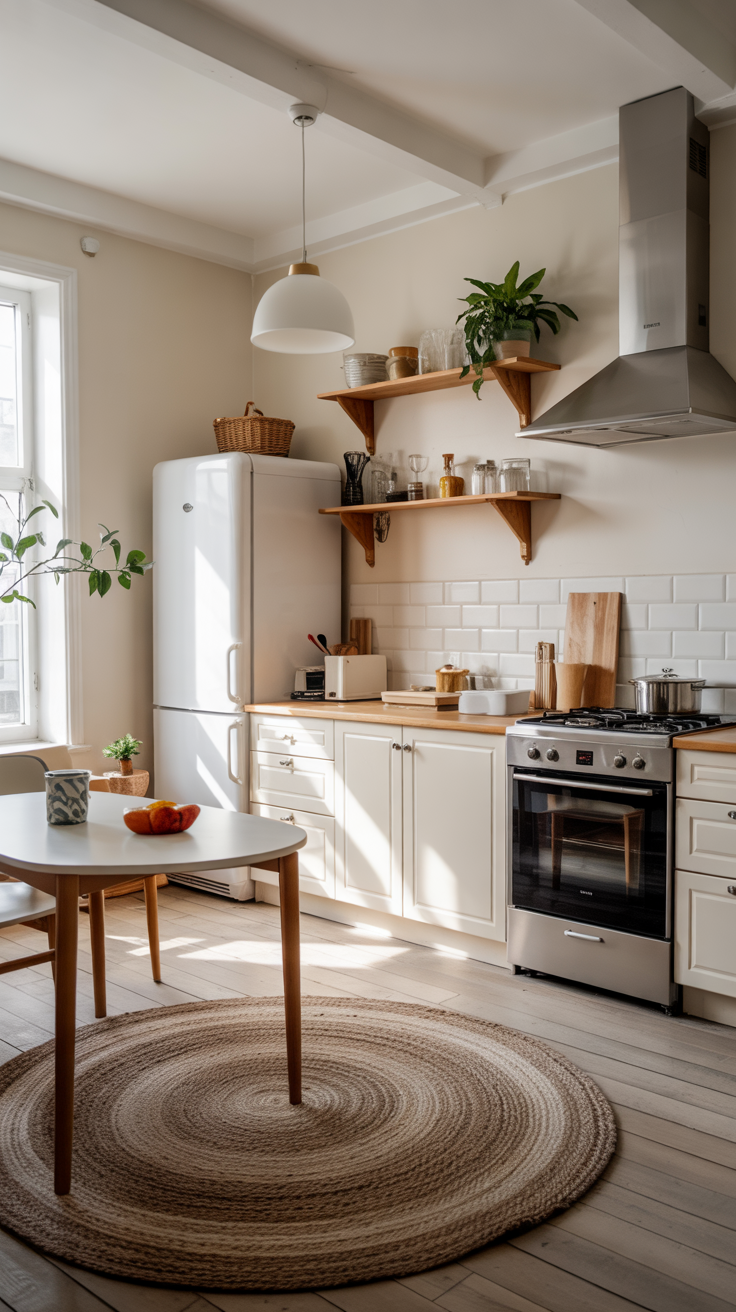
I often place round rugs under small tables or in corner breakfast nooks. They work especially well in kitchens with rectangular layouts, adding a sense of flow and movement.
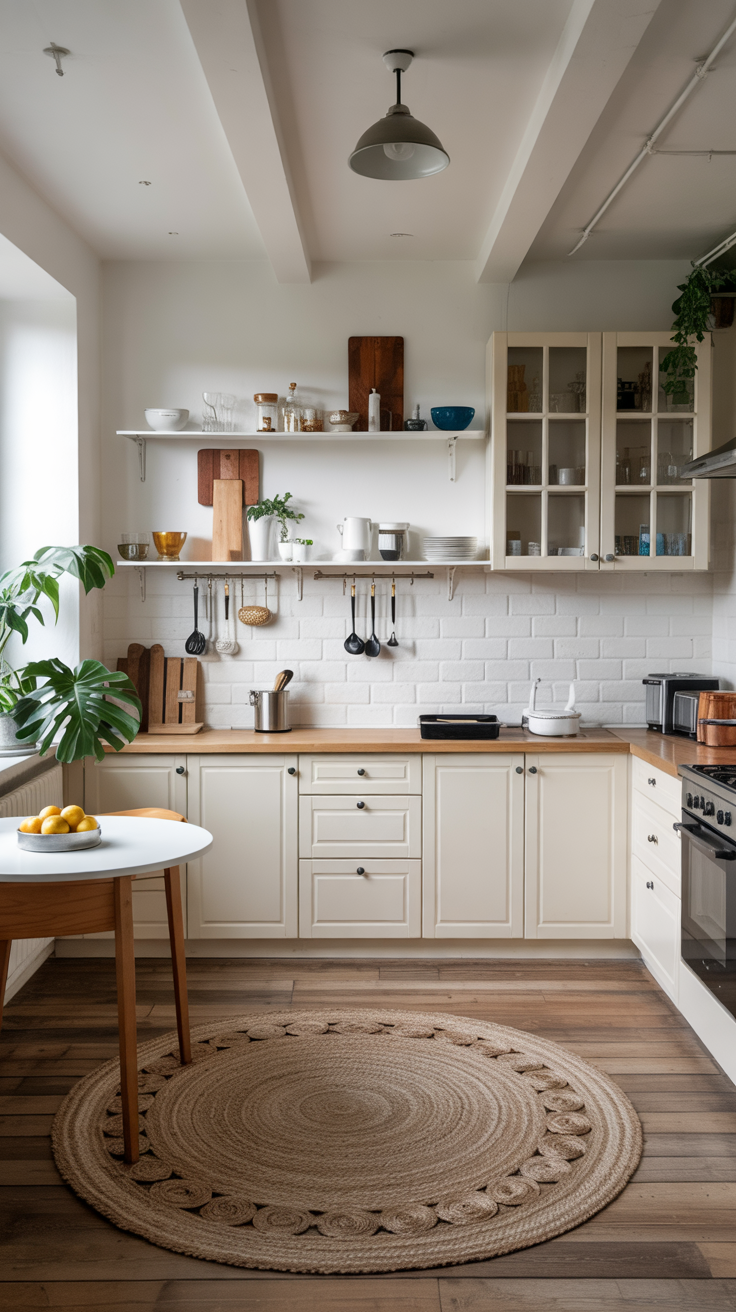
From my perspective, round rugs also help highlight specific areas without overwhelming the space. They act as focal points while maintaining balance.
What I would include here is more detail on choosing the right diameter for different kitchen zones to ensure proper proportion.
Kitchen Rugs for Table Areas That Combine Comfort and Style
Placing kitchen rugs under table areas is one of the most effective ways to enhance both comfort and style. I use this approach to define dining zones within the kitchen.
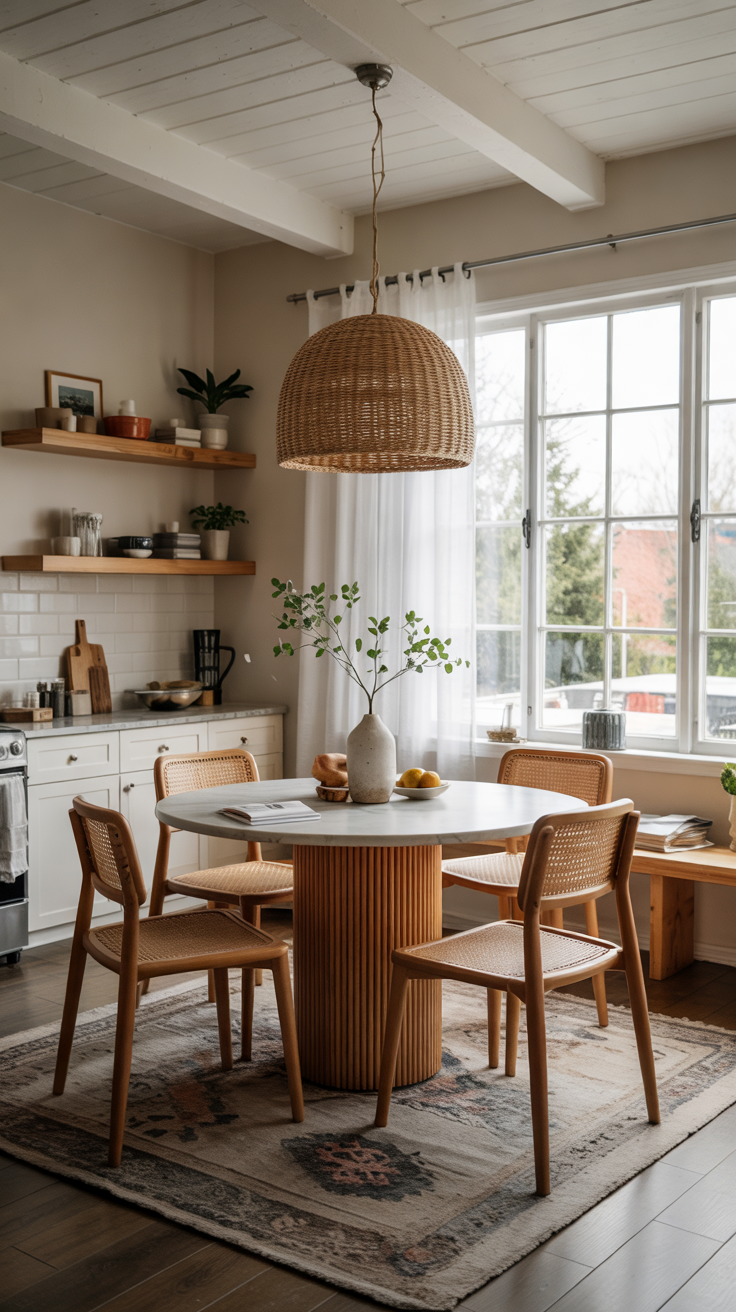
I choose durable, low-pile rugs that can handle chair movement. Materials like jute or synthetic blends work well, especially when combined with a cohesive color palette such as blue, black, or green.
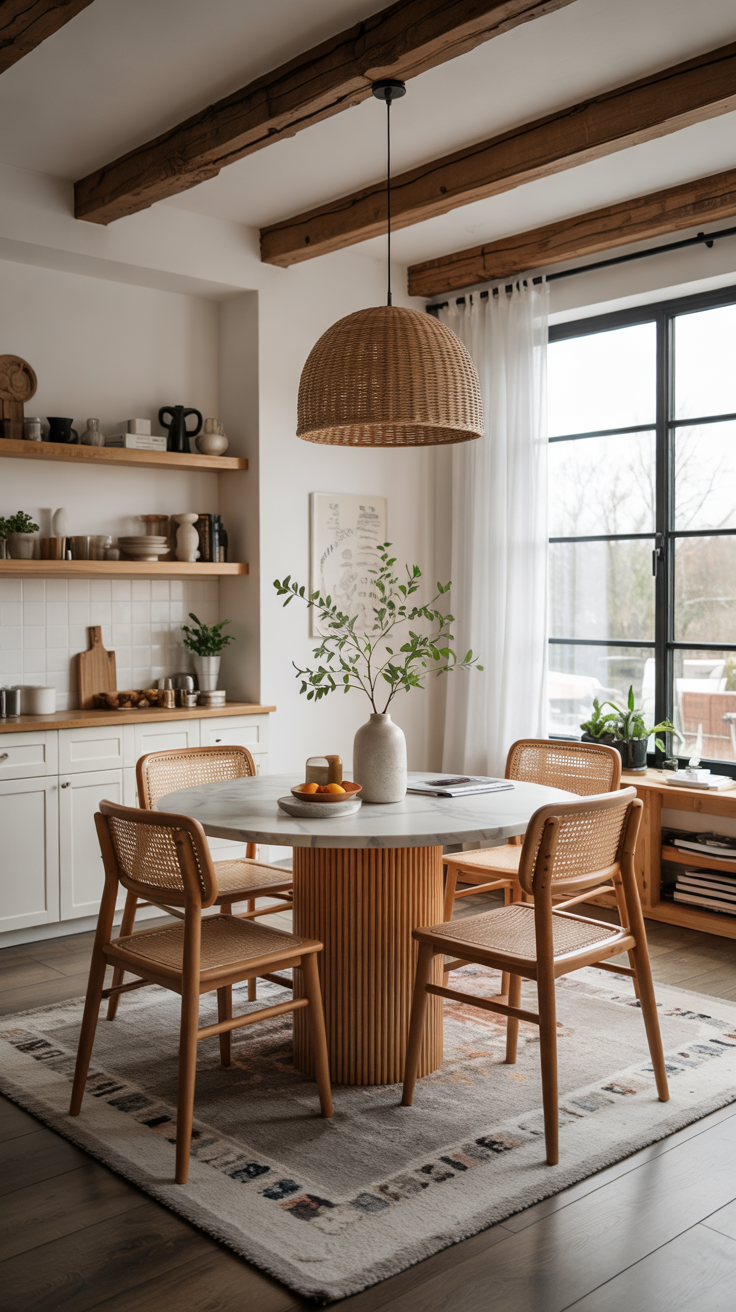
In my experience, this setup makes dining more comfortable and visually appealing. It also protects flooring from scratches and wear.
What I would add here is a focus on stain resistance and easy cleaning, particularly for households with children or frequent guests.
Green Kitchen Rugs That Bring Nature Indoors
I often use green kitchen rugs to introduce a calm, natural atmosphere into the space. In 2026, this trend is strongly connected to biophilic design, where interior elements reflect nature. A green rug can instantly refresh a kitchen, especially when combined with neutral cabinetry and natural materials.
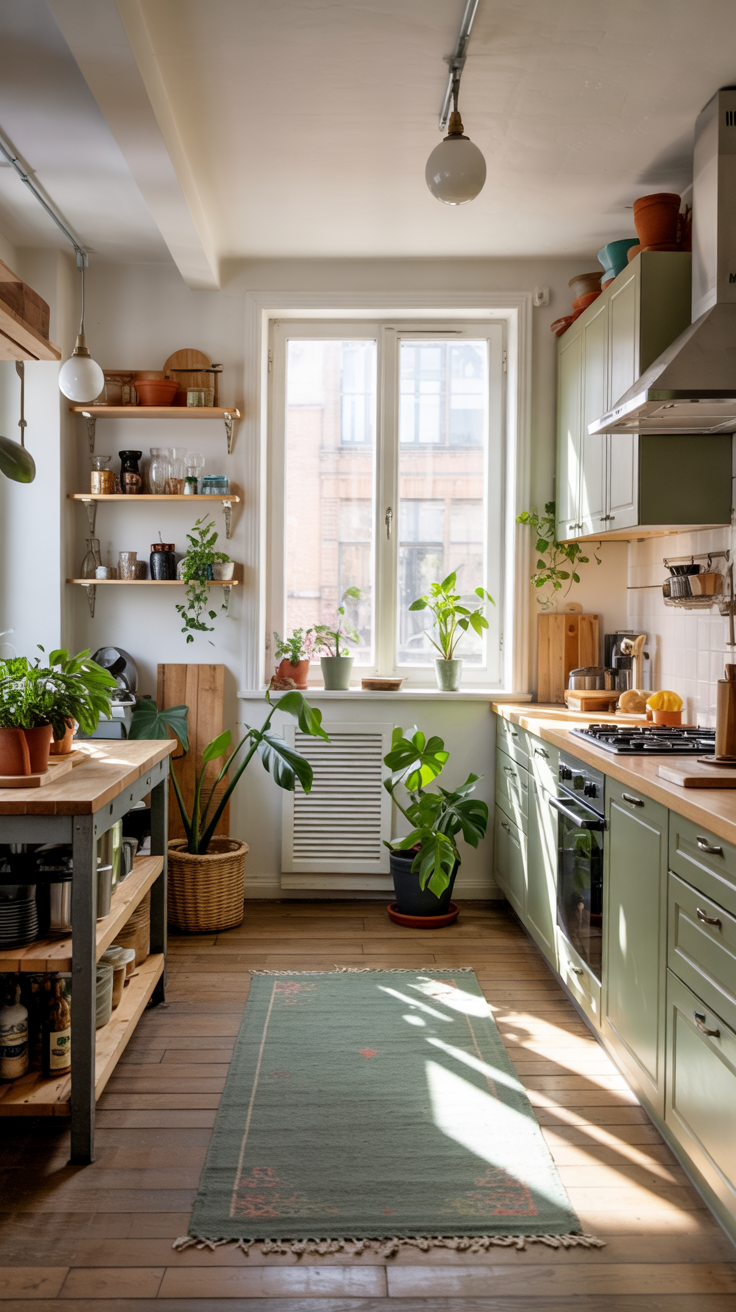
In my projects, I pair green rugs with wooden countertops, indoor plants, and matte finishes. Whether it is a deep forest tone or a soft sage shade, the rug becomes a grounding element. I prefer washable options to maintain both color vibrancy and hygiene in high-use areas.
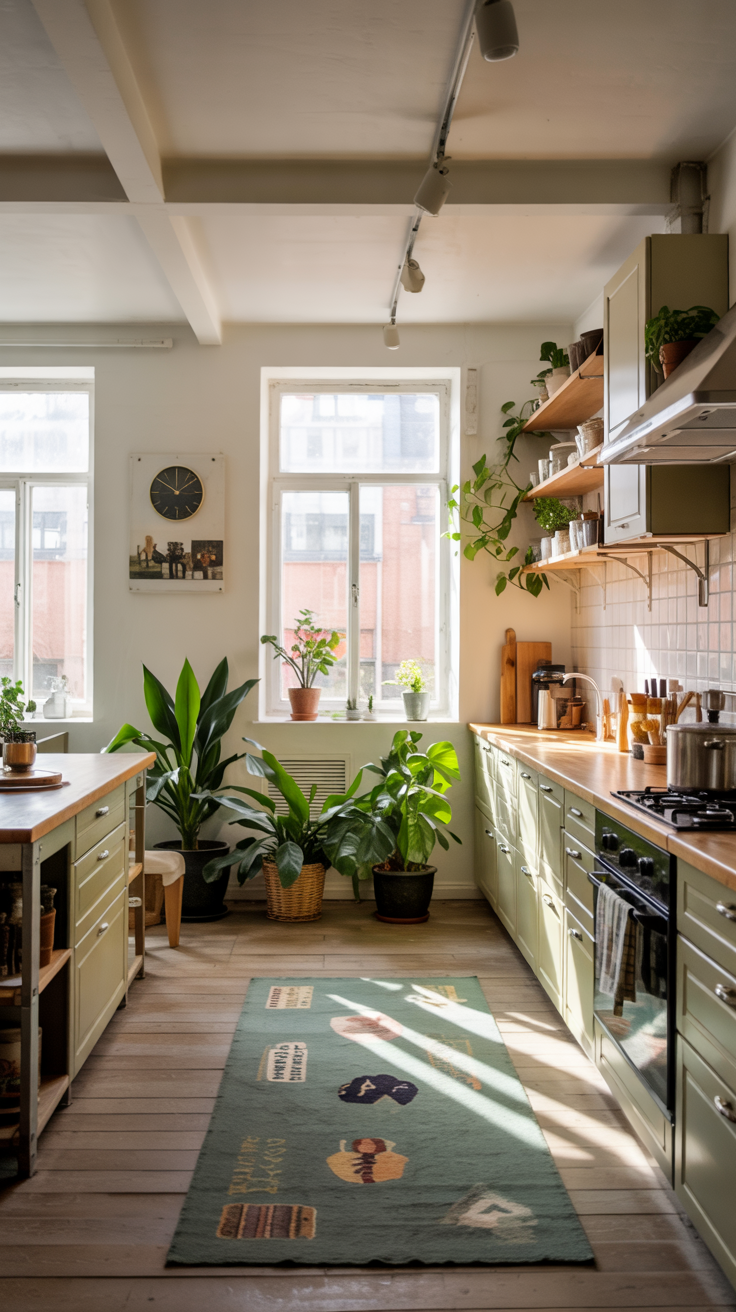
Personally, I find that green rugs create a balanced environment that feels both modern and relaxing. They work particularly well in kitchens with large windows and natural light, enhancing the connection between indoor and outdoor spaces.
What I would add here is guidance on choosing the right shade of green depending on lighting conditions and kitchen size to avoid making the space feel too dark.
Aesthetic Kitchen Rugs for Instagram-Worthy Interiors
Creating an aesthetic kitchen rugs decor setup is about more than just color – it is about composition and visual storytelling. I design kitchens where rugs act as focal points, complementing cabinetry, lighting, and accessories to create a cohesive look.
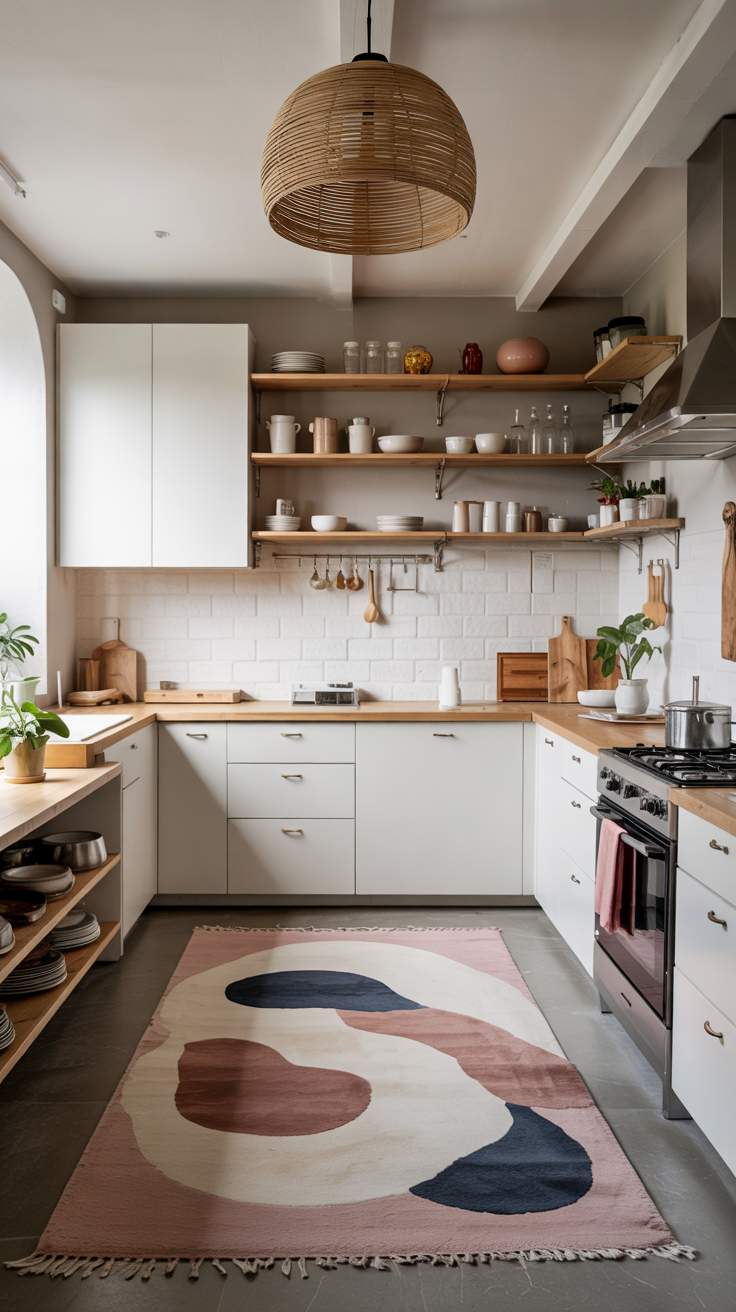
I often select rugs with subtle patterns, soft textures, or trendy tones like pink, beige, or muted blue. These rugs pair well with modern furniture, minimal decor, and carefully chosen accents. The goal is to achieve a clean yet visually appealing aesthetic that feels effortless.
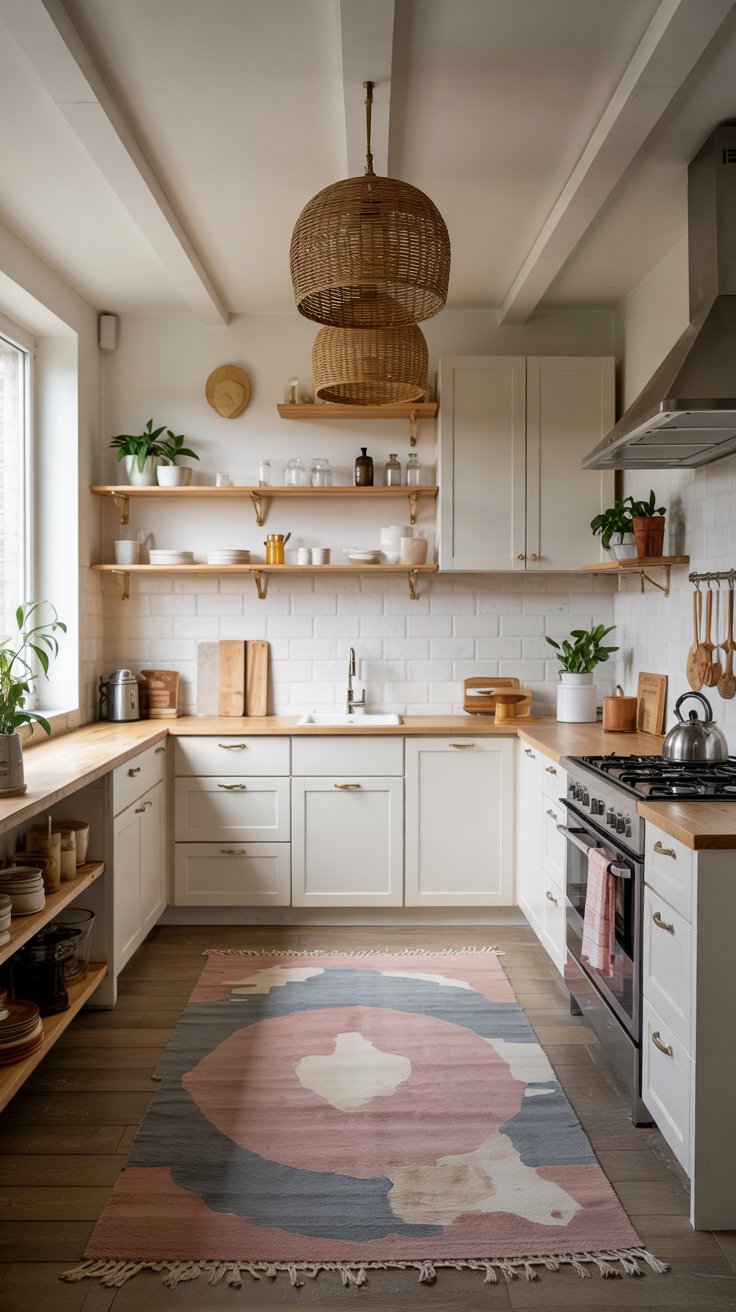
From my experience, the key is restraint. Too many decorative elements can overwhelm the space, while a well-chosen rug can elevate the entire interior. I often draw inspiration from curated interiors seen in design media.
What is missing here is a deeper explanation of how to layer textures and colors to create a truly cohesive aesthetic rather than a staged look.
Bloxburg Kitchen Rugs Inspiration and Creative Design Ideas
I approach bloxburg kitchen rugs inspiration as a way to experiment with bold and creative layouts. These designs often push beyond traditional interiors, incorporating colorful, playful, and sometimes unexpected combinations.
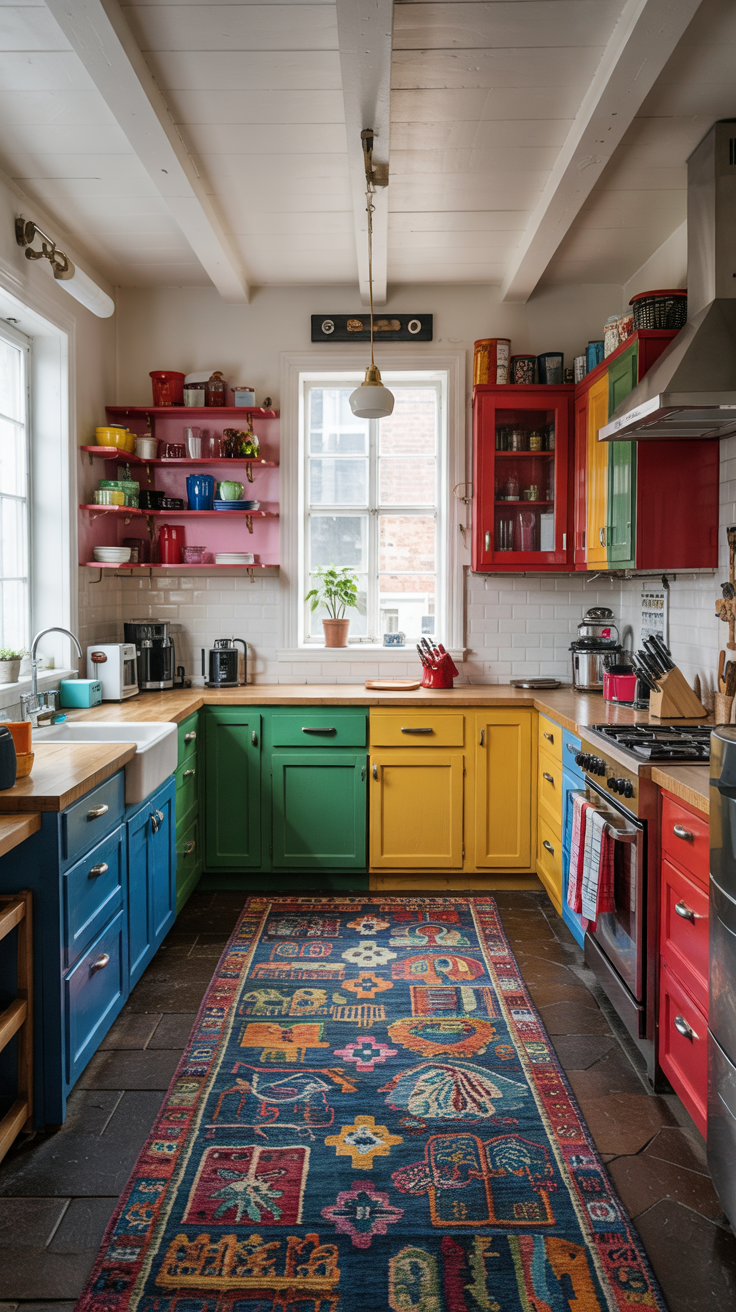
I use bright rugs, decals bloxburg-inspired patterns, and contrasting furniture to create a dynamic environment. This style works particularly well in eclectic kitchens where personality is a priority over strict minimalism.
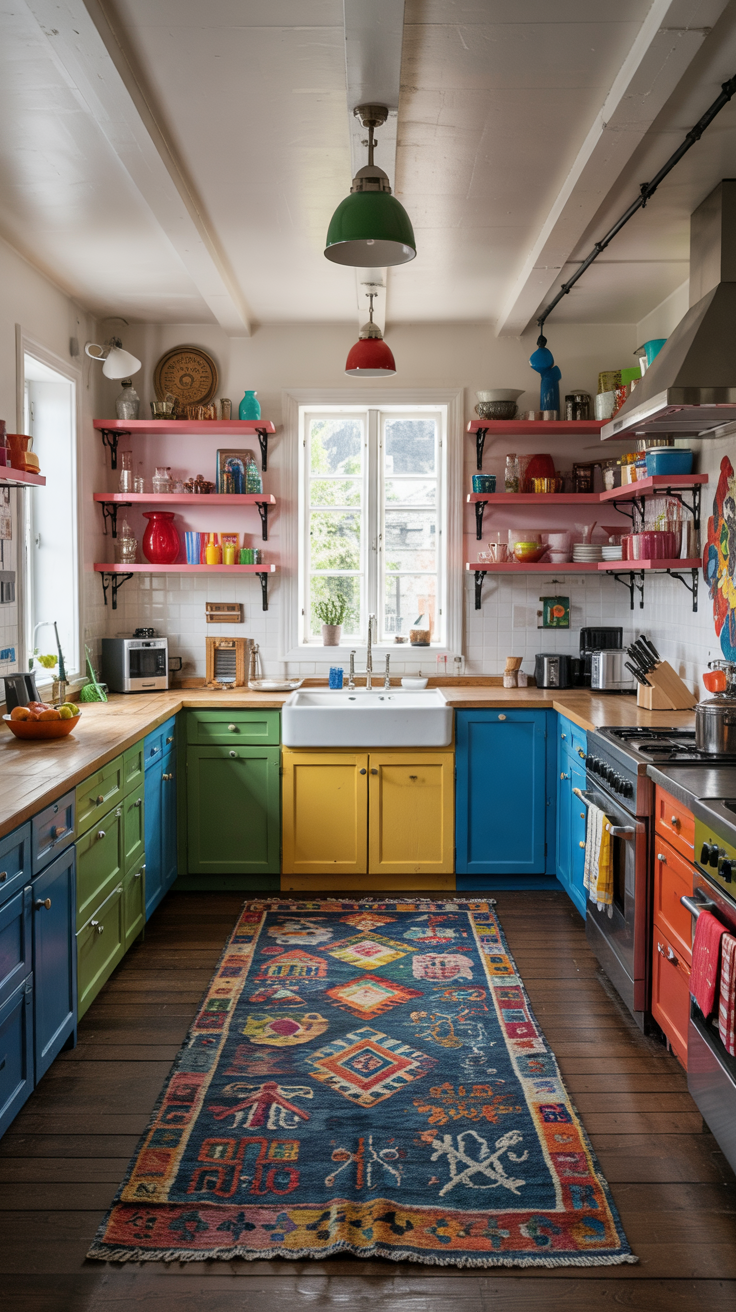
In my opinion, this approach encourages creativity. It allows me to break conventional design rules and explore new ideas, making the kitchen feel unique and expressive.
What I would include here is advice on balancing bold elements so the space remains functional and not visually overwhelming.
Long Kitchen Rugs for Galley Kitchens and Narrow Spaces
Long kitchen rugs runner designs are essential for narrow or galley kitchens. I use them to visually extend the space while providing comfort along the main walkway.
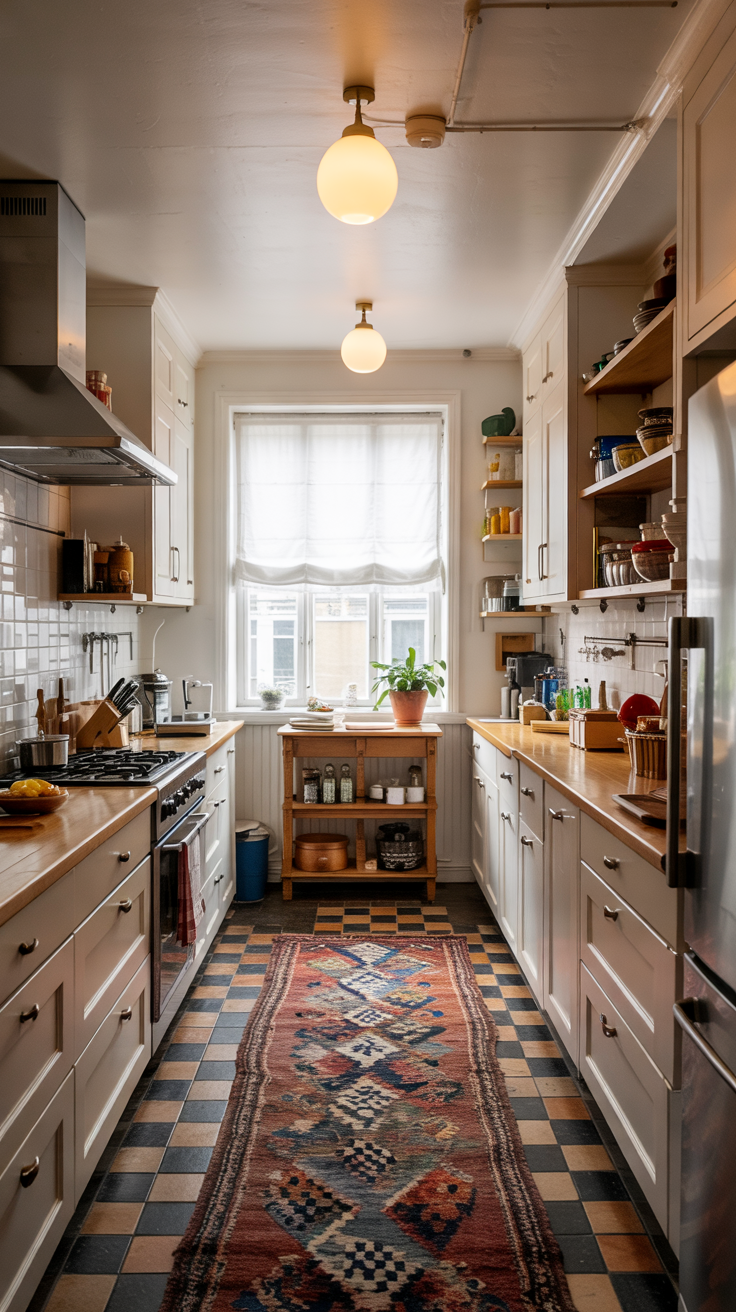
I usually choose long, durable rugs with subtle patterns such as checkered or linear designs. These patterns help guide the eye through the space, making it feel larger and more organized. Washable materials are especially important here due to concentrated foot traffic.
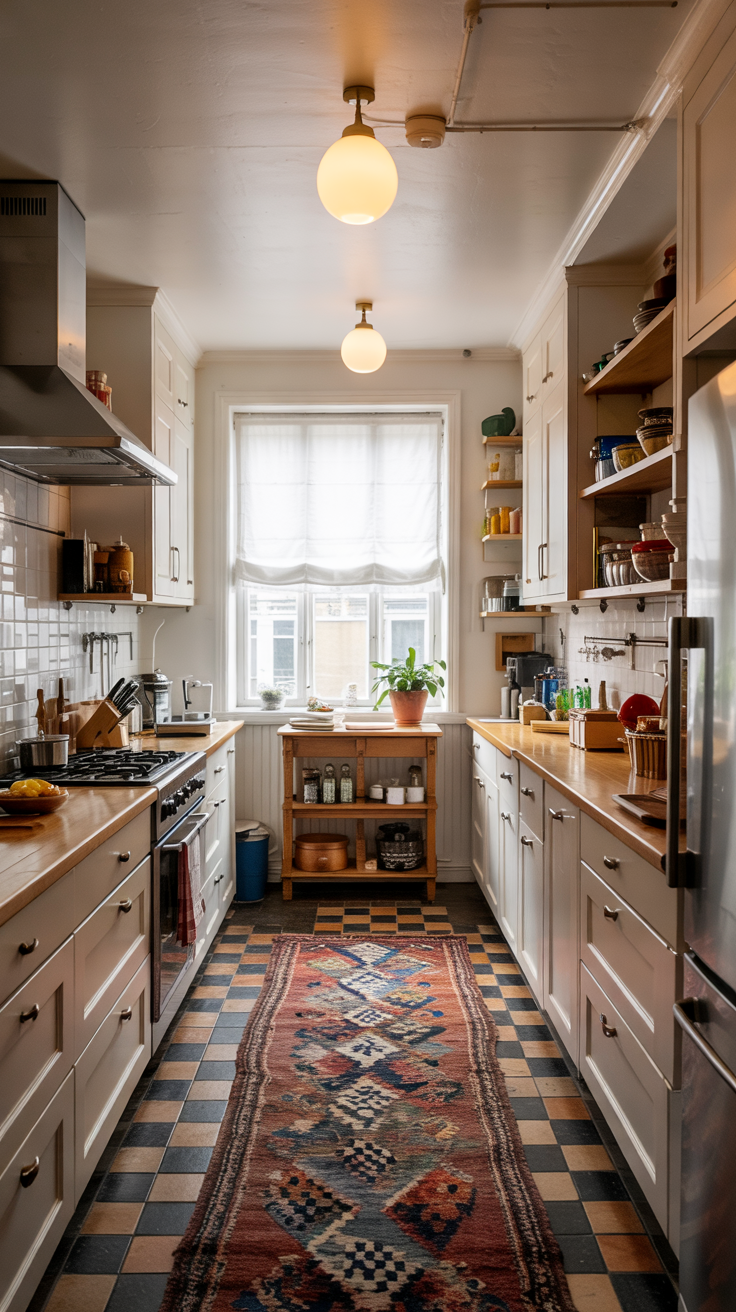
From my experience, a well-placed runner can completely transform a narrow kitchen, making it feel intentional rather than constrained. It also improves comfort during long cooking sessions.
What I would add here is a discussion on proper length selection to ensure the runner aligns with cabinetry and does not appear too short or oversized.
Kitchen Rugs Inspo – Fresh Ideas for Modern Homes
When I explore kitchen rugs inspo, I focus on blending functionality with modern aesthetics. In 2026, this means combining bold colors, unique textures, and smart placement strategies.
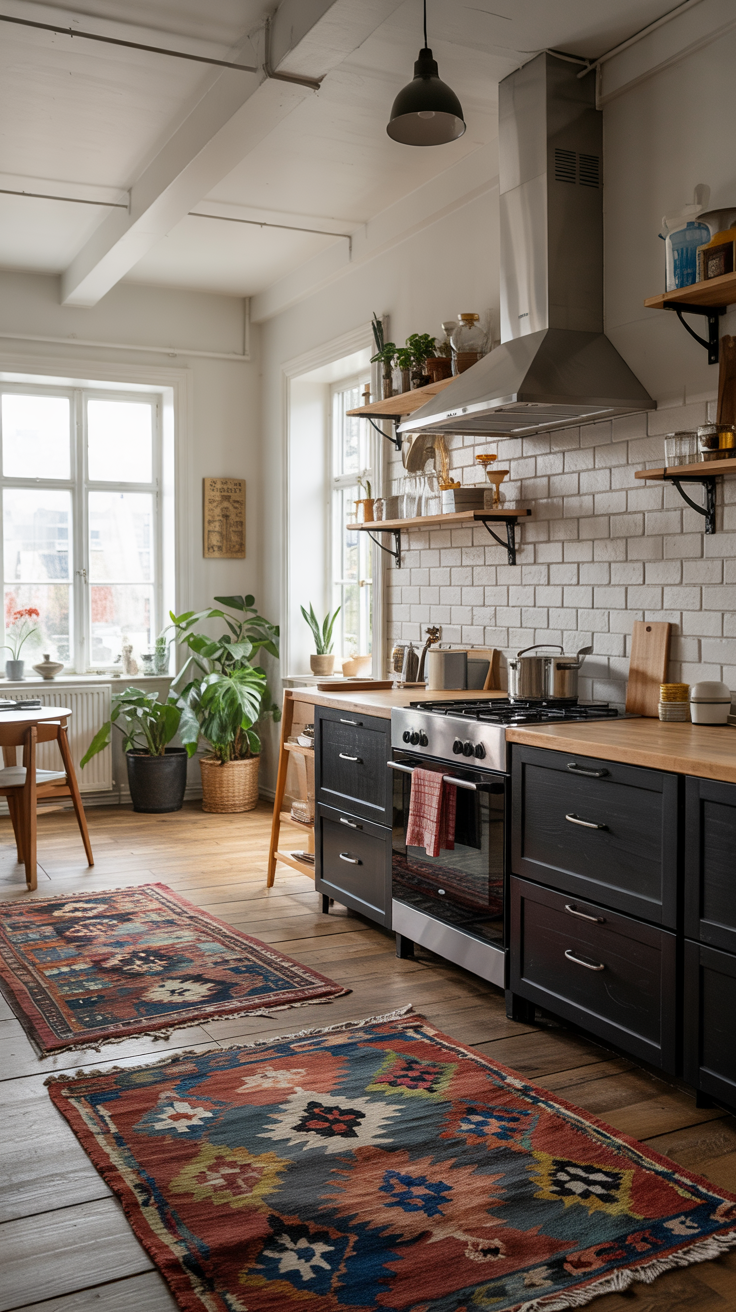
I often experiment with colorful rugs, mixing tones like red, blue, and even black for contrast. These rugs are paired with sleek cabinets, integrated appliances, and minimalistic decor to create a contemporary look.
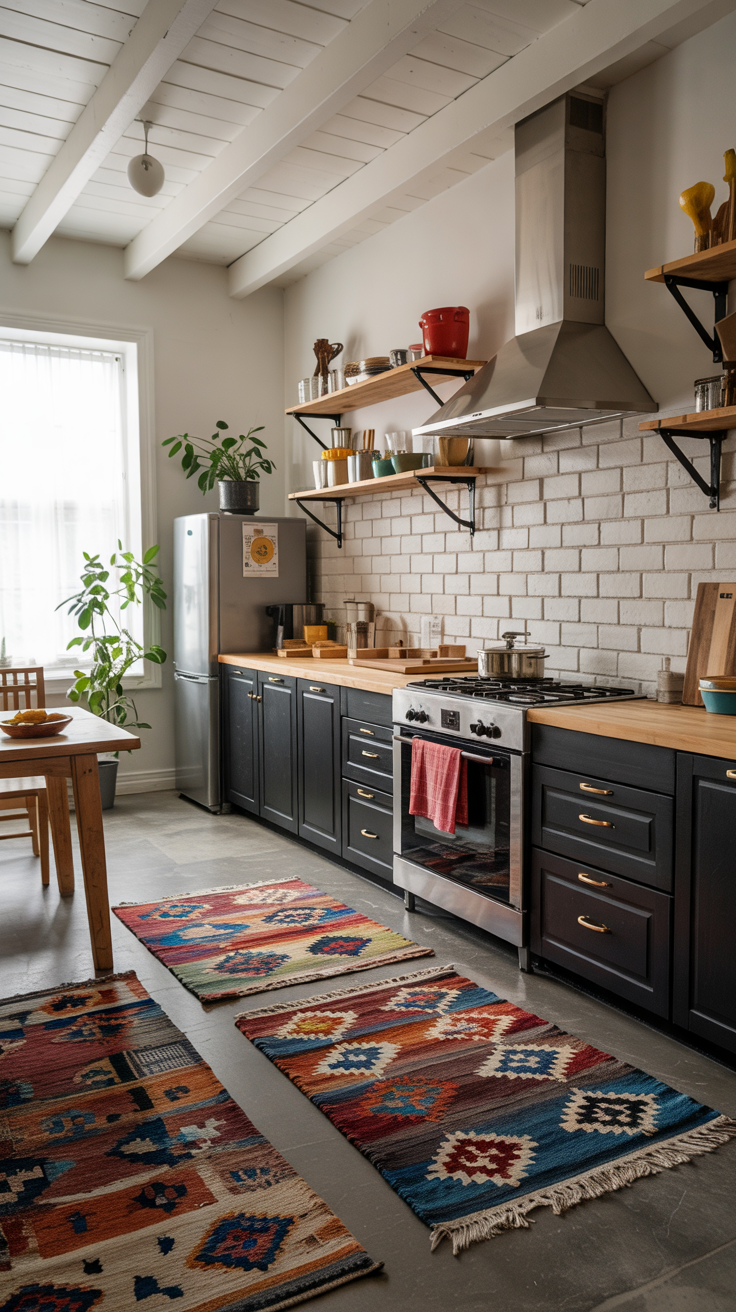
Personally, I believe that inspiration comes from experimentation. Trying different combinations allows me to discover unexpected yet effective design solutions.
What is missing here is a structured approach to testing different rug styles before committing, such as using temporary placements or visual mockups.
Pink Kitchen Rugs for a Playful and Trendy Look
Pink kitchen rugs are becoming increasingly popular for adding a playful and modern touch. I use them to introduce warmth and personality without overwhelming the space.
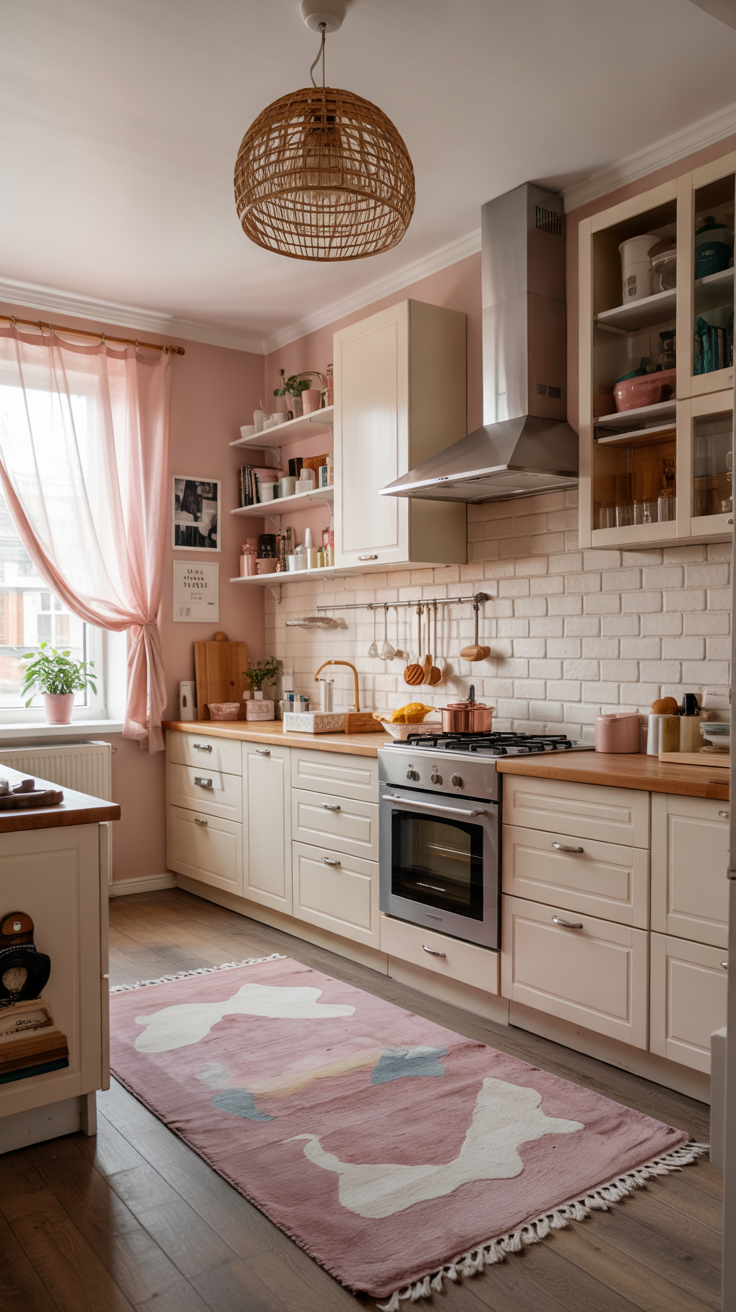
I pair pink rugs with neutral tones like white, gray, or beige to maintain balance. Soft pastel shades work well in minimalist kitchens, while brighter tones can be used in more expressive interiors.
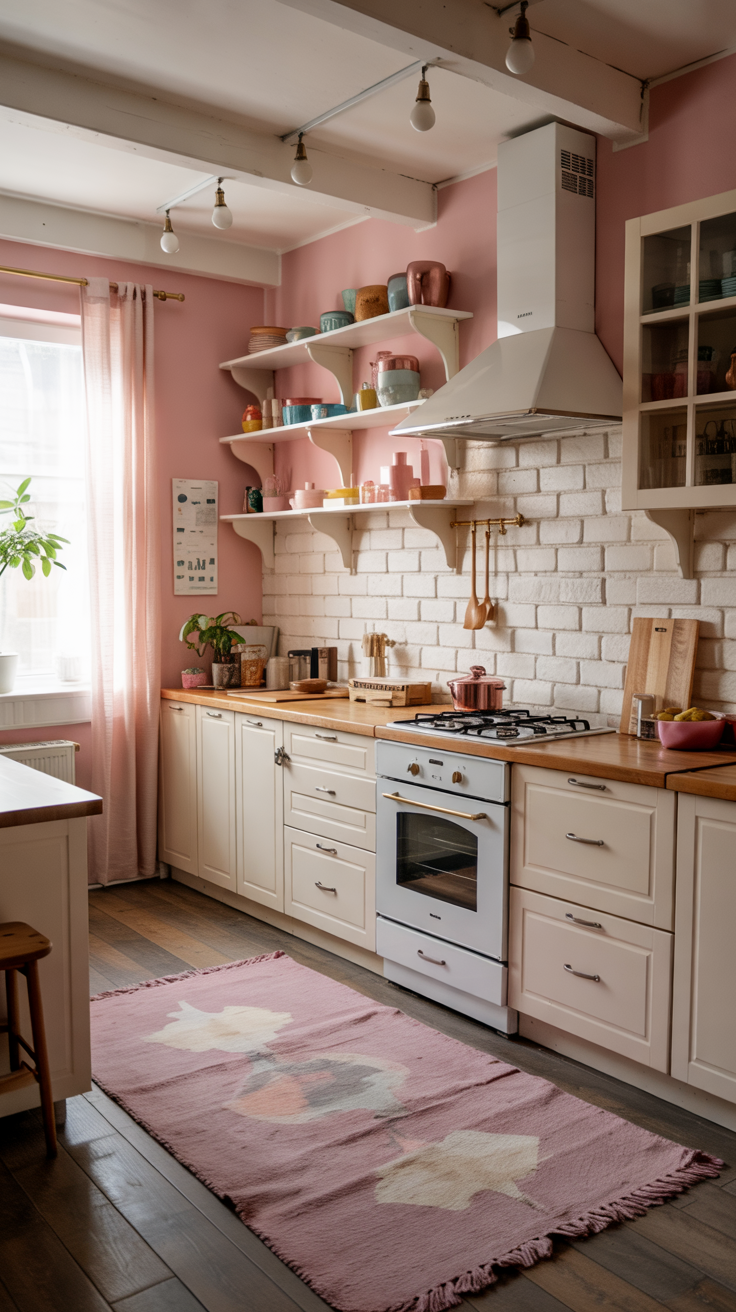
In my experience, pink rugs can transform a kitchen into a more inviting and cheerful environment. They are especially effective when combined with subtle decorative accents.
What I would include here is guidance on coordinating pink tones with other colors to avoid clashing or overly saturated designs.
Jute Kitchen Rugs for Natural and Eco-Friendly Interiors
Jute kitchen rugs are my go-to choice for eco-friendly and natural interiors. They bring texture and warmth while aligning with sustainable design principles.
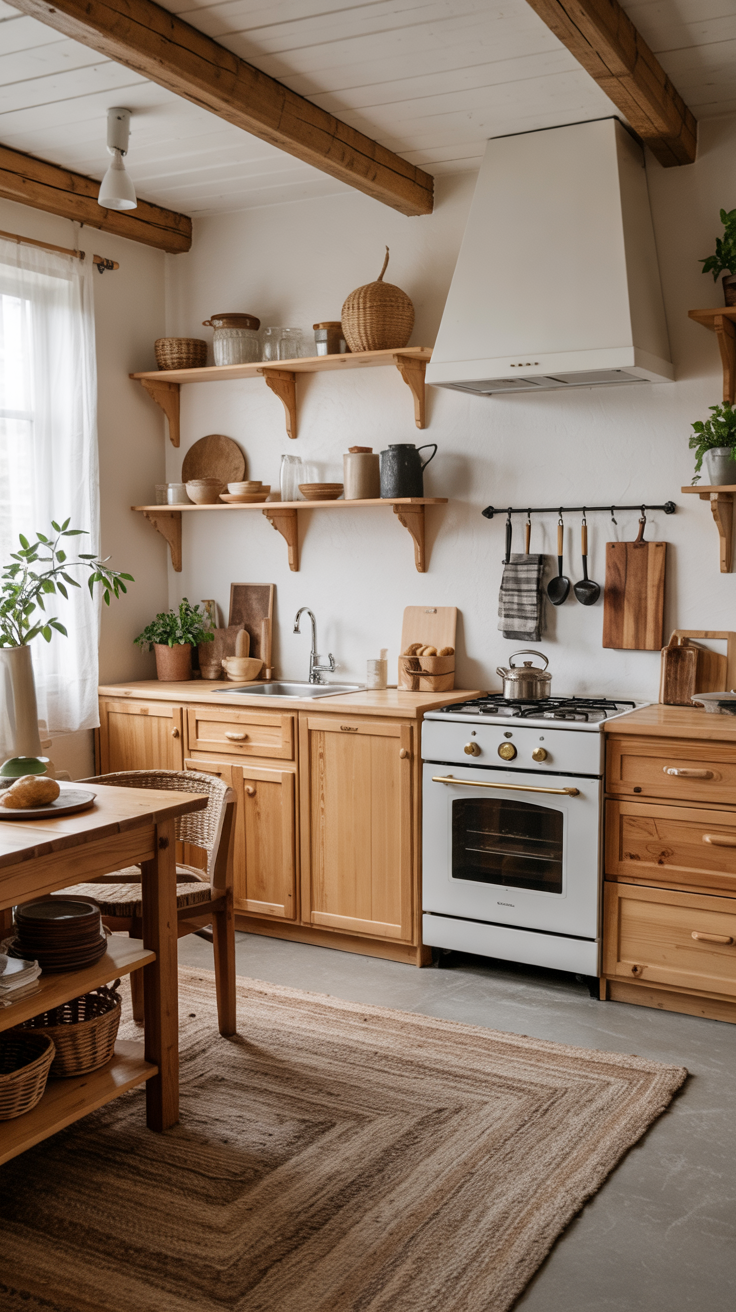
I typically combine jute rugs with wooden furniture, neutral palettes, and organic materials. These rugs are ideal for creating a grounded and timeless kitchen aesthetic.
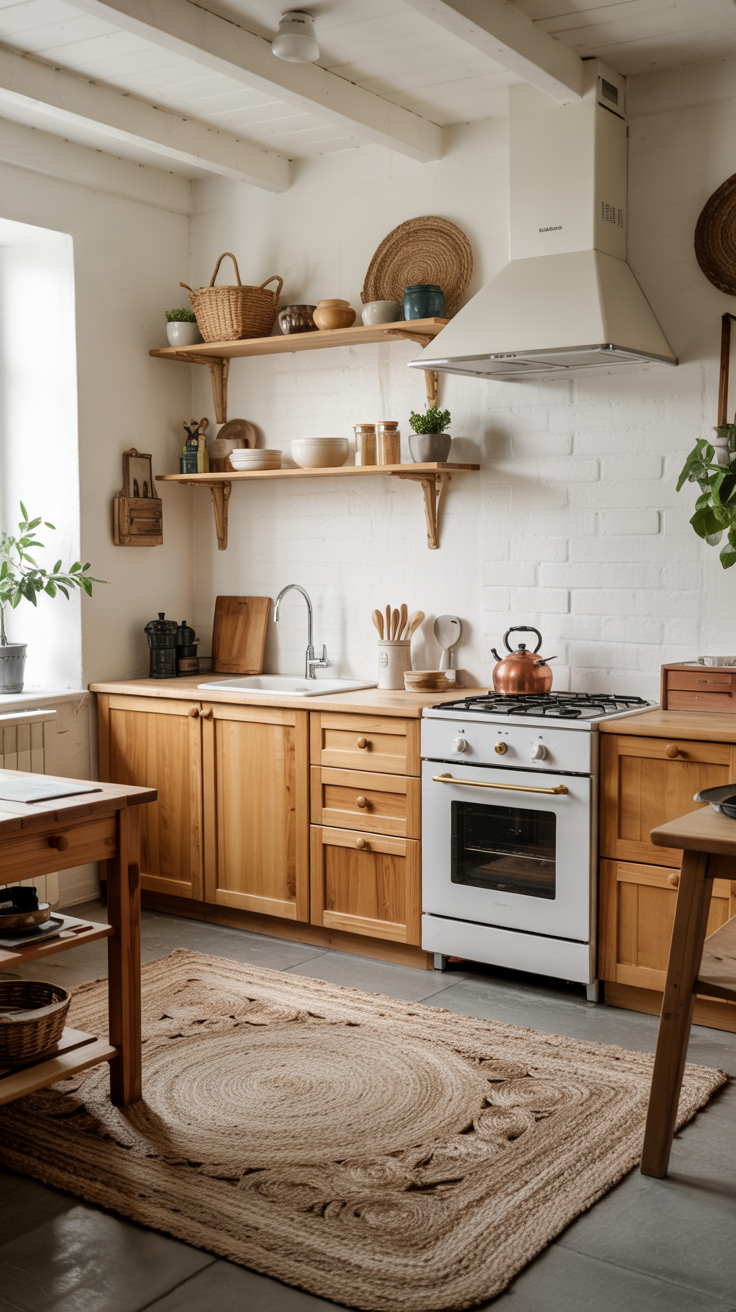
From my perspective, jute rugs offer durability and versatility. They work well in both modern and farmhouse kitchens, making them a practical investment.
What I would add here is a comparison between natural jute and synthetic alternatives, especially in terms of durability and ease of cleaning in kitchen environments.
Checkered Kitchen Rugs That Make a Bold Statement
I see checkered kitchen rugs making a strong comeback in 2026, especially in modern and farmhouse kitchens. The pattern creates visual rhythm across the floor, helping define zones like cooking and prep areas. In open layouts, a checkered runner adds structure without overwhelming the space, making it ideal for long kitchens or galley layouts.
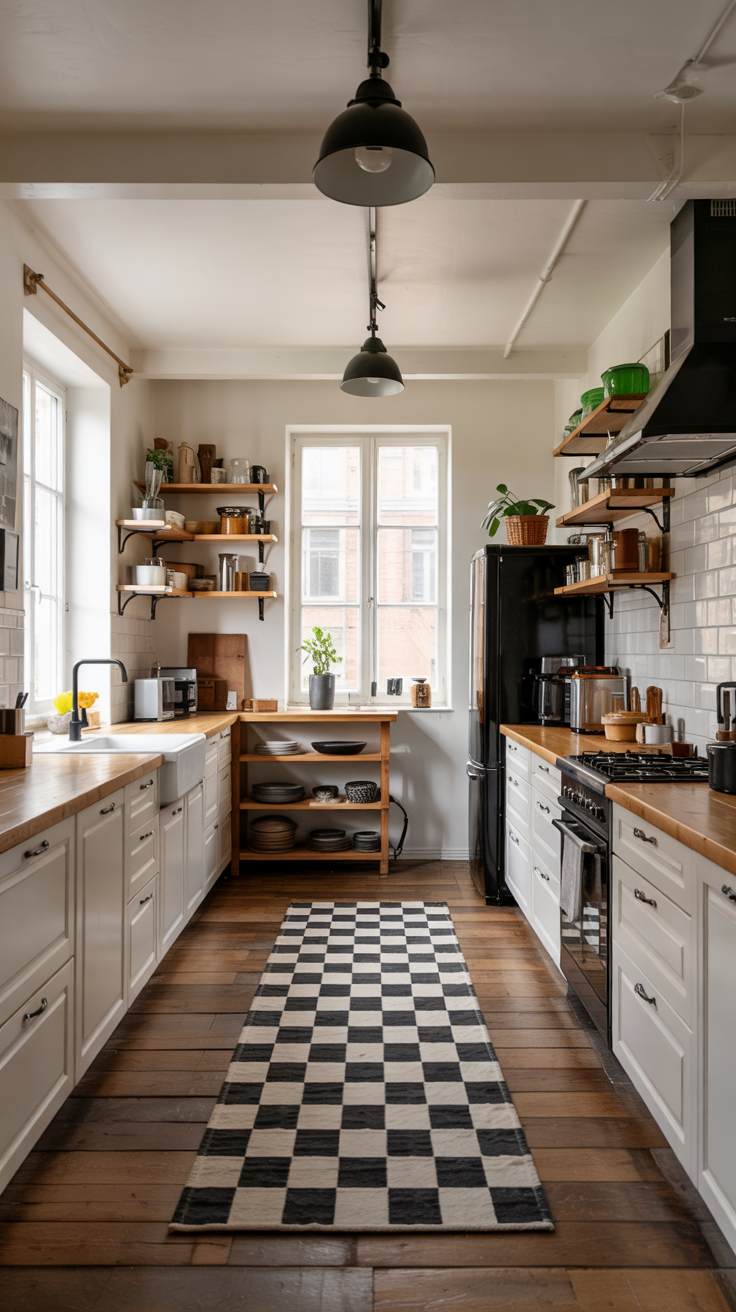
I typically pair a checkered rug with neutral cabinetry, wooden countertops, and matte black fixtures. The contrast enhances the pattern while keeping the overall look balanced. A washable material is essential here, since high-traffic placement near the sink or stove demands easy maintenance. I also recommend choosing a large or long runner for continuity.
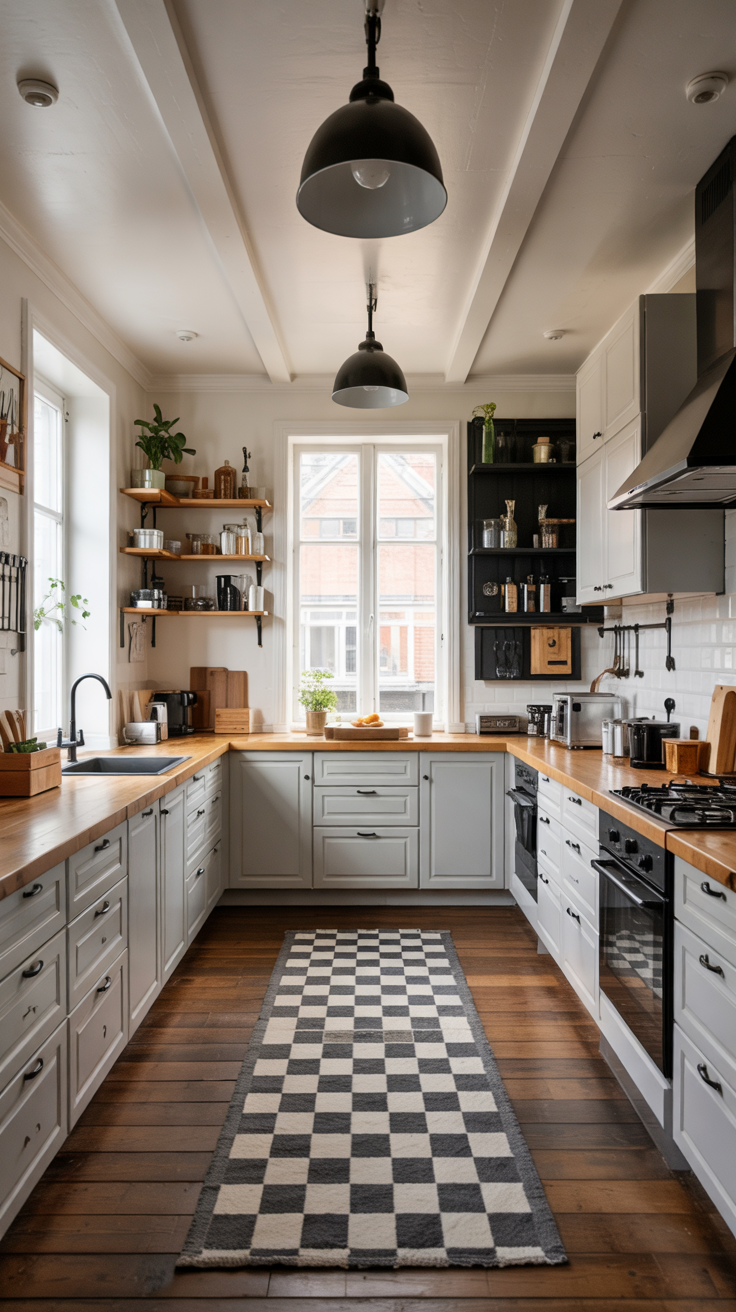
From my experience, designers often highlight checkered rugs as a timeless choice that blends vintage charm with modern appeal. I find they work especially well when combined with subtle decor elements like ceramic jars or minimal wall decals bloxburg style accents.
What I would add here is more layering, such as combining a checkered rug with smaller mats near specific work zones to improve both comfort and durability.
Kitchen Rugs Inspiration for Every Design Style
When I design kitchens, I always consider how rugs contribute to the overall inspiration of the space. Whether the style is minimalist, rustic, or contemporary, the right rug ties everything together. In 2026, kitchen rugs decor focuses on versatility, allowing homeowners to adapt styles easily.
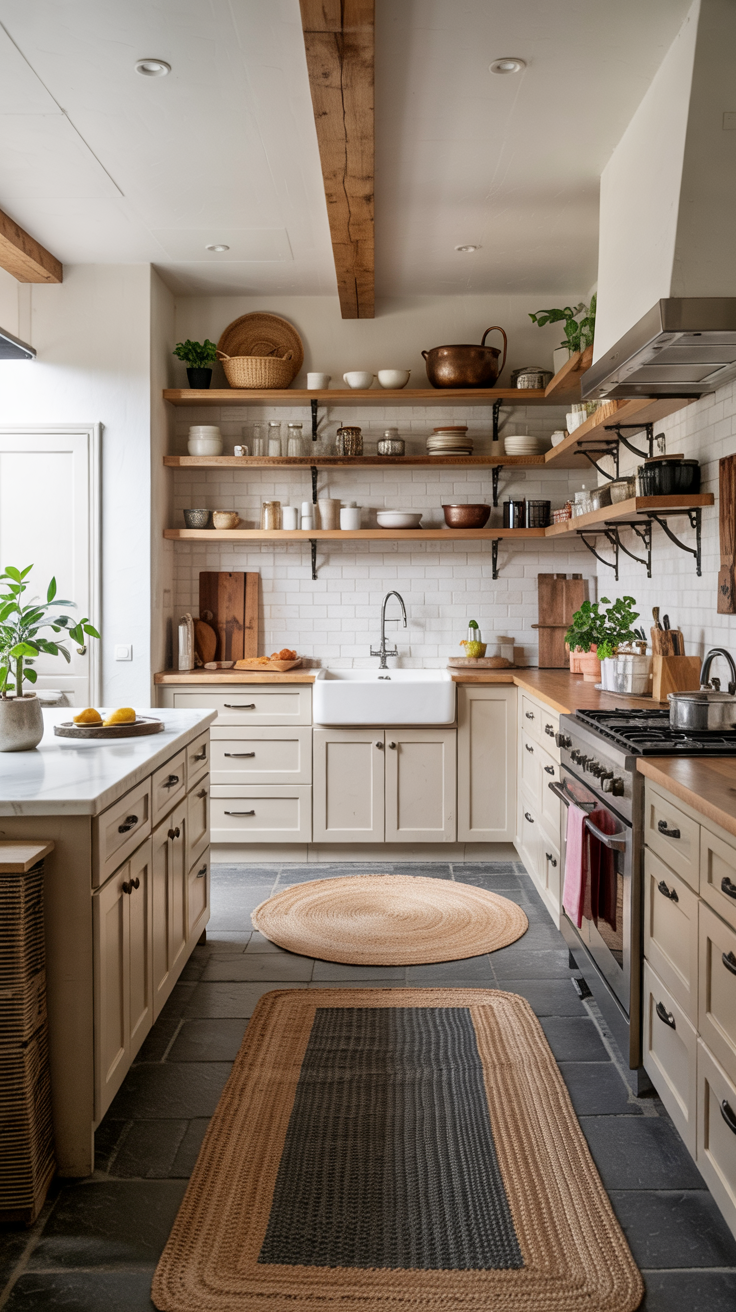
I often use jute rugs for natural kitchens, crochet rugs for cozy interiors, and sleek synthetic mats for modern spaces. Placement layout is key – under the table, near the island, or as a runner along cabinets. Each choice serves both functional and aesthetic purposes.
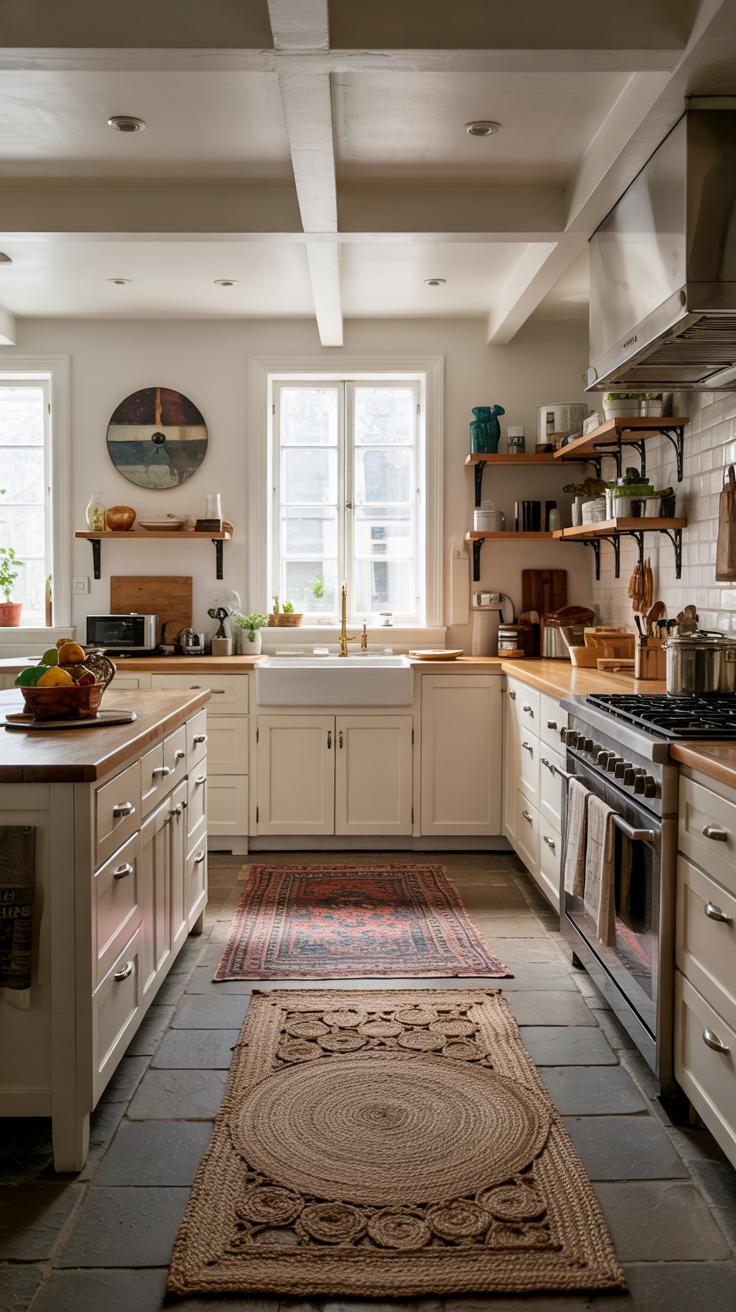
Personally, I believe rugs are one of the easiest ways to refresh a kitchen without major renovations. Inspired by interior design publications, I prioritize texture and color harmony over bold experimentation unless the space calls for it.
To improve this section, I would include guidance on mixing textures and layering rugs to create depth without cluttering the design.
Cute Kitchen Rugs That Add Personality to Small Spaces
In small kitchens, I rely on cute and aesthetic rugs to introduce personality without overwhelming the room. Compact spaces benefit from soft colors like pink, green, or pastel blue, which visually expand the area. A round rug can soften sharp corners and create a welcoming feel.
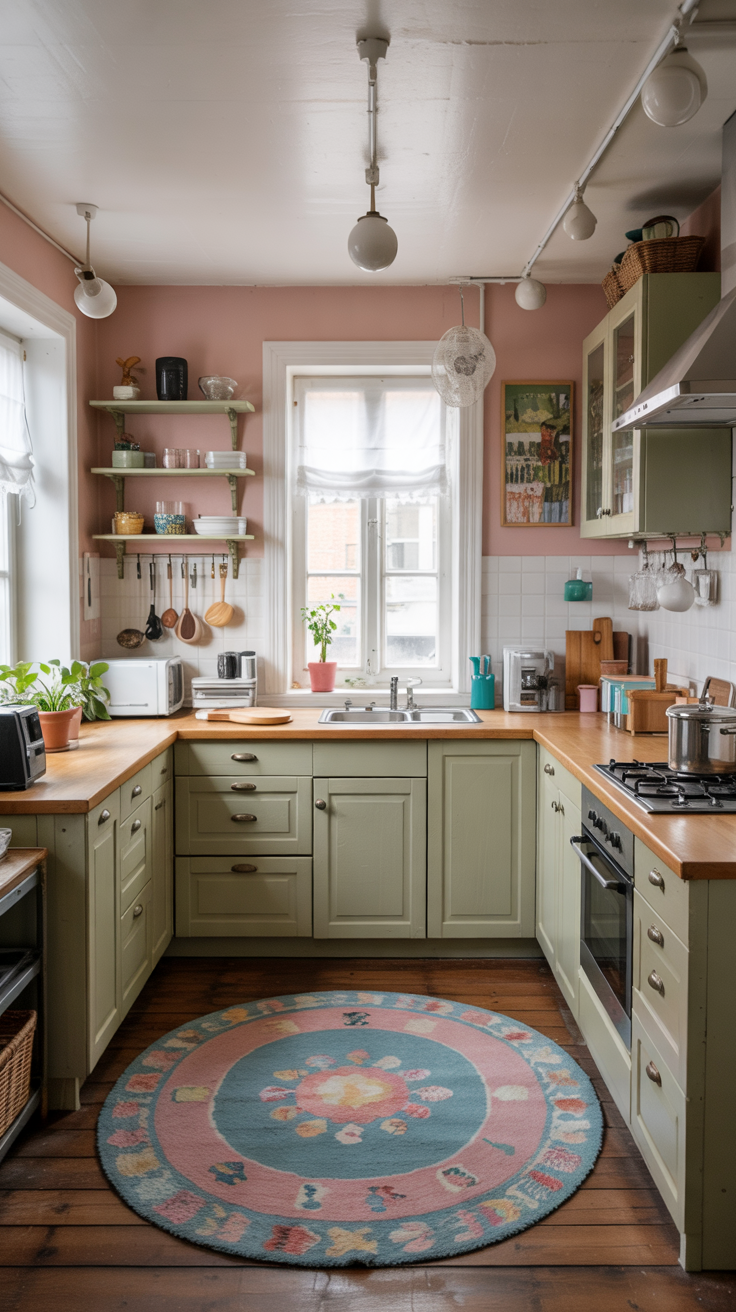
I usually combine these rugs with light cabinetry, compact furniture, and minimal decor. A washable kitchen mat is essential in small layouts, especially near sinks. I also like using playful patterns that add charm while staying practical.
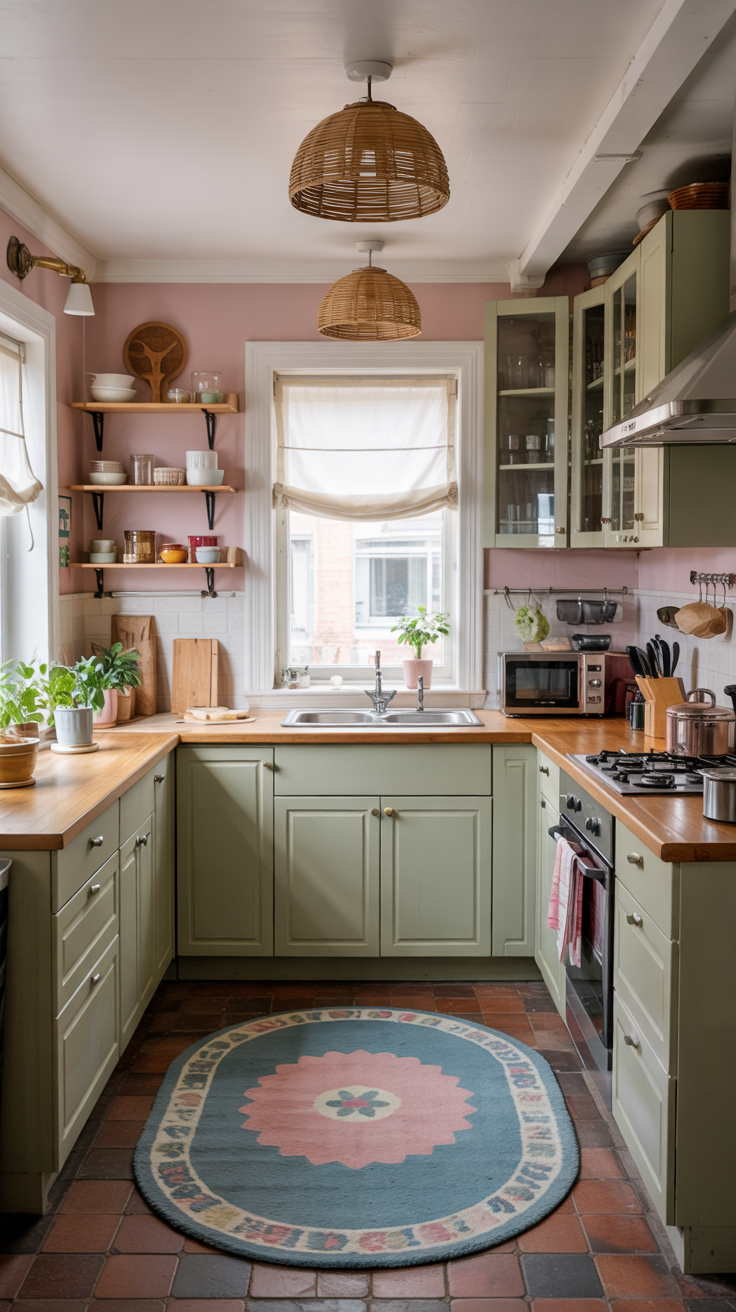
From my perspective, small kitchens should never feel limited in style. I often draw inspiration from urban apartment designs where every detail matters. Rugs become focal points rather than background elements.
What’s missing here is more emphasis on multifunctionality – for example, rugs that provide anti-fatigue support while maintaining a cute aesthetic.
Red Kitchen Rugs That Energize and Warm Up the Room
Red kitchen rugs bring energy and warmth, making them perfect for kitchens that feel too neutral or cold. I use red tones to create a focal point, especially in large kitchens with open layouts. The color naturally draws attention and enhances the overall atmosphere.
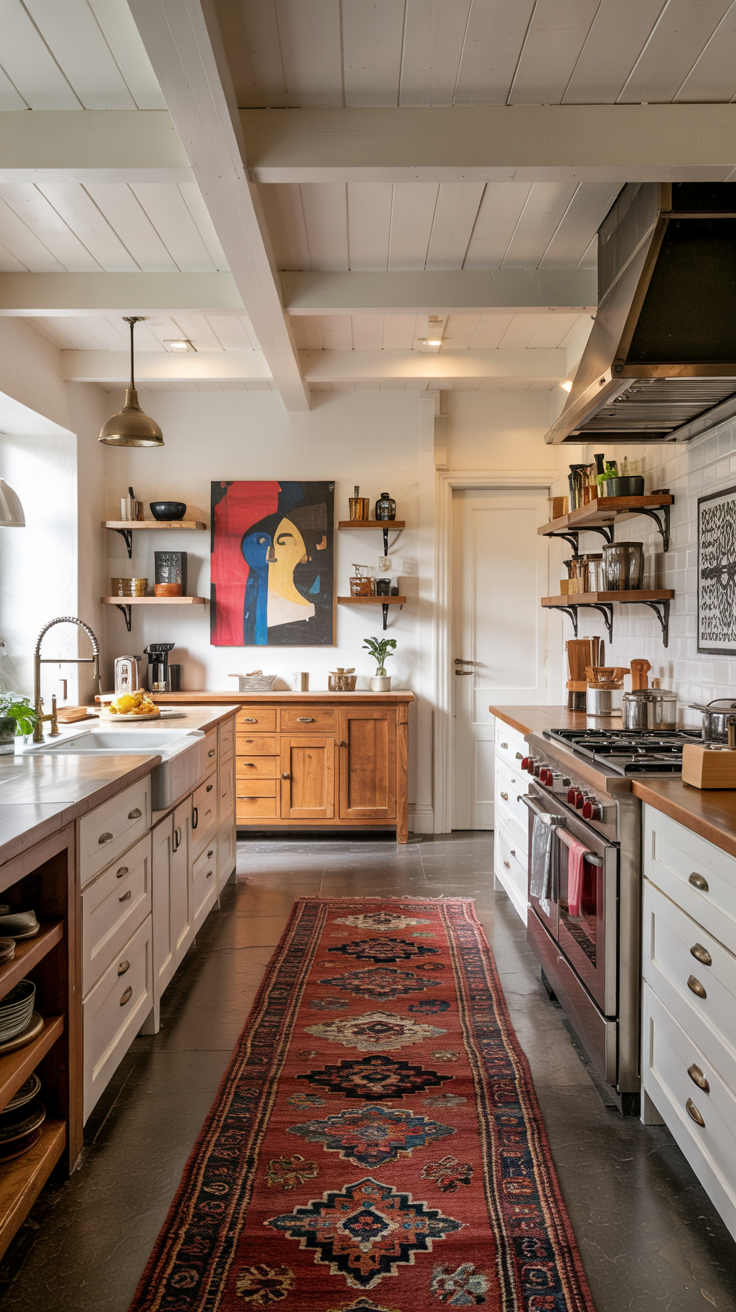
I pair red rugs with wooden furniture, white cabinets, and metallic accents. This combination keeps the look grounded while allowing the rug to stand out. A long runner works particularly well along cooking zones, adding both comfort and style.
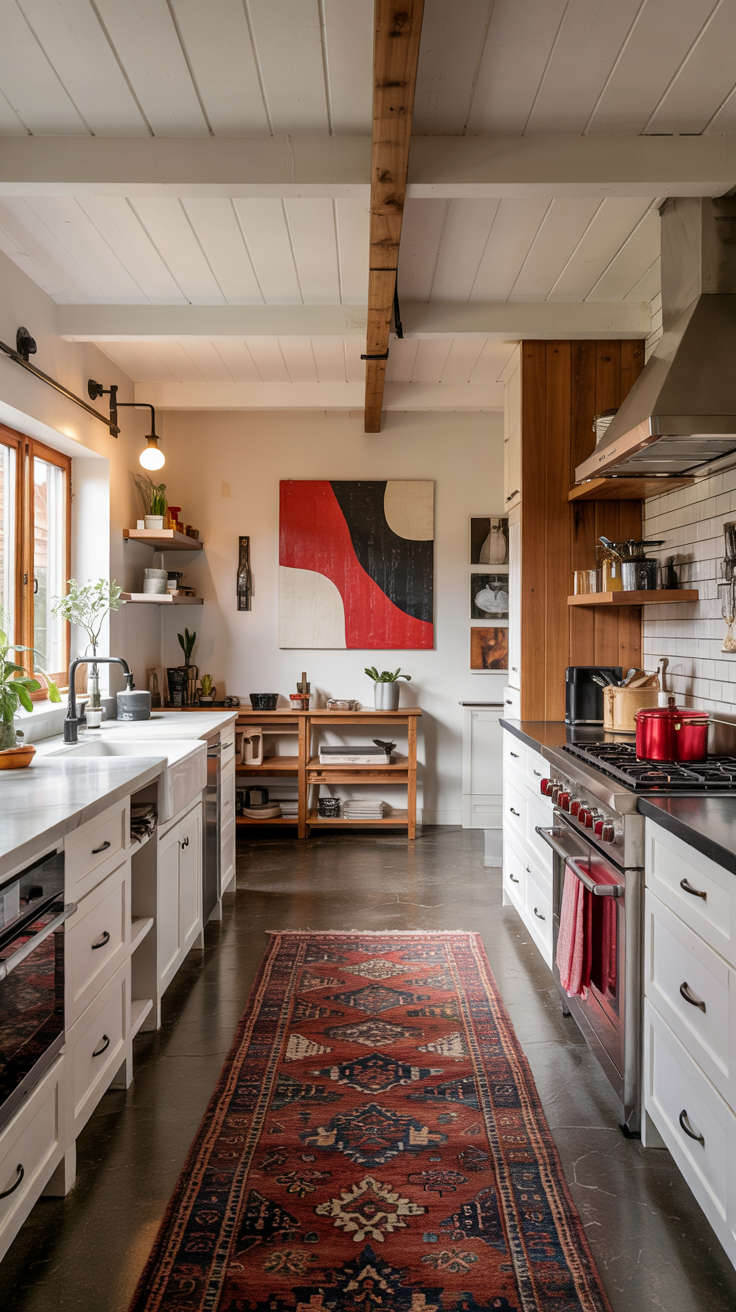
In my experience, bold colors like red should be used intentionally. Designers often recommend balancing them with neutral tones to avoid visual overload, and I fully agree with this approach.
To elevate this section, I would suggest incorporating seasonal variations, such as deeper reds for winter or lighter shades for summer transitions.
Christmas Kitchen Rugs for Festive Seasonal Decor
Seasonal kitchen rugs, especially Christmas-themed ones, are becoming increasingly popular. I like using them to instantly transform the kitchen into a festive space without changing permanent decor. Patterns often include checkered red and green, subtle holiday prints, or cozy textures.
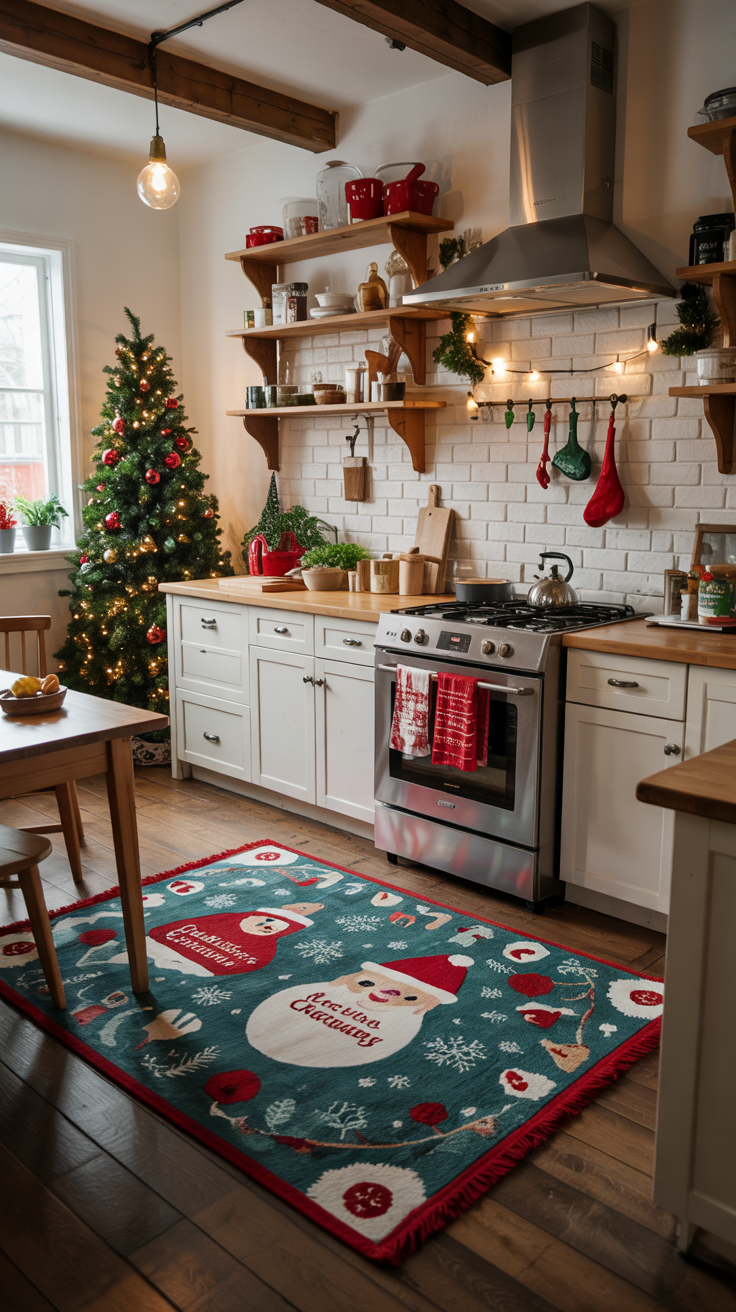
I usually combine these rugs with small seasonal accents like garlands, table decor, and warm lighting. Placement under the table or near the sink ensures both visibility and practicality. Washable materials are crucial since holiday cooking increases spills and traffic.
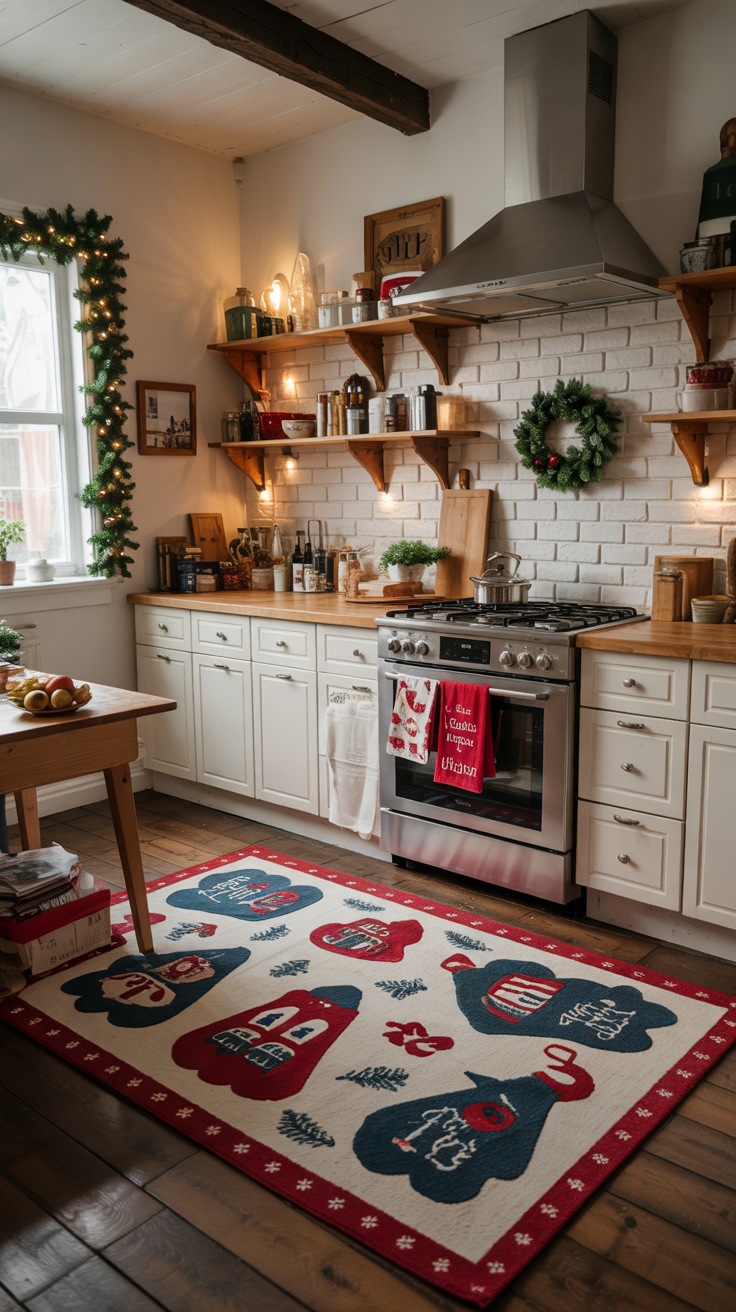
Personally, I enjoy how seasonal rugs create a sense of occasion. Many design experts suggest rotating decor elements throughout the year, and rugs are one of the easiest ways to do that effectively.
What I would add is a transition strategy – how to seamlessly switch from festive rugs back to everyday designs without disrupting the kitchen’s overall aesthetic.
Blue Kitchen Rugs for Calm and Coastal Vibes
Blue kitchen rugs are ideal for creating a calm and refreshing environment. I often use them in kitchens inspired by coastal or Scandinavian styles. Light blue tones open up the space, while darker shades add depth and sophistication.
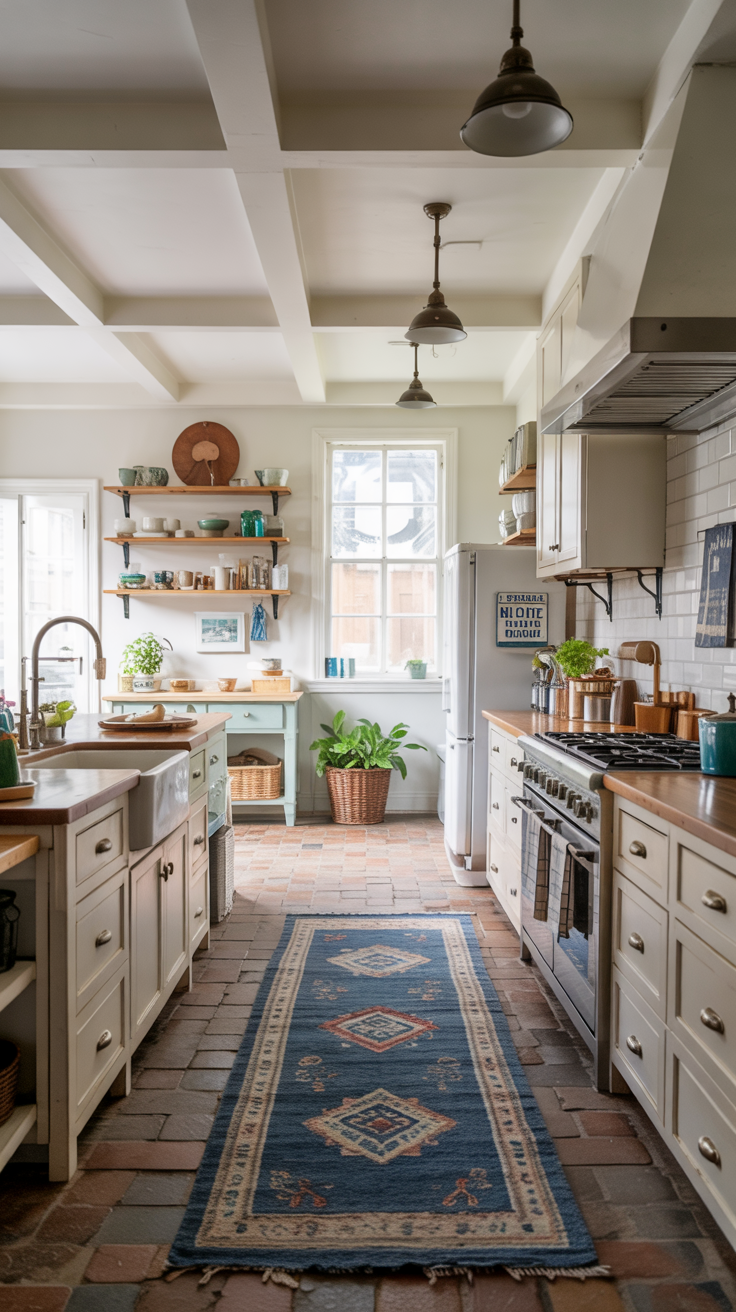
I pair blue rugs with white cabinetry, natural wood textures, and simple decor. A runner layout works well in elongated kitchens, while a larger rug fits nicely under a dining table. The combination creates a relaxed and inviting atmosphere.
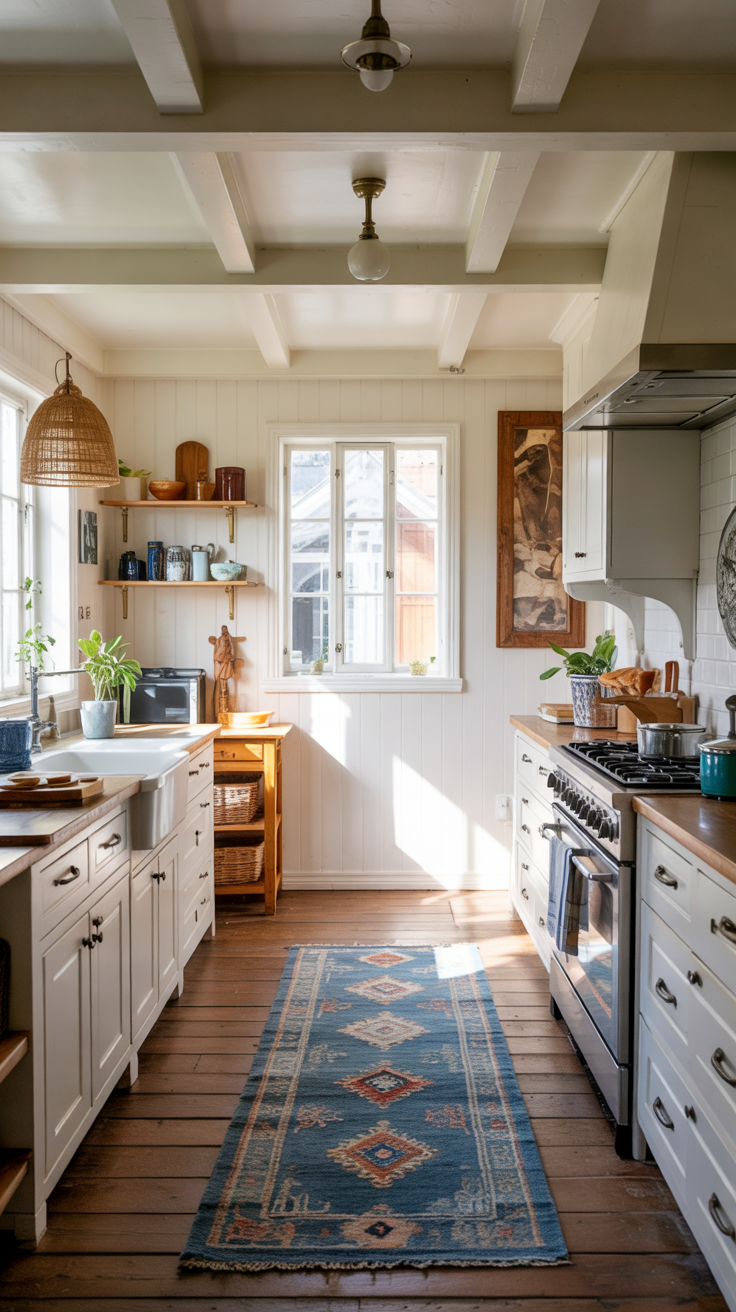
From my experience, blue is one of the most versatile colors in interior design. It adapts to both modern and traditional settings, making it a safe yet stylish choice.
To enhance this section, I would include advice on combining blue rugs with complementary colors like beige or gray for a more cohesive palette.
Black Kitchen Rugs for Sleek and Contemporary Kitchens
Black kitchen rugs are a go-to choice for sleek, contemporary interiors. I use them to ground the space and create contrast, especially in kitchens with light or monochrome color schemes. The result is a clean and polished look.
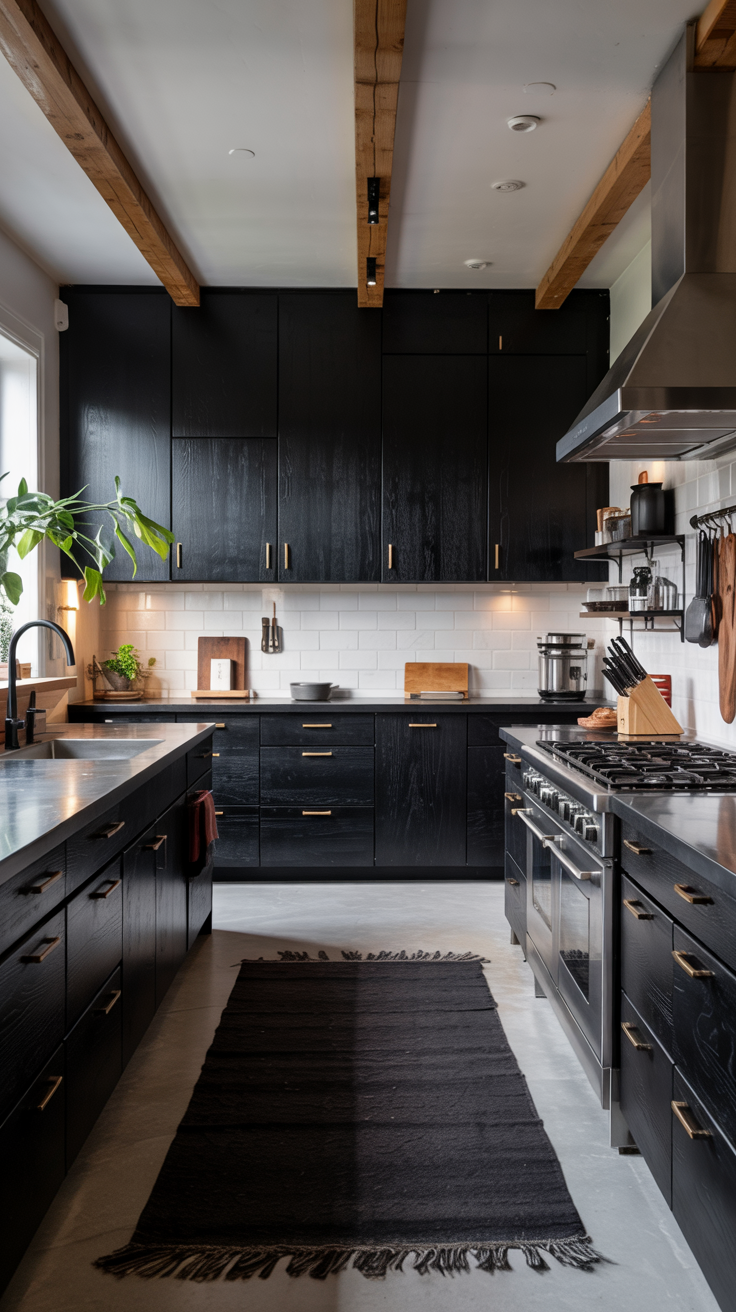
I typically combine black rugs with stainless steel appliances, matte finishes, and minimalist furniture. Placement near the sink or cooking area works well, as darker colors are more forgiving with stains. Washable options are still important for maintenance.
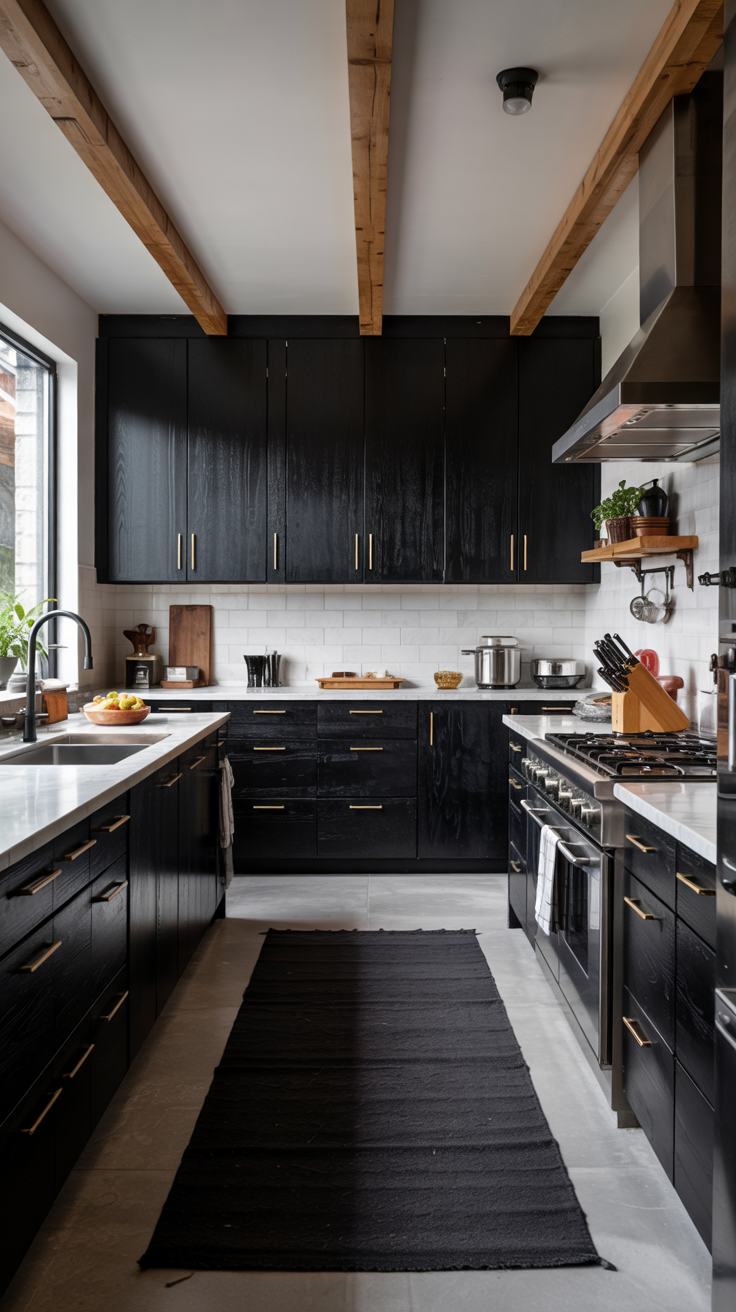
In my opinion, black rugs are underrated in kitchen design. They offer both practicality and elegance, especially when paired with subtle textures or patterns.
What I would improve here is adding more detail about lighting – how proper illumination prevents black rugs from making the space feel too heavy.